

Topological insulators get a layered twist
New work could aid the development of more energy-efficient electronic devices
 Read article: Topological insulators get a layered twist

New work could aid the development of more energy-efficient electronic devices
Read article: Topological insulators get a layered twist
Researchers discover a novel polarization switching mechanism in an ultrathin ferroelectric material
 Read article: ‘Slidetronics’ makes its debut
New work sheds fresh light on what happens when one metal object becomes electrified through contact with another
 Read article: Contact electrification explained at last
Simple, low-cost and highly sensitive technique could be extended to other heavy metals
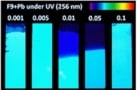 Read article: Zeolites detect toxic lead in water
New scanning technology detects neutron and gamma-ray emissions from nuclear material
 Read article: Tomography technique could help in the fight against nuclear terrorism
Novel light-matter states would have a technological advantage over electronic circuits
 Read article: Exotic quantum state could make smallest-ever laser
New evidence supports theory that the electron may be composed of two particles
 Read article: Electron’s dual nature appears in a quantum spin liquid
Electron tunnelling phenomenon boosts current and device efficiency
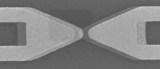 Read article: Efficient optical rectenna could generate power from waste heat
New optical coating technology produces low-loss, high-performance mirror for mid-infrared wavelengths
 Read article: Crystalline supermirrors cut optical losses
New material is based on iron and gallium, avoiding the need for expensive and scarce rare-earth elements
 Read article: Ultra-magnetostrictive material shows promise for beyond-CMOS technologies