

Hubble’s best shots: Eta Carinae
The aftermath of an explosive episode 7500 light-years away is the fifth in our series of images honouring the Hubble Space Telescope's 30th anniversary
 Read article: Hubble’s best shots: Eta Carinae

The aftermath of an explosive episode 7500 light-years away is the fifth in our series of images honouring the Hubble Space Telescope's 30th anniversary
Read article: Hubble’s best shots: Eta Carinae
A happy line-of-sight coincidence and one of Einstein's most dramatic predictions make a striking contribution to our series on the Hubble Space Telescope's 30th anniversary
 Read article: Hubble’s best shots: a cheeky gravitational grin
Our series on the 30th anniversary of the Hubble Space Telescope's launch continues as Keith Cooper reflects on the last stages in a star's life
 Read article: Hubble’s best shots: The Helix Nebula
Our series on the 30th anniversary of the Hubble Space Telescope's launch continues with an image of a mysteriously bright star
 Read article: Hubble’s best shots: Light echoes from V838 Monocerotis
The first in a new series of blog posts honouring the 30th anniversary of the Hubble Space Telescope's launch
 Read article: Hubble’s best shots: The Horsehead Nebula
Observations of a highly energetic gamma-ray burst prompt a re-think of how magnetic fields behave during these cosmic cataclysms
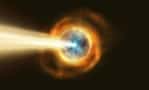 Read article: Titanic stellar explosion scrambles magnetic fields
Coronavirus outbreak called "the straw that broke the camel's back" after glitches with the rover's parachutes and electronics
 Read article: Mars rover launch delayed until 2022
20 years after discovering that the universe is expanding with increasing speed, scientists still argue about whether dark energy explains it. Keith Cooper explores the debate
 Read article: The dark-energy deniers
Designing equipment that can survive in the harshest reaches of the solar system is a challenge. Keith Cooper explores how instrument developers do it
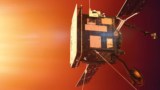 Read article: Instrumentation at the extremes
A lightweight optic inspired by the structure of crustaceans’ eyes is the key ingredient in a revolutionary new X-ray telescope
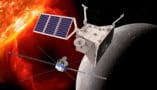 Read article: A lobster-eye view of the universe