

SNAP optics could speed up optical communications
Microscopic structures created on the surface of optical fibres could ease light transmission through fibre-optic networks
 Read article: SNAP optics could speed up optical communications

Microscopic structures created on the surface of optical fibres could ease light transmission through fibre-optic networks
Read article: SNAP optics could speed up optical communications
Incorporating satellite measurements of water vapour isotopes into weather models can improve weather forecasts, particularly when predicting heavy rainfall
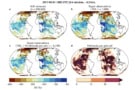 Read article: Heavy water isotopes make weather predictions more accurate
A 2D magnetic material exhibits a charge-ordered state in which electrons move collectively and unusually slowly while maintaining quantum coherence
 Read article: Two-dimensional material shows promise for long-term memory, thanks to slow electrons
Extending the lifetime of electric-vehicle batteries could reduce the need for mining critical minerals
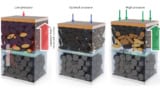 Read article: Pressurizing EV battery electrodes could make them last longer, if it’s done right
New desalination technology produces drinking water from ocean water while capturing valuable salts and minerals
 Read article: Solar-thermal desalination process operates at near 100% efficiency
A new technique that combines millimetre-wave radar with machine learning holds promise for scalable and sustainable monitoring of insect biodiversity
 Read article: Radar identifies insect species via reflections from wingbeats
A nanoparticle ink that can print structural colour onto flat or 3D surfaces could be used to create anti-counterfeit images, smart windows and displays, and vibrant artworks
 Read article: Researchers print structural colour with an inkjet printer
Microrobots harness fluidic torque to move millimetre-sized objects without physical contact
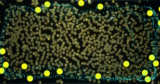 Read article: Magnetic microrobot swarm moves objects with water
Low-power optical device achieves around 100 times amplification using just a couple of hundred milliwatts of input power
 Read article: Compact optical amplifier is efficient enough for on-chip integration
New insight into the behaviour of atmospheric plastics could be beneficial for investigating their effects on climate, ecosystems and human health
 Read article: Scientists quantify behaviour of micro- and nanoplastics in city environments