

Nuclear clocks finally see the light
New timekeeping tools could revolutionize studies of fundamental physics
 Read article: Nuclear clocks finally see the light
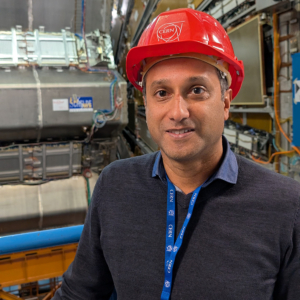
New timekeeping tools could revolutionize studies of fundamental physics
Read article: Nuclear clocks finally see the light
Discovery validates quantum picture of polarity and has implications for ultracold chemistry
 Read article: Collisions between dipolar molecules ‘switch off’ at low energies
Quantum simulator enables scientists to test laws of transport phenomena at the quantum level
 Read article: Atomic system acts like a quantum Newton’s cradle
Researchers find that a photon can spend a negative amount of time in an excited atomic state while passing through a cloud of atoms
 Read article: Negative time observed in photon-atom interaction
Fibre and satellites connections span two continents
 Read article: New definition of second ticks closer after international optical-clock comparison
Inaugural MIT Quantum Index Report finds that venture capital funding is providing billions of dollars into the field
 Read article: Large-scale commercial applications of quantum computing remain a distant promise, claims report
Superpositions persist at temperatures up to 1.8 K – practically oven-like by quantum standards
 Read article: Schrödinger cat states like it hot
Amazon team claims its Ocelot chip could speed up development by 3‒5 years
 Read article: Cat qubits open a faster track to fault-tolerant quantum computing
Interactions between these as-yet hypothetical particles and neutron stars' strong magnetic field would produce photons that radio telescopes can detect
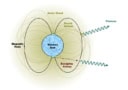 Read article: Axion clouds around neutron stars could reveal dark matter origins
A new approach could put Majorana particles on track to become a novel qubit platform, but some scientists doubt the results’ validity
 Read article: ‘Poor man’s Majoranas’ offer testbed for studying possible qubits