Author
Array
(
[0] => linkedin
[1] => facebook
[2] => twitter
[3] => google-plus
[4] => youtube
)
Array
(
[0] => linkedin
[1] => facebook
[2] => twitter
[3] => google-plus
[4] => youtube
)
Array
(
[0] => linkedin
[1] => facebook
[2] => twitter
[3] => google-plus
[4] => youtube
)
Array
(
[0] => linkedin
[1] => facebook
[2] => twitter
[3] => google-plus
[4] => youtube
)
Array
(
[0] => linkedin
[1] => facebook
[2] => twitter
[3] => google-plus
[4] => youtube
)
No Author
Author archive
The majority of stars in the universe are believed to be in binary systems, but previously no one had produced any evidence to show that such systems could contain planets. The 20 planets that have been detected outside our solar system all orbit around single stars. “To find evidence of a planet orbiting a pair […]

A more detailed review by Phil Anderson of Princeton University, US is in the November issue of Physics World magazine. This delightfully written little book is full of typically Dysonian intellectual sparkle. It is based on three public lectures given at the New York Public Library in 1997, in which the physicist Freeman Dyson looked […]
Charles Townes has written a biography – but it is not clear if it is his own or that of the laser. The laser is now such a feature of our everyday life that the remarkable story of its birth needs to be told, and Townes does so in a clear and personal way – […]
Carbon nanotubes are rolled up sheets of graphite that can have lengths of about 30-100 nanometers and diameters of about a nanometer. Two years ago it was discovered that carbon nanofibres – which consist of bundles of nanotubes – could absorb hydrogen. The Chinese/US team has now synthesised extra-wide nanotubes that can store 4.2% of […]
Electron transfer in protein results from quantum tunnelling between reduction- oxidation (redox) centres. “There’s a widely accepted idea that electrons get from one redox centre to another in a protein by travelling down a series of molecular bonds that describe a best pathway,” said Christopher Moser, one of the team. “What we’ve found is that […]
When the great and the good met at the World Conference on Science in Budapest in June, one question was on many people’s lips. How much has science changed since the previous World Conference held in Vienna 20 years before? One major development has been, of course, the collapse of science in eastern Europe and […]
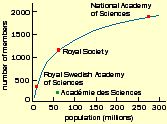 Read article: Ethics enters the 21st century
I I Rabi's work on the magnetic properties of nuclei, including the development of nuclear magnetic resonance, and his role as a peace campaigner during the Cold War have had profound and far-reaching effects throughout physics
 Read article: Isidor Isaac Rabi: walking the path of God
One clear result from the reader survey distributed with the July issue of Physics World was the large number of you who want more articles on the history and philosophy of physics. This came as a big surprise to us. We thought that we had responded to a similar message in our 1996 survey by […]
There is an old joke about a farmer who has a hen that will not lay eggs. After consulting unsuccessfully with a biologist, and then a chemist, he finally turns to a theoretical physicist. Several days later, the physicist announces that he has solved the problem: “First we assume a spherical chicken…” This story is […]
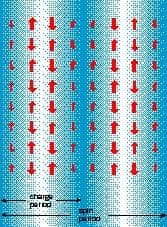 Read article: Superconductor stripes move on
Physicists have been attempting to create a vortex in a dilute Bose condensate since these systems were first created in 1995. In principle, atomic condensates are ideal systems in which to study vortices because they can now be created and probed routinely using lasers and microwaves (see Physics World August 1999). However, a direct demonstration […]
Copyright © 2026 by IOP Publishing Ltd and individual contributors


