Hydrogen sulphide is warmest ever superconductor at 203 K
"Holy grail" discovery is first major step for conventional room-temperature superconductivity
 Read article: Hydrogen sulphide is warmest ever superconductor at 203 K

"Holy grail" discovery is first major step for conventional room-temperature superconductivity
Read article: Hydrogen sulphide is warmest ever superconductor at 203 K
Spherical device might have very down-to-Earth applications
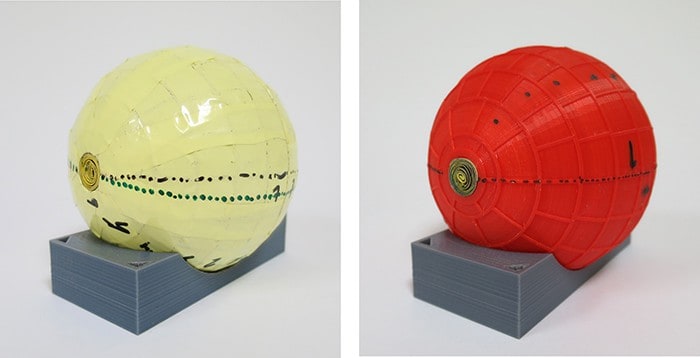 Read article: Physicists create a magnetic wormhole in the lab
The venerable "journal club" concept is thriving in the online environment
 Read article: Web life: Journal Club for Condensed Matter Physics
Measurements could boost our understanding of superconductivity
 Read article: Tiny probe reveals electrical conductance of individual atoms
How to clearly image 1000 individual ultracold atoms in a cloud
 Read article: Fermionic microscope sees first light
About 1000 new materials studied in four-year programme to understand this mysterious state of matter

Tiny transistor reveals electrons marching two by two
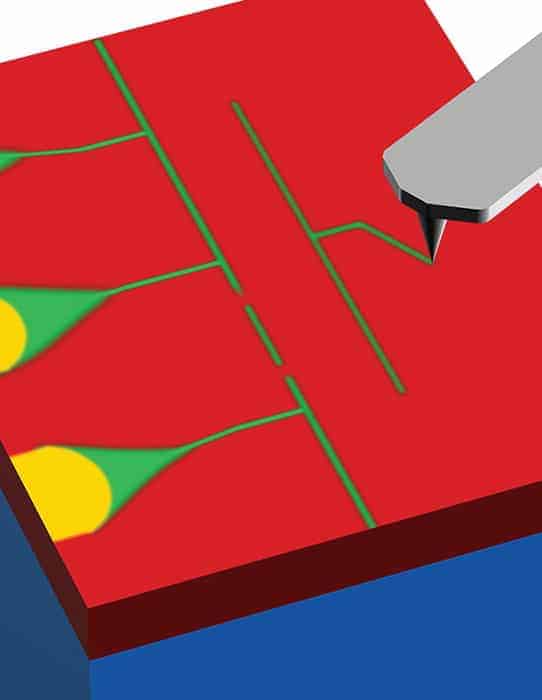 Read article: Electron pairing without superconductivity seen at long last
Molecular lattice also harbours unconventional superconductor
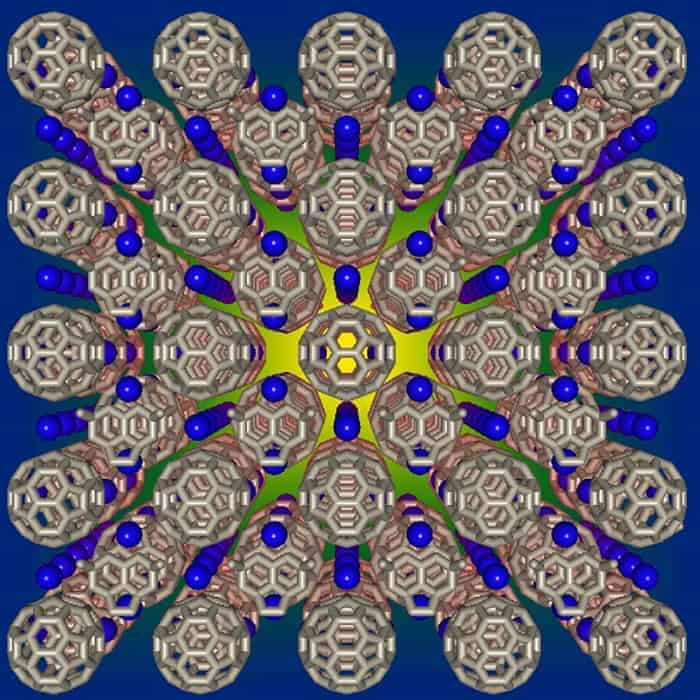 Read article: New state of matter found in crystal made from buckyballs
Conventional electron–phonon superconductivity endures to a temperature of 190 K in hydrogen sulphide
 Read article: Secret of record-breaking superconductor explained
Quantum computers could benefit from new source of entangled electrons
 Read article: Graphene quantum dots split Cooper pairs