Monuments to peer review and Canada, Marie Curie as superhero, a 3D book about Einstein

By Michael Banks and Hamish Johnston

You may remember a campaign to create a monument dedicated to those hard-working people who peer-review research papers. Last year, sociologist Igor Chirikov, from the National Research University Higher School of Economics in Moscow, raised $2521 on Kickstarter to turn an “ugly” block of concrete outside the university’s Institute of Education into a monument that reads “accept”, “minor changes”, “major changes”, “revise and resubmit” and “reject” on its five visible sides. Well, after months of toil that monument has now been unveiled by Chirikov in a ceremony at the institution that was attended by over 100 supporters. Most understand the sarcastic nature of the monument and love it,” says Chirikov. “Many also wonder what’s on the bottom side of the monument.” Chirikov is thinking of hanging a small mirror on a nearby tree so that everyone can see “Accept” on the top of the cube.

Still on fundraising, the Marie Curie Alumni Association is launching an illustrated book series for young children called My Super Science Heroes. The first one – Marie Curie and the Power of Persistence – aims to introduce children to Curie and her key accomplishments in a “fun and engaging way”. To get the project off the ground, the association has taken to Indiegogo to raise €15,000. Each scientist in the series will have a certain “superpower”, which in the case of Curie is her persistence. “Unlike being bitten by a radioactive spider, scientific achievement is a realistic goal, and celebrating these real-life heroes will encourage kids to explore the many possibilities a [science, technology, engineering and mathematics] programme offers,” the association writes. There is a month still to go if you want to donate. If the project raises the cash then the book is expected to be released by mid-October.

While that book will most likely be printed in the usual way, how about getting your hands on the world’s first 3D-printed book? Well, soon you can thanks to a project kickstarted last year by the Israeli-born designer Ron Arad. The book Genius: 100 Visions of the Future – will contain articles by 100 leading lights including Microsoft co-founder Paul Allen and the Nobel laureates Steven Chu and the late Harry Kroto. It is part of the Einstein Legacy project that celebrates 100 years since the publication of Albert Einstein’s theory of general relativity. The book is set to be unveiled at an event in Montreal, Canada on 9 September.

Tiny Canadian flag

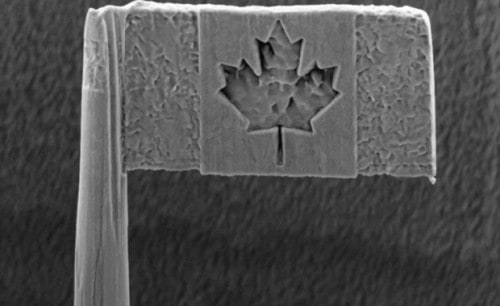
Speaking of Canada, the country is celebrating its 150th anniversary this year. In honour of the sesquicentennial, Travis Casagrande at McMaster University in Hamilton, Ontario has made what just might be the smallest Canadian flag ever – measuring just one-hundredth the width of a human hair. He used a focused ion beam microscope to etch the 3D flag – complete with a flagpole – into a penny. You can read more about the tiny sculpture on the CBC website.

Flash Physics: Exoplanet has huge rings, International Day of Light for 2018, LIGO pioneer bags €750,000 prize

Exoplanet with huge rings could be detected by amateur astronomers

An exoplanet 50 times the mass of Jupiter and encircled by a huge system of dust rings may be orbiting a star 1000 light-years from Earth. That is the claim of Hugh Osborn of the University of Warwick in the UK and an international team of astronomers who have seen evidence for the ringed exoplanet in two telescope surveys. The gas-giant exoplanet appears to be orbiting a young star called PDS 110 with a period of about 2.5 years. As the planet crosses in front of the star it blocks some of the starlight from reaching Earth. By a careful analysis of crossings recorded over 15 years by the Wide Angle Search for Planets and the Kilodegree Extremely Little Telescope, Osborn and colleagues have concluded that the exoplanet is surrounded by a ring system that is many times larger than the rings of Saturn. The team is now looking forward to making more detailed observations in September 2017, when the next crossing is expected to occur. Indeed, the dimming effect is so large that it should be measureable by amateur astronomers. “September’s eclipse will let us study the intricate structure around PDS 110 in detail for the first time, and hopefully prove that what we are seeing is a giant exoplanet and its moons in the process of formation,” says Osborn. While this is not the first exoplanet with rings, if its existence is confirmed in September it will be the first ringed exoplanet with a known orbital period. The exoplanet appears to lie within the habitable zone of PDS 110, which means that if moons form from the rings, they could support life. The latest analysis of the exoplanet is described in a preprint on arXiv.

International Day of Light will debut in 2018

Following the success of the International Year of Light (IYL) in 2015, the United Nations Educational, Scientific and Cultural Organization (UNESCO) has given its support to an annual International Day of Light. Beginning next year on 16 May, the day aims to provide “an annual focal point for the appreciation of the role that light plays in the lives of the citizens of the world”. An official inauguration ceremony will take place at UNESCO’s headquarters in Paris on 16 May 2018 involving presentations from Nobel laureates, business leaders and those representing other organisations in the arts, architecture, lighting and design. During IYL 2015, thousands of events were held in over 100 countries celebrating the science and applications of light. The year involved more than 100 partners from 85 countries – including the Institute of Physics, which publishes Physics World.

LIGO pioneer bags €750,000 Körber prize

Photograph of Karsten Danzmann

Karsten Danzmann, who led the development of key laser technologies used in the LIGO gravitational wave detectors, has won the Körber European Science Prize 2017. Worth €750,000, the prize will be presented to Danzmann on 7 September in Hamburg, Germany. The German physicist is 62 and is based at the University of Hannover. He is also director of the Max Planck Institute for Quantum Optics in Hannover. Danzmann pioneered the use of “squeezed light” to achieve significant noise reduction in the LIGO interferometers. The LIGO team – which includes Danzmann’s research group – has detected three gravitational-wave signals from coalescing binary black holes since September 2015. The most recent discovery was announced just yesterday. The prize is given by the Körber Foundation, which was founded in 1981 for the advancement of culture and science by the German entrepreneur Kurt Körber.

The need for speed: how Lorraine Bobb’s summer placement at Diamond Light Source influenced her career path

As I look back on the choices I have made in my career, I’m coming to the conclusion that I have always been fascinated by speed. When my friends and I discussed career ideas as early as secondary school, my preferences went along the lines of: astronaut, RAF pilot or Formula 1 engineer. All of these jobs sounded exciting, hands-on and challenging. I quickly decided that studying physics would be beneficial, regardless of which career option I chose to pursue.

After completing my A-levels, I went on to do an MSci physics degree at Royal Holloway, University of London (RHUL). At this time I was a keen sportswoman, and had secured a place on the Student Talented Athlete Recognition Scheme (STARS) at RHUL for athletics and skeleton – a sport where a person slides head-first down an ice track, while lying face-down on a small bobsled. I learned the importance of good time management and self-motivation while balancing both my academic and sporting commitments. From skeleton-sliding in particular, I learned how to channel any stress I felt as I stood at the top of the track into focus, and being able to give my best performance, even under pressure.

Particle fascination

Academically, I found myself drawn towards the field of particle physics.  I was intrigued by the Standard Model of particle physics, especially the then-ongoing search for the Higgs boson at the Large Hadron Collider at CERN. I was also captivated by the observation of neutrino interactions by the IceCube experiment. However, particle physics didn’t seem to offer the hands-on lab work I enjoyed to break up the humdrum of sitting at a desk all day, studying theory and analysing data. As I mulled over this problem, I realized that behind each great experimental discovery, there must be a lab or facility where the experiment itself was conducted. It was at this point that I entered the realm of accelerator physics and beam diagnostics – the marriage between particle physics and engineering where particles travel at nearly the speed of light.

I wanted to make an evidence-based decision before choosing accelerator physics as a full-time career. With this goal in mind, I chose undergraduate courses relating to particle accelerators and detectors. At RHUL, I did a summer placement on acoustic imaging of electron beams to further my laboratory skills and to network with other lecturers and students in similar research areas. I completed my Master’s thesis on accelerator optimization at the Compact Linear Collider using different beam-steering techniques. Although I had visited CERN, I still wasn’t sure what it would be like to work at a particle accelerator full time.

Diamond ring

Growing up in the area, I was aware of the “silver doughnut” on the rolling hills of Oxfordshire. It was much later that I learned this building housed Diamond Light Source – a third-generation synchrotron light source, with a series of X-ray beamlines that study atoms and molecules. In the summer of my third year, I sent my application to Diamond, with my fingers crossed that I would get a response. Unfortunately, it was not the response I was hoping for – I was told that Diamond was not taking on any summer students that year. However, knowing how crucial it was for my future plans, I persisted.

That summer I gained first-hand experience of everyday life at a particle accelerator

Via contacts at RHUL, I got in touch with the physicists at Diamond and let them know that I was prepared to work for no pay on more or less anything relating to the accelerator. Very soon after, the Diagnostics group at Diamond contacted me directly with an invitation for a paid internship working with them – and this was ultimately my big break. That summer, I developed a portable scanning knife-edge system for stability measurements on beamlines and I gained first-hand experience of everyday life at a particle accelerator. Most importantly though, I thoroughly enjoyed my entire experience. I had finally proven to myself that this was the career I wanted.

The next step was to further my knowledge and expertise. I did a PhD that  involved designing, building and testing a transverse beam size monitor using diffraction radiation on circular machines. Although it was a collaborative project between RHUL and CERN, I was based at CERN in Switzerland full-time. Initially, living abroad was very daunting (especially as I didn’t speak French), but in time I became much more independent. By the end of my PhD, I was very proud of the life I had established over the three years.

Lessons learned

In this time, I was lucky enough to travel to many countries around the world. All of the experimental tests for my PhD were done at the Cornell Electron Storage Ring (CESR) in the US. Often, I would be sent to Cornell University weeks ahead of the rest of the team to prepare for our shifts on the accelerator. Along with my technical knowledge, I learned how to manage a project that involved a lot of people and resources. I found that no-one can be expected to know everything, which is why teamwork is so important. Each person has their own area of expertise, and through a collective effort, we get to the finish line. During my time at CERN, I also had the opportunity to present my work at international conferences and to attend the annual CERN Accelerator School, which is hosted in a different member state each year. In this way, I was able to improve my presentation skills and to network face-to-face with many people at various stages of their careers.

Each day, I look for ways to improve the measurements I provide by doing my own research in the lab, on the accelerator, and with external collaborators

After my PhD, I returned to Diamond, where I now work as part of the Diagnostics group. I design and operate instruments that are effectively the eyes and ears of the accelerator and make sure that all 28 operational beamlines have access to high-quality X-rays for their non-stop, 24/7 experiments. Each day, I look for ways to improve the measurements I provide by doing my own research in the lab, on the accelerator, and with external collaborators. The best part of my job is the variety of issues that need to be solved and the opportunities to share my work, and that of Diamond, with the public through outreach events.

Diamond now has a well-established Student Summer Placement programme, which allows undergraduate students in science and engineering to gain first-hand experience of working at a leading scientific facility.  I’d encourage anyone starting out in physics to do a summer internship at a working facility in the branch of physics they’re interested in. You may end up returning to that same place of work as a member of staff as I have done, or to continue your studies. Or you may learn that actually, the career path you were following isn’t the right one for you. This is still a positive outcome. You’ve been able to direct your career based on evidence, and as a physicist, having data to support a theory is key.

LIGO bags its third black-hole merger

A third gravitational wave has been detected by physicists working on the LIGO gravitational-wave detectors in the US. The wave was produced by two black holes that merged about 3 billion light-years from Earth. One black hole was 31 times more massive than the Sun and the other weighed in at 19 solar masses. The previous two sightings of gravitational waves were also produced by black-hole mergers, but LIGO researchers think this is the first event in which the spin of one of the merging black holes could have been pointing in the opposite direction to the orbital rotation of the black holes.

The latest gravitational-wave observation is also the furthest of the three black-hole mergers seen so far, with the first and second detections being 1.3 and 1.4 billion light-years away, respectively. The newly observed merger created a black hole of 49 solar masses, which sits nicely between the first detection (62 solar masses) and the second (21 solar masses). Before LIGO saw its first gravitational waves in 2015, astronomers had no idea that such solar-mass black holes existed in the universe.

The new event, dubbed GW170104, was observed on 4 January 2017 when signals lasting about one tenth of a second were recorded in LIGO’s two detectors in Washington and Louisiana, which are giant interferometers, each consisting of two perpendicular arms 4 km long. Laser light travels back and forth between mirrors at either ends of the arms and some of this light is sent to a detector, where interference occurs. When a gravitational wave passes through a LIGO detector, it can slightly stretch one arm and compress the other, thereby altering the measured interference and letting the gravitational wave be measured in real time.

Death spiral

The newly observed event began as two black holes neared each other in a death spiral. As the system rotates, it broadcasts gravitational waves that spread out across the cosmos – some reaching Earth. The signals at both Livingston and Hanford had the characteristic “chirp” and “ringdown” seen in the previous two detections. Chirp describes the rapid increase in the frequency and amplitude of the gravitational wave that occurs just before the black holes merge. Ringdown is the gravitational wave that is emitted by the non-spherical merged black hole as it relaxes to become a sphere.

By studying both the chirp and the ringdown, LIGO physicists worked out the masses of the two initial black holes as well as the mass of the merged object. The merged black hole weighed 49 solar masses – the difference being radiated away in the form of gravitational waves.

Spinning around

Another key piece of information that can be gleaned from the gravitational wave is the alignment of the intrinsic angular momenta (or spins) of the black holes. As well as orbiting each other, each black hole can be spinning on its own axis – much like the Earth does. When the black holes coalesce, the total rotational velocity of the merged black hole cannot exceed a certain upper limit. So if the spins of the two merging black holes point in the same direction as the orbital spin, some of the orbital angular momentum must be discarded to meet this criterion before the merger can occur. This is done by emitting additional gravitational waves before the merger.

Data from the first detected black-hole merger (GW150914), recorded in 2015, suggested that the spins of both black holes were aligned with the orbital angular momentum. In the second detection (GW151226), recorded last year, there is some evidence that the spin of one of the black holes could be at an angle to the orbital angular momentum – but still have a component in the direction of the orbital angular momentum. In GW170104, however, it is possible that the spin of at least one of the black holes is at an angle and has a component in the opposite direction to the orbital angular momentum.

According to Bangalore Sathyaprakash of the University of Cardiff in the UK, the relative orientations of the spin and orbital angular momenta of a binary black hole provide important information about how the system formed. If they are aligned, it is likely that the system developed in isolation as two large stars that then collapse to create a binary black hole. Misalignment suggests that the black holes formed separately and then came together to create a binary system.

Real statistics

“We’re starting to gather real statistics on binary black-hole systems,” says Keita Kawabe of Caltech, who is based at the LIGO Hanford Observatory. “That’s interesting because some models of black-hole binary formation are somewhat favoured over the others even now and, in the future, we can further narrow this down.”

This third observation has also allowed LIGO scientists to put further limits on models that modify Albert Einstein’s general theory of relativity. Einstein predicts that the speed of a gravitational wave through empty space is independent of the frequency of the wave. So any deviation from this constancy would therefore show up as a frequency-dependent distortion of gravitational-wave signals seen by LIGO. Given that this was not seen, despite the waves travelling such long distances through the cosmos, general relativity appears to be holding firm.

“It looks like Einstein was right – even for this new event, which is about two times farther away than our first detection,” says LIGO physicist Laura Cadonati of Georgia Tech. “We can see no deviation from the predictions of general relativity, and this greater distance helps us to make that statement with more confidence.”

GW170104 is the first gravitational-wave detection to be announced since LIGO began its current observational run in November 2016. The LIGO team has also identified six other candidate events during this run, which they are now analysing. The observation is reported in Physical Review Letters.

  • The ability to observe gravitational waves heralds a new era of astronomy in which scientists will combine observations from a number of different instruments. You can read more in Multimessenger Astronomy by Imre Bartos and Marek Kowalski

3D printing goes micro

Over the past few years 3D printing has become one of the most-hyped topics in 21st century technology. Research into the techniques used in 3D printing has already given scientists new freedom in the design of components and devices, while the ability to manufacture highly individualized parts in a cost-effective way is finding new applications all the time.

So far, much of the hype has centred on macroscopic objects such as 3D printed implants or prototype parts for the automotive industry. However, a logical extension of the technology would be to exploit the unique potential of 3D printing in the domain of microstructures. This is of particular interest for optical scientists who wish to enhance the functionality of micro-optical devices such as highly integrated cameras, or even make it possible to build entirely new categories of devices that cannot be manufactured via a combination of traditional techniques such as UV- or electron-beam lithography.

Macro vs micro

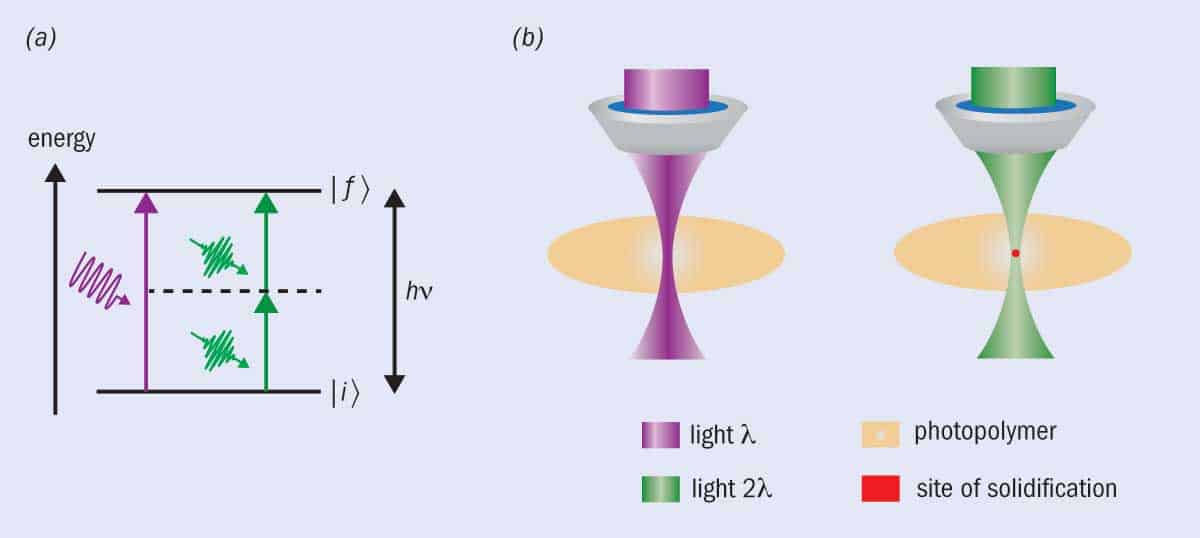
Macro-sized 3D printing relies on several well-established techniques, including the selective melting of metal powders; inkjet printing; stereolithography; and fused deposition modelling. In contrast, the realm of 3D microprinting is dominated by a single method: two-photon polymerization (2PP). In some ways this method is similar to conventional UV lithography, where a (usually) liquid photopolymer is illuminated with light at an appropriate wavelength; the polymer solidifies where the light is absorbed; and a combination of masks and subsequent removal of unexposed polymer are used to create highly sophisticated structures. The main difference is that in 2PP the trigger for solidification to take place inside the focal volume is a femtosecond laser pulse. The physical phenomenon that drives this process is known as two-photon absorption (TPA), and it can only occur if the laser light is very intense: if you focused all of the sunlight falling on the city of Würzburg, Germany, onto a single grain of sand, you would get an intensity equivalent to that used for 2PP. Under these extreme conditions, two simultaneously absorbed photons with wavelengths in the visible part of the spectrum (such as 515 nm) can trigger the same chemical reaction as a single UV photon. Because this reaction does not occur at lower light intensities, solidification is strongly confined to the focal volume, and the polymer does not interact with out-of-focus light at all. The site of solidification can then be scanned in three dimensions to generate a 3D microstructure, as with normal 3D printing.

The concept of 2PP has been well known for at least 20 years, and several research groups have used it to generate objects such as photonic crystals (which are essentially semiconductors for light), 3D structures for life-science applications and micro-optical devices. However, before the 2PP process can be exploited in commercial applications, some technological challenges need to be resolved. One constraint is that, as with many additive manufacturing processes, 2PP is limited to using a single focal volume to process the material. This “serial” process is inherently slow, comparable to painting an entire wall with a small brush instead of a roller. The second disadvantage is the limited availability of photopolymers that can be processed using 2PP while also providing superior functionality for 3D micro-optical devices. For example, some photopolymers have been optimized for the 2PP processing itself, but their chemical and physical properties leave something to be desired in terms of the performance of the completed device.

Industrial optimization

Within the optics and electronics department at the Fraunhofer Institute for Silicate Research (Fraunhofer ISC) in Würzburg, scientists are working to optimize 2PP processing with respect to industrial applications. A key aspect of this research is to develop hybrid polymers that combine inorganic or glass-like materials with substances that exhibit organic photochemistry (as in the reaction described above), and thereby unite the favourable mechanical properties of glass with the processability of purely organic polymers. These hybrid polymers, known commercially as Ormocers®, are liquid resins consisting of a [Si-O]n backbone with different organic side groups. The most important side groups are polymerizable components such as acrylate or epoxies, as they can be used to solidify the resin via photochemical processes. The choice of precursors and the processing conditions determine the conformation of the interlinked organic and inorganic networks, and thus the chemical and physical properties of the final substance. The main benefits of Ormocer chemistry are an excellent stability against temperature, resistance against chemical attack and superior mechanical properties (such as stiffness). Additionally, many properties can be tailored to meet the requirements of different applications.

Recently, researchers at Fraunhofer ISC have worked to improve the optical properties and stability of parts that have been 3D microprinted using Ormocers. For example, we have demonstrated that newly synthesized high-refractive-index hybrid polymers do not turn yellow even after being exposed to high-intensity UV LED light and temperatures of 150 °C for 72 hours. Temperature stability has also been proven by creating 2PP-printed microlenses that did not change their shape after being exposed to 200 °C for more than 1.5 hours. Such robustness is important because it means that microstructures fabricated via 2PP from Ormocer material can withstand the autoclaving procedures used to sterilize medical equipment, such as an endoscope equipped with sophisticated micro-optical lenses at the end of an optical fibre.

Another key benefit of these materials is their compatibility with biological matter. Ormocer composites are used as filling materials in dentistry, and many other material modifications are biocompatible with several human cell types. Some of these materials are even biodegradable, which is important when selecting appropriate materials for 3D-printed medical implants or scaffolds for tissue engineering. The micro-patterned hybrid polymer mimics the extracellular matrix, making it possible for human cells to be grown on it either in vitro or in vivo. Once this new tissue is formed, the scaffold material can then be reabsorbed by the human body.

Active interest

Despite their advantages over conventional polymers, hybrid polymers are still “passive” materials – meaning that their properties, defined by their chemical composition and processing, remain unchanged in response to external stimuli. To truly fulfil the potential of 2PP-written microstructures, scientists are also working to develop “active” materials. Such materials might, for example, act as optical gain media, convert one wavelength of light into another, or exhibit mechanical responses to external electrical or magnetic fields. Gain media have a number of applications, including the amplification of signals in optical data communication. Mechanical responses are important for actuators, for example in human–machine interfaces or miniaturized energy harvesters.

There are two main routes for achieving these properties. One is to incorporate active components during the chemical synthesis process itself, for example by linking optically active ions directly to the polymeric network. The other route is based on a “guest–host” approach, in which active nanoparticles are introduced into a (hybrid) polymer matrix. This route can be very straightforward as long as the guest nanoparticles “match” the host system; in other words, as long as they can be dispersed homogeneously and they maintain their active properties inside the matrix.

Foundations

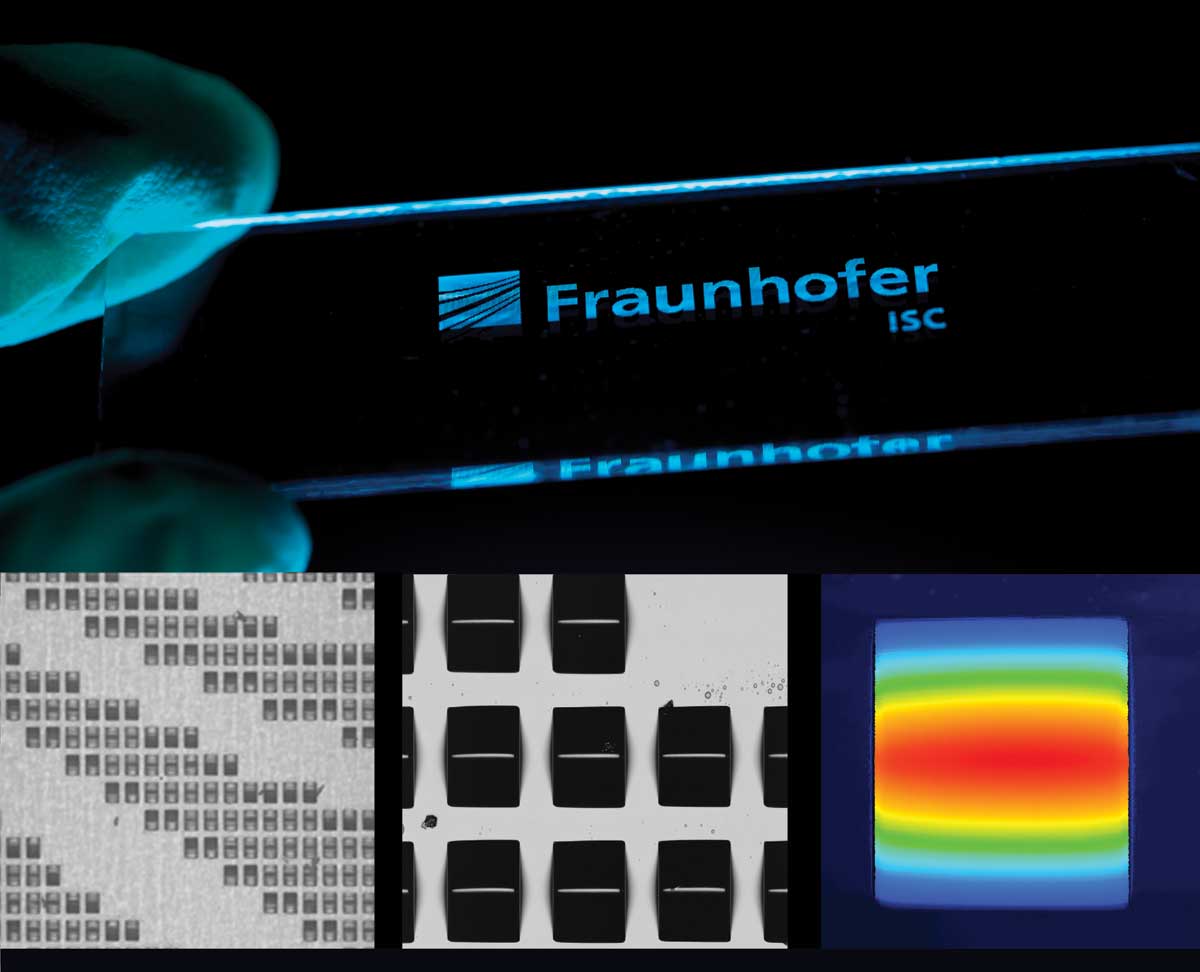
Researchers at Fraunhofer ISC demonstrated recently that material systems of the latter type – so-called “nanocomposites” – can be 3D microprinted using 2PP. In a proof-of-principle experiment, they introduced silica nanoparticles 48 nm and 380 nm in diameter into an Ormocer matrix and studied the material’s behaviour when it was illuminated with femtosecond laser pulses. An example of the results is shown in the “Fine structure” figure, which reveals a complex 3D pattern created in the 48 nm nanocomposite (left image pair) and the institute’s initials in the system containing 380 nm particles (right image pair). The hope is that such experiments will be the foundation for creating structures with more sophisticated particles.

In addition to new materials, another key area of development for 3D microprinting relates to the optics used to control the position of the laser focus during the printing process. The goal here is to set the position of the focus quickly as well as accurately. For this reason, “galvoscanner” mirrors have become increasingly popular, since they have significantly lower moving masses than high-accuracy linear stages, and thus make it possible to rapidly accelerate and position the focal spot in the focal plane.

The huge capability for rapid 3D micropatterning using galvoscanner technology is shown in the “Tiny prisms” image on p32. Here, the Fraunhofer ISC emblem is composed of 10 000 individual microprisms, with a base area of 50 × 60 µm² and a height of 25 µm. Printing a single microprism only takes a few seconds, even without thoroughly optimizing the process in terms of applied photon doses and writing velocity. This result clearly indicates that areas of several square centimetres can easily be filled with micron-sized elements – meaning that we could, in principle, use these 3D-printed microprism arrays in displays and other commercial technologies that rely on redirecting light with low optical losses. Furthermore, the depicted arrangement can be replicated easily, as it is only a so-called “2.5 dimensional” pattern with no undercuts.

Forging ahead

The tremendous potential of 3D microprinting using two-photon polymerization will be achieved when it is possible to employ materials that are not only compatible with the printing process, but that also exhibit new functional properties (either active or passive). Strategies for accelerating the printing process are also highly desirable, and galvoscanner mirror technology is already being implemented today. Both approaches – new materials and faster fabrication – will help ensure that 2PP is adopted on a larger scale in the future.

Succeeding as a community

What led you to start Optimax?

Mike Mandina, Optimax president I lost my job so I had a choice: I could either go work for someone else or create something new. By chance, I met a couple of entrepreneurs who had partnered with some people who were moonlighting from day jobs at Kodak. They had set up the beginnings of an optics shop in the basement of a barn. It had a concrete floor, sawdust and dirt would fall down from the ceiling if it was windy outside, and the low ceilings limited what kind of machinery could go in there. But it had a lot of power, and they had found and refurbished a number of pieces of equipment, so it was enough to get started making rudimentary optics – the basic elements of traditional lens manufacturing. That’s what became Optimax.

What had your career been like before that?

MM I went to university to study sociology and psychology, but after one semester I transferred over to the optics programme at Monroe Community College, working on an associate’s degree in optics technology. I did just over a year of full-time college and then I got a job in the optics industry, grinding lenses on the second shift. Because I was working nights, I was able to continue my education during the day. Eventually, I earned a bachelor’s degree in applied physics from Empire State College and an executive MBA from the Rochester Institute of Technology (these are all in New York, by the way). I founded my first optics company with a partner back in 1976 and sold it to Melles Griot around five years later. It became Melles Griot Optical Systems and that was the company that let me go in 1990.

Rick, how did you get involved in Optimax?

Rick Plympton, Optimax CEO I grew up in the Rochester area and my education was similar to Mike’s in that I went to the Florida Institute of Technology for a year, but I spent more time on the beach than I did in classes. So I came back and continued my education at Finger Lakes Community College in New York, US before transferring to the optical engineering programme at the University of Rochester. The first time Mike hired me was in 1984, when he was the production manager for Melles Griot Optical Systems and I was a student. We worked together for three or four years and then I went off and chased my career, working at Melles Griot’s corporate headquarters in southern California, as a field sales engineer in the south-east US and eventually at Melles Griot in Europe. After two years there, though, I came back to Rochester because this is where family is. I’d kept in touch with Mike throughout, and when I came back in 1995 there were 10 guys here struggling to make weekly payroll. Manufacturing was fleeing the Rochester community at the time: Kodak, Bausch and Lomb, Xerox, all the big players were downsizing and sending their manufacturing offshore. But when I looked at what Mike and the guys at Optimax were doing, I saw they were leveraging computer-controlled machining technology to make optical components and that meant they could make prototype lenses 10 times faster than the industry standard. Normally it takes about 10 weeks to make a lens; these guys could do it in a couple of days. So we developed a marketing plan around one-week delivery of prototype optics and started growing the business.

How did you get funding to expand beyond the barn?

MM In the very early days some of the founders put in about $30,000 in cash. The rest was credit cards and leases, and if there wasn’t enough cash coming in, the principals didn’t get paid. Rick was one of several people willing to not exactly get paid a lot of money for believing in the future. A number of those people are still here because they hung on and ultimately we developed great careers for them. They helped build the company.

RP By the time I joined, I knew the optics industry all over the US and Europe, so I went out and bragged about the capability that Optimax had developed using this new machining technology. And we really focused on being the prototype guys. Most factories are set up to do production work, so that niche – high-quality prototype optics, quick delivery if you need it – gave us an advantage in the market. And from 1995 to now, we’ve grown the business by about 25% per year.

What have been the biggest challenges?

RP Workforce development. We cannot go out on the street and hire people who know how to do what we do – we have to train everybody. The best we can do is find people who have good foundational skills through their hobbies, education or work experience. But aside from that, what’s most important is that they’re the type of people who want to learn and contribute.

What kind of technical background do you look for?

MM As time has gone on, the easy manufacturing has moved to countries with lower costs, so the complexity and difficulty of the optics that are left to be manufactured in the US has grown tremendously. Some optics can cost up to $100 000 and take months to fabricate, and they require sophisticated equipment, instruments and technical skills. We have an interesting cross-section of people at Optimax – anything from PhDs to GEDs, which in the US is the equivalent of a high-school diploma that you earn through night school. Optics manufacturing is still a cross between technology and art, so we look for people who have both a technical and an artisan mindset. They may or may not have terrific academic credentials, but if they can be productive, if they’re good people who like working with others to create value, and if they’re prepared to rely on each other for their family’s future prosperity – then Optimax is a good place for them.

What was your most difficult moment?

MM Back in the early days I had about a dozen people working for six weeks to ship products to a particular customer. Unbeknown to me, this customer was developing their own in-house capability and suddenly they sent everything back, cancelled the order and refused to pay. And that was that! It was not very nice. Most people in the industry don’t behave that way, but the person who was running this firm was a certain type of – well, anyway, that’s how they behaved. It didn’t kill us but it was very stressful trying to keep our people employed and find replacement work. That was around the time that Plympton showed up, so that was good timing; we were able to patch things up and keep going. But that could have been a defining moment for us – it was a defining moment for us. Since that time, by the way, we’ve done other work with that customer. They do pay a premium.

What are your plans for the future?

MM We’ve got big plans. Real big plans. I mean, real big!

RP Okay, enough Trump jokes – let’s see if we can give a better answer. We’re hiring about 50 people a year and our core business of optical components could easily triple in the next five to seven years, but we’re looking at ways to grow beyond that. So Mike and I have been putting together a spin-out programme for employees who are entrepreneurial-minded and want to think about market challenges that are outside our core capabilities. We’ll look at their ideas and we may fund a few new businesses, so 10 or 15 years down the road we might look more like an Optimax family of companies, addressing a multitude of market needs.

What do you know now that you wish you’d known when you started?

MM Some of the stuff you learn in business school is fundamental and will always work. But other things, by the time they do the research and understand how they work, then society, culture, the whole world has changed and those models don’t necessarily hold up anymore. Breaking away from those traditions in a sensible way sometimes pays.

RP I’d say that business schools are maybe not teaching what you need to know to grow a progressive company. Here’s an example: we take 25% of our profit every month and share it with employees. We know if we sold this business to a multinational corporation run by a bunch of MBAs, one of the first things they’d do is throw this bonus plan out the window. But we believe it’s been key to our success through the years. We also do some things to keep communication going and maintain a family sort of environment, such as monthly parties and a fun committee. We run three shifts around the clock five days a week, and building camaraderie among the different shifts is a big challenge that we’ve wrestled with through the years.

MM Another example is that we’re trying to keep our organizational structure flat. We’re at 300 employees now, and at times we’ve got to a place where the market wanted us to grow, but we couldn’t grow profitably because whatever we were doing up to that point didn’t work anymore. Things you do to run a business of 25 people don’t work as well at 50 people, and when you figure out how to run things with 50 people, that doesn’t work as well at 100 people, and so on. You start having more overhead costs; communication suffers; you’re in a bigger space; you have more geographic distances between people; your employees are in departments, so you start generating silos – it’s been quite an education about what not to do.

Any advice for someone thinking of starting a new optics firm?

MM They should come see us. Maybe we’ll partner with them! But seriously, I’d say you have to have passion in what you’re doing because there’s going to be impediments along the way, and you can choose to cave in at any time. We’ve had our trying moments – it’s not all upward rising. Things like the Great Recession happen, or a problem can occur with a technology or a customer. You’ve got to suffer through it. I think most people who’ve run a business have had to do those gut checks along the way.

RP If you’re starting out, you want to make sure you’re developing a capability that will enable others to be successful. The more you can help other people be successful with their programmes, the better shot you have at being successful in the long run.

Why the laser industry needs physicists

We’ve come a long way in the decades since the laser was invented, but in many ways the photonics industry is still nascent, reminiscent of where the electronics industry was in the 1960s. Lasers are nearly ubiquitous, but if you look inside the fancy consumer packaging you’ll still find a lot of duct tape holding things together (sometimes literally), and companies that operate out of the owner’s garage are effectively competing with giant international firms. In this environment, the inherently multidisciplinary nature of physics training means that people with a physics background have the opportunity to thrive. On any given day I may be called on to tackle problems in chemistry, biology, computer science, mechanical engineering, materials science or fluid dynamics – and even, on occasion, physics and optics.

Chemistry problems bedevil most laser systems. Photochemistry can lead to material changes (such as photodarkening in optical fibres) and ion mobility can cause colour centres and other localization problems, but the most common headaches are optical contamination and damage. The causes are impressively varied. In one particularly frustrating case we traced an ongoing optics contamination problem to sewer gas entering the lab from an unused floor drain. Volatile organics love to condense on optics, and the source of these compounds can range from oils or lotion on a user’s hands, to Scotch tape residue, to outgassing from wire insulation. We learned the hard way that optical coatings may be damaged by ozone, which is generated when UV light from the laser interacts with air; it turns out that purging closed laser systems to remove the air really is necessary at higher power levels. Then again, the nitrogen gas used to perform purges will interact with certain coatings, and some coatings behave differently in zero humidity, so you’d better be careful how you purge.

In the laser itself, material coatings such as anodization or paint may interact with different wavelengths of light, with outcomes ranging from discolouration to off-gassing and film deposition on optics. And finally, in water-cooled lasers one must consider the potential for corrosion, bimetallic or galvanic interactions between components, or carbon dioxide from the air forming carbonic acid and “eating” a bushing in the water pump (to list just a few examples).

Multiple obstacles

Speaking of cooling, though, remember that where there is water, there is life. Unfortunately, “life” in a laser cooling system means algae and biofilms, which cause various sorts of mischief. In a solid-state laser this slimy stuff may coat the flow tube or active element (such as the YAG/YLF rod), blocking the pump light and thereby reducing output energy. Good chemical knowledge will help you solve the problem – but remember that “simple” solutions such as bleach may damage seals and tubing, so you have to consider carefully and understand all of the materials used in the system and their chemical interactions.

Electrical engineering is everywhere in laser science, and sometimes it brings fascinating and unexpected challenges. Of course every laser designer needs to know some electrical engineering in order to design power and control electronics. But electrical engineering expertise is also necessary for understanding and mitigating electromagnetic interference (EMI), whether it comes from high voltages generated within the laser system itself by things like Pockels cells (which typically require a few kilovolts, with switching times of a few nanoseconds) or from the customer’s other equipment. For some customers this “external” EMI can be huge; spare a thought for the people designing electronics to operate near, say, the 350 TW pulse generator at Sandia National Laboratory in the US.

Another example of how I’ve put my electrical engineering know­how into action involved configuring ~20 kW mains for a laser power supply so that the laser can be manufactured in Europe, integrated into a large system in the US and finally installed in Israel. This task required us to take into account each country’s electrical standards. I’ve also learned about corona discharge in high-voltage flashlamp leads (4 kV) and how to mitigate this so that the discharge won’t ionize air and break down the leads’ rubber insulation.

Applying knowledge

As lasers move into mainstream applications, users demand computerized controls and diagnostics. This requires knowledge of software and computer engineering. With computerized control comes the need (or ability) for the laser to interface with other equipment – whether it be detectors in a spectroscopy system, motion control in a micromachining system, or something else entirely. New capabilities lead to new applications, and to conversations with customers that include the phrase “Great, but could you also…”. This, in turn, leads to further software and computer engineering challenges/opportunities (“opportunity” and “challenge” should always be viewed as synonymous).

The applications of mechanical engineering, materials science and fluid dynamics to laser science are probably most evident in thermal management problems, such as extracting heat from the laser and maintaining stability across varying ambient temperatures. If we want to answer questions like “Why did that YAG rod crack?” or “Why is one mirror mount more stable than another, and how can we make mounts even more stable?” or “How can we transfer heat from where it is generated to where it can be dumped safely?” then it is necessary to have a good understanding of thermal conductivity and thermal coefficients of expansion for various materials. Otherwise it will not be possible to build a laser system that is stable across a “reasonable” temperature range (where “reasonable” is defined by not-always-reasonable customer requirements).

That explains why mechanical engineering and materials science are important, but fluid dynamics? Well, when designing cooling systems one must consider the relationships between tubing diameter and flow resistance, and understand why turbulent flow is generally essential for efficient heat transfer from a surface to a cooling fluid. Building a stable laser is thus a fascinating interplay of mechanical engineering, materials science and fluid dynamics.

And finally, physics

Optics and physics are common to everything we do, but not always in the ways you might expect. Ray tracing and elementary optics principles are, obviously, employed for designing the laser, but they are also necessary for delivering the laser output beam to the target, often with rather complex geometries. Lenses and mirrors may seem simple enough, but as one involves articulated arms and/or long path lengths, the problem becomes difficult indeed.

Conservation of energy is a fundamental principle of physics and it is also fundamental to troubleshooting laser problems. Often the first manifestation of a laser problem is low (or no) energy at the output. So, is there energy going in? (Check mains power.) Is there pump light to the active element? (Measure the optical power at test points.) At each stage, if there is energy going in, then there must be energy coming out, with accommodation for normal losses.

Moving on to 20th century physics, a working knowledge of the uncertainty principle provides a basis for understanding limits on frequency bandwidth and pulse duration (especially for pulses in the picosecond range and shorter). The Kerr effect, Raman effects and a host of related nonlinear effects make it possible to generate very short pulses (tens of femtoseconds) and are used in numerous spectroscopic applications, but they can also confound our efforts if they crop up when not wanted. For example, stimulated Brillouin scattering limits power transmission in fibre networks and nonlinear self-focusing limits peak power in laser amplifiers. Entropy is elementary to any physics education and manifests in various ways within laser systems – in particular, it explains why dust gets everywhere. And finally, there is Murphy’s law, which predicts that any speck of dust or other contamination will settle on (and damage) the most expensive optic in the system.

In any customer-facing position, you are likely to face all of the above opportunities/challenges, plus more of the same, as you work with customers to understand how they want to use the laser, what challenges they face and what they really need to accomplish their work. A laser that stably produces light with the specified parameters is a good start, but true success only happens when the user achieves the desired effect – whether it be fabricating a component or making a measurement leading to new scientific discoveries.

On any given day

Lasers don’t taste good and aren’t much use as protection from the weather, so we must monetize our creations in order to have food and shelter. Here again, physics training can serve you well. As Milton Chang asserts in his book Toward Entrepreneurship, physicists’ skills are easily portable to the business environment. In part, this is because physics training incorporates the notion of “widgets” – sets of tools and principles that can be applied to various systems in various frames of reference. We’ve already seen that conservation of energy is useful for laser troubleshooting, but it is also essentially the same thing as accounting. Whether you are accounting for units of energy or counting units of money, the principles are the same. Multidisciplinary product knowledge, combined with a grasp of basic accounting, is a solid foundation on which to build success, whether you are leading a product line or an entire company.

On any given day, laser scientists may be using nano, pico and femtosecond pulse durations to reach giga, tera and petawatt peak powers to interact with materials on micron to nanometre distance scales or femtosecond and shorter time scales. I joke that our jobs should be subtitled “Rarely within nine orders of zero”! Physics students tend to work with the small and the large, from subatomic particles to supernovae, so fluidly moving across 20 orders of magnitude is “all in a day’s work”.

Of course there is room for specialization, particularly in larger companies, but there are still many positions within the laser industry that are inherently multidisciplinary. A physics training, multidisciplinary in nature, provides a solid basis for developing specialization in any number of fields, or being versatile enough to work on and solve a wide range of problems.
HPh logo

Physics World’s Laser at 60 coverage is supported by HÜBNER Photonics, a leading supplier of high performance laser products which meet the ever increasing opportunities for lasers in science and industry. Visit hubner-photonics.com to find out more.

Giving start-ups a leg up

Most stories about venture-funded companies are about winners. We’ve all heard them. They go a little like this: a brilliant founder had an idea, raised money, developed the product and – presto! – it was a terrific success. In reality the course of product development is rarely so simple or straightforward. There is always ambiguity about how much skill, and how much luck, figured in making any product a success. You also see a “survivor’s bias” to these stories, meaning that you hear much more about the successes than you do about the far more numerous failures.

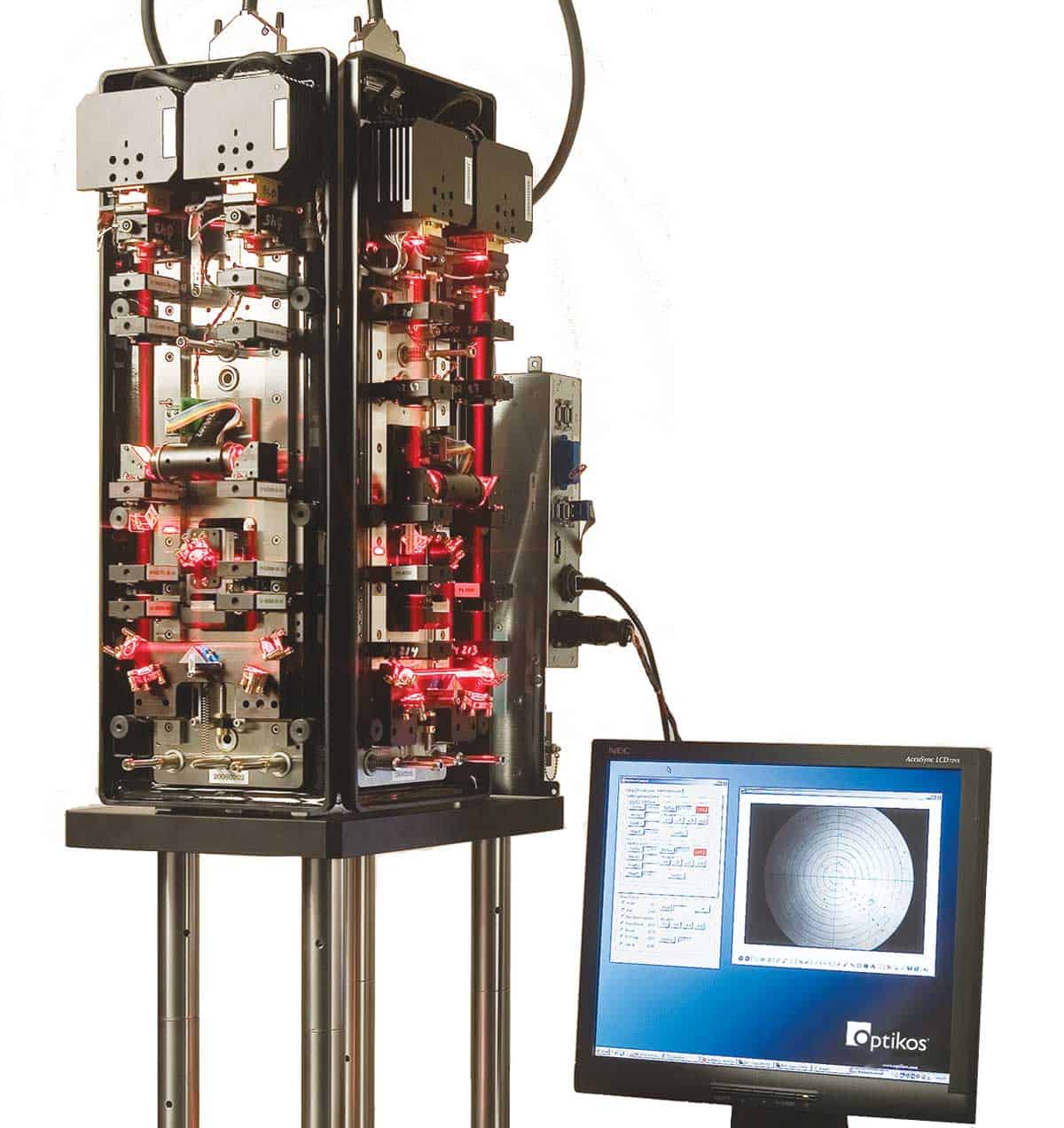
Few entrepreneurs want to tell the story about their association with a failed start-up, yet the greatest lessons are often learned from these difficult experiences – lessons like how to assess development risk, timelines to development, or the risks associated with jumping into an ever-evolving product market. Over the past 35 years the company I founded, Optikos, has worked with dozens of start-up and venture-funded companies in fields ranging from medical diagnostics and industrial instrumentation to consumer products. Our clients have included everyone from individuals with a good idea but no business experience to university spin-offs and well-funded corporate entities. What they have in common is that in most cases they have a core technology or product idea that is enabled by optics, but the optical aspect of it falls outside their core competence and expertise.

Making a difference

I’ve seen clients miss out on success for a whole range of reasons. Maybe they misjudged the market need, or entered the market too late. Sometimes they simply weren’t able to get their core technology to work well enough. But I’ve also seen cases where help from established specialty firms like ours has made the difference between a success story and a painful (though valuable) lesson.

Optikos started as an engineering services company, and within a few years we developed our own line of optical metrology products. Some 35 years later, more than half a billion optical components have been manufactured to our designs. We also provide optical product development services for a wide range of customers, and although our contributions are typically “unseen”, products that Optikos helped design and test can be found in millions of homes and businesses around the world.

Our team of mechanical, electrical, software and optical engineers has accumulated a lot of optical design experience, and our longevity in the industry also gives us “tribal knowledge” of suppliers from around the world. These assets put us in a good position to help start-ups fast-track the development of their products, quickly taking them from the laboratory to the market. We give these customers as much or as little as they need – from a short consultation or “sanity check” of something they’re developing, to connections to other resources such as manufacturing facilities. We also assist some of them as they transition from a pre-beta prototype to a manufacturable unit that can scale for high volume or off-shore production.

As an example, one of our clients has core technological expertise in biochemistry, and a related fluorescence measurement process that facilitates high-speed medical diagnostics. What they lacked was the optical technology and expertise needed to transform their laboratory demonstration into a manufacturable instrument as quickly as possible. Time-to-market is often the most important challenge faced by a new company, and accelerating that process depends directly on the start-up’s ability to identify and access technical resources. Before approaching us, many prospective clients have considered adding an in-house optical instrumentation capability, but quickly realized that they don’t have time to recruit, staff and develop a cohesive technical design team. Even with the means to quickly get a team of experienced optical instrumentation engineers in place, they would not be able to provide a long-term career trajectory for those highly specialized individuals and the team would dissolve after product launch.

With another client, our main contribution was to help them substantially reduce the cost of their product. This particular client was developing a fluid-based medical diagnostic system and we got involved at the product inception phase – all design issues were on the table. The most expensive component in their system was a cooled camera with a cost exceeding $10 000. We suggested that the cost of this camera could be reduced significantly because the camera, as used, was only a component in a much larger system, not a camera packaged for retail sale. We were able to engineer a low-cost cooled camera that they could assemble themselves, which reduced the component cost below $800. This enabled them to sell their product at a price point that would undercut their competitor’s offerings while still offering excellent performance.

Picking winners

Start-ups are generally viewed as risky investments, so venture-capital investors are only interested in firms that have the potential, if successful, to provide exceptional investment returns. At the earliest stage of development it’s often difficult to know whether a product will ultimately be a success, but the venture-capital model anticipates this because it assumes that most companies will not achieve the aspirational plans that initial funding was based on. After all, if you could predict success with high confidence at the earliest stages, then it wouldn’t truly be a risky investment deserving a high financial return.

Thus, sometimes the ideas with the greatest potential are ones that initially seem impractical, even odd, or too great a technical stretch. These are the products or technologies that can be exciting disruptors, capable of permanently changing the market and enjoying tremendous success. Our role is to inform and educate clients about potential engineering improvements, trade-offs and constraints in implementing their technology, while also helping them create realistic expectations about costs, timelines, tooling for high versus low production volumes and other important considerations, before a significant investment is made. But it’s never easy and we have seen extremely well-funded start-ups, particularly in the field of medical diagnostics, veer off course because they failed to achieve the diagnostic accuracy or speed requirements for commercial success.

Despite the high risk of failure, however, working with a start-up can be an exhilarating experience. We have worked with companies that were on their last legs, struggling to develop an initial prototype product – and had the satisfaction of seeing them go public two years later. The excitement of new technology, new markets, a breakneck pace of product development, and committed and impassioned people looking to change the world combine to create an environment unlike any other. Who wouldn’t want to get involved in that?

Test your brains with the Physics World blackboard quiz

By Matin Durrani

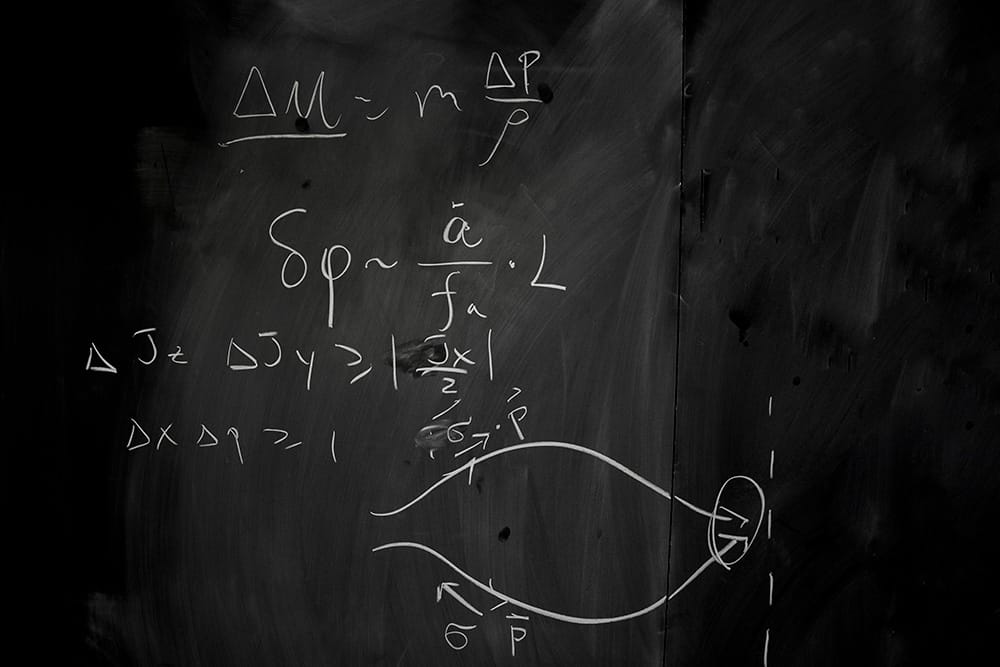
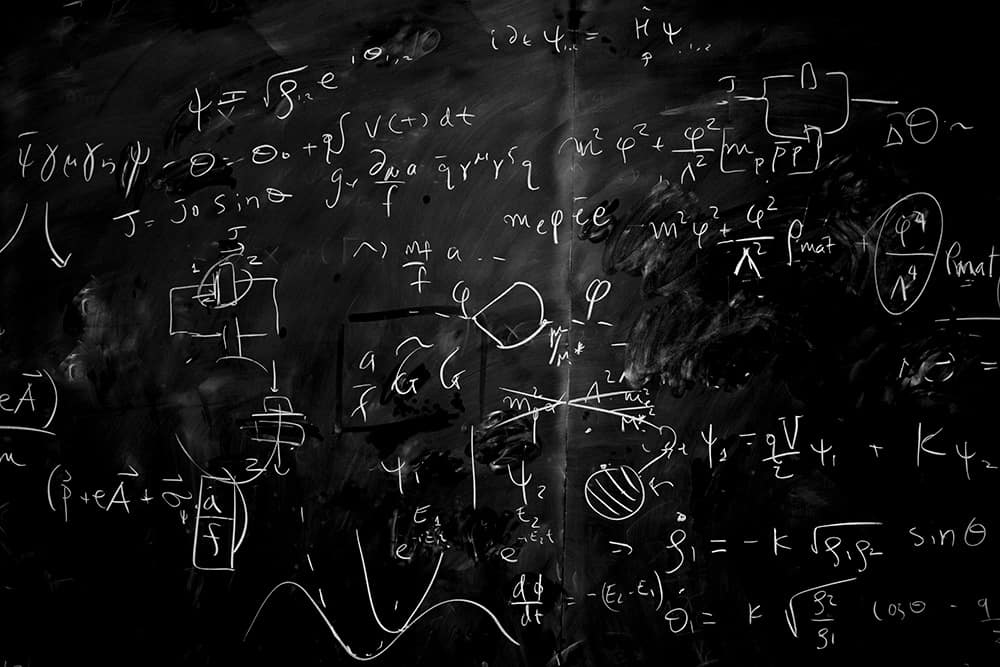
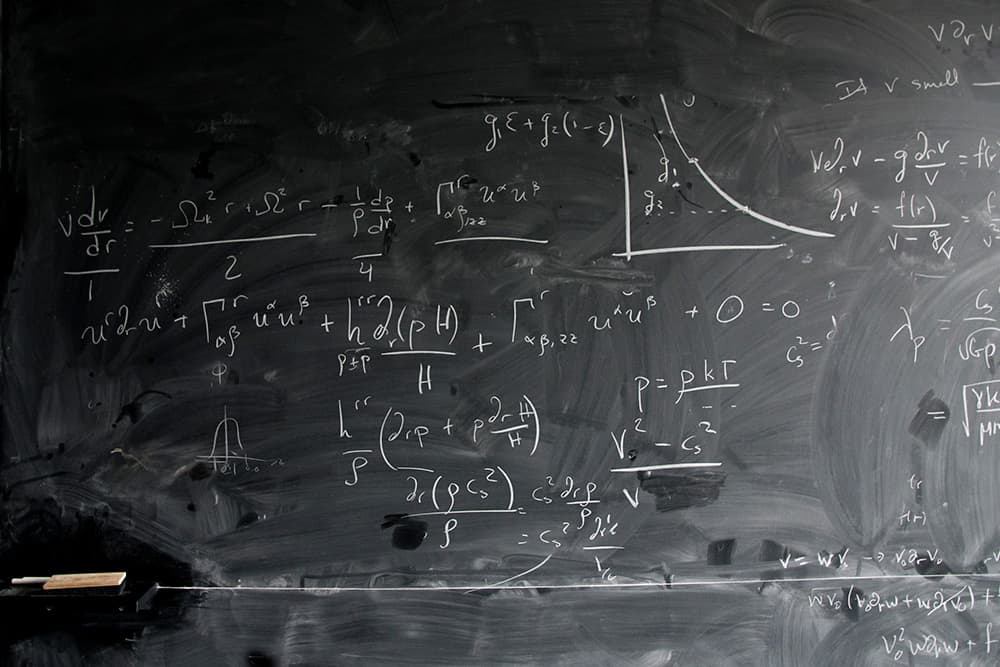
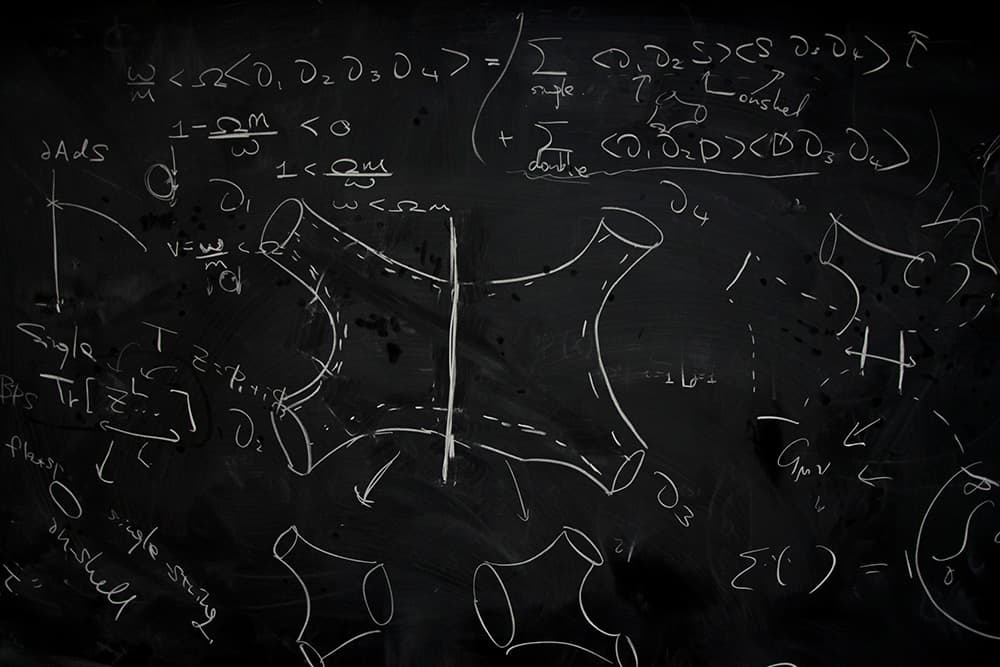
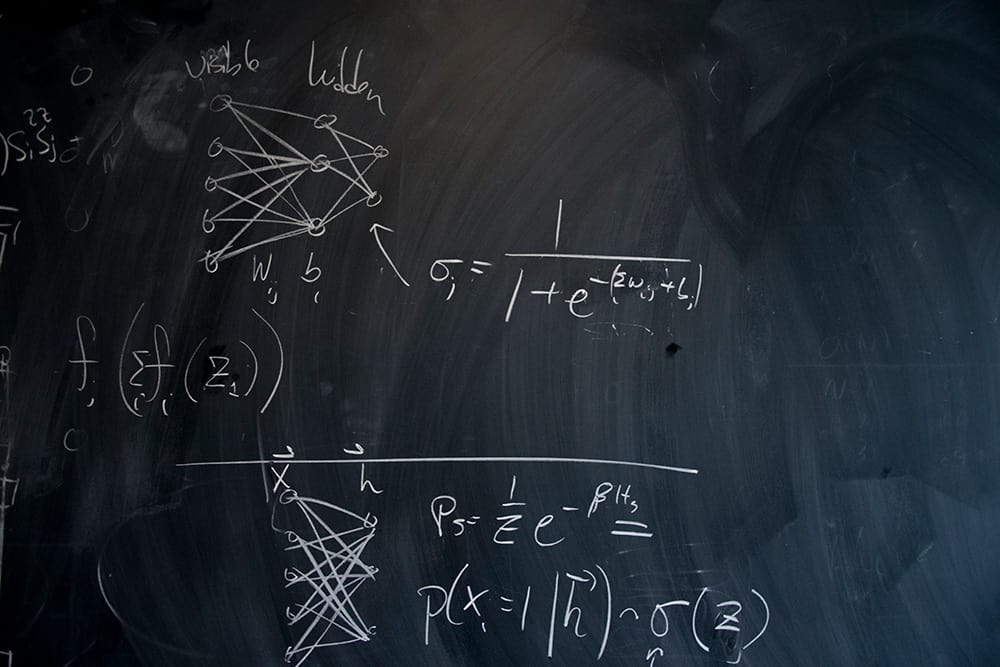
Can you tell what branch of physics is being described on the blackboard above? It’s one of six photographs taken by the communications folks at the Perimeter Institute for Theoretical Physics in Waterloo, Canada, where blackboards are an integral feature of the building’s design, appearing everywhere from the lifts to coffee areas.

In this quiz, your task is to study six blackboards and match them up with the physics topics they represent. There’s no prize, other than the satisfaction of having at least some inkling of what those clever theorists at the Perimeter are up to.

So here are the six topics:

• Accretion physics and general relativity

• Cosmology

• Neural networks and condensed matter

• Particle physics 1

• Particle physics 2

• Strings

And here are the six blackboards (you can click on each to see it in more detail).

A blackboard at the Perimeter Institute for Theoretical Physics in Waterlook, Canada


A blackboard at the Perimeter Institute for Theoretical Physics in Waterloo, Canada


A blackboard at the Perimeter Institute for Theoretical Physics in Waterloo, Canada


A blackboard at the Perimeter Institute for Theoretical Physics in Waterloo, Canada


A blackboard at the Perimeter Institute for Theoretical Physics in Waterloo, Canada


A blackboard at the Perimeter Institute for Theoretical Physics in Waterloo, Canada

We’ll reveal the answers at the end of the month. In the meantime, please don’t spoil the quiz for others by revealing the answers in the comments.

You can find out more about the power of blackboards in a great feature in the June 2017 issue of Physics World by science writer Philip Ball, who reckons that the blackboard still
retains an aura and usefulness for physicists that more advanced technologies can’t match.

You can read the article online here and in the June issue, which is now live in the Physics World app for mobile and desktop. It includes thoughts from Lauren Hayward Sierens, a condensed-matter physicist at the Perimeter Institute, who once appeared as part of a “live blackboard” artwork.

Remember that if you are a member of the Institute of Physics, you can read Physics World magazine every month via our digital apps for iOS, Android and Web browsers.

Fermilab at 50: the June 2017 issue of Physics World is now out

PWJun17cover-200By Matin Durrani

With America’s iconic Fermi National Accelerator Laboratory (Fermilab) celebrating its 50th anniversary this month, check out the June 2017 issue of Physics World magazine, which is now live in the Physics World app for mobile and desktop.

Fermilab mades its name with the Tevatron proton–antiproton collider but neutrinos hold the key to the lab’s future, as Ben Still from Queen Mary University of London makes clear in a feature on the physics of these elusive particles.

You can also enjoy a cracking review of Tommaso Dorigo’s new warts-and-all account of life in the CDF collaboration at Fermilab, while Seyda Ipek from the lab pops up in Philip Ball’s homage to the blackboard – which you can also read on physicsworld.com.

Plus don’t miss this month’s Lateral Thoughts, which reveals how one physicist working in a Scottish call centre ended up chatting to Enrico Fermi’s daughter-in-law about her TV.

Remember that if you’re a member of the Institute of Physics, you can read Physics World magazine every month via our digital apps for iOS, Android and Web browsers.

(more…)

Copyright © 2026 by IOP Publishing Ltd and individual contributors