A distant star pulses each time its planet hurtles close by. 400 light-years away, the star HAT-P-2 is orbited by a massive gas giant. The planet, called HAT-P-2b, is eight times the mass of Jupiter and has a highly eccentric orbit, meaning that it passes close by the star and then hurtles far out before returning to loop back around. Using 350 hours of observations taken by NASA’s Spitzer Space Telescope, a team of scientists was studying the temperature changes in the planet, when the researchers noticed unexpected, tiny vibrations in the star’s brightness. They found that each time the planet came close to the star, the star’s light pulsed. Indeed, the oscillations correspond to the harmonics of HAT-P-2b’s orbital frequency. After ensuring the vibrations were not caused by the telescope, Julien de Wit from the Massachusetts Institute of Technology (MIT) in the US and colleagues suggest the planet may actually be large enough to periodically distort the star during its eccentric orbit. This goes against previous theoretical models and predictions regarding a planet’s relationship with the star it orbits. How the planet might be affecting the star remains unknown, however. “It’s a mystery, but it’s great,” says de Wit, “because it demonstrates our understanding of how a planet affects its star is not complete.” The study is presented in The Astrophysical Journal Letters.
United Arab Emirates sets out Mars vision
The United Arab Emirates (UAE) has announced an ambitious plan to create a human settlement on Mars within the next 100 years. The “Mars 2117” project was unveiled by Sheikh Mohammed bin Rashid Al Maktoum, ruler of Dubai and the UAE’s vice president at the 5th World Government Summit in Dubai. The first phase of the Mars 2117 project will concentrate on achieving “scientific breakthroughs” to help colonise Mars by focussing on developing faster ways to get to and from the red planet as well as how to sustain life. Mars 2117 will initially begin with a UAE-based scientific team before being extended to include international scientists. “The new project is a seed that we plant today, and we expect future generations to reap the benefits, driven by its passion to learn to unveil a new knowledge,” says Sheikh Mohammed. “The landing of people on other planets has been a long-time dream for humans. Our aim is that the UAE will spearhead international efforts to make this dream a reality.” The country has already invested around £4bn in its space agency, which was created in 2014, and the UAE is also working to send a probe to Mars in 2021, dubbed Mars Hope.
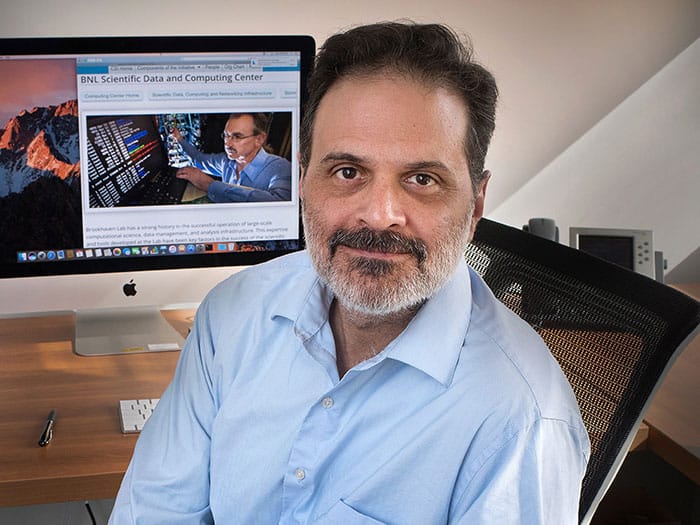
Francis Alexander new deputy director of BNL’s Computational Science Initiative
As deputy director of Brookhaven’s Computational Science Initiative, Francis Alexander will help foster data-driven scientific discovery. (Courtesy: Brookhaven National Laboratory)
Physicist Francis Alexander has been named deputy director of the Computational Science Initiative at the US Department of Energy’s (DOE’s) Brookhaven National Laboratory. Alexander was previously at the DOE’s Los Alamos National Laboratory for more than 20 years where he held a number of leadership positions including leader of the Computer, Computational, and Statistical Sciences (CCS) Division’s Information Sciences Group and leader of the Information Science and Technology Institute. “I was drawn to Brookhaven by the exciting opportunity to strengthen the ties between computational science and the significant experimental facilities – the Relativistic Heavy Ion Collider, the National Synchrotron Light Source II, and the Center for Functional Nanomaterials [all DOE Office of Science User Facilities],” says Alexander. “The challenge of getting the most out of high-throughput and data-rich science experiments is extremely exciting to me.” Alexander will work with CSI director Kerstin Kleese van Dam to expand the department’s research portfolio and promote data-driven discovery. Alexander will also act as BNL’s primary liaison to national security agencies, as well as develop partnerships with other national laboratories and research institutions.
You can find all our daily Flash Physics posts in the website’s news section, as well as on Twitter and Facebook using #FlashPhysics.
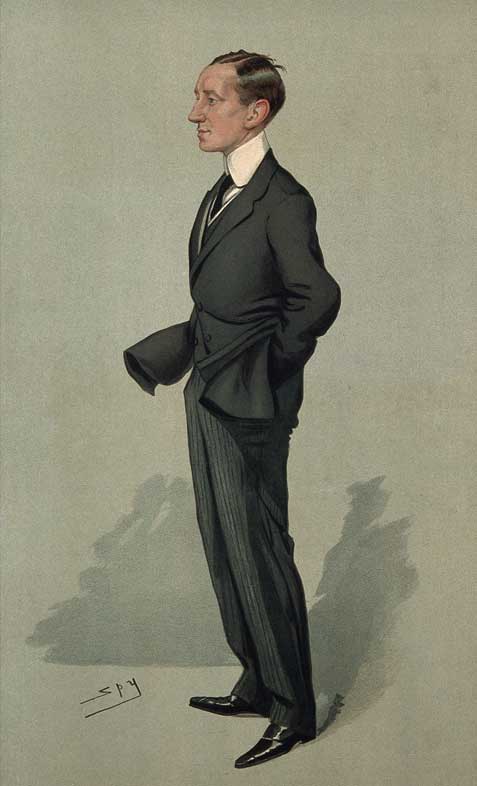
Electric personality: Guglielmo Marconi caricatured by Spy (Sir Leslie Matthew Ward), 1905. (Courtesy: Sir L Ward, Vanity Fair 1905/Wellcome Trust)
In July 1897 the young Italian entrepreneur Guglielmo Marconi was granted what is considered to be the world’s first wireless patent. To commercialize and popularize the embryonic technology that was wireless telegraphy, he founded his own company – the Wireless Signal and Telegraph Company, which later became Marconi’s Wireless Telegraph Company. The Italian innovator – and future Nobel physics laureate – had an ambitious vision for an interconnected, global wireless network, modelled on the existing global telegraphic network that spanned the globe in the late 19th century.
The success of Marconi – the man, as well as his many companies in the fields of wireless communications, broadcast radio and early television – is well documented in many a popular and academic publication. And yet, despite continued interest in Marconi’s public and private life throughout his time and even today, Marc Raboy’s Marconi: the Man Who Networked the World is the first detailed, thorough and academically rigorous biography of Marconi. Raboy presents a critical account of Marconi’s personality and private life, connecting the many different strands – commercial, political, social and public – surrounding Marconi, as well as covering the inventor’s important contributions to wireless communications and other technologies that have impacted our modern world.
The book neatly divides Marconi’s life into five chronological sections, describing various aspects and impacts of Marconi’s personality. The first section, “The Prodigy”, looks at Marconi’s early life as he grew up in Bologna, with his Italian–Irish family – his mother was Annie Jamieson of the Irish whiskey family. In 1896 at the age of 22, Marconi moved to Britain to begin his early commercial and international work in wireless technology, which led to his ground-breaking transatlantic transmission in December 1901.
Around this narrative of the more well-known parts of Marconi’s life, Raboy also describes more personal tales, including Marconi’s early and secretive romantic entanglements, such as his unfulfilled engagement to the American Josephine Holman.
The book then moves on to “The Player” – a section that examines the eight busy years between the transatlantic transmission in 1901 and Marconi’s Nobel prize (awarded jointly with German wireless pioneer Ferdinand Braun) in 1909. The book deftly intertwines Marconi’s charming personality and highly successful use of publicity – Marconi presented himself as a celebrity inventor – with the early commercial and international development of the various Marconi companies. Raboy also points out Marconi’s less charming use of legal action, including patent litigation, in an attempt to stifle competition.
In “The Patriot”, Raboy moves on to wider changes in the Marconi Company, such as the appointment of new managing director Godfrey Isaacs, and the ups and downs of Marconi and his companies before and during the First World War. The latter included the life-saving and headline-grabbing application of wireless telegraphy during the sinking of the RMS Titanic in 1912. Another point of note was the “Marconi Scandal”, also in 1912, in which the company lost its lucrative contract with the British government to construct the Imperial Wireless Scheme, in light of political deals and share-rigging. Raboy also describes how Marconi reconsidered his role, and that of wireless communications, in the aftermath of the world wars and the global devastation they had wrought.
The final two sections of the book – “The Outsider” and “The Conformist” – look at the inventor’s first forays into Italian fascism in the 1920s and 1930s, as well as the end of his first marriage and subsequent second marriage. Raboy also explores Marconi’s interest and involvement in wider technical applications of wireless technologies including beam navigation for ships and aircraft, broadcast radio, and short-wave long-distance radio. Marconi conducted many experiments in these new and promising technologies, with much of his experimental programme conducted on his floating laboratory, the yacht Elettra after whom his daughter Elettra from his second marriage was named (and not the other way round).
Raboy concludes with Marconi’s somewhat early and unexpected death in July 1937 at the age of 63, his heritage and the concerted efforts of Marconi and later his family to control his reputation and guarantee his legacy – a task continued by the Marconi Company publicity department well beyond Marconi’s death into the late 20th century.
In this readable and authoritative biography running to nearly 900 pages, Raboy provides a critical and illuminating study of how Marconi’s complicated personality and personal attributes – an irresistible combination of magnetic charm, singular vision and ruthless grand ambition – shaped his own life as well as the lives of many others. Unlike previous studies of Marconi, Raboy does not gloss over the more negative aspects of the inventor’s personality: his absence as a father; his many romantic affairs; his multiple and frequent threats of patent litigation to limit commercial competition; his use of the work of others (only some of whom worked for him and his companies); his (ultimately unfulfilled) monopolistic ambitions for a global wireless network; and his close involvement with Italian fascism towards the end of his life. Instead, Raboy argues that it was these very personality traits that shaped and determined the majority of Marconi’s business and technological choices, many of which contributed ultimately to the interconnected wireless world we live in today.
In claiming Marconi as “the man who networked the world”, Raboy is perhaps on shakier ground, as he downplays the importance and successes of the pre-existing global telegraph network in order to present Marconi as a unique visionary. Despite this somewhat overly ambitious underlying premise, Raboy’s volume is a major and long overdue biography that combines archival sources and publications to create a highly readable and fascinating insight into the public and private aspects of Marconi’s life. The book will appeal to popular and academic readers alike, including those with an interest in early wireless and telecommunications technologies, as well as those interested in a more insightful and illuminating look at Marconi’s life.
Trying to explain a scientific concept in 30 seconds or less is a rather difficult but worthy task. In 30-Second Meteorology: the 50 Most Significant Events and Phenomena, Each Explained in Half a Minute nine leading UK meteorologists tackle the basic terms and ideas we need to know to understand our planet’s ever-changing weather and climate. The book is divided into seven sections including the global atmosphere, the Sun and extreme weather. Each section opens with a glossary and includes a profile of a stalwart of the field – such as Edward Norton Lorenz and Milutin Milankovitch (though one can’t help noticing that not a single female scientist gets a mention). Edited by the UK Met Office’s Adam Scaife, each page-long entry includes a one-sentence definition of the concept, a slightly longer factoid, the main entry (each of which is only about 200 words) and a cross-reference of related topics. The book’s layout (an entry on one page with an illustration opposite) is consistent, making it an easy reference book or one that you can just dip into. The book’s distinctive art style, a cross between digital mixed-media and old-school collage, makes it visually appealing. Readers will find that most entries clearly explain everything from snow and sundogs to space weather and the polar vortex. What is slightly off-putting, though, is the section entitled “Can we change the weather?” Oddly, it does not talk about geo-engineering; instead, it covers topics such as the ozone hole and global warming. While the book does not shy away from discussing global warming, the section-title’s tone suggests that its effects may be seen in the future, rather than acknowledging that they are already in play. This seems like pandering to climate-change sceptics, something that no scientific book can afford to do today.
Ivy Press 2016 160pp £14.99hb
Camera celestia
Astronomy and the coffee-table book are very common bedfellows, and for good reason. As our imaging and processing capabilities have excelled over the past 30 years since the launch of the Hubble Space Telescope (HST), we have been privy to some truly stunning images of the cosmos. Naturally then, incandescent celestial images have graced the glossy pages of many a book, and Astrophotography: the Most Spectacular Astronomical Images of the Universe is no different in that aspect. Written and compiled by Cardiff University astronomer Rhodri Evans, the book includes nearly 200 pictures from across the electromagnetic spectrum – X-ray, radio, infrared, microwave and, of course, visible light – compiled for your viewing pleasure. The book opens with information on 19 different ground-based telescopes and 10 different spacecraft that have taken the images, and also includes a detailed glossary. Divided into five parts, the pictures span from the solar system, to the Milky Way, to our Local Group of galaxies, beyond the Local Group and, finally, to the “edge of the universe”. It is fair to wonder just who would want to buy a large, hardbound book of astronomy images when the Internet is overrun with them, but this is where Evans’ commentary comes into its own. Anyone with even a passing interest in astronomy is sure to have come across the iconic HST image of the “pillars of creation” in the Eagle nebula. The original 1995 image and the updated version from 2014 are compared and contrasted in the book, with differences in the imaging quality as well as physical changes pointed out, giving this popular image new context. It’s also good to see additions from the most recent space missions, such as pictures of Pluto and Comet 67P via New Horizons and the Rosetta mission, mixed in with old favourites. Pick up a copy of Astrophotography to update yourself on some of the most iconic and awe-inspiring celestial images of our times.
A mechanical metamaterial that responds strongly to motion from one direction, while blocking it in the other, has been developed by an international team of researchers. The research, which in principle at least breaks a fundamental assumption of mechanical engineering, could have applications ranging from shock absorption to prosthetics and robotics.
An important property of the new material is its ability to overcome reciprocity – a fundamental principle that governs many physical systems. It refers to the symmetrical transmission of energy between two points in space. Regardless of which point the energy is travelling from and to, it should behave identically in both directions. Mechanically, reciprocity implies that if you push on one side of an object, you should get the same response if you were to push on the opposite side – the motion travels through the object symmetrically.
Andrea Alù at the University of Texas at Austin in the US has previously worked on overcoming reciprocity for wave propagation. His past work includes producing acoustic isolators that transmit sound in only one direction and antennas that will not listen to their own echo.
Collaborative idea
While Alù was on sabbatical, he and Corentin Coulais of the Foundation for the Fundamental Research on Matter Institute for Atomic and Molecular Physics (AMOLF) in the Netherlands had an idea about a non-reciprocal metamaterial. Coulais previously worked with carefully designed mechanical metamaterials that respond in unusual ways to stimuli, and the researchers decided to combine their interests to produce a mechanical metamaterial that would behave non-reciprocally in response to time-invariant forces.
The researchers designed two non-reciprocal metamaterials that respond much more strongly to forces from one side than from the other. The first was a rubber-made, centimetre-scale metamaterial with a structure like a fish skeleton. It comprised springs arranged with a central spinal column and ribs protruding out at an angle. This structure showed non-reciprocity, but only when sufficiently high forces were applied – springs are fundamentally elastic, so they must be stretched enough to trigger significant rotation of the springs before the onset of nonlinearity.
Squares and diamonds
The researchers’ second design, therefore, consists of freely hinging squares and diamonds, which begin to rotate in response to even small displacements and are therefore non-reciprocal for even small forces. “If you pull it from the right, you displace the material, but only close to where you push or pull on it,” explains Coulais. “If you now pull on it on the other side, you induce a motion that propagates through the material.” Alù offers a more fundamental interpretation, saying the structure supports “edge modes” analogous to those in a topological insulator, which can travel through the material in only one direction. Such a material could potentially be useful in prosthetics such that an arm can be actuated from one side but not break what it picks up.
“Nonlinear systems with structural instability are not a completely new idea,” explains Nicholas Fang of Massachusetts Institute of Technology (MIT), but he adds: “I think this is a great example of curiosity driven problems…and I think there will very likely be potential applications.” John Pendry of Imperial College London believes the work is “interesting and worthwhile”, marking a further generalization of the concept of non-reciprocity. He cautions, however, that nonlinearity could make the systems very difficult to handle. “You’re restricted to certain values of the input signal to get the effect you want,” he says, “because the nonlinearity might generate quite a different response if you have a huge input or, typically, systems are linear for very small inputs.”
The researchers are aware of this problem, and Coulais says they are currently contemplating a non-reciprocal metamaterial than could be reconfigured by electric or magnetic fields. “One of the directions we’ve been discussing is to see if we could control the non-reciprocity in real time, such that you could have it for any amount of force,” he says. Non-reciprocal materials could be used to develop novel actuators; improve the efficiency of energy absorption, conversion and harvesting, and even be used in soft robotics.
When the world’s first experiments on magnetic resonance imaging (MRI) took place at the University of Nottingham in the late 1960s, I was working down the hall from Peter Mansfield’s pioneering group, in a related subgroup that focused on nuclear magnetic resonance spectroscopy (NMR). It was an exciting time: you could have an idea in the coffee room, go down to the lab and try it, and almost write a paper about it the same day because nobody had ever thought about it before. Nowadays, people have to work for years to produce meaningful results, but at that time it was so new, the whole process took a matter of weeks.
After I got my PhD at Nottingham, I spent two years as a postdoctoral assistant at the University of Leeds, where I used NMR to study liquid crystals. Following that, I became an academic at the University of Surrey, where I founded a research group developing MRI techniques for medical physics applications.
Practically minded
I love physics, but as MRI became increasingly biological in nature, I realized I was more comfortable on the technological side
I love physics, but as the field of MRI matured, it became increasingly biological and biochemical in nature, and I realized that I was more comfortable on the technological side. Really, I’m a frustrated engineer! That led me to get into more applied work, and in 1985 I spun out my own company from the university. Surrey Medical Imaging Systems (SMIS) ran successfully for 15 years and was responsible for a number of innovations, including the world’s first PC-based MRI systems; the first human limb scanner; and some of the world’s first high-field human MRI systems.
It’s very difficult to get a company going, and the achievements of SMIS wouldn’t have been possible without the money we raised from venture capital firms. However, from a founder’s perspective, their contributions came with a big downside: loss of control. By the late 1990s, I’d gone from owning 2/3 of the business to owning less than 1%, and it had also become clear that the company wasn’t going to fulfil our investors’ goal of becoming the next General Electric or Siemens. So they decided to break the company up and sell it off. However, I was able to license the core technology and use it to form the company now known as MR Solutions – this time without venture capital involvement.
My focus was on the development of more sophisticated spectrometers – the “brains” of an MRI scanner, which carry out all the control, data acquisition and processing functions – and also more compact and effective MRI scanners for preclinical (that is, non-human) research. Our most significant innovation has been the elimination of the liquid helium cooling system for high-field superconducting MRI systems. In order to make a high-strength magnet, the magnet coils need to carry high current. In practice, this can be achieved only by using superconducting wire, which must be operated at or below 4 K.
Traditionally, this very low temperature was achieved by immersing the magnet coils in a bath of liquid helium, but this is undesirable for several reasons. The world’s supply of helium is limited, which makes it expensive, and “wet” magnets (those that use liquid helium) also require bulky and expensive safety features to guard against damage from a helium gas leak (for example, due to heating when the magnet undergoes a “quench” and ceases to be superconducting). So the challenge presented to our development team was to develop a cooling system that did not require helium, but could reliably cool the entire magnet uniformly.
The development of the helium-free technology was carried out in collaboration with our magnet partners, who have experience of building small magnets for other physics applications. The new design incorporates superconducting magnet coils that are cooled by direct conduction with an “off the shelf” cryocooler fridge unit. These systems have an up-front cost about half that of a traditional magnet, and they are compact and relatively lightweight (350 kg instead of more than two tonnes). This means they can be housed in ordinary laboratories, where space is at a premium, and they do not require an emergency exhaust system. In addition, regular top-ups of helium are no longer necessary.
Our scanners are used by university research departments and industrial firms all over the world
The other significant innovation was making it possible to perform other types of imaging (such as PET, SPECT and CT imaging) either in series or in parallel with the MRI imaging. This generates a fusion of complementary images and data and saves significant amounts of research time. Our scanners are used by university research departments and industrial firms (mainly pharmaceutical companies) all over the world, and their main application is imaging small animals. Being able to conduct many types of imaging in one unit is very helpful for these users, since it eliminates the need to move sedated animals around between imaging systems that, previously, may have been located in different laboratories.
Skills needed
We began shipping the compact, high-powered cryogen-free MRI scanner in 2012, and since then, our revenue has grown by more than 50%. In 2016 MR Solutions received the Queen’s Award for Enterprise (Innovation) at Buckingham Palace in recognition of our technical innovations.
At the moment, the biggest challenge we face is the availability of skilled staff here in the UK. The country’s manufacturing base has been eroded, and it’s hard to find experienced engineers, manufacturing managers and MRI physicists. Many overseas students do PhDs in MRI in the UK, but they don’t have the right to work here after they graduate and getting work permits for them is challenging. Also, the skills we need are often different from what the modern MRI research environment provides. A lot of students work on commercial clinical scanners for their PhDs, but we need people who can take a piece of equipment apart and rebuild it.
We do train people with an MRI physics background in these “hard skills”, though, and at the end of 2016, we were able to bring our magnet production closer to home, with a new magnet factory in Abingdon, Oxfordshire. This makes it possible to control quality and production, and to continue developing our technologies. So while it’s not as easy to make breakthroughs now as it was in the early days of MRI, I hope someday that we will see these compact magnets used in a clinical setting to treat patients.
Dead cockroaches have different magnetic properties compared to their living counterparts, according to Tomasz Paterek from Nanyang Technical University in Singapore and colleagues, who put groups of dead and alive cockroaches in a magnetic field of 1.5 kG, which is 100 times stronger than a fridge magnet. After 20 minutes, they measured the strength of magnetization and how long it took to decay. Although both types became magnetized, the dead cockroaches’ field decayed in roughly 50 hours while the process took barely 50 minutes for the living creatures. Using mathematical models, the researchers suggest that the magnetization is caused by magnetic iron-sulphide particles around 100 nm in diameter. These become aligned with the external field and then lose alignment because of Brownian motion. The group attributes the different decay rates to the viscosity of the particle-containing medium inside the cockroaches. For the living bugs, this medium has a low, runny viscosity, while for dead cockroaches the medium begins to harden, consequently slowing the decay. As the magnetic sensing in living cockroaches is too slow for biological uses, the researchers suggest that it is used to influence chemical processes. Although questions remain, the study could help bioengineers to design new magnetic sensors. The preprint is available on the arXiv server.
A 3 hour-old supernova has been observed
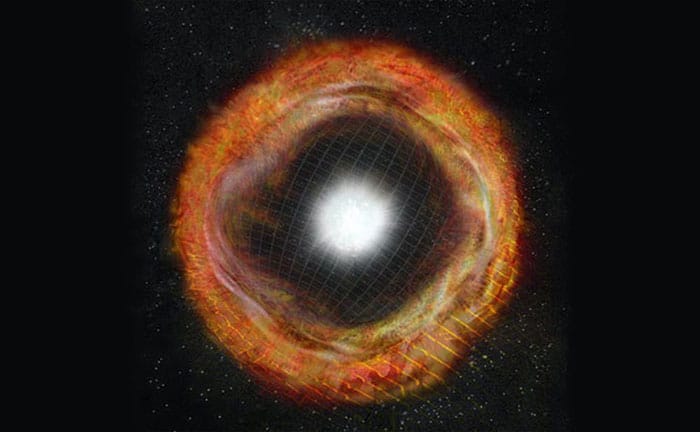
The supernova was observed 3 hours after exploding, giving insight into its life just before. (Courtesy: Ofam Yaron)
A star’s violent death has been caught on camera mere hours after it exploded. In October 2013, the fully automated Intermediate Palomar Transient Factory (iPTF) survey spotted the early stages of a type II supernova in a nearby galaxy. A supernova is the last, dramatic stage of massive star’s life. Type II is the most common category of supernova and occurs when a star 8–40 times more massive than the Sun has collapsed under its own gravitational fields and then exploded. Spectra of type II supernovae also show the presence of hydrogen, but astronomers know little about the evolution and environment of these massive stars before they explode, as it requires witnessing the very early stages of the supernova and such events are extremely rare. So once iPTF spotted the event only three hours after it occurred, researchers jumped at the opportunity to perform tests on the young supernova. These included X-ray, ultraviolet, infrared and visible-light photometry and spectroscopy. Ofer Yaron from the Weizmann Institute of Science in Israel and colleagues report the findings in Nature Physics. As the supernova was in its early stages, the scientists were able to spot dense debris encircling the star – something that was not predicted by current stellar models. Although they admit several scenarios could explain the surrounding debris, the researchers suggest that the star, a red supergiant, had been rapidly ejecting material over the year before it exploded. “It’s as if the star ‘knows’ its life is ending soon,” says Yaron. Over five days the material was completely swept away by the explosion. As type II supernovae are the most common, the observations made by Yaron and colleagues suggest that all massive stars may be unstable prior to their dramatic demise.
Construction begins on dark-matter detector
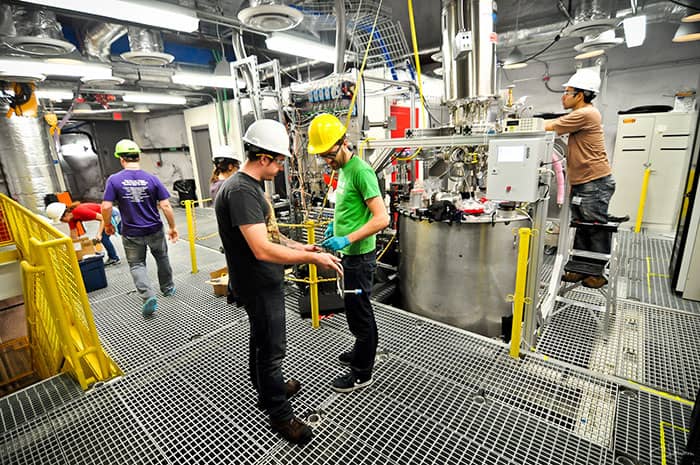
Construction on the LUX-ZEPLIN dark matter detector can begin. (Courtesy: http://lz.lbl.gov/)
The US Department of Energy (DOE) has given the green light for construction of the LUX-ZEPLIN dark-matter detector to start. Located around 1.6 km underground at the Sanford Underground Research Facility in Lead, South Dakota, the experiment will search for weakly interacting massive particles – a leading dark-matter candidate – by using a tank filled with 10 tonnes of ultra-pure liquid xenon. If a dark-matter particle collides with a xenon atom, it will then produce a flash of light that is picked up by around the 500 light-amplifying tubes lining the tank. LUX-ZEPLIN is expected to be around 50 times more sensitive than its predecessor, the Large Underground Xenon experiment. The start of construction comes after the DOE granted the experiment “critical decision 3”, which accepts the final design and allows building work to begin. The DOE’s Lawrence Berkeley National Laboratory is leading the construction of the facility, which includes around 220 participating scientists from 38 institutions around the world. LUX-ZEPLIN is expected to start operation in April 2020.
You can find all our daily Flash Physics posts in the website’s news section, as well as on Twitter and Facebook using #FlashPhysics.
We learn it from a young age: solids hold their shapes; liquids flow. Physical states of matter are mutually exclusive. A solid occupies a particular position in space, its molecules fixed. A fluid assumes the shape of its container, its molecules in constant motion. But a so-called supersolid, a predicted phase of matter that forms only under extreme circumstances, doesn’t follow this idea of order. To describe supersolids is an exercise in contradictions. On the one hand, they form rigid crystalline structures. On the other, theory predicts that part of their mass also acts like a superfluid – a quantum phase of matter that flows like a liquid, but without viscosity. That combination lets supersolids do things that seem unfathomable to the humdrum, room-temperature, Newtonian world, like flow through themselves – without friction.
Although the Russian physicists Alexander Andreev and Ilya Liftshitz first predicted in 1969 that supersolids could form in helium close to absolute zero, definite proof has been hard to come by, and this elusive phase of matter has largely remained entrenched in the world of theory. That may have changed, though: two independent groups of researchers – one at the Massachusetts Institute of Technology (MIT) in the US, and the other at ETH Zurich in Switzerland – recently reported forming supersolids.
Both of the new papers were posted on the arXiv preprint server in October (arXiv:1610.08194; arXiv:1609.09053), though they have not yet been published in peer-reviewed journals. Experts in the field say that so far, the evidence for supersolids looks convincing, with the usual caveats: namely, that more work and replication are needed. Both teams report coaxing supersolids into existence by manipulating a Bose–Einstein condensate (BEC), a bizarre state of matter that forms when bosons are chilled to within a fraction of a degree above absolute zero.
The near-simultaneous reporting of two cases of supersolids, found using different experimental approaches, is exciting not only because supersolids may now join the ranks of exotic, fundamental phases, like superconductivity and superfluidity, but also because the material has travelled a long and at times rocky path from prediction to experimental evidence.
“There are no scoops in science, only a slow construction of truth,” says physicist Sébastien Balibar at the École Normale Supérieure in Paris, who has conducted research on quantum solids and was not involved in the new studies. “Discoveries are very rarely made in one shot.”
A false start
The latest reports weren’t the first from physicists who suspected they’d formed supersolids. In a study published in 2004, Pennsylvania State University physicist Moses Chan, together with his graduate student Eun-Seong Kim, reported extraordinary results from experiments using helium-4, the most abundant isotope of helium on Earth (Nature427 225). At cold temperatures, helium-4 can be encouraged to form either a solid (at high pressure) or a superfluid (at standard pressure). Experiments in the 1930s showed that helium undergoes a phase transition to become a superfluid at 2.2 K, below which it exhibits spectacularly bizarre behaviour, like flowing up the walls of its container and out down the sides.
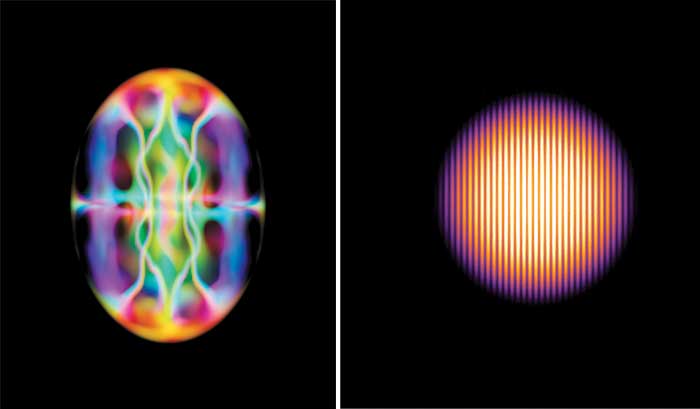
State of the art A Bose–Einstein condensate (simulation, left) is a starting point for supersolids (simulation, right). (Courtesy: left – National Institute of Standards and Technology/Science Photo; right – reused from Phys. Rev. Lett.107 150403 by permission of the APS)
Chan and Kim started with solid helium-4. They put the material in a torsional oscillator – a device that rotates in alternating directions – and lowered the temperature. At a sliver of a degree above absolute zero, the rotation of the device increased in frequency, which suggested that the amount of mass that was rotating had decreased. That change was consistent with the 1969 predictions by Andreev and Liftshitz, who hypothesized that some of the helium’s mass would form a superfluid that could flow through the rest of the solid without friction.
Other groups reproduced the experiment and found the same results, exciting the condensed-matter physics community. Still, doubt lingered, and for years, the results from Chan and Kim remained controversial.
One team that set out to reproduce the experiment comprised John Reppy, a physicist at Cornell University in the US, and graduate student Sophie Rittner. In a paper published in 2006, they reported that the frequency uptick was tied to defects in the solid helium. When they warmed the helium and let it cool slowly – a process called annealing that smooths out defects – the signature of supersolidity vanished. Then, in a paper published in Nature in 2007, physicist John Beamish at the University of Alberta, Canada, and his collaborators challenged Chan and Kim’s findings by suggesting that solid helium wasn’t perfectly stiff but instead had some give, a “giant plasticity”. This effect could allow some atoms to slide past each other, mimicking the properties of supersolidity. In later experiments, Beamish’s group worked with Balibar and his colleagues in Paris to better understand this effect, and bolstered the case for the new explanation.
Chan, ultimately, brought this chapter to its close. Reppy had been Chan’s adviser in graduate school, and Chan set out to redesign his own experiment to test alternative ideas about the supersolid state. In a paper published in 2012 and based on a new set-up, he reported finding no increase in rotational frequency – and thus no evidence for supersolids (Phys. Rev. Lett. 109 155301).
“This is a remarkable piece of science history,” says physicist Tilman Pfau, who studies particle interactions in BECs at the University of Stuttgart, in Germany. “The same author that claims something, gets criticized, goes back to the lab, sees he was wrong and writes a paper about it.”
New experiments
While some researchers continue to pursue the formation of supersolids in helium, many other labs have turned to BECs. Albert Einstein first predicted the existence of this state of matter in 1924, based on theoretical work by Indian physicist Satyendra Bose, but it took decades to develop the machinery needed to test the prediction. The first BEC was created in a lab in Colorado, US, in 1995, when physicists used lasers and magnetic fields to trap a clutch of rubidium atoms as the temperature was reduced as much as possible. Just above absolute zero, the individual atoms all began behaving like one giant superatom – a single quantum entity at its lowest energy state.
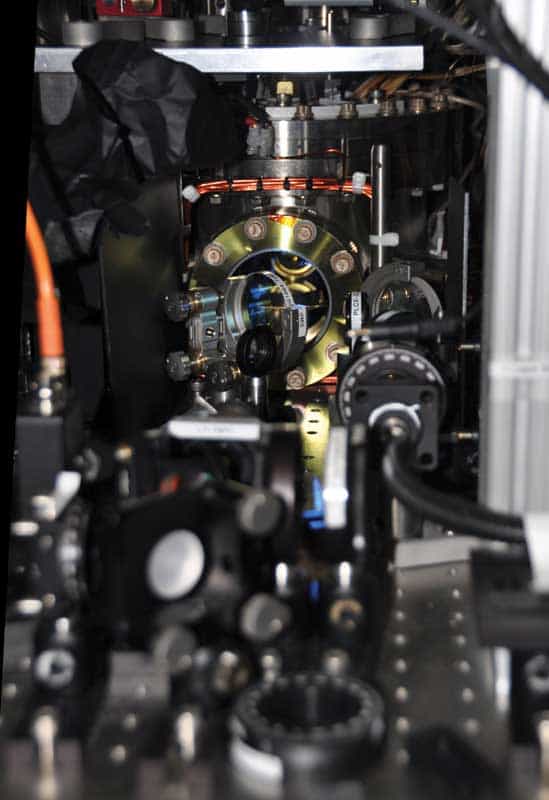
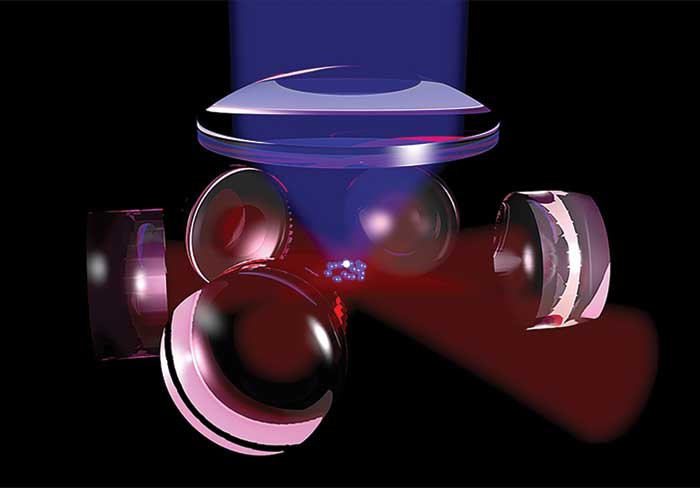
Intersection A Bose–Einstein condensate trapped by lasers is one method to create a supersolid. (Courtesy: ETH Zurich Institute for Quantum Electronics)
Research into the discovery and properties of BECs netted Nobel prizes for physicists Eric Cornell, at the US National Institute of Standards and Technology, and Carl Wieman, then at the University of Colorado Boulder and now at Stanford University, as well as Wolfgang Ketterle at MIT, whose lab is one of the two that has produced new findings on supersolids.
In the two decades since a BEC was first observed, physicists have become adept at finding ways to control every term in the Hamiltonian – the mathematical description of the energy state of the material. It is through tweaking the values of these terms that they’ve been able to probe new fundamental phases of matter, like supersolids.
Physicists often characterize transitions between phases of matter by what kind of symmetry is broken. Liquid water, for example, at the molecular level, looks the same under any transformation. The arrangement of molecules at one place in the liquid looks like the arrangement of molecules at another. But ice is a crystal, which means its structure looks the same only when observed at periodic intervals. So the translational symmetry of the liquid is broken as it becomes a crystal.
Both forming a crystal and forming a superfluid are associated with breaking symmetry; thus, to form a supersolid requires two kinds of symmetry to break simultaneously. First, a superfluid must be formed. An advantage of working with BECs is that it is well known how to make BECs behave like superfluids, making them a natural place to start; another is that physicists know how to vary atom interactions in the material. Second, while this superfluidity is maintained, the superfluid must become regularly ordered into regions of high and low density, like atoms in a crystal. Physicists have posited a variety of ways to stimulate atom interactions that lead to a solid state while maintaining superfluidity, i.e. the long-sought supersolid state.
“Supersolidity is a paradoxical competition between two different and contradictory types of order,” says Balibar. One of those is the order demanded by solidity, where individual atoms line up on a lattice; the other is superfluidity, where the atoms effectively combine, accumulating to the same quantum state. “Atoms in a supersolid should be localized and delocalized at the same time, distinguishable and indistinguishable.”
There may be more than one way to coax a solid from a BEC superfluid. One group that reported its findings in October, led by Tilman Esslinger at ETH Zurich, trapped the BEC at the intersection of crossing lasers, with each laser forming an optical cavity. The interaction of the photons and atoms in the BEC gave rise to self-organization – the hallmark of solidity – even though the material continued to look like a superfluid.
Pfau says the new work “goes clearly beyond” what groups have done before; Balibar, in Paris, says that the results look “convincing” and “the fundamental effect is clearly there”. At the same time, Balibar cautions that although Esslinger’s group claims evidence for spontaneous symmetry breaking, he’d like to see better confirmation. “That’s not totally obvious to me since the period of the supersolid is fixed by the laser wavelength.”
The other group, from Ketterle’s lab at MIT, also used lasers, but with a kind of BEC that takes advantage of the connections between the spin of an atom – an intrinsic quantum property that’s analogous to rotation – and its motion. (Spin–orbit coupling is a physical interaction that underlies many unusual physical phenomena, including topological insulators and some behaviours in superconductors.) The physicists used a laser to transfer some momentum to the atoms in the BEC, which led to the formation of interference patterns. From those patterns emerged tiger-like stripes of alternating density – standing waves – in the material. In its paper, Ketterle’s group reports that this density modulation breaks translational symmetry, the requirement for a solid.
Physicist Thomas Busch, who studies quantum processes in ultracold atomic gases at the Okinawa Institute of Science and Technology, in Japan, says theorists predicted a few years ago that the supersolid stripes should emerge. At the same time, he notes that experimental verification is exciting news to the community.
Neither group explicitly showed that the material could flow through itself, though the papers do offer arguments in favour of superfluidity. Despite past controversies over what is or isn’t a supersolid, Busch says that the vast majority of people will not have a problem calling the entities in the two new studies supersolids. “Figuring out the exact ‘super’ properties of the states created is now an exciting task for the future,” he says.
Beyond supersolids
Finding new states of matter has been a driving force in cold-atom research for decades, and supersolids are the latest bizarre material to join a growing list that already includes things like superfluids and superconductors. For the last two years, Pfau’s group, in Stuttgart, has been exploring quantum ferrofluids – magnetic droplets that can self-organize out of BECs at low temperature. “Nobody would have thought before [we observed the material in the lab] that this was a stable state of matter,” he says. Last year, in a paper published in Nature, the group reported that quantum ferrofluids can also break translational symmetry, which means they might be a good place to search for other supersolids.
Because scientists have been working with BECs for decades, they’ve figured out a lot about how to tame them and tune them to probe fundamental phases of matter. But they’re just getting started, says Busch. Now they’re looking for ways not only to identify other exotic phases, but also to explore what happens when these strange materials are combined, or how they act under other experimental conditions.
“How do these systems actually behave by themselves? How do they react to external stimulation? What happens if we squeeze them?” Busch likens this era of discovery to what happened in the years after BECs were first discovered, when physicists couldn’t wait to get to know the new condensates better. “The first thing people did [to BECs] was to squeeze them – the stuff you do when you get a new toy.”
In addition, he says, physicists want to study the effects of different long-range interactions and better understand how impurities affect the properties of the materials. Impurities could be critical in finding applications for supersolids. Busch notes that in semiconductor research, impurities added through doping can change the conductivity of a material and make it fit a certain use.
Higher dimensions may also be in store. In the preprint from Ketterle’s group, the researchers note a couple of possible future directions: more characterization of the system, for example, or extending their method to a 2D spin–orbit coupling system. Achieving supersolidity in three dimensions would be another major milestone, but breaking symmetries in three dimensions would be difficult to realize in experiments.
Exotic states of matter, like supersolids, show that under extreme conditions our physical reality behaves in bizarre ways that aren’t easy to explain. “The physics of cold atoms is some kind of simulation of fundamental problems that are well defined, but hard to calculate,” says Balibar. Theory may predict a spectrum of undiscovered properties that emerge in idealized matter, but controlling such strange stuff under extreme conditions is difficult. “Real matter has defects and surface states,” he says, “so our understanding of real matter is far from being complete.”
A new metamaterial film provides cooling without needing a power input. Made out of glass microspheres, polymer and silver, the material uses passive radiative cooling to dissipate heat from the object it covers. It emits the energy as infrared radiation and also reflects solar light. A team at the University of Colorado Boulder (CU-Boulder) in the US developed the material after receiving a $3m federal grant from the US Department of Energy’s Advanced Research Projects Agency-Energy (ARPA-E) in 2015.
Radiative cooling is the natural process through which objects shed heat in the form of infrared radiation. All materials at room temperature emit infrared at wavelengths of 5–15 μm. However, the process is not typically very efficient because it is counteracted by external influences that heat the object, such as sunlight and air currents. Air, meanwhile, absorbs and emits very little radiation with wavelengths 8–13 μm. The Earth cools itself at night by emitting infrared through this “atmospheric window” and into space.
Researchers are therefore interested in engineered materials that can enhance this natural process and cause objects to efficiently emit infrared through the atmospheric window. In theory, such materials could provide a simple way of cooling buildings and heat-generating technologies without the need for power-hungry machines.
Daytime challenge
While night-time radiative cooling materials, including a pigment paint, have been successfully developed, a daytime version has proved challenging. The problem is that the materials absorb sunlight, which quickly exceeds the cooling power and instead heats the surface.
So the challenge for the CU-Boulder researchers was to create a material that both reflects sunlight and also allows infrared emission. They created a thin, flexible material with two layers; a sheet of polymer polymethylpentene containing randomly dispersed silicon-dioxide (SiO2) glass microspheres 8 μm in diameter and a 200 nm-thick silver coating. The combination of the two layers is only 50 μm thick.
Magic film
“The randomized glass-polymer film is the one doing the magic,” explains Ronggui Yang, an author on the paper. The polymer-microsphere film is transparent to the whole solar spectrum but radiates infrared. The broad collective resonance among the microspheres ensures the film is highly emissive of infrared within the atmospheric range of 8–13 μm. This property therefore enhances the naturally occurring radiative cooling. Meanwhile, sunlight travels through the metamaterial and is reflected back by the silver coating, which prevents any solar heating.
The randomized glass-polymer film is the one doing the magic
Ronggui Yang, University of Colorado Boulder
But it is not just the properties of the material that the CU-Boulder group reports in Science. “The key innovation of this work is to produce the designed material at scale using the roll-to-roll process,” explains Yang. The researchers used a roll-to-roll extruder to distribute the microspheres in the polymer and a roll-to-roll sputtering machine to apply the silver coating. This means they are able to produce large amounts of the material in mere minutes. “When produced at scale, we estimate that the material cost is only $0.50 per m2 (yes, 50 cents per square metre), since it can be produced at 100 square metres per minute,” adds Yang.
Midday Sun
Field tests in Boulder, Colorado and Cave Creek, Arizona, revealed that the film’s average cooling power was more than 110 W/m2 over 72 hours. Even in the midday Sun, its average was 93 W/m2. This is roughly equivalent to the electricity generated by a typical solar panel of the same area.
The new material is similar to one produced by a group at Stanford University in 2014, which emitted roughly 40 W/m2 in direct sunlight. The previous design was fabricated using electron evaporation and consisted of seven alternate layers of silicon dioxide and hafnium dioxide. Not only does the new material appear to outperform the old (although testing methods are not directly comparable), it is also easier to make in large quantities.
The glass-polymer sheet has many potential cooling applications. By applying it to a solar-panel’s surface, the film could not only cool the panel but also recover an additional one or two per cent of solar efficiency, because overheating hampers the ability to convert solar energy. “That makes a big difference at scale,” says Xiaobo Yin, another researcher on the project.
But applying the film to buildings is not as simple as putting a layer on the roof. “You cannot just use our material to wrap a building,” explains Yang. This would cool the building in hot summers, but it would also continue cooling on cold nights and during the winter. The team therefore needs to create a thermal system design whereby water is cooled then circulated around the building. This is similar to a hot-water heating system and means the temperature can be controlled.
Works 24/7
“The key advantage of this technology is that it works 24/7 with no electricity or water usage,” says Yang. “We’re excited about the opportunity to explore potential uses in the power industry, aerospace, agriculture and more.”
The next step for the researchers is to create a 200 m2 “cooling-farm” prototype in Boulder. They have also applied for a patent and are working with CU-Boulder’s Technology Transfer Office to explore commercial applications.
The award for most bizarre title for a scientific paper goes to psychologist Nick Neave and colleagues at the UK’s Northumbria University and University of Lincoln for “Optimal asymmetry and other motion parameters that characterise high-quality female dance”. The team says it used “a data-driven approach to pinpoint the movements that discriminate female dance quality”. Why, you might ask? “The form and significance of attractive dance, however, has been less well studied, and this limits our understanding of its role in human courtship and partner selection.” The above video is from a previous study by the team about what constitutes a good male dancer.
Sunlight is slowing the rotation of the Sun’s outermost layers by stealing its angular momentum. That is the claim of researchers in the US and Brazil who have studied acoustic waves oscillating through the Sun’s visible surface – the photosphere – to determine how fast the Sun spins at certain depths.
It has been known since the 1980s that the outer 5% of the photosphere rotates more slowly than deeper layers. However, solar physicists do not understand why this slowdown occurs, its total extent and its effect on the Sun’s magnetic dynamo and solar wind.
To solve this puzzle a team led by Ian Cunnyngham and Jeff Kuhn of the Institute for Astronomy at the University of Hawaii has observed acoustic waves at the limb (edge) of the Sun’s disc using the Helioseismic and Magnetic Imager on NASA’s Solar Dynamics Observatory (SDO), which orbits Earth.
Bell ringing
The Sun is ringing like a bell as acoustic waves driven by turbulence crash through the plasma within its interior. The waves themselves, known as p-mode oscillations, have very low frequencies in the region of 3000 µHz and their harmonic patterns form the basis of helioseismology.
Cunnyngham and Kuhn’s team observed the oscillations at the solar limb, where the viewing angle makes it possible to determine how deep in the photosphere each oscillation is, allowing measurements of the rotation velocity at each depth. They found that the greatest amount of braking was occurring in the outer 70 km of the photosphere and that layers closest to the surface were rotating more slowly than deeper layers. This differential rotation could potentially twist localized magnetic field lines, affecting magnetic phenomena such as sunspots, active regions and even the formation of the solar wind.
The upper 70 km of the photosphere is where the Sun starts to turn transparent and photons can finally escape into space as sunlight. It has been a long journey for those photons. Generated by nuclear fusion within the Sun’s core, the photons first enter the dense radiative zone that makes up the inner two-thirds of the Sun’s radius. The photons are repeatedly scattered by atomic nuclei and, after perhaps a million years, they reach the outer third of the Sun, known as the convection layer. Here the temperature is cool enough for atoms to absorb the photons. This couples the atoms and photons as they rise on convection currents. When they reach the outer 70 km, the atoms cool sufficiently to radiate the photons into space.
Shared angular momentum
Because the atoms and photons are coupled, they share angular momentum, but when the photons are released they take some of that angular momentum with them, leaving the atoms in the upper photosphere to rotate more slowly.
“Think about spinning a water hose over your head,” Jeff Kuhn tells physicsworld.com. “The water will leave the hose with tangential velocity and will therefore carry some angular momentum.”
The researchers liken it to the Poynting–Robertson effect, where the orbital motion of dust grains in space is slowed by the pressure they receive from solar photons that are moving tangentially to the grains.
This is a good explanation for a long-standing problem, and a nice example of what someone can do with excellent data and clever ideas
Dean Pesnell, NASA Goddard
According to Dean Pesnell SDO’s Project Scientist from NASA’s Goddard Space Flight Center, it is possible that there are other torques slowing the Sun that have yet to be identified, but until then, “this is a good explanation for a long-standing problem, and a nice example of what someone can do with excellent data and clever ideas”.
The Sun’s photosphere plays host to localized magnetic fields that, through the process of recombination, release energy into the solar corona that drives our physical connection with the Sun.
“We’re looking into how the fields would be twisted up and affect the solar wind,” says Kuhn.
Hotter stars
Deeper down, the rotation of the Sun affects how the solar dynamo generates its magnetic field. The braking effect could also have consequences for hotter stars that produce greater amounts of photons than the Sun. “A very luminous star could have a much larger drag in its outer layers, but it is unclear how this would affect the star’s evolution,” says Kuhn.