New Horizons lifts the lid on Pluto’s peculiar polygons

The patchwork of polygons on the surface of a vast plain of ice on Pluto is created by heat upwelling from the interior of the dwarf planet. That is the conclusion of two independent teams of scientists that have combined data from NASA’s New Horizons mission with computer simulations to gain a better understanding of Sputnik Planum – the flat region where the mysterious polygons exist. One important consequence of the convection process is that the surface of Sputnik Planum could be less than one million years old, making it one of the newest known surfaces in the solar system.

NASA’s New Horizons spacecraft reached Pluto in July 2015, making it the first mission to explore the dwarf planet. The spacecraft has since provided scientists with a wealth of information about Pluto and its moons as well as the first images of Pluto’s icy surface, which captured the imagination of scientists and the public alike.

Sputnik Planum, which is an ice-filled basin that occupies an area of about 900,000 km2, makes for a particularly interesting feature. The surface of the ice – which is believed to be mainly nitrogen – appears to be broken up into a collection of polygon-shaped tiles, each of which measure anywhere from 10–40 km across. The polygons are not flat – rather their centres rise up tens of metres above their edges to create a gently rolling icescape.

Radioactive heating

Nitrogen has a melting point of 67 K, which is well above Pluto’s surface temperature of 36 K – and therefore the surface of Sputnik Planum should be solid. However, Pluto is believed to have a core containing radioactive elements that generate heat as they decay. Nitrogen ice is a poor conductor of heat, so this radioactive heating should make lower regions of the nitrogen significantly warmer than the surface.

William McKinnon and colleagues on the New Horizons Geology, Geophysics and Imaging Theme Team reckon that the ice temperature below the surface is high enough that the nitrogen is partially melted and can flow like a viscous fluid. This would allow heat to be transferred upwards by the process of convection. This involves warm nitrogen slowly rising to the surface, where it cools and then falls back down. For convection to occur, the ice must self-organize into an array of convection cells – and the New Horizons team believes that each polygon corresponds to a cell.

Low-speed convection

Working independently, Alexander Trowbridge and colleagues at Purdue University came to the same conclusion after creating their own computer model of the convection process. They calculate that the convection velocity is about 1.5 cm per year. This means that the surface of Sputnik Planum is about one million years old, which is consistent with the lack of craters on the surface of the ice. This estimate is in broad agreement with calculations made by McKinnon and colleagues, who suggest that the surface is about 500,000 years old.

While the two teams agree that convection is shaping the surface of Sputnik Planum, they disagree on some important parameters. Trowbridge and colleagues, for example, argue that the size of the polygons suggests that the depth of the ice is at least 10 km throughout the plain. However, McKinnon and colleagues point out that “sluggish lid” convection could be occurring – whereby ice near the surface is significantly cooler than that in the interior. The result is convection cells that are much wider than they are deep, leading to an ice depth of only around 3–6 km.

The thickness of the ice has an important bearing on how the basin underlying Sputnik Planum was formed. McKinnon’s team points out that 3–6 km of ice is consistent with the basin being formed by a meteorite impact. The formation of a basin capable of holding 10 km of ice, however, would probably involve more complex geophysical processes. Another open question is how all that nitrogen settled into the basin in the first place. While the total amount of nitrogen on Pluto is what planetary scientists would expect, exactly how so much of it ended up in Sputnik Planum remains a mystery and could be related to an as-yet-unknown major event in the history of the dwarf planet.

Both groups report their results in Nature.
Below the solar surface

The question of how the Sun shines is a perennial one for popular-science books. Usually, it crops up as a sideshow to general discussions about particle physics, or as a kind of preamble to more exotic-sounding subjects such as supernovae or fusion power. But Lucie Green’s book 15 Million Degrees: a Journey to the Centre of the Sun is different. Here, the workings of the Sun are the main event.

The book’s first 70 pages cover the so-called “standard model” of the Sun: hydrogen fusing into helium in the core, photons being absorbed and emitted on a 170,000-year journey to the surface, gaps in the solar emission spectrum and so forth. As Green points out, all of this was known, more or less, by 1957, so readers with a good background in physics can probably skim this part and concentrate on later chapters. These delve more deeply into topics such as sunspots, solar rotation, magnetic eruptions and, above all, the many ongoing space and ground-based observations of the Sun’s complex behaviour. Green, a solar physicist in the Mullard Space Science Laboratory at University College London, UK, is involved in some of these observations herself, and her enthusiasm for the subject is obvious. Clearly, there is much more to the Sun than meets the eye.

  • 2016 Viking £18.99hb 304pp

A daring raid

A few years ago, the Norwegian town of Rjukan literally got its moment in the Sun. Its location deep in a valley meant that for six months of the year, no sunlight reached its inhabitants – until 2013, when giant mirrors installed on a hillside began beaming light into the town centre, delighting locals and visitors alike. This image of light shining into darkness, and of triumph over an apparently insurmountable obstacle, is worth keeping in mind while reading Neal Bascomb’s The Winter Fortress: the Epic Mission to Sabotage Hitler’s Atomic Bomb.

The “fortress” of the book’s title is the Vemork hydropower plant, which sits on a cliff above Rjukan and was, at the outbreak of the Second World War, Europe’s only significant manufacturer of heavy water. This substance, which contains deuterium rather than ordinary hydrogen, was crucial to Nazi Germany’s atomic-bomb project because it acts as a neutron moderator, slowing neutrons to the speeds required to sustain a chain reaction in uranium-235. Hence, after the Nazi invasion of Norway in 1940, the Vemork heavy-water facility became a prime target for Allied sabotage. The Winter Fortress tells the story of the saboteurs: a small band of British-trained Norwegian commandos who endured almost unimaginable hardship and danger to carry out their mission.

It is also the story of Leif Tronstad, a Norwegian atomic chemist who improved Vemork’s heavy-water apparatus before the war and was instrumental in planning its destruction. Both of these intertwined stories are well-researched and told in gripping fashion. At times, one can almost feel the chill of the Norwegian winter or hear the swish of skis as Bascomb relates the saboteurs’ daring deeds. But as he makes clear, the ultimate effect of the saboteurs’ heroic efforts was rather limited. The Nazi atomic-bomb project was poorly funded, riven by internal disputes and, from 1943, subject to attack by Allied bombers. A few months’ delay in heavy-water production was one problem among many.

The German physicists’ reliance on heavy water was also a mistake: graphite (the neutron moderator Enrico Fermi used in his pioneering reactor of 1942) was more readily available and would have worked just as well. For anyone seeking to sensationalize the story of the Norwegian heavy-water saboteurs, these are inconvenient facts, but Bascomb (unlike the authors of some overblown statements on the book’s dust jacket) has no need of such hyperbole. His tale fascinates not because of the saboteurs’ results, but because of what it took to achieve them.

  • 2016 Houghton Mifflin £20.00/$28.00hb 400pp

To infinity, but not beyond

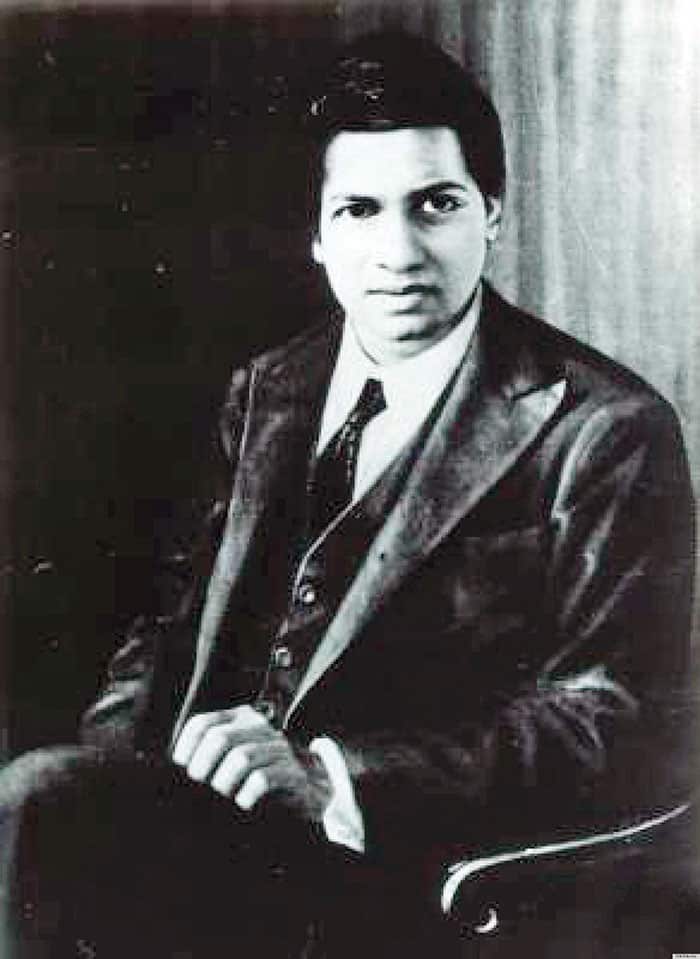
Photo of Srinivasa Ramanujan

The self-taught Indian mathematician Srinivasa Aiyangar Ramanujan has long been a hero in the mathematical community, but he remains mostly unknown outside the field. A new film aims to change that. The Man Who Knew Infinity is based on a 1991 book by Robert Kanigel and spans an eight-year period of Ramanujan’s life, beginning in 1912 with his time as a clerk at the Madras Port Trust in India and following him to Trinity College, Cambridge, UK, where he was invited to work with the British mathematician G H Hardy.

The initial scenes in Madras (now Chennai) are rather slow and the dialogue between the main characters – Ramanujan (played by Dev Patel of Slumdog Millionaire fame), his wife, his mother and his employer – seems awkward and stilted. The action picks up once Ramanujan is in Cambridge, where he has to navigate a myriad of social and academic nuances, and where he frequently struggles with his snooty and often racist colleagues. He is sometimes at odds even with his mentor Hardy (played by Jeremy Irons), who tries his best to teach this overly confident genius the necessity and value of proving his mathematical insights. Much of this is historically accurate, at least within the bounds of Hollywood storytelling (the fact that Ramanujan’s wife was about 12 years old when they began living together goes unmentioned). However, the film ignores the fact that although Ramanujan was relatively untaught and did not have a degree, he had published some of his work in the Journal of the Indian Mathematical Society and received recognition for his mathematical prowess in Chennai before he left for Europe.

Such lapses reveal the limitations of the “lone scientific genius” film genre, which has become rather prescriptive: take one young, clever but socially awkward (male) scientist; mix in some complicated equations (ideally written in sand or sketched upon a window); add a partner (often quickly forgotten) to humanize the aforementioned scientist; set all this against the backdrop of a life spent battling against the odds, and voilà, you have a winner. Still, one hopes The Man who Knew Infinity will help Ramanujan join his “lone scientific genius biopic” comrades (John Nash, Stephen Hawking, Alan Turing, et al.) in the scientific hall of fame. He certainly deserves it.

  • 2016 Edward R Pressman Film/ Zeitgeist Entertainment Group/ Animus Films/ Kreo Films FZ

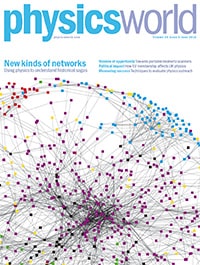
The June 2016 issue of Physics World is now out

PWJun16cover-200By Matin Durrani

Physicists can turn their hands to some unusual subjects. But in the June 2016 issue of Physics World magazine – now live in the Physics World app for mobile and desktop – we reveal the unexpected link between physics and ancient Icelandic sagas. If you don’t believe us, check our cover feature out.

Meanwhile, with the UK referendum on its membership of the European Union (EU) looming, we examine what impact the EU has on UK physics – and how remaining in or leaving the EU could affect the country’s science.

Don’t miss either our review of the new film The Man Who Knew Infinity, while our forum section this month has advice from Barry Sanders of the University of Calgary for how best to collaborate with scientists in China. There’s also a great interview with the new president of the US National Academy of Sciences Marcia McNutt.

(more…)

Huge magma reservoir could be lurking under South Korean island

An unexpected and massive reservoir of magma could be lurking under the South Korean island of Ulleung-do in the Sea of Japan. The surprise feature has appeared in a new seismic-tomography model of the region that was created by geophysicists in Switzerland and the Netherlands. Their new tomography technique could also improve our understanding of the earthquakes that occur in this region.

The region around the Japanese Islands is of considerable interest to geologists because it lies at the intersection of several tectonic plates. At these converging plate boundaries, rock is moving down into the mantle – resulting in a high occurrence of major earthquakes and the formation of arcs of volcanoes. To better understand these dangerous phenomena – especially the rupture processes that lead to large earthquakes – many attempts have been made to image the crust and mantle around Japan.

Images are made using seismic tomography – a method that uses seismic waves, generated by either earthquakes or explosions, to create 3D models of the Earth’s structure. This is done by solving an “inverse problem” to determine the locations where the seismic wave paths are reflected and refracted as they travel between different types of material.

Low-velocity regions

This reflection and refraction is governed by the relative speed of sound in different materials. Cool, dense and solid materials appear as regions with relatively high-velocity seismic waves. High-velocity regions (called “anomalies”) can be associated with large slabs of rock moving downwards. Conversely, regions that support relatively low-velocity seismic waves tend to be hot and include some partially melted material. The low-velocity regions’ anomalies are often found below volcanic regions.

In their new study, computational seismologists Saulė Simutė and Andreas Fichtner of the Swiss Federal Institute of Technology in Zurich and colleagues used an advanced form of tomography called full-waveform inversion to study the region surrounding Japan. Unlike traditional tomographic imaging, this technique uses complete seismic recordings. It also employs more accurate wave-propagation physics – based on a numerical solution to the seismic-wave equation – to provide improved seismic resolution.

“While the basic theory behind full-waveform inversion was developed several decades ago, it is only recently that computational resources [have] increased to a level that allows one to perform full-waveform inversion on regional to global scales,” explains Simutė.

The study used seismic data from 58 different earthquakes and involved looking at a total of 5500 waveform data sets. These were used to iteratively improve seismic-wave simulations and – after clocking an enormous 10 million central-processing-unit (CPU) and graphics-processing-unit (GPU) hours on two different supercomputers – create a structural model to match the data.

Fluid-induced upwelling

As expected, the simulations revealed the high-seismic-velocity signals of the known Pacific and Philippine lithospheric slabs under and around the Japanese Islands. The researchers were very surprised, however, to also detect a large region where the shear-wave velocity is as much as 19.5% lower than expected. This anomaly begins at a depth of around 50 km beneath the island of Ulleung-do and is likely to be a reservoir of partially molten rock around 300 km wide by 100 km deep. This Ulleung-do anomaly is, the researchers believe, caused by fluid-induced upwelling from the rapidly descending Pacific slab, and might possibly be related to the extinct volcano on Ulleung-do, which last erupted 5000 years ago.

Nicholas Rawlinson – a geophysicist from the University of Aberdeen – calls the finding of the Ulleung-do anomaly “striking”. While noting that quantitative-resolution tests on the researchers’ data appear to constrain the anomaly quite well – and that previous work suggests that even 1% of partial melt in the upper mantle can decrease shear-wave velocity by almost 8% – he cautions that he is “[not] aware of any studies that have found anomalies in the upper mantle as large as this, and further work may be required to convince the community of the veracity of this outcome”.

Simutė points out that the Ulleung-do anomaly could be caused by a 1–2% partial melt, so calling it a magma reservoir “is a little bit of an exaggeration”. She also says that another mechanism – grain-boundary sliding – can explain the low velocities equally well.

Dapeng Zhao – a geophysicist at Tōhoku University – notes that the interpretation of the Ulleung-do anomaly as fluid upwelling from the Pacific slab is consistent with his tomographic studies on the origins of active volcanoes around north-east Asia. He says that the quality of the tomographic model looks good at shallow depths – showing the two descending slabs as continuous high-velocity zones. However, he adds that “the slabs look intermittent in the deeper parts under some areas. If the slab images can be further improved in future studies, that would be great.”

With their initial study complete, Simutė and colleagues are now comparing the Ulleung-do anomaly with similar, smaller low-velocity anomalies under the Mediterranean – with the aim of better understanding its nature and, in particular, why it leaves such a weak impression on the Earth’s surface. At the same time, the team will be putting its 3D structural model to use in earthquake-source inversions. This will allow the researchers to better characterize the seismic sources, but also to then better refine their seismic tomography model.

The research is described in the Journal of Geophysical Research.

Ingredients for life spotted on comet 67P/Churyumov–Gerasimenko

The amino acid glycine has been discovered in the comet 67P/Churyumov–Gerasimenko, suggesting that the ingredients for early life may have been delivered to Earth by comets, rather than being created on our planet. More intriguingly, it also suggests similar comets could also have delivered life elsewhere in the universe – an encouraging sign for those looking for life on other planets.

The first life on Earth is thought to have appeared around 3.7 billion years ago. However, up until 3.8 billion years ago, the Earth was too hot to retain the volatile elements needed to produce life – including water. “100 million years is a very short time to make an ocean, and then to create organic molecules in the ocean, and finally to form a living cell,” says space researcher Kathrin Altwegg of the University of Bern in Switzerland.

Scientists have suggested that the process could have been speeded up if organic molecules such as amino acids – the building blocks of proteins – had formed in one of the dark molecular clouds that give birth to stellar systems, and had been delivered to Earth ready-made by comets or meteorites. “We know that comets impacted at that time because you see it in the craters of the Moon,” explains Altwegg.

Contamination woes

In 2009 astrobiologist Jason Dworkin of NASA’s Goddard Space Flight Center in Maryland and colleagues reported that samples collected from the Wild 2 comet by NASA’s Stardust mission contained glycine. However, this was contested because the samples had to be returned to Earth for analysis, and they showed evidence of contamination. Amino acids have also been detected in meteorites, but here too it is difficult to confirm that they have extraterrestrial origins – although isotopic ratios have suggested this is the case.

In the new research, Altwegg and colleagues analysed dust from the envelope of 67P/Churyumov–Gerasimenko using the mass spectrometer ROSINA (Rosetta Orbiter Spectrometer for Ion and Neutral Analysis) onboard the European Space Agency’s Rosetta spacecraft. The spectrometer ionizes incoming molecules and continuously measures the mass-to-charge ratios of the resulting molecular fragments. The researchers found that several of these molecular fragments matched products formed by the break-up of glycine. This was surprising, say the researchers, because glycine is not very volatile, so they had not expected any glycine present in the comet to be released into the gas cloud surrounding it. Further analysis suggested that it had been attached to the dust particles in the ice.

The team found no evidence of more complex amino acids. This was expected because only glycine can form without liquid water. “It’s catalytic chemistry in the ice,” explains Altwegg. Interestingly, ROSINA also revealed phosphorus – an atom also essential for the formation of life – among the material. “The Earth has phosphorus, that’s clear – and had phosphorus all along; but if you bring the organics and the phosphorus in one ship, then it’s more likely that they react together,” Altwegg says.

“Important discovery”

“I think it’s a very important discovery using an impressive instrument and is a wonderful confirmation of the work that we demonstrated on Stardust,” says Dworkin, who was not involved in the research. He says, however, that it will “absolutely not” settle the question of the ultimate origin of life on Earth, and questions the notion that only glycine can form without liquid water. “We synthesized a number of amino acids without exposure to liquid water [in our laboratory],” he says.

I think that in the end we can show that everything you need to develop life is in a comet – just not life itself
Kathrin Altwegg, University of Bern

Planetary scientist Hal Weaver of Johns Hopkins University in the US says that, although most scientists will probably not be surprised by the confirmation that comets contain glycine, the research is “a nice affirmation of what the folks found and analysed in the Stardust samples”. “What I’d really like to do next is to bring a sample of the nucleus of a comet back to Earth so it can be analysed in detail,” he adds.

Meanwhile, Altwegg’s team continues to study the ROSINA data. “I think that, in the end, we can show that everything you need to develop life is in a comet – just not life itself,” she says. She adds that the findings have significant implications for the probability of finding extraterrestrial life. “If you form glycine and it ends up in a comet, you can imagine that it can go anywhere in the universe,” she says.

The research is described in Science Advances.

Killer asteroid bust-up, exposing academic plagiarism, #IAmAPhysicist and more

First up in this week’s Red Folder is a tale of killer asteroids, hubris and peer review from the Washington Post. The science writer Rachel Feltman has written a nice article about a claim by physicist-turned-entrepreneur Nathan Myhrvold that NASA’s research on asteroids that could potentially collide with Earth is deeply flawed. On Monday, Myhrvold posted a 111-page preprint on arXiv that argues that asteroid radii measured by NASA’s NEOWISE project are far less accurate than stated by NASA scientists. What’s more, Myhrvold seems to suggest that NEOWISE scientists have “copied” some results from previous asteroid studies.

Myhrvold began his career as a theoretical physicist and, after a stint as Microsoft’s chief technology officer, founded an intellectual-property firm. He has never worked in the field of asteroids, yet he has taken great exception to some of the physics and statistical analysis underlying the NEOWISE results. His paper has been submitted to the journal Icarus, but has not yet passed peer review – unlike the NEOWISE results. In her article, Feltman ponders why Myhrvold is actively promoting his controversial work – he was featured in a New York Times article on Monday – before it has passed peer review. She also speaks to several NEOWISE scientists, who are not amused.

(more…)

Schrödinger’s cat lives and dies in two boxes at once

Schrödinger’s cat now has a second box to play in, thanks to an international team of physicists that has created a two-mode “Schrödinger’s cat state” for the first time. The experiment brings together two purely quantum properties, in that the “cat” (i.e. the photons) is simultaneously “alive and dead” (in a superposition of states) while also in two locations at once (the two boxes are entangled with one another).

The experiment is a step towards creating the larger and more sophisticated quantum states that are necessary to make quantum computing a reality. The team says that the work also demonstrates a two-logical-qubit system with in-built quantum error correction, making it a great resource for quantum metrology and quantum-communication networks.

Quantum cats

The famous Schrödinger’s cat paradox, first proposed in 1935, is based on one of the most basic tenets of quantum mechanics – superposition. This arises because a microscopic particle such as a photon is considered to simultaneously be in all possible “states” (or spatial positions in this experiment) until a measurement is made and its wavefunction collapses. In the real “classical” world, however, macroscopic objects such as cats do not exist in a superposition of states. This is usually explained in terms of “decoherence”, whereby a state loses its coherent quantum nature thanks to interactions with the environment. However, just where the boundary between the classical and quantum worlds lies is still a bit of a mystery.

Today, physicists can create multiparticle systems made up of many photons that are collectively in a superposition of two very different or extreme states. These are known as “Schrödinger’s cat states” and are easily distinguishable from each other. These systems can be achieved in the lab using harmonic oscillators. The oscillation of a microwave field, for example, can be thought of a swinging pendulum and the two different states are equivalent to the pendulum at the far left or right of its swing. In a cat state, the pendulum is at both distinct positions at once. Such harmonic oscillators are preferable to using atoms to create the two extreme states because the two swing positions are far more distinct and are separated by a distance that can include large numbers of intermediate states.

Two become one

To make a two-mode cat state, Chen Wang and colleagues at Yale University in the US, together with colleagues in France, used not one, but two harmonic oscillators based on microwave cavities. Here, the live cat corresponds to the microwave field in both cavities swinging in the positive direction, while the dead cat corresponds to the field swinging in the negative direction. This quantum combination of macroscopic multiparticle superposition states and entanglement was first proposed in 1993, but this is the first time it has been experimentally achieved.

The team’s device is made up of two, 3D microwave cavities and a monitoring port – all connected by a superconducting, artificial atom. The “cat” itself is made of confined microwave light in both cavities. The cavities were fabricated out of high-purity bulk aluminium and a sapphire chip with a micro-fabricated electric circuit was inserted into the aluminium package, which is connected using conventional microwave cables.

A measurement is made by transmitting microwave signals from room-temperature electronics through the device package – this signal indirectly informs the quantum state of the cavities. There are up to a few tens of photons in each cavity.

Wang tells physicsworld.com that his team’s method “differs from previous cat-state experiments in that we have two cavities carrying the cat state and therefore require measurements that can jointly probe the state of two cavities, which is a new development”. He adds that the team’s method also varies “from many other experiments dealing with the quantum state of microwave or optical photons, in that we operate on a quasi-classical state of microwave photons (coherent state) instead of individual photons, which allows us to easily access large number of photons”.

The distinguishability between the two states – which is a crucial factor – is determined by charting the states on a “phase space” map and measuring their distance in terms of how many possible states lie between them. Just how big the distinguishability distance must be before the state can be classified as “macroscopic” is still fairly subjective. In the current experiment, this distance is usually 30 photons, extending up to a maximum of 80 photons – Wang describes this as “more macroscopic than the few photons people typically deal with in our field, but certainly less macroscopic than a real cat”.

Different strokes

The results of the experiment can be interpreted in two different ways, according to the researchers. They describe the cat as “living in two boxes” by defining the joint state of the two cavities as the state of the cat (+ + is alive, – – is dead). In this case, by definition, the cat is in both boxes simultaneously. “This cat is big and smart. It doesn’t stay in one box because the quantum state is shared between the two cavities and cannot be described separately,” says Wang. An alternative view emerges if you consider the state of each cavity individually by performing single-box measurements. In this case, the team has two small and simple Schrödinger’s cats – one in each box – that are entangled.

Wang’s team says that the experiment has potential applications in quantum computation – especially as the cat states operate as fault-tolerant qubits. This is because information is redundantly encoded in the states using many degrees of freedom. “It turns out cat states are a very effective approach to storing quantum information redundantly, for implementation of quantum error correction,” says team-member Robert Schoelkopf, director of the Yale Quantum Institute. “Generating a cat in two boxes is the first step towards logical operation between two quantum bits in an error-correctible manner.”

The research is published in Science.

Jailed Iranian physicist freed temporarily after cancer treatment

The Iranian physicist Omid Kokabee has been released from prison following treatment for kidney cancer. On 20 April the 34 year old had a kidney removed at Sina Hospital in Tehran – news that sparked outrage among human-rights groups, which claim that his worsening condition is due to lack of medical treatment. Kokabee has been granted parole on medical grounds after a bond of 5 billion Iranian rials (US$165,000) was posted by his friends. The parole will be reviewed every two weeks and is expected to last several months.

Kokabee was arrested in 2011 during a trip to Iran while he was a PhD student in laser physics at the University of Texas at Austin and at the Institute of Photonic Sciences in Barcelona. He was sentenced to 10 years in prison for “collaboration with a hostile government” and “illegal enrichment”. On 24 April this year Iran’s justice spokesperson responded to a question about the case, insisting that Kokabee made “big trouble” with his nuclear knowledge.

Military recruitment

Kokabee claimed in an open letter written after his conviction that the real reason for his jailing was repeatedly declining offers to join a nuclear military programme involving laser enrichment. During his five years in jail, Kokabee has received support from physics Nobel laureates as well as human-rights awards from the American Physical Society in 2013 and the American Association for Advancement in Science in 2014.

As early as December 2012 Scholars at Risk (SAR) – a US-based international network of institutions that defend academic freedom and human rights – wrote to Ayatollah Ali Khamenei, Iran’s supreme leader, noting that Kokabee’s health was deteriorating, with him suffering from kidney stones and stomach pain. However, it was not until November 2015 that Kokabee was transferred to hospital for treatment. After a period back in jail, he was then sent to hospital again where he was diagnosed with cancer on his right kidney, which has now been removed.

“If the authorities had responded with more appropriate measures, Kokabee’s current condition might have been prevented,” says Clare Robinson, director of protection services at SAR.

Copyright © 2026 by IOP Publishing Ltd and individual contributors