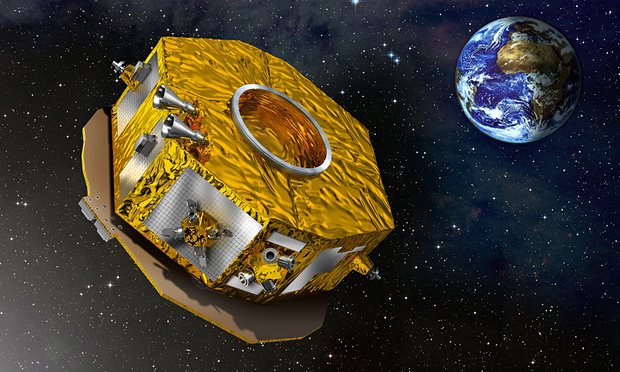
Flying high: LISA Pathfinder has overcome a major hurdle. (Courtesy: ESA)
By Hamish Johnston
2016 is shaping up to be a bumper year for physicists trying to detect gravitational waves. In February the LIGO collaboration announced the first ever direct detection of gravitational waves using two kilometre-sized detectors in the US.
Now, it looks like an even bigger detector will get permission to launch. Researchers working on the LISA Pathfinder space mission have just announced that they were able to isolate a 2 kg test mass at a special “Lagrangian point” between the Earth and the Sun. This is important because the planned LISA gravitational-wave observatory will use test masses located at three points in space (each separated by about one million kilometres) as the basis for a huge detector.
The bumble-bee uses its distinctive yellow-and-black fuzz to sense weak electric fields. This is the conclusion of scientists in the UK, who have shown that the bee’s tiny hairs move in response to electrostatic fields – causing a neural response in the insects. The team also found that the insect’s antennae move in the presence of electric fields, but surprisingly, the researchers were unable to detect a neural response. Commenting on the research, other scientists say that this work is fundamental to understanding the complex behaviour of bees, whose relatively simple neural network serves as inspiration for machine-learning algorithms.
To do their experiments, biologist Gregory Sutton and colleagues at the University of Bristol used wax to secure a live bumble-bee onto a post made of clay. The bee is held 1 cm away from a steel disc that has 400 V applied to it in 1 s pulses. This caused the bumble-bee’s fine hairs to wiggle back and forth and this motion was measured using a technique called laser Doppler vibrometry. This involves aiming laser light at the hairs and measuring the wavelength of the reflected light – which is Doppler-shifted upon reflection from a moving object.
Knowing the hair’s motion, the team could calculate how far the hairs are deflected by the electric field. Then, by inserting a tiny sharp needle into the base of a hair, the researchers were able to detect the electrical signal from neurons responding to the motion of the hair.
Hair-raising surprise
Sutton says he was surprised that the hairs alone were responsible for the bee’s detection of electric fields. The team’s original guess – now refuted by its work – was that the neural response to the electric field came from the insect’s antennae. “We made over five hundred different attempts to get the antennae to respond to the electric field,” he says. “We could not do it.” Nor did the researchers find the wings or feet sensitive to the field, so they concluded that the hairs were responsible for electric-field sensing, or electroreception.
This latest work follows the group’s 2013 study, in which the researchers discovered that bumble-bees can sense electric fields. This electrosensory capability is believed to help the insects to navigate toward flowers, with each type of flower having a distinctive electric-field pattern.
“When a bee leaves a hive for the first time, it doesn’t know what a flower looks like,” Sutton says. “So when a bee encounters its first flower, it takes the bee forever to figure out how to get pollen and nectar from it.” Being able to sense the electric fields allows bees to target known flower types to avoid having to re-learn the mechanics of feeding.
Electric advertisement
“The flower is advertising itself just like Coca-Cola does – by appealing to multiple senses,” Sutton says. “It’s ridiculously easy to pick out your favourite soda, even when there’s an entire wall of sodas,” he says. “It’s not just the name of the soda, it’s also the colour, the shape of the bottle, and when we touch it, it can have a different texture,” he says. In the same way, to the bee, the flower has its own colour, odour, taste – and electric-field pattern.
Research on bees’ sensory abilities is fundamental to understanding their behaviour, says Mathieu Lihoreau, a biologist at the Université Paul Sabatier in France, who was not involved in the research. “Three years ago we did not know that bees use electric fields to learn about their environments,” he says. “It’s becoming clear that this is something important.” Bees are interesting models for researching cognition because although their brains consist of only a million neurons – 100,000 times smaller than a human – they can complete complicated tasks such as communicating with each other. Robot decision algorithms have been inspired by bee behaviour, Lihoreau says.
Lihoreau points out that another important question is whether technology-related electric fields interfere with the bumble-bees’ senses. Sutton and colleagues have shown that the resonant frequency of bumble-bee fuzz is about 4 kHz, which is much lower than common communication frequencies. However, Sutton says it’s impossible to know the impact of technology on bees without experimental evidence. “This is a sufficiently important question that I’m uncomfortable speculating without data at my fingertips,” he says.
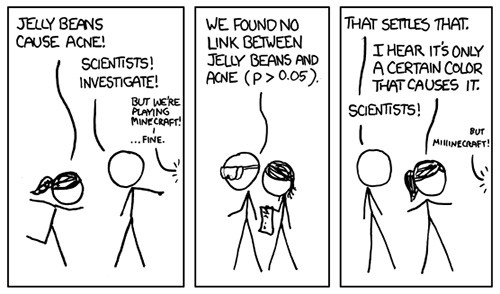
Significant. (Click to view full cartoon. Courtesy: xkcd/Randall Munroe)
By Margaret Harris
The “reproducibility crisis” in science has become big news lately, with more and more seemingly trustworthy findings proving difficult or impossible to reproduce. Indeed, a recent Nature survey found that two-thirds of respondents think current levels of reproducibility constitute a “major problem” for science. So far, physics hasn’t been affected much; the crisis has been most severe in fields such as psychology and clinical research, which, not coincidentally, involve messy human beings rather than nice clean atomic systems. However, that doesn’t mean it’s irrelevant to physicists. Last month, I had the pleasure of speaking to three physics graduates who have become personally involved in addressing the reproducibility crisis within their chosen profession: medicine.
Henry Drysdale, Ioan Milosevic and Eirion Slade are third-year medical students at the University of Oxford. All three earned their undergraduate degrees in physics, and they now make up one-third of COMPare – an initiative by Oxford’s Centre for Evidence-Based Medicine (CEBM) that tracks “outcome switching” in clinical trials. As Drysdale explained to me over coffee in an Oxford café, researchers who want to perform clinical trials have to state beforehand which “outcomes” they intend to measure. For example, if they are trialling a new drug to treat high blood pressure, then “blood pressure after one year” might be their main outcome. But researchers generally keep track of other variables as well, and often their final report focuses on a positive result in one of these other parameters (a dip in the number of heart attacks, say), while downplaying or ignoring the drug’s effect on the main outcome.
On Thursday 23 June voters in the UK will go to the polls. Not to elect a new government but to decide whether or not the country wishes to remain a member of the European Union (EU) – the supranational alliance of which it has played a fundamental part since 1973. An exit from the EU – dubbed “Brexit” – would profoundly affect many aspects of life in the UK from trade and commerce to travel and security. But what would it mean for physicists working in academia or industry, whether in the UK or elsewhere in Europe?
The official question facing voters on the referendum ballot paper is disarmingly simple: “Should the United Kingdom remain a member of the European Union or leave the European Union?” If the UK votes to leave, under Article 50 of the EU’s governing Lisbon Treaty, once the UK has notified the European Council – the body that defines the EU’s overall political direction – of its intention, the remaining 27 member states would have up to two years to decide on the arrangements for the withdrawal. This would include the details of the UK’s future relationship with the EU. And then the UK would be out.
Quite what the UK’s future relationship with the EU would look like is difficult to predict. No member state has ever left the union, which means that the current arrangements for withdrawal have yet to be tried and tested. Greenland did quit the European Economic Community – the EU’s predecessor – in 1985, but this sets little precedent for a full Brexit. And because the nature of any future relationship between the UK and the EU would be determined by the remaining member states, the extent to which the UK would be able to influence these negotiations is unclear.
Physicists will decide which way to vote based on more than just their experience as scientists, which is why the Institute of Physics (IOP), which publishes Physics World, decided earlier this year not to advise its members how to vote, instead seeking to keep physicists informed about the debate. In April it therefore published a briefing note with data on the impact of the EU on UK physics and also submitted evidence to an inquiry by the House of Lords Science and Technology Committee into the matter.
“We believe this evidence shows that to ensure the continued strength and success of UK physics in the event of a vote to leave the EU, priority must be given to ensuring that current collaborations and access to facilities across the EU are preserved; mitigating any reductions in funding, including (but not limited to) UK-based European facilities; and enabling UK physicists to continue to work with and recruit the best physicists, wherever they come from,” the IOP said in a statement.
The Lords committee, which received evidence from more than 110 universities, individuals, trade organizations and learned societies, concluded in April that the “overwhelming balance of opinion” favoured remaining in the EU. “The ease with which talented researchers can move between EU member states and the UK, the EU’s fertile environment for research collaboration, harmonized regulations, access to EU research facilities and the availability of substantial funding for research combine to make EU membership a highly prized feature of the research ecosystem in the UK,” the report states.
Speaking at a Royal Society debate on the EU last month, however, the science journalist and Conservative peer Matt Ridley criticized the EU. He pointed to a number of EU directives that have made it hard for researchers to do science and to the success of lobby groups regardless of the scientific evidence. “Brussels is not very good at evidence-based policy making, but it’s great at policy-based evidence making,” says Ridley, who is also a member of the Lords Science and Technology Committee.
Numbers game
In terms of hard numbers, the UK is an overall net contributor to the EU budget. From 2007 to 2013 the UK gave €77.7bn to the EU – representing 10.5% of member states’ contribution – and received back €47.5bn (some 6% of the total). In research spending, however, the UK’s Office for National Statistics estimates that the UK contributed €5.4bn between 2007 and 2013 and received back €8.8bn, an overall gain. Per year that figure is only about 3% of the UK’s annual R&D expenditure across industry and academia, which stood at £30.6bn in 2014.
When it comes to winning grants from the EU Seventh Framework Programme, which ran from 2007 to 2013, scientists in the UK came seventh overall, with a success rate of 22.6%. Over the same period, researchers from the UK won €1.7bn in grants from the European Research Council – 22.4% of the total and more than any other nation. They were also top dogs in getting Marie Skłodowska-Curie Actions – awards that enable researchers to work in different countries, sectors or disciplines. UK researchers received about €1.1bn, or 25.5% of the programme’s total budget in that time. According to the Higher Education Statistics Agency (HESA), meanwhile, UK physics departments received £285m in grant funding in 2013/2014, of which about 18% (some £50m) came from the EU.
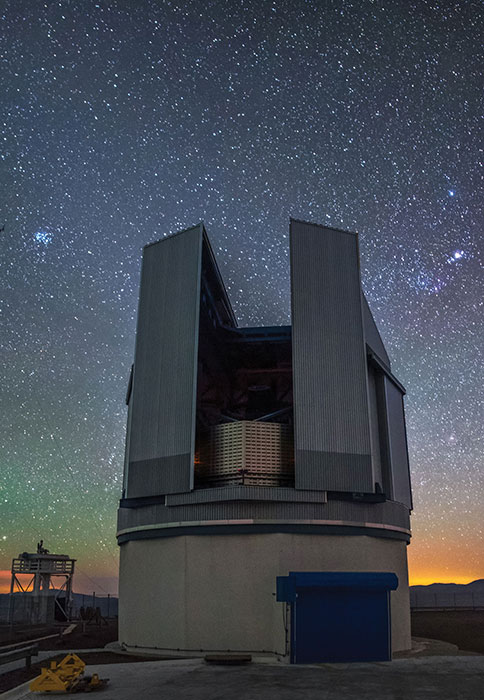
International collaboration The European Southern Observatory is 15.7% funded by the UK. This probably would not change if the UK left the EU. (Courtesy: A Tudorica/ESO)
A UK exit from the EU would not necessarily mean the loss of EU research funding. It may even be possible for the UK to sign up as an “associated country” to the European Research Area (ERA) as Israel, Norway, Switzerland and 10 other countries have done. This would require the UK to pay a proportion of its gross domestic product (GDP) towards the EU research budget, in return for which it would be allowed to compete for funding on a par with EU member states. Terms are negotiated individually with each member and have in the past been tied to freedom of movement for EU citizens.
Associate members do not, however, get a say in determining the priorities or the budget for the EU research programme and it is not clear if associate member status would be open to a large nation such as the UK. “The loss of ability to shape EU policy would be a huge blow to UK science, whether we manage to obtain associate member status or not,” says a spokesperson for Scientists for EU – a group advised by scientists including the University of Cambridge cosmologist Martin Rees and Julia King, vice-chancellor of Aston University. “Even achieving full associate member status would be difficult given our size on the programme and priorities of those who wish us to leave the EU.”
Chris Leigh from Scientists for Britain – a group that supports the leave campaign – takes a different view. “It’s frankly absurd to suggest that a country with Europe’s strongest scientific and academic base would not be welcome in the ERA,” says Leigh, who is an astronomer at Liverpool John Moores University. The group counts among its advisers Julia Reid, a member of the European Parliament for the UK Independence Party, and Jamie Martin, a former special adviser to justice secretary Michael Gove. Leigh also suggests that if the UK left the EU, the UK government could divert some of the money saved from its EU contributions to fund any resulting shortfall in research funding.
Access all areas
A UK exit from the EU is, however, unlikely to spell the end of the country’s involvement in some of the world’s largest physics research facilities. CERN, for example, receives 90% of its funding from its 22 member nations, of which three are non-EU member states. The UK contributed €126m in 2014 and could continue to do so regardless of its EU membership status. The same goes for the European Southern Observatory (ESO), which consists of 16 nations, two of which – Switzerland and Brazil – are not in the EU. In 2014 the UK contributed €22m – or 15.7% – of the ESO’s total funding.
Continued participation in other international partnerships could be more complicated. The ITER nuclear-fusion project, for example, is a collaboration between China, the EU, India, Japan, Korea, Russia and the US. The EU contributes 45% of the project’s total funding, with other partners paying 9% each. And while the European Space Agency (ESA) is an independent intergovernmental organization, it maintains close ties with the EU. ESA receives 73% of its €5.25bn annual funding from its 22 member countries – the UK pays €325m – with a further 25% from the EU. ESA and the EU operate a joint European Space Policy and programmes such as the Galileo global navigation system.
As for the impact of a UK exit from the EU on international collaboration and researcher mobility, according to HESA, some 14% of research and teaching staff in UK university departments are from non-UK EU countries. In physics departments, this figure rises to an average of 24%, although in some departments up to 50% of staff come from elsewhere in the EU. Nearly one in five publications in the physical sciences submitted in 2014 to the UK’s Research Excellence Framework – a programme used to allocate funding to university departments – had an EU collaborator. And more than 55% of UK publications between 2008 and 2014 had foreign co-authors, with four of the top five collaborative countries being EU member states.
Those in favour of Brexit point out that the UK would not want to close borders to scientists from around the world. In the absence of some kind of freedom of movement agreement, however, EU researchers would be subject to the same entry rules and visa requirements as researchers from elsewhere in the world. And this makes it more likely, says Universities UK – a body that represents the UK’s universities – that EU researchers would choose to go elsewhere.
Another issue for physicists is the impact that leaving or remaining in the EU could have on international students coming to the UK. Non-UK EU students currently make up 5% of all students at UK universities and 17% of physics PhD students. EU students are treated as UK students for funding purposes, meaning that they are charged annual “home” fees of up to £9000, rather than the £18,000 or more paid by students from outside the EU.
If the UK were to leave the EU, recruitment of EU students could be more complicated and more expensive, especially if such students were subject to the same visa regulations that apply to overseas students. But as EU students would then fall outside the tuition-fee and student-number controls used to restrict the number of EU students in some subject areas, such as medicine, universities could recruit more EU students and charge them higher fees.
For the IOP, though, the message to the UK government is clear. “Science is a long-term, collaborative endeavour, and we acknowledge the uncertainty that holding the referendum is creating in some international science partnerships,” the IOP says. “Whatever the outcome of the referendum, we would wish to see this uncertainty dealt with through a clear commitment from the UK government to ensuring long-term stability for UK science and for those with whom we collaborate.”
Fractals have always fascinated me and I am sure it’s the same for many of you. What I find most intriguing about them is how the relatively simple base pattern, or “seed”, quickly scales up to form the intricate designs we see in a snowflake or a coastline. In the video above, mathematician and animator Grant Sanderson has created a montage of “space filling curves” – theoretically speaking, such curves can endlessly expand without every crossing its own path to fill an infinite space. Following on from these curves, Sanderson shows you just how a simple seed pattern grows into a fractal and also describes how small changes to a seed property – such as an angle in a V – can alter the final image. The above video follows from a previous one Sanderson created on “Hilbert’s curve, and the usefulness of infinite results in a finite world” so check them both out.
For a little more than a decade, scientists have been struggling to explain why the amount of lithium predicted to have been formed in the early universe is about three times the value actually observed. Now, an international team of researchers believes it may have the answer: a new type of particle, outside of the Standard Model, that would have interacted with protons and neutrons shortly after the Big Bang so as to break up lithium-7.
According to a theory known as “Big Bang nucleosynthesis”, protons and neutrons fused to form nuclei in the first few minutes after the Big Bang. This process generated deuterium, large amounts of helium-4 and smaller amounts of helium-3 – the latter two combined to create beryllium-7, which eventually decayed to lithium-7. The theory makes very precise predictions of the relative proportions of these nuclei, based on a quantity – known as the photon–baryon ratio – taken from observations of the cosmic microwave background.
Measurement mismatch?
For helium and deuterium, these predictions agree very well with observations of physical systems thought to contain material dating back to the time of the Big Bang. However, the theoretical value for lithium – just five per billion of hydrogen – is between two and five times too high.
Now, Maxim Pospelov of the Perimeter Institute in Waterloo, Canada, together with colleagues at the Austrian Academy of Sciences in Vienna, says that this mismatch is not a “full-blown crisis for cosmology” because the observed lithium-7 levels, which are obtained from atmospheric spectra of very old stars, might not match primordial values. The researchers say that obscure astrophysical processes might have depleted lithium within the stellar atmospheres, but add that astrophysicists have yet to pinpoint such a process.
Instead, the team has looked to particle physics for a solution. Pospelov points out that, for several years, physicists thought that neutrons produced by the decay of unstable “supersymmetric” particles might have converted lithium-7 into lighter nuclei such as helium-4. However, those neutrons would eventually have fused with spare protons to create more deuterium, making the theoretical abundance of that isotope too high. Any extra helium-4, in contrast, would have been almost unnoticeable, given its abundance. “The amount of deuterium has been measured very accurately in the last few years,” he says, “so supersymmetric scenarios have been completely disfavoured.”
X marks the spot?
To overcome this problem, Pospelov and colleagues propose a previously unknown “X” particle that is electrically neutral and fairly stable, which interacts fairly strongly with both protons and neutrons, and has a mass lying somewhere between 1.6–20 MeV. The merit of particle X, explains Pospelov, is that it does not require extra neutrons to break up lithium. “Our idea was to find a particle-physics ingredient to recycle the neutrons that already exist,” he says.
Particle X would deplete lithium in two ways. It could break up beryllium nuclei into helium-3 and helium-4 before they could decay to lithium-7. It could also break up deuterium nuclei into their constituent protons and neutrons. In this latter case, the freed neutrons would destroy the lithium, but would then recombine with single protons to leave the deuterium abundance essentially unchanged. The 20 MeV upper limit on particle X’s mass, being less than the binding energy of helium-4, would mean that the abundance of these nuclei is also unaffected.
As to whether particle X could have any other role in the universe, Pospelov says it might conceivably act as a mediator between normal matter and dark matter – the mysterious substance thought to make up at least four-fifths of the universe’s mass. He notes that hypothetical “self-interacting” dark matter is favoured to have a mediator with about the same mass, between 10–30 MeV.
Solve for X
Pospelov concedes that the new particle might sound “somewhat arbitrary”, but he says that a number of experiments can test for its existence. Among these are “beam-dump” experiments involving the illumination of a fixed target with a beam of protons or electrons and monitoring for particles of just the right mass a few metres beyond the target. Alternatively, he says, experiments studying particles known as kaons would provide “a very clean environment” for hunting X particles, because these would interact strongly with light quarks, such as the strange and up/down quarks that make up kaons.
In the absence of such experimental evidence, other experts are sceptical. Keith Olive of the University of Minnesota in the US says there is little theoretical motivation for a light particle that interacts strongly with protons and neutrons that lies outside of the Standard Model. The proposal, he argues, “serves as more of an example of what might work, rather than as a solution” to the problem of the missing cosmic lithium.
Kenneth Nollett of San Diego State University, also in the US, describes the proposal as “clever” but “somewhat speculative”. He suspects that the lithium problem probably has an astrophysical explanation, but says that even if that proves to be the case, the current research will have been worthwhile. “Forward progress in science requires work on all fronts,” he says.
Flat, high-efficiency, ultrathin metasurface lenses, that focus light to subwavelength spots, have been developed by researchers in the US and Canada. The devices – which produce images comparable to top commercial lenses – were manufactured in an industrially viable way and could be used in laser-related imaging, microscopy and spectroscopy. They could be further developed for use in mobile-phone cameras and wearable electronics.
In optics, Fermat’s principle governs the operation of lenses, and states that light follows the path along which it accumulates the least phase. It bends towards the normal in regions of higher refractive index, to travel a smaller distance where the wavelength is shorter and phase accumulates more quickly. Phase accumulates continuously as the wave propagates, so the lens requires a finite thickness for waves to accumulate enough phase to be redirected as desired.
Researchers have since shown that phase discontinuities can also be imprinted by using tiny subwavelength elements made of silicon. These imprint a shift in the so-called Pancharatname–Berry phase of the light waves, by imparting a spatially dependent polarization shift as they pass through the elements. These elements are simpler to manufacture and focus transmitted visible light more efficiently, but they still absorb or reflect too much light to make a viable commercial lens.
Capasso’s team has now developed a new technique to fabricate these tiny “nanofins”, using electron beam lithography to pattern a resist before depositing a very thin layer of titanium oxide – which transmits visible wavelengths much better than silicon – onto the resist to produce the metasurface. The researchers used their technique to fabricate titanium-oxide metalenses designed to focus light at different visible wavelengths.
Titanium nanofins
The focusing efficiencies of the lenses were unprecedented for visible-light metalenses: the lens designed for 405 nm (violet) light brought 86% of the incident light to a focus. The lenses also had much higher numerical apertures than previous metalenses, allowing them to focus light from a wider angle to a single spot. This in turn produced focal spots smaller than the light’s wavelength, and smaller than those achievable with a state-of-the-art commercial objective containing multiple refractive lenses.
The researchers also demonstrated imaging with the metalenses for the first time in the visible region, showing that they could produce highly magnified images of several different test objects and resolve features less than one wavelength apart. The team’s lenses do suffer from quite large chromatic aberration – while this is not a problem for technical applications such as microscopy performed with monochromatic laser light, it would be for consumer applications such as camera lenses. Luckily, in 2015, Capasso and colleagues showed that a strategically designed silicon metasurface could focus multiple infrared wavelengths at the same point, and Capasso believes this should be possible at visible wavelengths too. “It’s just a matter of time before we do it also with titanium oxide,” he says. “With our lens, we believe that we can replace the ordinary lens in lots of cameras to make things more compact, cheaper, thinner and achieve the same performance.”
Andrea Alù of the University of Texas at Austin, who was not involved in the research, is impressed. “We have seen this series of papers in the last few years on metasurfaces, and the question has always been, ‘What is the efficiency? Can we ever make this competitive with known optical components? ” he told physicsworld.com. “This paper addresses some of these questions: it says that we can indeed build large-area metasurfaces that are still very thin, they are dielectric – so low loss – and yet they can provide a large numerical aperture, and goes forward to compare the response with state-of-the-art commercially available components.”
He points out, however, that the Pancharatmane–Berry phase shift is inherently polarization dependent, and that Capasso’s efficiency measurements were made using appropriately polarized light. “You cannot just put this on an iPhone camera and expect it to work for ambient light,” he explains. “I guess you could put in filters, but that sacrifices efficiency.”
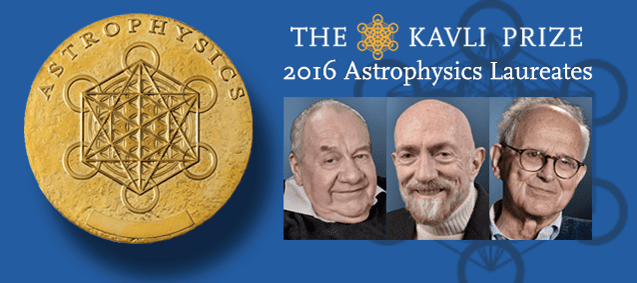
In early May, Ron Drever, Kip Thorne and Rainer Weiss – who co-founded LIGO – together bagged a cool $1m share of a special $3m Breakthrough Prize together with more than 1000 LIGO scientists, who shared the remaining $2m.
“A HAWC eye on the sky” takes you on an audiovisual tour of a striking new astrophysics facility in Mexico. The High-Altitude Water Cherenkov (HAWC) gamma-ray observatory – which was inaugurated last year – is designed to catch a glimpse of some of the most extreme events in the cosmos. Located near the peak of the extinct Sierra Negra volcano, HAWC cuts a spooky image against the Mexican countryside, comprising 300 giant silver barrels with yellow tops that are filled with water.
The film is narrated by Adiv González Muñoz, a HAWC researcher with a passion for time-lapse photography. González’s images are combined with stunning drone footage of the site and portraits taken by the film’s producer Lucina Melesio. González explains how photodetectors in the water barrels are used to detect Cerenkov light generated by charged particles travelling faster than the speed of light. These energetic particles are created when gamma rays from distant sources interact with the Earth’s atmosphere to create showers of secondary radiation that rain down on the planet’s surface. Astrophysicists study this radiation to pinpoint and better understand energetic events in the universe such as active galactic nuclei (AGN).
González, who is based at the National Autonomous University of Mexico (UNAM) in Mexico City, says that one of the best things about working at HAWC is the opportunity to escape from the urban environment. “In the cities it’s becoming really hard to see stars. But when you are [at HAWC] with no clouds, seeing the stars, your mind gets full of inspiring ideas,” he says. That sense of wonder is something that inspires González in both his scientific research and his photography.
HAWC is a bi-national project run by Mexico and the US that is helping to raise the profile of Mexico among the global astronomy community. It is located on the same extinct volcano as another Mexico–US facility, the Large Millimeter Telescope (LMT), which began its early science runs in 2013. You can read more about the HAWC and LMT facilities in the Physics World special report on Mexico.
“A HAWC eye on the sky” is the third film in our Faces of Physics series – a collection of short films about the lives of people working in physics, exploring their motivations and the impact of their work.
We will be publishing more films in the Faces of Physics series throughout 2016. By telling personal stories, we hope to show that physics is an ordinary activity that can lead to an extraordinary array of careers. To find out more about the social side of physics, take a look at the March 2016 issue of Physics World, a special edition about diversity issues in physics. Find out how to access that issue here.
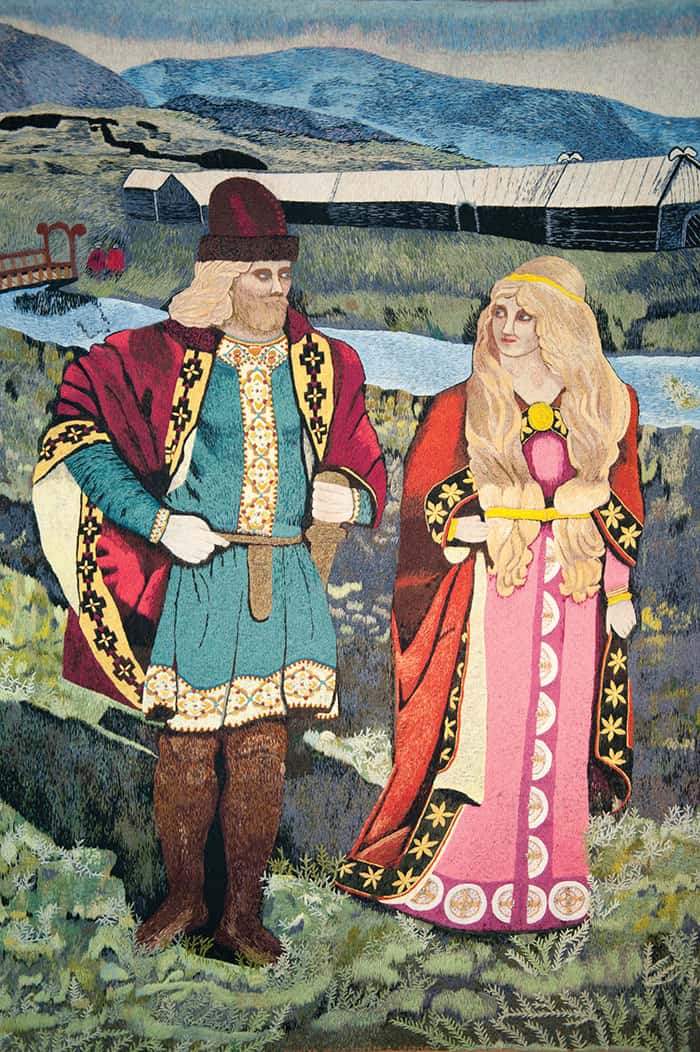
Views on the Viking Age. (Courtesy: Stefan Auth/imageBROKER/SuperStock)
The Sagas of Icelanders are prose narratives purporting to describe events during the settlement of Iceland more than 1000 years ago. Njáls saga is the most extensive of the Íslendinga sögur, and is often seen as the greatest piece of Viking Age Icelandic literature. The protagonist is Njál Thorgeirsson, a sage and lawyer. He and the warrior-chieftain Gunnar Hámundarson are close friends and Njál’s outstanding wisdom is complemented by Gunnar’s extraordinary physical prowess. When Gunnar marries the beautiful Hallgerthr, however, things go awry. Hallgerthr instigates a feud with Njál’s wife Bergthóra and minor insults and provocations ensue, escalating to major incidents of bloodshed in which scores of characters, including both Gunnar and Njál, die.
The antiquity of these anonymous texts and their narrative style make them unique in world literature. As with other ancient narratives, however, their historical authenticity has for many years been subject to scholarly debate. Some believe they contain descriptions of real Viking life and society. Others object that they are fictional and without any historical value.
Since these are questions of historical and literary merit, you might be wondering what physicists can possibly have to say about something that is seemingly so far removed from their own field. Statistical physicists, however, have always been interested in applying their wares outside the confines of physical systems. The subject itself emerged from probability theory in the 19th century, in parallel with the development of sociology – an early term for which was “social physics”. Nowadays sociophysics has re-emerged as a distinct branch of physics, drawing especially from statistical physics. The latter deals with collective phenomena in materials that emerge when lots of simple particles interact; an individual water molecule, for example, cannot freeze or flow but a huge collection of them can. Similarly, some properties of a population may not be simple aggregates of those of individuals. Examples include co-operative behaviour: a single bee cannot swarm and a single physicist does not have the critical mass of a research group.
In our research we take a step further and go beyond the interactions between particles and even beyond people we know to be real. Instead, we consider relationships between large casts of characters in epic texts and sagas. Viewing these as complex systems, we can use techniques from statistical physics to characterize these societies, ultimately exploring whether the communities they describe are credible.
Examining Njál’s world
The temptation to regard epic and saga narratives as treasure troves of data susceptible to the tools of statistical physics became irresistible when we realized that the field of “comparative mythology”, where scholars study myths from different cultures, has a concept familiar to all physicists who have worked with critical phenomena. Critical phenomena occur near the boundary between two or more physical phases, such as the “critical point” at which coffee starts to percolate or the “Curie temperature” at which certain materials lose their permanent magnetic properties to transition between ferromagnetic and paramagnetic phases. The familiar concept that is found in both critical phenomena and comparative mythology is universality.
Universality is where different systems have the same macroscopic properties, independent of details, of what the system is made of or how it is put together. In statistical physics, the essential behaviour of such systems – be they physical or social – can be described using just a few numbers, without referring to the specific details of the constituent parts, such as the single coffee grains or the individual people. These few universal parameters include critical exponents, so-called because in formulae describing phase transitions, they are the powers to which control parameters are raised. The values of the critical exponents can then be used to categorize the phase transitions.
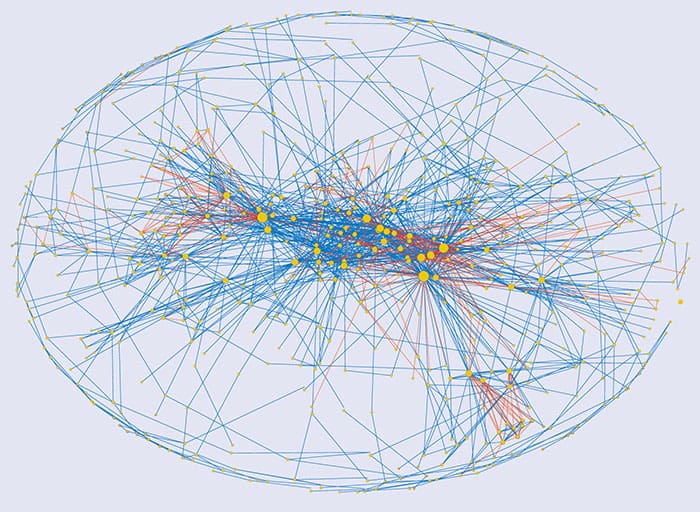
1 The complex network of Njál Nodes (yellow) represent characters appearing in the narrative of Njáls saga and the lines between these nodes, known as ‘edges’, represent relationships between them. Positive (friendly) relationships are shown in blue and negative (hostile) ones are shown in red.
In comparative mythology, universality is a relevant notion – though it has only been qualitative until now. One example is narratives that are claimed to have a common structure known as the monomyth, in which a hero goes on an adventure, has a crisis, wins a victory and then returns home transformed. Although the original concept of the monomyth has somewhat fallen out of favour, we considered whether we can introduce a new measure of universality – something different, and more akin to classifying phase transitions in statistical physics – whereby narratives are quantified so that they can be measurably compared.
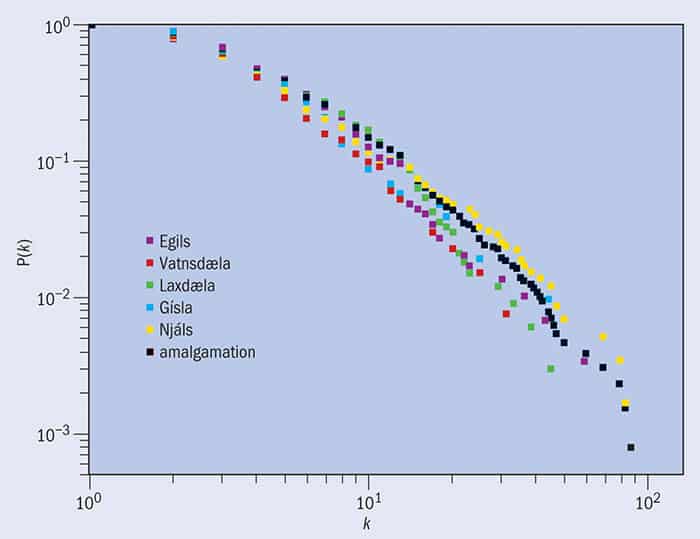
To do this we constructed social networks from the Íslendinga sögur (2013 Eur. Phys. J. B86 407). Our tasks involved identifying characters in the sagas and defining the relationship each has with others. Njáls saga, for example, involves 575 “nodes” (characters) linked by 1612 “edges” (interactions or relationships). It is depicted in figure 1, where positive (friendly) relationships are represented in blue and negative (hostile) ones are in red. The “degree” of a node is the number of edges attached to it, which means that someone who knows a lot of people corresponds to a high-degree node, and someone who knows hardly anyone is represented by a low-degree node. For Njáls saga, a plot of the number of people against the degree each person has is well described by a power law, in which many people have only a small number of acquaintances, while a few people have a lot (see figure 4). Omnipresent in physics, such power-law distributions lack an intrinsic scale and are “fat-tailed” compared with, for example, the normal distribution, meaning that a few nodes can have very high degrees.
In modern society, the familiar “six degrees of separation” concept quantifies the fact that everyone can be linked to everyone else in the world by a remarkably short chain of friendships. For the character network underlying Njáls saga, we found that the equivalent average number of steps between people, or “mean path length”, is even less: about five. Another way to describe a social network is to quantify the amount of “clustering”. In most real-world networks, a high proportion of one’s acquaintances are also acquainted with each other. When viewed as a network map, this appears as clusters of tightly bound groups of nodes, as opposed to nodes that are uniformly spread out. In a social network with lots of positive interactions, clustering tends to be high. With both its short path length and high clustering, Njáls saga is called a “small world”.
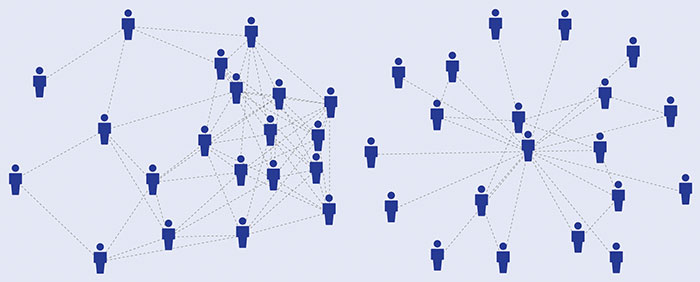
2 Comparative literature The network on the left illustrates assortativity, in which nodes with a similar number of edges, also known as the node’s ‘degree’, tend to be linked to each other. The network on the right has the opposite tendency and is disassortative.
Experience shows it is difficult to stay friends with two acquaintances who are mutually hostile. In network terms, a single negative link in a relationship triangle between three people (A, B and C) is rare because if A and B don’t like each other, it prompts the other node (C) to take sides. Similarly, triangles comprising three hostile relationships are also rare; realizing that “the enemy of an enemy is a friend” prompts two nodes to gang up on the third. The propensity to disfavour odd numbers of hostile links in a relationship triangle, which is known as “structural balance”, is evident in saga society. In Njáls saga, for example, only 10% of triangles have an odd number of hostile links.
In real life, people tend to associate with other people who are similar to themselves. Popular people, for example, tend to be mutually acquainted, while friends of less popular people also tend to be less popular. In network science, this is called “assortativity”. Its opposite – popular people interacting with unpopular people – is called “disassortativity” and both are illustrated in figure 2. The extent to which a network is assortative or disassortative can be quantified using a measure of the correlation between the degrees of the nodes known as the Pearson’s coefficient, which is positive for assortativity, and negative for disassortativity. Real social networks tend to be assortative and we find it is marginally so for Njáls saga. Another level of analysis we can use is to look at the positive-interaction networks only, since these are better able to capture the complexity of social networks than negative interactions, which have topologically trivial structures. Njáls saga is even more assortative if negative relations are excluded.
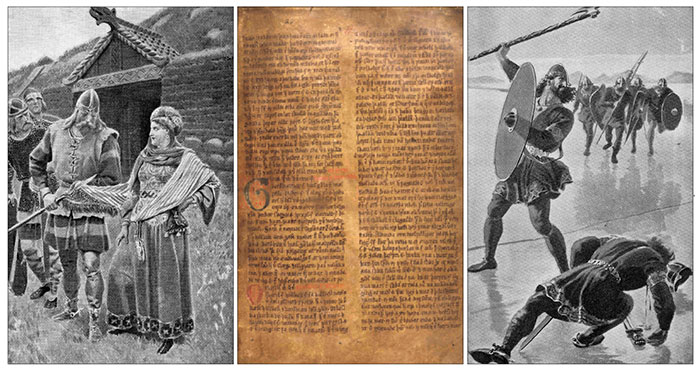
Surviving stories The most complete copy of several Icelandic sagas, including Laxdæla (left) and Njáls (right), is in the Möthruvallabók, a 14th-century manuscript (centre). (Courtesy: Vore fædres liv, Andreas Bloch; Möthruvallabók/Árni Magnússon Institute; Vore fædres liv, Andreas Bloch)
We conclude that the society described in Njáls saga is a highly clustered, structurally balanced, assortative small world with a fat-tailed degree distribution. While each of these characteristics is not unique to social networks, together they are characteristic of them. Though we cannot prove whether Njáls saga is fact or fiction, we can say that the network structure of the society underlying the tale is realistic.
The bigger saga picture
What about the other narratives from the Icelandic collection? We examined a further 17, four of which – Vatnsdæla, Laxdæla, Egils and Gísla saga – are particularly susceptible to network analysis, which works best when applied to large casts. The saga of the people of Vatnsdæla describes how the grandson of a Norwegian chieftain came to Iceland, then follows his family until the arrival of Christianity in the 10th century. The saga of the people of Laxdæla, meanwhile, has the second-largest network after Njáls saga. Like Njáls and Vatnsdæla, it is a family saga and some believe the author of Njáls saga may have used Laxdæla as a source. As for Egils saga, it also starts off in Norway, from which Egil’s family flees to Iceland, following a dispute with the king. Although a family saga, it centres on the life of Egil, a poet, farmer and warrior who gains our sympathies only to lose them again through his excessive violence. Gísla saga differs from the others in that it is an outlaw saga, in which the eponymous character is on the run for 13 years before finally being killed.
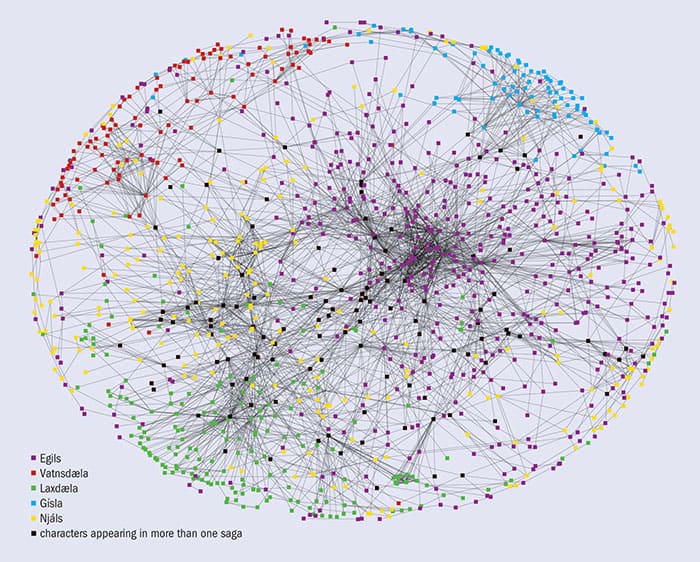
3 Connected casts The network corresponding to the amalgamation of five major sagas. Black nodes represent characters that appear in more than one saga. Community-detection algorithms can identify the three component sagas Egils, Vatnsdæla and Gísla, but fail to separate Laxdæla and Njáls saga, where there is a strong overlap of characters.
We found that these five sagas have certain statistics in common: each of them is a highly clustered, structurally balanced, small world. They are well described by power laws with similar exponents, although Laxdæla is better fitted by an exponential distribution. Where they differ from each other is in their assortativity. The family sagas Njáls, Vatnsdæla and Laxdæla are assortative. Egils saga is mildly disassortative but if we confine our analysis to its positive relations, that too has assortativity close to zero. As for Gísla saga, it is the only one which is centred on the exploits of a single individual rather than on a society, and this is reflected in the fact that it is the only one of the five sagas for which the overall network is disassortative, and strongly so at that.
Apart from their narrative style being so consistent and objective, a fascinating feature of the Íslendinga sögur is that they contain interwoven and overlapping plots, whereby main characters in one text can appear as minor ones in another. The merger of the five major sagas is depicted in figure 3. The social networks of three of the sagas – Vatnsdæla, Egils and Gísla – are fairly distinct. However the communities in two of the sagas – Njáls and Laxdæla – strongly overlap, which may be interpreted as supporting the theory that one may have been used as a source for the other. All five are well described by power laws similar to that exhibited by Njáls saga (figure 4).
Combined, the 18 sagas form a huge network that is a structurally balanced, assortative small world. Its mean path length of 5.5 is remarkably close to the six degrees of separation of modern society. Its degree distribution is best described by a truncated power law, the cut-off being due to the fact that no single protagonist appears as a major player in multiple sagas.
4 Socially similar For five different Icelandic sagas, this plot shows the complementary cumulative distribution functions, P(k), representing the numbers of characters with degree k or more. The distributions are well described by power laws with similar exponents, showing the alikeness of their social networks: few characters have very many relations (high degrees), while many characters have very few (low degrees).
So our physics-inspired investigations of saga society, we have focused on the totality of relationships between the characters depicted in the texts, rather than on the characters themselves, as most humanities researchers have done. This approach brings to the fore the credibility of the societal backgrounds in the sagas. Even if some of the events are fictional, they may play out against a backdrop that includes real history.
Our investigations are an example of curiosity-driven research and demonstrate how ideas inspired from physics can help other fields of inquiry. Obviously, our conclusions are from a network-science standpoint and input from other fields – archaeology, literature and comparative mythology – are required for an overall view. Nonetheless, we can conclude that, historically accurate or not, the societies recorded in the Íslendinga sögur are similar to those of modern social networks and as such are remarkably realistic.
Greek, Anglo-Saxon and Irish epics
Tale of the ages. Irish epic Táin Bó Cúailnge is set in the 1st century AD. The oldest manuscript is 11th or early 12th century but its oral history is centuries older. (Courtesy: Joseph Christian Leyendecker)
Our analysis of the Íslendinga sögur forms part of a broader initiative called Maths Meets Myths involving world epic literature and funded by the Leverhulme Trust, the European Science Foundation and the European Commission. In this context, we also examined narratives from Greece, Britain and Ireland (2016 J. Phys.: Conf. Ser.681 012002; 2012 EPL99 28002) and it is interesting to view the Icelandic sagas in these contexts.
Homer’s Iliad, penned in Ancient Greece, is considered as one of the markers of the beginning of the Western canon. Some evidence suggests that it may be based on historical conflict during the 12th century BC. Beowulf is an Anglo-Saxon epic, set in Scandinavia. Although embellished by obvious fiction, archaeological excavations support historical authenticity associated with some of its human characters. As for the Táin Bó Cúailnge, it is an Irish epic that some argue corroborates Greek and Roman accounts of the Celts, offering a “window on the Iron Age”. But others say that tales such as these three have no historical basis whatsoever. More think that they reflect the times of the medieval scribes who recorded them rather than the societies in which the stories are supposed to be set.
We find that the networks in Njáls saga and the combined Íslendinga sögur are more similar to that of the Iliad than they are to either the Irish or Anglo-Saxon texts. One important difference between the Icelandic texts and the Iliad, however, is that while the full saga network is “assortative”, that of the Iliad is not. To render the networks more alike, one would have to restrict to positive interactions in the Iliad network, which is then assortative. In other words, the Íslendinga sögur have similar network properties to the Iliad when hostility is removed from the latter but are quite different from Irish and Old English epics. Of all the epic literature we examined so far, the sagas of Iceland are the most realistic. Finally, although it is believed that Tolkien was influenced by Nordic literature, The Lord of the Rings and many other works of fiction have very different network structures from those of saga society.