The field that could improve your research 'impact'

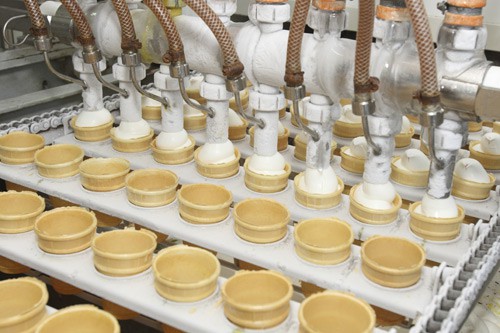
Preparation of ice-cream in a factory

By Matin Durrani

As Physics World editor, I spend most of my time covering science that I have never been involved in. I might write articles about astrophysicists, interview atomic physicists or edit features by particle physicists, but it doesn’t mean I’ve ever done any research in those fields.

It was therefore a pleasant change last Friday to attend a summit organized by the Institute of Physics, which publishes Physics World, on physics in food manufacturing. Back in the 1990s, I did a PhD with Athene Donald at the Cavendish Laboratory in Cambridge on the physical properties of mixtures of gel-forming biopolymers – materials that apart from being interesting from a fundamental point of view are also relevant to the food industry.

Many foods, after all, are complex, multicomponent mixtures – and if you can understand how they behave, then you can create foods that are healthier, cheaper and perhaps even tastier too.

(more…)

Physics for all – building a more inclusive discipline

The issue generated a lot of reaction, ranging from e-mails and letters to comments on the website, in person and on social media. In this podcast, Physics World editor Matin Durrani and careers editor Margaret Harris address some of the responses from the physics community – both good and bad – to that special issue in the company of Andrew Glester from The Cosmic Shed podcast.

Much of that reaction was in response to Louise Mayor’s feature “Where people and particles collide” on what it is like to be in a gender or sexual minority at the CERN particle-physics lab, which got picked up widely elsewhere in the media. But we also discuss reader thoughts on the article on unconscious bias, on the feature on “microaggressions” in the workplace and why Physics World devoted a whole issue to this topic in the first place.

Theorizing about the LHC’s 750 GeV bump

Last year, the LHC’s ATLAS and CMS experiments both reported a small “bump” in their data that denoted an excess of photon pairs with a combined mass of around 750 GeV. As this unexpected bump could be the first hint of a new massive particle that is not predicted by the Standard Model of particle physics, the data generated hundreds of theory papers that attempt to explain the signal. Of these, four different theoretical explanations – a particle predicted by a lesser-known version of supersymmetry; a particle linked to a new kind of strong nuclear force; a Higgs-like boson; and a decay product from other very heavy particles – have been selected for publication in this week’s issue of Physical Review Letters.

Statistical confidence?

The 750 GeV “diphoton” excess was announced by ATLAS and CMS in December last year and then confirmed, with slightly more confidence overall, by both collaborations at a meeting in La Thuile in northern Italy last month. Taking into account what is known as the “look-elsewhere effect” (the fact that across a range of energies some bumps are bound to appear by chance), CMS says it has seen an excess with a statistical significance of 1.6σ, while ATLAS reports a significance of about 2σ – corresponding, respectively, to a roughly 1 in 10 and 1 in 20 chance that the result is a fluke.

While these levels are far below the 5σ “gold standard” that must be met to claim a discovery, the fact that both collaborations saw a bump at the same energy has excited theoretical physicists. Indeed, since December, theorists have uploaded more than 250 papers on the subject to the arXiv preprint server.

In an editorial note, PRL editor Robert Garisto says that he and his colleagues “found it appropriate to publish a small sample” of those papers submitted to the journal, and that they then sought informal advice about which papers to choose. The resulting four, he explains, give readers “a sense of the kind of new physics that would be required to explain the data, if confirmed”.

Another boson

The authors of three of the four papers show how the bump could be caused by a boson with a mass of 750 GeV (the integer spin of a boson being needed to generate two (spin 1) photons). Gang Li and colleagues from Peking University in China propose a particle similar to the Higgs boson, which was itself discovered via a (125 GeV) peak in the energy spectrum of photon pairs at the LHC. The researchers say that the new particle would be produced by fusing gluons, positing that both that transformation and the boson’s conversion into photons would be mediated by other particles from beyond the Standard Model. Such mediation, they explain, would effectively prevent decay into particles other than photons, such as W or Z bosons, which are observed in the case of the Higgs but not at the higher energies considered here.

Another of these papers – by Yuichiro Nakai of Harvard University in the US, together with colleagues in Israel and Japan – suggests that the bump seen by the CERN experiments is down to a pion-like boson that is part of a new theory similar to quantum chromodynamics, which describes the strong force.

Supersymmetric gold?

Alternatively, according to Christoffer Petersson of Chalmers University of Technology in Sweden and Riccardo Torre of the EPFL in Switzerland, the data point to a particle known as a “sgoldstino” – this would be the bosonic partner of a fermion known as the goldstino, which is associated with the breaking of perfect supersymmetry. (According to supersymmetry, each boson has a fermion superpartner and vice versa; perfect symmetry would mean the two particles in each pair have the same mass, which is not observed.)

Petersson notes that the supersymmetry in question is not the “minimal” model most commonly studied by physicists, which predicts symmetry breaking at very high energies. The alternative put forward here instead involves symmetry breaking at low energies. “The minimal model can’t account for the observed excess [at 750 GeV],” he says. “So if this excess is true, we need to go beyond that model.”

More particles?

Finally, Won Sang Cho of the Institute for Basic Science in South Korea and colleagues argue that the particle or particles responsible for the excess do not necessarily have a mass of 750 GeV. Instead, they say, it is possible that the bump is caused by much heavier particles decaying into the two photons, as well as one or more additional particles.

As to whether the bump is a real particle as opposed to a statistical effect, physicists should not have to wait too much longer to find out. CMS spokesperson Tiziano Camporesi told physicsworld.com that his experiment should have collected enough data to provide a “hint” about this by about mid-June. He adds that the team is aiming to update its result in August – by which time both CMS and ATLAS should be in a position to independently confirm the data. If the result does stand, he says, it would “likely be the beginning of a new era for high-energy physics”.

All four papers are published in Physical Review Letters.

LIGO could soon detect one gravitational wave per week

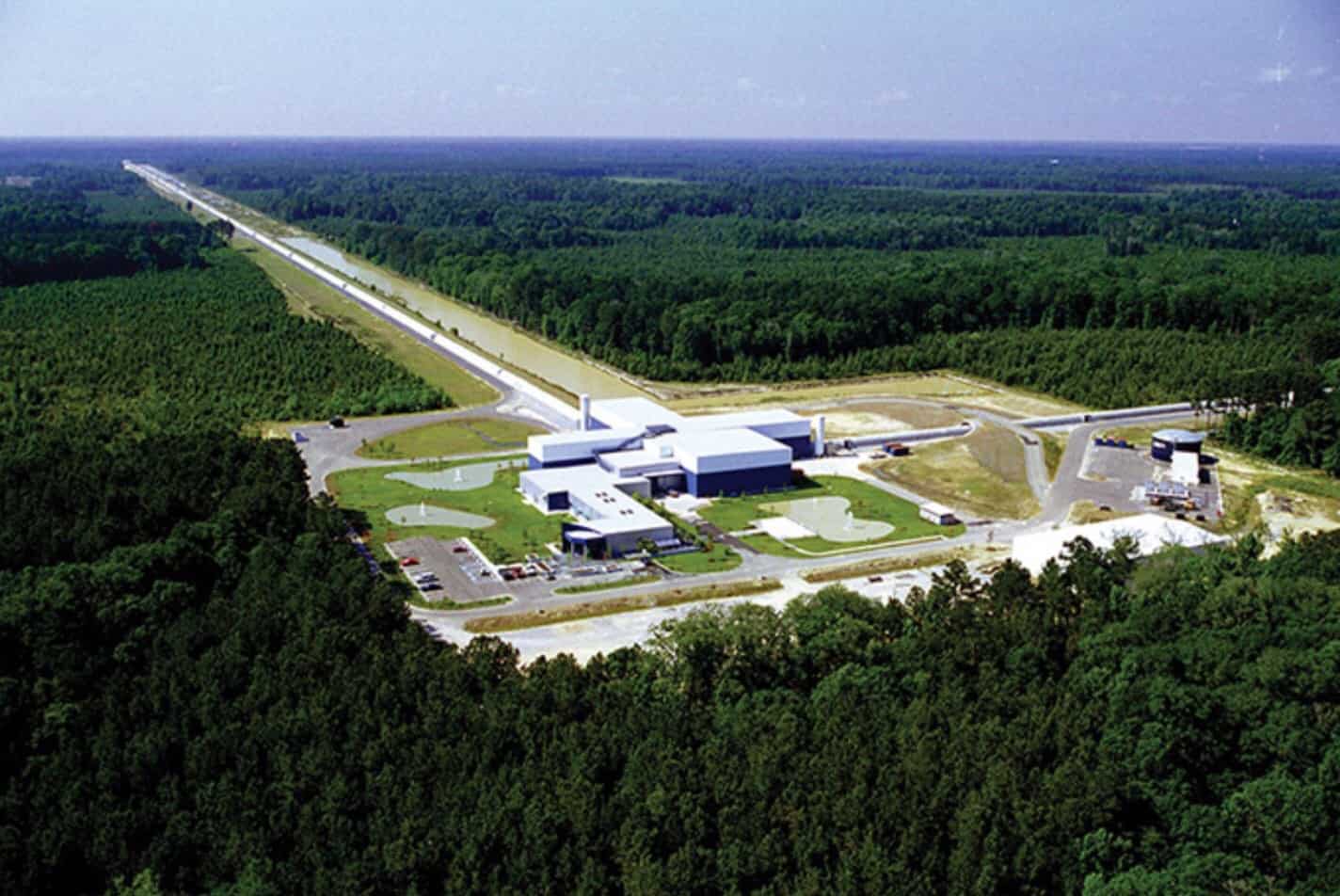
The LIGO detectors in Louisiana

By Hamish Johnston at the APS April Meeting in Salt Lake City 

I came to Salt Lake City hoping to glean a few golden nuggets of information about what future gravitational-wave detections we can expect from LIGO. What I found is that the collaboration is as tight-lipped as ever about discussing potential results. That’s fair enough and I understand the caution. However, I was hoping that the researchers would have loosened up a bit after their February announcement of the first gravitational-wave detection and share a little more with the general public.

So, what have I learned?

(more…)

HAWC spots TeV gamma ray flare

By Hamish Johnston at the APS April Meeting in Salt Lake City 

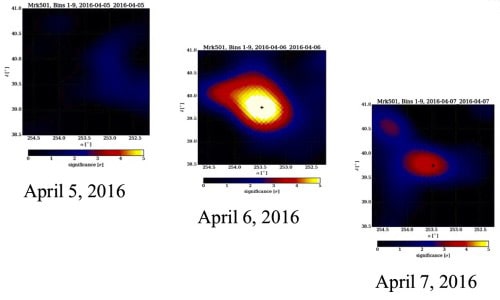
Talk about luck. Just 10 days before the April Meeting the High-Altitude Water Cherenkov (HAWC) gamma-ray observatory lit up with the detection of a galaxy that produced large numbers of teraelectronvolt (TeV) gamma rays for just one day (see image).

Dubbed Markarian 501, HAWC astrophysicists believe that the flare could be driven by a supermassive black hole at the centre of the galaxy. However, they admit that they don’t really understand how such flares occur.

(more…)

‘Cool’ Saharan ants’ silver hairs cause total internal reflection

A species of desert-dwelling ant is able to tolerate temperatures exceeding 50 °C because its body hairs act like prisms causing total internal reflection of light, according to the latest work from a team of physicists and biologists in Belgium. The researchers found that the hairs of the Saharan silver ant, Cataglyphis bombycina, provide a 10-fold increase in light reflection, prevent overheating and giving them their silver shimmer.

The Saharan silver ant is one of the most heat-tolerant animals on Earth. The insects can run across the sands of deserts in Egypt and on the Arabian Peninsula at midday, scavenging corpses of animals that succumb to the intense heat. Being able to tolerate temperatures above 50 °C allows them to forage during the hottest part of the day when most other animals, including predatory lizards, are sheltering from the heat.

Solar scavengers

To cope with the high temperatures, the ants limit the amount of time they spend out of their nests to just a few minutes and have evolved a number of physiological adaptations, such as longer legs and the production of heat-shock proteins prior to heat exposure. Last year, researchers in the US and Switzerland found that they also have uniquely shaped triangular hairs that help to reduce their body temperature.

In the latest research, Serge Aron from the Université Libre de Bruxelles in Belgium and colleagues, who weren’t involved in the earlier research, have further investigated the optical and thermoregulatory properties of the ants’ hairs. Using scanning electron microscopy, they confirmed that the hairs – which cover the dorsal side of the ants’ head, thorax and abdomen – are indeed triangular in cross-section. They also saw that the hair’s two upper surfaces (the top two facing away from the ants body, towards the Sun) are corrugated, with parallel groves running oblique to the longitudinal axis of the hairs, while the third side (that sits closest to the body of the ant) is flat and lies parallel to the surface of the ant.

Mirror mirror

Using ray-tracing optical models, the team found that the hairs reflect light like a prism: light enters through the upper surfaces of the hair and then bounces back off the flat bottom surface. For light in the visual spectrum, the reflectance is almost 100% for incidence angles ranging from 35° to 90°. At smaller incidence angles, light does get through, but it is likely to be reflected by other hairs underneath, according to the team. This mirror-like effect gives the ants their silver sheen and reduces heat absorption from sunlight.

The gap between adjacent corrugations (204 nm) is too short to cause diffraction of light. Instead, the researchers calculated that the groves slowly increase the refractive index of light as it enters the hair, reducing the amount of light reflected off the upper surfaces of the hair. “The corrugations increase the amount of light entering each hair and the amount of light exiting the hair after the total internal reflection,” explains Aron. “Overall, they enhance the total reflectance of the ants.”

Hair-loss heat

When the researchers compared shaved ants with unshaved ants, they found that the hairs produced an almost 10-fold increase in light reflection. To test how this affects body temperature, the researchers inserted digital thermometers into the abdomens of dead ants. When they exposed them to simulated Saharan summer midday sun, they found that within 90 seconds, the internal body temperature of hairy ants was up to 2 °C cooler than shaved ants.

Aron told physicsworld.com that if they had cylindrical hairs instead of triangular hairs, “thermal conditions would be unbearable for the ants”. As a result, the ants would either “not inhabit deserts” or would have to change their “biological rhythm, for example by foraging in early morning or late evening, when air and ground temperatures are less elevated – as is the case for most animals living in desert conditions”.

Intriguingly, one of the team, biophysicist Priscilla Simonis from the University of Namur in Belgium, has found that a species of ground-dwelling ant that inhabits rainforests and isn’t exposed to extreme temperatures has also evolved triangular hairs. The researchers suggest that due to the bright sheen that triangular hairs create, they could have evolved for other purposes besides thermoregulation, such as camouflage or communication.

The research is published in PLOS One.

An independent endeavour: the small companies trying to make fusion work

Fusion is just 20 years away, and always will be. Those who work on publicly funded fusion must be tired of hearing this well-worn joke, but it is not without an element of truth. After all, 2016 is the year in which ITER – the world’s first “more energy out than in” fusion reactor that is currently being built in France – was originally scheduled to begin operations, by confining its first plasma. ITER’s current schedule predicts that operations will actually begin in the mid-2020s – nearly 20 years after the facility was officially given the go-ahead – but that could yet be further delayed. The estimated cost, too, has tripled from around ¤5bn ($5.5bn) to ¤15bn.

ITER will be big because physics says it must be big: as a reactor grows, you get more output power from a given input power. At least, that is the conventional view. In January last year, however, physicist Alan Costly and others at the company Tokamak Energy in Abingdon, UK, published a paper claiming that the fusion-power gain depends only weakly on reactor size (Nucl. Fusion 55 033001). The paper, which has been downloaded more than 12,000 times, implies that gargantuan projects such as ITER are not the only route to fusion power. “The basic message is that smaller, lower-cost pilot plants and reactors may be feasible,” says Tokamak Energy’s chief executive, David Kingham.

Indeed, smaller and cheaper fusion plants are on the rise, but not in the public sphere. Tokamak Energy is one of several privately funded companies that have sprung up in recent years, each hoping to demonstrate that fusion does not need billions of euros and thousands of tonnes of metal. It was formed in 2009 by Mikhail Gryaznevich and Alan Sykes, who previously worked down the road from Abingdon at the Culham Centre for Fusion Energy (CCFE) – home to the Joint European Torus (JET), which is currently the world’s largest and most powerful fusion tokamak.

The principal workhorse of fusion research since its invention in the 1950s, the tokamak is a doughnut-shaped enclosure that confines a plasma – that is, the fusion reactants – in a magnetic field. As its name implies, Tokamak Energy is also developing tokamaks, but is focusing on those small enough to fit in rooms rather than aircraft hangers, and using more of a spherical (“cored apple”) shape rather than a doughnut design, like ITER.

A smaller footprint means the magnetic confinement is more important than ever, and for this reason Tokamak Energy is employing the latest high-temperature superconductors for its magnets. ITER, in contrast, is destined to rely on conventional superconducting magnets. Tokamak Energy’s current model, the 50 cm-wide ST25 HTC, ran its high-temperature superconducting magnets for 29 hours non-stop in July last year – a world first, according to Kingham.

The company has 14 permanent members of staff and, to date, $14m of private investment from sponsors including the manufacturers Oxford Instruments (also based in Abingdon) and the UK’s Institution of Mechanical Engineers. With such modest support, competing with the likes of ITER seems a challenge, yet Kingham says that the firm is not competing at all: where ITER and other publicly funded fusion hopes to proceed via rigorous scientific methodology, Tokamak Energy is proceeding by trial-and-error engineering.

“Build a device, see how it works, measure what you can, build the next device,” Kingham explains. “The outputs are proof-of-principle patents in some cases, rather than primarily scientific papers. We may sacrifice a depth of understanding about the science, but we hope to gain a whole lot of knowledge about how to engineer tokamaks and high-temperature superconducting magnets.”

Different approaches

Tokamak Energy is relatively conventional in opting for tokamak reactors, but this is not true of other private ventures. General Fusion in Burnaby, Canada, was founded in 2002 by plasma physicist and former laser-printer engineer Michel Laberge, and is based on the concept of an enclosed, liquid-metal vortex. Plasma is injected into the centre of the vortex before numerous pistons hammer on the outside of the enclosure, compressing the plasma and – theoretically, at least – sparking a fusion reaction.

It is a bold idea, but one that dates back to the 1970s with a programme called Linus at the US Naval Research Laboratory in Washington, DC. The main problem with Linus, says Laberge, is that the pistons could never strike the enclosure at exactly the same time. With some $100m of private investment, however, he and more than 60 colleagues are trying to solve this timing problem with modern computing systems – as well as demonstrate the various other complex sub-systems required to make this kind of “inertial confinement” fusion work.

Like Kingham, Laberge does not feel in competition with ITER – and, in fact, he believes the scientific approach provides a crucial resource. “All the physics those guys are learning – we want it, we need it,” he says. “Where we don’t quite agree with [ITER], is we don’t believe the standard superconducting tokamak will make a good power plant. In the future, it’s difficult to conceive that this machine will make electricity in a cost-effective way. It’s a fantastic experiment to learn the plasma physics, but as a power plant we think it’s not the way to go.” One of the main problems with ITER, Laberge says, is that the heat and emitted neutrons will melt and deteriorate the tokamak’s walls over time, forcing them to be replaced. “We have a wall that is already liquid,” he points out.

The apparent camaraderie among fusion start-ups even extends to what is considered to be the best-funded private venture: Tri Alpha Energy, based in Orange County, US. With backers including the Microsoft co-founder Paul Allen and Rusnano, a Russian government-owned private-equity company, it is attempting to develop a technology known as a colliding-beam fusion reactor, in which plasma vortices are fired into a cylindrical chamber containing the magnetic field. The geometry is simpler than a tokamak, yet still, in theory, generates closed magnetic-field lines, which are thought to be most effective at confining plasmas and promoting fusion.

There are many approaches to developing fusion-based technology and we can learn from all of them

Michl Binderbauer, Tri Alpha

“There are many approaches to developing fusion-based technology and we can learn from all of them,” says Michl Binderbauer, Tri Alpha’s chief technology officer. “For example, we are benefitting tremendously from the pioneering technology work done by ITER, especially related to the design and fabrication of superconducting magnet systems and its components. There are some advantages to a private company, including speed and flexibility, but we can learn from all approaches.”

In May last year, after 16 years in the business, Tri Alpha reported what it considers a “breakthrough”: a plasma heated to a temperature of 10 million degrees and confined for five milliseconds (Phys. Plasmas 22 056110). But CCFE director Steve Cowley, who is also chief executive officer of the UK Atomic Energy Authority, points out that JET can already reach 250 million degrees for half a second. Moreover, Tri Alpha is aiming to achieve proton–boron fusion – a reaction that is desirable for not generating any damaging neutrons but one that requires temperatures of more than four billion degrees. “I don’t want to pick holes in all of [these private ventures]; you could pick holes in what we’re doing,” says Cowley. “As a scientist, I’m looking for people who have new ideas – ideas we might adopt, or that change the field. And I don’t see any new ideas from these start-ups – yet.”

Cowley repudiates the paper by Costly and colleagues that claims smaller fusion reactors are viable, saying it relies on an empirically derived “confinement enhancement factor”, H. “The broad consensus is that it is difficult to achieve an H above 1,” says Cowley, yet the Tokamak Energy researchers take H to be over 1.5. Cowley is also sceptical of the engineering approach. “The idea that you can do this as Thomas Edison invented the lightbulb is attractive, but not all inventions work that way – especially where every step costs a lot of money,” he says. “Edison would make 50 bulbs, see which worked best, then try again. But if [a prototype] is going to cost millions, or billions, you need science so that you don’t have to build 50, you only need to build a few.”


Feedback on a scheme to cloak Earth from hostile aliens

David Kipping

By Hamish Johnston at the APS April Meeting in Salt Lake City 

Earlier today I caught up with David Kipping of Columbia University in the US after his fascinating talk about what could make an exoplanet habitable. I wanted to ask Kipping about a quirky paper that he and Alex Teachey published a few weeks ago, which I wrote about in the The Red Folder.

Kipping and Teachey described how a laser could be used to cloak the Earth from the prying eyes of an extraterrestrial civilization. The paper was published just before 1 April, so at the time I wasn’t sure whether the paper was legitimate (it is) and Kipping told me that publishing before April Fools’ Day did cause some confusion.

So what feedback has Kipping had about the paper?

(more…)

The accelerator tree bears fruit

Photograph of a tree in Salt Lake City

By Hamish Johnston at the APS April Meeting in Salt Lake City

This morning Mei Bai of the Jülich Institute for Nuclear Physics in Germany used a lovely phrase during her talk at the APS April Meeting. She showed a slide called the “accelerator tree”‘, which refers to a paper by Ugo Amaldi called “The importance of particle accelerators“.

(more…)

Merging black holes come to Salt Lake City

The Mormon Tabernacle in Salt Lake City

By Hamish Johnston at the APS April Meeting in Salt Lake City 

Will the LIGO collaboration announce today that it has detected more gravitational waves? There is a session this morning at 10.45 a.m. at the APS April Meeting with the enticing name “Results from Advanced LIGO“, and I think it’s safe to say that you should get there early if you want to get a seat.

In February the LIGO announced the first ever detection of a gravitational wave, which was made while the collaboration’s two detectors were being calibrated. Now that the experiment has been running since September 2015, it will be interesting to see if the first detection was a rare event that they were lucky to see,  or if LIGO will be detecting the mergers of black-hole pairs on a regular basis.

Stay tuned to for updates, and in the meantime enjoy this photograph I took of the Mormon Temple, which is across the road from the convention centre here in Salt Lake City.

Copyright © 2026 by IOP Publishing Ltd and individual contributors