The press coverage of this year’s Grammy awards taught me a new term: “producer inflation”. The term refers to the way making hit records seems to require bigger collaborations now than it did in years past, when teams of one or two producers sufficed to create all of the tracks. Pop star Taylor Swift’s latest Grammy-winning album, for example, boasted no fewer than 11 producers, while another hit album, by an artist called The Weeknd, listed 15.
The trend towards large collaborations is apparent in science, too. A paper with more than 5000 authors appeared last year in Physical Review Letters (2015 G Aad et al. (ATLAS Collaboration, CMS Collaboration) 114 191803), while the paper announcing the recent discovery of gravitational waves had more than 1000. This development, along with a perennial hunger for career advice among young scientists, has set the stage for Alaina Levine’s book Networking for Nerds: Find, Access and Land Hidden Game-Changing Career Opportunities Everywhere.
Networking for Nerds aims to teach you how to build relationships within this large pool of potential colleagues, mentors and collaborators via conferences, job interviews and online networking. As well as offering a dizzying array of networking dos and don’ts, the book takes readers on a tour of useful concepts and strategies such as branding, SWOT analysis (strengths, weaknesses, opportunities and threats), etiquette and social media. This is all standard stuff in some circles, particularly the business world, but it’s material that most scientists neglect during their education. The tips in the book include intriguing insights about when it’s appropriate to put your photograph on a business card (answer: it’s expected if you’re a realtor, but not if you’re a physicist), and even where you should place your knife and fork on your plate when you are done eating a formal meal (answer: in the US, they go at the 3 o’clock position; in Europe, at the 6 o’clock position).
Here I must disclose that, thanks in part to Levine’s own prodigious networking skills, I came to know her long before reading her book. For years, she’s been an active participant in the “Marketing for Scientists” group I founded on Facebook. So, as Levine’s valued professional contact, I take some pride in recommending her work to you. Indeed, the book explains exactly why professional contacts generally enjoy recommending one another. There’s nothing wrong with this sharing of information – so keep reading.
Levine understands us nerds because she has a bachelor’s degree in mathematics from the University of Arizona. She is also a science writer and a comedian. You should not, however, expect much comedy in Networking for Nerds. The tone is rather dry, despite the picture of goofy eyeglasses on the front cover. Bulleted lists of key points abound, and each chapter ends in a list of “Chapter Takeaways”. This textbook style is, perhaps, the book’s main limitation. While most readers of a book like this are probably not seeking a literary experience, while I was reading I found myself hungry for more narrative and a broader range of perspectives. Stories from nerds in various fields and from other career advice experts would have helped illustrate how the book’s techniques can apply across the diverse spectrum of scientific and academic subcultures. The prose provides many brief stories of Levine’s personal networking successes, but few stories of her failures that would help readers connect with her.
For a career advice book that’s easier to read and more comprehensive (at least for those aiming to stay in academia), try The Professor Is In: the Essential Guide To Turning Your PhD Into a Job. The author, Karen Kelsky, has a PhD in cultural anthropology from the University of Hawaii and rose to the rank of associate professor at the University of Illinois at Urbana-Champaign, serving for a while as the head of the Department of East Asian Languages and Cultures. If you think physics jobs in academia are rare, try getting a faculty position in an East Asian languages and cultures department! The odds are about the same as becoming an astronaut.
The Professor Is In takes on the “peon” mentality that holds back so many graduate students and explains how to think differently in order to succeed. Kelsky plays the academic curmudgeon, overworked and too busy to be bothered with your simpering – thank goodness she’s on your side. Don’t read this book to pick up new social-media tricks, or learn how to sniff out hidden opportunities such as unadvertised STEM jobs. But if you expect to walk right through the front door of academia, you’ll need Kelsky’s advice on putting together your application packages, writing your essays and keeping your hopes realistic.
As a mentor of students and postdocs, I expect I’ll find both of these books useful additions to my library. I’ll hand Networking for Nerds to the shy first-year graduate student to help them break out of their shell when they go to their first science conference. The fourth-year student who is starting to peer sideways at those faculty job listings will get The Professor Is In. But whichever book you find yourself handing your students, you might want to temper it with a bit of encouragement, because all this advice can get onerous. Ultimately, my favourite moment in these books came in chapter two of Networking for Nerds, where Levine acts on her sympathy for the beleaguered junior researcher by delivering, in a few words, a much-needed confidence boost. “You are a lot more important than you might have thought,” she writes, like a coach cheering a prize-fighter mid-bout. She’s correct. As a trained scientist or engineer, you are vastly important to the very future of humankind, wherever you end up working. And whether you’re wandering a vast, crowded conference room, or placing your CV on a huge pile of applications, your future rests on a strong belief in yourself.
The Professor Is In: the Essential Guide to Turning Your PhD Into a Job by Karen Kelsky 2015 Three Rivers Press £11.99/$15.00pb 448pp
Networking for Nerds: Find, Access and Land Hidden Game-Changing Career Opportunities Everywhere by Alaina G Levine 2015 Wiley £20.50/$29.95pb 248pp
A new simpler, cheaper and potentially more effective way to prevent radio antennas from picking up unwanted signals has been created by researchers in the US. With further development, the technique could also be used to help prevent thermophotovoltaic cells from re-emitting radiation they absorb – according to the team.
The laws of electromagnetism work exactly the same way if you run time in the opposite direction. One logical consequence of this is that an antenna designed to broadcast at a certain radio frequency will also be very good at absorbing radiation at that frequency. This is problematic for broadcast radio antennas, which will absorb radiation that has bounced back from surrounding objects – something that can have a negative impact on their operation. While there are ways of minimizing the effect of these echoes, they can be expensive and reduce the performance of the antenna.
Now, Andrea Alù and colleagues at the University of Texas at Austin have developed a new way of dealing with echoes. Their design is based on a traditional leaky-wave antenna, in which electromagnetic waves of certain frequencies couple to the space around the antenna and “leak out” as they travel along it. They added a series of variable capacitors called varactors to the antenna circuit. The capacitance of a varactor varies with the voltage applied to it, and this is used to adjust the operational frequency of the antenna. The researchers added a second, lower-frequency wave sent down the same antenna. This second wave does not couple to the space around the antenna and is therefore not radiated. However, the wave modulates the voltage on the varactors and therefore alters the operational frequency of the antenna while it is transmitting.
Lower symmetry
The modulation caused by the second wave means that the antenna no longer has time-reversal symmetry. Waves emitted from the antenna are produced by waves travelling in the same direction as the modulation. However, if the antenna absorbs reflected signals coming back from the broadcast direction, this results in waves in the antenna travelling in the opposite direction to the modulation. This asymmetry between emission and absorption allows the antenna to be operated such that reflected waves do not couple efficiently back into the antenna.
“All antennas commonly used today are static,” explains Alù. “So they look the same for a signal that goes out in a certain direction and a signal that comes back from that direction. Our antenna does not look the same because there is this extra temporal modulation.” A similar effect could be achieved by physically shaking the antenna, says Alù, but shaking an antenna at 100 MHz is no simple matter. Nevertheless, the researchers are experimenting with using micro-electromechanical resonators, which could overcome some technical limitations of varactors.
Alù says that the researchers have filed a patent on their antenna and received commercial interest. “At this point, it becomes more of an engineering and development problem than a conceptual one,” he says. They are now looking at extending the concept to higher frequencies, where they believe it could be applied to, for example, thermophotovoltaics – energy-harvesting devices that convert infrared radiation to electricity. Here, designers face the opposite problem – how to create a device that absorbs infrared radiation without re-emitting it as the device warms up.
Important applications
George Eleftheriades of the University of Toronto describes the new antenna as “significant”, saying it “is compatible to standard integrated-circuit techniques and thus can eventually find important applications in telecommunications”. He says that implementation challenges could include “the handling of high powers during transmission, the need to operate over wide bandwidths or multiple frequencies and reducing losses on the voltage-controlled capacitors”. “I believe eventually people would overcome these issues as they are not fundamental,” he concludes.
Research by the global consulting firm McKinsey & Company, published in its 2015 Diversity Matters report, shows that there is a positive correlation between more diverse companies and good financial performance. Companies with greater gender diversity were found to outperform their national industry median by 15% and those with greater ethnic diversity by 35%. Conversely, companies in the bottom quartile for both gender and ethnicity were actually seen to be lagging behind their competitors. In the UK, the highest uplift of earnings before taxes corresponded to companies with greater gender diversity at senior levels. The key message is that a more diverse workforce corresponds to higher financial returns.
While these are correlations and not causation, the McKinsey report hypothesized that this was because the more diversity within a company, the more it is making the most of the top talent. In short, if a firm recruits from the widest possible talent pool and retains and promotes the most talented people, it will not only have higher levels of employee satisfaction and decision-making but will also reap financial benefits.
But how does this translate to physics? In the UK, once students move beyond compulsory education (after age 16), those studying physics no longer reflect the diversity of the general population. UK government data show that just 20% of those taking A-level and undergraduate degrees in physics are girls. Students from black ethnic groups are roughly half as likely to take A-level physics as those from other ethnic groups. Students from the highest socioeconomic backgrounds, on the other hand, are not only eight times more likely to take A-level physics than those from the lowest, but they are also 20 times more likely to get an A.
We need to think seriously about whether we are doing enough to attract, recruit and retain the most talented potential physicists
It can be easy to dismiss this vision as something we, as individuals, have no power to influence. However, there are things we can do, on both a personal and organizational level, to change physics for the better. In my time working on the Diversity Programme of the Institute of Physics (IOP), which publishes Physics World, I have been involved with collecting data, examining the research and running initiatives on diversity in physics. Here I highlight my top five tips that I think can help all of us really tune in to our physics talent.
1 Do the research, check the science
There is a widespread notion that gender differences are innately wired and that boys and girls have different brains. You only have to look at how companies market toys by gender to even the youngest babies to see how entrenched the notion of innate gender differences is. However, the latest neuroscience studies show that there are as many differences within the genders as there are between the genders. In brain terms, the science seems to be saying that there is not really such a thing as a “typical” boy’s brain or a “typical” girl’s brain. So let’s start squashing the notion completely that you have to have a “boy’s brain” to do physics or that physics is, somehow, a “boy’s subject”.
But it’s not just gender differences that we need to think about. As the ASPIRES project run by King’s College London in the UK discovered, people hold very strong beliefs – even children as young as 10 think that you have to be really clever to be a scientist. We need to make sure children are not opting out of physics simply because they do not think they are clever enough. So do the research, check the science and start challenging assumptions about brains.
2 Be your own community builder
It is easy to think of diversity, equality or inclusion as being someone else’s job, problem or issue to tackle. But you don’t have to wait to be invited. One of the first places to start is to consider your own community and networks. What are your networks like? Look around the room. Does everyone look (more or less) like you? Do you always network with the same people, go to conferences with people with similar views and so on? You can start by changing the way you behave.
In the spotlight Role models in the public eye, such as space scientist Maggie Aderin-Pocock, can help children to see science as an option for everyone. (Courtesy: Take Three Management)
Instead of always chatting to the same people over coffee, look for someone completely different. They may be young, or old, of a different ethnicity or gender, or disabled. Or, think about who’s not there – are there people who don’t attend coffee, lunches and so on? You can join a new network and work with others, be an ally for a particular under-represented group, join a social-media campaign, a group such as your local ScienceGrrl chapter, or find out more about the work the IOP is doing and get involved in that. Make your own invitation and build new communities.
3 Think about your own attitudes, and get tested!
The words “diversity” and “inclusion” are often used interchangeably, but they mean different things. Generally, diversity can be thought of as the way in which we all differ – our different characteristics, backgrounds, beliefs, ages, genders and so on. Inclusion means actively involving and engaging with those differences to ensure that people’s distinct skills, experiences and perspectives are valued and supported so that everyone can contribute to the work or learning environment.
Essentially, diversity means acknowledging that we are all different and inclusion means ensuring that those differences are not a barrier to studying, being offered a job or promotion or to taking part in activities. Understanding this also means thinking about how your attitudes and opinions shape the way you include (or not) those from different groups. Everyone has unconscious biases – even me – and you can test yours using Harvard University’s Implicit Association Tests (see “So you think you’re not biased?” pp39–42). Take a few of these tests to find out more about yourself, and then do some training and reading up about unconscious biases and how to minimize the impact they have on the decisions you make. Recognize that being rushed, stressed, tired or hungry can all have an impact on how you make decisions. Take a personal journey and encourage others to do the same. After all, we all want to feel included and it’s no different for physicists.
4 Know your metrics
In any organization, being able to identify and measure the extent of your progress is important, but you need to know your baseline first to see how well you are doing. Understanding what the characteristics are of those who are currently part of your organization or community will enable you to understand where you need to target your action for change. Gather data and evidence to see what the issues really are, to avoid making wrong assumptions about who your minority groups are.
Once you have defined who or what you want to measure, you need to work out a way of doing this. How many students or staff did you recruit from minority groups last year? What are the proportions that applied, were interviewed, were offered, that accepted? Are these proportions the same? How many women returned from maternity leave? How many men took paternity leave? How many disabled staff do you have? How many speakers from minority groups did you invite to events last year?
Know your key metrics and be inquisitive about them. This will allow you to really think about where your short-, medium- and long-term cultural change is going to come from. Develop a personal action plan for change or an organizational one. Work out who is going to do what and when and ensure they are responsible and accountable for it. Measure, monitor, review, progress.
5 Don’t go on automatic pilot
When Liz Whitelegg and others from the Open University conducted their Invisible Witnesses research, they found that female scientists in children’s TV programmes were few and far between. And when they asked young children to draw a scientist, most pictures were of men, wearing a white lab coat, and usually with safety goggles on. Where are children getting these messages from? Who are our role models in physics and how are we promoting them? How many role models from under-represented groups do you actually know of?
Every time you meet someone who challenges your stereotype and bucks the “norm”, remember them for the future so that you can bring out examples of people from under-represented groups to help reinforce this in others. Try to use them as often as possible and think of them when you are writing articles, inviting speakers or giving talks. Such steps will help to recognize, celebrate and champion the achievements of a rich diversity of physicists, and provide a positive feedback loop.
A new physical mechanism that causes particles of different sizes to separate as paint dries has been identified by physicists in the UK and France. Based on computer simulations and experiments, the research suggests that smaller particles join forces to push larger particles in one direction, resulting in stratified layers of dried material. The work upends conventional wisdom about how paint dries and could lead to the development of new techniques for making layered materials.
When a thin liquid film containing paint or other tiny particles dries on a surface, two competing effects drive their motion. One is random Brownian motion, which is an equilibrium-seeking process that tends to distribute the particles evenly throughout the film. The other is evaporation, which tends to drive the system away from equilibrium and can lead to the self-organization of large-scale structures. Tiny particles in a disc of spilled coffee, for example, move towards the edge during evaporation to create a familiar “coffee ring”.
In mixtures with particles of two different sizes, the smaller particles have faster Brownian motion than the larger particles, and so should redistribute themselves away from the evaporating surface of the mixture more quickly than the larger particles. Larger particles should therefore build up on the air side of an evaporating film, with smaller particles on the other side.
Upside down
Now, Andrea Fortini, Ignacio Martín-Fabiani and colleagues at the University of Surrey and the University of Claude Bernard Lyon have found that the opposite is true in the mixtures they have studied. Smaller particles, they found, congregate near the air surface, not on the other side.
The researchers discovered this surprising effect by first doing computer simulations of a number of different mixtures containing large and small spherical particles with different relative sizes. They also simulated mixtures with different relative abundances of large and small particles.
They found that the larger particles move away from the air interface for mixtures in which the ratio of the particle diameters ranged from 2:1 to 14:1. However, for separation to occur there had to be at least 200 times more small particles than large particles in the mixture. These theoretical predictions were backed up by atomic force microscopy experiments using acrylic paints that contain particles with diameters of 55 nm and 385 nm, which have a ratio of 7:1.
Inward force
The team has come up with an explanation for the surprising effect that is based on an analysis of the forces on individual particles. As liquid evaporates, the density of particles near that surface increases, creating an inward force as the particles try to move away from the surface. By considering how the particles push against each other, the researchers worked out that the inward velocity of a particle is proportional to the square of its diameter. For the paint, large particles should therefore move 49 times faster than the small particles – something that was observed experimentally.
Understanding this effect, Fortini says, could lead to a range of useful materials. “This type of ‘self-layering’ in a coating could be very useful,” he says. “In a sunscreen, most of the sunlight-blocking particles could be designed to push their way to the top, leaving particles that can adhere to the skin near the bottom of the coating.” Other possible applications include creating layered films for electronics, ink printing and, of course, better paint.
The wrong way: where is the liquid nitrogen and duck fat? (CC BY 2.0 _BuBBy_)
By Hamish Johnston
How do you cook the perfect steak? Materials scientist Mark Miodownik of University College London has the answer. To cook his medium-rare steak (pink in the middle with a seared coating on the outside), Miodownik first seals the steak in a vacuum bag and places it in a warm water bath until it reaches 55 °C. He then dips it in liquid nitrogen for 30 s to chill the outer layer without freezing the middle. If that wasn’t unconventional enough, he then throws it into a deep-fat fryer containing duck fat. The result? “A lusciously seared steak, medium rare all the way through. And not a pan in sight!” says Miodownik. The BBC has put together a nice animation of the recipe: “What’s the weirdest way to cook a steak?”.
A new technique that uses laser pulses to detect concealed radioactive materials has been proposed by physicists at the University of Maryland in the US. It works by spotting ionized oxygen molecules created by gamma radiation and uses relatively cheap lasers. The technique is being field-tested and could be used for the remote detection of materials used to create “dirty bombs”, which combine conventional explosives with radioactive materials.
Despite being strictly controlled, radioactive materials are used routinely in hospitals and also for industrial-imaging applications such as testing welded seams. Terrorists could therefore, in principle, get their hands on the ingredients for making a dirty bomb. While the conventional blast from such a bomb is likely to be more deadly than the resulting radioactive contamination, dirty bombs could contaminate large areas, and lead to public panic and costly clean-up operations.
Security services are therefore keen to develop ways of detecting contraband radioactive material without have to get so close to a suspect object as to pose a health risk to personnel. One way of detecting nuclear contraband is to directly measure the radiation it emits using a Geiger counter or other radiation detector. This is often not practical, however, because it requires getting relatively close to a suspect object.
Environmental effect
Another approach is to measure the effect of emitted radiation on the surrounding environment, ideally from several hundred metres away. In the case of gamma-ray emitters, such as cobalt-60 and isotopes of polonium, emitted radiation collides with air molecules creating a cascade of lots of low-energy electrons. Some of these electrons will then attach themselves to oxygen molecules in the air, creating negative ions.
Now, Phillip Sprangle and colleagues in Maryland have worked out a way to detect the presence of these ions using two lasers. Their technique involves firing a low-intensity laser beam at the air surrounding a radioactive source, which increases the number of negative ions created by the gamma rays. A high-intensity laser pulse is then fired at the same region to create an avalanche electrical breakdown – essentially a spark that forms in the air. Once the spark has fully formed, the air acts like a mirror, reflecting the laser pulse back to a detector.
Knowing when the pulse is fired and when it is reflected back gives the time required for the spark to form. This time can then be related to the number of oxygen molecules ionized by the radioactive source – and the strength of the source itself. So by comparing the spark formation times in two different regions, the technique can determine if there is more radioactive material in one region than another.
Small quantities
The team has calculated that its technique could be used to detect 10 mg of cobalt-60 from a distance of several hundred metres. This could be done by shining the lasers at a region about 0.5 m away from the radioactive material. Sprangle points out that 10 mg is a much smaller amount of material than would be used in an effective dirty bomb.
Although other techniques have been proposed for measuring electrical breakdown near radioactive sources, they have their challenges. One uses terahertz radiation, which is difficult to create and detect, while another involves a high-powered infrared laser that has to be fired through the region of interest and then on to a detector behind the target. “We believe that our concept is more immediately practical, as it relies on well-developed technology, and also doesn’t require the detector to be located opposite the target from the laser source,” Sprangle told physicsworld.com.
He points out, however, that the technique is not appropriate for detecting all types of radioactive material. “Our technique would have difficulty detecting charged-particle emitters, as the emitted particles typically have very short ranges compared to gamma emitters such as cobalt-60, so they only cause elevated ion levels very close to the radioactive source.”
The technique is currently being tested at the University of Maryland and is described in Physics of Plasmas.
Let’s get right to the point: diversity is good for business. Differences in culture, background, language, race, gender, education and more all influence the way teams perform in a dynamic marketplace, and the direction of that influence is generally positive. Indeed, a landmark 2009 study of US companies found that organizations with more racial and gender diversity in their workforces do better on sales, customer numbers and other measures of business success (2009 American Sociological Review74 208). So when companies push for greater diversity in hiring, they aren’t enacting policies out of a philanthropic philosophy. On the contrary, they realize that diversity feeds into their bottom line via some fairly simple maths: more diversity = better innovations = better products = larger market share = > £$€¥.
One business leader who shares this view is Seema Kumar, who holds a bachelor’s degree in physics and is now vice-president for innovation and global health communications at Johnson & Johnson. “Diversity isn’t something that sits on the side,” Kumar attests. “It should be part of the DNA of who we are as people, groups, companies and societies.” With 135,000 employees and millions of customers worldwide, she explains, if Johnson & Johnson doesn’t think about diversity and inclusion in its workforce, then “we are missing opportunities. Innovation is our lifeblood, and it is inspired by a diversity of people and viewpoints”.
Miriam Keshani is another strong advocate of diversity in the workplace. A physicist who earned a Master’s degree in nanomaterials from the University of Cambridge, Keshani works at Sparrho, a London-based start-up that created a novel search and recommendation engine for scientific information. As the firm’s “chief happiness officer”, she explains, her job is to represent the interests of people who use Sparrho’s products. Doing that well requires her to be open to different perspectives, and it helps that in her small firm of five people, there are five nationalities represented and seven languages spoken. “Managers who hire only in their own image lead to a monoculture, which [stifles] innovation,” Keshani says. “We won’t succeed if we can’t develop something innovative, and we can’t be innovative if we don’t include diversity in the way we make product development and hiring decisions.”
Despite the evidence and the experiences of some enthusiastic champions, though, not all employers are fully on board. It is one thing for an organization to sing “hooray for diversity”, but something quite another to ensure that its mission, hiring practices and policies all line up in support of a more inclusive zeitgeist. And unfortunately, the low numbers of women and minorities working in physics-related fields suggest that much remains to be done. So how can physics graduates find employers whose commitment to diversity goes beyond lip service?
Truth or public relations?
A good starting point for analysing a company’s devotion to non-uniformity is to examine the set of policies that fly under the banner of diversity, inclusion and equity. The details matter. For example, not all diversity policies specifically mention transgender people.
Ruth Mills, an IT specialist with a Master’s degree in chemistry who works at Connect Advertising and Marketing, a Shrewsbury-based advertising agency, notes that this can be particularly concerning for those who are still in the process of transitioning to their new identity. Mills is transgender, and her own experience was positive: when she transitioned full time to female in 2013, her employer was very supportive. “If you have someone who is transgender who can transition and work as themselves, it is so much more natural and they become so much happier, and more productive, creative, engaged, communicative and collaborative,” she says, adding that prospective employees should look for policy language that specifically mentions transitioning, rather than “a blanket diversity statement”.
When you research a company or university, it’s also worth paying attention to the images you see on its website, annual report or videos. Do you see a mixture of faces? Or a sea of clones? According to Meg O’Connell – president of Global Disability Inclusion, a firm that consults with companies to implement inclusive policies and programmes for people with disabilities – marketing materials can reveal a company’s hidden successes or obvious biases. In particular, she looks for photos of people in wheelchairs or with other visible disabilities in corporate publicity material, as this may be a sign that the firm supports those with disabilities and is willing to provide accommodations and tools to help them succeed.
Others, however, are sceptical about whether diversity in promotional products reveals anything useful about the true diversity of a company. Chanda Prescod-Weinstein, a cosmology postdoc at the Massachusetts Institute of Technology, is a longtime advocate for under-represented minorities in science. She says that in her experience, “pictures are always public relations”.
Jabbar Bennett, associate provost for diversity and inclusion at Northwestern University, agrees that appearances can be telling, yet deceiving. Suppose you’re on an interview, he says, and “you are a woman or a person of colour, and the only people you’re seeing during the interview are women and people of colour”. This could be a sign that there is something amiss, he explains, “as these individuals alone most likely do not constitute the entire search committee”. Misguided, ignorant, or plain inappropriate hiring practices may “put people of colour in a pool because they need a person of colour on the list to say they are diverse”.
But while the presence of diverse faces in marketing materials or among a company’s current employees is not a cast-iron guarantee, O’Connell argues that their absence is probably worse. When she scrutinizes a diversity mission declaration and finds that the extent of the company’s stance on inclusiveness is simply the statement “we don’t discriminate”, she says, “that tells me they are not being open, welcome and inclusive”. Similarly, if the company’s careers page doesn’t mention employees with disabilities, notes O’Connell, “the talent will go elsewhere”.
In the hiring line
The actual hiring process can be another useful guide. When Rolf Danner, an openly gay physicist, was recruited by global security firm Northrop Grumman, “a big part of the decision-making process was whether they offered domestic partner benefits”, he says. “They were listed as achieving 100% on the Human Rights Index and on the policy side they checked all the boxes.” The corporation also had a non-discrimination policy based on sexual orientation and related affinity groups. “I was really excited about this!” he exclaims.
At the same time, though, Danner was also cautious. “People’s thinking takes longer than policies to catch up,” he warns. “What’s more important is what it’s like at the everyday working level. ‘Acceptance’ is not good enough for me.” Danner took a number of steps to determine how inclusive his potential company would be. In his interview, he told the decision-maker that he was openly gay and asked what the work environment was like. He also contacted the people with whom he would be collaborating to “gauge their comfort level” and took note of the language they used in chatting with him. For example, a red flag might have been if “I said something about my husband, and they echoed back ‘your partner’” – an indication that the speaker was not fully comfortable with the idea of gay families and relationships.
Reassured by what he heard, Danner accepted the job, and after he was hired in 2004, he got in touch with Northrop Grumman’s LGBT affinity group. Although the fact that the affinity group existed was a good sign of the company’s stance on diversity, Danner recalls that when he first met with the chair of the LGBT group, the other man asked Danner if it was okay for them to be seen together in the cafeteria – implying that there might be a concern over Danner being “outed by affiliation”, he says. “I was surprised by this. If this is what employees are worried about, then they self-censor,” and can’t do their best work.
Nowadays, Danner works for the Jet Propulsion Laboratory, and “the world for LGBT employees has really changed a lot in these 12 years”. His CV lists his affiliation with the US National Organization of Gay and Lesbian Scientists and Technical Professionals – in part, he says, as a shortcut to save time as to whether an organization is even worth his time. “Do your due diligence,” he recommends. “You don’t want to regret joining the company after you make the investment. Ask questions, even if they are hard. The company may just surprise you.”
How firms find the best employees
Companies dedicated to diversity and inclusion will devote resources to recruit at conferences and events and through publications and networks that attract diverse individuals. For example, to broaden the pipeline of STEM professionals from underrepresented groups, Kumar points out that Johnson & Johnson has teamed up with the New York Academy of Sciences and major firms PepsiCo Foundation, ARM and Cisco to launch the Global STEM Alliance, which consists of 230 partners in more than 100 countries. The New York Academy’s senior vice-president for education, Meghan Groome, explains that its purpose is to diversify and keep more people in the STEM pipeline.
But positive actions aren’t limited to large organizations. Keshani notes that to improve its market potential, Sparrho regularly recruits at regional networking events. “In London, there are lots of events that celebrate diversity,” she says, “and we make it a point to go there.” Sparrho is also involved with organizations such as Code First: Girls, which works to increase the number of women in tech careers.
A major aspect of attracting top talent is ensuring that job advertisements do not convey a misleading impression of who the ideal candidate should be, and therefore contribute to perceived biases. Kyler Kuehn, an instrument scientist at the Australian Astronomical Observatory (AAO) in Sydney, is a member of the AAO diversity committee. The group provides advice to internal hiring committees, including on issues of using gender-neutral language in marketing materials. “We want the absolutely best candidate,” he says, “and using language like ‘he’ or ‘him’ can discourage talented women from applying.”
Kuehn observes that polices and cultures that support inclusivity and equity often benefit employers as well as employees. Kuehn’s organization, for example, has a generous family leave policy and a very family-friendly philosophy, which, he says, makes him “feel more loyal”. Ultimately, the biggest thing a company can do for both its own success and that of its staff is to let employees be themselves. At her firm, says Mills, “nobody gives a damn who you are, as long as you are good at your job, present yourself professionally and contribute to the team. It’s pretty cool”.
Signs of a supportive employer
Do they have a noticeably diverse employee base?
Do they have policies relating to hiring people from different backgrounds and accommodating the needs of people of different abilities?
Do they have any high-profile executives who are open about being (for example) disabled, gay or transgender in their public profiles?
Do they have an executive dedicated to diversity initiatives, such as a chief diversity officer?
Do they advertise with and recruit at events put on by organizations that foster diversity, such as the Women in Science and Engineering (WISE) campaign?
Are they participating in formal initiatives to support diversity in science, such as the Athena SWAN campaign or Project Juno?
Are there groups within the company to help mentor and support women and members of other under-represented minorities in science, technology, engineering and maths (STEM)?
Is there “top-down” support for these groups, as opposed to employees needing to organize them on their own in an unofficial or ad hoc fashion?
Do they use the same language as you do in describing yourself? For example, if you mention your spouse, do they respond by using the word “partner” instead?
Do they provide opportunities for prospective employees to communicate with current staff and inquire about their experiences at the firm?
Hitting the ‘eject’ button
Suppose you followed all the advice, did your due diligence, and found a company or university that seemed welcoming and supportive of you and your professional goals. But then, unfortunately, something changed. Maybe your wonderful manager left and was replaced by someone much less inclusive. Or maybe your initially friendly and warm PhD supervisor turned out to be “friendly” in a decidedly uncomfortable, unprofessional and inappropriate way. Once you find yourself in a nasty situation, with a boss or a colleague who has crossed the line, how do you escape?
In academic science, especially, there is no easy answer. Protégés’ reputations are tied to their principal investigators’ outputs. The overall community is small, and your sub-sub-sub field may be practically pico-sized, with perhaps only three other people on the planet who understand your area of expertise (and who seemingly hold all the cards in terms of job opportunities). And at the centre of this minute cluster is “Dr Wolf”, the individual who is causing you trouble and distress.
(Courtesy: iStock/PhotoProdra)
In this kind of situation, the first thing to do is to recognize that you are not imagining it. “Don’t internalize it and talk yourself out of it. Don’t play it down,” stresses Miriam Keshani, a physicist who works at a London-based IT start-up called Sparrho. “Question the incident rather than questioning yourself. Understand the issues, and then talk to someone who can offer neutral advice.” Indeed, Andrew Faas, a workplace consultant and author of The Bully’s Trap: Bullying in the Workplace (Tate Publishing, 2015), affirms “you must rely on your gut instinct that there is something out of the norm”. This is especially critical when others might try to “rationalize the behaviour and say ‘oh, that’s just his management style’ ”. If you feel there is something wrong, there is something wrong.
Faas recommends making a record of all of the things Dr Wolf is doing, from seemingly small actions (such as excluding you from meetings) to larger actions such as unwelcome touching or overtly offensive and demeaning language. Take note of when and where the incident occurred and who may have witnessed it. Educate yourself about your legal rights (which will vary depending on where you live and, sometimes, who your employer is), and seek out “safe harbours” of groups who can assist you. Astronomy Allies is one such assembly that has emerged in recent years; according to its website (www.astronomyallies.com), its primary purpose is to “listen, and to provide you with a safe space to air your frustrations and talk through what you want to do next”.
The decision of what to do next will depend on your individual circumstances. However, do bear in mind that you have a right (not merely a privilege) to work in an environment that is physically and mentally safe. You do not have to “take it”. No matter how powerless you may feel, you do have the power to extract yourself from Dr Wolf’s clutches, and part of that power is determining how you will do this. For some, this will involve seeking help from others, sharing what has taken place and filing formal (perhaps even criminal) charges. For others, it may mean that you physically remove yourself from Dr Wolf’s orbit. You are a sovereign person, so you and only you get to decide what you want to do. And if you need a bit of motivation, consider this: “Life’s too short,” says Keshani. “Leave if you are not happy.”
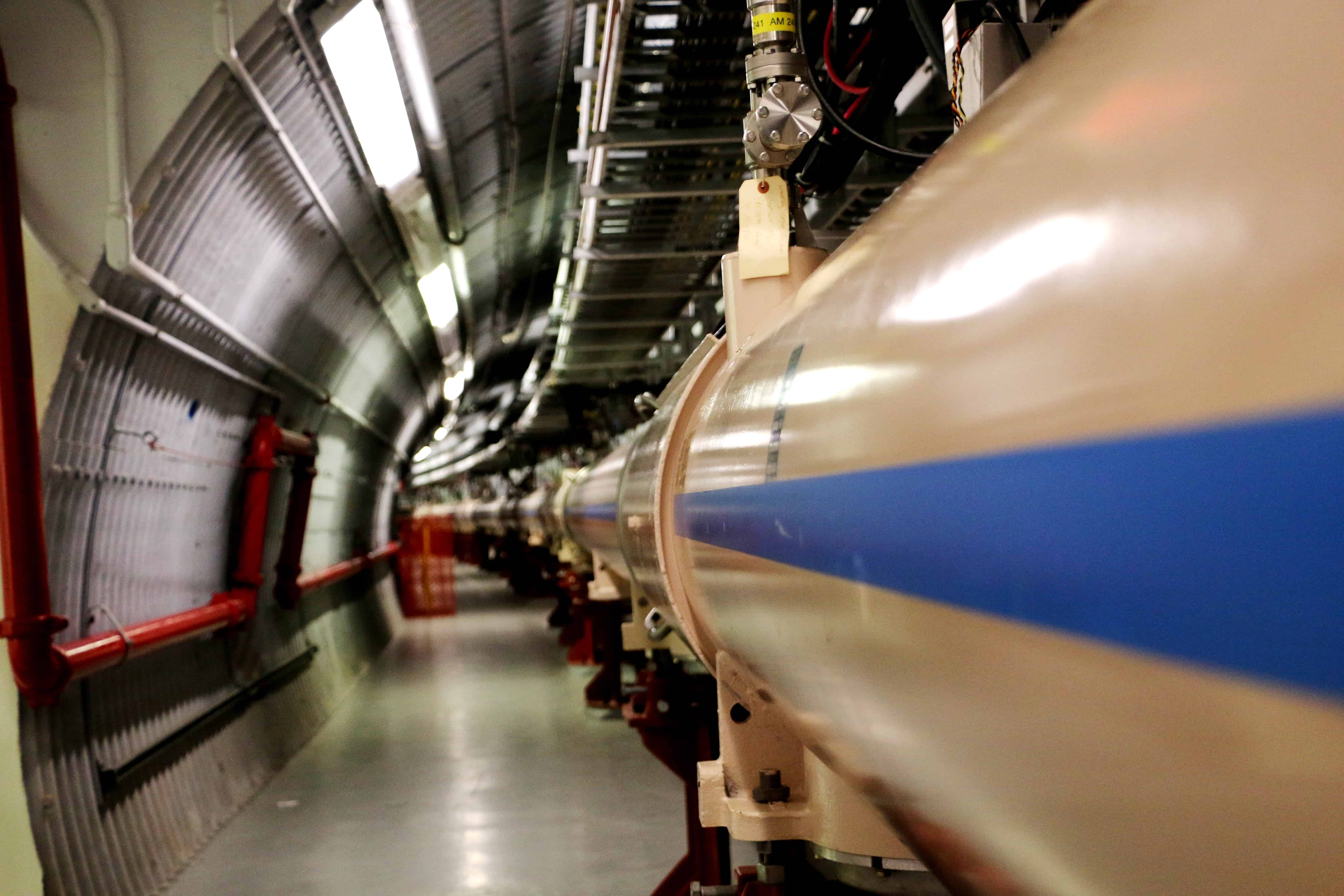
Beam me down: in the RHIC tunnel. (Courtesy: Tushna Commissariat)
By Tushna Commissariat in New York City, US
I’m not one to rejoice in someone else’s misfortune, but I must admit that I couldn’t help but be a bit pleased when I heard that the Relativistic Heavy Ion Collider (RHIC) at the Brookhaven National Laboratory (BNL) had a malfunction last Friday. You see, I happened to be visiting the collider and its detectors yesterday, and if a malfunctioning superconducting magnet had not shorted a diode last Friday, I would not have had the chance to go down into the collider tunnel, which was a great experience.
RHIC – which, along with the Large Hadron Collider at CERN, is the only other detector capable of colliding heavy ions and is, in fact, the only spin-polarized collider in the world – has been running since the year 2000, and accelerator director Wolfram Fischer tells me that I am rather “lucky” as “failed magnets are very rare”. Indeed, he said that after initial teething problems when RHIC was switched on, this was the first such magnet failure that has occurred in the past 15 years. But fear not, the RHIC maintenance crew is already hard at work – the diode will soon be replaced and the collider should be up and running again in the next few days.
Quantum superposition has been used to compare data from two different sources more efficiently than is possible, even in principle, on a conventional computer. The scheme is called “quantum fingerprinting” and has been demonstrated by physicists in China. It could ultimately lead to better large-scale integrated circuits and more energy-efficient communication.
Quantum fingerprinting offers a way of minimizing the amount of information that is transferred between physically separated computers that are working together to solve a problem. It involves two people – Alice and Bob – each sending a file containing n bits of data to a third-party referee, whose job is to judge whether or not the two files are identical. A practical example could be a security system that compares a person’s fingerprint to a digital image.
Reasonable accuracy
Proposed theoretically in 2001, quantum fingerprinting can make a comparison in an exponentially more efficient way than is possible using conventional computers. While the only way to ensure a complete comparison is to send the two files in their entirety, it turns out that a reasonably accurate comparison can be achieved classically by sending just the square root of the number of bits.
Quantum mechanics allows comparisons with even less data because a quantum bit (qubit) of information can exist not just as a zero or a one but, in principle at least, also in an infinite number of intermediate states. The vast increase in the number of possible combinations of states for a given number means that the number of physical bits that need to be transmitted scales logarithmically with the number of bits in the two files. As such, quantum fingerprinting permits an exponential reduction in data-transmission rates over classical algorithms.
Entangled qubits
The original proposal for quantum fingerprinting involved using log n highly entangled qubits, which Norbert Lütkenhaus of the University of Waterloo in Canada says is still many more qubits than can be implemented using today’s technology. In 2014 he and Juan Miguel Arrazola, now at the National University of Singapore, unveiled a more practical scheme. This involves Alice and Bob encoding their n bits in the optical phase of a series of laser pulses, and then sending those pulses to a beam splitter (the referee). The pairs of pulses arrive at the beam splitter one at a time – if the two pulses have the same phase they exit from one port, whereas opposite phases cause them to leave from a second port. In this way, the two files are judged to be identical if there is no signal at the second port.
The ramp up in efficiency is due to the fact that each pulse can be made from a tiny fraction of a single photon. This means that, on average, the pulses contain less than one photon, which is achieved by attenuating the laser light. This means n pulses can be encoded using just log n photons. As Lütkenhaus points out, the number of photons cannot be made arbitrarily small because there needs to be a reasonable chance that a photon is detected when the phases are different, for the referee to obtain the right answer: that the files are or are not identical. “The scheme gives us an asymptotically accurate result,” he says. “The more photons I put in, the closer I get to the black and white probability.”
Last year, Lütkenhaus and Arrazola, working with Hoi-Kwong Lo, Feihu Xu and other physicists at the University of Toronto, put the scheme into practice by modifying a quantum-key-distribution system sold commercially by the firm ID Quantique in Geneva. They showed that they could match files as large as 100 megabits using less information than is possible with the best-known classical protocol. They did admit, however, that their scheme, while more energy efficient, took more time to carry out.
Superconducting detectors
Now, a group led by Jian-Wei Pan and Qiang Zhang of the University of Science and Technology of China in Hefei has beaten not only the best existing classical protocol but the theoretical classical limit (which is some two orders of magnitude lower). The researchers did so by using more tailor-made equipment – in particular, they employed superconducting rather than standard avalanche photon detectors, which reduced the number of false-positive signals from the beam splitter and so improved the accuracy of the yes/no outputs, and designed a novel kind of interferometer.
Pan and colleagues successfully compared two roughly two-gigabit video files by transmitting just 1300 photons along 20 km of spooled fibre-optic cable, which is about half of what would be needed classically. Next, they plan to test their system by placing Alice, Bob and the referee at different points in a city such as Shanghai.
Despite Pan’s demonstration, Lütkenhaus thinks that quantum fingerprinting probably won’t be commercialized because its superiority over classical systems depends on fairly artificial conditions, such as the referee being unable to talk back to Alice and Bob. However, he says that the research “opens the door” to other, potentially more useful, applications. One example is database searching when the searcher doesn’t have access to the whole database, while the owner of the database can’t see the search terms. “For this, we have made a protocol but not the technology,” he says.
The work is reported on the arXiv preprint server.
Keepers of time: at the NIST campus in Gaithersburg. (Courtesy: Tushna Commissariat)
By Tushna Commissariat in New York City, US
As most of our regular blog readers will know, last week Physics World‘s Matin Durrani and I were in Baltimore attending the APS March meeting. While we spent most of the week at the conference centre, last Friday we visited the National Institute of Standards and Technology’s (NIST) Gaithersburg campus, as well as the Joint Quantum Institute (JQI), which is based at the University of Maryland. It was a jam-packed, exciting day that we spent zipping around to and from more than 10 different labs and departments, meeting people who use physics to do everything from improve the safety of body armour to redefining the kilogram.
As we saw so many interesting projects, covering them all would make for a rather long read. Instead, join me for a quick visual tour of NIST below (I will cover our JQI visit in a separate blog) to get a small taste of the physics and people involved.