Self-powered camera can take selfies forever

By Ian Randall

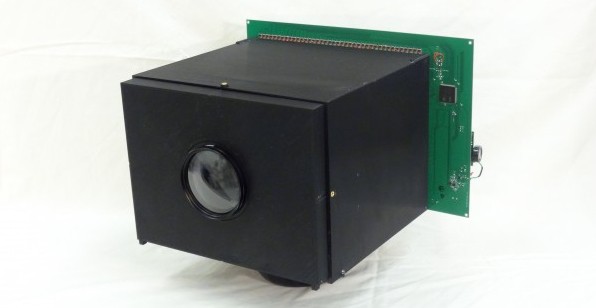
With a smartphone in every pocket and remotely operated cameras on every street corner, digital cameras are a ubiquitous part of life. Last year alone an estimated two billion cameras of various sorts were sold worldwide – with such sales likely to increase. While personal cameras are easily recharged, many new remote applications require smaller and longer-lasting power supplies.

But what if your camera could self-power while you take selfies? This is the idea put forward by Shree Nayar and his colleagues at Columbia University in New York City, who have created the first ever completely self-powered video camera.

(more…)

First visible light detected directly from an exoplanet

The first-ever direct detection of the spectrum of visible light reflected from an exoplanet has been made by an international team of astronomers. Using the High Accuracy Radial velocity Planet Searcher (HARPS) instrument at the European Southern Observatory’s La Silla Observatory in Chile, the astronomers studied light from 51 Pegasi b – the first exoplanet discovered orbiting a Sun-like star. Their observations not only uncovered new properties of this well-known object, but the work is also a successful proof-of-concept demonstration of a new technique for exoplanet detection.

51 Pegasi b lies a mere 50 light-years from Earth in the Pegasus constellation and was discovered in 1995. Famous as the first confirmed exoplanet found orbiting an ordinary star much like the Sun, 51 Pegasi b is a typical “hot Jupiter”. This is a relatively common type of exoplanet that is similar in size and mass to Jupiter but that orbits much closer to its parent star and so has its gaseous atmosphere “puffed up” by the intense heat.

Exoplanetary transmission

Currently, the two most common methods of detecting exoplanets involve observing a star’s radial velocity to see if it “wobbles” from the pull of an exoplanet, or looking for a tiny dip in the intensity of a star as the companion exoplanet transits across its face. But those keen on studying the atmosphere of an exoplanet usually observe the spectrum of the parent star’s light as it is filtered through the exoplanet’s atmosphere during transit – a method known as “transmission spectroscopy”.

In the new work, a team led by PhD student Jorge Martins of the Institute of Astrophysics and Space Sciences and the University of Porto, Portugal, used the HARPS spectrograph to observe 51 Pegasi b and pick out visible, albeit faint, light from the exoplanet. At optical wavelengths, the light we see from an exoplanet is actually reflected light from the star, only several orders of magnitude fainter. Using the parent star’s spectrum as a template, the researchers look for a similar signature of light reflected from the planet as it orbits its star. As the method does not depend on viewing an exoplanetary transit, it could be used to study many more exoplanets directly in visible light, revealing previously undetected characteristics such as their actual mass.

The team then apply a “cross-correlation function of a binary mask” – an image-processing technique that was first proposed by Martins in 2013. This amplifies the weak light reflected from the hot Jupiter’s atmosphere to amplify the minute planetary signal, which is easily swamped by other effects and sources of noise.

Reflective data

“This type of detection technique is of great scientific importance, as it allows us to measure the planet’s real mass and orbital inclination, which is essential to more fully understand the system,” says Martins. He adds that it also allows researchers “to estimate the planet’s reflectivity, or albedo, which can be used to infer the composition of both the planet’s surface and atmosphere”.

The team observed 90 spectra over seven different nights for a total of 12.5 hours of observing time. The researchers carefully selected windows during which the exoplanet could be observed close to “superior conjunction” – when the day side of the planet faces Earth – to maximize the amount of light coming from the planet. They found that 51 Pegasi b has a mass about half that of Jupiter but with a larger diameter and an orbit with an inclination of about nine degrees to the direction of the Earth.

The team noted it was particularly interesting that the detection was possible with data collected by an existing observing facility, as it was initially thought that the technique would only work with extremely high signal-to-noise ratio spectra that would be available with upcoming telescopes. Indeed, the results demonstrate the promise of this technique, especially in light of next-generation instruments such as ESPRESSO on the Very Large Telescope and the European Extremely Large Telescope.

The research is published in the journal Astronomy and Astrophysics.

The masters of antimatter

Physics World reporter Tushna Commissariat recently visited the ALPHA antimatter experiment at CERN and caught up with its spokesperson Jeffrey Hangst. In this podcast, they talk about the perfect recipe for making antihydrogen, they discuss dealing with the fact and fiction that surrounds the field, and reveal the everyday realties of being an antimatter architect.

Housed within CERN’s Antimatter Factory, which includes the Antiproton Decelerator (AD) (the source that provides low-energy antiprotons), ALPHA and the other antimatter experiments – ACE, AEGIS, ATRAP and ASACUSA – all study the many puzzling facets of antimatter. From its interaction with regular matter to the biological effects of antiprotons to how it falls under gravity, the various experimental teams hope that all will be revealed about antimatter’s true nature in the coming years.

In particular, the ALPHA experiment – which won the Physics World Breakthrough of the Year in 2010 for trapping 38 antihydrogen atoms for about one-fifth of a second – is gearing up to scrutinize the stuff, as it will begin an experimental run this summer with the newly updated ALPHA2 device, which uses lasers to spectroscopically study the internal structure of the antihydrogen atom.

In addition to finding out how exactly one makes and holds a few thousand atoms of the most volatile stuff in the universe, listen to this podcast to find out why Hangst thinks he has the coolest job in the world and what it is like to visit the one place in the universe where, as far as we know, antimatter is actively being produced.

Astronomers fill supervoid in their knowledge

A cold spot in the cosmic microwave background

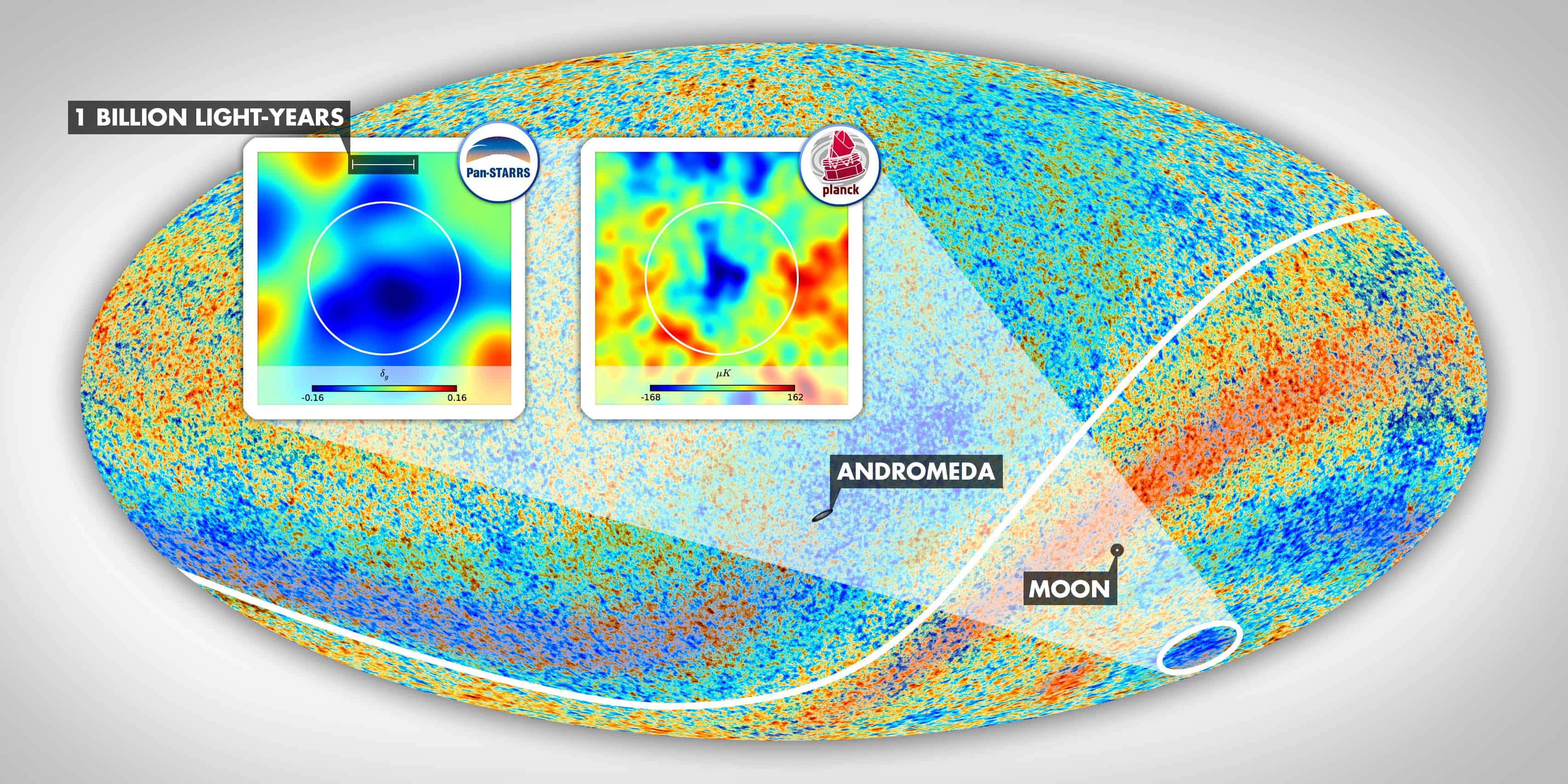
Astronomers believe they may finally be able to explain the origin of the “cold spot”, a  glaringly large cool region in the cosmic microwave background (CMB). Maps of the CMB, such as that created by the Wilkinson Microwave Anisotropy Probe (WMAP) and more recently by the Planck mission, reveal the distribution of radiation left over after the Big Bang. When in 2004 researchers noticed this cold spot on the map, they soon realized it was either a sign of exotic physics linked to the Big Bang itself or it was caused by some sort of structure in the foreground between the CMB and the Earth.

(more…)

Physicists generate electrical currents from noise

Two quantum dots have been used to generate an electrical current from voltage noise. The device was created by physicists in Germany, who say that it could lead to the development of systems that convert waste heat into useful energy.

Electronic devices generate large amounts of excess heat that must be dissipated. Instead of simply discarding this energy, using it to do useful work could revolutionize the electronics industry, and make it possible to create more efficient devices. Indeed, for more than a decade, physicists have been thinking up ways to convert this heat into electrical currents that can do work, such as power electronic devices.

Now, Lukas Worschech and colleagues at the University of Würzburg in Germany have verified experimentally that random voltage fluctuations can be rectified to drive a direct current. The experiment uses voltage noise to mimic the hot and cold spots of waste heat, and is therefore not a direct demonstration of waste heat being converted into work. However, team member Fabian Hartmann explains that it shows that small voltage fluctuations can drive a current: “A device derived from our sample might be able to provide the necessary power to drive autonomous and self-powered systems.”

Coupled quantum dots

The experiment comprises two quantum dots, which are discs of semiconductor about 300 nm in diameter. The quantum dots are separated by 150 nm to ensure that they exchange energy via Coulomb coupling – the electrostatic force that charged particles feel at a distance – as opposed to electrons physically jumping between the two subsystems. The researchers then connected three conducting leads to the system: two to the upper quantum dot to allow current to flow across the dot and one linking the lower quantum dot to a voltage source (several volts) with superimposed noise in the millivolt range.

While increasing the intensity of the noise applied to the lower quantum dot, the researchers measured larger currents across the upper quantum dot. The data followed a quadratic trend: doubling the voltage noise quadrupled the maximum current, at least for millivolt noise levels and currents measured in nanoamperes. “Certainly there is an upper bound that limits the device’s current. So far we have not tested these limits,” says Hartmann. The researchers also showed that they could reverse the direction of the current by changing the voltages of the leads attached to the upper quantum dot. This makes it energetically favourable for electrons to flow in one direction or another, depending on the voltage.

Getting warmer

One limitation to the team’s energy-harvesting scheme is that the quantum dots were immersed in liquid helium, which is clearly impractical for consumer electronics. Therefore, it will be critical to demonstrate that currents can still be driven at room temperature. “The biggest challenge is certainly to build a device that operates at room temperature,” notes Björn Sothmann, a researcher at the University of Geneva, who was not involved in the study.

In addition, further work is needed to show that currents can be driven by thermal fluctuations rather than voltage noise. “They do not create a true thermal gradient but mimic the effect by introducing noisy gate voltages,” says Rafael Sánchez of the Institute of Materials Science in Madrid, who published a theoretical study in 2012 that suggested that thermal fluctuations can drive a directed current. “However, the two effects [voltage fluctuations and thermal gradients] are closely related, so this study serves as a proof of principle for the rectification mechanism,” Sánchez concludes.

The research is described in Physical Review Letters.

Protests halt telescope construction on Hawaiian mountain

The summit of Mauna Kea, a dormant volcano on the island of Hawaii, has long been valued by astronomers for its pristine dark skies and high altitude. Rising to 4200 m at its peak, the mountain is the best location in the northern hemisphere to host astronomical observatories, and is currently home to 13 different telescopes. Long before the land was leased to the University of Hawaii for research purposes, though, the mountain was a sacred place for native Hawaiians.

Now, however, plans to build a new facility that will dwarf all others on the mountain are under threat, after construction of the $1.4bn Thirty Meter Telescope (TMT) was interrupted in late March when hundreds of native Hawaiians protested and prevented construction crews from entering the site. So far, 31 people have been arrested, and on 7 April Hawaii governor David Ige announced that construction would stop; it is not known when work will resume.

International collaboration

Designed to have a primary mirror 30 m across made of 492 hexagonal segments enclosed in a structure 66 m wide and 56 m tall, the observatory will allow astronomers to resolve the faintest and oldest galaxies. It is a collaboration between the California Institute of Technology (Caltech), the University of California, the National Astronomical Observatories of the Chinese Academy of Sciences, the National Institutes of Natural Sciences/National Astronomical Observatory of Japan, the Indian Institute of Astrophysics, the Association of Universities for Research in Astronomy, and the Association of Canadian Universities for Research in Astronomy.

To [the University of Hawaii], understanding one creation story is more important than the creation story of the islands they occupy
Kamahana Kealoha, Sacred Mauna Kea Hui

Members of the TMT project insist that they have the legal right to proceed after meeting all of the requirements to build the observatory, a process that took about seven years. “We followed the process slowly and carefully,” says Sandra Dawson from Caltech, who is TMT Hawaii community-affairs manager. “We got all the permits. We’ve been through the legal system. At every step, we have been approved.” Dawson adds that the TMT Corporation held some 30 public meetings open to the community to address possible concerns.

But many residents and conservationists say that laws have been circumvented, arguing that building the TMT will harm the delicate ecosystem on the mountain. A more fundamental concern, however, is their view that colonialism is impinging on the cultural and spiritual beliefs of the indigenous population. Since 1968 the University of Hawaii has leased more than 11,000 acres of land on Mauna Kea from the Hawaiian Department of Land and Natural Resources for scientific research.

“According to the Hawaiian world view, Mauna Kea’s summit is a place where creation begins,” says Kamahana Kealoha of Sacred Mauna Kea, one of the groups leading the protests. He adds that the University of Hawaii – which is subleasing the land on Mauna Kea to the TMT Corporation – “insist that the quest to see the origins of the universe is paramount. To them, understanding one creation story is more important than the creation story of the islands they occupy”, he says.

History, religion and culture

Upon seeing the concerns raised through the protests, some astronomers have begun to ask if construction of the observatory should continue. Emily Rice of the College of Staten Island in New York says that the astronomy community needs to talk about the issues raised by the protestors. “The discussion can’t just be science, funding and environmental impact. It has to be history, religion and culture,” she says. “Those [aspects] are things that scientists traditionally tend to stay away from. But we really can’t, in good faith, ignore these aspects of our work anymore.”

Amid the protests last month, Canada announced that it would provide $243.5m over 10 years toward the TMT’s construction.

Nanometre-scale printing technique could put its stamp on the electronics industry

Qiangfei Xia

This year marks 20 years since Stephen Chou, Peter Krauss and Preston Renstrom first published their work showcasing a versatile approach for mass production of identical nanostructures for the electronics industry. This technique is called nanoimprint lithography and it involves pressing a nano-patterned structure into a hot molten polymer. As the polymer cools, the pattern stamped into it sets so that it can be used as a mould to make several identical replicas of the original structure.

Just as the printing press brought literature to the masses, it is easy to imagine how this nanofabrication technique could have a significant impact on the production of integrated circuits. To commemorate the development, Nanotechnology has published a perspective article on the technique, and I had a chance to talk to the author Qiangfei Xia of the University of Massachusetts at Amherst about the technique’s advantages, challenges and outlook for the future.

(more…)

Heavy-metal Higgs, meet the Publons, Stephen Hawking's galactic tour and more

By Tushna Commissariat and Hamish Johnston

I’m sure that most of you have wondered what the Higgs boson would sound like if it were a heavy-metal song. Now you can turn it up to 11 (TeV that is) courtesy of CERN physicist and guitarist Piotr Traczyk, who has “sonified” data from two plots from the CMS experiment that were presented at the Higgs discovery seminar on 4 July 2012. His heavy-metal ditty is based on gamma–gamma and 4-lepton data from CMS and after you listen to his excellent song in the above video, you can find out more about how it was created by reading this entry by Traczyk on the Cylindrical Onion blog.

(more…)

Philae comet lander set for reboot

Artist's impression of Philae on the surface of comet 67P

Scientists at the European Space Agency (ESA) are hoping that the Philae lander, which successfully landed on a comet last year, will re-establish contact soon as it travels closer to the Sun. Philae was part of ESA’s Rosetta mission that was launched in 2004 but when Philae separated from Rosetta in November, it landed on the comet in an awkward position. This meant that the craft’s solar panels did not receive enough sunlight to recharge its battery, but the lander’s 10 instruments were able to carry out measurements before it went into hibernation mode about 50 hours after landing.

(more…)

ALMA debuts its high-resolution results

Scientific results of the highest resolution observations yet attempted by the Atacama Large Millimeter/submillimeter Array (ALMA) telescope are described in four papers to be published this month in Astrophysical Journal Letters. The observations were part of a campaign to test ALMA’s capabilities when run in its long-baseline configuration, and the result is stunning images and data for five astronomical objects. These include the planet-forming disc of HL Tau, the tumbling asteroid Juno, and a lensed galaxy 12 billion light-years away. These results are not only rich with new insights, but they also give us a sense of the incredible capabilities that ALMA will provide in the future.

ALMA is an array of 12 m- and 7 m-diameter antennas that observe the cosmos at millimetre/submillimetre wavelengths. The antennas work together to function as an interferometer, and this allows the signals from each of the antennas to be combined to simulate a telescope the size of the distance between the individual units. The array works like a zoom lens on a camera: the antennas can be repositioned so that the baseline of the simulated telescope is as small as 150 m or as large as 15 km across.

Expecting the unexpected

ALMA’s capabilities in its wavelength regime are revolutionary. The array is the largest and most sensitive millimetre/submillimetre instrument in the world, and its resolution is 10 times better than even the Hubble Space Telescope. As Anneila Sargent, chair of the ALMA board while the array was being built, predicted in 2008, “We know that every time in the past that a new wavelength region has been opened up, as ALMA will do, we have been surprised by entirely unexpected discoveries that significantly changed our understanding of the universe. We also expect the unexpected from ALMA.”

In its smaller configurations, ALMA can study the large-scale structure of cold gas and dust in the universe – and this is how the array has been used since it began its first early-science operations in 2011. But now, ALMA is beginning to test its long-baseline configuration, in which it is able to make its highest resolution observations and study the small-scale structure of objects in detail.

ALMA’s Long Baseline Campaign, which ran in late 2014, observed five targets using 22–36 antennas arranged with a baseline of up to the maximum 15 km. The targets were specifically selected to push the limits of ALMA’s capabilities: each target has a small angular size (less than two arcseconds) with a fine-scale structure that had been largely unresolved in previous observations made with other telescopes. Two of the targets, the variable star Mira and the active galaxy 3C138, were primarily used for calibration and comparisons of ALMA data with those of other telescopes. The remaining three targets not only demonstrated ALMA’s capabilities, but also resulted in new science discoveries.

Image of the protoplanetary disc surrounding the star HL Tau

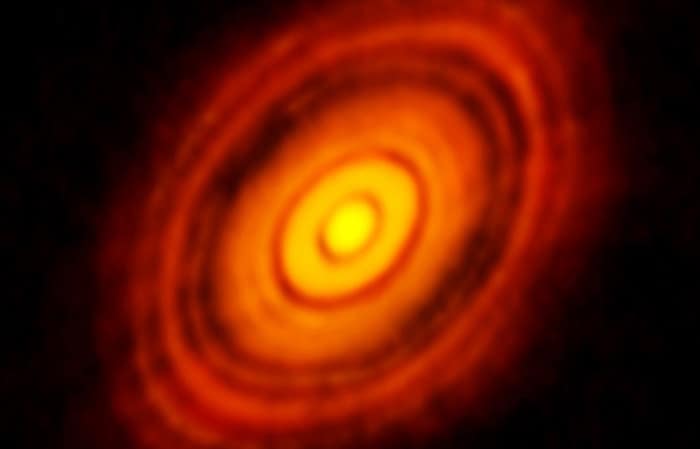
The first discovery involves HL Tau, which is a young star surrounded by a protoplanetary disc – a disc of gas and dust from which planets can be born. ALMA’s detailed observations of this region revealed a remarkable structure within the disc: a series of light and dark concentric rings indicative of planets caught in the act of formation. Studying this system is allowing scientists to better understand how multi-planet solar systems, like our own, form and evolve.

Juno, which is one of the largest asteroids in our solar system’s main asteroid belt, is the subject of the second discovery. ALMA’s observations of Juno were made when the asteroid was approximately 295 million kilometres from Earth. The 10 images ALMA took have been stitched together into the brief animation shown below, which shows the asteroid tumbling through space as it orbits the Sun. ALMA’s observations are not of reflected light, but rather of the millimetre-wavelength light emitted by the asteroid itself. The resolution of these images is good enough to study the shape and even some surface features of the asteroid – something that is unprecedented for this wavelength.

The final discovery concerns the star-forming galaxy SDP.81, which is so far from Earth that the light we see was emitted when the universe was only 15% of its current age. The galaxy is only visible because of a fortuitous alignment between it and a nearby foreground galaxy. The gravity of the foreground galaxy acts as a lens and bends the light from SDP.81 into a highly magnified cosmic ring. The combination of this lucky alignment and ALMA’s high resolution gives scientists a spectacularly detailed view of this distant galaxy, allowing them to study the actual shape of the galaxy and motion within it. This is ALMA’s highest resolution observation so far, and is described by Alma astronomers as being “about the same as seeing the rim of a basketball hoop atop the Eiffel Tower from the observing deck of the Empire State Building”.

The observations from ALMA’s first test of its long baseline clearly demonstrate that exciting times are ahead as scientists gear-up for the next cycle of observations. “It takes a combination of ALMA’s high resolution and high sensitivity to unlock these otherwise hidden details of the early universe,” says ALMA director Pierre Cox. “These results open a new frontier in astronomy, and prove that ALMA can indeed deliver on its promise of transformational science.”

Copyright © 2026 by IOP Publishing Ltd and individual contributors