Communicating discovery: the importance of getting it right

Mark Sims gets a lot of e-mail. As professor of astrobiology and space instrumentation at the University of Leicester in the UK – and previously the mission manager of the Beagle 2 Mars lander project – each day brings a deluge of correspondence. But the message that popped up in his inbox on 23 November last year caught his attention. It was from a former member of the European Space Agency’s Mars Express operations team who had detected a “glint” in a large impact basin close to the Martian equator after analysing images taken by the HiRISE camera on NASA’s Mars Reconnaissance Orbiter. And not just any impact basin. This was Isidis Planitia, the intended landing site of the Beagle 2 spacecraft, which was lost on Christmas Day in 2003.

This was not the first time that someone had claimed to have located the lost lander. But it was one of the most promising. So scientists from the HiRISE team, the Beagle 2 project team and NASA’s Jet Propulsion Laboratory obtained further images and analysed them in detail. They scrutinized the shape, size, height, colour and relative position of objects in the photographs. And they checked and rechecked their findings until they were all in agreement. On 16 January the UK Space Agency announced that, after over a decade lying in solitude on the surface of the red planet, Beagle 2 had been found.

The dangers of discovery

So far, the claim of Beagle 2’s discovery remains unchallenged and people seem to agree that the finding does indeed seem sound. But announcing major scientific findings doesn’t always go so smoothly. It can be a risky endeavour – all the more so when it is likely to attract significant public interest, or has implications for government policy. It is no longer a case of simply submitting a paper and leaving it at that. There can be messages to hone, press conferences to organize and journalists to respond to. And it is important that scientists have the ability – and the support – to deal with this because it is all too easy to get it wrong.

When astronomers working on the Background Imaging of Cosmic Extragalactic Polarization (BICEP2) telescope at the South Pole claimed in March 2014 to have found the first evidence for primordial “B-mode” polarization of the cosmic microwave background, it was heralded as groundbreaking proof of the existence of gravitational waves and of cosmic inflation in the early universe. But other researchers soon began to raise doubts about the results. And it has now been shown that the BICEP2 analysis, announced at a press conference prior to peer review, was deeply flawed (see “BICEP2 withdraws cosmic claims”, March pp6–7). The much trumpeted “proof” of inflation was, in fact, a foreground effect caused by dust within the Milky Way.
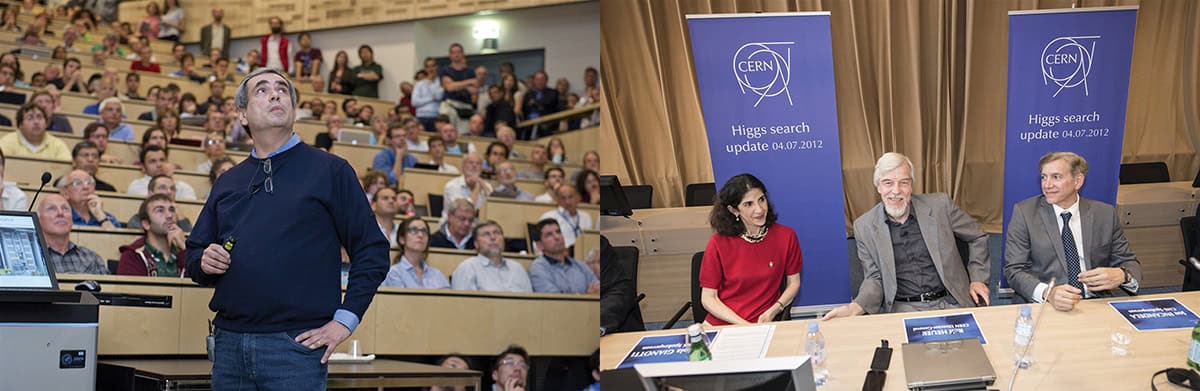
OPERA collaboration seminar and Higgs boson announcement

Another example of a discovery getting extrapolated too far too soon occurred in 2011 after the OPERA collaboration announced at a meeting at CERN and on a pre-print server that it had observed neutrinos travelling from the Geneva lab to its own facility in Gran Sasso, Italy, at faster than the speed of light. Despite the team’s initial cautious announcement and a sceptical response from fellow physicists, the story was soon picked up by the media and amplified around the world as a revolution in our understanding of one of the most fundamental rules of physics. So it came as a shattering blow when it turned out that the so-called revelation was no more than a case of faulty wiring within the experiment itself.

Communicating science

What causes scientists to get themselves into such situations? One of the biggest issues, it seems, is the pressure to announce things sooner rather than later. As Sims says, whoever gets there first gets the credit. This is a noble aim but it can lead to results being announced before they have been scrutinized fully, or to discoveries being over-hyped. “There’s always some pressure to make a splash with your work,” says Mark Birkinshaw, professor of cosmology and astrophysics at the University of Bristol, UK, “whether that’s for a promotion or to secure funding.” And people with healthy egos, suggests Ethan Vishniac, professor of astronomy at the University of Saskatchewan in Canada and editor-in-chief of The Astrophysical Journal, may not have a good sense of the limits of their work.

Another factor is the difficulty faced by scientists in communicating complex ideas in a clear and meaningful way. “Typically they err by simplifying their results to the point where their description is technically incorrect,” says Vishniac. It can also be challenging, admits Pierre Meystre, professor of optical sciences and physics at the University of Arizona, US, and lead editor of Physical Review Letters, to explain the context of important findings – and the uncertainty within them – to a non-scientific audience. And this can easily lead to misinterpretation of their results. “It can be difficult to communicate nuance,” he explains. “We have a hard time simplifying things without making them wrong.”

Different language used by scientists and non-scientists can also present a significant barrier to communication. Creationists jump routinely on the fact that evolution is “only a theory”, despite the fact that, for scientists, the word “theory” has a very specific meaning and implies much more certainty than the term does for a lay person. And in 2009 scientists at the Climatic Research Unit of the University of East Anglia, UK, came under fire when it was revealed that a researcher had referred in hacked e-mails to the use of a particular “trick” in the analysis of tree ring data. This was touted widely by climate sceptics as devious and fraudulent manipulation of data, when in fact it was shown later to refer to a perfectly legitimate way of handling complex datasets.

How to publicize your research effectively
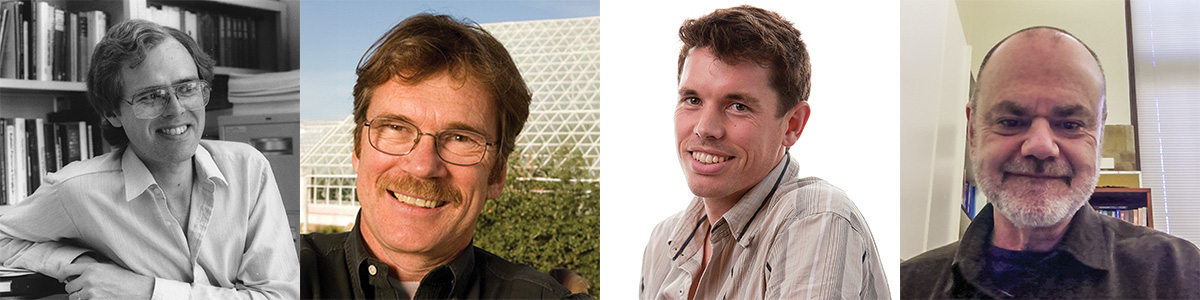
Mark Birkinshaw, Pierre Meystre, Ed Sykes and Ethan Vishniac

Mark Birkinshaw: Professor of cosmology and astrophysics at the University of Bristol
Get help from someone experienced, talk to someone in the science-communications business and use the university public-communications office. If you’re really keen, take one of the science-communications courses.

Pierre Meystre: Professor of optical sciences and physics at the University of Arizona and lead editor of Physical Review Letters
Know your audience and understand why they will be interested. Have a simple message – just one or two things that you want to communicate. Avoid scientific jargon. And never oversell. Some people oversell, and in the end it hurts everybody.

Ed Sykes: Chair of Stempra, a network for science-communications professionals
Think about how to engage with the wider public. If you are working on a potentially controversial project or something of media interest, consider early on the messages you would like to communicate. And when the news breaks, make sure you are available to speak with journalists. This is your opportunity to make sure your work is reported accurately.

Ethan Vishniac: Professor of astronomy at the University of Saskatchewan and editor-in-chief of The Astrophysical Journal
A small solid claim is better than a large uncertain one. It’s very difficult to convey essential context and background to new scientific results. Don’t be afraid to give a bit of context and history.

But it is not just scientists who are to blame, says Sims. Media reports can also paint an overly simplistic picture of scientific discoveries. “The media want certainty,” he says. “They want things to be black and white. But science isn’t black and white.” And the desire to sell the story can sometimes trump the reality of what is being reported. The media want stories that will sell, says Birkinshaw, and concentrate on the aspects that make good copy. “When I’ve been sent a draft article on some result for comment,” he says, “I usually find that though it’s been written to be engaging, the ‘hot button’ words don’t accurately reflect what the research said and the caveats to the work are often lost.”

Ed Sykes, chair of Stempra, a UK-based network for science communications professionals, emphasizes that the blame shouldn’t be put on one individual or group – there is plenty of opportunity for things to go awry. “There is pressure on scientists to look at sexy topics and to publish interesting results,” he says. “Journals are under pressure to pick topics that will get the most attention. Funders want to get their messages out and to attract the attention of journalists. Journalists work under time pressure and want interesting stories. And articles go to sub-editors, who will find pictures, choose headlines and edit the text.” So what can scientists do to improve the way in which their findings are communicated? Sykes, and others quoted here, give their advice in the box above.

Uncertainty and peer review

Given the potential for even the most incontrovertible of discoveries to be reported incorrectly, how certain of their results should scientists be before they tell the world? “As scientists, we’re never certain,” Meystre argues. “That’s what science is about. That’s how progress is made.”

Vishniac, meanwhile, emphasizes the role that peer review can play in weeding out erroneous results. “Scientists should have convinced their peers before they try to convince the public,” he says. “It’s all too easy to convince yourself. Peer review is an essential part of this process.” So is it acceptable for scientists to announce results of discoveries before they have been subject to peer review? “No,” Vishniac insists.

Meystre echoes this sentiment. “Peer review is the only reliable mechanism,” he says. “It maintains the credibility of the scientific process.” Meystre does, however, acknowledge that the mechanism is far from ideal. “I’m not going to claim that the peer-review process is perfect, because it’s not,” he says. “But I’m not aware of a system that’s better.”

Peer review can be a slow process. Furthermore, not every discovery will find a journal interested in publishing it. And the rise of pre-print servers, such as arXiv, puts unreviewed findings directly into the public domain. So is peer review always a realistic prerequisite to communicating scientific results to the wider world?
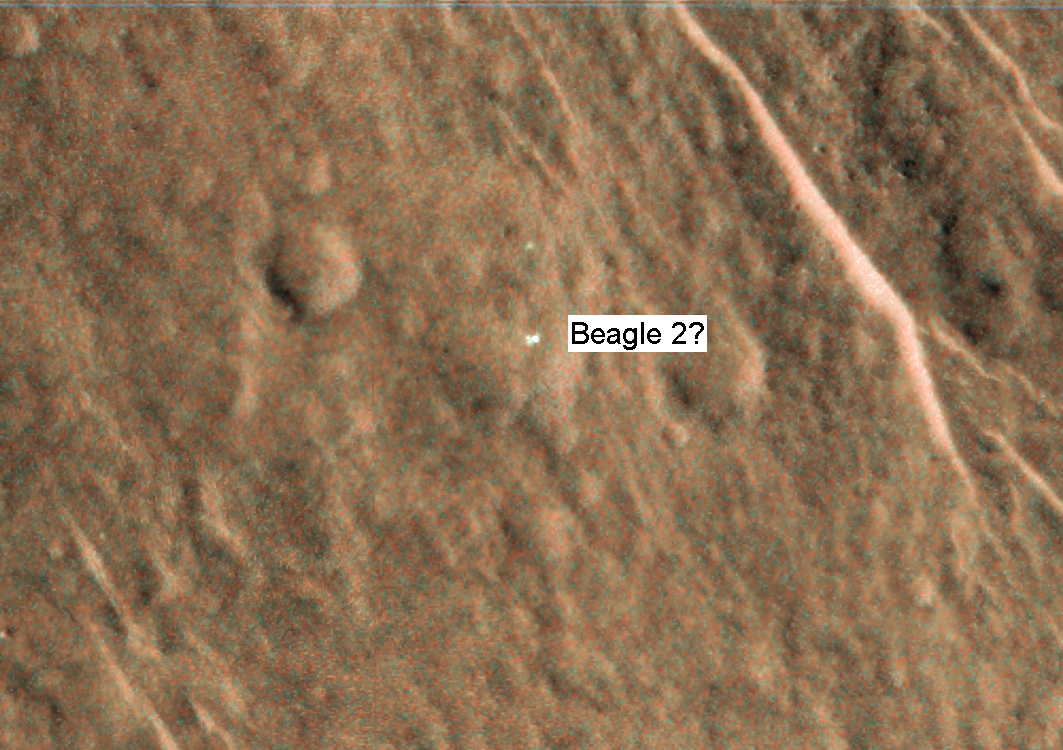
Supposed image of the the lost Mars rover Beagle 2

Birkinshaw proposes a pragmatic approach. Most results require some peer review before publicizing, he says, but there are circumstances where this isn’t realistic. For example, when a result is attracting a lot of attention, it can be hard to avoid announcing it immediately. Sykes emphasizes that the potential impact of the work should also be taken into consideration. “If it’s just an interesting thing,” he says, “it’s OK to announce without peer review. But if it is arguing for a particular policy or has a significant impact on other people, it needs to be peer reviewed.”

The cost of getting it wrong

Poorly communicated science does not go unnoticed. And its impact can be significant. “I think it puts the public off,” says Birkinshaw, “and may hurt the recruitment of young scientists. And the level of hype is not appreciated – there seem to be too many breakthroughs!” Meystre adds that with a low level of public scientific literacy, especially in the US, misinterpretation of science can lead to mistrust in scientists and the rise of pseudoscience in areas such as climate change and childhood vaccinations. Another ugly side of science communication when it turns sour is that it can affect individuals and hurt long-standing collaborations. In the case of OPERA and the neutrinos, for example, the head of the OPERA programme subsequently resigned from his post, and CERN was quick to distance itself once the result was found to be flawed.

A more positive picture

According to the Ipsos MORI Public Attitudes to Science survey in 2014, which quizzed the UK public, some 90% of respondents trust scientists working in universities to follow the rules and regulations relating to their profession, up from 84% in 2011. However, half said that scientists put too little effort into informing the public about their work and over two-thirds would like scientists to spend more time discussing the social and ethical implications of their work with the general public.

The capacity for science to enthuse and excite us remains, nevertheless, undimmed. Just as families huddled around their television sets to watch Neil Armstrong take his first tentative steps on the moon in 1969, we seem to have a special place in our hearts for his modern-day counterparts, such as UK physicist Stephen Hawking and Tweeting Canadian astronaut Chris Hadfield. And we never cease to be captivated, it appears, by scientists’ quest to expand the frontiers of knowledge – even if they sometimes stumble along the way.

So what of Beagle 2? After the fanfare of the initial announcement, are we set to be disappointed in a few months’ time by a flood of counter-claims or a quiet retraction? Sims is sanguine. “I’m 96–99% certain that it is Beagle 2,” he told Physics World, “but nature can play tricks on you.” So further photos will be taken, more analysis will be done and, in time, a paper will be prepared so that the team’s results can be examined in detail by the wider scientific community. “It’s either Beagle 2,” he adds, “or the most peculiar bit of Martian geology I’ve ever seen.”
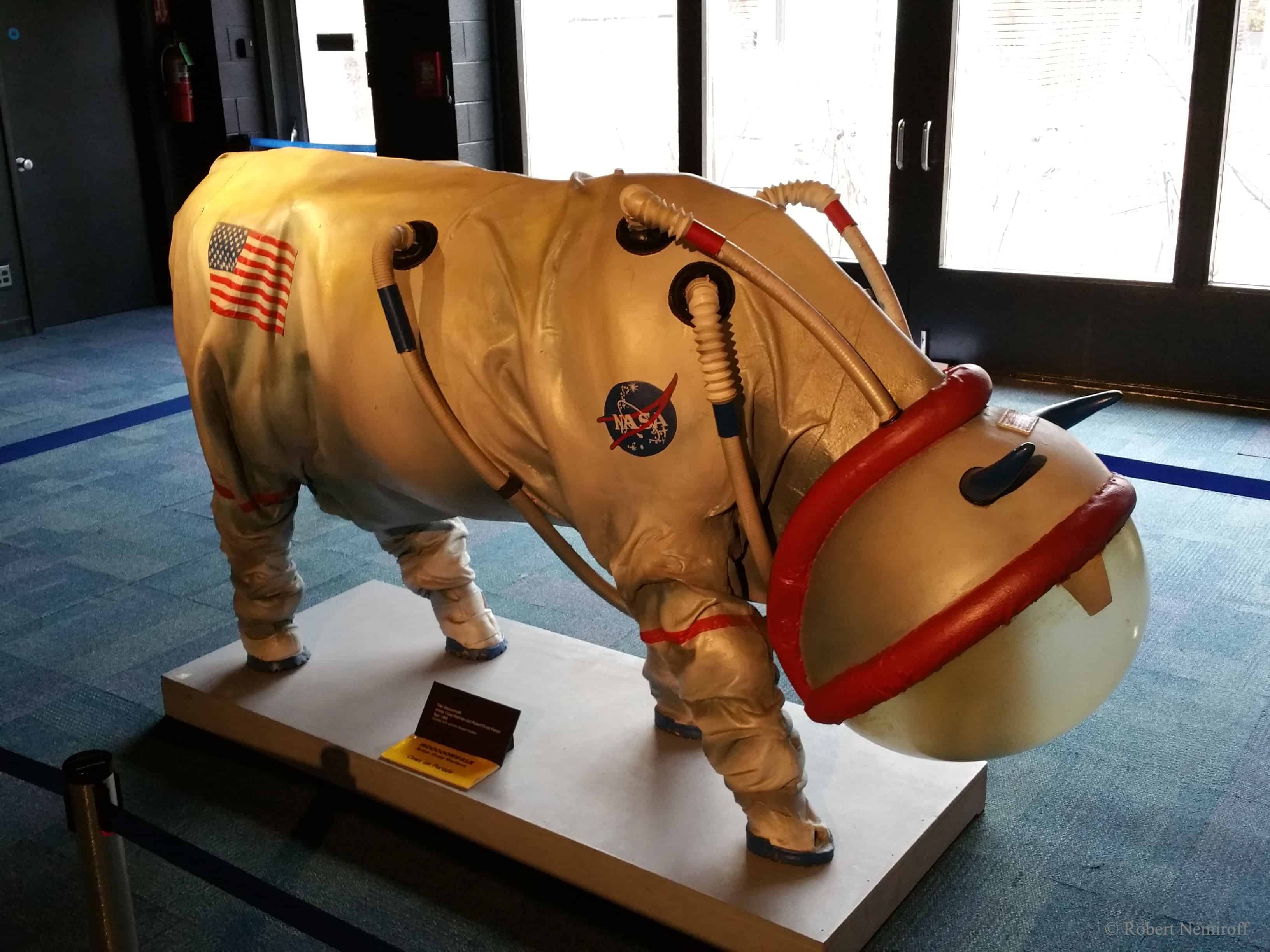
Isaac Newton's Good Friday, art meets physics and our favourite April Fool gags

APOD image of artwork "Mooooonwalk"

By Hamish Johnston and Tushna Commissariat

As it’s Good Friday today, it can only mean that this week’s Red Folder will include a selection of the best physics-related April Fool jokes from earlier this week. Fermilab’s daily e-bulletin Fermilab Today had an entire joke edition up in the morning – their lead story was probably our favourite as the lab announced its new breakfast cereal dubbed “Neutrin-Os”, but their new day spa sounds pretty good too. CERN went for the funny if slightly obvious Star Wars joke, confirming the existence of the Force, but a slightly more subtle joke came earlier in the week from CERN Bulletin, which ran a story about CERN’s computer-security department handing out prizes for best password – we are still not quite sure if they were joking or not! Astronomy Picture of the Day had a truly fantastic image (see above) of a Lunar Grazing Module described as a “multipurpose celestial bovine containment system”.

(more…)

Dousing flames with low-frequency sound waves

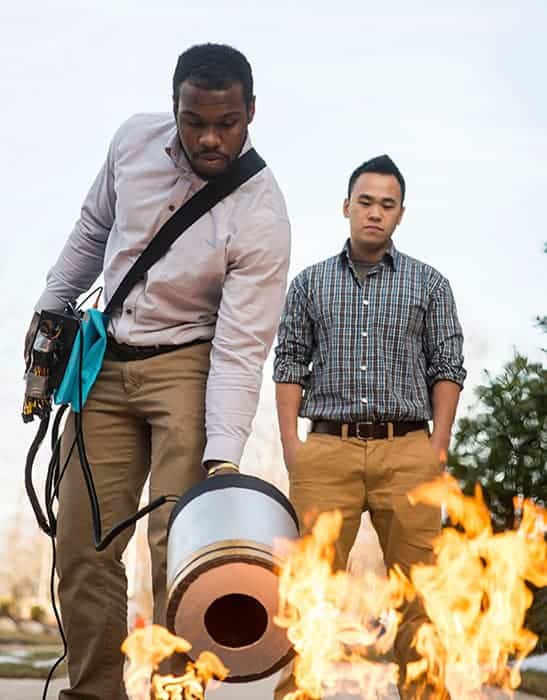
Photo of the duo testing their sound-blasting fire-extinguisher prototype

A new type of extinguisher that uses sound waves to put out fires has been built by two engineering students in the US. Both chemical- and water-free, the invention offers a relatively non-destructive method of fire control, which could find applications in fighting small fires in the home, and the researchers now hold a preliminary patent application for their device.

While the concept of using sound waves to extinguish flames is not new, previous attempts to realize the principle – including efforts by teams at West Georgia University and the US Defense Advanced Research Projects Agency (DARPA) – had not been successful. Undeterred by this, as well as initial scepticism from their peers and faculty, Seth Robertson and Viet Tran – both final-year undergraduates at George Mason University in Virginia, US – elected to explore the concept, developing a series of prototype sonic extinguishers for a research project.

All about that bass

The principle behind the extinguisher is simple: as they are mechanical pressure waves that cause vibrations in the medium in which they travel, sound waves have the potential to manipulate both burning material and the oxygen that surrounds it. If the sound could be used to separate the two, the fire would be starved of oxygen and, accordingly, would be snuffed out.

Tran and Robertson explored the impact of different frequencies of sound on small fires. While ultra-high frequencies had little effect, the duo found that lower, bass frequencies – between 30 and 60 Hz – produced the desired extinguishing effect. Consisting of an amplifier and cardboard collimator to focus the sound, the duo’s final extinguisher prototype – which cost them only about $600 to develop – is a hand-held, 9 kg, mains-powered device with the capacity to quickly put out small, alcohol-fuelled fires.

“In my opinion, [Robertson and Tran’s] success has been down to their determination and willingness to try many different approaches to harnessing sound waves,” comments Brian Mark, who is also based at George Mason University and is the duo’s research supervisor, adding that the current prototype has been the result of many trials and experiments.

Catching on

Having acquired a preliminary patent application for the design, the researchers are now hoping to move onto further testing and refinements of their extinguisher, with the aim of taking steps towards a potential commercial application. Originally, Robertson and Tran envisaged their device as ideal for use on small fires in the home – for example mounted over a stove top – but are now investigating the possibility of applying the principle to broader applications. One possible use could be in space, where traditional extinguishing agents are hard to focus at a target fire. “Fire is a huge issue in space,” says Tran. “In space, extinguisher contents spread all over the place. But you can direct sound waves without gravity,” adds Robertson.

A possible complication may lie in the heat inherent in larger blazes. As the sonic extinguisher contains no coolant, it may be unable to prevent larger fires from reigniting after the sound is turned off. However, their duo’s work could potentially be applied to “swarm robotics where the device would be attached to a drone”, to be used in situations such as large forest fires or urban blazes, thereby improving safety for firefighters.

Bringing the quantum to life

Ever since Erwin Schrödinger’s classic 1944 book What is Life?, physicists have been eagerly looking for applications of quantum mechanics to biological systems. By suggesting that the laws of thermodynamics are not well suited to explain highly reliable biological processes (such as heredity) that depend on a relatively small number of particles, Schrödinger opened the door for a search for quantum effects in biology. Have we made any progress in the last 71 years towards understanding how quantum physics can explain the mysteries of life? The answer, Jim Al-Khalili and Johnjoe McFadden argue in their latest book, is an enthusiastic “yes”.

In Life on the Edge: the Coming of Age of Quantum Biology, the authors – a theoretical nuclear physicist and a molecular geneticist – take us on a head-spinning tour of the many biological effects whose mechanisms are starting to be explained by quantum mechanics. Some of the examples they provide have solid experimental backing. For example, it is now well known that enzymes – the ubiquitous proteins that speed up vital biochemical reactions – rely on quantum tunnelling of electrons and protons to enhance reaction rates. Quantum mechanics may also help to explain the extraordinary efficiency of one of the most important biochemical reactions on the planet: the harvesting of light energy by photosynthetic complexes in plants. After a chlorophyll molecule absorbs a photon, an electron–hole pair is created, and this pair must travel some distance along a series of biomolecules in order to reach the site where photosynthetic oxidation reactions take place. It may accomplish this not by undergoing a slow, classical random walk, but by relying on a much more efficient quantum walk. In effect, it could travel to the reaction site by all possible paths.

Some of the finest writing in the book, though, relates to applications of quantum mechanics to biology that are still not fully understood. The ability to distinguish different smells may, for example, have a quantum connection, and the quest to elucidate why different odorant molecules smell the way they do is laid out in an exciting “whodunit” fashion. The key mechanism, it seems, may be the resonant frequencies of the molecular bonds within odorants, but how does the body sense this? One leading theory is that each receptor molecule in the nose becomes activated if it binds to an odorant molecule with the “right” vibrational modes – that is, modes that can exchange energy with electrons tunnelling between different sites on the receptor molecule.

Equally fascinating is the historical narrative of how scientists have come to understand the mechanisms that many animals (most notably migrating birds) use to orient themselves based on the Earth’s magnetic field. The most convincing explanation, the authors suggest, is related to chemical reactions that take place in a protein located in the eyes of the animal. These reactions rely on quantum tunnelling of electrons, and the rate at which they occur is extremely sensitive to weak magnetic fields – thus giving the animal a chemically based quantum compass.

About a third of the book is devoted to much more speculative applications of quantum physics to major unsolved problems in the biological sciences. Can the quantum tunnelling of protons across DNA base pairs spontaneously induce genetic mutations? Could life on Earth have emerged in a comparatively short timescale because the particles that made up primordial biomolecules were quantum entangled, thus allowing them to perform an efficient quantum search for a self-replicating configuration? Is consciousness partly explained by the effect of macroscopic electromagnetic fields on ions that quantum tunnel through membrane channels in neurons? These proposals are, in most cases, little more than speculations by the authors, and are rightly labelled by them as such. Nevertheless, these speculations are presented in a clear, entertaining form, and they give the authors a handy excuse for providing interesting overviews of some of the most fascinating problems in biology.

Physicists are used to associating quantum effects with low-temperature, isolated systems in very well-controlled laboratory conditions. For many, then, the most fascinating question in the book is how quantum coherence is able to persist long enough in hot, messy biological systems to make quantum effects relevant there. To address this question, the authors present a carefully amassed body of evidence that biological noise actually plays a role in enhancing the timescale of quantum coherence in biological systems, rather than reducing it. This suggestion explains the title of the book: life exists on an edge, dependent on conditions that are carefully tuned (presumably by evolution) to allow quantum mechanical effects to influence biological processes. But it also raises questions of a different sort. Might a better understanding of the conditions in which biological quantum systems operate lead us to novel technologies? Could we, for example, create photosynthesis-mimicking power generators with efficiencies that go much beyond the classic Carnot limit? Could it even be the key to the creation of artificial life forms?

The breadth of the science and scholarship presented in the book is outstanding. Perhaps to minimize reader fatigue, the authors make abundant use of nature documentary-style anecdotes; this does, however, slow the pace of the book, and busier readers might have preferred it if the authors had left them out. Some readers could probably also have done without lengthy descriptions of introductory biology and physics concepts, especially when the details of a few of the biological quantum effects are occasionally somewhat glossed over.

On the other hand, the book is remarkable for the way it incorporates information from scientific literature published just a few months ago – contributing to the impression that quantum biology is an exciting, emerging field. By the end of the book, most readers will be yearning for a sequel in a few years, when some of the biological questions left open in this book will have been answered and new, exciting ones will be awaiting explanations – explanations that, if the authors are right, will most likely involve quantum mechanics.

  • 2014 Bantam Press £20.00hb 368pp

Filling the world with light

How did you start working with blue LEDs?

In the 1980s many people were working on creating blue LEDs using zinc selenide. I was then working at Nichia Corporation and also working towards a PhD. At the time, it was possible to obtain a PhD by just publishing papers, which is called a “paper degree”. So I was mostly interested in publishing as many papers as possible to get my PhD. I began to work on gallium nitride as not many people were working on that material.

Was it exciting when you found you could make an efficient blue LED?

A blue LED is made from various layers of gallium nitride, but you also need indium gallium nitride, which is the key material as it emits blue and green light. Yet when we make LEDs with indium gallium nitride there is a huge dislocation density – a measure of deformation in the material – of around 109 cm–2. Given this huge number, many expected that the material would never work as LEDs because you generally needed a dislocation density less than 103 cm–2 to produce an efficient LED. But we managed to get it to work. Given the high dislocation density, nobody knows the physics behind why it works and is so efficient – it’s still a mystery.

And the Nobel Foundation finally recognized the breakthrough last year?

Yes, I shared the 2014 prize with Isamu Akasaki and Hiroshi Amano. Although it’s funny that indium gallium nitride – the key to blue LEDs – wasn’t mentioned by the Nobel Foundation in the prize announcement. They ignored it. It’s incredible as you can’t make a blue LED without it.

Given the 20-year gap, did it come as surprise to finally win?

No, because ever since the breakthrough in 1993, the Japanese media have followed me in October every year saying that I should be awarded a Nobel prize.

How did you find out you had won?

When the Nobel Foundation called me. It was 2 a.m. local time in California, so I was sleeping.

Has your life changed since?

Not by much. The only difference is that the Japanese media follow me more now and students recognize me. The University of California, Santa Barbara, has also given me a free parking space and I don’t have to teach anymore.

How will you spend the money?

The amount of money you get for winning a Nobel prize is smaller these days. The three of us got $400,000 each. For Nobel week – a series of events marking the award, including the Nobel banquet – I paid the expenses of 14 guests, which came to about $100,000. I was then left with $300,000 and then $150,000 after US taxes. I have also donated half – $75,000 – to the University of Tokushima.

What will they use that money for?

I didn’t tell them how to spend it, so they can use it however they see fit.

How are relations now with Nichia?

I left Nichia in 1999 to move to the University of California, Santa Barbara. As I did not sign a non-disclosure agreement, the firm then filed a lawsuit for infringement of trade secrets. I countersued them using Japanese patent law, which states that an invention belongs to the inventor and not the company. In 2005 I settled with Nichia for a one-off payment of $8m. Since winning the prize I have tried to improve relations with Nichia, but they are not interested. So I won’t be trying again.

Do you feel disappointed by this?

I expected that they would say no, so I am not disappointed. It was actually my former adviser at the University of Tokushima – Osamu Tada – who said that I should aim to improve relations with them.

As your prize is deeply connected with light, will you be involved with the International Year of Light?

I have a lot of invitations to many events around the world, but at the moment I am very busy.

What are you working on now?

Together with my colleagues, we are working on next-generation lighting – laser lighting. Using laser diodes we can obtain a luminescence 1000 times higher than an LED, so we can make a very bright light source. But it will take time to achieve this, maybe 5–10 years.

What are the challenges?

Currently, laser diodes are very expensive – around $10 for a laser diode, but just $0.10 for an LED. Also, the “wall plug” efficiency of laser diodes is around 30%, this is not high enough compared to the blue LED, which is about 50–60%. So we have to find ways to reduce the cost and improve the efficiency further, but we are very excited about the prospect of laser diodes.

Between the lines

A doodle with spaces coloured in yellow, pink and different shades of green

Mathematical doodling

The next time you find yourself idly sketching loops and curves on a notepad, Tim Chartier has a request: he wants you to turn your doodles into mathematics. A mathematician at Davidson College in North Carolina, US, Chartier is the author of Math Bytes, a grab-bag of a book that is full of quirky everyday applications of mathematics, including the aforementioned doodles. It turns out that any squiggle you create will obey the formula V + F – E = 2, where V is the number of vertices (the points at which lines intersect each other), F is the number of enclosed areas or faces (basically regions you could colour in) and E is the number of edges (the line segments between the vertices). The relationship between these numbers is called the Euler characteristic after the 18th century mathematician Leonhard Euler, who proved that it holds for all doodles. It has a number of applications, including as a test to determine whether a maze is solvable. Euler’s characteristic is also linked to the famous “travelling salesman problem”, which asks which of many possible paths one should take between a set of vertices in order to minimize the distance travelled along the edges. Conceptually speaking, this isn’t a hard problem to understand, but as Chartier explains, it is actually one of the most challenging puzzles in all of computational mathematics. Most of the chapters in Math Bytes likewise begin with simple set-ups and gradually move on to more complex ideas, and this (plus the large number of hands-on examples) make it a handy guide for anyone involved in science or mathematics outreach.

  • 2014 Princeton University Press £16.95/$24.95hb 152pp

Exploring spirit

Here’s a back-of-the-envelope problem for the rocket scientists reading this: how much conventional rocket fuel would it take to deliver a Space-Shuttle-sized payload from Earth to the Alpha Centauri system in less than 1000 years? The answer – and many other interesting facts concerning the past, present and future of space exploration – can be found in Beyond, a new book written by Chris Impey. An astronomer and popular-science author, Impey makes an affable and generally even-handed guide to this fascinating subject, balancing rhetoric about humankind’s restless curiosity with sober assessments of what is and is not possible. The book refers, vividly, to “the tyranny of the rocket equation”, while the immense cost and long time period required to terraform Mars or send humans to another star are laid out with a fine, clear blend of optimism and realism. The one sour note in Beyond concerns its treatment of “new space” entrepreneurs such as Burt Rutan and Richard Branson. The book was already in press in October 2014, when one of Rutan’s pilots, Michael Alsbury, was killed during a test flight for Branson’s Virgin Galactic project, so it is not Impey’s fault that this setback is barely mentioned. Even so, in light of Alsbury’s death and the still-incomplete investigation into its causes, readers may find it a trifle jarring to read fawning descriptions of Branson’s buccaneering attitude and Rutan’s “entrepreneur’s impatience with red tape”. (After all, what are safety regulations but a form of red tape?) Once Impey finishes gushing about the “breathtaking passion” of these charismatic figures, though, his overall assessment of “new space” is fair-minded and insightful. Far from being moribund, today’s space industry, Impey argues, “may now be where the Internet was in 1995, ready to soar”. Now isn’t that an exciting thought?

  • 2015 W W Norton £16.99/$27.95hb 336pp

Astrofacts at your fingertips

What’s the reddest object in our solar system? Surprisingly, the answer isn’t Mars but a denizen of the Oort cloud called Sedna. This icy, rocky object resembles Pluto except for the high proportion of carbon-based chemicals mixed into its crust, which account for its reddish hue. Sedna’s other claim to fame is that it is currently the most distant object we know of in the solar system: located well outside the orbits of Uranus and Neptune, it orbits the Sun on a highly elliptical path that will eventually take it out to a point that is 937 times farther from the Sun than the Earth is now. As such, Sedna’s reddish glow isn’t going to be readily apparent to backyard stargazers, so it’s not immediately obvious why it deserves its own entry in the pages of Astronomy in Minutes, a pint-sized guide that promises to explain the night sky “in an instant”. Look more closely, though, and you will see that the book’s small size belies its scope. Written by the astronomer and science communicator Giles Sparrow, Astronomy in Minutes includes brief summaries of astrophysical topics such as variable stars, black holes and the H-R diagram of stellar evolution as well as practical stargazing tips. With individual descriptions of what to look for in 60 different constellations, plus some more complex material to whet the appetites of young enthusiasts, it’s definitely worth tucking into a backpack the next time you head out for a bit of stargazing.

  • 2015 Quercus £8.99pb 416pp

Littered with errors

By Michael Banks

Photograph of Swheat Scoop cat litter (CC-BY-SA Ryan Forsythe)Cat litter and radioactive waste – not a combination you would normally expect to come across (although some cat owners may disagree).
But a report by the US Department of Energy has squarely blamed kitty litter for the explosion of a single drum of nuclear waste – dubbed “68660” – that burst open at the Waste Isolation Pilot Plant (WIPP) in New Mexico in February 2014.

A year-long investigation by a nine-member panel – led by David Wilson of the Savannah River National Laboratory – has concluded that the incident was caused by the use of the wrong brand of feline litter.

As cat litter is highly absorbent, for years it has been used to help keep nuclear waste contained. Indeed, each barrel of waste at the WIPP is filled with about 26 kg of the stuff.

(more…)

Five amazing physics demonstrations

Even if you’re a hardcore theoretical physicist, I’m sure you’ll agree that experiments are the lifeblood of physics. After all, theory and experiment go hand in hand – and there’s nothing to beat getting your hands dirty to get a proper understanding of the subject.

But how can pupils and students get excited about experiments? Making practical work a key part of exam syllabuses is surely important – yet the danger then is experimental work becomes a chore not a charm.

Physics World April 2015 cover

If you need inspiration, check out the April issue of Physics World magazine, which is now out in print and digital formats. It contains a great feature by Neil Downie – head of sensors at Air Products, Basingstoke, Hampshire, UK and a Royal Academy of Engineering visiting professor at the University of Surrey.

Having run “Saturday science clubs” for children for more than two decades, Downie presents in the feature his five best physics demonstrations of all time. He’s also teamed up with Physics World to create a set of five short films, each showing one of the demos in action.

Apart from being simple and quick to carry out, the beauty of the five demos is that while you don’t need much equipment to get started, you can take the projects in lots of different directions.

If you’re a member of the Institute of Physics (IOP), you can get immediate access to the feature and all five videos with the digital edition of the magazine on your desktop via MyIOP.org or on any iOS or Android smartphone or tablet via the Physics World app, available from the App Store and Google Play. If you’re not yet in the IOP, you can join as an IOPimember for just £15, €20 or $25 a year to get full digital access to Physics World.

We’ve also included the first of Downie’s films above to whet your appetite, in which he shows the principles of the “Vacuum Bazooka”.

For the record, here’s a rundown of what else is in the issue.

• UK and Italy vie over telescope HQ – An Italian bid to host the headquarters of the world’s largest radio telescope has been judged superior to a British proposal – yet it has failed to get the green light. Edwin Cartlidge reports

• Filling the world with light – After sharing the 2014 Nobel Prize for Physics for the discovery of efficient blue light-emitting diodes (LEDs), Shuji Nakamura talks to Michael Banks about what comes next

• Fostering talent – Science can only blossom if young researchers are rewarded for their growth rather than their “academic ancestry”, says Abraham Loeb

• Fight over light – Robert P Crease explains the fascination with Goethe’s flawed book Theory of Colours, which savagely attacked Newton’s book Opticks

• Communicating discovery – So you’ve made a scientific discovery – what next? Communicating your finding to the public without succumbing to the many pitfalls along the way is a tricky business, as Simon Perks reports

• The will of the WISPs – While many physicists hunt dark matter in the form of WIMPs – “weakly interacting massive particles” – others have turned their attention to a lighter prey: “weakly interacting slim particles”, or WISPs. Edwin Cartlidge reports

• Five amazing physics demonstrations – There’s nothing better than a good physics demonstration to illustrate the subject’s fundamental principles. Neil Downie, who has run Saturday science clubs for children for more than two decades, presents his five best demos of all time

• Bringing the quantum to life – Marta Varela reviews Life on the Edge: the Coming of Age of Quantum Biology by Jim Al-Khalili and Johnjoe McFadden

• Albert and Erwin: decline and fall – Denis Weaire reviews Einstein’s Dice and Schrödinger’s Cat: How Two Great Minds Battled Quantum Randomness to Create a Unified Theory of Physics by Paul Halpern

• Freeze brain – The challenge of designing the equipment that makes low-temperature
science possible has kept Roger Mitchell fascinated throughout his 30-year career at the UK firm Cryogenic, where he is now technical director

• Once a physicist – John Harte, an ecologist in the Energy and Resources Group at the University of California, Berkeley, US

• Physics on a coffee break – Karen Yates from Imperial College London, muses over the importance of coffee in physics

Amazing science demo one: The Vacuum Bazooka

This video is the first in a series of “five amazing physics demonstrations” presented by demo aficionado Neil Downie. In addition to his day job in industrial science, Downie has run Saturday science clubs for children for more than two decades, during which he creates fun and innovative science demonstrations that are all simple and quick to carry out.

In a special feature in the April issue of Physics World, Downie describes his five best demos of all time, all of which use everyday equipment to illustrate fundamental physics concepts. In the article, Downie describes how his fondness for the five experiments comes from the fact that, with a bit of creativity, each one can be easily adapted to explore physical concepts further. In the digital edition of the April issue, each demonstration is accompanied by a video in which Downie walks you through how to present each demonstration. Full details of how to access the print and digital issues are available at the bottom of this article.

The first demo is “The Vacuum Bazooka”, in which a vacuum cleaner is transformed into a missile launcher that can propel objects across a room. The video shows the front cover of Physics World being used for target practice, with Downie explaining how the experiment illustrates physics principles including air pressure, acceleration, ballistics, inertia and air flow down tubes.

The Vacuum Bazooka

So what’s this all about? This project redeploys the humble vacuum cleaner as a projectile launcher. Over the years I have made hundreds of Vacuum Bazookas, and thousands more have been made around the world by others. Some people have even used professional laboratory vacuum pumps and managed extraordinary feats such as firing ping-pong balls so fast that they will punch holes in beer cans.

What bits and pieces do I need? The Vacuum Bazooka can be swiftly plugged together from plumbing parts. In my favourite version, it consists of a long plastic tube, at one end of which you connect another long tube at right angles using a plastic T-piece. You’ll also need a suitable projectile, such as a cylinder of wood or a champagne cork, that can pass easily down the main tube, through the T-piece and out the end. Finally, you’ll need a reasonably powerful domestic vacuum cleaner (I use a Henry) that can reduce the pressure in the tube from atmospheric pressure (100 kPa) to 80 kPa or less.

How do I get going? Wearing safety goggles, set up your kit about 5–10 m from a target, such as a table placed on its side. Connect your vacuum cleaner to the end of the tube that’s at right angles to the first. Turn the cleaner on and then let a decent vacuum build up in the tube by placing a sheet of paper over the free end of the T-piece through which the projectile will leave. Reach over and insert your projectile into the far end of the tube, holding it tightly while you point the tube at your target. Wait for a moment and then let go of the projectile. Whoosh! It’ll zoom down the tube, fly out through the T-piece and whack into your target.

And what physics will I learn? The experiment reminds us that we live at the bottom of an “ocean” of air that creates an apparently preposterous pressure on our bodies. By removing the air from the tube, you can accelerate objects really fast because of the resulting pressure differential. Without the sheet of paper, however, the differential would be much smaller and the projectile would move only slowly – and probably jam the T-piece. In case you’re wondering, I’ve estimated that the cork will fly at a speed of (2P0L/zρ)1/2, where P0 is the pressure in the tube, L is its length, z is how far the projectile travels and ρ is the density of air. Why don’t you try checking the equation – perhaps by doing the experiment outside on a lawn? As for the sheet of paper, it rarely gets damaged – the puff of air just before the projectile exits the tube usually blows the paper harmlessly aside.

  • If you’re a member of the Institute of Physics (IOP), you can now enjoy immediate access to the April issue of Physics World with the digital edition of the magazine

Graphene sandwich squares away ice

Sandwiching water between two sheets of the wonder-material graphene causes it to freeze at room temperature in the form of 2D square crystals of ice, rather than its normal hexagonal crystal lattice, according to a team of researchers from the UK, Germany and China. This phase of ice could exist within some other nanostructures, such as carbon nanotubes, and could help explain why water moves unusually in these materials – a result that could have implications for developing more efficient filtration, desalination and distillation technologies.

Water exists in many forms, including liquid, vapour and as many as 15 crystal structures of ice. The hexagonal structure is responsible for the shape of snowflakes and the intricate patterns that form on surfaces when they freeze. “Less noticeable, but equally ubiquitous, is the water found at interfaces and confined in microscopic pores,” says Irina Grigorieva of the University of Manchester in the UK. “In fact, monolayers of water cover every surface around us, even in the driest deserts, and fill in every single microscopic crack on Earth – for example those present in rocks. However, we know very little about the structure and behaviour of such microscopic water – especially when it is hidden from view in capillaries deep inside a material.”

The newly discovered ice films, which are less than 1 nm thick, have a completely different symmetry to that of normal ice – which has a hexagonal structure. “The new phase of ice forms at room temperature, well above the ‘normal’ freezing temperature of water,” explain team leaders Grigorieva and Andre Geim, who is also based at Manchester and is one half of the duo that won the Nobel prize for the discovery of graphene in 2010. “Apart from finding this new phase – not something that happens every day – our result will allow us to better understand the counterintuitive behaviour of water inside nanochannels, such as ultrafast permeation though graphene-oxide membranes.”

Under pressure

The researchers employed high-magnification electron microscopy to look at the atomic structure of water trapped inside a transparent nanoscale capillary made from two sheets of graphene. Graphene is a layer of carbon atoms just one atom thick, and so does not obscure electron-microscopy imaging. “Thanks to strong adhesion between the graphene sheets that form the nanocapillary, pressures inside it can reach as high as 1 GPa, which appears to be an important factor in making water crystallize into ice,” explains Grigorieva.

“To our surprise, we found small square crystals of ice at room temperature, provided the graphene capillaries were narrow enough – that is, those that allow for no more than three molecular layers of water,” she says. “The water molecules form a square lattice, sitting along evenly spaced neat rows running perpendicular to each other.” Such a flat square arrangement is completely uncharacteristic for bulk ice, in which the molecules always form small pyramidal structures, she adds.

Uncharacteristic shapes

Alan Soper of the UK’s Rutherford Appleton Laboratory in Harwell, Oxford, agrees. “Water trapped between graphene sheets under these conditions is likely to crystallize, even at room temperature,” he writes in a Nature News & Views article. “But the fact that it forms a square structure is unexpected.”

The team says that it also attempted to find out how common square ice might actually be in nature using computer simulations. “Our results shows that if the layer of water is thin enough, it should form square ice independently of the exact chemical make-up of the confining nanopore walls,” says Grigorieva. “It is thus likely that square ice is very common on the molecular scale and present at the tip of every microscopic crack or pore in all materials.”

The new observations might be important for understanding how water moves through natural and man-made nanoscale channels. These include aquaporin (a widely occurring channel protein that regulates water flow across cell membranes) and carbon nanotubes.

The research is published in Nature.

Copyright © 2026 by IOP Publishing Ltd and individual contributors