The idea that correlation does not imply causation is well known to scientists and statisticians, but now physicists in Canada have shown that it is not always the case in the weird world of quantum mechanics.
Research in medicine, economics and many other disciplines often relies on showing a statistical correlation between two variables. It is often not clear, however, whether a change in one variable actually causes a shift in the other or whether the two variables are related via a third unmeasured factor. In a drug trial, for example, a higher recovery rate among those who take a certain drug compared with those who choose not to take the drug could be related to a third factor that is linked causally to both – perhaps those who choose not to take the drug are less ill than the others. The answer is to carry out randomized drug trials, in which drugs and placebos are distributed randomly. This means that one variable – whether or not a patient chooses to take the drug – is controlled, rather than being left alone.
In the latest work, a team led by Kevin Resch of the University of Waterloo in Canada and Robert Spekkens of the Perimeter Institute for Theoretical Physics, also in Waterloo, has discovered that in quantum mechanics it is possible to find out whether or not two variables are linked causally without having to control one of the variables. Both variables can in fact be left free, with causation established purely by studying the pattern of correlations that emerge from repeated trials of the quantum system.
Entangled partners
Spekkens and two other theorists devised a scheme in which they start by preparing two photons in an entangled state. They measure the polarization of one of these photons, called A, and then send it and its entangled partner through a gate. The photon that emerges from this gate – denoted B – is in some cases just a transformed version of A, whereas in other cases it is A’s entangled partner. In the first instance, A causes B, while in the second case the two particles are related to one another by a common cause.
Crucially, these two possibilities are combined using a random-number generator, so that for a certain fraction of the time the apparatus establishes a direct causal link between A and B, whereas the rest of the time A and B are two halves of an entangled pair. In other words, the person operating the experiment doesn’t know whether they are dealing with a single particle at two different times or with two entangled particles.
Resch and two of his students put this scheme into practice using polarizers, making one of three measurements on A – distinguishing horizontal from vertical polarization, diagonal from anti-diagonal polarization, or left-circular from right-circular polarization – and then carrying out exactly the same measurement on B. They repeated this process thousands of times to build up reliable statistics, with around a third of the runs dedicated to each measurement type.
Matching polarizations
The researchers established that if A causes B then the result of the polarization measurement at B may either match that at A for all three kinds of polarizers or match it for just one kind. Conversely, if A and B have a common cause, then B’s result will either match A’s for two of the three polarizers or match it for none of them (i.e. measured polarizations will always be different). These correlations were seen in the distribution of results from thousands of runs, with the exact form of that distribution dependent on the “bias” that the researchers chose to apply to the random-number generator – in other words, just how likely the generator was on any given run to emit a transformed version of A rather than spit out A’s entangled partner.
In this way, the team was able to establish a pattern of correlations that could in future be used to identify the unknown bias of a black-box experiment. Their results bear some similarity to those obtained in unpublished work carried out in 2013 by a team led by Vlatko Vedral of the National University of Singapore and Oxford University. Vedral’s group had discovered correlations that imply a direct causal link between quantum states – in their case, between nuclear spins. What Resch and colleagues have done is to find a set of correlations that can prove either the existence of a causal link or that of common causality. “We found out about the earlier work when we were halfway through writing our paper,” says Katja Ried at the University of Waterloo. “But our work is more general. It is more symmetrical.”
Superposition of causation states
Caslav Brukner of the University of Vienna and the Institute of Quantum Optics and Quantum Information in Austria praises the “important and interesting” work, and raises the intriguing prospect that correlations could exist in a superposition of being both causally related and correlated through a common cause. He explains that such superpositions would be analogous to those of position or momentum in quantum mechanics. “If such structures exist in nature,” he says, “the new research might turn out to be useful to detect them.”
The researchers say that their work could help to better understand the extent to which quantum uncertainty is a feature of the real world, as opposed to a limitation in our knowledge of the world. They also believe their results could prove useful in testing components for quantum computers, by helping to distinguish between a component’s input causing its output and a source of external interference acting on both.
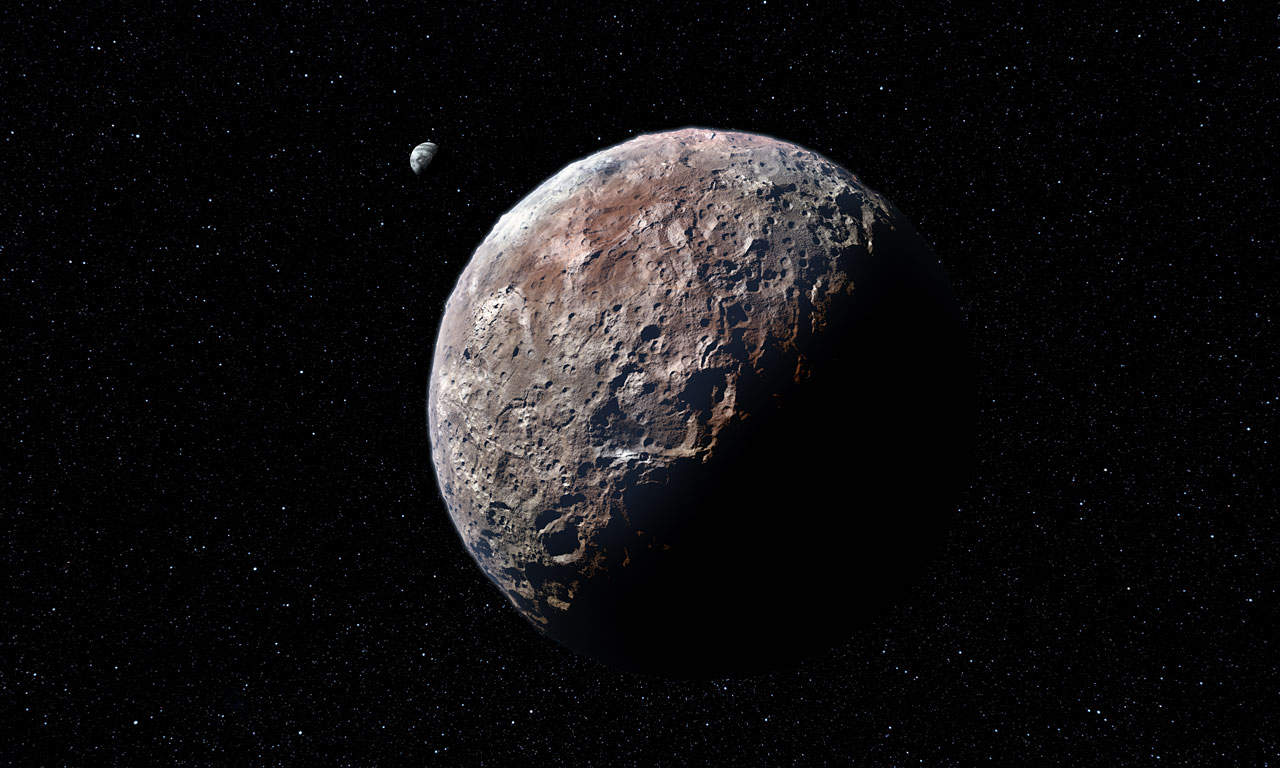
Name game: does that crater look like a Steve, or maybe a Carol? (Courtesy: IAU/L Calçada)
When I was a young lad back in the late 1960s, my family would join the annual March migration of Canadians to Florida. Along with alligator farms and the endless beaches, the Kennedy Space Center was a popular tourist destination and I can still remember visiting it and getting a solar spinner globe as a souvenir. Sadly, since the end of the Space Shuttle programme in 2011, Florida’s “Space Coast” has fallen on hard times. While there are still rocket launches – there are two planned for April – thousands of NASA employees have been let go and the surrounding communities look worse for wear. The New York-based photographer Rob Stephenson has put together a collection of images taken in and around the centre that he calls “Myths of the Near Future”. To me the photographs evoke the allure of the space age as well as the inevitable decline of any human endeavour.
The efficiency of quantum-cryptographic systems could be improved thanks to a new technique that uses “twisted light” to increase the amount of information carried per photon. Developed by an international team of researchers, the technique involves encoding 2.05 bits per photon by using the orbital angular momentum (OAM) of light instead of the more commonly used polarization of light, which only allows one bit per photon. The researchers say their new approach could be extended to achieve 4.17 bits per photon, and it could be used to make cryptographic systems more resilient to external eavesdroppers.
Unlike most other quantum technologies, quantum-cryptographic systems are already being used commercially by some banks and other organizations to ensure the secrecy of their communications. Such systems employ quantum-key distribution (QKD), which allows two parties – say Alice and Bob – to exchange an encryption key secure in the knowledge that it will not have been read by an eavesdropper (say, Eve). This guarantee is possible because the key is transmitted in terms of quantum bits (qubits) of information, which would be irreversibly changed if they were somehow intercepted and read, thereby revealing Eve.
One to two
Most current QKD schemes make use of the different polarization orientations of a photon – vertical, horizontal, diagonal, antidiagonal – but this only allows one qubit to be transferred per photon. In the new work, Mohammad Mirhosseini of the University of Rochester in the US and colleagues worldwide have doubled the amount to 2.05 qubits per photon by encoded their qubits using the OAM and the azimuthal angular position (ANG) of photons. OAM involves the wavefront of a beam of light spiralling around its propagation axis and is sometimes referred to as “twisted light”.
These two properties provide what are known as “mutually unbiased bases” – an essential requirement for QKD. Using such bases means that a correct key is revealed only if Alice encodes the information using a particular basis and Bob measures in that same basis. As the OAM and ANG are mutually unbiased with respect to one another, an eavesdropper would not be able to detect a photon simultaneously in both bases, thereby boosting its security.
Twisted alphabet
Once Alice and Bob have generated their QKD, they publicly announce the basis they have used for each symbol in the key and compare what basis was used for sending and which basis was used for receiving. They only keep the part of the key in which they have used the same bases and this ultimately produces a secure key, which can then encrypt messages and indeed transmit them with regular encryption without the need for quantum cryptography.
Mirhosseini, who is part of Robert Boyd’s group at Rochester’s Institute of Optics, says that the team was able to encode a 7D “alphabet” – seven letters or symbols – using OAM and the ANG. “Our experiment shows that it is possible to use ‘twisted light’ for QKD and that it doubles the capacity compared with using polarization,” he says, further explaining that “unlike with polarization, where it is impossible to encode more than one bit per photon, twisted light could make it possible to encode several bits, and every extra bit of information encoded in a photon means fewer photons to generate and measure”.
The team demonstrated that its system can generate and detect information with 93% accuracy and at a rate of 4 kHz. In the future, the researchers hope to push the rate to the gigahertz level, which is desirable for telecommunication applications. In an earlier experiment that used a strong laser beam instead of single photons, Boyd’s team was able to measure up to 25 modes or bases of OAM and ANG, rather than seven. If that method is applied to the new scheme, it could be used to transmit and measure 4.17 bits per photon using more sophisticated equipment.
Sound scatters from most surfaces and creates echoes that can be distracting to listeners and dangerous if you happen to be in a submarine trying to evade detection. Now, researchers have proposed a new “acoustic topological insulator” that could help alleviate such problems by transmitting sound in certain directions without any backscattering. If the material can be built in the lab, it could herald the development of new acoustic devices that have a range of medical and military uses including improving hearing aids and making objects invisible to sonar.
Topological insulators are materials that do not conduct electricity through their bulk volume but are very good conductors on their surfaces. This is possible because of the existence of special “edge states” in which electrons cannot backscatter for topological reasons. Recently, several research groups have been looking at how an acoustic version of a topological insulator – whereby sound waves will travel on the surface of a material but not through its bulk – could be made from a periodic acoustic medium called a “phononic crystal”.
Spinning air
Now, a team led by Baile Zhang at Nanyang Technological University in Singapore has unveiled a new design for an acoustic topological insulator made from a regular array of spinning cylinders.
The design is based on a triangular lattice with unit cells 20 cm in size. Each unit cell contains a rigid solid cylinder at its centre that is spinning at 400 revolutions per second. Each cylinder is surrounded by a concentric shell that is transparent to sound. The rotation of the cylinders causes the air in each shell to rotate, while the remainder of the lattice is filled with stationary air.
Calculations done by the team suggest that sound waves at frequencies between 914–1029 Hz will be guided around the edges of the lattice. Furthermore, the waves move with ease across any defects, disorders, sharp corners or protrusions on the edges of the lattice. This is the same behaviour seen in the electric conductivity on the surface of a topological insulator.
“This structure can guide acoustic waves around its surfaces smoothly without reflection, even in the presence of defects or disorders,” explains Zhang.
One-way travel
Another important feature of these “acoustic edge states” is that sound will only propagate in one direction. This direction depends on whether the cylinders are rotating clockwise or anticlockwise, and therefore can be reversed by altering the rotation. The calculations also suggest that such lattices could be tuned to offer this unidirectional, reflection-free propagation across a range of audible and ultrasonic frequencies.
Zhang told physicsworld.com that the phononic crystals could be used to improve hearing aids by creating systems that are very efficient at channelling sound through the ear canal. He also believes that the technology could be used to create acoustic “invisibility cloaks” that would guide sonar sound waves around the surface of objects such as submarines, thereby hiding them from detection.
“This work constitutes credible proof of the principle of acoustic insulators,” says Thomas Brunet of the University of Bordeaux in France who was not involved in the study. José Sánchez-Dehesa of the Polytechnic University of Valencia in Spain adds that “The challenge now is making this theoretical proposal feasible in a simple and cheap manner.”
Then make sure you download the latest album from Isle of Wight electronic duo Cosmic Mind Warp.
In a “unique crossover” between the worlds of cosmology, quantum physics and electronic music, Alister Staniland and David Holmberg have just released a new concept album dubbed Subatomic Particles.
The 15-track album, which features songs such as “Large Hadron Collider”, “Quantum Tunnelling” and “Down Quark”, is described by the duo as a “hallucinogenic head-trip through the microscopic world of subatomic particles and the strangeness of quantum physics”.
If a friend told you that they were spending the night stargazing in New York City, you might well assume they were on the lookout for Woody Allen or Scarlett Johansson. But for many amateur astronomers, they are more interested in the stars and planets above. This short film brings a personal story to the Dark Skies Awareness campaign, by following the amateur astronomer Irene Pease as she struggles to find a patch of darkness amid the dazzling lights of the Big Apple.
We also meet politicians and campaigners who have helped to bring about recent legislation in New York State to curb unnecessary light pollution. Those in favour of the new laws believe that it will alter NYC’s nightscape for the better, for example the introduction of shielded light fixtures will create a romantic glow. As with any new law, however, there are still challenges that remain in the implementation.
This film has been produced by the New York-based filmmakers Lucina Melesio and Aman Azhar. It is the first in a series commissioned by Physics World as an official media partner of the International Year of Light (IYL 2015). These short documentaries will tell personal stories relating to some of the core themes of IYL 2015, including light for health and light for studying after sunset.
If you want to find out more about the Dark Skies Awareness campaign, then check out the March issue of Physics World. This special issue of the magazine was devoted to light and includes a feature by science and environmental writer Gabriel Popkin about the advantages and disadvantages of using light-emitting diodes in the quest for dark skies.
If you’re a member of the Institute of Physics (IOP), you can now enjoy immediate access to the new special issue about light in our lives with the digital edition of the magazine on your desktop via MyIOP.org or on any iOS or Android smartphone or tablet via the Physics World app, available from the App Store and Google Play. If you’re not yet in the IOP, you can join as an IOPimember for just £15, €20 or $25 a year to get full access to Physics World both online and through the apps.
“This,” said Kenneth Brecher, handing me an ordinary cardboard kaleidoscope, “was the first mass-market fad – the first hula hoop, the first Rubik’s cube! It was a popular 19th-century science sensation with a huge impact on optical devices that followed, right up to the development of cinema.”
Brecher, a tall, reddish-haired, animated man of 71, was standing in the dining room of his home in the outskirts of Boston. He has put in 43 years as a professor of physics and astronomy at the Massachusetts Institute of Technology and at Boston University; he and his wife – also a physicist – have an asteroid named after them (4242 Brecher). He also researches visual perception and science education. All these interests intersect in kaleidoscopes; Brecher is surely the only kaleidoscope collector thoroughly versed in the physics and visual psychology principles on which they are based.
I had come to visit him in a commemorative mode: not only is 2015 the bicentenary of the idea behind kaleidoscopes, it is also the International Year of Light (IYL 2015), to which kaleidoscopes, and Brecher’s own research, have surprising connections. His house was teeming with spectra produced by light from the morning Sun that struck prisms in each room. On the dining-room table, he had laid out for my benefit a dozen kaleidoscopes that were special, either historically or technologically, drawn from his collection of 150 or so mostly displayed in a room on the floor above. “Upstairs we’ll play,” he said. “Here we learn!” The history of kaleidoscopes, I was about to discover, is a tangled saga of intersecting technologies, social developments, mathematical principles and singular personalities.
How kaleidoscopes began
The kaleidoscope Brecher handed me was the ordinary sort I had as a kid. Its basic elements are two angled mirrors, a mounting tube and an object case at one end of the tube containing a collection of objects. Peering through the kaleidoscope – the first I’d looked through in decades – I saw a mosaic of six colourful images sprouting symmetrically from a centre point. Turning the object case jostled the objects inside, magically morphing the stained-glass-like mosaic while still preserving its symmetry.
The man who invented and named the kaleidoscope was David Brewster (1781–1868). Brewster graduated from the University of Edinburgh in 1800 heading towards a career as a minister, but a case of stage fright paralysed him during his first sermon, causing him to leave the pulpit and the vocation. Brewster instead became an entrepreneur and man of letters, writing a biography of Isaac Newton among other activities. “See this?” Brecher said, holding up a cigar-box lid decorated with a distinguished portrait. “That’s him!”
Brewster also became a serious amateur scientist in the days when that was possible. Intrigued by optical phenomena such as reflection and refraction, he made a tremendous discovery. “Remember the Brewster angle?” Brecher asked. I did; it’s the angle at which unpolarized light striking an object creates a reflected beam that’s polarized. Brewster’s discovery in 1814 brought him Royal Society membership and the Copley Medal. “Polarization through reflection – that’s what’s behind the gas laser,” said Brecher.
The next year, 1815, Brewster noticed that two mirrors placed at certain angles create a curious multiplication of images and succession of “splendid colours” that is “one of the most beautiful [phenomena] in optics”. Further toying let him make symmetrical images of the reflections, and he enhanced their beauty by putting small pieces of coloured glass in a transparent container at the far end of the mirrors. Brewster patented the device in 1817, and tried to mass-market it with the help of a manufacturer. He coined the term kaleidoscope by combining the Greek words kalos (beauty), eidos (form) and scopein (to see).
In 1818 Brewster wrote of his invention in The Kaleidoscope: Its History, Theory and Construction, with Its Application to the Fine and Useful Arts. The fundamental principle of the kaleidoscope, Brewster wrote, is “that it produces symmetrical and beautiful pictures, by converting simple into compound or beautiful forms, and arranging them, by successive reflexions, into one perfect whole”. The sensational appeal of this device swept across all social strata in Britain and abroad. “It afforded delight to the poor as well as the rich; to the old as well as the young…200,000 instruments were sold in London and Paris during three months.”
Novel, inexpensive and beautiful, kaleidoscopes inevitably attracted knock-offs. “It was like Samsung and Apple,” Brecher said, drawing comparisons with today’s mobile-phone wars. “Rivals made small variants or exploited defects in the original patent application, and Brewster got screwed – never made a buck.” Brewster fought patent infringers, unsuccessfully, for the rest of his life, and in 1858 published a second, expanded version of his book in which he wrote in extensive detail about his path to discovering the kaleidoscope.
Brewster called his invention a “philosophical instrument” – an entertaining and educational device based on scientific principles – but he also claimed the kaleidoscope would find applications in the “fine and useful arts”, providing artists with beautiful forms that could not be produced other ways. It remained, though, largely a parlour amusement, and was followed throughout the rest of the 19th century by a series of other entertainment devices, such as the stereoscope, praxinoscope, the zoetrope, the phenakistoscope, and the thaumatrope. “The kaleidoscope was the first of a line of optical technologies that culminated in cinema,” Brecher said.
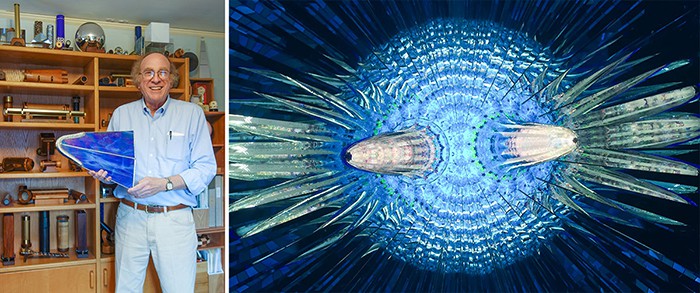
Eye candy Left, Kenneth Brecher showcases Gravity’s Rainbow. (Courtesy: Robert P Crease). Right, a polyhedral kaleidoscope designed by David Sugich that gives startling images. (Courtesy: Kenneth Brecher)
I asked Brecher how he first got interested in kaleidoscopes. As a physicist, he’s studied light and optics since his teenage years, but in 1999 his interest took a different turn when he won a grant from the US National Science Foundation to develop optics-based physics experiments for a hands-on education initiative called Project LITE (Light Inquiry Through Experiments, http://lite.bu.edu). The equipment needed to be cheap, accessible, educational and fun, which led him to also investigate things like visual perception, depth perception and binocular vision.
Brecher was particularly interested in spectroscopes – as he likes to say: “In astronomy, a picture may be worth a thousand words, but a spectrum is worth a thousand pictures.” What Brecher really wanted to do was to create a simple binocular spectroscope that students might find easier to use and would let them view spectra with two eyes. But in 2000, while attending an American Astronomical Society meeting, Brecher stumbled into a store in Albuquerque that had a few kaleidoscopes. “I bought one,” he said. “Paid $50 – a lot of money for a professor! Intriguing, maybe even educational. Also, I thought, if there were a binocular kaleidoscope, it might help me solve the optics problem to build a simple and inexpensive binocular spectroscope.”
But did binocular kaleidoscopes exist?
Introducing Cozy Baker
Nobody knew. But then Brecher learned of an amateur collector named Cozy Baker, who lived outside Washington, DC. The next time Brecher was in the area, for an astronomy review panel at NASA’s Goddard Space Flight Center, he dropped in for a visit.
“It blew my mind!” Brecher said. “She had a thousand kaleidoscopes, in every size and type, all over the house, in every room. I had never seen such a private collection of anything!”
Baker (1923–2010) had a fascinating story herself. In 1981 her 23-year-old son had been killed by a drunk driver. Devastated, she wrote a book about her loss, and on a visit to Nashville, Tennessee, to talk about it she came across a crafts shop that had a handmade kaleidoscope. Baker bought it, and on the plane home pointed it through the window. According to her obituary in the Washington Post, “As Mrs Baker watched the Earth below her melt away in a swirl of crystallized colours, she found the pain of her son’s loss was relieved with every twist of the kaleidoscope.”
Baker began to collect kaleidoscopes, and eventually acquired more than 1000, in what was believed to be the largest such collection in the world. They were made of everything from cardboard and plastic to sharkskin and elephant tusks, and in the shape of everything from simple tubes to aeroplanes and famous buildings. One had cost her $12,000, another was 2m high and 4m long. Her house had an indoor “kaleidoquarium” fish tank and a backyard “kaleidopool”.
Baker became the hub of a network of kaleidoscope designers, makers, collectors and store-owners. She started an organization, the Brewster Kaleidoscope Society, published a journal, hosted annual conferences on kaleidoscopes, and published a series of coffee-table books that promoted kaleidoscopes and the people who made them. “Cozy”, as everyone called her, created a community of kaleidoscope lovers that drew in and educated people who otherwise would have had no interest in the subject. Including Brecher.
“So that’s the rational story of how I got into kaleidoscopes,” he said, “through cheap optics, vision and spectroscopy. The left brain story. Of course, the right brain story is that kaleidoscopes are beautiful and I enjoy them!”
Towards gravity’s rainbow
Thanks to Baker, Brecher found the answer to his original question – true binocular kaleidoscopes do not exist. Baker’s collection did include one with two eyepieces, but it did not combine the vision to create a fusable image. Still, certain of her kaleidoscopes did raise new issues about his other interests in visual perception.
Brecher handed me a glass pyramidal kaleidoscope about 50cm high. Peering through the base, I was startled to see that the mosaic was not flat but spherical. “You don’t need two eyes to have depth perception!” he said triumphantly. “Here you have only monocular cues, but what you are looking at is clearly 3D!” Such devices stimulated him into trying to understand how you can perceive depth from a single monocular image.
Depth perception with one eye is possible because we normally use about a dozen monocular cues to perceive depth (including obscuration, perspective and relative size) but only one binocular cue – the image disparity between the two eyes. “If you help the brain think it is essentially looking through a window at the real world as opposed to a painting or other construct,” Brecher said, “then by using many monocular cues, the percept can seem very 3D.”
In kaleidoscopes, this is usually done by using three or more mirrors, and cutting them off at various angles. “Up to now we’ve been looking at plain vanilla kaleidoscopes,” Brecher explained. “Two mirrors, jointed. But why use just two mirrors? Why not three or more? At various angles?” Intriguingly, the first person to explore the mathematics of polyhedral kaleidoscopes was the German mathematician August Möbius (1790–1868), of Möbius strip fame; the subject was then generalized into a study of n-dimensional kaleidoscopes by the Canadian geometer Harold Coxeter (1907–2003). Three tapered mirrors, it turns out, create a sphere. More can make the image of almost any polygon.
Brecher pulled out an elaborate polyhedral kaleidoscope, looking something like a purple dorsal fin of a shark. The eyepiece was in the end that would be attached to the shark’s body, while the object case was bent around what would be the tip of the fin. “It’s the only one in existence, and I named it,” he said. “Don’t drop it.” I looked in and saw a spectacular blue and white sphere from which two finger-like protrusions seemed to grow, along which other objects seemed to travel when you moved the device.
“Isn’t that amazing!” Brecher said. “This is about as visually complex as you can get. There is no such object in there, after all. But you see it from monocular cues – you can even photograph it!” David Sugich, the designer, asked him to come up with a name. “I said ‘Gravity’s Rainbow’, because those fingers reminded me of gravitational wells. It’s a polyhedral kaleidoscope with four mirrors and a curved endcap.”
Back in fashion
When Baker began collecting in the 1980s, kaleidoscopes were going through a period of relative popularity dubbed the “kaleidoscope renaissance” (the title of a book she wrote in 1993). The resurgence in interest was partly social, triggered by a budding arts and crafts movement and an enthusiasm for psychedelic images. But two technological developments also gave kaleidoscopes an oomph by dramatically boosting the quality of image in them.
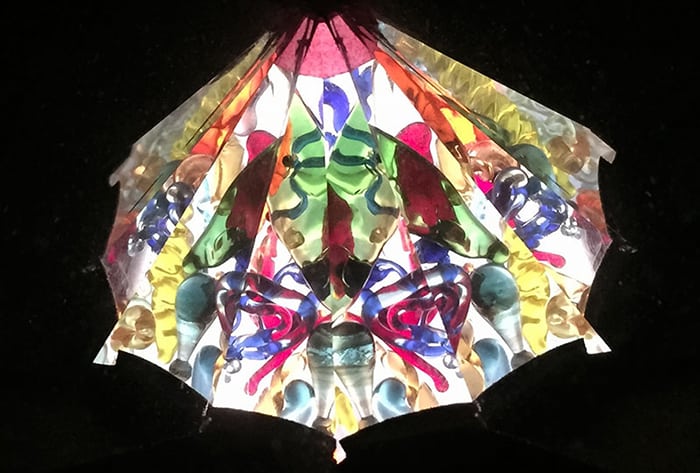
More than a toy The Parascope, designed by Wiley Jobe, can sell for thousands of dollars. (Courtesy: Kenneth Brecher)
The first development involved the use of “front-surface” mirrors. Traditional kaleidoscopes had used ordinary “back-surfaced” mirrors, in which the silvering (or aluminization) is on the back. Such mirrors aren’t ideal for kaleidoscopes because the light gets reflected so often in the device that each time the image gets dimmer. Front-surface mirrors are better because the glass is used only as the matrix to support an aluminized upper surface. The only snag is that if you touch a front-surface mirror even once you ruin it, which is why good kaleidoscopes have to be sealed up. “You’ve got to keep them clean,” Brecher explained.
Another reason for the kaleidoscope renaissance was the use of polarizing sheets, which dramatically improved colour quality in polarized kaleidoscopes. In fact, the idea of using polarized light in kaleidoscopes to create beautiful effects had first been proposed by Brewster in the 1858 edition of his book, in which he suggested incorporating into the eyepiece polarizing crystals known as “herapathite”. Interestingly, a way of creating polarizing sheets from herapathite had to wait until the 1920s and the work of the chemist Edwin Land, who’d originally read Brewster’s book as a teenager and founded what would become the Polaroid Corporation. “There’s a direct line from the kaleidoscope to polarizing transmission materials to Polaroid – then back to the kaleidoscope!” Brecher declared.
Brecher then picked up another kaleidoscope from the table and handed it to me. On the side it read “Judith Karelitz” and “Museum of Modern Art” (referring to MOMA in New York). I looked through it. The mosaic was not symmetrical, but – unusually – in the shape of a spiral. “I don’t know if Karelitz was the first to use polarizing sheets in kaleidoscopes,” said Brecher, “but she was the first to promote them commercially in a big way, through an arrangement with MOMA in the 1970s. By the way you can’t get colours and sharpness like this from a computer screen, at least not yet! The reality is so beautiful!”
The critical point
“Enough pedagogy! Let’s go play!” Brecher led me to the upstairs room where he displays the bulk of his kaleidoscopes. He spent the next hour or so explaining the variants in his collection “Here’s a teleidoscope. They were also invented in the 19th century. What’s distinctive about them is that they have no object case; the object case is the world.” He handed me another. “This is a polariscope. It has two polarizers perpendicular to each other, and incorporates clear transparent materials that are birefringent. Amazing colours!” He showed me a cubic device called a holoscope, developed by the artist Gary Allison, that one views through an open corner; depending on the mirror topology you can create 3D figures based on the five Platonic solids.
I saw others too, including a “Bubble Scope”, which lights up at the press of a button. Its colours are created not by polarization or diffraction, but by interference thanks to a thin film whose thickness changes as you tilt it. Then there was the “Cumos”. Invented by a Japanese teenager named Minori Yamazaki, it’s a cube with six flat mirrors inside, with something painted on one surface, and a small hole cut in one corner as a viewer. There were others too, with different numbers of mirrors, different geometries, different mounts and cases – some made with discs and wheels, some tilted or straight, others barrel- or oblong-shaped. Some object cases are even filled with liquid so the objects move more slowly.
Brecher also showed me a few kaleidoscopes that had been elaborately reconstructed by craftsmen he knew, who were copying instruments that sold at Sotheby’s and Christy’s for as much as $75,000. “Not my world!” Brecher said. “I couldn’t afford an original.” One, a “Parascope” designed by Wiley Jobe, allows you to change the mirror angle, thereby altering the symmetry of the parasol-like image.
As I left, I noticed a psychedelic painting on the wall created by a psychedelic artist who designed the video screen in the largest kaleidoscope in the world – the 20m-high Kaatskill Kaleidoscope in Tremper, New York. It was built in a grain silo and opened in 1996; visitors lie on the ground and look up to see the images. It’s “the first cathedral of the third millennium”, according to the artist, Isaac Abrams. “He was a childhood friend of mine,” said Brecher. “He never took a painting lesson, took LSD one day, and started painting the next day after that and never looked back.”
“One more thing,” Brecher added while I was at the door, producing a binocular-like object. “It’s my version of a binocular teleidoscope.” I looked through, but couldn’t quite resolve the images. “It takes a bit of futzing, and still needs work. Every little bit has to be just right. When I get it right, hopefully everyone will buy it and it will be the next hula hoop!”
Last summer, the Institute of Physics (IOP), which publishes Physics World, invited around 8500 physics undergraduates in the UK and Ireland to complete an online survey about careers. The 319 students who responded hail from 57 different institutions, and while they are not a random sample, their views seem broadly in line with those of their peers. In particular, their career aspirations will sound familiar to many physicists. When the survey gave students a list of 25 sectors of the economy and asked them to choose up to five that appealed to them, the most popular option was “academia”, but there was also a long tail of interest in other areas. All told, 11 different sectors caught the eye of at least 10% of survey respondents, reflecting the fact that a physics degree opens many doors.
When students were asked to name up to five companies where they would like to work, the answers were even more diverse. More than 400 different organizations made the list, including universities and government bodies as well as private-sector firms. In general, the most popular sectors and the most popular companies overlapped (see “Top picks” below). A closer look at the survey data, however, turns up a few oddities. The optics and photonics sector was fairly popular, with more than 20% of respondents saying they would be interested in a job in that area. However, when the students were asked to name actual companies, few (3%) picked firms that do business in an optics- or photonics-related field. Similarly, interest in the petrochemical sector was relatively low (8%), yet the oil firm BP was nevertheless among the top five preferred employers.
If you think that sounds like some physics students aren’t quite sure what they want to do, or where they want to do it, you aren’t alone: the students in the survey agree. “One of the major problems I personally am having is deciding what areas to go into,” one wrote in the survey’s comments section. Many said that they found the number of possible paths overwhelming (see “So many options” figure below). Others were unsure whether jobs advertised to graduates in other fields, such as engineering or computer science, would also accept applications from physicists. Overall, nearly two-thirds (63%) agreed that there was “a lack of information about job opportunities” for physics graduates.
Engineering an opening
To help fill this gap, Physics World asked physicists and human resources managers at a variety of companies to respond to some of the concerns that came up in the survey. First up: competing with applicants from other degree courses. “There is a lack of clarity in careers advice about which jobs are open to physicists and which are actually only recruiting engineers,” one student complained. “Most jobs I see are looking for engineers or degrees in computation,” echoed another. When applying for jobs in those fields, argued a third, “it seems as though physicists would be at a disadvantage”.
Oliver Collis, a physics graduate who is now an engineer, begs to differ. After earning his degree in physics and astronomy from Cardiff University, he spent 10 months teaching English in China before applying for an engineering role at MM Microwave, which supplies antennas and other microwave components to the aerospace, defence and telecommunications industries. While Collis says he was “concerned” about not having an engineering degree when he applied for his current role, he did not let that stop him. “I decided that what you learn on the physics degree is really problem solving,” he says. “Physics gives you such a strong background in maths as well, and then it’s just about applying what you already know to a different scenario.” Thanks to this background, he says, “I very quickly went from not knowing anything about antennas to designing them.”
Mathematical prowess was also an important transferable skill for Michael Bennett, who joined the software firm Integrated Environmental Solutions (IES) after earning a PhD in physics from Keele University. IES makes software that helps building professionals create more energy-efficient buildings, and its human resources (HR) manager Lorna Findlay estimates that almost half of the 40-member software development team in the company’s Glasgow office come from a physics background. Other physicists at IES create mathematical models and simulations of heat flow in “green” buildings, something that Bennett says is “not worlds away” from academic research.
Claire McCormick, an HR manager at the electronics firm Freescale Semiconductor, is slightly more cautious about welcoming physics graduates into non-physics roles. “For most of the engineering opportunities we have, we do tend to look for electronics and electrical engineers,” she says. However, physics graduates who have relevant experience in electronics thanks to their coursework, a final-year project or a summer internship would be seriously considered for roles in Freescale’s research and development (R&D) groups. “When we bring in any graduate, they have to learn on the job,” she explains. “We’re looking for someone with a good grasp of electronics, someone who knows their way around a basic circuit, but a full understanding of microcontrollers would not be required.”
Using your skills
Another concern for the physics students who participated in the IOP survey was the difficulty of finding jobs that actually use their physics skills, as opposed to more general graduate-level roles. “In the easily available careers information, much more emphasis is put on ‘jobs you can do with a physics degree’ rather than ‘jobs you should do with a physics degree’,” one student wrote. “If I were to guess why this is, I’d say it’s because a lot of technical jobs for physics graduates are with small companies.”
So many options Data source: Institute of Physics online survey of undergraduate physicists 2014.
Small companies can certainly have a lot to offer, particularly for students with broad interests. PolyPhotonix, a small start-up firm based in north-east England, is developing new products and devices based on organic light-emitting diodes. Its managing director, Alex Cole, says that he looks for people with skills in more than one field. “With us, you’ll do a bit of engineering one day, a little chemistry the next, and then you’ll be looking at Schrödinger’s equations,” he says.
Another advantage is that unlike big companies, which may receive thousands of applications for a few dozen graduate jobs (and can thus afford to be extremely picky), small firms are often willing to consider applicants who meet most job specifications, but not all of them. “They said that two or three years’ experience was ideal, but I sent them my CV and cover letter anyway,” says Collis, of MM Microwave. “I’d always wanted to be involved in designing things and making things that were ‘mine’, so I expressed that on the cover letter and that’s what convinced John [McGreevy, the company director] to give me an interview.”
That said, students should not rule out finding physics-based roles at larger firms. Ian Taylor, a physics graduate who works on lubrication science at Shell Global Solutions, says that his company offers many opportunities for graduates to put their physics knowledge to work. “Developing fuels requires an understanding of combustion physics, and both fuels and lubricants require a good understanding of friction and wear,” he says. In other areas of Shell, Taylor explains, physics graduates are trained in petrophysics and seismology before being sent to exploration sites. Physicists also go into the company’s R&D centres, where they work alongside engineers and chemists to develop next-generation products.
How to stand out
The IOP is working to raise awareness of jobs that use physics. As well as hosting company-specific careers fairs, the Institute runs events where students can talk to physics graduates who are employed in a variety of different fields. “It’s part of my job to find companies that people haven’t thought of,” says Vishanti Fox, the IOP careers manager. For students who already know what they want to do, but want more information about a specific field (see “I want to do X but all I hear about is Y” figure below), Fox suggests getting involved in one of the IOP’s subject groups and making use of networking opportunities there.
I want to do X but all I hear about is Y Data source: Institute of Physics online survey of undergraduate physicists 2014.
Once students have identified a company that interests them, there is still the small matter of applying for a job there. How can they make their application stand out? Reassuringly, Findlay, of IES, says that the first hurdle is actually not that high. “When I review applications, I always like it if our company name is mentioned,” she says. “It shows that the applicant has bothered to do some research about what we do.” McCormick, of Freescale Semiconductor, suggests that students take time to review old course notes before attending a technical interview. “Too often, students don’t go back and think, ‘What questions might I be asked here?'” she says.
Aside from getting the basics right, everyone that Physics World spoke to for this article agreed that relevant experience is a huge advantage. Companies both large and small regard their summer internship and “year in industry” placement programmes as prime recruiting grounds, and they also look favourably on applicants who have completed similar programmes at other firms. Students without formal industry experience should not get too discouraged, though. Other ways of gaining experience and demonstrating interest include programming mobile-phone apps, making 3D-printed models, getting involved in science outreach or becoming active members of university societies. “In general, what would knock people back is if we can say, ‘this person has been to university and that’s all they’ve ever done,'” Cole says. The CV of one recent hire, he adds, stood out because it mentioned that the applicant was an enthusiastic kayaker and president of the university’s cheese society.
As for the value of postgraduate degrees – an area of concern for several students in the IOP survey – opinions among employers are mixed. Most of those contacted by Physics World regard advanced degrees as “nice to have” rather than essential. “We don’t go out looking for postgraduate degrees – it’s more a question of finding the right person,” McCormick says. For others, though, an MSc or PhD degree is a definite advantage. “There’s a lot of skills that you develop during a Master’s or a PhD that make you a more well-rounded person,” Bennett says. “We are interested in developing software further. We want to develop models that are physically consistent and match reality. Lots of postgraduate courses provide skills relevant for those purposes.” Getting a second degree in a different subject also broadens the range of activities you can do, says Dan Kolb, a senior scientist at PolyPhotonix who has an undergraduate degree in physics and a PhD in engineering.
Summing up
Because physics is not a vocational degree like, say, medicine or law, physics students may need to work harder to identify jobs that use their skills. However, there are many employers out there who value the skills that physics graduates can offer. If students can show they have those skills, as well as convey passion and interest in their prospective employer, they will be well on their way to great careers – regardless of which field they choose to enter.
Top picks
Most popular sectors
Academia 55%
Nuclear 42%
Aerospace and defence 40%
Energy, excluding nuclear 34%
Engineering 30%
Most popular companies
Google 16%
BAE Systems 13%
EDF 11%
Rolls-Royce 9%
BP 9%
(Data source: Institute of Physics online survey of undergraduate physicists 2014)
Physicists in the US and Serbia have created an entangled quantum state of nearly 3000 ultracold atoms using just one photon. This is the largest number of atoms ever to be entangled in the lab, and the researchers say that the technique could be used to boost the precision of atomic clocks.
Entanglement is a purely quantum-mechanical phenomenon that allows two or more particles to have a much closer relationship than is allowed by classical physics. One property of entangled particles is that they can be very sensitive to external stimuli such as a gravity or light, and therefore could be used to create precise “quantum sensors” and clocks.
Until this latest experiment by Vladan Vuletić and colleagues at the Massachusetts Institute of Technology and the University of Belgrade, physicists had managed to entangle about 100 atoms within a much larger ensemble of atoms. Now, Vuletić’s team has managed to entangle nearly 94% of the atoms in its ensemble of 3100 atoms.
The experiment involves an optical cavity – two opposing imperfect mirrors – containing about 3100 rubidium-87 atoms that are cooled to a temperature of near absolute zero. Light is shone into one side of the cavity and allowed to bounce back and forth between the mirrors. Some of the light will eventually escape through the opposite side of the cavity, where it is captured by a detector. A magnetic field is applied to the atoms, which causes them to align their spins along the length of the cavity. However, the probabilistic nature of quantum mechanics means that the spins are not all aligned and their directions will fluctuate about the magnetic field.
Preliminary experiment
These fluctuations were measured in a preliminary experiment that involves firing a pulse of polarized light into the cavity. The pulse interacts with the atomic spins and emerges from the cavity with a small change or rotation of its polarization. This rotation is a measure of the direction of the total atomic spin of the gas relative to the direction of the magnetic field. By making this measurement many times over, the team showed that the total atomic spin in the cavity has a Gaussian distribution that is a disc centred on the direction of the applied magnetic field.
This representation of the total spin is called a “Wigner function” and it illustrates how the probabilistic nature of quantum mechanics causes fluctuations in the direction of the total spin. However, the fact that the function is Gaussian means that the atomic spins are behaving independently of each other and are not entangled. Therefore, the challenge for the researchers was to prepare the atoms in such a way that the Wigner function becomes non-Gaussian – which is strong evidence for entanglement.
To do this they fired an extremely weak polarized laser pulse into the cavity. Occasionally, just one photon in the pulse will bounce back and forth in the cavity and interact with nearly all of the atomic spins. This succession of interactions is what entangles the atoms.
Heralding entanglement
This photon can then leave the cavity and be detected. Such entangling photons are identifiable because their polarizations have been rotated by 90° by the atomic interactions. So, whenever such a “herald” photon was detected, the physicists immediately measured the direction of the total atomic spin. They repeated this process many times over to determine the Wigner function of the entangled atoms. Instead of a Gaussian disc, the distribution resembled a ring of positive probability surrounding an inner region of negative probability.
According to Vuletić, this hole of negative probability is the hallmark of entanglement. Furthermore, the researchers were able to calculate that the entanglement involved about 2910 of the 3100 atoms. In this experiment, the atomic spins were entangled in two states that lie on opposing sides of the hole of negative probability.
Vuletić says that the research has important practical applications because the Wigner function is essentially a measure of the uncertainty in a quantum measurement. By entangling large numbers of atoms and effectively “punching a hole” in the centre of the Wigner function, the precision of a quantum measurement can be improved. He told physicsworld.com that his team is now using the entanglement technique to create a more precise atomic clock.
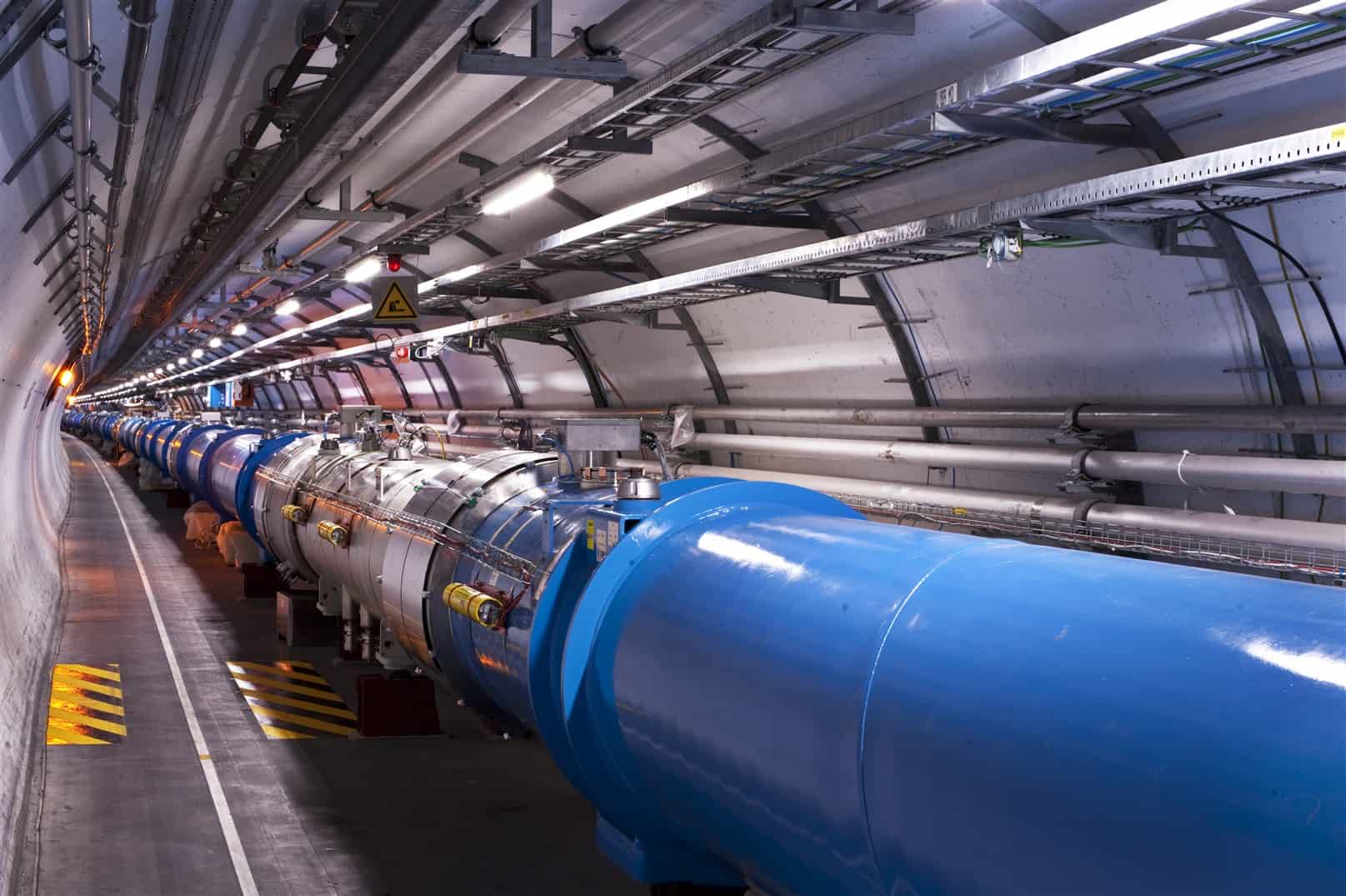
Back down the tunnel: technicians will soon be repairing an electrical fault somewhere along the LHC. (Courtesy: CERN/Maximilien Brice)
Today I was planning to write a cheerful blog celebrating the first circulating proton beams in the Large Hadron Collider (LHC), but sadly the particle gods are not smiling down on CERN this week. Accelerator physicists in Geneva have identified an electrical fault in one of the collider’s magnet circuits and plans to restart the giant machine this week have been put on hold – possibly for several weeks.