One step from Earth

On 14 December 1972 a small flower of flame blossomed under a squat metal box in a valley on the south-eastern edge of our Moon’s Mare Serenitatis. Within seconds, the ascent stage of Apollo 17’s lunar module Challenger, was lifting commander Gene Cernan and lunar module pilot and mission geologist Harrison “Jack” Schmitt back into lunar orbit to rendezvous with the Command Module America.

To Cernan and Schmitt it was a time of mixed emotions. They felt exultation at having become the 11th and 12th members of the human race to set foot on a celestial body other than the Earth. And yet their departure was also a time of mourning, for it signalled the end of NASA’s Apollo programme – the only project ever to have landed humans on the Moon. Budget cuts meant that all future Apollo missions were scrapped and humanity retreated to Earth orbit.

But the scientific analysis of the rocks brought back by the Apollo programme continued and Apollo scientists showed that the lunar regolith is rich in elements that are scarce on Earth, such as helium-3 as well as lanthanum, neodymium and other rare-earth elements. Now, more than four decades since the end of the Apollo programme, nations and companies are beginning to take the prospect of lunar mining very seriously indeed. After all, when something’s scarce there’s money to be made.

Gas stations in the sky

Humans may not have ventured beyond low Earth orbit since Apollo 17 came home, but unmanned spaceflight has made giant strides since then. In particular, during the 1990s two robotic science missions were sent to the Moon: the joint US Department of Defense and NASA Clementine mission in 1994, followed by NASA’s Lunar Prospector Mission in 1998–1999. Both used small orbiting spacecraft and the missions suggested that, contrary to all expectations, there might be water ice on the surface of the Moon.

The Clementine orbiter used ultraviolet and infrared imaging to map the Moon, and initial results suggested that water might be present in the polar regions. The Lunar Prospector Mission used a neutron spectrometer to search for the presence of hydrogen, particularly at the south pole region of the Moon. NASA’s announcement in March 1998 that the Lunar Prospector had found significant quantities of water in the Moon’s polar craters made headlines around the world.

Since then, several new lunar-orbiting science spacecraft have been launched, including India’s Chandrayaan-1 in 2008 and America’s Lunar Reconnaissance Orbiter (LRO) in 2009. The latter carried the Lunar Crater Observation and Sensing Satellite (LCROSS) booster, which was specifically designed to crash into the Moon’s south pole in an attempt to confirm the presence of water.

“We want[ed] to identify whether there is hydrogen at the poles that is associated with water ice or other volatiles,” recalls Richard Vondrak, project scientist for the LRO and deputy director of NASA’s solar system exploration division. “Our goal [was] to locate them, measure their concentration and [answer] the question: is that material accessible in the quantities required for use?”

LCROSS impacted a permanently shadowed crater in the south polar region of the Moon on 8 October 2009. The ejecta plume, which was analysed by an instrumented probe following behind the impactor, confirmed – using infrared and visible light spectrometers and cameras – the presence of water ice in the region. Estimates currently suggest that there are approximately 1 billion tonnes of water ice at the south pole of the Moon and 600 million tonnes at its north pole.

It is this, more than anything else, that has kindled interest in mining the Moon, for where there is ice, there is fuel.

The icemen cometh

At the forefront of interest in excavating lunar ice is the Shackleton Energy Company (SEC) of Austin, Texas. The firm was founded in 2007 by explorer and space entrepreneur Bill Stone with the aim of developing the equipment and technologies necessary for mining the Moon.

Dale Tietz, the company’s chief executive officer, says SEC wants to take advantage of what it believes are enormous quantities of ice at the poles of the Moon. “[This] can be mined and converted into rocket propellants and sold in low Earth orbit to all space partners at significantly lower prices than anything available today that could be launched from Earth,” he explains. The savings will come because it is much cheaper to launch spacecraft from the Moon, which has one-sixth of the gravity of Earth. “If you run the numbers it comes out as a 20-fold improvement on the ability to launch something from the Moon compared to from the Earth into low Earth orbit,” says Tietz.

Low Earth orbit (LEO) is SEC’s preferred destination for its “gas station in space” because it is close to its customer base, namely Earth, and also because the International Space Station is in LEO. “It is simply convenient for us to put our depot there,” says Tietz.

Tietz is adamant that the firm’s initial goal is only to mine water ice – because of its potential as a rocket fuel – rather than other resources such as helium-3, which is in short supply on Earth. Helium-3 has several applications on Earth, such as cooling materials to less than 1 K and being used as a detection material in neutron-scattering facilities , but when it comes to the Moon, some firms think it has potential as an energy source.

This image looks like the Moon, but it is not a photo; the image is made up of many long colourful ribbon-like rectangles going between the north and south poles, curved so that they look like they are on the surface of a sphere. Their shapes are apparent because there are also black slivers going north to south where there is an absence of data, but overall there is more colour than darkness. At each of the poles the colour is dark blue with pink speckles, as far as about a sixth of the way up the Moon from either extreme. In between, the colour is a mottled mixture of two colours: about two-thirds green and a third an orangey-rust colour

SEC plans to mine water ice by sending both crewed and uncrewed (i.e. robotic) miners to the lunar poles. “We will electrolyse [the water ice] to liquid oxygen and liquid hydrogen and use some of it for our own lunar propulsion activities, for example to power mining hoppers, lunar rovers and life support,” says Tietz. Predominantly though, the ice extracted there will be shipped in the form of water or ice to LEO. “LEO is where we will have monstrous electrolysers to convert the water to propellants on an on-demand basis,” he says.

SEC also plans to exploit other deposits of volatiles on the Moon harvested as a by-product of its ice-mining operations. Tietz says that the firm expects to capture nitrogen and carbon dioxide, which can then be reused for growing foods or developing chemicals.

Tietz is dismissive about the economics – at least initially – of mining helium-3. This isotope of helium is produced by fusion in the core of the Sun and is fantastically rare on Earth because it cannot penetrate our atmosphere and so is only available as a by-product of man-made nuclear-fission reactions on Earth. “At the present time, we do not find the concentrations of helium-3 in our polar target areas to be of sufficient abundance to be economic,” says Tietz. “If you look at the real estate that has to be mined to get to it where we will be, which is in an extremely harsh and geographically small area at the lunar poles, from a percentage point of view we do not think it will be worthwhile.”

A watery tale

Moon Express is another privately funded lunar-resources company that is planning a return to the Moon. Founded by Silicon Valley entrepreneurs Naveen Jain, Bob Richards and Barney Pell, the firm unveiled its MX-1 lunar lander spacecraft in December 2013. According to the Moon Express website, the MX-1 is a “breakthrough robotic space vehicle capable of a multitude of applications including delivering scientific and commercial payloads to the fraction of the cost of conventional approaches”.

Like SEC, Moon Express is interested in using water as a fuel – but in a different form. It plans to fuel its operations and spacecraft using “high-test peroxide” (HTP), which has a long and illustrious history as a propellant. First developed by the Nazis during the Second World War, it was originally named C-Storff and used to fuel missiles and the U-Boat 1407. Britain’s Royal Navy then built two Explorer-class submarines, Explorer and Excalibur, using HTP as an experimental fuel. The project was, however, abandoned after several fires, which led British naval personnel to rename the two subs the “Exploder class”.

While the fuel might not have been suitable for underwater work, it was used in combination with kerosene to successfully power the British Black Arrow rocket in the 1950s, which launched the UK’s Prospero X-3 satellite from the Woomera Range in South Australia.

It is perhaps no surprise therefore to see HTP making a comeback in the MX-1 satellite. Moon Express has the goal of winning the Google Lunar XPRIZE and mining the Moon for resources of economic value. Its focus is rare-earth elements, which include niobium, yttrium and dysprosium.

Farouk El-Baz, the geologist behind the original site selection of the Apollo missions, is as enthusiastic as SEC and Moon Express about the return to the Moon. “There are all kinds of questions about the Moon which remain to be answered,” he says. However, El-Baz is cautious about the idea of sending humans back to the Moon. “I think to answer [these questions] the best way is to send robotic missions.”

Another, more academic development in lunar exploration is that being spearheaded by Lunar Mission One. Sponsored by academia and industry as well as crowd funding, the project aims to enhance understanding of the Moon and the Earth by using drilling technology at the south polar region to understand where the volatiles in the crust came from and identify additional resources that will make a permanent presence on the Moon a reality.

Enter the dragon

Rare-earth elements, which are vital for everything from mobile phones to computers and car batteries, are also attracting attention from other nations. China, whose Jade Rabbit lander successfully touched down on the Moon in December 2013, is interested in mining the Moon for such elements as well as titanium, which the LRO found is up to 10 times more abundant in the lunar regolith than on Earth.

China currently has a near-monopoly on terrestrial rare-earth elements, having pursued a strategy of price control that has put all but its own mines out of business. Still, its own mines will not last forever, which is why China might try to mine the Moon. It already has plans to send a crewed mission to the Moon by 2020, and its space agency has publicly suggested establishing a “base on the Moon as we did in the South Pole and the North Pole”.

Colour photograph of the Moon. In the foreground is a large rock taking up about a third of the photo. To the left of this an astronaut, who looks very small in comparison, is holding a silhouetted device, and to the right is some kind of space buggy. These three things sit upon a flat grey landscape that only in the distance rises up into hills, beyond which is the blackness of space

This raises questions about the territorial annexation of the Moon. During the Cold War, the possibility of countries claiming territory on the Moon or other planets was considered realistic enough that the 1967 Outer Space Treaty was enacted to prevent it. But if there really is a superabundance of elements on the Moon, would this piece of paper stop nations from trying a land-grab?

China, of course, is also tantalized by the lure of helium-3. With a large and rapidly growing population and horrendous problems with pollution from its proliferating coal-fired power stations, a clean and limitless source of energy is impossible to ignore. Some believe that a fusion reactor fuelled by deuterium and helium-3 would be far cleaner than conventional fusion with deuterium and tritium because high-energy neutrons, which make fusion reactor walls radioactive, are not produced in nearly the same quantities. This argument has its flaws, not only because deuterium reacts up to 100 times more slowly with helium-3 than it does with tritium, but also because deuterium held in a reactor with helium-3 would produce neutrons anyway through various intermediary reactions. Still, this has not stopped China expressing an interest in helium-3 and it is for much the same reasons that India is also interested in the Moon. It plans to send Chandrayaan-2, which will carry a rover vehicle equipped with geological prospecting tools, to the Moon in 2016.

All interested parties agree that the Moon – one step from Earth – is the essential first toehold for humankind’s diaspora to the stars. Indeed, Bill Stone of SEC sees his firm as an integral part of that first step. “Once established…Shackleton will represent the first fully off-Earth corporation with the majority of its continuing resources coming from the Moon, not the Earth,” he claims. If this vision is realized, it would mean that the need for additional Earth-based launches would be limited to sending new hi-tech electronics and tools, and for personnel rotations. “Until Shackleton is successful, however,” cautions Stone, “getting to the Moon will remain an extraordinary and very expensive and dangerous feat for everyone”.

Chris Riley, co-producer of the award-winning film In the Shadow of the Moon, as well as the recent documentary Neil Armstrong First Man on the Moon, has no doubt about the importance of going back to the Moon because of its still hidden secrets. “Pure exploration is the most important driver for returning to the Moon,” he says. “It’s the size of the African continent, and yet we’ve only picked around with people on the surface in six places for a handful of days.”

As for El-Baz, who trained the Apollo astronauts in lunar geology, there is a bigger vision. “Our objective in the long run should be an astronauts’ mission to Mars. That’s what we should concentrate on.”

But it all starts with one step from Earth.

New optical fibre shortens laser pulses the easy way

A simple and efficient way of creating ultrashort infrared laser pulses has been unveiled by an international team of physicists. The technique reduces the length of a pulse by simply passing it through a specially structured, hollow glass fibre filled with a noble gas. The researchers say that the new method should make it easier for laboratories to produce pulses for studying chemical reactions on very short timescales.

The details of chemical reactions are often studied by “pump–probe spectroscopy”. This involves firing an attosecond-long (10–18 s) “pump” X-ray pulse at a sample to activate a reaction, followed a tiny fraction of a second later by a second, “probe”, pulse. By measuring the interaction between the probe pulse and the reacting chemicals, researchers can gain insight into the state of the reaction at the time it was hit by the probe. By varying the time gap between the pump and probe pulses, the progression of the reaction can be mapped out in time. Similar attosecond pulses can also be used to measure interactions between electrons in a molecule.

Attosecond pulses are produced in the lab by a process called high-harmonic generation. This involves firing an intense infrared laser pulse into a gas, where its powerful oscillating electric field drags electrons away from their atoms. The electrons then snap back to the atoms, producing an attosecond X-ray pulse.

More bandwidth needed

The process of high-harmonic generation requires ultrashort infrared pulses that are no longer than one cycle of the average frequency of the infrared light – longer infrared pulses will produce ill-timed sequences of attosecond pulses. This means that the infrared pulse needs to be less than about 5 fs (5 × 10–15 s) in duration. Such extremely short pulses cannot be produced directly by conventional lasers because confining light energy into such a narrow time interval requires a source that delivers light over a wide range of frequencies – something a laser cannot do. Instead, sophisticated and expensive optical equipment is used to shorten pulses from an infrared laser.

Now, scientists at Vienna University of Technology, together with colleagues in France, Germany, the UK and Russia, have demonstrated a simple and ingenious technique for compressing the energy in an infrared pulse into a single cycle. Ironically, the technique works because of dispersion, which usually causes pulses to spread out in time. In most materials, dispersion causes light at low frequencies to travel faster than higher frequency light. However, in materials with “anomalous dispersion”, light at higher frequencies travels faster than its low-frequency counterpart.

Basket weaving

The researchers took advantage of these two types of dispersion within an intricate “kagome optical fibre”. The central portion of the fibre is a void that is filled with a noble gas such as argon or xenon and has normal dispersion. This region is surrounded by a delicate kagome structure that resembles woven fabric – kagome is a traditional Japanese basket weave – and has anomalous dispersion. The combined effect of both regions on an 80 fs infrared pulse passing along the fibre is to squash all its energy into just 4.5 fs. Indeed, using the kagome fibre, the team could produce an output pulse with peak power of more than 1 GW, which is enough to pull electrons away from atoms.

Micrograph of a cross-section of the kagome optical fibre

The researchers focused their shortened pulses on a sample of xenon gas and used an interferometry technique to observe the movement of the individual electrons as they were torn away from the atoms. From these measurements the team was able to show that the pulses contained only one cycle of the infrared field. “By making the peak positive or negative, we were able to steer electrons in one direction or the other,” explains team member Tadas Balciunas. “That’s like an ultrafast electric switch.”

Many applications

The researchers now believe they can develop and simplify the technique even further. Their first priority is to demonstrate definitively that they can generate X-ray pulses using their technique. After that, says Balciunas, “there are many applications that can be tried”.

John Travers of the Max Planck Institute for the Science of Light in Erlangen, Germany, who was not involved in the research, is impressed with the new technique. “While lots of previous work, including work by me and my group, has often shown evidence that this self-compression is occurring,” he says, “this is significant because it shows that what we’ve been saying for some years is actually correct.”

The research is published in Nature Communications.

Galactic dust sounds death knell for BICEP2 gravitational wave claim

Astronomers working on the Background Imaging of Cosmic Extragalactic Polarization (BICEP2) telescope at the South Pole have withdrawn their claim to have found the first evidence for the primordial “B-mode” polarization of the cosmic microwave background (CMB). The claim was first made in March 2014 and this update comes after analysis of data from the Keck Array telescope at the South Pole and the most up-to-date maps showing polarized dust emission in our galaxy from the European Space Agency’s Planck collaboration. It now seems clear that the signal initially claimed by BICEP2 as an imprint of the rapid “inflation” of the early universe is in fact a foreground effect caused by dust within the Milky Way.

Cosmologists believe that when the universe was very young – a mere 10–35 s after the Big Bang – it underwent a period of extremely rapid expansion known as “inflation” when its volume increased by a factor of up to 1080 in a tiny fraction of a second. About 380,000 years after the Big Bang, the CMB – the thermal remnant of the Big Bang – came into being. BICEP2, Planck and the Keck Array all study the CMB and BICEP2’s main aim was to hunt down the primordial B-mode polarization. This “curl” of polarized CMB light is considered to be the smoking gun for inflation.

In March last year BICEP2 scientists claimed success, saying that they had measured primordial B-modes with a statistical certainty of 7σ – well above the 5σ “gold standard” for a discovery in physics. However, doubts soon crept in, especially about how the team had handled the effect of galactic dust on the result. Also, the BICEP2 measurements used in the 2014 analysis were made at just one frequency of 150 kHz – for a signal to be truly cosmological in nature, it must be crosschecked at multiple frequencies.

Dusty data

When the most recent dust maps from Planck were released in September last year, it became apparent that the polarized emission from dust is much more significant over the entire sky than BICEP2 had allowed for. While the dust signal is comparable to the signal detected by BICEP2 even in the cleanest regions, this did not completely rule out BICEP2’s original claim. To put the issue to rest, the three groups of scientists analysed their combined data – adding into the mix the latest data from the Keck Array, which also measures CMB polarization.

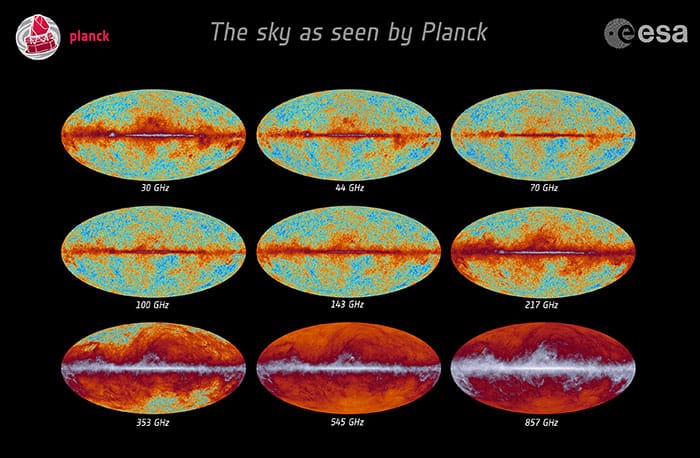
This analysis was based on CMB polarization observations on a 400 square-degree patch of the sky. The Planck data cover frequencies of 30-353 GHz, while the BICEP2 and Keck Array data were taken at a frequency of 150 GHz. “This joint work has shown that the detection of primordial B-modes is no longer robust once the emission from galactic dust is removed,” says Jean-Loup Puget, principal investigator of the HFI instrument on Planck at the Institut d’Astrophysique Spatiale in Orsay, France. “So, unfortunately, we have not been able to confirm that the signal is an imprint of cosmic inflation.” While they did find a signal from B-modes that arose due to gravitational lensing from galaxies, which had been spotted before in the CMB, it is not the primordial signal the groups were looking for.

These data imply that the simplest inflation models are now ruled out with 95% confidence
Neil Turok, Perimeter Institute of Theoretical Physics

Since its public announcement in March 2014, the BICEP2 team has been criticized by some physicists for prematurely claiming to have found the first “smoking gun” evidence for inflation. Neil Turok, director of the Perimeter Institute of Theoretical Physics in Canada, who had been an early critic of the BICEP2 results, now points out that the latest joint analysis has shied away from making a clear comparison of the data against the most basic models of inflation. “These data imply that the simplest inflation models are now ruled out with 95% confidence,” he says, explaining that, while this is not yet conclusive, it may just be just a matter of time thanks to a host of experiments that are currently gathering new and better data on the B-modes. Indeed, Turok believes that within a year we may have the data that begins to winnow away many inflationary theories. One such basic theory – dubbed the Φ2 theory – predicts a 15% contribution in the CMB fluctuations to come from primordial gravitational waves, but the data from the joint analysis show that the maximum contribution is 12%. Turok told physicsworld.com he would not be surprised if this contribution were shown to be a mere 5% in the next year.

All-sky maps recorded by Planck at nine frequencies

Bandwagon jumping

Peter Coles, an astrophysicist at the University of Sussex in the UK, told physicsworld.com that, with data at only one frequency, there was no way BICEP2 could have ruled out dust emission. “I think they were right to publish their result, but should have been far more moderate in their claims and more open about the uncertainty, which we now know was huge,” he says. “I don’t think BICEP2 comes out of this very well, but neither do the many theorists who accepted it unquestioningly as a primordial signal and generated a huge PR bandwagon.”

Coles adds that, despite what has happened, he still believes strongly in open science. “The BICEP2 debacle has really just demonstrated how science actually works, warts and all, rather than how it tends to be presented in the media. But I do feel that it has exposed a worrying disregard for the scientific method in some very senior scientists who really should know better. It can be dangerous to want your theory to be true so much that it clouds your judgement. In the end it’s the evidence that counts.”

Caught in a loop?

Following BICEP2’s announcement last March, Subir Sarkar – a particle theorist at the University of Oxford and the Niels Bohr Institute in Copenhagen – claimed to have found evidence that emissions from local “radio loop” structures of dust in our galaxy could generate a previously unknown polarized signal. This new foreground – which should be seen in the radio and microwave frequencies and is present at high galactic latitudes – could easily mimic a B-mode polarization signal, according to Sarkar.

Planck’s data from last year convinced Sarkar and colleagues that the loop structures crossing the BICEP2 observation region may be the main cause of the polarization signal. Sarkar told physicsworld.com that he is surprised that the latest paper does not offer a physical explanation for why there should be so much dust at such high galactic latitudes. “Unless we understand this it will be hard to model the foreground emission to the level of accuracy required to make progress in the continuing search for gravitational waves from inflation,” he says.

Currently, a variety of satellite and ground-based experiments – such as LiteBIRD, COrE, Atacama Cosmology Telescope and the recently launched SPIDER telescope – are busy taking measurements of the CMB polarization to settle the debate on gravitational waves, and hence inflation. Indeed, the BICEP experiment itself is now taking data at two frequencies and will soon up that number to three.

Theories run amok

“For the past 35 years, theoretical physics has been an extravaganza of model-building,” says Turok, adding that theories have “sort of run amok.” He alludes to the fact that data from experiments as different in scale as the Large Hadron Collider and Planck have shown that the universe “is much simpler than we expected”. The data in the coming years will show whether or not relics of gravitational waves indeed abound in the universe – or if inflationary theories should be consigned to the dusty corners of history.

The paper “A joint analysis of BICEP2/Keck Array and Planck data” by BICEP2/Keck and the Planck collaboration has been submitted to the journal Physical Review Letters. A pre-print is available here.

Ultrasound puts a new twist on light

A new way to create and guide beams of “twisted light” has been created by researchers in the UK. The team used a cylindrical array of ultrasound loudspeakers to create a pattern of density waves in a fluid through which a laser beam is shone. The system creates twisted “Bessel beams” that can be reconfigured at a rate of about 150 kHz and shows promise for use in a wide range of applications including optical tweezers, high-speed data transmission and aberration correction for microscopes.

Twisted light refers to a beam with a wavefront that rotates around its direction of propagation with a corkscrew-like motion – and therefore carries orbital angular momentum. Bessel beams are a type of twisted light that have been created in the lab using special lenses and have been used in optical tweezers. An important feature of Bessel beams is that they do not diverge as they propagate, which makes them well-suited for optical tweezers.

Concentric waves

In 2006 Craig Arnold and colleagues at Princeton University created “zeroth order” Bessel beams using ultrasonic standing waves. The waves create concentric regions of high and low density in a fluid held in a cylindrical container. The optical refractive index of a fluid increases with the fluid’s density and therefore the fluid behaves as a complicated lens, which focuses a conventional laser beam into a Bessel beam.

An important feature of this “acousto-optic” device is that it can be reconfigured at a rate of about 1 kHz. This means the Bessel beam to be used for manipulating particles in optical tweezers, for example. However, the beam could not be steered and higher-order Bessel beams – those carrying angular momentum – could not be made. Other researchers have used liquid crystal-based spatial light modulators to create a wider variety of twisted light, including Bessel beams. This approach can also achieve reconfiguration rates up to about 1 kHz, but faster rates would allow twisted light to be used in a broader range of applications.

Now a team led by Bruce Drinkwater at the University of Bristol and Mike MacDonald at the University of Dundee have created a new acousto-optic device that can create and steer higher-order Bessel beams with the added bonus of a fast reconfiguration rate.

No reflections

At the heart of the system is an array of 64 tiny piezoelectric loudspeakers that are arranged on the inner wall of a short tube with an inner radius of about 5.5 mm. The tube is filled with water and capped at both ends by glass slides that are transparent to light, creating a cylindrical lens. A crucial feature of the inner wall of the tube is that it absorbs the ultrasound that impinges on it, rather than reflecting the ultrasound back into the water. This means that there are no resonant standing waves within the chamber and this allows the output from the loudspeakers to be used to create much wider range of wave patterns than Arnold and colleagues could achieve. Indeed, the patterns need not be centred on the cylinder’s axis of symmetry and this allows the centre of beam to be scanned across the plane of the cylinder.

A beam of laser light is passed through the device and the emerging Bessel beam is captured by a digital camera for analysis. The researchers were able to observe Bessel beams of the first to fourth order as they adjusted the amplitudes and relative phases of the loudspeakers. They were also able to raster the position of the centre of the Bessel beam a distance of ±0.2 mm in both the x and y directions.

The non-resonant nature of the device also plays a role in its rapid reconfiguration. Because a sound wave only travels across the cylinder once – rather than bouncing back and forth many times – the time needed to change the shape of the lens is simply the time it takes a sound wave to travel across the cylinder. In this latest device the maximum reconfiguration rate is about 150 kHz. However, Drinkwater and colleagues point out that if the lens is made from a solid material such as lithium niobate – with a much faster speed of sound than water – then a reconfiguration rate of about 1.5 MHz could be achieved.

Applications are everywhere

“The number of applications of this new technology is vast,” says Drinkwater. “Optical devices are everywhere and are used for displays and communications, as well as scientific instruments.”

One possibility is to use the device to encode information into the orbital angular momentum states of light pulses. This could allow pulses of the same colour light, but with different orbital angular momentum states, to transmit data simultaneously along the same optical fibre, thereby boosting the data transmission rate.

Other applications of Bessel beams include optical tractor beams that can pull objects towards a light source and the “photoporation” of living cells, which makes use of the non-diverging nature of a Bessel beam to punch a tiny hole in the cell membrane. Adaptive optics for optical microscopes, which would perform the real-time correction of images for the effects of aberration, is another possible application.

The research is described in Optics Express.

  • Last year Hamish Johnston visited Bruce Drinkwater’s lab at the University of Bristol to learn about the physics of ultrasound. You can listen to his conversation with Drinkwater and watch a short video about ultrasonic levitation here: “The wonderful world of ultrasound“.

Louise Mayor bags European astronomy journalism prize

By Matin Durrani

If you think that writing a great feature article about physics is easy, think again. You want something that’s pitched at the right level for the audience. You’ve got to avoid jargon and explain technical terms where necessary. You can’t go on and on – you’re not trying to rewrite Wikipedia.

Most importantly, you need to tell a good story and say something new, different and intriguing. And remember, your readers could switch off at any point, so the article has to be well written, flow well from point to point, have plenty of colour and, ideally, have some pay-off or punch-line at the end. No point just trailing off into nothingness. Oh, and good pictures, headlines and captions are a must.

So I’m sure you’ll join me in congratulating my colleague Louise Mayor – features editor of Physics World magazine – who has won this year’s European Astronomy Journalism Prize for an article she wrote for the October 2014 edition of the magazine. Her winning article is entitled “Hunting gravitational waves using pulsars” and looks at efforts to detect gravitational waves using radio telescopes to observe distant pulsars.

(more…)

The February 2015 issue of Physics World magazine is now out

It’s now more than 40 years since the last person set foot on the Moon, but since then we’ve come to realize that the lunar surface is not only home to plenty of rare-earth elements, such as lanthanum and neodynium, but also to more than a billion tonnes of water-ice at the poles. Several US firms in fact have bold plans to mine those resources, as the cover story of the February issue of Physics World magazine makes clear.

One idea is to electrolyse the water into hydrogen and oxygen that could be used as a fuel source for operations on the Moon. Even more boldly, the water ice could be shipped to low Earth orbit, where it could be used to fuel space craft sent up from Earth. To find out more about whether those plans are realistic, do check out the February issue, which is now out online and through our app.

(more…)

Nailing the half-life of iron-60

The most accurate measurement yet of the half-life of iron-60 has been made by an international team of physicists. While previous measurements of the half-life had differed by a factor of two, the team says that it has accounted for most sources of error that plagued earlier experiments. The radioactive isotope – whose half-life is measured at 2.60 million years with a 2% uncertainty – can now be used to date astrophysical events on that timescale, making it a reliable astrophysical chronometer.

While most of the iron in the universe is iron-56 – a stable nucleus made up of 26 protons and 30 neutrons – iron-60 (60Fe) has 34 neutrons and it is the four extra neutrons that make the isotope unstable to radioactive decay. 60Fe is also an “extinct radionuclide” – a nuclide formed by primordial processes in the early solar system, nearly 4.6 billion years ago.

Solar system histories

The existence of such radionuclides is normally inferred by looking for a “superabundance” of their stable decay products – one neutron becomes a proton and 60Fe decays into cobalt-60 (60Co) and finally into the stable nickel-60 (60Ni). While there is no primordial 60Fe still on the Earth from when the solar system formed, a small amount has been found in the deep-sea of the ocean floor. This material most likely originates from outer space – either from meteorites (where 60Fe is produced thanks to the meteorites being constantly bombarded by cosmic radiation) or from stellar nucleosynthesis events such as supernovae that occurred only a few million years ago. Such traces help astronomers build a clearer picture of the supernovae that may have occurred nearby as the solar system evolved, having a significant impact on the Earth’s climate, as well as its ability to host life.

To use 60Fe as an accurate chronometer though, its half-life must be known precisely. But the two best previous measurements – made in 1984 and in 2009 – found different answers that disagreed by nearly a factor of two. Indeed, the 1984 experiment found the half-life of 60Fe to be 1.5 million years, while the 2009 experiment deemed it to be 2.6 million years.

Perfectly precise?

Anton Wallner from the Australian National University, along with colleagues in Austria and Switzerland, has now confirmed the latter measurement of 2.6 million years with a 2% uncertainty by using a different method from the 2009 group.

Scientists normally measure half-lives by using different types of spectroscopy to measure the decay rate per second in a sample containing a known number of the nuclei. For 60Fe, they detect the gamma rays that are emitted by its daughter nucleus 60Co, which is no mean feat. Wallner tells physicsworld.com that two factors play a key role – the experiment needs a sufficient number of 60Fe nuclei within its sample, so that the radioactivity is high enough to be measured. Furthermore, the team must know to great precision the initial number of 60Fe nuclei in the sample. Ironically, this number is directly related to the half-life value itself, making the entire measurement very tricky.

Paradoxical measurement

The team used accelerator mass spectrometry (AMS) – the same method used by the 1984 experiment, but different from the 2009 experiment – to determine the tiny concentration of 60Fe isotopes in its sample. Wallner explains that AMS is better than the 2009 group’s method of “inductively coupled plasma mass spectrometry” (ICP-MS), as AMS allows the team to easily distinguish between equal mass isotopes of different elements present in the same sample. Wallner acknowledges that AMS does have a more complex measurement set-up than IC-PMS, allowing systematic errors to creep in, but the researchers can correct for these errors confidently. “Our motivation was to produce an accurate value, even if it is not as precise as the ICP-MS result,” he says. Instead of using the 60Fe half-life, they compared the number of isotopes detected to the concentration of 55Fe – another rare isotope – thereby accounting for the aforementioned errors.

There are numerous implications of having nailed down this value because primordial radionuclides (whose half-lives span between 0.3 and 81 million years) allow astrophysicists to deduce the time-scales of the process that they are produced in. These include supernovae and evolving low-to-medium-mass (AGB) stars. Also, Wallner explains that “60Fe is produced in stellar nucleosynthesis by neutron capture on 59Fe,” but, as the neutron-capture cross sections are directly related to the half-life, knowing this value is essential. There are satellites, such as ESA’s International Gamma-Ray Astrophysics Laboratory (INTEGRAL), that can detect “recently” decaying 26Al and 60Fe in our galaxy by counting the number of atoms present in the interstellar medium. Once again, this requires an accurate half-life value.

The devil wears pulsars, Leó’s lost love and a terrifying polonium plot

Fancy a Hubble Space Telescope T-shirt or perhaps a pair of leggings printed with glow-in-the-dark stars and planets? For pictures and links to these and other stellar fashions, check out the STARtorialist blog, which is run by two astronomers based in New York City and described as “Where science meets fashion and scientists get fabulous!”.

(more…)

How to twist light into a Möbius strip

Möbius strips can easily be made at home – just take a strip of paper, give it a half-twist and then join its ends together. Trivial as it may sound, this loop possesses the unusual property of having only one surface and one edge. They also appear very rarely in nature and had never before been seen in light. Now, an international group of physicists has created such shapes using the polarization of laser light, and the researchers say that these electromagnetic patterns could be used to build new kinds of small-scale structure such as metamaterials.

The possibility of making an optical Möbius strip was suggested in 2005 by Isaac Freund of Bar-Ilan University in Israel. Freund calculated that a pair of laser beams could be manipulated such that the axis along which their combined electric fields oscillates – the polarization vector – would trace out a Möbius strip. He proposed using beams with different spin and orbital angular momenta, and making them interfere at specific angles to one another. The spin – or circular polarization – of an electromagnetic wave involves its polarization rotating clockwise or anticlockwise in a circle that is normal to the direction of propagation. Orbital angular momentum, on the other hand, comes from the twisting of a beam’s wavefront around its propagation axis.

Longitudinal challenge

Normally, a light wave vibrates in a plane at right angles to its direction of travel; but crucial to creating a 3D optical pattern such as a Möbius strip is to ensure that it also has a longitudinal component along the propagation axis. It turns out that Freund’s proposal for creating this longitudinal component is extremely challenging from an experimental point of view, so in this latest work Peter Banzer of the Max Planck Institute for the Science of Light in Erlangen and colleagues in Germany, Canada, Italy and the US have taken a different approach.

Banzer and colleagues used a liquid-crystal device known as a q-plate. When exposed to a beam with a certain spin, a q-plate transforms that beam so that it has opposite spin and 2q units of orbital angular momentum, where q can be any half-integer value and is a property of the particular plate used. The team used a green laser beam that was a superposition of two waves with opposing spin. The result was a beam with a polarization that varied across its width. It was circularly polarized at its centre, but linearly polarized – and with varying orientations of the polarization vector – further out.

Tight focusing

To extend this 2D pattern of polarizations into the third dimension, the researchers sent the beam through a tight-focusing microscope lens. This gave the beam a longitudinal component – the size of which depended on the degree of focusing. The result was a Möbius strip of polarization that measured just 200–250 nm across. By changing the q-plate, the researchers were able to create Möbius strips with three (q = –1/2) and five half turns (q = –3/2).

“It was a puzzle in the community as to whether such a topology could exist physically or whether it was just a mathematical description,” says group member Ebrahim Karimi of the University of Ottawa. “But now we have seen this in the lab, we know that Freund’s theory is correct.”

A brilliant tour de force at the cutting edge of optical technology
Isaac Freund of Bar-Ilan University

Freund himself describes the latest work as “a brilliant tour de force at the cutting edge of optical technology”, and says that it “goes far beyond verifying a particular prediction because it demonstrates that it is possible to measure the full 3D polarization structure of light”. It is a breakthrough, he adds, that is sure to be followed by research on other 3D optical systems.

Topological richness

Others in the field also praise the experiment. Michael Berry of the University of Bristol says that the work required “virtuoso mastery” of several optical techniques and that it “emphasizes Freund’s prediction of the geometrical and topological richness hidden in the laws of electromagnetism and expressible in light”. Miles Padgett of the University of Glasgow, meanwhile, says that the results may have important applications in areas such as optical lithography and nanofabrication.

One potential application is creating tiny 3D objects with unusual topologies – including tiny Möbius strips – which are very difficult to make using conventional lithography because of a lack of control over a light beam’s longitudinal component. Karimi told physicsworld.com that the new technique might be particularly useful for manipulating polymers, given the strong response that these materials have to light polarization. He also believes that the scheme might prove useful in building metamaterials – artificial materials that have unusual optical properties that can be put to work in optical devices.

The research is reported in Science.

  • Check out our free-to-read digital edition of Physics World magazine containing 10 of our best-ever features on the science and applications of light, which we have put together to mark the International Year of Light

A single light of science

2015 is the International Year of Light and Light-based Technology (IYL 2015), as people around the world celebrate the remarkable properties of light and its applications. In this short film you will meet people working in some of the key focus areas of IYL 2015, including Nobel laureates, development professionals and a range of people from the creative industries.

“The year of light is a chance to focus on some of the amazing things that we’ve learned about light and using light. But more importantly, about some of the amazing opportunities we have to learn new things about light,” says William Phillips, who won the 1997 Nobel Prize in Physics for developing methods to cool and trap atoms with laser light.

These interviews were filmed earlier this month during the official opening ceremony of IYL 2015 at UNESCO’s headquarters in Paris. This two-day event – attended by more than 1000 people – combined talks with exhibitions, art installations and musical performances. The event opened with the reading of a statement from the UN secretary general Ban Ki-moon who said that “light is a unifying symbol that signifies wisdom and excites the imagination across the world”.

One of the key activities of IYL 2015 is to highlight the use of light-based technologies for global development. For instance, the Study after Sunset initiative is promoting the use of solar-powered LED lanterns in parts of the world where there is little or no reliable source of light for after dark. Linda Wamune, a development worker featuring in this film, says there are currently 600 million kerosene lamps being used in Africa. These are expensive to fuel and the fumes they emit can be extremely damaging to people’s health, but people use them because of the absence of reliable electricity grids.

Another key strand of IYL 2015 is to build bridges between the sciences, arts and humanities through collaborative projects. As an example of the scope and diversity of the international year, the film features the adventurer and speleologist called Olivier Testa, who was involved in assembling a special collection of photographs of the caves of Haiti. These images demonstrate how light and shadow can reveal the geological richness of these environments in stunning detail.

Stay tuned to physicsworld.com throughout IYL 2015 for plenty more light-inspired films. In the meantime, don’t forget to check out our free-to-read digital collection of 10 of the best Physics World features related to the science and technology of light, spanning everything from the physics of rainbows to a new type of glasses that could bring improved vision to millions.

Copyright © 2026 by IOP Publishing Ltd and individual contributors