

A man, a plan, a bomb

Was the atomic bombing of Hiroshima and Nagasaki justified? Was it necessary? Were there other – better – options available, either to the scientists who built the bombs or the generals who ordered them dropped? Nearly 70 years later, there are still no settled answers to these questions, and Tom Morton-Smith’s new play Oppenheimer wisely avoids dwelling on the “what ifs” of atomic history. Instead, the play – which runs at the Royal Shakespeare Company’s Swan Theatre in Stratford-upon-Avon until 7 March – focuses on what actually happened, and on the price that the bomb’s scientific father, J Robert Oppenheimer, paid for the fame it brought him.

The journey from idealistic youth to cynical old age is hardly unusual. Even so, it is rare for a human being to travel as far, and as fast, as Oppenheimer did in the late 1930s and early 1940s. As Oppenheimer begins, we see “Oppie” at a party in Berkeley, California with his friends, his students, his younger brother Frank and his sometime lover Jean. The party is a fundraiser for victims of the Spanish Civil War, but as Oppie cheerfully admits, the money they collect is all being “dispersed…distributed…through the Party”. Oppie, it seems, is something of a left-wing Pied Piper, lending socialist books to his physics students even as news of something truly revolutionary – nuclear fission – reaches them from Europe.

By the end of the play, a bomb based on nuclear fission has been built, tested and dropped, and Oppie has betrayed nearly everyone at the party. The idealistic Jean is soon dropped in favour of the cynical Kitty, who becomes Oppie’s wife. Others fall victim to a different kind of lust. When General Groves, military chief of the nascent US bomb project, appears onstage and offers to make Oppie the project’s scientific leader, the deal is conditional: the Berkeley professor must “distance” himself from his lefty associates. Desperately ambitious, Oppie obeys, casting off friends, colleagues and even his own brother like an unstable nucleus sheds particles, until there is almost nothing left.

The analogy between Oppenheimer and an unstable nucleus is Morton-Smith’s own, and he, the Royal Shakespeare Company cast and director Angus Jackson handle the play’s physics content with assurance. It helps that the basic principles of nuclear fission aren’t that difficult. Indeed, fission’s relative simplicity is a problem for the play’s characters: while Oppie worries that the Nazis will get a bomb first, Edward Teller rages that there is “no beauty or elegance” in smashing chunks of uranium together. Beautiful or not, though, the physics in Oppenheimer could easily have been confusing or plodding. The fact that it is neither is a credit to everyone involved.

The play requires a large cast, and several of the supporting actors turn in bravura performances. Thomasin Rand excels as Kitty, a magnificently bitchy drunk, while Catherine Steadman shines as the fragile Jean. Among the men, Ben Allen makes Teller an intriguing mixture of malice and humour, and one of the play’s most moving scenes belongs to Jamie Wilkes, who plays Oppie’s student Bob Serber. Most of the actors are young, which is historically accurate (the average age of the physicists at the wartime Los Alamos laboratory was about 25), and several scenes emphasize the immaturity of the men (and women) who shouldered the titanic responsibility of building the bomb.

The greatest responsibility, of course, fell on Oppenheimer himself, and the same is true for the central character in Morton-Smith’s play. With his lanky frame and pale, expressive face, John Heffernan is perfectly cast as Oppie, and he brings charisma and vulnerability to a role that requires plenty of both. He also revels in his character’s ambiguous morals, hinting that Oppie may regret his own sacrifices as much as he regrets the deaths of Japanese children. That’s a brave suggestion, and it may well be historically accurate. In his monumental 2012 biography Inside the Centre, Ray Monk describes Oppenheimer as “swaggering like a cowboy” after the first atomic bomb test and “raising his hands in the air like a prize-winning boxer” after Hiroshima. Remorse (and high-minded quotations from Hindu scripture) came later.

At just over three hours (including the interval), Oppenheimer is not short, and there is a limit to how many dramatic moments either the play or its audience can withstand. By the time the cast assembles for the first atomic bomb test, we have already witnessed at least four shattering confrontations between Oppie and various other characters. Morton-Smith’s writing – so real and vivid in those personal cataclysms – is also weaker on the symbolism needed to convey the horrors of atomic warfare onstage. A scene where a child actor declaims on the devastation of Hiroshima falls particularly flat, coming across as both unnecessary and overly literal; did they really need to depict a bomb called “Little Boy” as an actual little boy?

These are small things, though, and they do not seriously detract from the play’s considerable emotional punch. Oppenheimer will not change any minds about the bomb’s morality, but it doesn’t have to. “Oppie” and his “boys” did what they did. As a consequence, we live in a nuclear-armed world. What we do about that is up to us.

  • Royal Shakespeare Company, Swan Theatre, Stratford-upon-Avon, UK
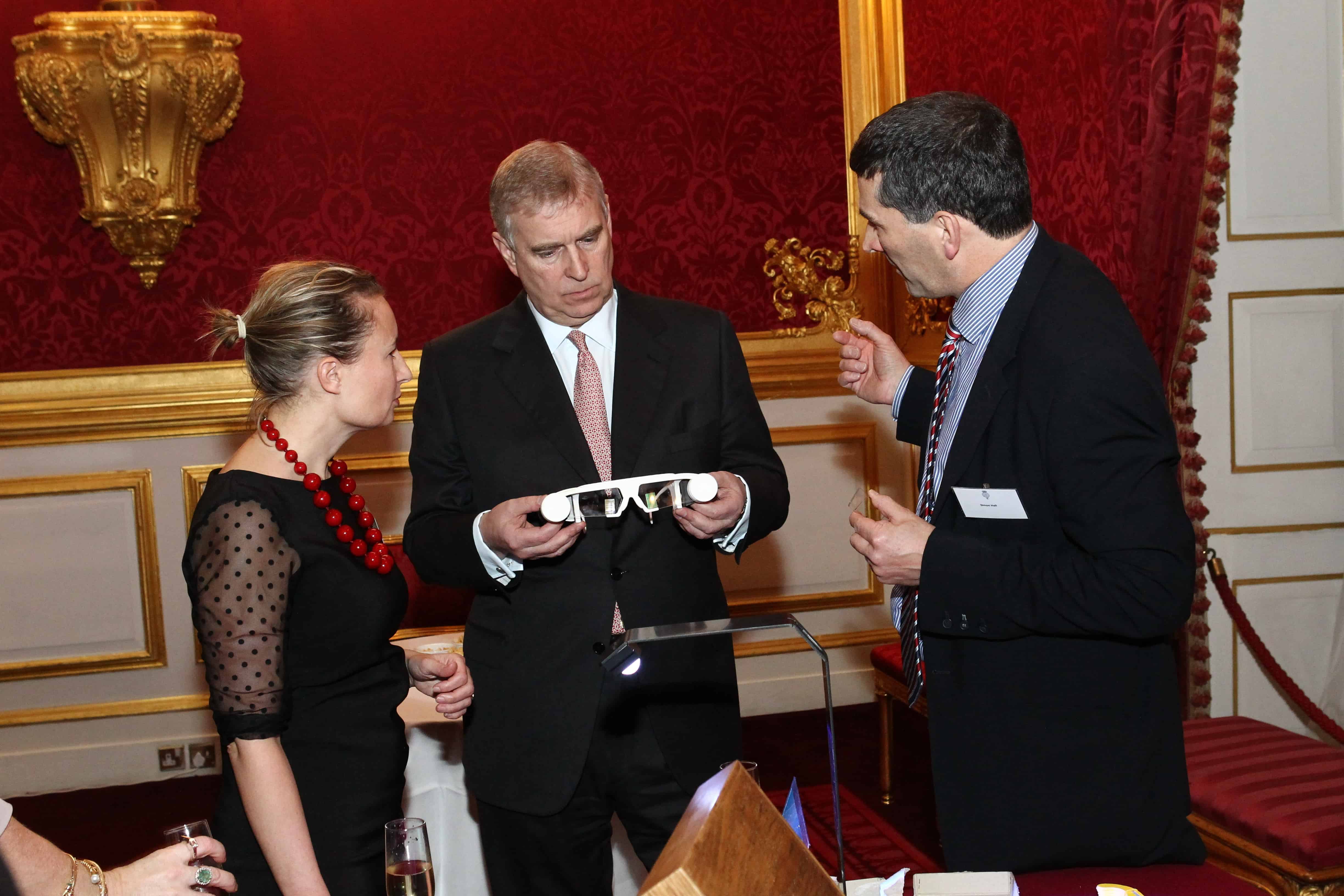
Royal approval for the International Year of Light

Duke of York tries on NPL glasses at UK launch of the International Year of Light 28 January 2015

By Matin Durrani

And so last night to St James’s Palace in London and the official UK launch of the International Year of Light and Light-based Technologies (IYL 2015). The building, which belongs to the British monarchy and has a long history as a royal residence, might sound a rather grand venue for the event – but when HRH The Duke of York is the patron for IYL 2015 in the UK, then who wouldn’t take up his invitation to host the opening reception for the year?

The evening began with a short speech from the Duke of York, who said that he had always had an interest in physics despite not having taken it as a single subject at school – and that he was “right behind” all the activities taking place in the IYL 2015. “The International Year of Light is about how we have used light over the centuries,” he told the 200 or so guests. “It is how we are applying light, photonics and various other aspects in order to make the world a better place, not only for ourselves, but for future generations.”

(more…)

Shutdowns and start-ups

“After 32 years of operation,” Steven Dierker announced, “the National Synchrotron Light Source (NSLS) will shut down for the final time this afternoon in just a few minutes.”

Dierker, the associate laboratory director for photon sciences at Brookhaven National Laboratory in the US, was speaking in a crowded NSLS control room on 30 September last year. By any measure, he continued, the NSLS had been one of the most productive scientific instruments ever, with more than 57,000 users, 17,000 publications and 7000 protein-crystal structures identified. Work at the lab also led to two Nobel prizes (in 2003 and 2009).

Dierker’s audience included lab administrators, machine operators, visitors and soon-to-be former users; a spillover crowd watched via a monitor. One person had flown from France for the event, while another had come from California. Most were wearing T-shirts that read: “Save the last photon for me”.

This long-planned event seemed perfectly natural. But why the fanfare over the end of a piece of equipment?

I asked several people, whose varied responses puzzled me. “It’s a funeral,” said one machine operator. “More like a divorce,” said another. An administrator said he felt pride. One user said it was like a graduation where everyone parties because they are moving on. Another reminisced about the past, saying an experiment at the NSLS “was like a road trip in college – you hang out with friends, eat junk food, listen to music and feel good about yourself”. Yet another user was angry: “Shutting it down’s a crime!” Everyone said that attending the ceremony was important, but gave a different reason why.

Celebration and cannibalism

Many aspects of science are clearly important: discovery, publishing and mentoring. Others, like shutdown ceremonies for scientific instruments, are also natural, routine and essential. Yet why are they harder to talk about?

The NSLS was not the first instrument, or even the first light source, to get a termination ceremony. When its contemporary, the Synchrotron Radiation Source (SRS) at the Daresbury Laboratory in Cheshire, UK, was shut down six years ago after 28 years, staff were given limited-edition commemorative medallions and gathered for what Ian Munro, who had steered the facility through its initial stages, called a “final photon party”.

Cannibalism tends to accompany shutdown rituals, and SRS parts had been promised to half a dozen other light sources, to museums and even to art – its dipole vessels were made into the Dipole Henge sculpture at Daresbury. As the end neared, Munro praised the “community village feel” at the SRS, saying its legacy lived on at the newer Diamond Light Source in Oxfordshire. Then he hit a red rf crash button, the overhead screen went blank and everyone toasted the machine. The ceremony was posted online.

The NSLS’s legacy also lives on, although closer to home, in the form of Brookhaven’s massive new $900m NSLS II, which will enter commission later this year and for which Dierker was the project director. NSLS II will produce X-rays that are 10?000 times brighter than its predecessor.

Yet the imminent start-up of NSLS II was not on the mind of Gary Weiner, an NSLS operator for almost 25 years, who was given close-out duty last September. “Attention all personnel,” he announced over the -public-address system. “NSLS shutdown will begin in 40 seconds. The last 40 seconds of light here at the National Synchrotron Light Source. I’ve been an operator here for 25 years. And I just want to say that it’s been an honour and privilege for me to work here, to do the work that we’ve done.” He quavered, before continuing: “And to work with all the great people that I’ve known here over the years. 20 seconds to go.” Weiner collected himself. Then: “Attention all personnel. X-ray and UV shutters will be disabled at this time. For the last time.”

The applause was warm and long. The control room crowd, however, was experienced enough to know that disabling the shutters was only the beginning of the death throes. Everyone stared at the beam monitors, watching silently as the beams ramped down to zero. This took several minutes. When Weiner finally announced, “That’s it!” the audience erupted in wild applause and whistles.

It didn’t take long for the cannibals to descend. A few minutes after the ceremony I noticed Dierker and Lisa Miller, another Brookhaven photon-sciences administrator, on the experimental floor, surveying equipment for delivery to NSLS II.

The critical point

We underestimate such ceremonies if we see them as simply expressing the sentimental feelings of administrators, operators and users about a tool they can no longer use. There’s more to such events. Nearly everyone I questioned mentioned two special things about the NSLS that made them think it is worth commemorating: the community it brought together and its role in their research. The way they spoke of the machine brought to mind “collective effervescence” – the French sociologist Emile Durkheim’s term for rituals in which different feelings bubble up in individuals as they celebrate sharing a way of life larger than they are.

Scientific shutdown ceremonies are different; the communities involved have been brought together by instruments, and are not really societies in Durkheim’s sense. Still, his term is apt. The NSLS made possible a unique way of life for those who worked at it, allowing them to become who they are and to do what they did. No wonder, then, the variety of descriptions I heard about what people were feeling – from divorces and funerals to graduations and road trips. What shutdown rituals really reveal, I think, is how little we understand the special character of scientific communities.

Laser pioneer Charles Townes dies aged 99

The US physicist Charles Townes, who shared the 1964 Nobel Prize for Physics for his work that led to the development of the laser, has died at the age of 99. Townes played an integral part in the race to make the first laser by developing its forerunner – the “maser” – which could produce and amplify electromagnetic radiation in the microwave region of the spectrum.

Townes’ key work began while he was at Columbia University in the early 1950s, when he proposed a device that could produce coherent electromagnetic waves through amplification by stimulated emission. He coined the term “microwave amplification by stimulated emission of radiation” – or maser – although Townes was not the only person to have the idea. Independently, and at a similar time, Nikolay Basov and Alexander Prokhorov of the Lebedev Physical Institute of the Russian Academy of Sciences, and Joseph Weber of the Catholic University of America, had also been working on the theoretical framework behind the maser.

In 1954 it was Townes and his team who turned their theory into a working device by using a stream of energized ammonia molecules to produce amplification of microwaves at a frequency of about 24 GHz. But it was in December 1958 that Townes and his brother-in-law Arthur Schawlow, who was then at Bell Labs in New Jersey, described how the maser concept could be extended into the optical regime, to make the first “infrared and optical maser” – in other words, a laser (Phys. Rev. 112 1940).

However, the pair were mainly interested in developing the laser for spectroscopic studies so tried to build a continuous – rather than a pulsed – device. It was not until 1960 that the physicist and engineer Theodore Maiman of Hughes Research Laboratories managed to build the first working laser by generating pulses of coherent light from a fingertip-sized lump of ruby illuminated by a flash lamp (Nature 187 493).

Work on the maser led to Basov, Prokhorov and Townes being awarded the 1964 Nobel Prize for Physics for their “fundamental work in the field of quantum electronics, which has led to the construction of oscillators and amplifiers based on the maser–laser principle”. Townes was awarded half the prize, while Basov and Prokhorov shared the other half. “Townes was a giant and an inspiration,” says optical physicist John Dudley, president of the European Physical Society.

“Beyond his own remarkable achievement across many different branches of physics, perhaps an equally important legacy are the careers and contributions of the many scientists that Charles Townes supervised and mentored,” says optical physicist Miles Padgett from the University of Glasgow. “These successes include, for example, Arno Allan Penzias who himself won the Nobel Prize for Physics in 1978.”

A life in physics

Born on 28 July 1915 in Greenville, South Carolina, Townes was just 19 when he graduated in 1935 from Furman University in Greenville with degrees in physics and modern languages. After then completing a Master’s degree in physics at Duke University, he went on to do a PhD on isotope separation at the California Institute of Technology.

After graduating in 1939, Townes worked at Bell Labs in New Jersey until 1947, before heading to Columbia University, where he also served as director of the Columbia Radiation Laboratory from 1950 to 1952. In 1959 Townes served as vice-president and director of research at the Institute for Defense Analyses (IDA) in Washington, DC – a non-profit organization that advises the US government.

After two years at the IDA, Townes went back to academia, taking a position at the Massachusetts Institute of Technology before going to the University of California, Berkeley in 1967, where he spent the remainder of his career. A practising Christian, Townes was awarded the Templeton Prize for science and religion in 2005. He also published an autobiography, How the Laser Happened, in 1999.

  • Check out our free-to-read digital edition of Physics World magazine containing 10 of our best-ever features on the science and applications of light, which we have put together to mark the International Year of Light. It includes “From ray-gun to Blu-ray”, in which Sidney Perkowitz reviews how lasers are now inextricably entwined in our lives

Climate-change denier given top Brazilian science job

Brazilian president Dilma Rousseff has named an outspoken climate-change denier as head of the country’s science ministry. Aldo Rebelo – who was previously Brazil’s sports minister and has no scientific background – is a member of the Brazilian Communist Party and was also leader of the lower house of Congress between 2005 and 2007. He replaces Clélio Campolina Diniz, who had only been appointed early last year.

Rebelo’s appointment has caused concern among some researchers in Brazil given his views on climate science. In 2010 he penned an open letter to environmentalist Márcio Santilli declaring that climate change is an “environmental scam”. He also stated that developed nations have a hidden agenda dedicated to halting the industrial development of booming economies such as China, India and Brazil, adding that the curbing of greenhouse-gas emissions is “nothing less, in its geopolitical essence, than the bridgehead of imperialism”.

His positions on climate change are completely out of phase with the Brazilian scientific community
Paulo Artaxo, University of São Paulo

Paulo Artaxo, an atmospheric physicist from the University of São Paulo, told Brazilian newspaper Folha de São Paulo that the nomination of Rebelo is “concerning”. “His positions on climate change are completely out of phase with the Brazilian scientific community,” Artaxo notes. “We are expecting serious problems in several areas, such as the environment, biodiversity, climate change and forest protection.” Other researchers, however, do not seem overly concerned by Rebelo’s stance. “I’d rather wait and see what Rebelo’s next move will be,” climatologist José Marengo of Brazil’s Centre for Natural Disaster Monitoring and Alerts told physicsworld.com. “I wouldn’t make predictions based on something he said five years ago.”

First-rank team

Marengo says that the key for Rebelo will be building a good team within the science ministry. “Currently, many key roles are played by very respected scientists,” he says. “If Rebelo keeps it this way, things can work well.” Indeed, Rebelo has already met the leaders of the Brazilian Academy of Sciences and the Brazilian Society for the Progress of Science. He has also appointed biochemist Hernan Chaimovich of the University of São Paulo as president of the Brazilian National Council for Scientific and Technological Development. “Rebelo is starting to form a team composed of first-rank scientists, which will be good for Brazilian science, technology and innovation,” says Marengo.

Having a ministry led by someone who knows the political game well might be advantageous
Jean Ometto, National Institute for Space Research

Indeed, some scientists hope that Rebelo – who is known as an excellent negotiator – will put the science ministry in a position that is more relevant politically, which could result in increased investment for science. “Although his past declarations are questionable, he is a skilful and experienced politician,” says Jean Ometto of the Brazilian National Institute for Space Research. “Having a ministry led by someone who knows the political game well might be advantageous.”

Heart-muscle model could help pinpoint regions of atrial fibrillation

A new mathematical model of cardiac muscle tissue could provide important insights into a heart condition called atrial fibrillation, which is a leading cause of strokes. The model was created by scientists in the UK, who hope that it could help to pinpoint troublesome regions of the heart so that doctors can destroy them.

During a regular heartbeat, blood travels from the upper chambers (the atria) into the lower chambers (the ventricles) and on around the body. Cardiac muscle pumps blood by contracting in response to electrical impulses, with each fibre-like muscle cell being excited to contract by a neighbouring muscle cell that itself has just been excited by a neighbour. In a healthy heart, these contractions move across the muscle as plane waves. In contrast, fibrillation involves the emergence of chaotic spiral waves that cause the heart muscle to quiver spasmodically rather than pumping blood effectively. Ventricular fibrillation cuts off the body’s blood supply and can very rapidly lead to cardiac arrest and death. Atrial fibrillation, the subject of this latest research, is less dramatic, but if blood is not efficiently expelled from the atria, it can begin to coagulate into blood clots. As a result, atrial fibrillation is the largest single cause of stroke.

A common treatment is to insert a catheter electrode into a particular part of the heart thought to be responsible for a patient’s atrial fibrillation and use radio waves to destroy it. However, identifying the regions responsible for initiating fibrillation remains a challenge, and outcomes are highly variable. Now, physicists Kim Christensen and Kishan Manani, together with cardiologist Nicholas Peters of Imperial College London, have constructed a simplified schematic model of how regions of poor transverse connectivity between cells affect the propagation of planar wavefronts in cardiac tissue.

Going backwards

Occasionally, a cell fails to contract in response to its neighbour, and this can create a wave that attempts to propagate in the direction opposite to the forward propagating wavefront. After a cell has been excited, it cannot be excited again for about 200 ms. If the cells are very well connected, then almost all of the cells will have been excited by the forward-propagating wavefront. This means that a rogue backward-moving wave will die out quickly because it cannot find a path through this temporarily unexcitable region. As the tissue becomes less well connected, however, more cells remain unexcited, and this provides more opportunities for backward waves to twist their way around the heart’s muscle.

The Imperial team found that the system undergoes a sharp transition as the connectivity is varied in the model. When more than a certain fraction of the cardiac cells are transversely connected to their neighbours, the researchers’ simulation shows only plane waves in the muscle. When the fraction of connected cells was just below this threshold, they observed isolated spiral waves that spontaneously formed but did not propagate through the tissue. When the fraction was further below threshold, however, they found many more such waves spontaneously forming and, crucially, stimulating other spiral waves that permeated throughout the tissue – the same behaviour as seen during persistent atrial fibrillation.

The work suggests that in a heart with a connectivity fraction near the threshold value, the sources of the spiral waves could be detected and destroyed – and normal cardiac rhythm would resume. “If patients have been in atrial fibrillation for many years, it’s anticipated that they’d have a lot more fibrosis,” says Manani. Treatment of these patients is less successful.

Complex physiology

However, biophysicist Flavio Fenton of Georgia Institute of Technology says that the work reveals little that had not been demonstrated in a 2002–2005 series of papers by Gil Bub, then at the State University of New York Downstate Medical Center, and colleagues in Canada. “The atrium is not smooth: it is a very complex physiological structure,” he explains. “There are networks of thin muscles branching and crossing, irregular boundaries, fibre anisotropy, all of which affect significantly conduction.” This paper, he says, considers the electrical connections between the cells with no consideration of the electrophysiology of the cells themselves – something that Bub and colleagues have already done.

Bub himself, however, is more positive. “When I was writing those papers, if someone had told me that you could take a real piece of tissue that was showing a spiral wave, ablate that spiral core, and then end up with no activity, I would have said that’s completely nonsensical,” he says. However, results from a recent clinical trial have shown exactly this. “Everybody’s really surprised,” he adds. “This paper is interesting because the simulations back up this idea that you can have these localized sources, and they show a very reasonable way to explain the kinds of behaviours that the surgeons are seeing.”

The research is published in Physical Review Letters.

Oppenheimer and the Bomb

By Margaret Harris

It’s pretty easy to see why the Royal Shakespeare Company (RSC) wanted to stage a play about J Robert Oppenheimer. There is definitely a bit of Macbeth in the way this ambitious, aloof theoretical physicist rose to become the scientific leader of the Manhattan Project during the Second World War. Equally, there’s a hint of Caesar or Lear in Oppenheimer’s eventual downfall, which came thanks to a toxic combination of political intrigue and his own arrogance.

The parallels between “Oppie” and Shakespeare’s tragic heroes were highlighted on Saturday, when a group of physicists and artists gathered on stage at the RSC’s Swan Theatre for a panel discussion on “Oppenheimer and the Bomb”. The discussion was part of a programme of events related to the RSC’s production of Oppenheimer, a new play written by Tom Morton-Smith and based on Oppenheimer’s life in the 1930s and 40s. During the discussion, one of the panel members, director Angus Jackson, called Oppenheimer “a play about leadership” as much as science, noting that the leadership conflicts that Oppenheimer experienced were “comparable” to those of the heroes in the RSC’s traditional repertoire.

(more…)

Deflategate, DIY particle detection and an ode to Beagle 2

By Hamish Johnston

Loyal sports fans often need a reason for losing beyond “their team was better than ours”, and the latest blame-game in American football comes with a twist of physics to it. The run-up to this year’s Superbowl is no exception. Some disgruntled Indianapolis Colts fans claim that the New England Patriots had taken advantage of deflated footballs to make their decisive 45-7 victory on 18 January, which sends them to the championship game.

(more…)

Rosetta data deluge reveals dynamic comet with sand dunes and jets

Last November the European Space Agency’s Rosetta mission made history when its Philae lander touched down on the surface of comet 67P/Churyumov–Gerasimenko. Now, mission researchers have studied new data from a host of sensors and devices on board the main Rosetta craft that is in orbit around comet 67P. The latest data provide the closest and most detailed look at the Jupiter family comet (JFC) and tell us about its coma, shape, composition, temperature, nucleus, surface features and more. The researchers found that, in some instances, the comet differs from other JFCs encountered so far, thereby improving our knowledge of comet formation and the origin of our solar system.

The new work has been published in a special issue of the journal Science this week and includes seven new reports based on data from the orbiter.

Nicolas Thomas from the University of Bern and colleagues scrutinize data from the Optical, Spectroscopic and Infrared Remote Imaging System (OSIRIS) on board Rosetta. Their images, which cover nearly 70% of the total surface, show a variety of different structures and textures including dune and ripple-like structures, wind tails, and many active processes such as dust transport that have carved out of the comet’s features. They also see a surface riddled with fractures at different length scales, especially at the comet’s nucleus (solid centre) and surface erosion via the loss of large chunks of material. This, they conclude, means that the nucleus may have lost a large amount of matter in this way.

The researchers also identified 19 distinct regions on the comet that are separated by distinct boundaries and are grouped according to the type of terrain dominant within. The terrain itself is made up of five basic categories: dust-covered; brittle materials with pits and circular structures; large-scale depressions; smooth terrains; and exposed, more consolidated (or “rock-like”) surfaces.

Fluffy insides

Holger Sierks at the Max Planck Institute for Solar System Research in Göttingen, Germany, and colleagues also used OSIRIS to study the nucleus of 67P, which is made of dust, rock and frozen gas, Surprisingly, they found that the nucleus seems to be rather porous and fluffy, and has a bulk density less than half that of water. They also note that 67P’s unique “rubber-duck” shape posits an interesting question regarding the comet’s origin – whether its two lobes formed from two objects as a “contact binary” nearly 4.5 billion years ago, or it is a single body with a gap that evolved thanks to it losing mass. While the researchers do not have a definitive answer just yet, they point out that as both lobes have a very similar composition, a single eroded body seems more likely. However, they cannot yet rule out the possibility that 67P is the result of two similar comets forming in the same part of the solar system and then merging sometime later.

Image comparing the relative albedos of the Earth, the Moon and 67P

Using Rosetta’s Visible and Infrared Thermal Imaging Spectrometer (VIRTIS), Fabrizio Capaccioni at Istituto Nazionale di Astrofisica (INAF) in Rome, Italy, and colleagues found that the nucleus is covered with opaque, organic compounds – but very little water ice. This indicates that the sunlit surface of 67P is quite dehydrated. Indeed, the researchers say that this extremely dark, dry and rich comet is very different from the other JFCs studied to date, and that thanks to the presence of organic compounds on the nucleus, 67P “represents a different species in the cometary zoo”.

Samuel Gulkis at NASA’s Jet Propulsion Laboratory in Pasadena, California, and colleagues measured the temperature of 67P using the Microwave Instrument on the Rosetta Orbiter (MIRO). Their data identify the daily and seasonal patterns in the temperatures beneath 67P’s surface. They claim to have seen “fluxes of heat transport” and ice sublimation, and they suggest that most water ice is lost as it sublimates to a gas from the “neck” of the 67P comet, where plumes of gas have often been seen. The dusty covering of the comet may be several metres thick in places, and MIRO’s measurements of the surface and subsurface temperature suggest that the dust plays a key role in insulating the comet interior, helping to protect the ices thought to exist below the surface. This, according to the researchers, may play an important role in the “longevity of 67P, and probably of comets in general. The importance of measuring the temperatures below the surface of a comet – and particularly below its diurnal layer – is illustrated by these data”, they write.

Varying coma

Myrtha Hässig at the University of Bern, Switzerland, and colleagues took many measurements of the composition of the comet’s coma – the fuzzy envelope surrounding 67P’s nucleus – using the Rosetta Orbiter Spectrometer for Ion and Neutral Analysis (ROSINA) over many rotational periods (it takes 12.4043 h for the comet to rotate once). They saw large compositional fluctuations in the “heterogeneous coma that has diurnal and possibly seasonal variations”, and they saw that, along with water, carbon monoxide and carbon dioxide were outgassed from the surface, revealing a complex relationship between the comet’s nucleus and its coma.

67P's surface showing fracturing, uplift and debris

Alessandra Rotundi at INAF in Rome and colleagues put together data from all of the Rosetta instruments, including the Grain Impact Analyser and Dust Accumulator (GIADA), to capture and analyse dust grains from the comet and study the dust grains’ speed, momentum and mass. Combined with data from OSIRIS, ROSINA and MIRO taken between July and September last year, the team has made a first estimate of the comet’s dust-to-gas ratio, with around four times as much mass in dust being emitted than in gas, averaged over the sunlit nucleus surface.

Hans Nilsson at the Swedish Institute of Space Physics and colleagues have used the Rosetta Plasma Consortium (RPC) instruments and scrutinized the water ions in 67P’s atmosphere to try and decipher how a magnetosphere may form around the comet. As the comet approaches the Sun, its gas-dust coma will continue to grow, and interactions with charged particles of the solar wind and ultraviolet light from the Sun will lead to the development of the comet’s ionosphere and, ultimately, the magnetosphere.

“Rosetta is essentially living with the comet as it moves towards the Sun along its orbit, learning how its behaviour changes on a daily basis and, over longer timescales, how its activity increases, how its surface may evolve, and how it interacts with the solar wind,” says Matt Taylor, ESA’s Rosetta project scientist. In the coming months, Rosetta will keep pace with 67P as it looms ever closer to the Sun – its closest approach will be in August – and the comet becomes much more active.

The research is published in Science.

Structured photons slow down in a vacuum


The speed of light in a vacuum is 299,792,458 m s–1, right? Not necessarily, according to a team of physicists in the UK, which has found that the speed of an individual photon decreases by a tiny amount if it is initially sent through a patterned mask. The phenomenon – which is different to other observations of slow light – should also occur for sound waves, the researchers say.

The speed of light has been measured since as far back as the 17th century, but it was not until the 1970s that physicists settled on a value that was accurate in a vacuum to just a few parts per billion. In 1983 that value became the official value, fixed against a new definition of the metre in the International System of Units. And an important value it is, for according to Einstein’s special theory of relativity, the speed of light in a vacuum, c, is the maximum speed obtainable by any entity – no matter what inertial frame of reference it is measured in.

Of course, light can appear to slow down if it travels through a dense medium – a result of the photons having to interact with the medium and take an indirect route through it. In water, the speed of light is roughly 225,000,000 m s–1, while in glass it is roughly 200,000,000 m s–1. The change can be even more drastic – particularly in highly “nonlinear” materials, in which light’s speed can be reduced to just a few metres per second. Strange effects can also occur in a vacuum, including the Gouy phase shift, which happens when a beam of light is focused to a point and results in a tiny increase in its “phase velocity”.

Structured photons

Now it seems that physicists have come up with a new way of changing the speed of light in a vacuum. Over two years, Miles Padgett and colleagues at the University of Glasgow, together with Daniele Faccio of Heriot-Watt University in Edinburgh, designed an experiment that can determine whether light with a certain “spatial structure” travels substantially slower than regular light in a vacuum. The researchers created a source that emitted pairs of photons simultaneously. One of the photons went straight to a highly precise photon counter, while the other went via two liquid-crystal masks, which imparted their profile onto the passing particle of light.

Across a propagation distance of 1 m, the team found that the spatially structured photon lagged behind its partner by between 10 and 20 wavelengths. That equated to a drop in speed of about 0.001%, says team member Jacquiline Romero.

There are many ways of defining the speed of light: phase velocity, peak velocity, information velocity – definitions abound. Padgett and colleagues stick to the group velocity, which is a measure of how fast the envelope of an electromagnetic wave moves. When a beam of light passes through a mask, some of its constituent rays will continue to propagate at a slight angle to the beam’s axis. These rays have to travel farther, therefore the group velocity of the entire envelope falls – and this is what the researchers observed.

No ambiguities?

The reliance on group velocity might seem like an important footnote, but the researchers believe that the use of single photons in their experiment should remove any ambiguities in interpretation. “One of the nice things about our work is that we have taken the simple case of single photons, which when observed make a detector go ‘click’,” says Padgett.

Padgett does not know what, if any, applications could result from the findings. The effect is biggest, he explains, when the diameter of the optics used is large and the distances are short, so it is unlikely to have any impact in astronomy. Nonetheless, he believes the phenomenon should exist in any wave, including sound. “We did this experiment really to satisfy our own curiosity,” he explains. “We have always been interested in structured beams.”

Goëry Genty, a physicist at the Tampere University of Technology in Finland says that the experiment is interesting because it measures the group velocity of photons. “In that sense, the results are not in contradiction with anything we know from textbooks, and certainly not with special relativity,” he adds. “There have been couple of experiments in the past to show this effect, but perhaps here the novelty lies in the fact that the researchers are dealing with single photons.”

The research is published in Science.

  • Check out our free-to-read digital edition of Physics World magazine containing 10 of our best-ever features on the science and applications of light, which we have put together to mark the International Year of Light
Copyright © 2026 by IOP Publishing Ltd and individual contributors