Strontium’s nuclear ‘spin symmetry’ revealed

A new measurement, made by an international team of researchers using the world’s most precise clock, shows that the quantum spins of atomic nuclei can help determine an atomic collision’s strength. This phenomenon arises due to a particular type of “spin symmetry” of nuclear spins, the first direct evidence of which has now been found. The finding could help researchers better understand phenomena such as superconductivity and quantum magnetism.

The measurement piggybacks on a recently developed atomic clock based on the element strontium, which has two electrons in its outermost shell. Typically the spins – or magnetic moments – of these electrons point in opposite directions and cancel each other, giving the atoms zero overall electronic spin. This makes electronic spin largely irrelevant for how such atoms interact with each other. Conversely, the strontium nucleus has a non-zero spin – for the isotope strontium-87 this spin can take any of 10 values. But because the nucleus resides in the atom’s centre, inside many layers of electrons, physicists have long thought nuclear spin should not affect how atoms interact when they collide.

Strongly interacting

In 2010, however, theorist Ana Maria Rey at the research institute JILA in Boulder, Colorado in the US, realized that the nuclear spin could have an effect, due to a property called “SU(N) spin symmetry”. According to that symmetry, two colliding atoms with different nuclear spins should interact much more strongly than those colliding with the same nuclear spins, although the particular values of the spins should not matter. No existing device at the time of Rey’s prediction afforded the precision and control needed to measure this effect.

That changed in January 2014, when Rey’s JILA colleague Jun Ye and others reported building a strontium clock that beat all previous clocks in precision and stability. The clock uses a population of weakly interacting strontium atoms cooled to around one-millionth of a degree above absolute zero and trapped in a lattice made by interlacing laser beams. The researchers determined the clock’s tick rate by illuminating the atoms with a red laser at a precise frequency, and averaging the rate of electron transitions between two of the atoms’ quantum-energy states. Rey theorized that this rate should change slightly depending on whether two interacting atoms had the same or different nuclear spins, and that Ye’s newest clock would be sensitive to this change.

Super stability

Ye’s team has now measured the predicted frequency shift. Depending on whether colliding strontium atoms have similar or different nuclear spins, the rate at which Ye’s clock ticked changed by around one part in 1016, which is like adding or subtracting 14 seconds to the age of the solar system. Detecting this minute effect would be impossible without the clock’s ultra-stable laser, which can maintain a coherent quantum state long enough to average the electronic transition frequency over hundreds or thousands of strontium atoms. “That’s really the secret weapon, that we have a laser that can maintain extremely long coherence times,” says Ye.

Composite image of JILA's strontium clock

Understanding and controlling for the spin-symmetry effect will be crucial for building even more precise clocks, one of which will eventually replace the current cesium standard. Beyond better clocks, the team’s methods will also enable physicists to study phenomena that emerge from the quantum behaviour of large ensembles of particles, including superconductivity and quantum magnetism, Ye says. “It’s really fantastic how this clock technology is now used to investigate quantum many-body systems,” says Florian Schreck, a physicist at the University of Amsterdam who calls the result a breakthrough. “I think many people will follow in the steps of this team.”

The work was published in Science.

Thinking about thinking

By James Dacey in Córdoba, Argentina

There has been a lot of fancy language flying around here at the International Conference on Physics Education (ICPE), which is taking place in Córdoba. Words such as “pedagogy” and “metacognition” roll off the tongues of education researchers as naturally as a particle physicist at CERN saying the words “Higgs boson”.

At first it seemed a bit like a foreign language to me, but I’ve started to realize that one of the recurring ideas at the conference can be described in more everyday terms: thinking about thinking. Teachers should think about the way they think about learning, and the way their students think about learning.

(more…)

Controlling ferromagnetic domains using light

A variety of magnetic materials can be controlled using only polarized light, according to new work carried out by an international team of researchers. The unexpected and so far unexplained discovery shows that the optical phenomenon, which was previously thought to be possible only in ferrimagnets, is actually much more general. The discovery could potentially have a major impact on data storage, as it could allow magnetic bits to be rapidly switched by optical pulses in state-of-the-art hard drives.

From magnetic tapes to computer hard drives, rewritable data storage has traditionally been achieved using ordering of magnetic domains. Individual bits are stored by setting the magnetization vector of a particular domain to point either up or down. However, as data processing becomes faster in modern computers, data storage needs to speed up too. This presents both practical and theoretical difficulties for magnetic data storage.

The traditional way to flip a bit is to apply a magnetic field. However, speedily setting magnetic domains requires stronger and faster pulsed magnetic fields, and these are difficult to generate in a computer’s hard drive. Furthermore, in 2004 researchers using magnetic fields generated by the Stanford Linear Accelerator showed that the extreme fields needed to switch a domain in less than two picoseconds caused a complete breakdown of the magnetic order of a material, apparently placing an ultimate speed limit on magnetic data storage.

Speedy switching

In 2006 Theo Rasing and colleagues at Radboud University Nijmegen in the Netherlands showed that the magnetization of domains in ferrimagnets – materials that contain two types of magnetic domain oriented in opposite directions – can be controlled by circularly polarized light. This control could be accomplished by a low-power laser pulse with a duration as short as 40 femtoseconds. But while the rare-Earth ferrimagnets used by Rasing and subsequent researchers were popular in magneto-optical drives, they are not used in computer hard drives because they are easily magnetized and demagnetized. The magnetism of very small domains is therefore quite unstable, thus limiting the density at which the materials can store data.

But now, Stéphane Mangin of the University of Lorraine in France, along with colleagues in the US, Germany and Japan, has demonstrated that this type of optical switching can also be achieved in ferromagnetic films made from materials such as cobalt, platinum, nickel and palladium. These materials are of great interest to hard-drive developers but until now most of the theories explaining optical switching were applicable only to ferrimagnets. “Here we are really showing that is not the case – you can have different kinds of ferromagnetic or other magnetic materials that show this behaviour,” says Mangin, but cautions that they still do not know how this occurs.

The researchers tested a selection of ferromagnetic films, varying parameters such as the relative thicknesses, the proportions of different materials and the number of layers, to confirm their finding. Using a standard method, the team viewed each sample under a Faraday microscope, which uses polarized light. A domain polarized in one direction appears black, whereas a domain polarized in the other appears white. The researchers irradiated the samples using 100 femtosecond laser pulses and found that they were able to switch domains as well as introduce polarization to parts with no net polarization.

Frazzled physicists

Both Rasing and Bert Koopmans, a nanomagnetics expert at the Technical University of Eindhoven in the Netherlands, were taken aback. “It gives me a kind of rollercoaster feeling,” says Koopmans. “The interpretation of these [optical-switching] experiments has changed throughout the years. I thought that I understood everything and this experiment has completely frazzled my mind.” Both researchers, however, insist that more needs to be done to demonstrate that the work can be useful in hard drives. “In this paper, there are no results from single pulses – only from accumulated pulses,” says Rasing. “So, it is a bit difficult to tell whether it is really very fast optical switching or heating by the laser – although the helicity is clearly important here – that has been demonstrated.” Mangin and his collaborators are currently working on both a theoretical explanation and practical development of the technique.

The research is published in Science.

Towards a more plausible dragon

Wizards, mermaids, dragons and aliens. Walking, running, flying and space travel. A hi-tech elevator, a computer, a propulsion engine and a black hole. What do all of these things have in common? This might seem like a really hard brainteaser but the answer is simple: they all obey the fundamental laws of our universe. Accordingly, there are certain dos and don’ts, maybes and no ways that should guide our imaginations when we think about them.

That, at least, is the argument that physicist and science-fiction aficionado Charles Adler makes in Wizards, Aliens and Starships: Physics and Math in Fantasy and Science Fiction. In the book, Adler, a professor at St Mary’s College of Maryland, US, offers a grand tour of almost all of the main themes encountered in the -sci-fi literature and attempts to evaluate their plausibility using first principles from physics. From the mythical world of J K Rowling’s Harry Potter series to the many stories that deal with the possibility of space travel, the future of our civilization or the existence of civilizations elsewhere in the universe, he considers a wide variety of topics and scenarios.

Written in a relaxed style, the book is full of enjoyable discussions, and readers who are already familiar with the sci-fi literature will appreciate the numerous references to other works. Those who are less familiar will, most probably, feel tempted to read some of the works referenced and commented on.

Adler’s main tools in exploring the possibility or impossibility of an idea are the “back-of-the-envelope calculations” popularized by Enrico Fermi. As the last great generalist in physics, Fermi combined an exceptional training in theoretical physics with tremendous skill in experimental physics. Equipped with this unique combination of abilities, he was able to ask seemingly impossible questions and, with a few simple arguments, produce fast, approximate answers to them with an accuracy that only detailed and time-consuming computations could surpass.

One topic that Adler examines in the book using this “Fermi problems” approach concerns how size affects various aspects of any living creature, whether real or fantastic. For example, size considerations can explain why humans walk at about 2 m/s, how this speed might change on another planet and how it compares with the speed of species with longer legs. Similarly, in the same chapter, the reader learns why there are no biological flying species beyond a certain mass (roughly that of the California condor). Later, Adler uses the same approach to evaluate the feasibility and cost efficiency of the space elevator – a breathtaking engineering project that has been proposed by some as a way to transport material and people to space. Using conservative estimations, he argues that a space elevator would be risky and its benefits not as great as proponents have insisted.

Having taught a course on physics in Hollywood movies many times using some of the same source material, I must confess that this is the book I have always meant to write if I ever had the time to do so. Reading it, I felt like my notes and my course slides had been magically transformed from their raw form into an engaging book. Although not a textbook in itself, Wizards, Aliens and Starships could serve as a great companion book for courses offered to non-science students, as a means of taking away the students’ boredom and animosity towards science.

The book contains a few typos but, fortunately, they do not create any serious problems for the reader. In some places, however, I found myself questioning a few of the assumptions and/or statements. On occasion, additional research might also have been beneficial. For example, in chapter 11, where Adler discusses speculative propulsion systems, he places a lot of emphasis on the cost, time and efficiency required to produce antimatter. I found his assumptions and calculations unpersuasive because they are based on superficial limitations of the current time. Humans’ engineering efforts have never been focused on the mass production of antimatter, and it is easy to imagine that, with dedication and will, we could create a high–efficiency production factory that would make antiparticles at a much lower cost. The more important issue, I believe, is the separation and storage of antimatter for an extremely long period of time – periods that must be fantastically longer than the lifetimes of the antimatter particles themselves. This issue is not touched on at all.

Similarly, when discussing the possibility of fire-breathing dragons, the author calls the suggestion that dragons might generate large amounts of methane in their digestive systems “ingenious”, but also states that “there may be some reason that this mechanism is fundamentally impossible”. Here, I feel that his intuition might be wrong. Exobiologists study how creatures could have evolved on other planets, and one possibility that has drawn their attention is a “methane world” – that is, one where methane plays a role similar to that of water on Earth. Using scientific principles and imagination, exobiologists have envisioned a very complex, biodiverse environment on such a planet. One could also imagine a milder version where methane is not the dominant compound but nevertheless plays an important role. As Murray Gell-Mann has stated: “anything that is not forbidden [by fundamental laws] is compulsory”. However, in the author’s defence, introducing reasonable assumptions is part of the nature of back-of-the-envelope problems, and hence I cannot be extremely negative on this point. Also, for a book that covers so many topics, adding more details would have made it too bulky.

My other criticism is more important. The book uses a vast number of facts from science and a long list of formulae from physics. As a result, and based on my experience with the general public, the book is not really accessible to people who prefer to read plain text with no calculations, just the facts and the results spelled out explicitly. That is not a problem for readers like myself, who are trained in science and will find much to appreciate here, but the publisher’s declaration that the book “will speak to anyone wanting to know about the correct – and incorrect – science of science fiction and fantasy” is not necessarily valid.

Overall, though, this is an exciting book. To paraphrase John Wheeler, it is about our universe as it really is; a museum of wonder and beauty that often contrasts with the fictional universes of imagination encountered in the sci-fi literature. I would not hesitate to recommend it to anyone who is interested in understanding the relationship between physics and science fiction. Instructors of introductory physics courses, especially, will find it a valuable supplement to dry physics textbooks, and its use may even boost students’ evaluations of the course. I will certainly use it in my classes.

  • 2014 Princeton University Press £19.95/$29.95hb 392pp

Web life: Super Planet Crash

So what is the site about?

Super Planet Crash is a deceptively simple game based on the dynamics of planetary systems. Players start out with a single Earth-sized planet orbiting a Sun-sized star and gain points by adding additional celestial bodies. Bigger objects such as dwarf stars, brown-dwarf planets and gas-giant planets earn more points than smaller ones like ice giants and super-Earths, but be warned: adding the wrong planets at the wrong time or in the wrong places will quickly lead to chaotic behaviour. If your planets crash into each other and/or go rocketing off beyond a certain distance (currently set, somewhat arbitrarily, at 2 AU – twice the distance between the Earth and the Sun), you’ll lose the game and have to start again.

Who is behind it?

The creator of Super Planet Crash, Stefano Meschiari, is a PhD student at the University of Texas at Austin in the US. As part of his “day job”, he maintains a scientific software package called Systemic Console that astronomers use to identify potential exoplanet signals within data sets acquired via Doppler observations of stars. After creating a stripped-down version of Systemic designed for educational use, Meschiari decided that his next project would be even more outreach-oriented. “I had been thinking for a long time about how to use my expertise developing Systemic to create an outreach game that would be appealing to a larger audience,” he told Physics World, adding that he wanted “something that would be fun and easily understandable at a more visceral level than Systemic”.

How much physics is involved?

The science behind the “digital orrery” simulation is pretty basic – these are strictly Newtonian systems, with no adjustments for general relativity. It is also not currently possible to extract numerical data (such as orbital velocities or distances) from games or to “rewind” to the moment just before a crash to study the collision dynamics in more detail. However, Meschiari says that the current game (which has already been played millions of times) is essentially a prototype. He hopes to add more features in the future, and he and some colleagues have applied for funding to develop the game into a full package of “edu-tainment” applications. In the meantime, though, Meschiari hopes that the game will work like a “gateway drug”, stimulating players to learn more about gravity and exoplanets.

What’s it like to play?

Addictive, if sometimes frustrating. To achieve a high score, you really need to chuck a dwarf star into the mix. But while certain binary systems – particularly those where the original star and the added dwarf star are very close together – produce stable orbits, getting there requires “some art and some luck”, Meschiari says. A lot depends on the position of the first planet, which is generated by the game and is therefore random rather than player-determined; hence, in some games, the odds are stacked against you from the start. However, that is perhaps the point, since in real life, as in the game, not all planetary systems are created equal. For example, we do not observe many quadruple-star systems precisely because they are much more likely than binaries to be unstable. And if your reviewer’s efforts are any indication, we shouldn’t expect to see many systems of eight brown dwarf stars either. “Super” planet crash indeed.

Physics World’s futuristic look

Some of you may remember a news story I wrote last month that looked at a new optical gadget that uses a holographic waveguide to augment reality. The device hopes to transform the wearable-display market – it allows users to overlay full-colour, 3D, high-definition images into their normal line of sight, thereby interacting with their surroundings. The waveguide was developed by UK-based company TruLife Optics, along with researchers from the adaptive-optics group at the National Physical Laboratory (NPL) near London.

(more…)

US–Russia tensions hit scientists

Political tensions between the US and Russia due to the ongoing Ukraine crisis have started to hit scientific exchanges between the two countries. The US Department of Energy (DOE) has already banned Russian scientists from working in its laboratories and delayed or withheld permission for US government scientists to attend meetings in Russia. The US government has also suspended almost all joint activities on space science. The moves follow Russia’s annexation of Crimea in March and its continued support for anti-government fighters in eastern Ukraine. Since then, the US and Europe have imposed sanctions on Russian individuals and companies.

Limitations on scientific exchanges with Russia have also been introduced, including a temporary end of an accord on nuclear issues. Signed last September by US energy secretary Ernest Moniz, who is a physicist, and his Russian counterpart Sergey Kirienko, the accord gave Russian scientists access to the Los Alamos National Laboratory – one of the three US nuclear labs – in return for similar access to Russian nuclear facilities. Now, the DOE has cancelled the visits and has also prohibited its US employees from travelling to Russia, except to deal with nuclear security, weapons of mass destruction and “top-level national interests”.

Strained ties

The clampdown has caused uncertainty among several prominent physicists, such as those planning to attend the International Atomic Energy Agency’s conference on fusion in St Petersburg in October. So far, no US attendee has been refused permission to travel to the meeting, but nor have any received permission to go. Siegfried Hecker, a former director of Los Alamos, warns against the deteriorating situation regarding nuclear issues. “Co-operation is needed to deal with some of the lingering nuclear safety and security issues in Russia and the rest of the world, with the threats of nuclear smuggling and nuclear terrorism, and to limit the spread of nuclear weapons,” he says.

The DOE has also banned Russian citizens indefinitely from visiting DOE labs, including non-nuclear weapons facilities such as the Brookhaven National Laboratory – although it has allowed exceptions for scientists already in the US or on their way. The policies have created an atmosphere of concern especially among Russian-born scientists working in the US. “Russian scientists feel that we are under suspicion – those working in the US are afraid to make moves that may be viewed as politically motivated,” says Ukraine-born Artem Oganov, director of the Centre for Materials by Design at Stony Brook University and president of the Russian-American Scientists Association.

Limiting knowledge?

Oganov told physicsworld.com that he is “very seriously” thinking about returning to Russia and that his association is “afraid” to take funds from Russia for its annual conference in November, for “fear of being accused of being part of the KGB as history knows examples of similarly ridiculous accusations at the time of the cold war”. “What is happening now in Ukraine is a human tragedy that also brings a huge loss to science,” he adds. “I feel that Western sanctions, limiting exchange of scientific knowledge with other countries, are counterproductive and immoral. We have no right to limit scientific knowledge.”

In a statement, a DOE spokesperson noted that the department reviews each area of co-operation internally before making a decision whether it can continue or should be postponed until a later date. The statement added that the DOE has continued “its critical bilateral nuclear non-proliferation activities in a number of key areas”, and that “co-operation with Russia remains an essential element in the global effort to address the threat posed by nuclear terrorism”.

The move by the DOE follows US president Barack Obama’s decision in April to restrict scientific exchanges in space science by suspending all government visits between NASA and Roscosmos, the Russian space agency.

The administration excluded only work on the International Space Station (ISS), where currently the US relies on Russia’s Soyuz rockets to take its astronauts to the station. Russia responded in May by after announcing a ban on exports of RD-180 engines that the US uses on its Atlas V rockets to launch satellites into space. Dmitry Rogozin, deputy prime minister and head of the Russian space agency, added that Russia will no longer permit NASA to use the ISS after 2020.

One bright spot, however, is the continuation of a programme run by the Massachusetts Institute of Technology that sends its students – mainly physical scientists and engineers – to work in companies, universities, and research institutions in Russia. “We decided last spring not to let high-level politics to get in the way of this important travel,” says Elizabeth Wood, co-director of the programme. “So far we’ve had no pushback from the governments.”

Turning a physics class into a video game

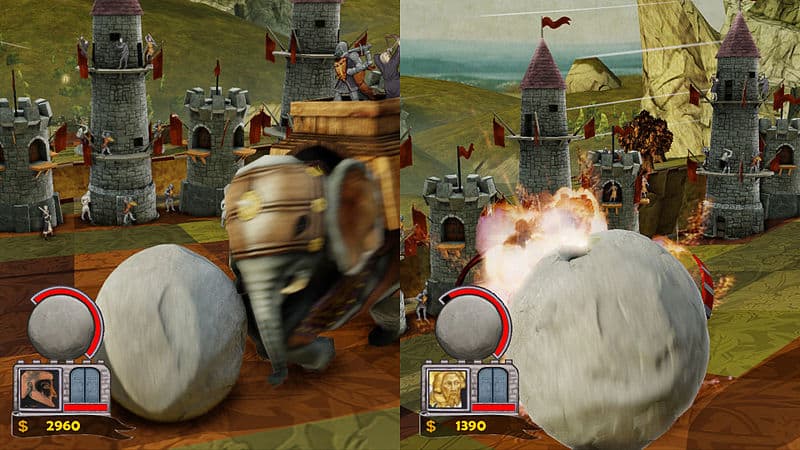
Screenshot from Rock of Ages computer game

By James Dacey in Córdoba, Argentina

“When was the last time you heard a student say they wanted a physics course that was long and difficult?”

That was a rhetorical question that physicist and education researcher Ian Beatty put to us today while delivering his keynote talk at the International Conference on Physics Education (ICPE) 2014 here in Argentina. Beatty’s point is that two of the worst things that people say about computer games is that they are too easy or that they end too quickly. Needless to say, he had never heard such protestations from his physics students!

Beatty, a physicist and educational researcher at the University of North Carolina at Greensboro in the US, believes that course creators could learn a trick or two from game designers. He has therefore spent the past three years trying to understand what it is about video games that makes them so appealing to gamers, and how to incorporate some of the underlying principles into a physics course.

(more…)

NASA’s Stardust mission snares first dust from beyond the solar system

Seven rare, microscopic dust particles, which could be of interstellar origin, have been found among samples collected by NASA’s Stardust mission, according to an international team of researchers. The tiny particles show features that are consistent with dust that would be found in an interstellar dust stream, suggesting that they date back to the beginnings of the solar system. If confirmed to be of interstellar origin, the discovery could improve our understanding of the origin and evolution of the solar system itself.

NASA’s Stardust Interstellar Dust Collector was launched in 1999 and collected thousands of dust particles from the coma (the nebulous envelope around the nucleus) of comet Wild 2, which it flew through in January 2004. Stardust headed back home in 2006, making it the first mission to return solid extraterrestrial material to Earth from beyond the Moon. But on the way, Stardust also sought to collect the first samples of interstellar dust – ancient matter that comes from beyond the solar system. Such interstellar matter had previously been identified only in primitive stony meteorites, such as carbonaceous chondrites, based on them having very different proportions of isotopes compared with typical material found in the solar system.

Cosmic-dust trap

To snare the cosmic dust, the Stardust spacecraft used a collector that was exposed to the interstellar dust stream on two occasions, in 2000 and 2002, for a total of 195 days. The collector, which consisted of a set of silica aerogel tiles held together with aluminium foil, succeeded in capturing a few dozen precious dust particles. Now, Andrew Westphal of the University of California, Berkeley, along with John Bridges of the University of Leicester in the UK and colleagues from a host of institutions worldwide, have studied the microscopic impacts that the particles made on the aerogel tiles and the foil.

Finding and identifying these minute tracks within the aerogel of the returned collector was not easy – individual grains are only microns in size and weigh just picogrammes. Mission scientists therefore set up Stardust@home – a citizen-science project in which members of the public identified possible individual grains by scanning through more than a million images. The volunteers identified all but two of the 71 tracks reported on the surfaces.

Interstellar tracks

The vast majority of these tracks were produced by spacecraft debris, but the researchers concluded that three tracks in the aerogel and four in the foil itself could have originated from interstellar space, because these seven tracks had very different elemental compositions and impact trajectories. “For instance, we were able to distinguish the composition of iron sulphide, nanophase iron and olivine, which are quite distinct from any spacecraft debris, and the direction of the tracks was consistent with this,” says Bridges, whose team at Leicester also measured some of the impact craters on the foil. “Remember that the grains had a closing velocity of up to about 15 km s–1 with the aerogel and foils,” he says. “The residue in the craters was analysed and this gave us a second way of identifying interstellar material.”

The team’s analysis found that the seven particles’ chemical composition and structure varied from that expected. The smaller particles differ greatly from the larger ones, which the researchers describe as having a fluffy structure, similar to a snowflake. The researchers caution that additional tests will need to be carried out before they can say for sure that these are pieces of debris from interstellar space. Three of these four particles retrieved in the foil were found to contain sulphur compounds, which some astronomers have argued do not occur in interstellar dust.

Optical microscope image of the dust particle Orion

The Stardust team now plans to continue analysing the other 95% of the foils to see if enough additional particles can be found to gain a better understanding of their inherent properties. Two particles, dubbed Orion and Hylabrook, will undergo further tests to determine their oxygen-isotope quantities, which could provide even stronger evidence for their extrasolar origins. Bridges explains that the early identifications of interstellar grains from chemical separates of carbonaceous-chondrite meteorites showed extreme isotopic anomalies. “That’s how we identified them in the first place,” he says. “But now we know that is a much broader range of compositions. We are getting a better view into the Stardust grains that were the seeds of our solar system.”

The research is published in the journal Science.

Nearby galaxy harbours rarest type of black hole

Astronomers in the US have used the flickering of X-rays to pin down the mass of a black hole in the nearby galaxy M82, finding the black hole to be about 400 times as massive as the Sun. This means it is of the rarest, mid-sized black-hole type, and raises the question of how these odd objects arise.

Mass is a fundamental property of any black hole, which has so much gravity that nothing can escape its grip. Black holes come in two main types: stellar-mass black holes that are roughly 10 times as massive as the Sun, such as Cygnus X-1, and supermassive black holes, which are typically millions or billions of times as massive as the Sun and inhabit the centres of large galaxies.

But there is a big gap between the two types. Intermediate-mass black holes “are much, much less studied compared with stellar and supermassive black holes,” says Dheeraj Pasham, an astronomer at the University of Maryland in College Park. That is because intermediate-mass black holes are rare, with only one firm example ever identified.

Now he says there is another confirmed candidate: the black hole M82 X-1. Previous mass estimates for this object ranged from just 20 solar masses to more than 1000, so astronomers did not know whether it was an ordinary stellar-mass black hole or a rare intermediate-mass black hole. Indeed, it was already suggested in 2006 that the black hole was an intermediate mass one, but this was yet to be confirmed. The black hole lies in M82, a “starburst” galaxy only 12 million light-years away, which spawns lots of new stars. M82 orbits M81, a giant spiral whose gravity stirs it up and triggers the starburst.

Stars are often caught by a black hole’s immense gravitational force and lose material to the objects. Before plunging into the black hole though, the trapped stellar material gets so hot it emits X-rays. The team analysed six years of X-ray observations and discovered two oscillations every 0.2 and 0.3 seconds. These periods indicate how long the hottest material takes to orbit the black hole, and far exceed the periods of similar oscillations seen around stellar-mass black holes. The longer period suggests a much greater mass, because the more massive a black hole, the larger it is and the longer material takes to revolve around it. Using two different methods, the researchers conclude that M82’s black hole is 428±105 and 415±63 times as massive as the Sun.

“They’ve done a great job,” says Chris Done, an astronomer at the University of Durham. “But I wouldn’t bet a house on it just yet.” She thinks the mass is more uncertain than they claim. Still, it probably falls into the intermediate range, because she says stellar-mass black holes, which arise from the explosion and collapse of a star, should not exceed 80 solar masses. “There’s no real way we know of to make a black hole this massive,” Done says. “To get to 400 solar masses is really pretty freaky!”

Supermassive black holes grow to millions or billions of times the Sun’s mass because they occupy galactic centres that attract stars and gas. But M82 X-1 is not at the centre of its galaxy. Astronomers have suggested that one way in which this black hole could have grown to such an abnormal size is thanks to a cluster of stars near its location, which could have fed the object, before a massive star’s approach ejected the black hole from the cluster.

The research is published in Nature.

Copyright © 2026 by IOP Publishing Ltd and individual contributors