Physicists take up key science posts in Serbian government

A physicist has been appointed as Serbia’s minister of education, science and technological development, raising hopes that the tide might be turning for the country’s ailing research sector. Srđan Verbić, 43, takes up the position after being appointed by the new Serbian prime minister Aleksandar Vučić, who was sworn into office at the end of April. Verbić will also be joined in government by Aleksandar Belić, head of the country’s Institute of Physics, Belgrade, who was made secretary of state for science.

Verbić graduated in theoretical physics from the University of Belgrade in 1993, before co-ordinating the physics programmes at Petnica Science Center near Valjevo. He received a Masters in artificial intelligence in 2001 and a PhD earlier this year from the University of Belgrade in the field of evaluating knowledge tests. Verbić has also worked at the Programme for International Student Assessment and since 2005 was based in a governmental agency for evaluating education quality, where he advised on natural sciences.

Separating science from education

One of Verbić’s first actions as science minister has been to group science and higher education together and separate them from the much larger education sector – something that scientists had been campaigning for since a previous dedicated science ministry was annexed to education in 2011. Verbić told physicsworld.com that he is now looking to set up a science foundation in Serbia and to bring back the best Serbian scientists from abroad. He also wants to see more investment in science, which is currently “far from satisfactory” with Serbia spending just 0.96% of its GDP on R&D in 2012.

“Unlike the huge and overcomplicated problems in education, it’s clear what the problems are in science and how to solve them,” Verbić told physicsworld.com. “Perhaps the most important thing is the creation of a long-term science-research policy and the separation of grant calls and evaluations from daily politics, leaving them to experts.” Other issues facing Verbić include an increase in the number of institutions that are in debt and protests by researchers over poor funding and delays in getting the money they were promised. “Science funding is so small that practically all of it goes on salaries,” he says.

“Extremely good news”

Verbić’s appointment has been greeted positively by scientists. Milovan Šuvakov of the Institute of Physics, Belgrade, who is unofficially advising the new cabinet and who helped organize a large demonstration in support of setting up a dedicated science ministry, says the appointment is “extremely good news” for science and education in Serbia. “Verbić is an intelligent and hard-working man who always makes well-thought-through decisions and is above all very well informed about problems in these sectors,” he says.

Those with political experience did not do a lot, so maybe it’s time for inexperienced people
Srđan Verbić, Serbia’s minister of education, science and technological development

Slobodan Bubnjević, a physicist by training who is based at the Center for Promotion of Science in Belgrade, says that Verbić’s appointment came as a “big surprise” because few people believed the post would be given to a scientist. Bubnjević sees Verbić’s background in physics as being positive because researchers have wanted scientists to be in charge for some time. “The expectations are enormous,” he adds. However, Bubnjević worries that Verbić’s lack of political weight could make reforms difficult. “Verbić is an expert in education with an untainted reputation in research and education communities, yet he is not a political figure,” he says.

But Šuvakov points out that Verbić’s team does have a great deal of experience. “Verbić has been working for a decade in a governmental agency that evaluates education, and Belić already has experience working in the ministry as an aide to a previous minister from 2001 to 2003,” he says. Verbić seems unconcerned about his lack of political know-how. “Those with political experience did not do a lot, so maybe it’s time for inexperienced people,” he says. “We’ll base all our decisions on empirical evidence, instead of on impressions, as is too often the case.”

Shape matters when nanoparticles fight cancer

The shape of a nanoparticle is important for how easily it can penetrate into a tumour, with rods and hollow cubes entering more readily than discs and spheres. This new result, from researchers at Georgia Institute of Technology and Washington University Medical School in the US, could lead to better nanoparticle-based cancer diagnosis and therapy.

Cancer drugs and markers can be delivered to the inside of tumour cells by encapsulating the pharmaceuticals within tiny nanoparticles about 100 nm in size. The idea is to coat the nanoparticle with molecules that have an affinity for the target tumour. Only when the nanoparticle enters the tumour is its pharmaceutical cargo released, thereby minimizing side effects and improving marker accuracy. The efficacy of this process depends on a variety of factors, and one of the most critical of these is the shape of the structure. It is therefore important to understand which nanoparticle shapes are best, but such studies are complicated because it is difficult to track the movement of nanostructures in the body.

Four distinct shapes

Now, a team of researchers led by Younan Xia at Georgia Institute of Technology and Yongjian Liu of Washington University has solved this problem using gold nanostructures that contain radioactive gold-198 in their crystal lattices. The nanostructures were made in four distinct shapes – solid discs, rods, spheres and hollow cubes – and were all roughly the same size (between 50 and 100 nm across). By using an external detector to measure gamma rays from the gold-198, the team could follow the nanostructures as they distributed themselves in live mice with tumours.

The researchers found that the different shapes entered the tumours at different rates and also distributed themselves differently. “Our findings should help us develop better strategies for cancer imaging and therapy,” explains Xia.

The study reveals that the rods (10 nm in diameter and 50 nm long) did not accumulate in the tumour sites as readily as the other shapes. However, those rods that did arrive at the surface of the tumour were better at penetrating into its core. In contrast, the spheres (about 50 nm in diameter) and discs (7 nm thick and 100 nm in diameter) were only able to reside on the surface of the tumours.

Shape matters

The cubes – which were hollow “nanocages” with an edge length of about 50 nm – were also able to penetrate to the core of the tumours. Xia believes that the cubes were able to reach the tumour cores because of their hollow structure and relatively low density. “Our study shows that the shape of gold nanostructures is important for how these particles enter and distribute themselves in tumours,” concludes Xia.

The team says that it will now focus on reducing the size of the nanostructures it studied so that these can stay in the bloodstream for longer periods and also better penetrate cancer cells. “We also plan to test these radioactive nanostructures on other tumour models, such as orthotopic mouse breast-cancer cells,” says Xia. “We will further functionalize the surface of these structures with targeting ligands so that tumour cells take them up more readily.”

The research is described in ACS Nano.

What is a pulsar?

In less than 100 seconds, Tim O’Brien of the University of Manchester in the UK provides a fly-by tour of pulsar science. When the first pulsar signal was detected in the 1960s, for a short time it was referred to as “little green man 1” because the regular pulsing appeared to be a message from aliens. However, it did not take long for astronomers to figure out that these signals come from rapidly rotating neutron stars, which beam radiation from their magnetic poles.

Watch more from our 100 Second Science video series.

Physicists sound-out acoustic tractor beam

An acoustic “tractor beam” that can pull an object by firing sound waves at it has been created by physicists in the UK and US. The beam was made using a commercial ultrasound surgery system and differs from previous tractor beams that use light. The researchers say their technique could be readily adapted for medical applications that manipulate objects or tissue within the body.

The new tractor beam has been created by Mike MacDonald and colleagues at the University of Dundee, University of Southampton and Illinois Wesleyan University by using an ultrasound ablation system, which is normally used to destroy tumours thanks to focused beams of intense sound. First proposed in 2006 by Philip Marston of Washington State University and realized using light in 2010 by David Grier and colleagues at New York University, the technique involves firing two beams of ultrasonic waves upwards at a triangular-shaped target at about 51° either side from the vertical direction. The target is shaped such that the beams bounce off opposite sides of the triangle, causing the reflected sound to travel straight up (see figure “Reflecting beams”).

Downward tug

Ideally, the technique requires the use of two “Bessel beams”, which have circular wave fronts that curve around the direction of propagation and so carry angular momentum. When the wave front strikes the target, the angular momentum is redirected as regular momentum and if the target and beams are arranged correctly, more of this “skew” momentum will be reflected up than down. This results in an equal-and-opposite downward force on the triangle, which is pulled towards the plane containing both ultrasound sources.

Diagram showing how the ultrasound tractor beam works

Although the researchers were unable to create an ideal Bessel beam, they approximated it using a commercial array of ultrasound sources originally designed for focussed ultrasound surgery. They set up their tractor beam in a tank of water using ultrasound at 550 kHz, with the triangular target suspended on a balance and ultrasonic sources arranged so that the tractor beam pulls it down. Vertical forces due to the ultrasound are then measured by monitoring the weight of the triangle, with the triangle experiencing an extra downward tug of as much as 1 mN when the ultrasound was switched on.

Drug delivery

As for practical applications of the tractor beam, MacDonald says that its operation is not limited to pulling triangular-shaped objects – which were used to make the concept easier to understand – and it would work on objects with a range of different shapes. Indeed, in 2010 Grier and colleagues used a similar optical tractor beam to pull spherical particles.

According to MacDonald, the technique could have a range of applications in medicine, including manipulating objects, fluids and tissue inside the body. A tractor beam could, for example, be used to deliver encapsulated drugs to the exact location of the body that requires treatment. And because the technique makes use of equipment that is already approved for medical use, MacDonald believes that new treatments based on ultrasound trapping could be developed quickly.

Looking beyond medicine, Grier points out that acoustic tractor beams can move much larger objects than their optical counterparts, and so could prove useful for remote sampling. “This would include gathering samples of dust and other small particles from dangerous and hard-to-reach places for environmental monitoring, geophysics (volcanic plumes), atmospheric testing, and oceanic testing, to name just a few,” he says.

The tractor beam is described in Physical Review Letters.

The biophysics of Godzilla, skipping stones, Schrödinger in the morning and more


I’m a bit of a connoisseur of the art of stone skipping. That’s because I grew up a stone’s throw from the western end of Lake Ontario, which thanks to its shale shoreline has the best skipping stones in the world. As a result, I was fascinated to read a piece on the Figure One blog about entitled “Frisbee meets fluid: Skipping stones takes spin and skill”.

(more…)

Superheavy element 117 weighs in again

“Ununseptium” or the superheavy element Z = 117 could finally be ready to be added to the periodic table. An international collaboration has produced four atoms of the elusive element, which was first spotted in 2010. The measured decay properties of these atoms match the previous data, which strengthens the case for official recognition of 117 as a new element along with its decay-chain elements 115 and 113. In the process, the researchers also discovered a new isotope “lawrencium-266”.

Stable islands

While the majority of the periodic table is filled with naturally occurring elements, nuclear-physics experiments have added another 27 elements to the mix. Elements beyond atomic number (Z) 104 are referred to as superheavy elements, the most long-lived of which are thought to approach a so-called island of stability, where nuclei with extremely long half-lives should be found. Indeed, the shell model of the nucleus predicts that such superheavy elements become more stable as their neutron number goes up and they reach the “island”, at Z = 184.

Although these elements are not found in nature, they can be produced by accelerating beams of nuclei and smashing them into targets of specific, very heavy nuclei. Ununseptium atoms are the heaviest ever observed – they are 40% heavier than an atom of lead. In 2010 a Russia–US collaboration working at the Joint Institute for Nuclear Research in Dubna, Russia, fired beams of the rare isotope calcium-48 at targets of berkelium-249 to catch the first glimpse of 117.

Pure target

In the latest experiment, the intense isotope beam from the GSI Helmholtz Centre for Heavy Ion Research in Darmstadt, Germany, was used to bombard the berkelium target, supplied by the Oak Ridge National Laboratory in Tennessee, US, to create the ununseptium atoms. A precious 13 mg of the highly purified berkelium (that itself has a half-life of only 330 days) was synthesized across 18 months at Oak Ridge and shipped to Johannes Gutenberg University in Mainz, where it was transformed into a target that could withstand the high-power calcium-ion beams.

Atoms of element 117 were then separated from huge numbers of other nuclear-reaction products at the TransActinide Separator and Chemistry Apparatus (TASCA) facility. They were identified via their radioactive-decay products, which included the lighter products 115–103, thereby adding to the proof of the observation of 117. Surprisingly, the team, headed by Christoph Düllmann of Johannes Gutenberg University, also identified a previously unknown alpha-decay pathway in Db-270 (dubnium – element 105) and the new isotope Lr-266 (lawrencium – element 103). With half-lives of about one hour and about 11 hours, respectively, they are among the longest-lived superheavy isotopes known to date. “This is of paramount importance as even longer-lived isotopes are predicted to exist in a region of enhanced nuclear stability,” says Düllmann.

While the latest experiment might have confirmed the existence of element 117, it will still be some time for it is formally christened. The International Unions of Pure and Applied Physics and Chemistry will review both this and the 2010 results to decide whether further experiments are needed before acknowledging the element’s existence. Only then will a particular institute be offered the naming rights.

“Making element 117 is at the absolute boundary of what is possible right now,” says team member David Hinde, director of the Heavy Ion Accelerator Facility at the Australian National University. “That’s why it’s a triumph to create and identify even a few of these atoms.”

The research is published in Physical Review Letters.

CERN gets set for LHC restart

By Michael Bishop in CERN, Geneva

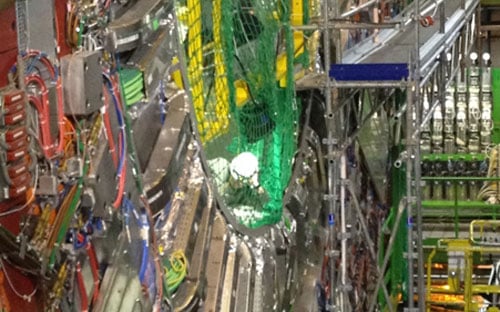
As CERN ramps up its preparations for “Run 2” of the Large Hadron Collider (LHC) at the start of 2015, many are wondering where the next big discovery will come from and whether it will emulate the success, and popularity, of the discovery of the Higgs boson in 2012.

There appears to be no hangover from that landmark event and a genuine excitement among the scientists at CERN, which I witnessed first-hand earlier this week during a two-day tour of CERN’s facilities organized by the UK’s Science and Technology Facilities Council (STFC).

Many of the UK-based scientists that I spoke to during the tour showed a remarkable enthusiasm for the experiments they were working on and confessed to expecting similar, if not bigger, discoveries when the particle collider starts smashing protons together at higher energies.

(more…)

Electromagnetic noise could set European robin adrift

The internal magnetic compasses of migratory birds can be disrupted by weak, man-made electromagnetic interference, according to a new study carried out by researchers in Europe. The unexpected effect was seen in European robins, which were unable to orient themselves in the presence of broadband, radiofrequency noise believed to be caused by AM radio and electronic signals.

Despite having been known for over half a century, the exact mechanism behind “avian magnetoreception” – a sense that in theory allows migratory birds to detect a magnetic field and so perceive direction – is poorly understood. Regardless of how it is done, the birds’ talent is easily demonstrated using an Emlen funnel – a device that records the direction in which entrapped birds attempt to take off. The funnel is shaped like an inverted cone and lined with an inkpad at the bottom. When placed into the funnel, night-flying songbirds instinctively attempt to escape in the direction of their current migratory path and this is traced along the sides of the cone, which is lined with paper.

Avian compass

When using this method to study European robins kept inside wooden huts, however, Henrik Mouritsen from the University of Oldenburg and colleagues were puzzled to find that their birds seemed unable to orient themselves as expected. Given previous theories that robins might be affected by radiofrequency magnetic fields, the researchers experimented with reducing local electromagnetic noise by screening the birds’ huts with electrified and grounded aluminium plates. This shielding reduced the interference by two orders of magnitude, while leaving the static geomagnetic field unaffected. The impact on the birds was striking – a surprising restoration of their orientation abilities.

“What we wanted to study originally was exactly where in the brain this magnetic compass information is processed in these night-migratory birds,” says Mouritsen. The interference effect was seen by chance, Mouritsen notes, adding that they “realized that [if the effect] was really due to the electromagnetic background noise, then that would be very interesting in its own right” – and would also be useful for understanding the exact magnetoreception mechanism behind the avian compass.

Seven-year scrutiny

To verify their observations, the researchers ran repeated experiments over a seven-year period and tests were conducted double-blind to avoid bias. Initial tests – using two screened huts, where only one was actually grounded and the experimenters were unaware of which – confirmed the role of the screening out of the interference in the restoration of the birds’ sensory abilities. Subsequently, the team exposed the robins – within shielded huts – to similar electromagnetic noise of their own creation, and this was also seen to leave the animals disorientated.

Peter Hore, a chemist at the University of Oxford who is part of Mouritsen’s team, told physicsworld.com that while the mechanism by which the Earth’s magnetic field could affect the outcome of a chemical transformation (the mechanism via which the avian compass is thought to work) is well understood, “we’re talking here about man-made fields that are two to three orders of magnitude weaker…so what we don’t know is whether this is a direct effect”.

Stretching limits

By varying the frequency of the electromagnetic noise, the team was able to determine that the interference was disruptive over a broad range of frequencies, from 20 kHz up to 5 MHz. Electromagnetic noise in this range, the researchers write, is commonly caused by the operation of electronic equipment and AM radio signals – but not, they note, from mobile phones or power lines, whose fields fall outside this frequency range. While the man-made, electromagnetic noise seems to be too weak to disrupt the bird’s compass outside of urban settings, the researchers question the impact such noise might be having on the numbers of night-migratory songbirds, which are in decline.

Mark Denny, co-author of the book Engineering Animals, points out that the “magnetic orientation sense of European robins is disabled by broadband magnetic fields with strengths as low as 1 nT…this is four and a half orders of magnitude below the geomagnetic field strength”, thereby stretching the limits of what was previously thought biophysically possible.

The research is described in Nature.

Scientists face discrimination when choosing a PhD

One of the most important decisions any aspiring scientist must make is what they should study for their PhD. Therefore, any advice that they receive from established academic researchers is of great value – and many academics are very generous with their time when it comes to mentoring up-and-coming researchers.

But do academics tend to reach out to some groups of people while ignoring others? That’s the subject of a study by three business-school professors – Katherine Milkman, Modupe Akinola and Dolly Chugh – who wanted to know if a person’s gender or ethnic origin affects their chances of booking an appointment with an academic to discuss their future.

(more…)

When waiting for 10 years is just too long

By Matin Durrani

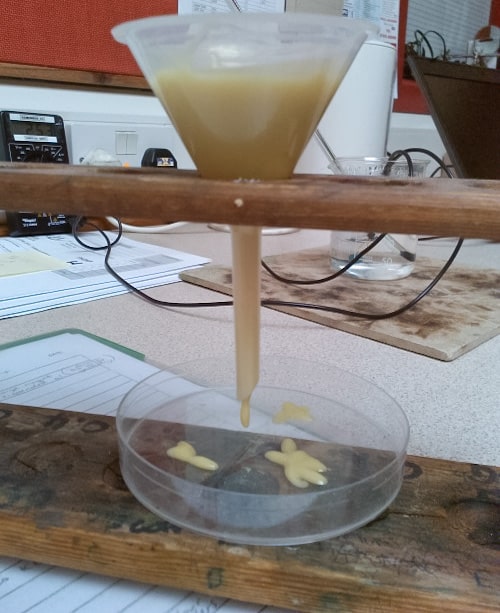
In case you haven’t seen it yet, I do encourage you to read our feature article from the May issue of Physics World about the now-famous pitch-drop experiment at Trinity College Dublin. This simple funnel of pitch shot to fame last year after a drop from it was finally observed falling for the first time – with a video of the dripping drop having so far been viewed more than two million times on YouTube.

Although it was the first time that a drop had been seen to drip from the Dublin funnel, it’s thought that other drops would have fallen about once a decade since the apparatus was set up in 1944. Be that as it may, Trevor Cawthorne from Queen Elizabeth’s Grammar School in Horncastle, Lincolnshire, UK, e-mailed me this morning, pointing out – quite rightly – that “10 years is a long time to wait for the results of an experiment”.

(more…)

Copyright © 2026 by IOP Publishing Ltd and individual contributors