Earth is closer to the edge of Sun’s habitable zone

The Earth could be closer than previously thought to the inner edge of the Sun’s habitable zone, according to a new study by planetary scientists in the US and France. The research also suggests that if our planet moved out of the habitable zone, it could lead to a “moist greenhouse” climate that could kick-start further drastic changes to the atmosphere.

A star’s habitable zone is the set of orbits within which a planet could have liquid water on its surface – and being within this zone is considered to be an important prerequisite for the development of life.

The current consensus is that the Sun’s habitable zone begins at about 0.95 astronomical units (AU), a comfortable distance from the Earth’s orbit at 1 AU. However, this latest work by James Kasting and colleagues at Penn State University, NASA and the University of Bordeaux suggests that that inner edge of the zone is much further out at 0.99 AU.

Lost oceans

“Our new climate model predicts that we are closer to the moist-greenhouse scenario than we had thought,” says Kasting. In this scenario, the stratosphere becomes wet and fully saturated as the Earth’s surface warms. This results in the dissociation of water molecules and the release of hydrogen into space. Depending on the levels of atmospheric saturation, the oceans would be completely lost over timescales as long as several billion years. This, say the scientists, would result in our climate changing to resemble a Venus-styled runaway greenhouse.

Penn State’s Ramses Ramirez points out that the atmosphere currently has an average surface relative humidity of 77%, which gradually decreases to 10% or less above an altitude of 10 km – so the atmosphere is far from fully saturated. However, there are two ways that the Earth’s atmosphere could move in that direction.

Slipping over the edge

One is that the Earth’s orbit changes and it slips across the 0.99 AU inner edge. The second is that the Earth remains at 1 AU but rising temperatures caused by greenhouse gases such as water vapour and carbon dioxide lead to a moist greenhouse. Indeed, the researchers are now calculating how much carbon dioxide would be needed for the second scenario to occur.

Scientists believe that a moist greenhouse would begin when the global average temperature reaches 340 K – whereas the current average is 288 K. Kasting says that under really pessimistic assumptions – a 10-fold to 20-fold increase in atmospheric carbon dioxide – it could be possible for the average temperature to reach 340 K. However, he points out that even if humans continue to burn fossil fuels at a very high rate, a catastrophic moist greenhouse would not kick in until at least 2300.

Other researchers, however, point out that the Earth has been much hotter in the past and such a transition did not occur. Dorian Abbot, a climate scientist at the University of Chicago, points out that average temperatures were about 10–15 K warmer during the Cretaceous period. “As far as we know, Earth has never been in a moist-greenhouse state,” says Abbot. “We certainly did not lose our entire oceans.”

Signatures of moist greenhouse by 2100?

Ravi Kopparapu at Penn State says that if current IPCC temperature projections of a 4 K increase by the end of this century are correct – which assumes a rapidly growing and fossil-fuel intensive global economy – our descendants could start seeing the signatures of a moist greenhouse by 2100.

Kopparapu argues that once the atmosphere makes the transition to a moist greenhouse, the only option would be global geoengineering to reverse the process. In such a moist-greenhouse scenario, not only are the ozone layers and ice caps destroyed, but the oceans would begin evaporating into the atmosphere’s upper stratosphere.

Ramirez admits that there are two major caveats associated with the work. The first is the assumption that the modelled atmospheres are already fully saturated. This means that the atmosphere holds as much water vapour as it possibly can at a given temperature. The second is that the models do not incorporate cloud feedback, which could be important.

“Sobering” results

Despite these caveats, Kasting still thinks that the results are sobering. “If you are this close to [the] inner edge of the habitable zone, it is not as difficult to push yourself over…[and] that is catastrophic,” he says.

However, Colin Goldblatt, a planetary scientist at the University of Victoria in Canada, cautions against taking the concept of a habitable zone too literally. “I can put a planet at 0.9 AU and that planet will be perfectly habitable,” says Goldblatt. “It might not be where Kasting would like to retire, but things will live there.”

The research is described in The Astrophysical Journal.
Listen to our latest podcast about quantum computing

By Hamish Johnston

One of the most enjoyable parts of my job is speaking to physicists about their research. A while ago I had the pleasure of talking to five physicists who are passionate about quantum computing. Four are academics: John Martinis of the University of California, Santa Barbara; Raymond Laflamme of the University of Waterloo in Canada; John Preskill of the California Institute of Technology; and Charles Marcus of the Niels Bohr Institute in Denmark. The fifth physicist is Geordie Rose, who is the co-founder of a company that says it has built a quantum computer.

(more…)

Voyager 1, where art thou?

By Tushna Commissariat

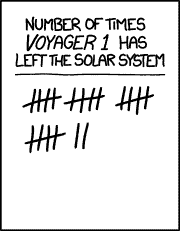
It’s a running joke at the Physics World news desk – the exact location of the Voyager 1 probe and how often we end up writing about how it really has nearly left the solar system this time. So we decided to wait and watch when the news broke on Wednesday evening this week that the probe had left the solar system for sure (again).

Unsurprisingly, the next morning our inboxes included a slightly sheepish “status update” message from NASA. “The Voyager team is aware of reports today that NASA’s Voyager 1 has left the solar system,” says Edward Stone, Voyager project scientist based at the California Institute of Technology, Pasadena. “It is the consensus of the Voyager science team that Voyager 1 has not yet left the solar system or reached interstellar space. In December 2012 the Voyager science team reported that Voyager 1 is within a new region called ‘the magnetic highway’ where energetic particles changed dramatically. A change in the direction of the magnetic field is the last critical indicator of reaching interstellar space, and that change of direction has not yet been observed.”

(more…)

Surround no sound?

By Tushna Commissariat

Invisibility cloaks seem to fascinate scientists and the public in equal measure, and every few months a novel design for some sort of metamaterial that cloaks either light or sound catches our eye, if you excuse the pun.

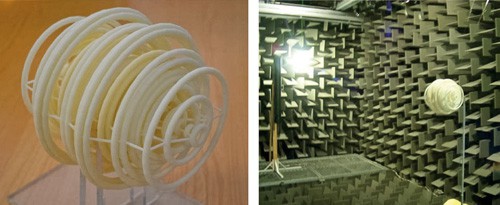
This week, we came across a group of researchers in Spain that claims to have designed, fabricated and tested the first “directional 3D acoustic cloak” that works for airborne sound. Previous designs of acoustic cloak work in water and air, but only if the sound propagates in 2D. Also, many cloaks only work within a narrow band of frequencies, limiting their uses.

(more…)

Intense terahertz pulses cause DNA damage and repair

Short yet powerful bursts of terahertz radiation can damage DNA and also increase the production of proteins that help the cells to repair this damage. That is the conclusion of physicists and biologists in Canada, who have studied how the electromagnetic radiation interacts with human skin cells. The discovery could lead to the development of new medical therapies that make use of terahertz radiation.

Electromagnetic radiation in the terahertz frequency range – usually defined as 0.3–3 × 1012 Hz – shows great promise for security and medical-imaging applications. This is because it can pass through clothing and penetrate skin but is not ionizing like X-rays. As a result, low-intensity terahertz pulses are believed to be harmless to living organisms.

Vibrational modes

However, biophysicists have known for some time that double-stranded DNA has vibrational modes at terahertz frequencies. “In fact, these modes play an important role in local helix melting, or the separation of base pairs, which is necessary for the biological process of transcription to occur,” explains Lyubov Titova of the University of Alberta, who did this latest research with colleagues there and at the University of Lethbridge. Recent theoretical work suggests that externally applied terahertz radiation can couple to these modes and amplify them. Now, Titova and colleagues have found evidence that intense, picosecond-duration pulses of terahertz radiation can actually cause DNA strands to break in human skin cells.

The team created terahertz pulses by firing infrared laser pulses at a non-linear lithium–niobate crystal. The resulting pulses last about a picosecond and peaked at a frequency of 0.5 THz with a bandwidth of 0.1–2 THz. Each terahertz pulse has an energy of about 0.1–1.0 µJ, which is at least 10 million times greater than the energy of the terahertz pulses used in medical-imaging applications.

Damage and repair

The pulses were fired at samples of artificial human skin tissue that are able to undergo cell division and are metabolically active. DNA damage was detected by looking for a chemical marker called phosphorylated histone H2AX, which is formed when DNA strands are broken. This marker was seen in skin samples exposed to the terahertz pulses, along with increases in the levels of multiple-tumour suppressor and cell-cycle regulatory proteins that are involved in DNA repair. These observations could mean that damage done by the picosecond terahertz pulses is quickly and efficiently repaired – minimizing the risk of cancer being caused.

The study did not consider the effects of long-term exposure to such pulses – the skin samples were analysed 30 minutes after exposure. The team now plans to study how the effects change over time after exposure. “[This] should allow us to establish how quickly any induced damage is repaired,” explains Titova.

Potential medical applications

The team also plans to look at the potential therapeutic uses of intense terahertz pulses – with the hope that such pulses could become a new tool in the fight against cancer. “Any agent that causes DNA damage has potential applications in cancer therapy,” explains Titova. The team is now planning to study how intense terahertz pulses impact cancerous cells.

In addition to understanding the biological effects of the pulses, compact and inexpensive sources of intense pulsed terahertz radiation would have to be developed for use in hospitals. While such systems are currently not available, Titova says that terahertz technology is “developing by leaps and bounds, and such sources will probably be available in the near future”.

The research is described in Biomedical Optics Express.

Five of the best

By Margaret Harris at the APS March Meeting in Baltimore

With so many sessions taking place at the APS March Meeting, finding time to write about them is almost impossible. However, now that I’m waiting for my flight from Baltimore back to the UK, I’ve got all the time in the world – so here’s my list of five conference highlights.

(more…)

Putting a new spin on photons

The best measurement yet of the photonic spin Hall effect (SHE) has been made by researchers in the US. The team amplified the normally extremely weak and difficult to detect photonic SHE by measuring polarized light incident on a specially designed metamaterial – a 2D sheet of gold nanoantennas. The researchers suggest that the observed polarization-dependent deflection of the photons could be useful in sensing and communication applications.

Photonic SHE is an optical phenomenon of quantum mechanics that is similar to the more familiar SHE observed for electrons. The spin possessed by an electron is a property related to magnetism – it is a quantized angular momentum that gives rise to a magnetic moment. The electron also has an orbital angular momentum relative to the fixed atoms in the solid, which also results in a magnetic moment. The interaction between the spin and orbital moments – the famous spin–orbit interaction – causes spins of opposite sign to be deflected in opposite directions so that they follow curved paths through a semiconductor. Put simply, the electron’s spin is deflected by an electric field and the SHE describes the curved path that spinning electrons follow through a semiconductor. The curved movement arises from the interaction between the physical motion of the electron and its spin.

Weak effect

Photons also possess spin and so exhibit a similar SHE. But the effect is extremely weak thanks to the fact that photons have a very small momentum compared with electrons. “The photonic SHE is very weak because the spin angular momentum of photons and spin–orbit interactions are basically negligible,” says Xiang Zhang of the Lawrence Berkeley National Laboratory’s Materials Sciences Division, who is one of the authors of the new research, published in Science. He points out that while other experiments have tried to detect the photonic SHE using techniques such as weak measurements, the effect observed has always been very small.

Zhang designs and studies metamaterials – artificial materials specially engineered to have properties not found in nature – and he wondered whether such a material could be used to enhance this weak optical effect. “We looked at specifically making a 2D metamaterial with optical resonators that are very small compared with the wavelength of the incident light and we engineered it to change the gradient of the light to greatly enhance a naturally weak effect to the point where it was directly observable with simple detection techniques,” explains Zhang.

Golden Vs

In the new work, Zhang and colleagues’ metamaterial surfaces are about 30 nm thick and were constructed from V-shaped gold nanoantennas with a geometry that could be configured by adjusting the length and orientation of the arms of the Vs. “We chose eight different antenna configurations with optimized geometry parameters to generate a linear phase gradient along the plane,” says Xiaobo Yin, a member of Zhang’s research group and the lead author of the Science paper. “This enabled us to control the propagation of the light and introduce strong photon spin–orbit interactions through rapid changes in direction. The photonic SHE depends on the curvature of the light’s trajectory; so the sharper the change in propagation direction, the stronger the effect.”

Zhang told physicsworld.com that the researchers had to manoeuvre the light into a “dramatic turn” while incident on the metasurface so that a “giant” photonic SHE would occur. “It’s like riding a bicycle and being forced to make a very sharp and sudden turn,” he says. “It’s the key concept of our idea – to change the direction of the light dramatically, and the V-shaped nanoantennas do that,” he explains. Since the entire metasurface sample measured only 0.3 mm, a 50 mm lens was used to project the transmission of the light through the metamaterial onto a charge-coupled device (CCD) camera for imaging.

Polarization manipulation

Yin adds that their metamaterial allows the researchers to control not only the incident light’s propagation, but also its circular polarization. “This could have profound consequences for information encoding and processing,” he says. He explains that information could be encoded and manipulated into the spin–orbit interaction as well as the polarization of light, “much like the 0 and 1 of today’s electronic devices”. Also, Yin claims that the ability to control left- and right-circular polarization of light at the metamaterial surface should allow the researchers to form optical elements, like highly coveted “flat lenses”, or to manage light polarization without using wave plates.

According to researcher Miles Padgett, of the University of Glasgow in the UK, who was not involved in the work, the new results have some other interesting effects. “The surface ‘Vs’ that the researchers make act as tiny resonators where the emitted light has a different phase to the illuminating light. Changing the angle of the V allows them to change the phase delay and this allows one to make a phase grating that is very thin…less than the wavelength,” he says. He further explains that the new research exploits a difference in behaviour for the two polarization states and so their “grating” imposes a polarization splitting. “What was also interesting to me was that the effect seems to be broadband rather than restricted to a monochromatic wavelength,” says Padgett.

“One of the most important things that our new work shows is that you can manipulate the spin–orbit interaction in photons too…spintronics may not just be for electrons now,” says Zhang.

The research is published in Science.

Should more leading scientists engage in public service?

By James Dacey

Richard Feynman – undoubtedly one of the greatest scientists of the 20th century – died 25 years ago this year. To mark the passing of this physics and cultural icon, the BBC and the Open University have teamed up to produce two television programmes about Feynman’s life and work. The first programme aired in the UK on Monday, a docudrama called The Challenger portraying the role Feynman played in the investigation into the causes of the Challenger disaster. Readers in the UK can watch the programme here. Later this year, the BBC will broadcast a documentary about Feynman’s life.

I enjoyed Monday’s drama. I thought William Hurt did an excellent job of playing a smart and humane Richard Feynman, without over-cooking the “eccentric bongo-player” aspects of Feynman’s personality. Hurt certainly earned his wages, as the plot focused almost exclusively on how the Nobel laureate navigated his way through the alien world of high-level US politics, with all its game-playing and vested interests. My only criticism would be that because the film was so intensely focused on Feynman’s moves and responses, we didn’t really get to know any of the supporting characters.

(more…)

Quantum computing: challenges, triumphs and applications

Participants include John Martinis of the University of California, Santa Barbara; Raymond Laflamme of the University of Waterloo in Canada; John Preskill of the California Institute of Technology; and Charles Marcus – who was at Harvard when the recording was made but who is now at the Niels Bohr Institute in Denmark.

While most experts agree that practical quantum computers are some way off in the future, I also spoke to Geordie Rose, who is co-founder of Canada’s D-Wave Systems, which claims to have already built – and sold – quantum processors. While Rose says that the firm’s processors are currently being used to develop practical commercial applications, he also thinks that ultimately they may even have more artistic uses.

String theorist bags $3m Fundamental Physics Prize

By Hamish Johnston

The string theorist Alexander Polyakov has won the 2013 Fundamental Physics Prize. The $3m prize is awarded by Milner Foundation, which is funded by the Russian entrepreneur Yuri Milner and was inaugurated last year.

(more…)

Copyright © 2026 by IOP Publishing Ltd and individual contributors