Quantum computing: challenges, triumphs and applications

Participants include John Martinis of the University of California, Santa Barbara; Raymond Laflamme of the University of Waterloo in Canada; John Preskill of the California Institute of Technology; and Charles Marcus – who was at Harvard when the recording was made but who is now at the Niels Bohr Institute in Denmark.

While most experts agree that practical quantum computers are some way off in the future, I also spoke to Geordie Rose, who is co-founder of Canada’s D-Wave Systems, which claims to have already built – and sold – quantum processors. While Rose says that the firm’s processors are currently being used to develop practical commercial applications, he also thinks that ultimately they may even have more artistic uses.

String theorist bags $3m Fundamental Physics Prize

By Hamish Johnston

The string theorist Alexander Polyakov has won the 2013 Fundamental Physics Prize. The $3m prize is awarded by Milner Foundation, which is funded by the Russian entrepreneur Yuri Milner and was inaugurated last year.

(more…)

Proton therapy teams up with PET imaging

An innovative new system at Massachusetts General Hospital (MGH) is helping to reduce the uncertainties in proton therapy. In this short film, researchers at the MGH explain how they can fire a beam of protons at a tumour then check whether their beam has hit the intended target. The team had to devise a way to quickly transfer a patient to a PET scanner after proton therapy, without leaving them feeling seasick.

If you enjoyed this video, then you may want to watch this film about the history of the MGH and its approach to cancer therapy.

Planck reveals ‘almost perfect’ universe

After more than two years of painstaking analysis, cosmologists working on the €700m Planck space mission have announced their first results. Speaking today at the headquarters of the European Space Agency (ESA) in Paris, the researchers have released the most precise measurement of the cosmic microwave background (CMB) radiation – a remnant of the Big Bang – to date.

The results revise downwards the proportion of the universe made up by dark energy from 74% to 68.3%, while dark matter accounts for 26.8% of the total (up from 22%) and ordinary matter 4.9% (up from 4%). Planck also reveals that the universe is some 80 million years older than thought, to put the age of the universe at 13.8 billion years old. Planck scientists also say there is no evidence from the data of an additional fourth type of neutrino, which had been hinted at by NASA’s Wilkinson Microwave Anisotropy Probe (WMAP).

“The progress made in understanding the origin of the universe is an order of magnitude better compared with what has been done before,” says ESA director general Jean-Jacques Dordain. “This [the data] is what they call perfect; but as scientists got much more than they expected, so it is almost perfect.”

In July 2010 ESA released Planck’s first all-sky survey of the CMB showing tiny temperature fluctuations thought to have been produced by the same irregularities in space that led to the formation of galaxies. However, ESA researchers deliberately scrambled the survey image that was released to the public while they spent the next two years carrying out a full scientific analysis. In the new results, released today, cosmologists have used some 15 months’ worth of Planck data.

Probing the Big Bang

Launched by ESA in 2009, Planck uses two instruments to measure the CMB at frequencies between 27 GHz and 1 THz. It takes these measurements at a point in space that is some 1.5 million km further out from the Sun than the Earth. Known as Lagrange point L2, Planck hovers there, barely disturbed by stray signals from Earth and without needing to use much fuel to stay in position.

Cosmologists believe that the nascent universe underwent a period of extremely rapid growth – a period that began 10–35 s after the Big Bang – during which the universe is thought to have undergone enormous expansion called inflation.

The CMB was born about 380,000 years after the Big Bang, when primordial protons, neutrons and electrons formed neutral atoms that allowed photons to “decouple” and finally move freely. Photons could then suddenly travel unhindered through space, their wavelengths being stretched by the expansion of the universe to leave a haze of microwave radiation in every direction.

New results

As with WMAP, the previous CMB space-based mission, Planck has found almost perfect agreement with inflationary models and the standard model of cosmology. Known as “lambda-CMD” (lambda cold dark matter), this model describes a flat, homogenous universe dominated by dark matter and dark energy. “There is little doubt that we have now uncovered a fundamental truth of the universe,” says George Efstathiou of the University of Cambridge, speaking at the ESA press conference.

David Spergel, a theoretical astrophysicist from Princeton University who has worked on the WMAP data, told physicsworld.com that the Planck results are “a great triumph” for experiment and theory. “With even higher precision than WMAP, the [Planck] data fits the standard model,” he says.

There are, however, some hints of physics beyond the standard model of cosmology in the new Planck data. Efstathiou showed that fluctuations in the CMB temperatures at large angular scales do not match those predicted by the standard model, in addition to an asymmetry in the average temperatures on opposite hemispheres of the sky. Such deviations were hinted at by WMAP but were largely ignored because of doubts over their origin.

“Such features are not caused by galactic emission or instrumentation,” says Efstathiou. “This is exotic physics – there seems to be some memory that has been retained on the largest scales from previous phases of the universe.” One possible explanation for this is that the universe is not the same in all directions on a larger scale than we can observe.

Cosmologist Joanna Dunkley from the University of Oxford says that the large angular scale anomalies are “tantalising” and could point to new physics. “It needs some more thought about what kind of theoretical models could produce this sort of signal,” she says.

Another big aim of the Planck mission is to detect a so-far-unobserved type of polarization known as “B-modes”, which date back to the period of inflation and are determined by the density of primordial gravitational waves. If such waves could be detected, they might tell us what mechanism generated them in the universe’s first moments, what caused inflation, and even if there was something before the Big Bang. However, Efstathiou says that the Planck team has not yet exploited those data.

The Planck material released today represents only half the results expected to come from Planck over its lifetime.

Cosmic background

The CMB was first discovered in 1964 by the US radio astronomers Arno Penzias and Robert Wilson, earning the pair the 1978 Nobel Prize for Physics. However, it was NASA’s Cosmic Background Explorer (COBE) that set the field of cosmology alight in 1992, when it revealed that the CMB is not uniform but has slight variations that carry information about the early universe.

The launch of WMAP in 2001 and its study of the CMB proved to be huge vindication for the standard model of cosmology. A few years after launch, WMAP returned the first all-sky survey of the CMB and revealed the temperature of this background radiation in exquisite detail. In 2006, after three years of data-taking, the WMAP team measured the incredibly weak polarization signal of the photons, allowing cosmologists to infer how much the fluctuations are cuased by the distorting effects of matter and how much they are down to gravity waves in the infant universe. WMAP placed strong constraints on models of inflation, showing that the first stars formed when the universe was 400 million years old.

Some 30 papers based on Planck’s findings will be released on arXiv tomorrow.

Targeting tumours

Doctors at Massachusetts General Hospital (MGH) are pioneering an exciting new approach to proton therapy. This short film introduces the pencil-beam scanner, a way of firing protons at tumours with impressive precision. The pencil beam allows more precise shaping of the beam’s range, as doctors can adjust the beam throughout the duration of the therapy as if they were painting the tumour.

If you enjoyed this video, then you may want to watch this film about the history of the MGH and its approach to cancer therapy.

An iconoclast’s career

The “maverick genius” referred to in the title of Phillip Schewe’s book is Freeman Dyson: a truly great mathematical physicist, bestselling author, longest-serving member of the US military’s JASON advisory group, and occupant of the “fourth chair” when the Nobel Prize for Physics was awarded for quantum electrodynamics (QED) – among many other distinctions. Indeed, a biography of Dyson was long overdue, even though his own autobiographical writings are extensive and so beautifully written that no ordinary author could match them, Schewe included.

Why, in that case, should we bother with this biography? Because, as the author makes clear, there are many Freeman Dysons, and how they developed (evolved?) into each other, and what their relationship is, are both relevant parts of his story – as is some kind of appraisal of what one is to make of the final individual.

My own contacts with Dyson have been indirect. Of course, I tried to understand the fundamental QED papers of 1949 that revised all our views of quantum field theory, and I used the techniques presented in them to help solve a puzzle in solid-state physics. Then, in 1958 I was chosen as a substitute for Dyson after he was enticed away from the University of California, Berkeley – where he had spent three summers researching condensed-matter problems with Charles Kittel – to work at General Atomics in La Jolla, California. There, for much more money than Kittel could command, Dyson helped design the safe reactor TRIGA and the Orion spaceship. (I had a marvellous summer at Berkeley, though my papers were crude compared with Dyson’s.) But we did not meet until the first energy crisis, when we both attended a workshop on energy that was sponsored by the American Physical Society. Afterwards, we met at disarmament seminars at Princeton University in New Jersey, which is where I first sensed his ambiguity about conventional liberal positions on subjects such as the “Star Wars” defence initiative – most of which I hold unambiguously.

This is not an authorized biography, so Schewe did not have access to any private letters in his research. However, he is a well-known popularizer of physics (being employed in that capacity by the American Institute of Physics) and he has done a meticulous job of finding all of the relevant sources available. He has researched the course of Dyson’s life in detail, beginning with his privileged and precocious childhood at Winchester and foreshortened Cambridge years, which were overshadowed by the approach of the Second World War. Dyson spent the war years doing operations research for Bomber Command, and his determinedly itinerant graduate years with Hans Bethe and Richard Feynman culminated in the great breakthrough of QED. After his relatively brief, but scientifically fertile, junior faculty years at Birmingham and Cornell, he settled permanently at the Institute for Advanced Study (IAS) at Princeton in 1953, at the age of 30.

“Settled”, however, is hardly the word for it: the liberal vacations and relaxed leave policies of the IAS have enabled Dyson to become the epitome of the “have briefcase, will travel” scientist, bringing him several further careers. The one that seemed to leave the strongest impression on him was his involvement with the nuclear world and particularly the Orion project, which foreshadowed major themes of his later career. Orion was a nuclear-powered spaceship that he, Edward Teller and Ted Taylor designed in 1959 and advocated thereafter, and this experience seems to have left him with a visionary predilection for thinking the unthinkable in terms of the long-term future of the human (or other intelligent) race in space. He also became a major influence in the effort to achieve some measure of nuclear disarmament; after initially opposing the test ban treaty, as a JASON consultant he co-wrote an influential report opposing the employment of nuclear weapons in Vietnam.

Until the 1980s Dyson kept up a continuous and active career in mathematical physics, with occasional forays into broader interests such as condensed matter, biology (particularly studies on the origins of life) and astronomy. Around that time, he discovered his second métier as a writer of extraordinarily readable prose. A number of well-received essays were followed by his first autobiographical book, Disturbing the Universe (1979), which was nominated for the US National Book Award. Then came Weapons and Hope (1984), which captured the public’s interest in the Reagan administration’s Strategic Defense Initiative (the aforementioned “Star Wars”). He continues to publish a book every few years as well as many articles and book reviews. Partly thanks to his prolific writing, but also because he seems to have something inspiring and beautifully phrased to say for any occasion, he has become a popular lecturer and maintains a frighteningly full travel schedule. Most recently he has delighted in maintaining minority views on a number of topics such as climate, religion (his Christianity places him in the minority for his profession) and genetic modification.

Did he ever have time for a private life? Schewe’s book records Dyson’s claim (perhaps a dubious one) to have had two principles in his relations with women: he did not allow himself to become interested if he didn’t have marriage in mind; and he intended to have six children. He proposed to his first wife, Verena – a bright, glamorous mathematician and single mother at the IAS – almost on meeting her, and wooed her by mail for over a year throughout his continual travels until (with some reluctance on her part) they married in 1950. She bore him two children before a miscarriage, but theirs was a somewhat stormy marriage, noteworthy for the fact that her thesis and mathematical notes were deliberately burned in the interest of domesticity. Both children, Esther and George, became well-known figures, she as a journalist-entrepreneur and he as an author. Dyson’s second wife Imme, formerly his children’s au pair, produced four more daughters. Friends of his children report that Dyson is a kindly, avuncular figure, though a rather strict father.

A more important question, though, is whether Dyson is the important world figure that Schewe makes him out to be. In his career, we can see traces of the mathematical physicist’s reluctance to tackle the ambiguous or deeply puzzling question, or to go out mathematically even a little bit on a limb – something that contrasts sharply with his joyful interest in bizarre futurology. Perhaps this is the source of Dyson’s dreadful misjudgment on the climate question: he sees that the possible errors are large, but does not factor in that they are likely to be large in the wrong direction, and does not credit obvious qualitative arguments from simple laws of physics.

One could wish, as in many biographies of scientists, that the scientific contributions were more critically presented and contextualized. Sometimes the hype goes too far, as when Schewe compares Dyson’s popularity as the guru of QED in the 1950s with the Beatles’ “conquest of America” in the 1960s. Dyson’s very elegant arguments do not always have much to say about how things work in the real world, and the author makes little effort to distinguish whether they do. He did not, for one thing, participate in any of the revolutionary events that created the Standard Model. However, my own preference is for the sloppy and practical rather than elegant and precise, so I am prejudiced.

It is natural for biographers to fall a little in love with their subjects, but on balance, this book leaves the reader intrigued but a bit unsatisfied. Dyson is a superbly able man and has done so much, but what if he had focused on one career? Perhaps the career he really wanted was scotched, as Schewe suggests, by the fallout problems of Orion? In any case, he is worth reading about and marvelling at.

  • 2013 Thomas Dunne Books £17.49/$27.99hb 352pp

Deep-sea imaging reveals how tectonic plates slide

The gradual sliding of tectonic plates across the Earth’s surface may be lubricated by a layer of partial melting, according to researchers from the US. Their study involved conducting magnetotelluric imaging across the Middle America Trench, off the shore of Nicaragua – where the Cocos plate is subducting under the Caribbean plate – and it revealed a far-reaching, high-conductivity layer at a 45–70 km depth in the upper mantle.

“Scientists have known for some time that Earth’s tectonic plates are able to slide across the mantle because they are underlain by relatively low viscosity material in the asthenosphere, but the processes that decrease this viscosity are debated,” explains lead author Samer Naif, a PhD student at the Scripps Institution of Oceanography in San Diego. “Our observations show that the asthenosphere beneath the Cocos plate contains a partially molten channel. Since small amounts of melt in the asthenosphere will significantly lower its viscosity, we infer that this layer could be facilitating the motion of the Cocos plate over the mantle, much like a lubricant.”

Melt layer

The structures and forces that enable tectonic plates to move across the mantle have long been debated. Previous studies have suggested that the low viscosities found in the asthenosphere – the ductile part of the Earth just below the lithosphere, within the upper mantle – that are needed for such movement might be caused by the presence of small quantities of dissolved water. The partially molten channel the team has discovered, however, supports an alternative solution – acting to decouple the motion of the tectonic plate above from the convecting mantle below.

“Our data tell us that water can’t accommodate the features we are seeing,” Naif told physicsworld.com. “The information from the new images confirms the idea that there needs to be some amount of melt in the upper mantle – and that’s really what is creating this ductile behaviour for plates to slide.”

Natural low-frequency electromagnetic-field variations at the Earth’s surface induce secondary electromagnetic fields in the conducting Earth. Taken on the sea floor, magnetotelluric imaging uses measurements of the strengths of these induced fields, as a function of frequency, to generate images of electrical conductivity within the crust and mantle. Naif explains that this technique of exploring the inaccessible mantle is particularly sensitive to the presence of conductive materials – such as the ionic fluids in molten rock. The newly found layer – which extended beyond the sampling region in the direction of the Cocos plate interior – stopped short of the subduction zone. The team believes that here the melt’s buoyancy may keep it from sinking with the descending plate edge – instead pooling under the plate.

Unplanned discoveries

The melt also has a notable characteristic – being 1.5 to 2 times more conductive in the direction of plate motion, compared with parallel to the trench axis. “Shearing of this melt-rich layer at the base of the plate could explain both the anisotropy of conductivity and why oceanic plates seem to move over the underlying mantle with little resistance,” comments Donald Forsyth, a marine geophysicist at Brown University in the US, who was not a part of the team. “A sheared melt layer could lower the viscosity of the mantle in the direction of plate motion, so that there would be little drag at the base of the plate.”

The team had not set out to uncover this feature of the upper mantle. Indeed, the researchers originally intended to study the fluid cycle around the Middle America Trench, then extended their planned array of sea-floor magnetotelluric stations towards the Cocos plate interior with the idea of defining a baseline crust/mantle structure for comparison with the fluid structures at the trench. In total, 50 measuring stations were placed along a 280 km profile of the sea floor. “We went out looking to get an idea of how fluids are interacting with plate subduction [and] we discovered a melt layer we weren’t expecting to find at all – it was pretty surprising,” says another team member, Kerry Key, also from the Scripps Institution of Oceanography.

How and why

Two possibilities are being proposed to explain the origin of this layer of partial melt. In one scenario, the melt occurs and is retained beneath the crust as a result of the mantle upwelling and decompression melting that forms the newly emerging plate material. Another theory proposes that the melt is generated in small amounts throughout the upper mantle and – as a result of buoyancy – rises up to the asthenosphere to pool out in such a layer underneath the cold lithospheric plate above.

“This study shows rather convincingly a strong electrical resistivity contrast between [the] lithosphere above and partial melt beneath,” comments Gregory Houseman from the University of Leeds in the UK, who was not involved in the work. “The authors’ explanation of the low resistivity band makes sense for oceanic lithosphere that is only about 20 million years old – although it implies either a hotter mantle or more water present than is usually quoted in order to get melting at 45 km.” He adds that it would be important to get seismic data for the boundary and check for consistency with the electrical measurements.

In search of more information on the formation of the melt layer, the researchers are now expanding their area of investigation. “We would like to extend the survey to younger regions of the Cocos plate in order to determine if the melt layer exists there as well,” says Naif. “This may help us to determine its origin and also to understand how prevalent this layer is beneath the plate.”

The work is published in Nature.

Particle physics comes alive on a tablet

By Hamish Johnston

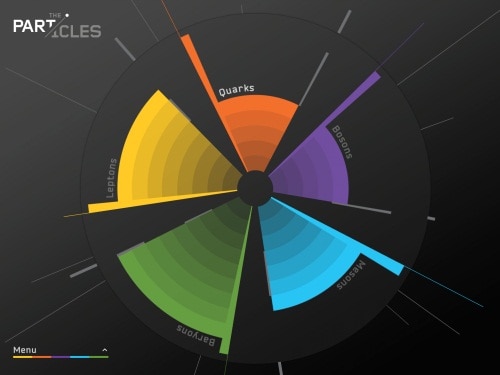
The physicist and best-selling author Frank Close has joined forces with Michael Marten – founder of the Science Photo Library (SPL) – and CERN Courier editor Christine Sutton to create a new app about particle physics. Called The Particles, the app is billed as an introduction to the Standard Model and is aimed at a wide audience that includes professional physicists, students and even amateur enthusiasts.

(more…)

One good sign

By Margaret Harris at the APS March Meeting in Baltimore

“Science remains institutionally sexist. Despite some progress, women scientists are still paid less, promoted less, win fewer grants and are more likely to leave research than similarly qualified men.”  The opening lines of Nature’s recent special issue make an arresting – if depressing – summary, so it’s not surprising that Roxanne Hughes chose them to kick off yesterday’s press conference on women in science, technology, engineering and mathematics (STEM) at the APS March Meeting.

Hughes, an education expert at the US National High Magnetic Field Laboratory, spoke about a study she’d done of 26 women undergraduates. All of them entered university with the intention of studying a STEM subject, and 12 had enrolled in a “living and learning community” that offered specialized mentoring opportunities and the chance to live with other female science students. Such programmes have often been touted as a way of helping women persist in science, but on Hughes’ evidence, this particular one made not a whit of difference, at least in numerical terms. The 12 students in the study who switched to non-STEM fields were evenly split between those who participated and those who didn’t.

(more…)

Atmospheric ozone variations could affect transatlantic fliers

Scientists in the US have used data from sensors on aircraft to show that current strategies for reducing passenger exposure to ozone may not be effective.

Although ozone high up in the stratosphere provides protection from ultraviolet radiation, it can be harmful when circumstances such as air travel or ground-level pollution expose humans to high levels of the gas. Ozone can cause breathing difficulties, headache or even premature death. As a result, US Federal Aviation Regulations limit ozone levels to less than 0.25 parts per million, and to 0.1 parts per million as a three-hour average. Now Seema Bhangar and Bill Nazaroff of the University of California Berkeley are arguing that the route-planning measures used to limit ozone exposure may not be up to the job.

“[Our research] raises questions about the claim – which is written into current federal regulations – that aircraft can prevent high in-cabin ozone levels by modifying flight paths to avoid air that is expected to contain high concentrations of ozone based on statistical summary tables of the variation of ozone with altitude, latitude and season,” explains Bhangar. “The summary tables do not capture the rich spatial variation of atmospheric ozone concentrations.”

The team found that the mean height of the tropopause – the boundary between the troposphere and stratosphere – decreased towards the poles, as expected. This should mean that ozone concentrations at aircraft cruising altitudes are generally larger at high latitudes. But the pair did not find a systematic or monotonic increase with latitude in the ozone concentrations encountered by transatlantic flights.

Local disturbances

“Our research findings suggest that the highest ozone levels encountered by aircraft may be tied to local, episodic disturbances in the tropopause height,” says Bhangar. “These high levels cannot be avoided through flight-path planning that is based only on mean annual variations in ozone with altitude, latitude and season.”

Many aircraft use ozone control devices, or “converters”, in their ventilation systems to remove ozone entering the plane. The team’s results indicate that as these devices age and approach the 60% efficiency limit at which they receive maintenance, cabin ozone levels between February and June could exceed the 0.1 ppm limit on transatlantic flights; the tropopause tends to be lowest in the spring and at its maximum height in the autumn.

“Though levels of ozone outside the cabin do not translate directly to exposures inside the cabin, outside ozone concentration is a key indicator of in-cabin exposures to both ozone and ozone-reaction byproducts,” says Bhangar. The presence of an ozone control device is also important.

A domestic issue

Currently, only long-haul flights are required to have ozone control devices. But the team found that ozone levels greater than 0.1 ppm were routinely encountered outside the aircraft even in US domestic airspace.

In earlier studies Bhangar, Nazaroff and colleagues took a suitcase full of ozone measurement kit on board planes. Arranging this is complicated, expensive and time consuming, so when the researchers heard about the vast amount of data collected by the MOZAIC project, they were intrigued. MOZAIC has been running since 1993, using sensors installed on the shells of commercial aircraft.

The researchers looked at MOZAIC data from Airbus A340 planes travelling from Germany, to either Los Angeles, Chicago or New York between 2000 and 2005 – a total of 865 flights.

Opportunistic and valuable

“This approach – making opportunistic use of an existing dataset – started as an engaging diversion from our primary air-sampling-based investigation, but proved to be a valuable complement to that campaign, which provided us with independent, useful insights,” says Bhangar. “The present work provides a way to build on the in-cabin work via a much larger sample size and lower investment of sampling effort per monitored segment.”

Peak one-hour ozone concentrations measured in the study ranged from 90–900 ppb, while the flight-average ozone level was 50–500 ppb. Flights to Chicago and New York typically saw higher average ozone concentrations than those to Los Angeles, as flights to the US West Coast tend to take a more northerly route, avoiding much of the “high ozone” region centred in the western North Atlantic, say the researchers.

The amount of ozone inside the cabin depends not only on the atmosphere outside, but also on the ventilation system, materials making up the cabin surface, density of occupants, and surface area to volume ratio. The team estimated that more than 95% of the flights between February and June analysed in the study would have exceeded the 100 ppb (0.1 ppm) mark for flight-average ozone levels inside the cabin if ozone converters were absent or ineffective.

Reducing human exposure

“Our results improve the scientific basis for understanding conditions under which air travellers and flight crew are likely to be exposed to elevated ozone,” says Bhangar. “The findings can help regulators and the airline industry to be more efficient, effective and strategic in reducing human exposures to ozone and ozone byproducts in the air-cabin environment.”

The ideal next step, Bhangar believes, would be to add an indoor monitoring component to the MOZAIC endeavour. “If even one of the MOZAIC aircraft currently measuring outdoor parameters on all routine flights were equipped with an indoor ozone sensor, the resulting data – in conjunction with information on the ventilation system, ozone converter and occupant load – could give us an unprecedented look not only at real-time in-cabin and atmospheric ozone levels on a large number of flights, but also at what mediates the relationship between these two variables.”

In the meantime, the scientists are investigating levels of dynamic air pollutants in other occupied indoor environments, with a focus on bioaerosols. They reported their aircraft results in Environmental Research Letters (ERL).

Ozone is not the only health issue facing air travellers. Levels of neutron radiation on board aircraft are also monitored and some physicists are concerned about cosmic rays.

Copyright © 2026 by IOP Publishing Ltd and individual contributors