

By Hamish Johnston
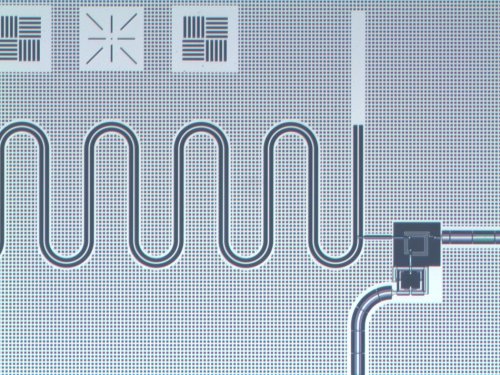
A month ago I wrote about a way of storing a handful of photons in an atomic gas, where the interactions between them can be controlled – a result that could benefit physicists trying to build quantum computers.
By Hamish Johnston
A month ago I wrote about a way of storing a handful of photons in an atomic gas, where the interactions between them can be controlled – a result that could benefit physicists trying to build quantum computers.
For decades, scientists have argued over whether there is a link between cosmic rays and cloud cover, which in turn could affect climate. Now two atmospheric physicists in the UK have discovered that global atmospheric electricity – which itself is altered by cosmic rays, space weather and El Niño – affects the base height of certain types of clouds.
“Electric currents flow continuously throughout much of the atmosphere because of the global atmospheric electric circuit, and these currents sometimes pass through clouds,” explains Giles Harrison, who along with Maarten Ambaum did this latest study at the University of Reading.
“Whether these small currents affect the cloud’s constituent droplets has proved to be a question that is very difficult to answer because, almost invariably, other much stronger influences on the droplets are present,” Harrison adds.
With that in mind, the pair investigated a common type of cloud called “layer clouds” during polar darkness when many of these other influences are lessened or absent. Measurements with a laser ceilometer – a device that determines the height of a cloud base – done in Sodankylä, Finland and Halley, Antarctica, revealed that the cloud base rises an average of four metres for a 1% increase in fair-weather electric-current density. This means that shifts of up to about 200 m per day are possible.
Global atmospheric electricity exhibits a daily cycle, hitting a minimum at around 03:00 GMT and peaking at roughly 19:00 GMT – when activity is high in thunderstorm hotspots such as Africa and North America. This cycle was discovered in the early 20th century on board a ship operated by the Carnegie Institution of Washington. This variation is known as the Carnegie curve, or as Harrison puts it more poetically, “the fundamental electrical heartbeat of the planet”.
Harrison and Ambaum found that the base height of the layer clouds they looked at showed a similar cycle to the Carnegie curve. They believe the effect may be due to the charging of small droplets in the cloud’s base, which encourages them to stick together.
“The implications are that factors affecting currents flowing in the atmosphere – such as thunderstorms, cosmic rays and Pacific Ocean temperatures – may have distant effects on droplet properties in cloud bases,” says Harrison. “Particularly interesting is the possibility that space weather changes could affect weather in the lower atmosphere.”
Harrison stresses that the results say nothing about any long-term effects, as they were found for rapidly occurring changes from hour to hour. He reckons that establishing whether the electric currents influence clouds gives an additional perspective on coupling processes within the atmosphere.
“The realization that the electrical heartbeat of the planet plays a role in the formation of layer clouds indicates that existing models for clouds and climate are still missing potentially important components,” adds Ambaum. “Understanding these missing elements is crucial to improve the accuracy of our weather forecasts and predicting changes to our climate.”
Layer clouds cover about 40% of the planet, trapping heat at night but reflecting back solar radiation during the day. Unlike thunderclouds, they do not generate strong electrification internally.
The magnitude of cloud effects arising from global-circuit-current changes remains to be quantified, says Harrison. “We plan to make improved weather-balloon measurements of cloud droplets and their electrification, to unravel the detail of the droplet processes concerned and their effect on surface temperatures or rainfall.”
Harrison’s previous work has developed new experimental methods using weather balloons to detect whether droplets near the top and bottom edges of layer clouds are electrically charged. “Using these techniques, we have shown that droplet charging does occur in layer clouds, as a result of currents flowing in the atmosphere,” he says. “We have also shown, theoretically, that the charges generated can affect the behaviour of the cloud droplets. Demonstrating the planet’s electrical heartbeat in polar clouds is a further step in establishing whether droplets are actually affected by the currents flowing.”
The research is described in Environmental Research Letters and you can view the video abstract above.
In less than 100 seconds, Daniel Mortlock ponders whether the quantum wavefunction could be more than a mathematical function.
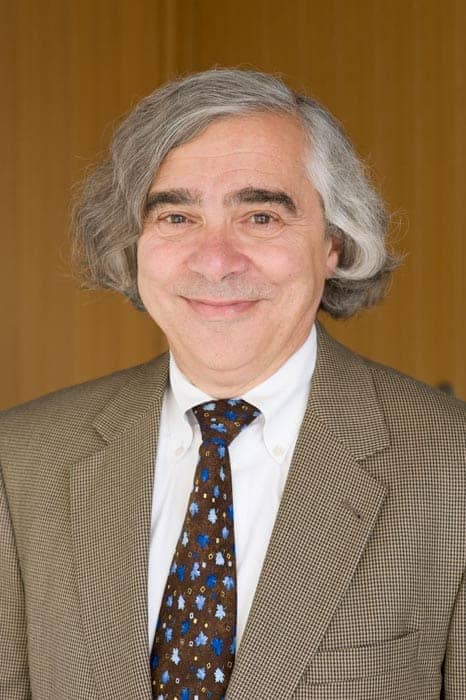
President Obama has nominated Ernest Moniz, a physicist at the Massachusetts Institute of Technology (MIT), to succeed Nobel laureate Steven Chu as US energy secretary. If the Senate approves the nomination, Moniz will assume the top position in the US Department of Energy (DOE), where the responsibilities range from the country’s stockpile of nuclear weapons to funding national laboratories to supporting energy-efficiency programmes. “Most importantly,” the president said in his announcement, “Ernie knows that we can produce more energy and grow our economy while still taking care of our air, our water and our climate.”
Moniz, 68, received a BSc in physics from Boston College in 1966 before being awarded a PhD in theoretical physics from Stanford University in 1972. He then joined MIT a year later, serving as head of the department from 1991 to 1995.
Unlike Chu when he took over the role of US energy secretary four years ago, Moniz has direct experience of Washington. Under the administration of Bill Clinton, he served as associate director for science in the Office of Science and Technology Policy from 1995 to 1997 and spent the next four years as under-secretary of energy in the DOE. “Physics sometimes looked easy compared to doing the people’s business,” he noted about his role in office in an interview in 2009 with Boston College. Moniz then returned to MIT and in 2006 became the first director of the MIT Energy Initiative.
Moniz’s colleagues at MIT have applauded his nomination. “He has shown a remarkable ability to discern how best to bring groundbreaking research to bear on both immediate and longer-term energy problems,” says former MIT president Susan Hockfield, who chose Moniz to start up the Energy Initiative. That view is shared by Michael Lubell, the American Physical Society’s public affairs director and professor of physics at the City College of New York. “He is very, very broad in his knowledge of science and energy,” he says.
However, some environmentalists have expressed suspicion of Moniz, because of his stated support for nuclear power and the use of natural gas as a bridge to a future energy economy based on renewables. Nevertheless, colleagues regard him as more prepared for the cut and thrust of Washington politics than his predecessor. “He’s a politically savvy guy, and as a result of his time in Washington he understands Washington reasonably well,” Lubell adds. “He has a much more natural grasp of politics than Chu ever had, even to this day; his instincts are better.”
Assuming that Moniz wins Senate approval in the coming weeks, he will face a far tougher financial situation than Chu, who was able to use stimulus funds to start new initiatives. Now, the DOE has to retrench under the terms of the “sequester” that, when it went into action only a few days ago, cut significant funds from all cabinet departments.
At the MIT Energy Initiative, Moniz focused on transforming the energy mix, with particular reference to renewable energy technology, which many Republicans in Congress regard with suspicion, if not contempt. But Moniz has also insisted that non-renewables must remain part of the energy portfolio for several years until they become “too carbon-intensive”. Natural gas “is part of our solution, at least for some time,” he told a meeting at the University of Texas, Austin in December.
And in testimony about a recent MIT Energy Initiative report into the controversial process of fracking, which involves pumping sand and liquid into deep shale deposits to liberate natural gas, he spoke out against banning the method, calling instead for better regulation and oversight. That has drawn the ire of some environmentalists, who regard fracking as anathema. Critics have also expressed suspicion about the financial support that the Energy Initiative receives from fossil-fuel interests. Significantly, though, the DOE has no ability to oversee fracking. That authority belongs to the Environmental Protection Agency (EPA).
Along with the selection of Moniz, President Obama yesterday nominated Gina McCarthy to head the EPA. Currently the agency’s assistant EPA administrator, McCarthy, 58, arrived in Washington in 2009, following stints as an environmental official in Massachusetts and Connecticut. When the Senate will consider both nominations is currently unknown.
In less than 100 seconds, Martin Archer introduces the ideas of quantum-mechanical entanglement and non-locality.
In less than 100 seconds, Daniel Segal explains how electrons can transition instantaneously between energy levels within an atom.
Physicists in Russia are the first to detect water dimers – bonded pairs of gaseous water molecules – in conditions similar to Earth’s atmosphere. Such dimers have been predicted to have important effects on the Earth’s radiation balance and atmospheric chemistry, so this latest breakthrough could help scientists gain a better understanding of how their presence affects climate.
Water vapour is the third most common gas in the Earth’s atmosphere, and the principal absorber of both sunlight and the Earth’s blackbody radiation. Scientists have known for decades that water appears to absorb more radiation than theoretical models suggest that it should. In the 1960s the Russian astronomer Sergei Zhevakin suggested that this discrepancy could be explained if, among the free water molecules (monomers), hydrogen bonding caused a small proportion of water molecules to pair-up to create dimers. These dimers, suggested Zhevakin and others, would be much stronger absorbers than single water molecules.
While chemists have been able to study water dimers at temperatures near absolute zero, it was not clear whether the structures could even form under conditions found in the Earth’s atmosphere. This is because the infrared spectral signatures of a dimer are extremely difficult to separate from those of single water molecules – making standard spectroscopy techniques unable to answer the question.
Much more promising are the rotational spectra of dimers and monomers, which calculations suggest should be much more distinct than infrared spectra. These features appear in the extremely high-frequency (EHF) region of the radio spectrum – at about 100–200 GHz – and should differ significantly because dimers have much higher moments of inertia than monomers. Unfortunately, standard spectrometers did not have sufficient resolution to detect these faint, broad peaks predicted by quantum-chemistry calculations.
Now, using a special spectrometer, researchers at the Russian Academy of Sciences in Nizhgy Novgorod led by Mikhail Tretyakov – a former student of Zhevakin – have made the first clear observations of water dimers under conditions similar to those in the atmosphere. The team created a new spectrometer in which EHF radiation is injected into a cavity with a mirror at either end. The resonance of the cavity depends on the separation between the mirrors, which is controlled extremely precisely. Gas is then injected into the cavity and the frequency is varied. At frequencies the gas does not absorb, the cavity shows one sharp peak at its expected resonant frequency. However, at frequencies near the absorption peaks of the gas, the resonance peak becomes broader. By measuring this change in the sharpness of the peak, the researchers were able to measure resonances associated with water dimers.
The researchers injected water vapour into the cavity at a similar temperature (23 °C) and partial pressure to that found in the atmosphere. Previous attempts to detect the water dimer at ambient conditions have focused on a single peak, which is difficult to assign unambiguously to a particular molecule. Instead, the researchers identified a distinct series of four peaks in the absorption spectrum. These occurred at exactly the same positions as measured in cold-temperature experiments. The researchers interpret this as clear evidence that water dimers can form in water vapour under ambient conditions.
There is one puzzling aspect of the results, however: the measured absorption peaks were four times broader than those predicted by computer modelling. The researchers speculate that the reason may lie in the simplifying assumptions about the structure of the water molecule that are made by the computer model. For example, the water molecule is assumed to be symmetric, whereas in reality this is not quite true.
David Wales, a theoretical chemist at the University of Cambridge, says that while a full explanation of the broadness of the lines is important, the identification of four peaks makes the detection of the dimer quite convincing anyway. “It will inspire a lot of new work, both theoretical and experimental,” he says.
Tretyakov agrees that more work needs to be done: “First of all, I need to improve the signal-to-noise ratio of the spectrum – I know how to do that now. After that, I can get more information on the quantitative properties of the water dimer, and this will help us to understand the properties of liquid water in the long run.”
The research is published in Physical Review Letters.
By Michael Banks
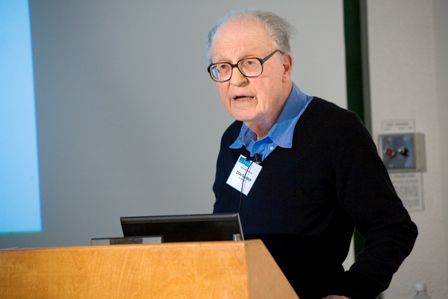
The US physicist Don Glaser has died at the age of 86. Glaser was instrumental in inventing the bubble chamber – a vessel filled with a superheated transparent liquid such as liquid hydrogen that can be used to detect electrically charged particles moving through it. He was awarded the Nobel Prize for Physics for this work in 1960, aged just 34.
A major digital education initiative set up by Harvard University and the Massachusetts Institute of Technology (MIT) has just doubled its number of university partners and signed up its first members from outside the US. The edX programme, which offers free online learning, is now joined by universities in Canada, Australia, the Netherlands and Switzerland. “We have had an international student community almost from the beginning and bringing these leading international universities into edX will help us meet the tremendous demand we are experiencing,” says edX president Anant Agarwal from MIT.
edX is a not-for-profit education programme offering “MOOCs”, or massive open online courses. MOOCs differ from conventional online learning programmes, being free of charge, offering vast resources and not usually leading to any formal credit being awarded by the providers. Although MOOCs have existed for several years, the founders of edX say they are raising the bar by building an entire open-source platform that links some of the world’s leading universities. A typical edX course consists of “learning sequences” involving videos presented by university academics, along with assessments and online interactive laboratories.
Harvard and MIT both invested $30m in edX early last year and were subsequently joined in the initiative by the University of California at Berkeley, the University of Texas, Wellesley College and Georgetown University. Now, these six institutions will be joined by Rice University (also in the US), McGill and Toronto universities in Canada, plus the Australian National University, Delft University of Technology in the Netherlands, and the École Polytechnique Fédérale de Lausanne in Switzerland. “Each of these schools was carefully selected for the distinct expertise and regional influence they bring to our growing family of edX institutions,” says Agarwal.
All six current edX members launched courses in 2012 and have new courses starting this spring. Among the new batch is a course on electricity and magnetism taught by Walter Lewin, an MIT physicist who already has a strong online following through earlier recorded lectures. Other existing edX courses include those on quantum mechanics and computing taught by Berkeley academic Umesh Vazirani, and on solid-state chemistry by MIT human-genome pioneer Eric Lander. According to edX spokesperson Dan O’Connell, Delft has already indicated that it will be begin offering edX courses from autumn, including courses on solar energy and space engineering.
In less than 100 seconds, Martin Archer explains why Einstein was uncomfortable with some of the philosophical implications of quantum mechanics.