Black hole found spinning near the relativistic limit

The best evidence yet that some supermassive black holes (SMBH) rotate at extremely high rates has been found by an international team of astronomers. Made using the recently launched NuStar space telescope, the study suggests that a huge black hole at the centre of a distant galaxy acquired a huge amount of rotational energy as it formed. The discovery could provide important information about how SMBHs and their associated galaxies form and evolve.

Astronomers know that black holes that are as large as a billion solar masses can be found at the heart of most galaxies. Because these gravitational behemoths are created at the same time as their host galaxies, understanding how they formed could provide important information about galaxy formation and evolution.

Knowing the spin of an SMBH can provide important clues about how it formed. If the black hole grew slowly, by sucking in small amounts of matter from all directions, then it isn’t expected to have much spin. However, if the formation process involves the black hole gorging rapidly on matter from a specific direction, conservation of angular momentum would leave it with an extremely large spin.

Redshifted X-rays

The spin of a supermassive black hole can be measured by looking at the effect that the spin has on material that is being sucked in to the black hole. This material forms an accretion disc that swirls around the black hole before disappearing from sight. The faster the black hole is spinning, the closer the inner edge of the disc is to the centre of the black hole. As a result, the X-rays emanating from the inner edge are affected by the black hole’s gravity more when the black hole is spinning.

Astronomers see this as a “stretching” of the wavelength (redshift) of characteristic X-rays emanating from iron and other elements in the accretion disc. By measuring the redshift, the spin of the black hole can be deduced.

The problem, however, is that these X-rays must first travel through fast-moving clouds of gas that surround the accretion disc. The absorption of X-rays by the gas could mimic the effect of a spinning black hole. As a result, astronomers have not been that confident about their estimates of black-hole spin.

Sensitive at higher energies

Now, Guido Risaliti of the Arcetri Observatory in Florence and astronomers in the US, Denmark and the UK have separated the redshift and cloud effects using data from NASA’s NuSTAR space telescope – which was launched in June 2012 – along with data from the European Space Agency’s XMM-Newton space telescope. Unlike other instruments that are sensitive in the 0.5–10 keV range, NuStar can detect X-rays in the 3–80 keV energy range. The instrument’s excellent sensitivity at higher energies means that it can tell the difference between the effects of gas absorption and spin on the X-rays.

Risaliti and colleagues pointed the telescopes at the SMBH at the centre of the galaxy NGC1365, which is about 56 million light-years away. This black hole, which is about 2 million times more massive than the Sun, is of particular interest because previous studies had suggested that it was rotating rapidly.

The results suggest that if cloud absorption were the only process affecting the X-rays, then the clouds must be so dense that they absorb up to 98% of the X-rays created in the accretion disc. But if this were the case, then the cloud would quickly absorb vast amounts of energy and then blow apart.

Vast amounts of rotational energy

As a result, Risaliti and colleagues concluded that the spinning black hole did affect the X-rays emitted from the accretion disc. The study confirms that the SMBH is spinning at a rate close to the limit defined by the general theory of relativity. While the rotational properties of a spinning gravitational singularity are difficult to describe in a simple way, Risaliti explains that the rotational energy of the SMBH at the heart of NGC1365 is about the same as the energy that is given off by a billion stars burning for a billion years.

Risaliti tells physicsworld.com that the team is currently looking at observations of NGC1365 in an attempt to understand why the X-ray spectrum changes over time. The spin of an SMBH is expected to be constant, therefore these changes should be related to variations in the accretion disc and other structures close to the black hole.

In the longer term, he believes that studies of SMBH spin in galaxies throughout the universe will provide important information about the formation and evolution of galaxies.

The observations are described in Nature.
Polymer capacitor dazzles flash manufacturer

Researchers in Singapore have developed a prototype polymer capacitor that can store much more energy per unit volume than capacitors currently used to power camera flashes. The team claims that the technology could boost the performance of mobile-phone cameras, which often suffer from dim flashes. The group has already teamed up with a flash manufacturer with the aim of creating commercial products based on the technology.

For perfect pictures in low light, a camera flash must deliver a sudden, extremely bright pulse of full-spectrum light. Most flashes do this by creating an electrical discharge through xenon gas, which requires a relatively large capacitor. This makes it difficult to integrate xenon flashes in mobile phones, which tend to be smaller than dedicated cameras and packed with more components.

Ionized gas

A xenon flash consists of a glass tube filled with xenon gas with electrodes at either end. The gas has an extremely high resistance in its normal state, but when the potential difference across the electrodes becomes high enough, it ionizes. The resistance then suddenly drops, allowing the capacitor to discharge and creating sudden heating of the gas and a short pulse of intense light.

To fire a xenon flash, hundreds of volts must be applied across the electrodes in a very short time. This is done using electrical energy that is stored within a capacitor by charging conducting plates separated by a dielectric medium. However, just like the xenon gas, the dielectric medium has a finite breakdown field. To store more energy without exceeding the breakdown field, more dielectric – usually aluminium oxide – is needed and this increases the size and weight of the capacitor. As a result, many mobile phone manufacturers use LED flashes, which do not require unwieldy capacitors but are not as bright as xenon devices.

Higher breakdown field

Now Lee Pooi See from Nanyang Technological University (NTU) in Singapore and colleagues have developed a new multilayer polymer dielectric with a much higher breakdown field than the materials used in traditional camera capacitors. This means the same amount of energy can be stored in a much smaller volume. Polymer capacitors are not a new invention, and are often used in high-end electronics because they are more stable than conventional capacitors and can discharge more quickly. But previous polymers used in capacitors have had a lower maximum-energy density than conventional designs.

Lee explains the secret of the new material, which her group has applied for a patent on. “It’s a very stable polymer – not just chemically but thermally and electrically as well,” she says. “Often when the breakdown field is low for other polymers it’s due to defects or instability of the chemical structure, but our polymer isn’t prone to defects or moisture issues.” A capacitor four times smaller can store the energy required to power the same xenon flash. As well as camera flashes, the capacitor should have uses in other consumer electronics where miniaturization and high speed are important.

Commercial ambitions

The invention has caught the eye of Singapore-based Xenon Technologies, the world’s largest manufacturer of xenon flashes. The company has entered a commercial partnership with Lee’s team at NTU to turn the laboratory prototype into a viable commercial product.

The collaboration is hoping to produce a working commercial prototype by September, after which how to produce it industrially will become important. “If we want to have mass production, we cannot just rely on the lab-based instruments we are currently using,” says Lee, “I would foresee that some investment from industry is required if it’s really attractive to push forward towards a product.”

Jack Tuen, chief executive of Xenon Technologies, is upbeat about the partnership: “This project will yield a breakthrough solution for the digital-imaging industry, which will be the world’s smallest xenon flash.”

Opening up research

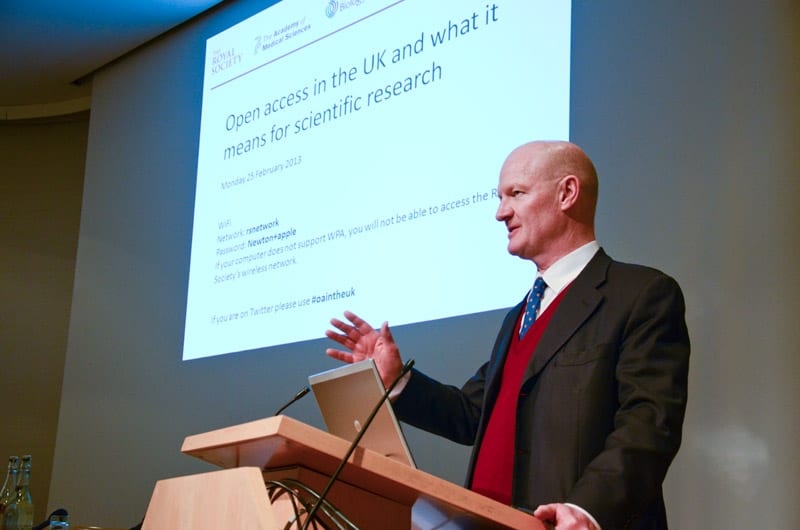
David Willetts speaking at the open access meeting at the Royal Society (courtesy: Jesse Karjalainen/IOP Publishing)

By Michael Banks

Yesterday I headed to the Royal Society in London to attend a meeting on open access and what it means for scientific research.

From what I heard at the meeting, I was surprised to learn that some scientists were largely unaware of how it could change scientific publishing.

(more…)

Super single-photon source

By Hamish Johnston

One requirement for many quantum-computing schemes is a device that can deliver a succession of single particles such as photons on demand. This has proven to be a challenge because in the quantum world probability reigns, so you can never be certain what will pop out of your device. Another challenging requirement is that these particles must be indistinguishable from each other.

(more…)

Gold nanocages could image and treat tumours

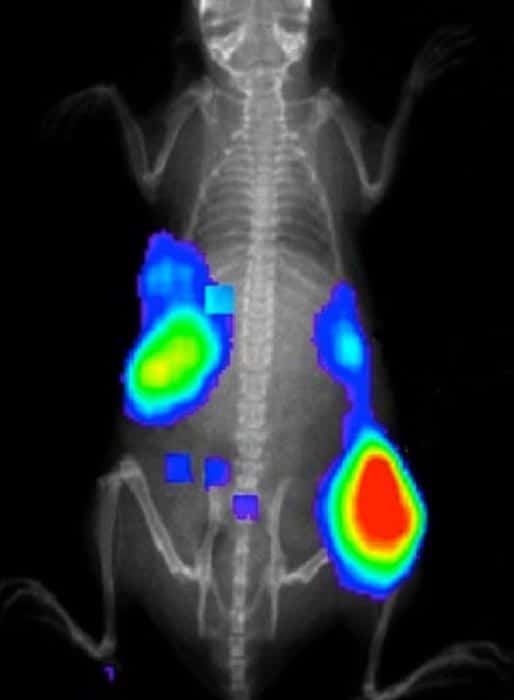
Real-time image of tumours in a mouse

Tiny gold particles called nanocages that emit Cerenkov light could be used to image tumours and deliver drugs to destroy them at the same time. That is the claim of researchers in the US, who have detected Cerenkov light from within live mice that had been injected with the nanoparticles. The nanocages are among the very first reported “theranostic” nanoparticles that have the potential to fulfil both therapeutic and diagnostic roles in medicine.

Gold nanocages are tiny structures with hollow interiors and ultrathin porous walls. They are of particular interest to medical researchers because they do not interact with biological materials and can therefore be used within the body. Nanocages can also be designed to absorb and scatter light in the near-infrared (NIR) region of the electromagnetic spectrum. Light at these wavelengths (700–900 nm) can penetrate deeply into soft biological tissue and so is perfect for optical imaging based on photoacoustic and optical-coherence tomography.

Younan Xia at the Georgia Institute of Technology, together with Yongjian Liu from Washington University School of Medicine and Cathy Cutler at the University of Missouri, have done experiments that suggest that gold nanocages containing radioactive gold-198 could also be used as contrast agents in luminescence imaging, while in addition carrying drugs to tumours.

Cerenkov light from tumour cells

Gold-198 undergoes beta decay and emits a fast-moving electron, which in turn creates Cerenkov radiation in the form of visible and NIR light. When the nanocages are injected into the mice, they appear to accumulate in tumour cells, and therefore the Cerenkov light can be used to locate tumours. To demonstrate this, the researchers detected the Cerenkov light emitted by gold nanocages in live mice using a commercial imaging system.

Normally, such tumour markers are made to give off light by illuminating the region of interest with an excitation light source. This can sometimes cause healthy tissue to emit the same sort of light as a tumour – a problem that could be minimized by using Cerenkov-emitting nanocages.

No separation anxiety

Another important benefit of using a radioactive isotope of gold is that its presence does not alter the chemical properties of the nanocages and the isotope is unlikely to separate from the nanocage. “The radioactive gold-198 nanocages emit Cerenkov light but the physicochemical and other properties of these nanostructures remain unchanged,” explains team member Yucai Wang. “Our approach is thus a new and robust way to label a nanoparticle. In conventional radioisotope labelling (where the isotope is attached to a nanostructure by chemical means), there is always the concern that the label will ‘come off’ during treatment. By incorporating gold-198 atoms into the walls of the gold nanocages, such an issue does not exist anymore.”

The technique developed in this research could be used for diagnosing cancer and to guide nanoparticle delivery for treating tumours, Wang says. The latter could be achieved by adding targeting molecules, such as peptides, to the gold nanocages – something that the team is now investigating. The hope is that this could offer a new and improved way of delivering drugs to cancer cells that could be used in photothermal treatment, chemotherapy or a combination of the two.

The current work is reported in Nano Letters.

Flowers and bees communicate using electric fields

By Hamish Johnston

Spring will soon be upon many of us – and for me, nothing evokes the spirit of the season more than a bee buzzing from flower to flower on a warm, sunny afternoon. But I never would have guessed that a bee takes a measure of a flower’s electrical field before it alights.

(more…)

Mosh-pit physics could save lives

An audience of frenzied heavy-metal concertgoers behaves just like molecules in a gas, according to the first-ever study of crowd motion in a “mosh pit”. The work was done by physicists at Cornell University in the US – who claim that a better understanding of the collective motion of the mosh pit in front of a stage could lead to better designed music venues and improved crowd-control tactics. They also believe that the study could be used to reduce the risk of injury or worse during mass evacuations, riots and other “extreme social gatherings”.

Crowds of people exhibit a range of collective behaviours depending on the social context. For example, people walking in opposite directions down a corridor tend spontaneously to separate into two lanes. But when people become panicked, the situation can change significantly and often for the worse. At the 2010 Love Parade festival in Duisburg, Germany, for example, a crowd disturbance escalated into a fatal stampede that left 21 people dead and hundreds more injured. A similar panic during the 2006 Hajj pilgrimage to Mecca claimed 300 lives in the crush.

Understanding crowd dynamics in these extreme situations is critical to avoiding future tragedies. “But we just don’t really understand well how people are going to behave [in these situations] and that’s because we don’t have a lot of experimental data,” explains co-author of the study, Jesse Silverberg, who is a postgraduate student at Cornell. While it would be unethical to engineer a crush in the name of scientific research, asking volunteers to practise stadium evacuations clearly falls short of simulating the blind panic at the crux of real-world disasters.

Messages from the mosh pit

An idea for a more plausible proxy system hit Silverberg when he was at a heavy-metal gig. For many fans, expressing their exuberance at a show involves “moshing” – that is, a form of physical abandon, often violent, characterized by pushing, shoving, pummelling and bouncing off one another. Audience members who want to partake tend to gravitate together to form a “mosh pit” front and centre. Finding himself on the outside looking in, Silverberg was stunned: “I was absolutely amazed by the different types of collective motion that I saw coming out of this group of people,” he recalls.

Together with fellow postgraduate Matt Bierbaum, Silverberg analysed mosh-pit footage from YouTube, correcting for perspective distortions and camera instability before applying particle-image velocimetry techniques to track the flow of bodies. The researchers found that the statistical distribution of the moshers’ speeds replicated that of molecules bouncing round in a 2D gas – the Maxwell–Boltzmann distribution in 2D.

“This is not something that any of us expected,” says Jim Sethna of Cornell, whose statistical-mechanics class inspired the work. The important question facing the team was how could it be that self-propelled moshers crashing together in a system far from thermodynamic equilibrium could collectively resemble the equilibrium state of a gas?

A method to the madness

Seeking answers, the team used standard flocking-simulation software to model the mosh pits. Such models have been around for several decades and were originally created to simulate the collective behaviour of flocks of birds. The model reduces each human entity to a simple particle – a Mobile Active Simulated Humanoid, or MASHer. The researchers included two types of MASHer in a ratio 3:7 in the total group of 500 – those inclined to move round and follow their neighbours (active), and those with a tendency to stay still and hang back (passive). They discovered that when random collisions, as in a gas, were more dominant than the tendency for individuals to follow their neighbours, the simulation resembled a classic mosh pit. However, when they nudged up the tendency to follow or flock, a new structure emerged that was ordered and vortex-like – one that looked intriguingly like the “circle pits” seen at many heavy-metal concerts (see video above).

“You’d think that, like square dancing, you’d need to have a brain to do it, but apparently not,” jokes Sethna. “You can get these circle pits just by making the flocking term a little bigger and the noise a little smaller.” You might also think that sentient beings could be credited for the segregation seen at gigs – where anyone who doesn’t want to get involved either moves away or chooses not to run forwards, resulting in a more stationary crowd surrounding the pit. However, this behaviour appeared in the simulation with the simple addition of the flocking term.

Building a taxonomy of behaviour

Anders Johansson, a crowd-modelling expert at Bristol University in the UK who was not involved with the research, thinks that the work takes an “interesting direction” in a field that has thus far focused on either comparatively calm pedestrian traffic or footage of disasters. “I think this helps towards building a taxonomy of different crowd behaviours in different settings,” he explains.

He adds that incorporating this sort of crowd modelling into architectural design – for example building sports stadia with optimal emergency-escape routes – is already being done. “It’s fitting into all stages – planning, design, even operational aspects during big events – nowadays and it’s starting to be a mature area really,” he says.

Voluntary panic?

What is still not clear, however, is whether mosh-pit studies provide useful information about how crowds behave in situations of genuine panic – given that the participants put themselves into the fray voluntarily.

The Cornell team is hopeful that further tests will show its model parameters to be more widely applicable. Nevertheless, says Stehna, “It’s very cool that a simple model can describe human collective behaviour. That gives us confidence…that if we had data on extreme conditions, we could probably come up with a model that didn’t involve complex strategies. We don’t know that this is definitely possible but it seems much more likely now that mosh pits are described.”

The work is published on the arXiv preprint server.

Search for ‘unparticles’ focuses on Earth’s crust

Evidence of a minuscule force that could exist between two particle spins over long distances could be lurking in magnetized iron under the Earth’s surface. That is the conclusion of a new study by physicists in the US, who have used our planet’s vast stores of polarized spin to place exacting limits on the existence of interactions mediated by unusual entities such as “unparticles”.

The intrinsic angular momentum, or “spin”, of a particle gives that particle a magnetic moment, and the interaction between spins generates magnetism. A ferromagnet, such as iron, becomes magnetized when the spins of some of the electrons in its constituent atoms line up, while quantum mechanics tells us that the magnetic force between spins results from the electrons exchanging “virtual” photons.

Some theoretical physicists have suggested that other, as-yet-undiscovered particles might be exchanged virtually and so give rise to new types of spin–spin interaction. In 2007, for example, Howard Georgi of Harvard University proposed the existence of unparticles, which would have the unusual property that their masses would scale with energy or momentum.

Searching in the lab

To date, physicists have searched for such interactions using laboratory-based sources of particles with polarized spin – the idea being to monitor any change in the energy associated with the spins as their polarization is shifted relative to that of a set of particle spins in a detector. So far, such tests have come up empty-handed, but researchers continue to make their devices ever-more sensitive in order to progressively reduce the maximum strength that such a force could have.

In the latest work, Larry Hunter and colleagues at Amherst College in Massachusetts, together with Jung-Fu Lin of the University of Texas, Austin, use the Earth, rather than a laboratory device, as the source of polarized spins. The idea is to use the spins from unpaired electrons in the iron present in the Earth’s crust and mantle that are lined up by the planet’s magnetic field. A disadvantage of this approach is that these spins are, on average, thousands of kilometres from any detector, thus rendering the interaction between individual spins far weaker than would be the case with a lab-based source. But Hunter and colleagues worked out that this drawback should be more than compensated for by the sheer quantity of aligned spins in the Earth (they calculate that there should be some 1042 spins) and the fact that some of the interactions hypothesized by theorists drop off relatively slowly – in inverse proportion to the distance or the distance squared, rather than the distance cubed as is the case with magnetic-dipole fields.

Experiments in a spin

To put their approach into practice, the researchers were able to use results from three existing experiments. Two of these – one at the University of Washington, Seattle, and another, operated by Hunter’s group, at Amherst – were designed to measure a tiny hypothetical angular dependence of the laws of physics known as Lorentz-symmetry violation. The fact that the detectors in these experiments were placed on a rotating turntable makes them also well suited to measuring any long-range interaction with spins in the Earth’s interior. The polarization of the source – the Earth – is not reversible, but the polarization of the detector is.

The researchers also made a map of the Earth’s polarized electron spins, drawing on data that showed the variation of temperature, magnetic-field direction and magnitude, and unpaired-electron density throughout the Earth. They then calculated the potentials associated with each of the anomalous spin interactions, integrating across the whole of the Earth and working out the effect of these potentials on the detectors in Seattle and Amherst. In this way they were able to reduce the upper limit of the forces associated with the exchange of unparticles, as well as with particles known as axial bosons, by a factor of a million. “In our obscure business of precision measurements it might take a decade to improve the sensitivity of an experiment by an order of magnitude,” says Hunter, “so using just laboratory sources it might have taken 60 years to get to the limits we did.”

Better off in Thailand

Hunter says that his group could further increase the sensitivity of its experiment by a couple of orders of magnitude once it has corrected a number of “systematic effects”, and he believes that rival groups might arrive at similar sensitivities. He also points out that further improvements could be made by placing the experiments in a more-suitable location, estimating that the stronger and better-aligned magnetic field that exists in southern Thailand would lead to a doubling in sensitivity compared with that attainable in Amherst.

Hunter adds that the discovery of a new long-range spin–spin force might also lead to improved mapping of iron concentrations in the lower mantle, given the limited data available from more conventional geophysical and geochemical observations.

“Clever and creative”

Derek Jackson Kimball of California State University, East Bay, describes the latest work as “a remarkably clever and creative new approach to the ongoing search for new fundamental forces of nature”, adding that it “will surely be useful for guiding the development of new theories and experiments that seek to explore physics beyond the Standard Model”.

Meanwhile, Eric Adelberger of the University of Washington says that when he first heard about the Amherst work, he was “amazed at the large claimed size of the Earth’s spin source and was sceptical” about the researchers’ claims. But he says he changed his opinion once he read the research in detail. “Their work is a real contribution,” he adds. “The moral is not to trust one’s ‘gut reaction’ – in my case that the effect was not large enough to be interesting – but to undertake a real calculation.”

The research is published in Science.

Has Steven Chu been a good US energy secretary?

By James Dacey

Photo of Steven Chu

The Nobel laureate Steven Chu has recently announced that he is to resign from the role of US energy secretary. He will step down from the post at the end of February having served throughout the entire four years of Barack Obama’s first presidential term. During his reign, Chu has received strong plaudits from many Democrats and environmentalists. Obama has credited Chu for increasing the nation’s use of renewable energy while reducing its dependence on oil imports.

Others, however, have been critical of Chu. He is accused of specific failures such as the initiatives that led to the downfall of Solyndra – a solar-cell manufacturer that went bankrupt after receiving $535m in Department of Energy loan guarantees. A more general criticism when Chu was appointed was that he had very little political experience to carry out such a critical role in the governance of the US.

(more…)

Robert Richardson: 1937–2013

The American condensed-matter physicist and Nobel laureate Robert Richardson has died at the age of 75 from complications related to a heart attack. Based at Cornell University since 1968, Richardson shared the 1996 Nobel Prize for Physics with his former PhD student Douglas Osheroff and Cornell’s David Lee. The three researchers were cited for their discovery that helium-3 becomes a superfluid at very low temperatures.

Being fermions, helium-3 atoms ought not to be able to condense into a superfluid, but some physicists had speculated that the atoms could form bosonic pairs similar to the Cooper pairs found in superconductors. In a famous series of experiments in 1971, Richardson and colleagues confirmed that these pairs formed a superfluid at temperatures below about 2.5 mK.

“Glorious time” at Duke

Richardson was born on 26 June 1937 in Washington, DC and did BSc and MSc degrees at the Virginia Polytechnic Institute. He received a PhD in physics in 1966 from Duke University, where he worked under Horst Meyer on nuclear magnetic resonance of solid helium-3. Richardson later recalled the “glorious time” he spent at the university.

After a further year at Duke, in 1966 Richardson moved to Cornell, where he spent the rest of his career focusing on low-temperature physics, working initially with Lee and Dave Reppy and later becoming director of Cornell’s Laboratory of Atomic and Solid State Physics. He also served as the university’s first vice-provost for research from 1998 to 2003 and had a spell as director of the Kavli Institute at Cornell for Nanoscale Science.

Landmark report

In 2005 Richardson helped write the landmark National Academy of Sciences report entitled Rising Above the Gathering Storm: Energizing and Employing America for a Brighter Economic Future. It identified shortcomings in the US’s approach to developing science and technology, and recommended changes to how research and higher education are funded and how science and technology are taught in US schools.

Copyright © 2026 by IOP Publishing Ltd and individual contributors