Plan comes together for LHC shutdown

Fixing the LHC


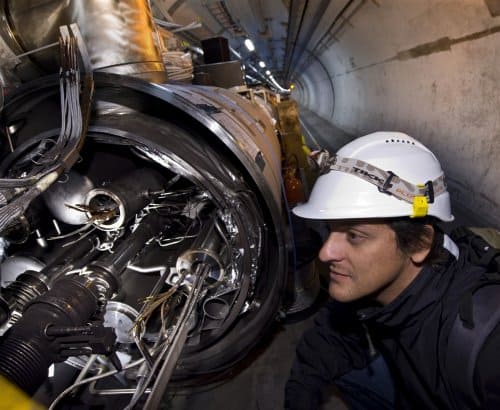
Looking under the hood at the LHC (Courtesy: CERN)

By Hamish Johnston

By all accounts the Large Hadron Collider (LHC) and its experiments are working much better than expected and are gathering data like gangbusters. So it might seem strange that many physicists at CERN are keen to shut the whole thing down for a 20-month overhaul. But that’s going to happen at the end of February 2013, when the facility in Geneva will go dark.

One key change that must be made to the accelerator is the replacement of all the connectors between superconducting magnets to ensure that the LHC can run at a collision energy of 14 TeV – compared with the current energy of 8 TeV. This overhaul is seen as crucial because it was the failure of one of these connectors that led to the disastrous explosion of 2008.

Given that no evidence for physics beyond the Standard Model has emerged from the LHC so far, many physicists must be very keen to boost the collision energy in the hope that strange things will happen.

As the connectors are replaced, all four LHC experiments will be upgraded.

You can read all about the revamp here.

Graphene offers up another quantum surprise

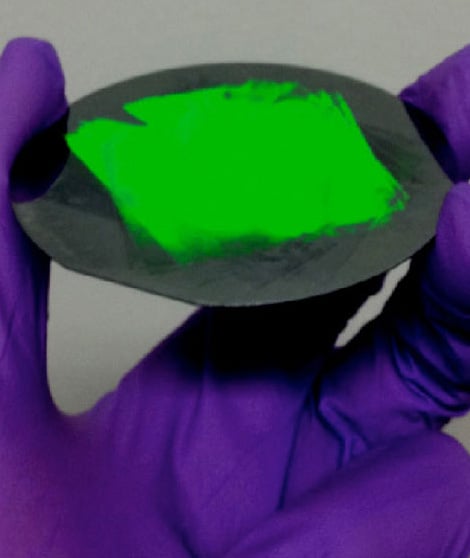
Physicists in the US and Germany have discovered yet another surprising property of the “wonder material” graphene – it displays a fractional quantum Hall effect (FQHE) that is different to that seen in conventional materials. The finding will be important for studying correlations among relativistic particles and may even help in the development of quantum computers in the future.

The FQHE occurs when charge carriers like electrons are confined to a 2D plane, as in graphene, and are subjected to a perpendicular magnetic field in the Z-direction. If a current flows in the X-direction, a voltage – the Hall voltage – occurs in the Y-direction. At very low temperatures, this voltage is quantized in distinct steps or Hall states.

Fractional charges

The FQHE is different from the better-known integer quantum Hall effect and is a result of strong interactions between electrons that occur in some materials. These interactions make the charge carriers in a FQHE material behave as quasiparticles with charge that is a fraction of that of an electron. These fractionally charged quasiparticles obey so-called fractional statistics, a feature that may be important for developing future quantum computers. In addition to the FQHE, these strong interactions often lead to important collective phenomena such as superconductivity, magnetism and superfluidity. Therefore understanding strong interactions is of fundamental importance in condensed-matter physics.

Graphene is a layer of crystalline carbon just one atom thick and is different from other materials in that its charge-carrying electrons whizz around at extremely high speeds, behaving like relativistic particles with no rest mass. Researchers have already shown that the relativistic charge carriers in graphene interact strongly with each other and that this phenomenon can be detected as the FQHE.

Unconventional sequence

Now, Amir Yacoby and colleagues at Harvard University and the Max-Planck Institute for Solid State Physics have shown that the FQHE in graphene is different to that in other materials. “We found an unconventional sequence of [fractional quantum hall] states in graphene, which are a consequence of the underlying symmetries in the material,” explains Yacoby. “These states provide insights into the interplay between these symmetries and electron–electron interactions in graphene.”

The researchers obtained their results by using a scanning single-electron transistor (SET) to probe samples of suspended graphene that were subject to an applied magnetic field. The SET is a special type of local probe that is particularly non-invasive, says team member Ben Feldman. It measures the presence of energy gaps in the electronic spectrum of materials with a sensitivity that no other technique can match and is therefore ideal for exploring phenomena like the FQHE.

“One other important finding of our research is that small regions of very clean graphene exist, even when macroscopic samples are relatively dirty,” he says. “Studying graphene with local probes like ours may thus yield further interesting insights into graphene.”

Studying electron–electron interactions

The experiments also back up the previous research, which showed that electrons in graphene interact strongly and that the resulting physics is very different to that observed in more conventional systems. “Graphene is therefore a promising material for studying electron–electron interactions,” says Yacoby.

The team now plans to continue exploring the unusual FQHE in graphene. “We would especially like to better understand how the electrons are ordered in the various FQH states,” he adds. “We are also interested in learning about the FQHE in related materials like bilayer graphene.”

The work is detailed in Science.

Take a chance on Turing

Alan Turing Monopoly board


By Tushna Commissariat

With Christmas coming up, for those of you looking for geeky and fun gifts for friends and family, here is one to add to your shopping list – Bletchley Park has officially launched a special edition Alan Turing Monopoly board. The new game-board is based on a unique board housed in the Bletchley Park Museum and hand-drawn by William Newman, son of Turing’s mentor, scientist Max Newman, in 1950 and has been created by Winning Moves, which creates new editions of Monopoly.

Above is an image of the new board, and below is a copy of Newman’s hand-drawn version. (Images courtesy Bletchley Park/ Winning Moves.)

In Turing’s Monopoly, all the banknotes have Turing’s face on them and instead of the usual London haunts occupying the squares, the board maps places of significant importance in Turing’s life – for example, Bletchley Park and Kings College, Cambridge replace Mayfair and Park Lane, respectively – along with key elements of the original hand-drawn board, which the great mathematician played on with a young William in the early 1950s – and lost, according to Bletchley Park. The special edition also includes a copy of the hand-drawn board, complete with Newman’s own rules, unseen pictures of Turing donated by his family as well as historical references for all the places mentioned.

“Bringing this board to life has been one of the most exciting and unique projects we’ve been involved with here, and we’re thrilled to see it finally available for others to enjoy,” says Iain Standen, head of the Bletchley Park Trust. “This edition really completes the fantastic story of the board, from it being played on by Turing (and his losing on it!), to it going missing and then being rediscovered and donated to the museum here. Of course, we’re also very proud that Bletchley Park adorns the ‘Mayfair’ square!” Google bought the first 1000 special-edition boards as a donation to the Bletchley Park Trust.

So if you are hankering after some science Monopoly fun, you can pre-order your very own game from the Bletchley Park website here for £29.99, and take a look at the dedicated Facebook page here. Or make sure to put it on your Christmas wish-list – I know it’s definitely on mine!

Alan Turing Monopoly original board


Topological behaviour spotted in quasicrystal

A surprising connection between quasicrystals and topological insulators has been demonstrated in the lab by physicists in Israel. The team has studied how light propagates through a 1D quasicrystal and found that it is similar to how electrons conduct in a 2D topological insulator. The surprising result suggests that quasicrystals could be used to create systems with dimensionality higher than 3D – something that could be useful both in studying fundamental physics and creating materials with new and useful properties.

A topological insulator is a material that is an insulator in the bulk but for reasons related to geometry is a conductor on its surface or edge. Perhaps the most famous example of a topological insulator is the integer quantum Hall effect (IQHE), whereby electrons on the edges of a 2D ribbon conduct electricity but no conduction occurs in the middle (or bulk) of the ribbon. Now Yaacov Kraus, Oded Zilberberg and colleagues at Israel’s Weizmann Institute of Science have shown that a similar 2D topological effect can be seen in how light propagates in a 1D quasicrystal – suggesting that the quasicrystal actually has 2D topology.

The team performed experiments using 2D arrays of parallel waveguides. The separation between the waveguides is set so that some of the light propagating down one waveguide can leak into an adjacent waveguide, then into the next and so forth (see figure). If the movement of the light in the direction perpendicular to the waveguides is considered, it is similar to an electron moving through a 1D lattice with lattice spacing equal to the distance between the waveguides. The fact that the light “hops” from one waveguide to the next makes the system analogous to a model of electron conduction.

Sticking to the edge

In one experiment the team created a system in which the optical properties of the waveguides – and the spacing between them – are not identical. Instead, the structure is actually a quasicrystal described by the Aubry–André (AA) model. When a pulse of light is fired into a waveguide in the centre of the quasicrystal it spreads out to adjacent waveguides as it propagates through. However, when a pulse is fired at the waveguide at the left edge of the quasicrystal all the light remains in that channel, which the team say is a “clear signature of the existence of a localized boundary state”.

In the next experiment the team focused on an effect called “adiabatic pumping”, whereby light is transferred from one edge of a device to the other – a topological effect that is seen in materials that exhibit the IQHE. To see this pumping the team created a second quasicrystal based on a different version of the AA model. When a light pulse is introduced to a waveguide at the edge of the device the light migrates across the device with all of it ending up in the waveguide at the opposite edge (see figure). So once again, a 1D quasicrystal seems to behave in the same way as a system with 2D topology.

The physicists explain this curious behaviour by pointing out that the AA model contains a parameter that provides a mathematical description of the quasicrystal. This, they argue, can be thought of as an extra dimension – effectively boosting the topology to 2D.

According to Kraus, this discovery is exciting because it means that systems with topologies beyond 3D could be created using quasicrystals – something that would be a boon for fundamental physics. Also, it could be possible to use quasicrystals to create practical devices based on materials with specific topologies.

The team is now looking at how to create a 2D quasicrystal with 4D topology.

The research is described in Physical Review Letters.

Introducing 100 Second Science

100 Second Science


By James Dacey

The Higgs boson…dark matter…nanotechnology…exoplanets…quantum computing…black holes. Physics is an incredibly exciting and diverse field. But with such vast quantities of information available these days (thanks to the Internet) you can sometimes feel like you’re drowning in an ever-increasing flow of ideas, facts and figures. Sometimes, all you really want is a concise overview of a topic by someone who really does know what they are talking about. Our new series of videos on physicsworld.com could be the answer to your prayers.

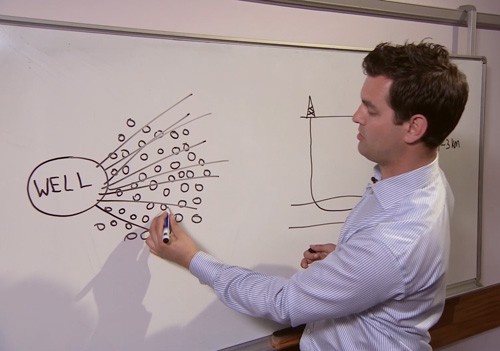
100 Second Science is a series of short films where, as the name suggests, scientists have up to 100 seconds to answer some of the biggest and most intriguing questions in physics. Presenters are armed with nothing more than a whiteboard and a set of marker pens, and we really are strict about the timing. In fact, when recording the films, presenters were faced with a countdown clock that sounded an alarm once their 100 seconds were up, making the experience that bit more exhilarating/nerve-racking.

Topics covered in our first batch of films cover a wide spectrum of physics and its related disciplines. Among the questions answered by specialists are “What is supersymmetry?”, “How does quantum teleportation work?” and “How do you recognize a penguin in a crowd?”. In filming and producing the videos we certainly learned a lot and we hope that you will too. And the scientists also appeared to take a lot from the experience. Several of them commented about what a vast departure it was from their usual experiences of presenting: standing in front of students and lecturing for an hour or so.

In the future, we hope to record more of these films. So if there are any questions or topics that you would really like to be addressed, then please send your ideas to pwld@iop.org.

Dark-matter hope fades in microwave haze


The latest results from the Planck space telescope have confirmed the presence of a microwave haze at the centre of the Milky Way. However, the haze appears to be more elongated than originally thought, which casts doubt over previous claims that annihilating dark matter is the cause of the emissions.

A roughly spherical haze of radiation at the heart of our galaxy was identified as far back as 2004 by the Wilkinson Microwave Anisotropy Probe (WMAP). Since then, some astrophysicists have suggested that this haze is produced by annihilating dark-matter particles.

However, some researchers have questioned whether the haze actually exists at all, suggesting that it could be an artefact of how the WMAP data were analysed. Doubts were raised as to whether WMAP was capable of picking out this weak signal buried deep in emissions from galactic dust, the cosmic microwave background (CMB) and other noise from hectic regions of the galaxy.

It is definitely there

The argument now seems to have been settled by the latest results from Planck, a European Space Agency mission launched in May 2009. “Crudely speaking, we agree with all the WMAP results,” explains Krzysztof Gorski of NASA’s Jet Propulsion Laboratory in California, who is a member of the Planck team. “Planck is more sensitive, and has a greater frequency range, taking us into a realm that WMAP couldn’t even see,” he told physicsworld.com. One of the telescope’s main objectives is to accurately map fluctuations in the CMB, so it is well suited to subtracting that radiation to reveal the haze.

With the presence of the haze independently verified, focus has returned to determining its origin. After its original discovery, some researchers, including Dan Hooper of Fermilab near Chicago, US, argued that annihilating dark matter could explain the galactic haze. Dark matter has long been thought to bind galaxies together, but detecting it directly has remained elusive. In Hooper’s mechanism, dark-matter particles annihilate to produce conventional electrons and positrons. These particles then spiral around the Milky Way’s magnetic field to produce the radiation we see as the microwave haze.

It still smells like dark matter to me
Dan Hooper, Fermilab

However, as well as confirming its existence, Planck was also able to reveal details of the shape of the haze. “The new results seem to suggest that the haze is elongated rather than spherical [as previously thought],” explains Hooper, who was not involved in the Planck research. “Simulations suggest that we would expect to find dark-matter halos that are roughly spherically symmetric,” he adds. There might still be room for a partial dark-matter explanation, however. “Our opinion is that no single current model explains the haze’s origin,” admits Gorski. So Hooper is not giving up. “It still smells like dark matter to me,” he says.

Related to Fermi bubbles?

The Planck observations also revealed a sharp southern edge to the haze. This implies that the formation mechanism is sporadic – if it were continuous, then the edges of the haze would appear diffuse. “The sharpness also implies that the haze might be related to the Fermi bubbles,” says Hooper. The Fermi bubbles are two giant, gamma-ray-emitting structures extending 25,000 light-years above and below the centre of the galaxy. Spotted by the Fermi space telescope in November 2010, these bubbles also have sharp, defined edges pointing towards a rapid release of energy as their cause, rather than a continuous, steady process.

It is possible, then, that the two phenomena have a common origin. “There may be some mechanism crossover between the haze and the bubbles,” says Andrew Pontzen, a theoretical cosmologist at the University of Oxford in the UK. “The next step would be to see exactly how much overlap there is in the data,” he adds. Any areas where the two phenomena do not overlap still leaves the door open for dark matter to play a part. “Maybe the cause [of the haze] is a mixture of dark-matter annihilation and other mechanisms,” Hooper adds.

Whichever explanation turns out to be correct, the Planck results have focused the argument. “Observationally, this is a great step forward,” Pontzen says. “However, the centre of the galaxy remains an intrinsically complicated place where a plethora of strange things are going on,” he adds. In the end, it might take Planck’s successors to settle the debate.

The Planck results are presented in a preprint on the arXiv server.

Atoms interfere one at a time

Physicists in the US say they are the first to directly observe single-atom interference over distances much greater than the atom’s coherence length. The experiment involves using optical tweezers and a sequence of laser pulses to “bounce” the atom along two different paths that meet up after about 1 ms. The team says that if the precision of the experiment can be improved, it could provide new information about the possible existence of non-Newtonian gravity at micron distances. The researchers say the technique could also be used to study the tiny force that arises between an atom and a conducting surface, dubbed the “Casimir–Polder effect”.

In the strange world of quantum mechanics, an atom can exist in a superposition of two or more trajectories until a measurement is made of its position or momentum. This property can be exploited in a matter–wave interferometer, whereby – strange though it may sound – a single atom can simultaneously follow two different paths to a detector. Forces on the atom will cause a relative phase shift between the two paths, resulting in a shift in an interference pattern created where the two paths meet.

Such experiments have been carried out before using large ensembles of atoms, effectively creating pulses of atoms that travel along each path. The atoms then create an interference pattern at the detector, which can be measured and used to infer the gravitational constant or to look for deviations from Newton’s theory of gravitation. Until now, however, it has not been possible to carry out matter–wave interference by sending just single atoms through the apparatus because most pulsed-interferometer experiments rely on high atomic throughput to boost the signal at the detector and therefore lack deterministic control at the single-atom level.

Controlling single atoms

The new, single-atom matter–wave technique has been developed by L Paul Parazzoli, Aaron Hankin and Grant Biedermann at Sandia National Laboratories in New Mexico. Their technique differs from earlier experiments in that each atom begins and ends its journey in optical tweezers – laser light that is focused to a small region in which the atom is held.

The Sandi researchers used a cloud of ultracold caesium atoms that are trapped and cooled to 4.2 μK using a combination of laser light and magnetic fields. They then created optical tweezers in the gas that can hold just one atom, before firing a laser pulse at the atom to place it in a specific quantum state. The optical tweezers were then switched off, letting the atom go into freefall.

Kicked up and down

The atom was then subjected to a sequence of light pulses separated by 500 μs. The first pulse puts the atom into a superposition of two states – one that has received an upward photon kick that causes it to rise up, and one that is falling because it has received no kick. The second pulse then either knocks the rising atom downwards or kicks the falling atom upwards – the result being two trajectories that will merge at a point in time 500 μs later where a third laser pulse causes their paths to overlap. When the states merge, the tweezers are switched back on and the quantum state of the atom is measured.

The entire process is then repeated hundreds of times to determine the phase shift between the two paths and thus the gravitational force on the atom at a level of 3 × 10–27 N.

Parazzoli, Hankin and Biedermann were able to see a clear interference pattern emerge when the relative phase of the pulsing lasers was adjusted, hallmarking the self-interference phenomenon of single atoms. In their experiments, the separation between the two atomic states was as large as 3.5 μm, which is more than 200 times greater than the coherence length of the atoms used. As a result, the team claims that its is the first demonstration of “free space” single-atom interference – with free space referring to the fact that the atom is unbound, allowing for its states to separate in space.

“Really cool”

Paul Hamilton of the University of California, Berkeley, who was not involved in the work, told physicsworld.com that the Sandia researchers “demonstrate full interferometry and show a very impressive long-term stability”. He also calls the experiment “a really cool textbook demonstration of single-atom interference”.

Because the technique employs one atom at a time, the Sandia team believes that it could be used to make extremely localized measurements of forces very near to surfaces, such as the Casimir–Polder force that occurs between an atom and a conducting surface. Like the more familiar Casimir force, this force arises from the zero-point energy of the vacuum and has implications for the design and operation of micron- and nanometre-sized mechanical devices.

The team also claims that if the sensitivity of the technique can be improved by two orders of magnitude, it could be used to place new constraints on theories of non-Newtonian gravity at micron-length scales. Indeed, if gravity is found not to be Newtonian at such tiny distances, it could provide important clues about how the theory of gravity could be unified with the Standard Model of particle physics. “This type of interferometer has shown absolute calibration in other cases, a characteristic that would be very useful for detecting departures from the inverse square law at micron-length scales,” says Parazzoli.

The research is described in a preprint on arXiv.

Do you think the Large Hadron Collider will discover new physics beyond the Standard Model?

By James Dacey

Thumbnail image for Thumbnail image for hands smll.jpg

You can be taken on a fascinating journey through space–time if you read this month’s issue of Physics World. It contains a feature by the theoretical physicists Henrik Melbéus and Tommy Ohlsson that describes how particle-physics experiments such as the Large Hadron Collider (LHC) are being used in the hunt for extra dimensions. Melbéus and Ohlsson trace the history of theories of extra dimensions, which are known collectively as KK theories after the physicists Theodor Kaluza and Oskar Klein who first proposed the idea in the early 20th century.

KK theories represent science that goes beyond the Standard Model of particle physics. The Standard Model has been incredibly useful, but as Melbéus and Ohlsson point out, it does have a few shortcomings. For instance it cannot be used to explain dark-matter particles, which have been predicted to exist in order to explain the observations of how galaxies move under the influence of gravity. Some of the KK theories predict the existence of particles that could prove to be these elusive dark-matter particles. In their feature, Melbéus and Ohlsson describe how particle collisions at high-energy accelerators could lead to the creation of KK particles.

So far, however, the LHC has not revealed any signs of these particles, but this “no show” has helped theoretical physicists to constrain the scale of these extra dimensions – if they do indeed exist. Over the next few years, physicists will continue to analyse the abundance of data from LHC collisions in the search for KK particles. They will also be looking for other signs of physics beyond the Standard Model such as the “sparticles” predicted by supersymmetry theories.

In this week’s Facebook poll we want to know what you think will come of this hunt. Please let us know by answering the following question.

Do you think that the Large Hadron Collider will discover new physics beyond the Standard Model?

Yes
No

Have your say by visiting our Facebook page, and please feel free to explain your response by posting a comment below the poll.

Last week’s poll was the concluding part of a three-week series dedicated to careers in physics. We asked you to select the action that you think would be most helpful to benefit the career prospects of physics postdocs. Out of a choice of five options the most popular by a large margin was “Longer-term contracts (e.g. three years rather than one)”, which attracted 73% of responses.

The second most-popular option with 11% of votes was “More training in transferable skills”. In joint third place, with 6% each, were “Better advice on career options outside academia” and “Creating more mid-level ‘permanent postdoc’ jobs”. In last place was “Improved support for postdocs with spouses and families”, collecting just 4% of responses.

Thank you for all your responses and we hope to hear from you again in this week’s poll.

Complex quasicrystals created using new nanofabrication technique

Researchers in the US have invented a new nanofabrication technique that can generate 2D patterns with very high rotational symmetries over large areas. Until now, only spatially repeating structures – which have sixfold or less rotational symmetry – could be patterned over such large areas using industrial photolithography techniques.

Dubbed moiré nanolithography, the technique can produced patterns with rotational symmetries as high as 36-fold – something that has never been observed in nature. Such high rotational symmetries could prove useful for a huge range of applications, from making better photonic crystals to boosting the performance of photovoltaic devices.

Until the 1980s most researchers thought that long-range order in physical systems was impossible without spatial periodicity. They believed that atoms were packed inside crystals in symmetrical patterns that were periodically repeated over and over again, and that this repetition was necessary to obtain a crystal.

Quasicrystals break the mould

In 1984 Daniel Shechtman of the Technion-Israel Institute of Technology discovered quasicrystals – materials that have ordered but not periodic structures. Shechtman made his discovery while studying samples of an aluminium–manganese alloy and found that the atoms in these crystals were packed in an icosahedral pattern that could not be repeated but which had “10-fold” rotational symmetry.

A system is said to possess n-fold rotational symmetry if it looks the same after it has been rotated through 360/n degrees. A sample with 10-fold rotational symmetry therefore remains unchanged after being rotated through 360/10 = 36 degrees. Before Shechtman’s discovery, a 2D ordered system was only supposed to have either one-, two-, three-, four- or sixfold rotational symmetry, with anything else being forbidden by the laws of crystallography.

Since 1984, scientists have discovered hundreds of different quasicrystals – some of which have properties of technological interest – and Shechtman bagged the 2011 Nobel Prize in Chemistry for his efforts.

36-fold rotational symmetry

Now, a team led by Teri Odom at Northwestern University has created 2D quasicrystal nanostructures with a staggering 36-fold rotational symmetry using a new moiré nanolithography technique. Moiré patterns have been known for a long time and can be seen in the everyday world by placing two pieces of fine mesh one on top of the other and then rotating them to create new, more complicated patterns. As you keep on turning, the patterns change as in a kaleidoscope.

Moiré nanolithography relies on the interference of two repeating patterns overlapped at a specific angle, explains Odom. 2D periodic patterns can be routinely fabricated by photolithography over large areas, but these arrangements have sixfold rotational symmetry at most – like a hexagonal lattice. Other high-rotational-symmetry quasicrystals have become popular in recent years (the most well known and highest being the 12-fold symmetry ones), but these must be patterned through serial lithography methods, such as focused-ion-beam milling and electron-beam lithography, which are time-consuming and expensive.

Moiré exposures

“We succeeded in making nanopatterns with rotational symmetries higher than any quasicrystals previously reported by performing two or more exposures through patterned poly(dimethylsiloxane) (PDMS) elastomeric masks,” Odom explains. “Because we first make the patterns in a photoresist, we can then transfer the moiré pattern onto a wide range of materials, from silicon to metals. We can then fabricate omnidirectional reflectors or electrodes, for example, using these structures fairly easily.”

One area in which such high-symmetry moiré nanopatterns might have an impact is in photovoltaics, Odom adds. Thanks to their high rotational symmetry, these patterns can trap light with nearly the same efficiency at all angles. This could come in handy for making solar panels that would not need sophisticated trackers to follow the position of the Sun during the day, for example.

And that is not all, because the distances between the features in these high-rotational-symmetry lattices are on the length scale of the wavelength of visible light – about 500 nm – the patterns have the potential to manipulate the flow of light in new and exciting ways. “For instance, we are currently transferring these patterns onto metallic substrates that can trap, concentrate and slow down light via so-called surface plasmon waves,” says Odom. “We are also looking at how nanohole arrays patterned with this moiré technique in metallic sheets can selectively transmit light at specific energies in the optical regime.”

The research is reported in Nano Letters.

Crackpots and consequences

The letter arrived in Physics World‘s in-tray last summer. Written in blue ink, with occasional recourse to red for especially important points, it claimed to predict the date of “The Second Coming of the Lord Jesus Christ” using images from the Hubble Space Telescope. The specified date came and went without incident, and we were somewhat surprised to receive another letter from the same source. This one was labelled “The Second Coming of the Lord Jesus Christ (Correction)”, and it posited a new, later date for Jesus’s arrival. The revised date was calculated using the rotation period of the planet Venus, plus a simple mathematical identity that, according to our correspondent, “angels know and use”. Two subsequent letters contained further revisions, and the current predicted date is 22 September 2012. But in the letter-writer’s words, “only GOD knows whether the new presented date is the correct one”, so mere mortals like us will just have to wait and see.

Nearly all professional physicists receive at least one letter like this a year. In most cases, such letters go straight into the recycling bin, although a handful of the best – including Physics World‘s “Lord Jesus Christ” correspondence – end up in semi-permanent storage. But these ad-hoc attempts at crackpot curation pale in comparison with those of the science writer Margaret Wertheim. For the past 15 years, Wertheim, a physics graduate, has assiduously collected all the letters, books, glossy brochures and poems she receives from people peddling their own theories of the universe. After accumulating two long shelves full of such material, and investigating a few of the authors, she has distilled her experience into a fascinating and occasionally frustrating book called Physics on the Fringe: Smoke Rings, Circlons, and Alternative Theories of Everything.

Wertheim’s book is fascinating in large part because she has boldly gone where few trained scientists have gone before. Rather than ignoring the people she calls “outsider physicists”, she has engaged with their ideas, attended annual conferences organized by their professional body (yes, they have one) and even driven 1000+ miles to visit one of them. All of this qualifies her to draw conclusions about who outsiders are and what makes them tick, but for the most part, she avoids sweeping generalizations. The truth, she writes, is that outsider theorists are a varied bunch, and as for their ideas, “there is very little that unites the disparate range of theories in my collection except for the sense that mainstream physics is badly off course”. They also display what Wertheim calls “a startling inattention to copy-editing”.

A few common threads do emerge. For example, Wertheim observes that the men (and they are almost all men) who create alternative theories of physics frequently have some kind of technical background, such as engineering. Despite this, they reject mathematics as a means of understanding the world, and rely on words rather than equations to explain their ideas. They write in a kind of scientific pidgin, they describe their work as “revolutionary” – and, of course, they view the establishment’s failure to acknowledge their brilliance with dismay and befuddlement.

In the middle part of her book, Wertheim turns away from studying outsider physics as a whole, and instead focuses on one particular outsider, whom she dubs “the Leonardo of the field”. For me, this is where the book’s frustrating aspects begin. The object of Wertheim’s journalistic interest and affection is Jim Carter, a successful inventor who lives in a trailer park in rural Washington State. It is not hard to see why she has singled him out. For starters, Carter is obviously sane and, as a theorist, he is clearly operating on a more sophisticated level than Physics World‘s “Lord Jesus Christ” correspondent. Carter’s “circlon” theory of atomic structure is unusually coherent, lacking the non-sequiturs and characteristic rambling style so beloved of outsiders and, like many mainstream physicists, he is motivated by a deep desire to understand how the universe works. To this end, he has spent more than 50 years developing his theories. Remarkably, one of them even makes a prediction that could be tested – albeit only during a space mission.

And therein lies the nub of Wertheim’s argument. In 2010 she attended the annual conference of the outsiders’ professional body, the Natural Philosophy Association, which that year featured 121 outsider physicists presenting 121 different theories of the universe. This might sound bizarre, but in Wertheim’s opinion it was beaten hands down by the string cosmology conference she attended in 2003. At this star-studded event, she writes, participants were “fired up” by the idea that there could be as many as 10500 different variants of string theory, each of them totally different – and all utterly unsupported by a shred of evidence. So why are string theorists respected physicists with television programmes and book contracts, while Jim Carter and his brethren are regarded as a bunch of cranks?

One answer is that the string theorists have gone through a lengthy training process. This is rather a straw-man argument, though, and Wertheim is accordingly quick to demolish it. Some fields of endeavour, she reasons, should indeed be restricted to trained and accredited personnel: brain surgery, for example. But others, such as art and lovemaking, are rightly left open to pretty much anyone, regardless of their qualifications or ability. The question, she suggests, is whether theoretical physics is more like brain surgery or more like sex.

In case this argument fails to convince, Wertheim has another. Outsider theorists draw meaning and personal satisfaction from their work, she observes. For this reason, she writes, “Might we not simply enjoy their alternative narrative arcs?”

Physics on the Fringe is a great read, and Wertheim a persuasive writer with a knack for challenging unspoken assumptions. But there are two significant problems with her thesis. The first is that most theoretical physics is not like string theory. Wertheim sort of acknowledges this when she discusses string theory’s critics within the physics community, but I wish she had said more about the role of experimental evidence, since many areas of theoretical physics are supported by truckloads of it. One does not need to be an elitist or a fan of mathematical elegance to believe that quantum mechanics – to take just one example – is “true”, while alternative theories are “false”, in the scientific senses of these words.

The second problem is that most outsider physicists are not like Jim Carter, and unfortunately this is something Wertheim addresses only obliquely. Carter comes across as an intelligent and likeable eccentric, and I wouldn’t mind visiting him, as Wertheim did, in his remote forest idyll. But some outsiders are not so amiable. There is a distinct streak of anger and grievance running through their letters, and while Wertheim claims that mental illness is rare in the alternative-physics community, I am not so sure. In any case, even if the self-regard of outsider theorists falls short of pathology, the sheer chutzpah required to persevere in the face of universal condemnation is not always benign. People who fervently believe their theories are correct sometimes react badly to criticism, and if they have enough money and power, they can do real harm.

That statement might sound like hyperbole, but I know of at least one person who learned, to his cost, just how true it was. I would like to name him, but unfortunately, some cranks have a penchant for making legal threats, and England’s strict libel laws mean it is safer not to. So you will just have to trust me when I say that this particular “alternative narrative arc” was not, in fact, very enjoyable for any of the people who found themselves enmeshed in it.


Copyright © 2026 by IOP Publishing Ltd and individual contributors