Researchers at the University of Strathclyde, UK, have developed a new method to recycle the valuable semiconductor colloidal quantum dots used to fabricate supraparticle lasers. The recovered particles can be reused to build new lasers with a photoluminescence quantum yield almost as high as lasers made from new particles.
Supraparticle lasers are a relatively new class of micro-scale lasers that show much promise in applications such as photocatalysis, environmental sensing, integrated photonics and biomedicine. The active media in these lasers – the supraparticles – are made by assembling and densely packing colloidal quantum dots (CQDs) in the microbubbles formed in a surfactant-stabilized oil-and-water emulsion. The underlying mechanism is similar to the way that dish soap, cooking oil and water mix when we do the washing up, explains Dillon H Downie, a physics PhD student at Strathclyde and a member of the research team led by Nicolas Laurand.
Supraparticles have a high refractive index compared to their surrounding medium. Thanks to this difference, light at the interface between them experiences total internal reflection. This means that when the diameter of the supraparticles is an integer multiple of the wavelength of the incident light, so-called whispering gallery modes (resonant light waves that travel around a concave boundary) form within the supraparticles.
“The supraparticles are therefore microresonators made of an optical gain material (the quantum dots),” explains Downie, “and individual supraparticles can be made to lase by optically pumping them.”
Resonating and recyclable: Supraparticle lasers confine and amplify light through whispering gallery modes — resonant light waves circulating along a spherical boundary — inside a tiny sphere made from aggregated colloidal quantum dots. (Courtesy: Dillon H Downie, University of Strathclyde)
The problem is that many CQDs are made from expensive and sometimes toxic elements. Demand for these increasingly scarce elements will likely outstrip supply before the end of this decade, but at present, only 2% of quantum dots made from these rare-earth elements are recycled. While researchers have been exploring ways of recovering them from electronic waste, the techniques employed often require specialized instruments, complex bio-metallurgical absorbents and hazardous acid-leaching processes. A more environmentally friendly approach is thus sorely needed.
Exceptional recycling potential
In the new work, Laurand, Downie and colleagues recycled supraparticle lasers by first disassembling the CQDs in them. They did this by suspending the dots in an oil phase and applying ultrasonic high-frequency sound waves and heat. They then added water to separate out the dots. Finally, they filtered and purified the disassembled CQDs and tested their fluorescence efficiency before reassembling them into a new laser configuration.
Using this process, the researchers were able to recover 85% of the quantum dots from the initial supraparticle batch. They also found that the recycled quantum dots boasted a photoluminescence quantum yield of 83 ± 16%, which is comparable to the 86 ± 9% for the original particles.
“By testing the lasers’ performance both before and after this process we confirmed their exceptional recycling potential,” Downie says.
Simple, practical technique
Downie describes the team’s technique as simple and practical even for research labs that lack specialized equipment such as centrifuges and scrubbers. He adds that it could also be applied to other self-assembled nanocomposites.
“As we expect nanoparticle aggregates in everything from wearable medical devices to ultrabright LEDs in the future, it is, therefore, not inconceivable that some of these could be sent back for specialized recycling in the same way we do with commercial batteries today,” he tells Physics World. “We may even see a future where rare-earth or some semiconductor elements become critically scarce, necessitating the recycling for any and all devices containing such valuable nanoparticles.”
By proving that supraparticles are reusable, Downie adds, the team’s method provides “ample justification” to anyone wishing to incorporate supraparticle technology into their devices. “This is seen as especially relevant if they are to be used in biomedical applications such as targeted drug delivery systems, which would otherwise be limited to single-use,” he says.
With work on colloidal quantum dots and supraparticle lasers maturing at an incredible rate, Downie adds that it is “fantastic to be able to mature the process of their recycling alongside this progress, especially at such an early stage in the field”.
An international team of physicists has used the principle of entanglement entropy to examine how particles are produced in high-energy electron–proton collisions. Led by Kong Tu at Brookhaven National Laboratory in the US, the researchers showed that quarks and gluons in protons are deeply entangled and approach a state of maximum entanglement when they take part in high-energy collisions.
While particle physicists have made significant progress in understanding the inner structures of protons, neutrons, and other hadrons, there is still much to learn. Quantum chromodynamics (QCD) says that the proton and other hadrons comprise quarks, which are tightly bound together via exchanges of gluons – mediators of the strong force. However, using QCD to calculate the properties of hadrons is notoriously difficult except under certain special circumstances.
Calculations can be simplified by describing the quarks and gluons as partons in a model that was developed in late 1960s by James Bjorken, Richard Feynman, Vladimir Gribov and others. “Here, all the partons within a proton appear ‘frozen’ when the proton is moving very fast relative to an observer, such as in high-energy particle colliders,” explains Tu.
Dynamic and deeply complex interactions
While the parton model is useful for interpreting the results of particle collisions, it cannot fully capture the dynamic and deeply complex interactions between quarks and gluons within protons and other hadrons. These interactions are quantum in nature and therefore involve entanglement. This is a purely quantum phenomenon whereby a group of particles can be more highly correlated than is possible in classical physics.
“To analyse this concept of entanglement, we utilize a tool from quantum information science named entanglement entropy, which quantifies the degree of entanglement within a system,” Tu explains.
In physics, entropy is used to quantify the degree of randomness and disorder in a system. However, it can also be used in information theory to measure the degree of uncertainty within a set of possible outcomes.
“In terms of information theory, entropy measures the minimum amount of information required to describe a system,” Tu says. “The higher the entropy, the more information is needed to describe the system, meaning there is more uncertainty in the system. This provides a dynamic picture of a complex proton structure at high energy.”
Deeply entangled
In this context, particles in a system with high entanglement entropy will be deeply entangled – whereas those in a system with low entanglement entropy will be mostly uncorrelated.
In recent studies, entanglement entropy has been used to described how hadrons are produced through deep inelastic scattering interactions – such as when an electron or neutrino collides with a hadron at high energy. However, the evolution with energy of entanglement entropy within protons had gone largely unexplored. “Before we did this work, no one had looked at entanglement inside of a proton in experimental high-energy collision data,” says Tu.
Now, Tu’s team investigated how entanglement entropy varies with the speed of the proton – and how this relationship relates to the hadrons created during inelastic collisions.
Matching experimental data
Their study revealed that the equations of QCD can accurately predict the evolution of entanglement entropy – with their results closely matching with experimental collision data. Perhaps most strikingly, they discovered that if this entanglement entropy is increased at high energies, it may approach a state of maximum entanglement under certain conditions. This high degree of entropy is evident in the large numbers of particles that are produced in electron–proton collisions.
The researchers are now confident that their approach could lead to further insights about QCD. “This method serves as a powerful tool for studying not only the structure of the proton, but also those of the nucleons within atomic nuclei.” Tu explains. “It is particularly useful for investigating the underlying mechanisms by which nucleons are modified in the nuclear environment.”
In the future, Tu and colleagues hope that their model could boost our understanding of processes such as the formation and fragmentation of hadrons within the high-energy jets created in particle collisions, and the resulting shift in parton distributions within atomic nuclei. Ultimately, this could lead to a fresh new perspective on the inner workings of QCD.
A new foldable “bottlebrush” polymer network is both stiff and stretchy – two properties that have been difficult to combine in polymers until now. The material, which has a Young’s modulus of 30 kPa even when stretched up to 800% of its original length, could be used in biomedical devices, wearable electronics and soft robotics systems, according to its developers at the University of Virginia School of Engineering and Applied Science in the US.
Polymers are made by linking together building blocks of monomers into chains. To make polymers elastic, these chains are crosslinked by covalent chemical bonds. The crosslinks connect the polymer chains so that when a force is applied to stretch the polymer, it recovers its shape when the force is removed.
A polymer can be made stiffer by adding more crosslinks, to shorten the polymer chain. The stiffness increases because the crosslinks supress the thermal fluctuations of network strands, but this has the effect of making it brittle. This limitation has held back the development of materials that need both stiffness and stretchability, says materials scientist and engineer Liheng Cai, who led this new research effort.
Foldable bottlebrush polymers
In their new work, the researchers hypothesized that foldable bottlebrush-like polymers might not suffer from this problem. These polymers consist of many densely packed linear side chains randomly separated by small spacer monomers. There is a prerequisite, however: the side chains need to have a relatively high molecular weight (MW) and a low glass transition temperature (Tg) while the spacer monomer needs to be low MW and incompatible with the side chains. Achieving this requires control over the incompatibility between backbones and side chain chemistries, explains Baiqiang Huang, who is a PhD student in Cai’s group.
The researchers discovered that two polymers, poly(dimethyl siloxane) (PDMS) and benzyl methacrylate (BnMA) fit the bill here. PDMS is used as the side chain material and BnMA as the spacer monomer. The two are highly incompatible and have very different Tg values of −100°C and 54°C, respectively.
When stretched, the collapsed backbone in the polymer unfolds to release the stored length, so allowing it to be “remarkably extensible”, write the researchers in Science Advances. In contrast, the stiffness of the material changes little thanks to the molecular properties of the side chains in the polymer, says Huang. “Indeed, in our experiments, we demonstrated a significant enhancement in mechanical performance, achieving a constant Young’s modulus of 30 kPa and a tensile breaking strain that increased 40-fold, from 20% to 800%, compared to standard polymers.”
And that is not all: the design of the new foldable bottlebrush polymer means that stiffness and stretchability can be controlled independently in a material for the first time.
Potential applications
The work will be important for when it comes to developing next-generation materials with tailored mechanical properties. According to the researchers, potential applications include durable and flexible prosthetics, high-performance wearable electronics and stretchable materials for soft robotics and medical implants.
Looking forward, the researchers say they will now be focusing on optimizing the molecular structure of their polymer network to fine-tune its mechanical properties for specific applications. They also aim to incorporate functional metallic nanoparticles into the networks, so creating multifunctional materials with specific electrical, magnetic or optical properties. “These efforts will extend the utility of foldable bottlebrush polymer networks to a broader range of applications,” says Cai.
Popularized in the late 1950s as a child’s toy, the hula hoop is undergoing renewed interest as a fitness activity and performance art. But have you ever wondered how a hula hoop stays aloft against the pull of gravity?
Wonder no more. A team of researchers at New York University have investigated the forces involved as a hoop rotates around a gyrating body, aiming to explain the physics and mathematics of hula hooping.
To determine the conditions required for successful hula hoop levitation, Leif Ristroph and colleagues conducted robotic experiments with hoops twirling around various shapes – including cones, cylinders and hourglass shapes. The 3D-printed shapes had rubberized surfaces to achieve high friction with a thin, rigid plastic hoop, and were driven to gyrate by a motor. The researchers launched the hoops onto the gyrating bodies by hand and recorded the resulting motion using high-speed videography and motion tracking algorithms.
They found that successful hula hooping is dependent on meeting two conditions. Firstly, the hoop orbit must be synchronized with the body gyration. This requires the hoop to be launched at sufficient speed and in the same direction as the gyration, following which, the outward pull by centrifugal action and damping due to rolling frication result in stable twirling.
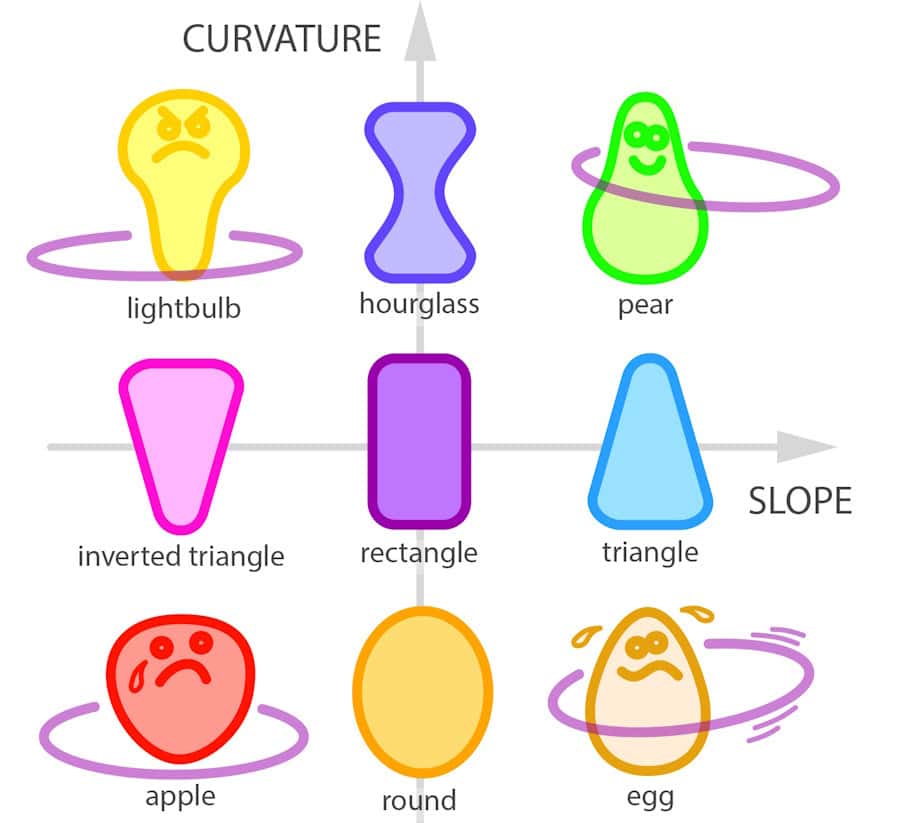
Shape matters Successful hula hooping requires a body type with the right slope and curvature. (Courtesy: NYU’s Applied Math Lab)
This process, however, does not necessarily keep the hoop elevated at a stable height – any perturbations could cause it to climb or fall away. The team found that maintaining hoop levitation requires the gyrating body to have a particular “body type”, including an appropriately angled or sloped surface – the “hips” – plus an hourglass-shaped profile with a sufficiently curved “waist”.
Indeed, in the robotic experiments, an hourglass-shaped body enabled steady-state hula hooping, while the cylinders and cones failed to successfully hula hoop.
The researchers also derived dynamical models that relate the motion and shape of the hoop and body to the contact forces generated. They note that their findings can be generalized to a wide range of different shapes and types of motion, and could be used in “robotic applications for transforming motions, extracting energy from vibrations, and controlling and manipulating objects without gripping”.
“We were surprised that an activity as popular, fun and healthy as hula hooping wasn’t understood even at a basic physics level,” says Ristroph in a press statement. “As we made progress on the research, we realized that the maths and physics involved are very subtle, and the knowledge gained could be useful in inspiring engineering innovations, harvesting energy from vibrations, and improving in robotic positioners and movers used in industrial processing and manufacturing.”
Our guest in this episode of the Physics World Weekly podcast is the Turkish quantum physicist Mete Atatüre, who heads up the Cavendish Laboratory at the UK’s University of Cambridge.
In a conversation with Physics World’s Katherine Skipper, Atatüre talks about hosting Quantour, the quantum light source that is IYQ’s version of the Olympic torch. He also talks about his group’s research on quantum sensors and quantum networks.
Some of our understanding of Uranus may be false, say physicists at NASA’s Jet Propulsion Laboratory who have revisited Voyager 2 data before and after its 1986 flyby of this ice-giant planet. The new analyses could shed more light on some of the mysterious and hitherto unexplainable measurements made by the spacecraft. For example, why did it register a strongly asymmetric, plasma-free magnetosphere – something that is unheard of for planets in our solar system – and belts of highly energetic electrons?
Voyager 2 reached Uranus, the seventh planet in our solar system, 38 years ago. The spacecraft gathered its data in just five days and the discoveries from this one and, so far, only flyby provide most of our understanding of this ice giant. Two major findings that delighted astronomers were its 10 new moons and two rings. Other observations perplexed researchers, however.
One of these, explains Jamie Jasinski, who led this new study, was the observation of the second most intense electron radiation belt after Jupiter’s. How such a belt could be maintained or even exist at Uranus lacked an explanation until now. “The other mystery was that the magnetosphere did not have any plasma,” he says. “Indeed, we have been calling the Uranian magnetosphere a ‘vacuum magnetosphere’ because of how empty it is.”
Unrepresentative conditions
These observations, however, may not be representative of the conditions that usually prevail at Uranus, Jasinski explains, because they were simply made during an anomalous period. Indeed, just before the flyby, unusual solar activity squashed the planet’s magnetosphere down to about 20% of its original volume. Such a situation exists only very rarely and was likely responsible for creating a plasma-free magnetosphere with the observed highly excited electron radiation belts.
Jasinski and colleagues came to their conclusions by analysing Voyager 2 data of the solar wind (a stream of charged particles emanating from the Sun) upstream of Uranus for the few days before the flyby started. They saw that the dynamic pressure of the solar wind increased by a factor of 20, meaning that it dramatically compressed the magnetosphere of Uranus. They then looked at eight months of solar wind data obtained by the spacecraft at Uranus’ orbit and found that the solar wind conditions present during the flyby only occur 4% of the time.
“The flyby therefore occurred during the maximum peak solar wind intensity in that entire eight-month period,” explains Jasinski.
The scientific picture we have of Uranus since the Voyager 2 flyby is that it has an extreme magnetospheric environment, he says. But maybe the flyby just happened to occur during some strange activity rather than it being like that generally.
The timing was just wrong
Jasinski previously worked on NASA’s MESSENGER mission to Mercury. Out of the thousands of orbits made by this spacecraft around the planet over a four-year period, there were occasional times where activity from the Sun completely eroded the entire magnetic field. “That really highlighted for me that if we had made an observation during one of those events, we would have a very different idea of Mercury.”
Following this line of thought, Jasinski asked himself whether we had simply observed Uranus during a similar anomalous time. “The Voyager 2 flyby lasted just five days, so we may have observed Uranus at just the ‘wrong time’,” he says.
One of the most important take-home messages from this study is that we can’t take the results from just one flyby as a being a good representation of the Uranus system, he tells Physics World. Future missions must therefore be designed so that a spacecraft remains in orbit for a few years, enabling variations to be observed over long time periods.
Why we need to go back to Uranus
One of the reasons that we need to go back to Uranus, Jasinski says, is to find out whether any of its moons have subsurface liquid oceans. To observe such oceans with a spacecraft, the moons need to be inside the magnetosphere. This is because the magnetosphere, as it rotates, provides a predictable, steadily varying magnetic field at the moon. This field can then induce a magnetic field response from the ocean that can be measured by the spacecraft. The conductivity of the ocean – and therefore the magnetic signal from the moon – will vary with the depth, thickness and salinity of the ocean.
If the moon is outside the magnetosphere, this steady and predictable external field does not exist and it can no longer drive the induction response. We cannot therefore, detect a magnetic field from the ocean if the moon is outside the magnetosphere.
Before these latest results, researchers thought that the outermost moons, Titania and Oberon, would spend a significant part of their orbit around the planet outside of the magnetosphere, Jasinski explains. This is because we thought that Uranus’s magnetosphere was generally small. However, in light of the new findings, this is probably not true and both moons will orbit inside the magnetosphere since it is much larger than previously thought.
Titania and Oberon are the most likely candidates for harbouring oceans, he adds, because they are slightly larger than the other moons. This means that they can retain heat better and therefore be warmer and less likely to be completely frozen.
“A future mission to Uranus is critical in collecting the scientific measurements to answer some of the most intriguing science questions in our solar system,” says Jasinski. “Only by going back to Uranus and orbiting the planet can we really gain an understanding of this curious planet.”
Happily, in 2022, the US National Academies outlined that a Uranus Orbiter and Probe mission should be a future NASA flagship mission that NASA should prioritize in the coming decade. Such a mission would help us unravel the nature of Uranus’s magnetosphere and its interaction with the planet’s atmosphere, moons and rings, and with the solar wind. “Of course, modern instrumentation would also revolutionize the type of discoveries we would make compared to previous missions,” says Jasinski.
From squirting cucumbers to cosmic stamps, physics has had its fair share of quirky stories this year. Here is our pick of the best 10, not in any particular order.
Escape from quantum physics
Staff at the clunkily titled Dresden-Würzburg Cluster of Excellence for Complexity and Topology in Quantum Matter (ct.qmat) had already created a mobile phone app “escape room” to teach children about quantum mechanics. But this year the app became reality at Dresden’s science museum. Billed as “Germany’s first quantum physics escape room”, the Kitty Q Escape Room has four separate rooms and 17 puzzles that offer visitors a multisensory experience that explores the quirky world of quantum mechanics. The goal for participants is to discover if Kitty Q – an imaginary being that embodies the spirit of Schrödinger’s cat – is dead or alive. Billed as being “perfect for family outings, children’s birthday parties and school field trips”, the escape room “embraces modern gamification techniques”, according to ct.qmat physicist Matthias Vojuta, “We ensure that learning happens in an engaging and subtle way,” he says. “The best part [is] you don’t need to be a maths or physics expert to enjoy the game.
Corking research
Coffee might be the drink of choice for physicists, but when it comes to studying the fascinating physics of liquids, champagne is hard to beat. That’s mostly because of the huge pressures inside the bottle and the explosion of bubbles that are released once the cork is removed. Experiments have already examined the expanding gas jet that propels the cork stopper out of a just-opened bottle caused by the radiation of shock waves up the neck. Now physicists in Austria have looked at the theory of how these supersonic waves move. The “Mach disc” that forms just outside the bottle opening is, they found, convex and travels away from the bottle opening before moving back towards it. A second Mach disc then forms when the first disc moves back although it’s not clear if this splits from the first or is a distinct disc. Measuring the distance of the Mach disc from the bottle also provides a way to determine the gas pressure or temperature in the champagne bottle.
Cosmic stamps
We love a good physics or astronomy stamp here at Physics World and this year’s offering from the US Postal Service didn’t disappoint. In January, they released two stamps to mark the success of NASA’s James Webb Space Telescope (JWST), which took off in 2021. The first features an image taken by the JWST’s Near-Infrared Camera of the “Cosmic Cliffs” in the Carina Nebula, located about 7600 light-years from Earth. The other stamp has an image of the iconic Pillars of Creation within the vast Eagle Nebula, which lies 6500 light-years away that was captured by the JWST’s Mid-Infrared Instrument. “With these stamps, people across the country can have their own snapshot of Webb’s captivating images at their fingertips,” noted NASA’s head of science, the British-born physicist Nicola Fox.
Record-breaking cicadas
This year marked the first time in more than 200 years that two broods belonging to two species of cicadas emerged at the same time. And the cacophony that the insects are famous for wasn’t the only aspect to watch out for. Researchers at Georgia Tech in the US examined another strange aspect of these creatures – how they wee. We know that most insects urinate via droplets as this is more energy efficient than emitting a stream of liquid. But cicadas are such voracious eaters of tree sap that individually flicking each drop away would be too taxing. To get around this problem, cicadas (just as we do) eject the pee via a jet, which the Georgia Tech scientists looked at for the first time. “Previously, it was understood that if a small animal wants to eject jets of water, then this [is] challenging, because the animal expends more energy to force the fluid’s exit at a higher speed,” says Elio Challita, who is based at Harvard University. “This is due to surface tension and viscous forces. But a larger animal can rely on gravity and inertial forces to pee.” According to the team, cicadas are the smallest animal to create such high-speed jets – a finding that could, say the researchers, lead to the design of better nozzles and robots.
Ale in a day’s work Researchers conduct a beer-tasting session at the University of Leuven in Belgium. (Courtesy: Justin Jin)
Raising the bar
Machine learning was a big topic this year thanks to the 2024 Nobel prizes for both physics and chemistry. Not to be outdone, scientists from Belgium announced they had used machine-learning algorithms to predict the taste and quality of beer and what compounds brewers could use to improve the flavour of certain tipples. Kevin Verstrepen from KU Leuven and colleagues spent five years characterizing over 200 chemical properties from 250 Belgian commercial beers across 22 different styles, such as Blond and Tripel beers. They also gathered tasting notes from a panel of 15 people and from the RateBeer online beer review database. A machine-learning model that was trained on the data could predict the flavour and score of the beers using just the beverages’ chemical profile. By adding certain aromas predicted by the model, the team was even able to boost the quality – as determined by blind tasting – of existing commercial Belgian ale. The scientists hope the findings could be used to improve alcohol-free beer. Yet KU Leuven researcher Michiel Scheurs admits that they did celebrate the work “with the alcohol-containing variants”.
Beetling away
Whirligig beetles can reach speeds of up to 1m/s – or 100 body lengths per second – as they skirt across the water. Scientists thought the animals did this using their oar-like hind legs to generate “drag-based” thrust, a bit like how a rodent swims. To do so, however, the beetle would need to move its legs faster than its swimming speed, which in turn would require pushing against the water at unrealistic speeds. To solve this bugging problem, researchers at Cornell University used high-speed cameras to film the whirligigs as they swam. They found that the beetles instead use lift-based thrust, which has been documented in whales, dolphins and sea lions. The thrusting motion is perpendicular to the water surface and the researchers calculate that the forces generated by the beetle in this way can explain their speedy movements in the water. According to Cornell’s Yukun Sun, that makes whirligig beetles “by far the smallest organism to use lift-based thrust for swimming”.
Tough nut to crack: Pistachios come in different shapes and sizes with the shells being non-symmetric. (Courtesy: Shutterstock/everydayplus)
Pistachio packing problem
It sounds like a question you might get in an exam: if you have a full bowl of N pistachios, what size container do you need for the leftover 2N non-edible shells? Given that pistachios come in different shapes and sizes and the shells are non-symmetric, the problem’s a tougher nut to crack than you might think. Thankfully, the secret of pistachio-packing was revealed in a series of experiments by physicists Ruben Zakine and Michael Benzaquen from École Polytechnique in Palaiseau, France. After placing 613 pistachios in a two-litre cylinder, they found that the container holding the shells needs to be just over half the size of the original pistachio bowl for well-packed nuts and three-quarters for loosely packed pistachios. Zakine and Benzaquen say that numerical simulations could be carried out to compare with the experimental findings and that the work extends beyond just nuts. “Our analysis can be relevant in other situations, for instance to determine the optimal container needed [for] mussel or oyster shells after a Pantagruelian seafood diner,” they claim
The physics of paper cuts
If you’ve ever been on the receiving end of a paper cut, you’ll know how painful it can be. To find out why paper is able to slice through skin so well, Kaare Jensen – a physicist from the Technical University of Denmark – and colleagues carried out a series of experiments using paper with a range of thicknesses to make incisions into a piece of gelatine at various angles. When combined with modelling, they discovered that paper cuts are a competition between slicing and “buckling”. Thin paper with a thickness of about 30microns doesn’t cut skin so well because it buckles – a mechanical instability that happens when a slender object like paper is compressed. But thick paper (above about 200microns) is poor at making an incision because it distributes the load over a greater area, resulting in only small indentations. The team discovered, however, that there is a paper cut “sweet spot” at around 65microns, which just happens to be close to the paper thickness used in print magazines. The researchers have now put their findings to use, creating a 3D-printed scalpel that uses scrap paper for the cutting edge. Dubbed a “papermachete”, it can slice through apple, banana peel, cucumber and even chicken. “Studying the physics of paper cuts has revealed a surprising potential use for paper in the digital age: not as a means of information dissemination and storage, but rather as a tool of destruction,” the researchers write.
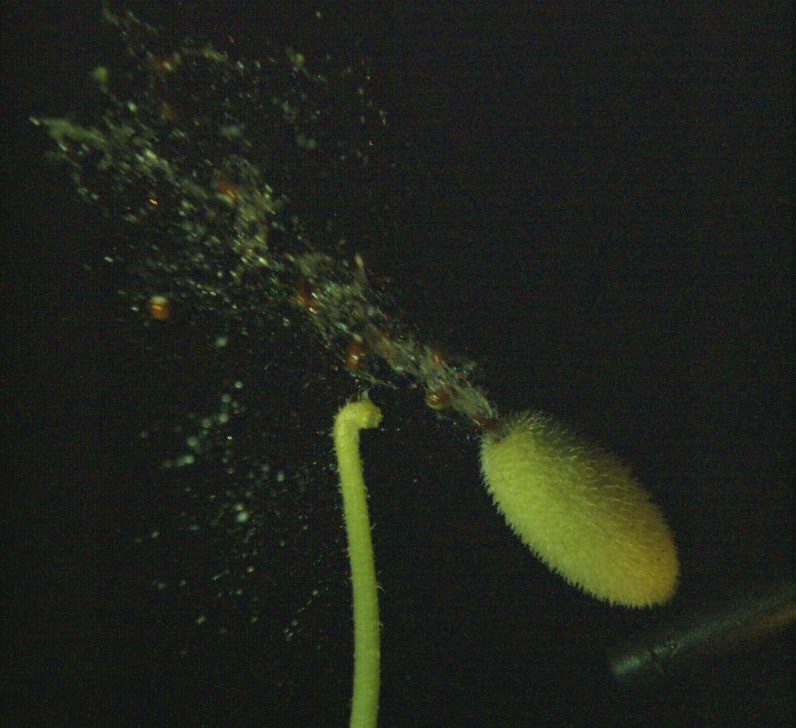
Quick fire round: just before launch the fruit of the squirting cucumber rotates from bring vertical to close to an angle of 45 degrees, improving the launch angle for the seeds (courtesy: Derek Moulton).
Squirting cucumbers
The plant kingdom is full of intriguing ways to distribute seeds such as the dandelion pappus effortlessly, drifting on air currents. Not to be outdone, the squirting cucumber (Ecballium elaterium), which is native to the Mediterranean and is often regarded as a weed, has its own unique way of ejecting seeds. When ripe, the ovoid-shaped fruits detach from the stem and as it does so explosively ejects seeds in a high-pressure jet of mucilage. The process, which lasts just 30 ms, launches the seeds at more than 20 m/s with some landing 10 m away. Researchers in the UK revealed the mechanism behind the squirt for the first time by using high-speed imaging and mathematical modelling. The researchers found that in the weeks leading up to the ejection, fluid builds up inside the fruits so they become pressurized. Then just before seed dispersal, some of this fluid moves from the fruit to the stem, making it longer and stiffer. This process crucially causes the fruit to rotate from being vertical to close to an angle of 45°, improving the launch angle for the seeds. During the first milliseconds of ejection, the tip of the stem holding the fruit then recoils away causing the pod to counter-rotate and detach. As it does so, the pressure inside the fruit causes the seeds to eject at high speed. By changing parameters in the model, such as the stiffness of the stem, reveals that the mechanism has been fine-tuned to ensure optimal seed dispersal.
Chimp Shakespeare
And finally, according to the infinite monkeys theorem, a monkey randomly pressing keys on a typewriter for an infinite amount of time would eventually type out the complete works of William Shakespeare purely by chance. Yet analysis by two mathematicians in Australia found that even a troop might not have time to do so within the supposed timeframe of the universe. The researchers came to their conclusion after creating a computational model that assumed a constant chimpanzee population of 200 000, each typing at one key per second until the end of the universe in about 10100 years. If that is true, there’d be only a 5% chance a single monkey would type “bananas” within its own lifetime of just over 30 years. But even all the chimps feverishly typing away couldn’t produce Shakespeare’s entire works (coming in at over 850 000 words) before the universe ends. “It is not plausible that, even with improved typing speeds or an increase in chimpanzee populations, monkey labour will ever be a viable tool for developing non-trivial written works,” the authors conclude, adding that while the infinite monkeys theorem is true, it is also “somewhat misleading”, or in reality it’s “not to be”.
You can be sure that next year will throw up its fair share of quirky stories from the world of physics. See you next year!
The past few years have seen several missions to the Moon and that continued in 2024. Yet things didn’t get off to a perfect start. In 2023, the Japanese Space Agency, JAXA, launched its Smart Lander for Investigating Moon (SLIM) mission to the Moon. Yet when it landed in January, it did so upside down. Despite that slight mishap, Japan still became the fifth nation to successfully soft land a craft on the Moon, following the US, Soviet Union, China and India.
In February, meanwhile, US firm Intuitive Machines achieved a significant milestone when it became the first private mission to soft land on the Moon. Its Odysseus mission touched down on the Moon’s Malapert A region, a small crater about 300 km from the lunar south pole. In doing so it also became the first US mission to make a soft landing on the Moon since Apollo 17 in December 1972.
Astronomy is unique in having a significant amateur community and while radio astronomy emerged from amateur beginnings, it is now the focus of elite, international global consortia. In this fascinating feature, astrophysicist and amateur radio astronomer Emma Chapman from the University of Nottingham, UK, outlined how the subject developed and why it needs to strike a fine balance between its science and engineering roots. And also make sure not to miss Chapman discussing the history of radio astronomy on the Physics World Stories podcast.
Hidden stories
Still on the podcast front, this Physics World Stories podcast from this year features a fascinating chat with astronaut Eileen Collins, who shared her extraordinary journey as the first woman to pilot and command a spacecraft. In the process, she broke several barriers in space exploration and inspired generations with her courage and commitment to discovery.
Star power: This spectacular image taken by Euclid shows Messier 78 – a nursery of star formation that is enveloped in a shroud of interstellar dust – that lies 1300 light-years away in the constellation of Orion
Euclid’s spectacular images
Astronomy and spectacular images go hand in hand and this year didn’t disappoint. While the James Webb Space Telescope continued to amaze, in May the European Space Agency released five spectacular images of the cosmos along with 10 scientific papers as part of Euclid’s early release observations. Euclid’s next data release will focus on its primary science objectives and is currently slated for March 2025, so keep an eye out for those next year.
What makes a physics story popular? The answer is partly hidden in the depths of Internet search algorithms, but it’s possible to discern a few trends in this list of the 10 most read stories published on the Physics World website in 2024. Well, one trend, at least: it seems that many of you really, really like stories about quantum physics. Happily, we’ll be publishing lots more of them in 2025, the International Year of Quantum Science and Technology. But in the meantime, here are 2024’s most popular stories – quantum and otherwise.
As main characters in quantum thought experiments go, Wigner’s friend isn’t nearly as well-known as Schrödinger’s cat. While the alive-or-dead feline was popularized in the mid-20th century by the science fiction and fantasy writer Ursula K LeGuin, Wigner and his best mate remain relatively obscure, and unlikely to appear in an image created with entangled light (more on this later). Still, there’s plenty to ponder in this lesser-known thought experiment, which provocatively suggests that in the quantum world, what’s true may depend, quite literally, on where you stand: with Wigner’s friend inside a lab performing the quantum experiment, or with Wigner outside it awaiting the results.
Popularity isn’t everything. This story focused on a paper about a high-temperature superconducting wire that appeared to have a current density 10 times higher than any previously reported. Unfortunately, the paper’s authors made an error when converting the magnetic units they used to calculate current density. This error – which the authors acknowledged, leading to the paper’s retraction – meant that the current density was too high by… well, by a factor of 10, actually.
Surprisingly, this wasn’t the most blatant factor-of-10 flop to enter the scientific literature this year. That dubious honour belongs to a team of environmental chemists who multiplied 60 kg x 7000 nanograms/kg to calculate the maximum daily dose of potentially harmful chemicals, and got an answer of…42 000 nanograms. Oops.
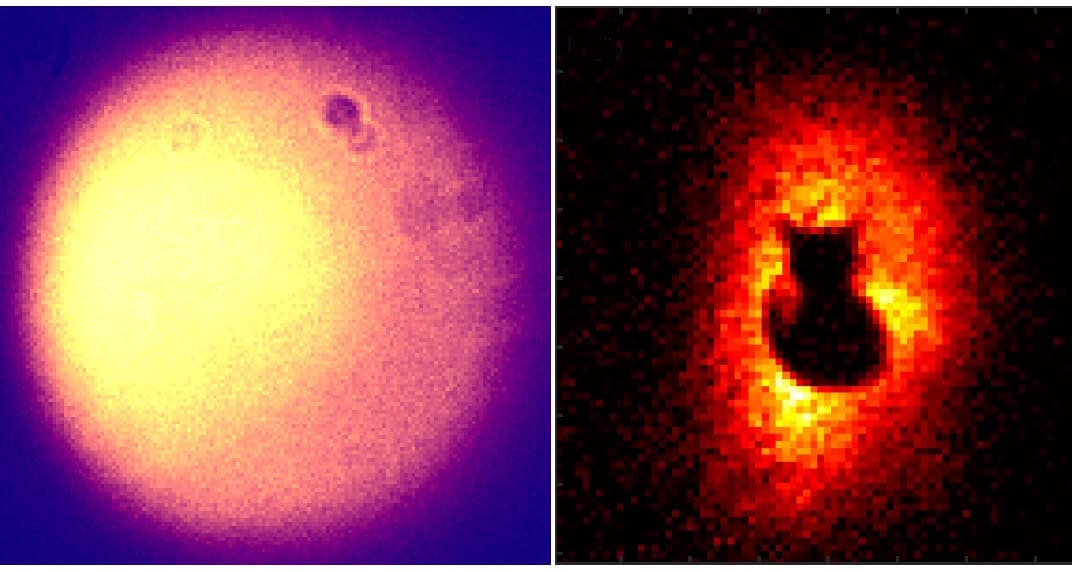
Remember the entangled-light Schrödinger’s cat image? Well, here it is again, this time in its original context. In an experiment that made it onto our list of the top 10 breakthroughs of 2024, researchers in France used quantum correlations to encode an image into light such that the image only becomes visible when particles of light (photons) are observed by a single-photon sensitive camera. Otherwise, the image is hidden from view. It’s a neat result, and we’re glad you agree it’s worth reading about.
At this time of year, some of us in the Northern Hemisphere feel like we’re inhabiting an icy exoplanet already, and some of you experiencing Southern Hemisphere heat waves probably wish you were. Sadly, none of us is ever going to live on (or even visit) the temperate exoplanet LHS 1140 b, which is located 49 light-years away from Earth and has a mass 5.6 times larger. Still, astronomers think this watery, icy world could be only the third planet (after Earth and Mars) in its star’s habitable zone known to have an atmosphere, and that was enough to pique readers’ interest.
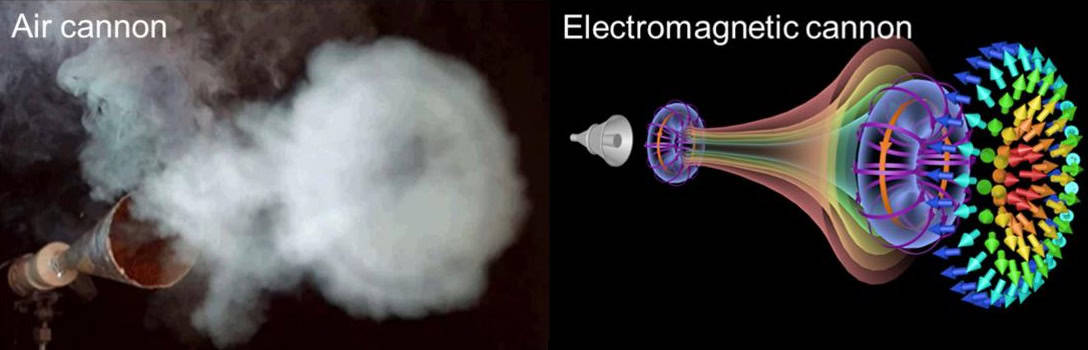
Toroidal pulses Air cannons produce visible vortex rings by generating rotating air pressure differences, while electromagnetic cannons emit electromagnetic vortex pulses using coaxial horn antennas. (Courtesy: Ren Wang; Pan-Yi Bao; Zhi-Qiang Hu; Shuai Shi; Bing-Zhong Wang; Nikolay I Zheludev; Yijie Shen)
An electromagnetic vortex cannon might sound like an accessory from Star Trek. In fact, it’s a real object made from a device called a horn microwave antenna. It gets its name because it generates an electromagnetic field in free space that rotates around the propagation direction of the wave structure, similar to how an air cannon blows out smoke rings. According to its inventors, the electromagnetic vortex cannon could be used to develop communication, sensing, detection and metrology systems that overcome the limitations of existing wireless applications.
Returning to the quantum theme, the fifth-most-read story of 2024 concerned an experiment that demonstrated a new violation of the Leggett-Garg inequality (LGI). While the better-known Bell’s inequality describes how the behaviour of one object relates to that of another object with which it is entangled, the conceptually similar LGI describes how the state of a single object varies at different points in time. If either inequality is violated, the world is quantum. Previous experiments had already observed LGI violations in several quantum systems, but this one showed, for the first time, that neutrons in a beam must be in a coherent superposition of states – a fundamental property of quantum mechanics.
True impact: a new study finds that “foundational” ideas in science are often not properly cited, which can skew rankings. (Courtesy: iStock/ilbusca)
When a scientific paper introduces a concept that goes on to become common knowledge, you might expect later researchers to cite the living daylights out of it – and you would be wrong. According to the study described in this article, the ideas in many such papers become so well known that the opposite happens: no-one bothers to cite them anymore.
This means that purely citation-based metrics of research “impact” tend to underestimate the importance of seminal works such as Alan Guth’s 1981 paper that introduced the theory of cosmic inflation. So if your amazing paper isn’t getting the citation love it deserves, take heart: maybe it’s too foundational for its own good.
Physicists have been trying to produce a theory that incorporates both gravity and quantum mechanics for almost a century now. One of the sticking points is that we don’t really know what a quantum theory of gravity might look like. Presumably, it would have to combine the world of gravity (where space and time warp in the presence of massive objects) with the world of quantum mechanics (which assumes that space and time are fixed) – but how?
For the University College London theorist Jonathan Oppenheim, this is the wrong question. As this article explains, Oppenheim has developed a new theoretical framework that aims to unify quantum mechanics and classical gravity – but, crucially, without the need to define a theory of quantum gravity first.
Can a quantum system remain maximally entangled in a noisy environment? According to Julio I de Vicente from the Universidad Carlos III de Madrid, Spain, the answer is “no”. While the question and its answer might seem rather esoteric, this article explains that the implications extend beyond theoretical physics, with so-called “maximally entangled mixed states” having the potential to revolutionize our approach to other problems in quantum mechanics.
The science fiction writer Arthur C Clarke famously said that “Any sufficiently advanced technology is indistinguishable from magic.” Sadly for Clarke fans, the magic in this article doesn’t involve physicists chanting incantations or waving wands over their experiments. Instead, it refers to quantum states that are especially hard to simulate on classical machines. These so-called “magic” states are a resource for quantum computers, and the amount of them available is a measure of a system’s quantum computational power. Indeed, certain error-correcting codes can improve the quality of magic states in a system, which makes a pleasing connection between this, the most-read article of 2024 on the Physics World website, and our pick for 2024’s “Breakthrough of the year.” See you in 2025!
This year marked the 70th anniversary of the European Council for Nuclear Research, which is known universally as CERN. To celebrate, we have published a bumper crop of articles on particle and nuclear physics in 2024. Many focus on people and my favourite articles have definitely skewed in that direction. So let’s start with the remarkable life of accelerator pioneer Bruno Touschek.
Man of many talents Bruno Touschek pictured in 1955. (Courtesy: CC-BY-3.0: https://cds.cern.ch/record/135949)
Born in Vienna in 1921 to a Jewish mother, Bruno Touschek’s life changed when Nazi Germany annexed Austria in 1938. After suffering antisemitism in his hometown and then in Rome, he inexplicably turned down an offer to study in the UK and settled in Germany. There he worked on a “death ray” for the military but was eventually imprisoned by the German secret police. He was then left for dead during a forced march to a concentration camp in 1945. When the war ended a few weeks later, Touschek’s expertise came to the attention of the British, who occupied north-western Germany. He went on to become a leading accelerator physicist and you can read much more about the extraordinary life of Touschek in this article by the physicist and biographer Giulia Pancheri.
Today, the best atomic clocks would only be off by about 10 ms after running for the current age of the universe. But, could these timekeepers soon be upstaged by clocks that use a nuclear, rather than an atomic transition? Such nuclear clocks could rival their atomic cousins when it comes to precision and accuracy. They also promise to be fully solid-state, which means that they could be used in a wide range of commercial applications. This year saw physicists make new measurements and develop new technologies that could soon make nuclear clocks a reality. Click on the headline above to discover how physicists in the US have fabricated all of the components needed to create a nuclear clock made from thorium-229. Also, earlier this year physicists in Germany and Austria showed that they can put nuclei of the isotope into a low-lying metastable state that could be used in a nuclear clock. You can find out more here: “Excitation of thorium-229 brings a working nuclear clock closer”.
Expert panel Tulika Bose, Philip Burrows and Tara Shears were speaking on a Physics World Live panel discussion about the future of particle physics held on 26 September 2024. (Courtesy: Tulika Bose; Philip Burrows; McCoy Wynne)
In 2024 we launched our Physics World Live series of panel discussions. In September, we explored the future of particle physics with Tara Shears of the UK’s University of Liverpool, Phil Burrows at the University of Oxford in the UK and Tulika Bose at the University of Wisconsin–Madison in the US. Moderated by Physics World’s Michael Banks, the discussion focussed on next-generation particle colliders and how they could unravel the mysteries of the Higgs boson and probe beyond the Standard Model of particle physics. You can watch a video of the event by clicking on the above headline (free registration) or read an article based on the discussion here: “How a next-generation particle collider could unravel the mysteries of the Higgs boson”.
Neutrinos do not fit in nicely with the Standard Model of particle physics because of their non-zero masses. As a result some physicists believe that they offer a unique opportunity to do experiments that could reveal new physics. In a wide-ranging interview, the particle physicist Juan Pedro Ochoa-Ricoux explains why he has devoted much of his career to the study of these elusive subatomic particles. He also looks forward to two big future experiments – JUNO and DUNE – which could change our understanding of the universe.
Çiğdem İşsever “My main focus is to shed light, experimentally, on the so-called Higgs mechanism.” (Credit: DESY Courtesy of Cigdem Issever)
“Children decide quite early in their life, as early as primary school, if science is for them or not,” explains Çiğdem İşsever – who is leads the particle physics group at DESY in Hamburg, and the experimental high-energy physics group at the Humboldt University of Berlin. İşsever has joined forces with physicists Steven Worm and Becky Parker to create ATLAScraft, which creates a virtual version of CERN’s ATLAS detector in the hugely popular computer game Minecraft. In this profile, the science writer Rob Lea talks to İşsever about her passion for outreach and how she dispels gender stereotypes in science by talking to school children as young as five about her career in physics. İşsever also looks forward to the future of particle physics and what could eventually replace the Large Hadron collider as the world’s premier particle-physics experiment.
This year marked the 70th anniversary of the world’s most famous physics laboratory, so the last two items in my list celebrate that iconic facility nestled between the Alps and the Jura mountains. Formed in the aftermath of the Second World War, which devastated much of Europe, CERN came into being on 29 September 1954. That year also saw the start of construction of the Geneva-based lab’s proton synchrotron, which fired-up in 1959 with an energy of 24 GeV, becoming the world’s highest-energy particle accelerator. The original CERN had 12 member states and that has since doubled to 24, with an additional 10 associate members. The lab has been associated with a number of Nobel laureates and is a shining example of how science can bring nations together after a the trauma of war. Read more about the anniversary here.
Comms boss James Gillies in 2013. (Courtesy: CERN/Claudia Marcelloni)
When former physicist James Gillies sat down for dinner in 2009 with actors Tom Hanks and Ayelet Zurer, joined by legendary director Ron Howard, he could scarcely believe the turn of events. Gillies was the head of communications at CERN, and the Hollywood trio were in town for the launch of Angels & Demons. The blockbuster film is partly set at CERN with antimatter central to its plot, and is based on the Dan Brown novel. In this Physics World Stories podcast, Gillies looks back on those heady days. Gillies has also written a feature article for us about his Hollywood experience: “Angels & Demons, Tom Hanks and Peter Higgs: how CERN sold its story to the world”.