Alpha might vary across the universe

Spectrum of a quasar


A look into the anatomy of a quasar’s spectrum (Credit: Michael Murphy, Swinburne University of Technology/NASA/ESA)

By Tushna Commissariat

A paper published in Physical Review Letters this week talks about how one of the fundamental constants of our universe – the fine-structure constant (α) – may vary across the universe. If you feel like you have heard something about this before, that is because the researchers have been looking into this particular phenomenon for almost a decade now.

They published a pre-print of this work on the arXiv server in August 2010, but the paper was only published in PRL yesterday, the delay perhaps reflecting how profound the finding could be.

The constant α is a combination of another three constants – the speed of light “c”, the charge of an electron “e” and Plank’s constant “h” – and is given by α = e2/hc.

John Webb and colleagues first looked at the light coming from very distant quasars in 1999, using the Keck Observatory in Hawaii and more recently the Very Large Telescope in Chile, to see if α really was a fundamental constant or if it varied with time or space. They use distant quasars simply as light sources that span across billions of light years. The spectrum of the quasar light carries an imprint of atoms in gas clouds that the light traverses through on its way to Earth. These spectral “fingerprint” absorption lines (known as “metal absorption lines”) are then compared with the same fingerprints found in laboratories here on Earth to infer any changes to α.

What the researchers found, after looking at the light from almost 300 quasars (as of 2010) was that α was decreasing in one direction as seen from the Earth and increasing in the exactly opposite direction. This asymmetry in the two hemispheres has been dubbed the “Australian dipole” by the researchers and has a statistical significance of about 4 σ. While some scientists were sceptical of the finding in 2010, others called it “the news of the year in physics”. If the discovery is confirmed, it would have profound implications on our understanding of the universe and on many of our current cosmological theories.

If you would like to refresh your memory about the paper or find out what it’s all about, take a look at the news story written by Hamish Johnston last year here, or take a look at the feature article written for Physics World by lead author of the paper, John Webb, here.

Sticky tank climbs the walls

By Hamish Johnston

A major breakthrough in gecko physics occurred in 2002 when Kellar Autumn and colleagues at Lewis and Clark College in Oregon showed that the lizards use Van der Waals forces to stick to (and scurry up) smooth vertical walls.

Since then, researchers have worked hard to mimic the structures found on gecko feet. Indeed, Stanford University’s Sangbae Kim has already built a “Stickybot” robotic lizard that is capable of climbing walls. Stickybot solved an important problem facing a gecko-inspired climber – how to make a foot that sticks when you want it to, yet releases when the climber takes a step upwards. Kim’s solution is “directional adhesion”, whereby the stickiness of a foot depends on the directions of the forces applied to it.

Another approach to the stick/release problem involves using continuous treads of an adhesive material that resemble those you would find on an army tank or bulldozer. The main problem with such “tank” climbers is that a tail is needed to ensure that there is an inward force at the front of the tread so that it grabs onto the wall.

stickytank.jpg

Now, Jeff Krahn and colleagues at Simon Fraser University in Canada have invented a tank robot that doesn’t need a tail – something that greatly simplifies the robot’s design. You can see the robot in action in the video above.

Another feature of the robot, according to the researchers, is that it is the first tank robot to use treads with microstructures that mimic gecko feet (right). Previous climbing tanks had used flat, unstructured materials.

Krahn’s robot, however, has treads covered in tiny mushroom-like structures that protrude slightly from the surface. The caps of the mushrooms are about 10 µm in diameter, with the stalks being about half that size. According to Krahn, this overhang allows the treads to grab on to rough surfaces.

The robot is described in a paper published in Smart Materials and Structures.

Dancing in the quantum world

Pressure limits tumour growth

Physicists in France have found that the simple application of mechanical pressure can slow down the growth of a tumour and limit its size. The researchers, who carried out their work using mice cells, say the results could lead to better diagnostic tools for cancer and perhaps eventually to new kinds of drugs to treat the disease.

It is well known that tumours form and develop into cancers when the DNA inside living cells mutates, but how that development is influenced by the environment around a tumour remains a subject of debate. The new research, by Jean-François Joanny of the Curie Institute in Paris and colleagues, investigates how a tumour’s growth is limited by the pressure it experiences as it pushes against the surrounding healthy tissue.

It is difficult to separate out the roles of genetics, biochemistry and mechanics in a tumour within a living organism. To get around this problem Joanny’s team does its work on the laboratory bench using a tumour-like ball of mouse cells with a diameter of a few tenths of a millimetre. The researchers place the simulated tumour into a bag several millimetres long and made from a semi-permeable polymer. This is then put into a solution containing nutrients that allow the cells to grow. Left alone in this state the tumour would have continued to grow for two to three weeks, until it reached a steady-state in which cell death exactly balances cell division.

Clamping down with sugar

To find out what effect pressure has on this growth, the team adds long sugar molecules to the solution. These molecules are too large to pass through the tiny pores in the bag and so remain outside the bag, creating an imbalance in their concentration that forces solution out of the bag in order to try and restore equilibrium. The greater concentration of solute outside the bag then exerts mechanical pressure onto the bag, and this pressure is felt by the tumour inside. This is repeated using identically prepared tumours, each one in its own bag and immersed in a solution with a different concentration of sugar, therefore exposing each tumour to a different pressure.

The team found that the higher the pressure the slower the tumour growth and the smaller the tumour’s ultimate size. For example, exerting a pressure of 500 pascals (just 0.5% of atmospheric pressure), halved both the growth rate of the tumour and its steady-state volume.

To establish exactly how pressure slows growth, Joanny and co-workers froze the tumours, cut them into very thin slices and covered the slices with two kinds of antibody. This reveals the distribution of dying and dividing cells in each tumour – the two kinds of cell fluorescing at a different wavelength. They discovered, contrary to expectations, that applying pressure to a tumour does not appreciably change the rate of cell death. Instead, pressure only appears to affect cell division, reducing it throughout the tumour, but especially in the core.

No room for division

Comparing these results with a computer simulation, the researchers concluded that this slower growth results directly from the mechanical pressure, rather than any biochemical processes affected by the change in pressure. The simulation represents pairs of cells as mutually repelling particles, each of which divides into a new pair when their separation exceeds a certain value. With cell death represented by a constant rate of particle removal, increasing the pressure on the outside of the simulated tumour yields a reduction in growth that matches that observed in the experiments.

Having found that placing a tumour under pressure reduces the final size of that tumour, team member Fabien Montel points out that the most invasive, and therefore most dangerous, tumours ought to be those that are able to withstand higher pressures. He says he and his colleagues would like to be able to prove this correlation by placing tiny biosensors onto tumours inside patients and establishing that the most dangerous ones are indeed those subject to higher pressures (he adds that these sensors could ultimately be used as a diagnostic tool to gauge how dangerous individual tumours are). But he says this would be extremely difficult to do with current technology and so a more achievable next step would be to take pieces from tumours that have been removed from patients and expose them to the laboratory stress test, so demonstrating, albeit within idealized conditions, that the pressure–invasiveness correlation is real.

“We are not saying that mechanics is the only way of looking at tumour growth because we know there is a lot of biochemistry involved,” says Montel. “But maybe we don’t have to know all the details of what is going on inside the cell in order to understand its growth.”

The research is described in Phys. Rev. Lett. 107 188102.

Between the lines

Expand your knowledge

With Saul Perlmutter, Adam Riess and Brian Schmidt sharing this year’s Nobel Prize for Physics for discovering that the expansion of the universe is accelerating, you may well want to speed up the rate of increase of your own knowledge about the cosmos. If so, you could do worse than to check out The Manga Guide to the Universe by science journalist Kenji Ishikawa and physicist Kiyoshi Kawabata from the Tokyo University of Science. Translated from the original Japanese, the book contains a neat mix of comic strips (“manga” being the Japanese word for “comics”) and bona fide scientific discussion. Actually, the “proper bits” will be much more worthwhile for physicists than the cartoons, although the latter are still fun even if not that illuminating. One segment on our galaxy includes corny lines such as “The Milky Way, huh? Sounds yummy,” while it takes 10 pages to draw out some fairly weak parallels between football and the Big Bang (players congregate at certain spots on the pitch just as galaxies cluster together). Still, with many popular-science books being criticized for racing through complex ideas far too fast, the gentle pace will ensure that readers are not lost – although their rate of expansion of new knowledge is likely to be fairly small.

  • 2011 No Starch Press £15.99/$19.95pb 256pp

Super-sizing the universe

Talking of things getting bigger, back in 1999 Martin Rees published a book called Just Six Numbers, in which the Cambridge University cosmologist tried to explain how the shape and size of our universe depend on just six key fundamental constants. Shortly afterwards astrophysicist Michael Rowan-Robinson from Imperial College London came out with a similar book called The Nine Numbers of the Cosmos. Now James Stein from California State University has written Cosmic Numbers, in which he argues that 13 numbers are needed for a full understanding of the universe. Three of the numbers, namely Ω (the ratio of the actual density of the universe to the critical density), ε (the efficiency of hydrogen fusion) and the relative strengths of the electrical and gravitational forces, also appeared in Rees’s book, but newbies include things such as the speed of light, the gravitational constant and the Avogadro constant. Stein’s book is much more chatty than either that of Rees or Rowan-Robinson and if “physical constants per dollar” is your criterion for buying a book, then obviously this is the one for you.

  • Basic Books £17/99/£25.99hb 228pp

Wonder vs certainty

Science is all about certainty, precision and objectivity. But it is also about wonder, mystery and creativity. In his book The Blind Spot, mathematician William Byers explores these two competing views of science, and offers strong philosophical and practical arguments in favour of the latter. According to Byers, the “science of wonder” is “characterized by a limitless openness and creativity”. On the other side is the “science of certainty”, from which stems such concepts as immutable “laws” of nature (not just “patterns” or “regularities”). Byers cautions against identifying all science with this “certain” variety, arguing that doing so contributes to a “mythology of science” that can be misused and misinterpreted. He also suggests that because “wonder” science is at home with complexity and ambiguity, it may be better at solving the complex and ambiguous problems of the modern world. Byers writes with the zeal of a convert, so it comes as no surprise when, in the book’s final chapter, he confesses that he used to be “entranced” by the “certain” view of science. Whether his readers will be similarly converted is a moot point, especially as the book is somewhat repetitive in its early chapters. But converted or no, all should appreciate the depth of thinking that Byers has brought to bear on an intriguing and important topic.

  • 2011 Princeton University Press £16.95/$24.95hb 224pp

Rogue waves triggered by ocean currents

In February 1986 the passenger ship SS Spray was travelling along the east coast of the US when it was suddenly hit by a wave that was estimated to be 17 m high – the second in a system of three consecutive “rogue waves” that were much higher than normal ocean swells. The ship suffered some minor damage and took on some water – although passengers and crew were shaken, all aboard survived. Now an international team of physicists has explained how these terrifying waves could suddenly appear in the middle of the ocean.

Mariners have long known that such waves are more prevalent in regions of strong ocean currents – the Gulf Stream in the case of the SS Spray. However, physicists have struggled to explain the physical connection between current and waves. But now Miguel Onorato and colleagues at the University of Turin in Italy and the Swinburne University of Technology in Australia have done computer simulations that show how rogue waves can form when normal ocean waves encounter a strong current moving in the opposite direction.

The work is based on the idea that such a pulse of three or four giant waves can be described mathematically as a “breather”, which is an exact solution of the nonlinear Schrödinger (NLS) equation. Not to be confused with its quantum cousin, the NLS applies to classical physics including water waves and optics.

Focused into a breather

The team began the simulation with the sort of plane waves that you might encounter on the ocean – swells with an amplitude of 2.5 m that propagate in a specific direction. These waves then encounter a current that is flowing in the opposite direction. When the plane waves travel from a region of no current to a region with a current, they cross a current gradient. The simulations show that the encounter with the gradient causes the energy of the plane wave to be focused into a small region. This causes instability in the plane wave, which triggers the appearance of a breather.

The simulations suggest that breather formation could occur when plane waves with a period of about 10 s – a typical condition in a storm – encounter a current travelling at about 1.5 m s–1, a speed not unknown for ocean currents.

Efim Pelinovsky of the Institute of Applied Physics at the Russian Academy of Sciences agrees with the team’s analysis of how the breathers could form, and points out that the process could occur in regions where the prevailing winds move in the opposite direction as the current. This condition is commonly seen in the Indian Ocean off the coast of South Africa, where the Agulhas Current has long been associated with rogue waves.

Onorato told physicsworld.com that researchers working in Tokyo have already done experiments in wave tanks that back up the simulations. Because the NLS also applies in optics, Onorato says that the effect should also be seen in experiments with light. Instead of a current, a breather should be formed when light waves travel through an optical fibre along which certain nonlinear properties change gradually.

The work is reported in Phys. Rev. Lett. 107 184502.

Astronomers discover complex organic matter abound in the universe

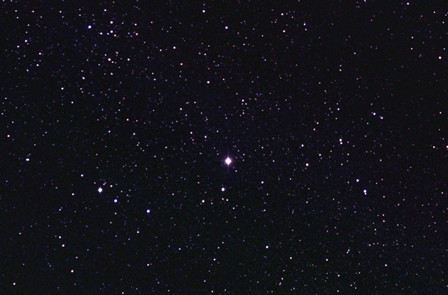
Recurrent Nova RS Ophiuci


NASA image of the star field in the constellation Ophiucus; at the centre is the recurrent Nova RS Ophiuci (Credit: John Chumack)

By Tushna Commissariat

Complex organic compounds – one of the main markers of carbon-based life forms – have always been thought to arise from living organisms. But new research by physicists in Hong Kong, published yesterday in the journal Nature, suggests that these compounds can be synthesized in space even when no life forms are present.

Sun Kwok and Yong Zhang at the University of Hong Kong claim that a particular organic compound that is found throughout the universe contains complex compounds that resemble coal and petroleum – which have long been thought to come only from carbonaceous living matter.

The researchers say that the organic substance contains a mixture of aromatic (ring-like) and aliphatic (chain-like) complex components. They have come to this conclusion after looking at strange infrared emissions detected in stars, interstellar space and galaxies that are commonly known as unidentified infrared emissions (UIEs). These UIE signatures are thought to arise from simple organic molecules made of carbon and hydrogen atoms – polycyclic aromatic hydrocarbon (PAH) molecules – being “pumped” by far-ultraviolet photons. But Kwok and Zhang both felt that hypothesis did not fill the bill accurately enough, when they considered the observational data.

As a solution, they have suggested an alternative – that the substances generating these infrared emissions have chemical structures that are much more complex. After analysing the spectra of star dust forming when stars explode, they found that stars are capable of making these complex organic compounds on extremely short timescales of weeks and that they then eject it into the general interstellar space – the region between stars.

Kwok had suggested, at an earlier date, that old stars could be “molecular factories” capable of producing organic compounds. “Our work has shown that stars have no problem making complex organic compounds under near-vacuum conditions,” says Kwok. “Theoretically, this is impossible, but observationally we can see it happening.”

Another interesting fact is that the organic star dust that Kwok and Zhang studied has a remarkable structural similarity to complex organic compounds found in meteorites. As meteorites are remnants of the early solar system, the findings raise the possibility that stars enriched our protoplanetary disc with organic compounds (by angela). The early Earth was known to have been bombarded by many comets and asteroids carrying organic star dust. Whether these organic compounds played any role in the development of life on Earth remains a mystery.

It will also be interesting to see if this finding has an impact on research groups that look for life in the universe, such as SETI , considering that complex organic molecules have always thought to be markers of carbon-based life forms.

Continents may reflect conditions in the Earth’s core

In bold new research, a group of scientists in France believes that it has established a link between two of the great discoveries in 20th-century geophysics – plate tectonics and the fact that the Earth’s magnetic field has reversed direction many times throughout the planet’s history. The researchers from Ecole Normale Supérieure, CNRS and Institut de Physique du Globe in Paris, argue that during a given geological period the location of continents is linked with the frequency of magnetic field reversals. The findings have been met with cautious excitement by other geophysicists in the field.

The Earth’s magnetic field is produced by the flow of molten iron in the planet’s outer core – the Coriolis force helps to create a convection pattern in this zone, leading to a geodynamo. By studying the orientation of magnetic minerals in rocks at the Earth’s surface, geophysicists know that the main dipolar component of the field has reversed direction many times since the field became established early in Earth’s history.

It has long been recognized, however, that the average rate of these magnetic field reversals has varied throughout the past. For example, during the last 25 million years the average reversal rate has been once every 250,000 years; compared with once every 600,000 years during the preceding 25 million years. Most geophysicists agree that the frequency of reversals must be related to slow changes in the conditions at the boundary between the outer core and the overlying mantle – a region some 2900 km beneath the Earth’s surface. Modelling work has shown that more reversals occur when there is an asymmetry between conditions in the outer core in the northern hemisphere and those in the south.

“Symmetry breaking”

In this latest work, the French team suggests that these conditions at the core–mantle boundary may be correlated with the mantle-wide convection. These enormous convection cells result in the circulation of near-molten material within the mantle and they ultimately provide the driving force behind plate tectonics. The team speculates that this “symmetry breaking” deep within the Earth may be reflected in the distribution of continents – resulting in more landmass in one of the hemispheres than the other.

To test the theory, the team quantified the north–south symmetry of continents throughout the Earth’s history. The researchers did this using reconstructed locations of continents projected onto a 2D map and enclosing all continents with a so-called complex envelope – this enabled them to observe the symmetry about the equator. They then compared the changing symmetry with the well-established rate of magnetic-field reversals over the past 300 million years.

Publishing their findings in Geophysical Research Letters, the researchers report a correlation between the rate of field reversals and the extent of asymmetry among continents. Both phenomenons occur on a timescale of roughly 100 million years. “The point is that 100 million years is not a long time for mantle flow because it is flowing very slowly,” team member François Pétrélis told physicsworld.com, pointing out that a tectonic plate will typically take the same amount of time to move a few thousand kilometres.

A French revolution?

Ronald Merrill, a geomagnetic researcher at the University of Washington, says that the paper is likely to receive attention in international circles but that it will not be viewed as revolutionary. While he does not dismiss the link, he is concerned that it is difficult to establish a clear link between heat flow at the core and the distribution of continents. He points out that the processes that lead to the creation of new continental material on top of the tectonic plates are far from trivial.

Ulrich Christensen, a geophysics researcher at the Max Planck Institute for Solar System Research, takes a similar position. “The correlation is good enough to further explore the idea, but is more suggestive than compelling,” he says. Christensen believes that the idea will be strengthened with more evidence from dynamo simulations that the north–south symmetry at the core–mantle boundary is indeed the most important controlling factor for reversal frequency.

Pétrélis says this is one of the ways in which he intends to develop this research and he will also look for more information about the reversal process in paleomagnetic records.

Bold plans for Turkish physics


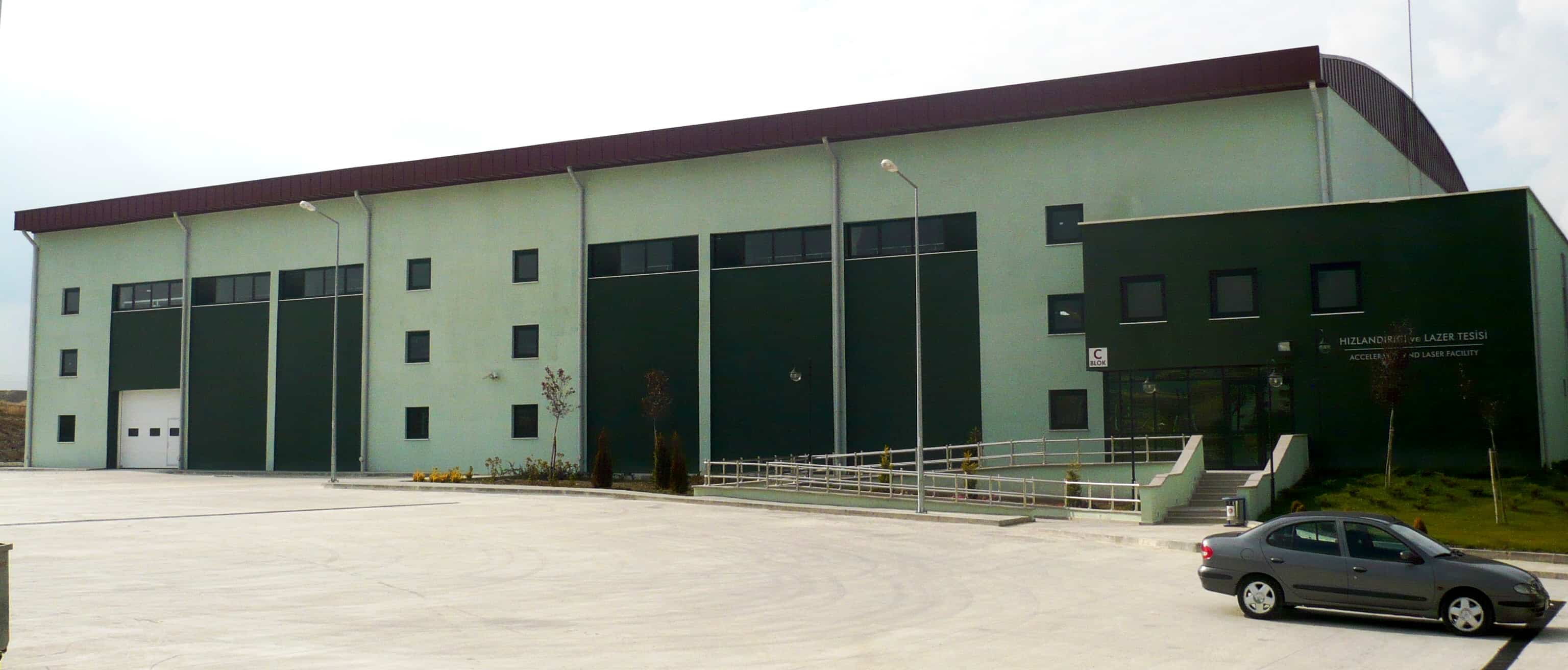
The Acclerator Technologies Institute at Ankara University (Credit: Michael Banks)

By Michael Banks in Ankara, Turkey

“Build it and they will come” seems to be the mantra at the new Accelerator Technologies Institute (AIC) based at Ankara University in central Turkey.

I was here today in the Turkish capital to learn about the country’s ambitious plans to create a smorgasbord of particle accelerators over the next 15 years – from an infrared free-electron laser to a particle factory that would produce copious amounts of exotic particles.

The AIC, which was completed last year, is now gearing up to train PhD students in accelerator technology starting in spring 2012.

As well as training the next generation of young scientists, the centre is also the first part of the Turkish Accelerator Centre (TAC).

The TAC is a $1bn project that will, over the next 15 years, involve the construction of – wait for it – two free-electron lasers, a low-energy proton accelerator, a 3 GeV synchrotron, a high-energy proton accelerator and, last but not least, a particle factory that will collide electron and positrons and be complete by 2024.

The infrared laser, known as TARLA, forms the second part of TAC and will cost around €35m to build. It will accelerate electrons to an energy of 40 MeV before sending them through an “undulator” – a set of magnets – to produce radiation in the range 2–250 µm.

The building for TARLA is now complete, with scientists beginning to move in the first parts of the accelerator. The facility is expected to have its first users by 2015 and will have room for eight experimental stations with beamtime also available to users from outside Turkey.

But for now, attention is firmly on the AIC and training the next generation, who will most likely be building the next parts of the TAC. “What we need is to educate people. That is the most important aspect,” says TARLA director Suat Ozlorucuklu.

The building for Turkey's TARLA free-electron laser


The building for Turkey’s TARLA free-electron laser is complete (Credit: Michael Banks)

Turkey invests in medical isotopes


The new Proton Accelerator Facility in Ankara (Credit: Michael Banks)

By Michael Banks in Ankara, Turkey

A helipad is not what you would normally expect to see at a brand new research facility. But that is what sits next to the new Proton Accelerator Facility (PAF) based in Ankara, Turkey.

However, the helipad is not for A-list scientists or celebrities visiting the PAF, but instead to transport medical isotopes, which in some cases have a half-life lasting just a few hours, from the PAF to hospitals around the country.

Construction of the PAF has just been completed at the Saraykoy Nuclear Research and Training Center (SANAEM), which is operated by the Turkish Atomic Energy Authority (TAEK).

Earlier today I was granted an exclusive tour of the PAF (and no, sadly, I didn’t arrive by helicopter) by Ali Tanrikut, acting director of SANAEM.

The €20m PAF will produce a range of medical isotopes such as fluorine-18 and thallium-201 by accelerating protons in a 2 m diameter cyclotron to energies around 15–30 MeV and then smashing them into a variety of targets.

Turkey already has eight smaller cyclotrons that produce medical isotopes. However, they are all based at hospitals and mostly make fluorine-18, which is used in positron emission tomography to produce a 3D image of processes in the body.

Until now, other isotopes such as palladium-103, which is used to treat prostate cancer, have had to be imported from other countries and the PAF will aim to end Turkey’s dependence on this. Indeed, radioisotope production is an expensive business, with 1 g of some radioisotopes costing thousands of pounds.

Another important role for the facility is to help to train students and researchers so they can start building their own beamlines at the facility. “Education and training cannot be done without infrastructure,” says Tanrikut. “We need to train young people so they learn how to play with these protons.”


The cyclotron at Turkey’s Proton Accelerator Facility (Credit: Michael Banks)

Copyright © 2026 by IOP Publishing Ltd and individual contributors