Inkjet printing produces high-performance transistors

A new inkjet-based printing technique for making high-performance, single-crystal thin-film transistors has been developed by a team of researchers in Japan. The room-temperature process could be used to make large-area printed electronics, including flexible displays, solar cells, electronic paper and sensor sheets.

High-purity single crystals have been crucial in advancing semiconductor microelectronics, and devices with the highest performance invariably contain single-crystal interfaces. Printing techniques, such as inkjet technology, show promise for making large-area and flexible electronic devices and work by depositing patterns on a substrate using inks made of semiconductor materials. One major problem with inkjets is that the deposited materials have poor crystalline properties, which reduces charge-carrier mobility in the material and ultimately degrades device performance.

Now, Tatsuo Hasegawa of the National Institute of Advanced Industrial Science and Technology (AIST) in Tsukuba and colleagues have come up with a new printing process that combines a semiconductor ink and a crystallization ink into one. The first is a semiconductor in a solvent and the second, an “antisolvent” – a liquid in which the semiconductor is insoluble. The method produces exceptionally uniform, single-crystal or polycrystalline thin films that grow at the liquid–air interface on a substrate.

Avoiding ‘coffee rings’

“These results are strikingly different from those achieved with previous such printing methods,” Hasegawa tells nanotechweb.org. “Until now, it was difficult to produce uniform semiconducting thin films with [high-quality crystals] because of self-crystallization, or the ‘coffee-ring’ effect.” This effect involves the movement of tiny particles in a solvent that is driven by evaporation.

The team used a piezoelectric inkjet printing machine with double printing heads that eject droplets of 60 pl at a frequency of 500 Hz. During the process, the antisolvent ink (pure anhydrous dimethylformamide) is printed first and then overprinted with the ink containing the organic semiconductor C8BTBT. The deposited droplets then naturally mix together on the surface of the substrate.

Using an optical microscope, the researchers observed tiny floating bodies that begin to form at the liquid surface. Each body seems to act as a nucleus for further crystallization and subsequently grows larger. These bodies eventually cover the entire surface of the droplet to form C8BTBT thin solid-like layers before the solvent evaporates. The solvent evaporates quite slowly, with the final result being films of C8BTBT that are around 30–200 nm thick, sticking tightly to the substrate surface.

High-performance mobility

The researchers used this material to make thin-film transistors with a gold source and drain electrodes and Parylene-C as the gate dielectric layer. The finished devices have average charge-carrier mobilities as high as 16.4 cm2/Vs. Such a value puts the devices into the high performance range, which starts at 10 cm2/Vs. The on-off current ratio is also high, at 105–107.

According to Hasegawa, this performance is much higher than previous transistors made from C8BTBT and compares well with other very-high-performance devices, including rubrene single-crystal devices. “We believe the good properties observed come thanks to the fact the single-crystal thin semiconductor film forms slowly. This is because of the fluid nature of the microliquid droplet in which laminar flow dominates over turbulent flow.” The technique should also work for other functional soluble materials, he adds.

The team, which includes researchers from the University of Tokyo and KEK in Tsukuba, now plans to optimize its equipment and device-processing techniques. “For example, there is plenty of scope for improving the source/drain contacts in our transistors,” reveals Hasegawa. “The next step will then be to exploit the technique for making printed electric metal wires and then ultimately produce all-printed electronic products.”

The work was published in Nature DOI:10.1038/nature10313.
Sweepers of the sky

One and a half million kilometres from Earth, a superb observatory is quietly reshaping our understanding of how nebulae coalesce into stars. Its primary instrument is the largest space telescope ever launched, a 3.5 m diameter monster designed for infrared photometry and spectroscopy. This is the Herschel Space Observatory, and over its planned three-year lifetime, this European Space Agency (ESA) mission will study cool objects throughout the universe, including comets, galaxies and nebulae.

The observatory owes its name in part to the astronomer William Herschel, who discovered infrared light (then called “calorific rays”) in 1800. Born in 1738 in Hanover, Germany, Herschel began his career as a musician, and followed his father’s example by joining the band of the Hanoverian Guard. After finding that the military life was not for him, in 1755 he deserted and moved to England. There, his interest in music was gradually eclipsed by another childhood love: astronomy. He would go on to become “the most celebrated of all astronomers of the universe”, according to his contemporary Jérôme de Lalande.

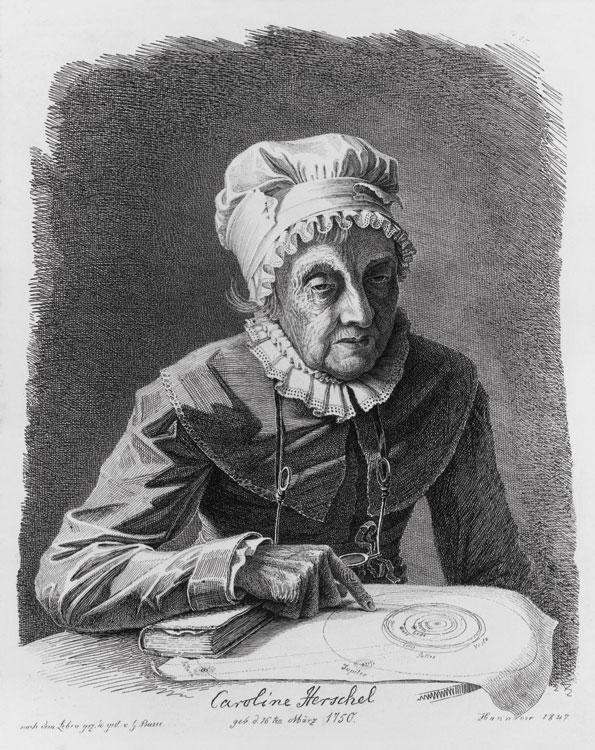
William, however, was not the only Herschel. The ESA observatory is also named for his spinster sister Caroline, who joined him in England in 1772. Initially brought over to work as a housekeeper and general dogsbody, when astronomy took over William’s life, it also took over Caroline’s. After starting as her brother’s assistant, Caroline gradually developed into an observer and astronomer in her own right. In 1786 she became the first woman to discover a comet, and she would go on to discover at least seven (possibly eight) more.

It is fitting, then, that the two Herschels are jointly the subjects of Discoverers of the Universe, a new biography by Michael Hoskin of Churchill College, Cambridge. Hoskin has also written several previous works on the Herschels, and in this book, he discusses not only their science, but also their place in the wider scientific community, the narrower but richer universe of their daily lives, and their sometimes complicated relationship.

During the decade following Caroline’s arrival, William gained a reputation as a skilful astronomer, observing variable stars, measuring the height of lunar mountains and creating a catalogue of double stars. Then, in 1781, he made the discovery that put him firmly among astronomy’s greats. Within months of his finding “a curious either nebulous star or perhaps a comet” in Gemini, it was established that this was a planet beyond Saturn – the first planet to be found since antiquity. In an evening, William had doubled the scale of the solar system. But what should the new world be called? This was before there was an International Astronomical Union to decide such things, so William named it after his king (and fellow Hanoverian), George III. In the rest of the world, though, the prospect of a British monarch being immortalized in the heavens was not greeted with enthusiasm, and by the 1850s even the British had accepted the planet’s alternative name: Uranus, after the Greek god of the sky.

William’s choice did, however, bring him to the king’s attention. Not yet a victim of the mental illness that was to blight his later life, in the 1780s George III was a patron of the sciences, and he had a genuine fascination with astronomy. William was duly appointed “Astronomer to his Majesty”, with a salary of £500 and a residence at Datchet near Windsor (though the house was in such a derelict state that he soon moved to a more comfortable one in Slough). At this, the faithful Caroline abandoned her own interests in a musical career and again joined her brother to act as his housekeeper and assistant.

For the next two decades, the Herschels “swept” the sky, cataloguing nebulae and clusters of stars. This was painstaking and uncomfortable work, especially in the severe winters, and it was all meticulously recorded by Caroline. By 1789 William had a profitable side-line as a manufacturer of telescopes, including an unwieldy “40-foot reflector” that was the largest instrument of its day. Caroline, for her part, at last had her importance officially recognized: the king granted her a salary of £50 to act as her brother’s assistant.

If this book has a hero, it is Caroline. When Hoskin writes about both Herschels, it is with respect for their skill and dedication, but I detect additional warmth when he describes Caroline. It is clear from his account that the Herschels were loving siblings, and Caroline was eternally grateful to William for helping her to escape a grim life of domestic servitude in Hanover. Again and again, though, William followed his own goals at Caroline’s expense, expecting her to abandon any possibility of an independent life to look after his paperwork, painstakingly record and catalogue his (or should that be their) discoveries, ensure his house was well run, and so on. But although she did eventually leave her cottage in the grounds of William’s house, the siblings’ relationship remained cordial, and she was ever ready to assist with his investigations.

Had Caroline remained a drudge in Hanover, the skilful, imaginative and hard-working William would still have been a major figure in astronomy. Caroline’s constant assistance and support, however, made him a giant. In addition to the discoveries already described, over his busy career William found moons of Saturn and Uranus, coined the word “asteroid”, catalogued 3000 variable stars, compared stellar spectra and attempted to confirm that colours travel at different speeds. His observations of star clusters and nebulae (many of which were actually galaxies, a fact unknown to astronomers at the time) suggested that the cosmos evolved with time, providing a nail in the coffin of the notion that we live in a static, completed universe. Herschel’s universe was dynamic, containing objects that went through life cycles, and implying an ancient rather than recent origin of the cosmos. It is not an exaggeration to say that by the time of his death in 1822, William Herschel had turned astronomy into the science that we recognize today.

An important work of biography, Discoverers of the Universe is an enjoyable read, rich in fascinating characters and incidents that reveal not only the human story of two of astronomy’s greats, but also a wider panorama of Georgian science and society. I found it a delight from start to finish.

Space–time cloak becomes reality

By Hamish Johnston

In this month’s issue of Physics World, Martin McCall and Paul Kinsler outline plans for an “event cloak” – a device that would be perfect for the ultimate bank heist. Now, physicists in the US are the first to build one.

McCall and Kinsler are theoretical physicists at Imperial College London and their article offers a recipe for a device that allows selected events to go undetected.

Now it seems that Alexander Gaeta and colleagues at Cornell University have built a working event cloak – albeit different from the McCall and Kinsler’s proposal.

The device comprises two “split time lenses” (STLs). The first STL takes a beam of light and splits it into two parts, one that is delayed in time and the other that is advanced in time. This creates a gap in time and any event occurring within this gap cannot be detected by the beam. The second STL then does the reverse on the beam, closing the gap in time.

An easy way of understanding this process is the “stream of cars” analogy in McCall and Kinsler’s article.

Indeed, McCall told physicsworld.com “We were very pleased to see that our concept has been realized experimentally – it doesn’t quite use the same technique we proposed, but I think it can fairly claim to be the first experimental observation of the signature of a space–time cloak”.

The July issue of Physics World is devoted to the physics of invisibility and you can download a free PDF copy here.

A paper describing the cloak has been uploaded to the arXiv preprint server and the authors say it will be published in Nature. The latter means that Gaeta and colleagues are unable to speak about the paper.

Camera fits on the head of a pin

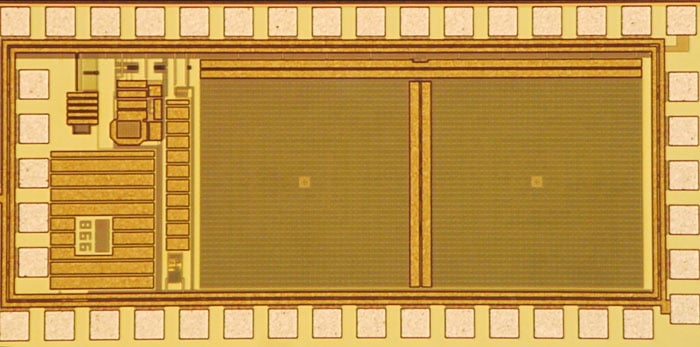
While tiny cameras are now found in just about every mobile phone and laptop, a camera that can fit on the head of a pin and that costs just a few pennies takes miniaturization to a new level. Researchers in the US have developed a micro-camera with no lens, no focusing optics and no moving parts. Just 500 µm across and 10 µm thick, the device could have a number of applications in areas that range from surgery to robotics and imaging.

The micro-camera was developed by postdoctoral associate Patrick Gill and colleagues at Cornell University’s Alyosha Molnar Lab in New York. The camera can resolve images about 20 pixels across, so while it will not be used to obtain high resolution images, its size offers immense scientific and technological possibilities. “It’s not going to be a camera with which people take family portraits, but there are a lot of applications out there that require just a little bit of dim vision,” says Gill.

Traditional cameras use focusing optics such as lenses or mirrors, which map incoming light based on its incident angle to a sensor plane made up of photosensitive pixels. But this means that they are bulky, have off-chip optics and require precision manufacturing. To avoid these complications, the Cornell team uses an array of angle sensitive pixels (ASP), each of which is composed of a photodiode under two metal gratings formed using standard semiconductor-processing techniques. Light incident on the upper grating produces an interference pattern that in turn interacts with the second grating. Light is either passed or blocked depending on the alignment of the interference pattern and the second grating. As the alignment is sensitive to changes in the incident angle of the incoming light, the net effect is that the light passed by an ASP depends sinusoidally on the incident angle.

Picket fences

Gill says that a simple explanation of how the light passes through both gratings is the analogy of driving down a street and looking at two aligned fences on the same side of the road. “We have made each pixel of our camera angle sensitive. Consider two picket fences, one behind the other. They have slats and gaps at the same spacing. Looking through the fences, at some angles the gaps of the two fences align, while at other angles the slats of one align with the gaps of the other. The overall effect is that the amount of light coming through the fences is a sinusoidal function of the incident angle. The creation of sinusoidal patterns as a result of two periodic apertures is known as the Moiré effect and that is basically what happens with our gratings too,” explains Gill.

Then, using a Fourier transformation technique commonly used in image processing, each pixel provides one component of the Fourier transform of the image being detected and the various components are then assembled into an image. The researchers call their camera a planar Fourier capture array (PFCA) and while they have only produced an initial prototype of the device, Gill feels that it worked better than expected.

“What is exciting about the PFCA is that it does not require any special manufacturing at all, what we have used is a commercially produced semiconductor. I honestly feel that the uses of the PFCA are limited only by one’s creativity, especially considering how cheap it is,” claims Gill.

In fact, Gill says that he himself became interested in making this micro-camera because as he is a neuroscientist he was looking for ways to introduce an optical system into the brain without causing much damage. “The array could be fashioned into a probe for imaging neurons that have been modified to glow when they are active, which would mean that we could study how the brain’s neurons fire under certain stimuli. And because of its microscopic nature, the damage would be minimal,” says Gill.

Smaller and better

Although the current camera is already microscopic, being produced using a 180 nm CMOS process, Gill believes a 32 nm process could be used, which could mean a factor of two improvement in the resolution. “There was a fair amount of redundancy in our current camera as it is a prototype. Now, after testing the initial design, we know how to improve the resolution and make it more efficient. We could achieve a 40 × 40 pixel resolution,” says Gill. The camera could feature as a component in any cheap electronic system – in devices that detect the angle of the Sun or a micro-robot that requires a simple visual system to navigate.

The research has been accepted for publication in Optics Letters.

Nanowire laser could boost data storage

From reading DVDs to purifying drinking water, semiconductor lasers have found a remarkable array of uses in modern technology. Now, they could find even wider application thanks to researchers in the US who have developed a new type of device that could mean smaller, more powerful and cheaper ultraviolet lasers. The technology could lead to a CD that could store up to six hours of music, and might even provide a new way of probing single biological cells.

The amount of information stored on a CD depends on how finely the tracks are cut. But the tracks on a CD cannot be so fine that a laser cannot read them. This minimum size is called the diffraction limit and is about half the wavelength of the laser light.

Ultraviolet challenge

To cram more data into ever finer grooves, successive generations of technology have used lasers with ever shorter wavelengths. An audio CD player uses a 780 nm (near-infrared) laser, whereas a DVD player uses 657 nm red laser light and Blu-ray devices use 405 nm violet light. The obvious next step is an ultraviolet laser, but creating a suitable device has been a challenge.

A semiconductor laser contains a p–n junction: with the n-region containing free electrons and the p-region containing positive “holes”. When a voltage is applied, the electrons and holes move towards each other and combine to create light. The wavelength of the light depends on the semiconductor, with gallium nitride previously being considered the best candidate for ultraviolet lasers. However, gallium nitride does not make an efficient laser at room temperature because too much heat is released when the electrons and holes combine.

How to make a p-region?

To get round this problem Sheng Chu and colleagues led by Jianlin Liu at the University of California, Riverside have been working with zinc oxide instead. The challenge facing the team was how to make a p-region in zinc oxide – the n-region is easy. Previous work by the Riverside group and others had shown that doping the zinc oxide with small amounts of antimony will produce the necessary holes. The difficulty is producing a single crystal containing both an n-region and a p-region, so that electrons and holes can flow freely between the two.

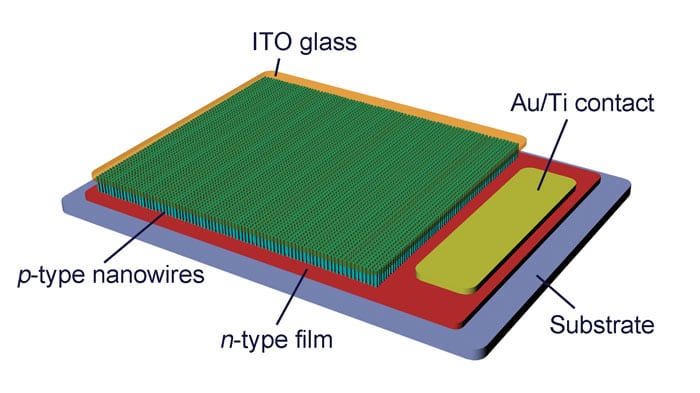
Liu’s team did this by growing long, thin crystals of antimony-doped zinc oxide on a thin film of pure zinc oxide (see above). These nanowires have diameters of about 200 nm and are about 3 µm long. Just as the team had hoped, the ends of the nanowires fused into a single crystal with the thin film underneath. Tests revealed that the device worked extremely well as a prototype ultraviolet laser, producing light with a variety of wavelengths closely spaced around 385 nm.

Further development needed

Ritesh Agarwal of the University of Pennsylvania, who was not involved in the work, is impressed and feels that the technology should be further developed. “[The researchers] have demonstrated large-area lasing devices, but the true potential of nanowires will be realized when single-nanowire laser diodes can be fabricated with ease. This still remains a big challenge in this field,” he says.

Chu also feels the real significance of the research may lie in single-nanowire lasers that could be used to study living cells. “If we develop our method further, I hope we can insert this tiny laser into the cell or even smaller tissue inside the cell. If this technology were to be realized, then it would be a powerful tool for doing basic biological and biomedical research into the single cell and perhaps even for killing viruses,” he told physicsworld.com.

The work is reported in Nature Nanotechnology.

How to make a superlens from a few cans of cola

“Acoustic metamaterial” may sound exotic, but researchers in France have managed to assemble one from a few multipacks of cola cans. Arranged in a grid, the drinks cans act as a superlens for sound, focusing acoustic waves into much smaller regions than their metre-long wavelengths typically allow. The cans act as resonators, directing the volume of the sound to peak in a space just a few centimetres wide, and this heightened precision could improve acoustic-actuator systems.

Propagating light or sound waves diffract when they encounter an object, with the resulting interference preventing the waves from being focused to a spot smaller than about half their wavelength. However, the scattering process also involves evanescent waves, which prevent discontinuities in the electromagnetic field and fade away quickly – within half a wavelength of the reflecting object.

Superlenses pick up and amplify these evanescent waves and offer a way of beating the diffraction limit. Now, Geoffroy Lerosey, Fabrice Lemoult and Mathias Fink of the Institute Langevin in Paris have developed a system to build and control evanescent waves in order to tightly focus acoustic energy.

Collective resonance

Each can resonates at about 420 Hz, which is slightly below the standard concert tuning pitch of A above middle C. However, by assembling 49 cans into a seven-by-seven square, the cans resonate collectively rather than individually. By playing a single tone using different combinations of the eight speakers surrounding the array of cans, the researchers are able to make the cans resonate at frequencies of about 340–420 Hz. These resonances are the evanescent waves building up among the cans.

The different resonances produced different shapes in the pressure distribution across the array, measured with a microphone suspended above the cans. Once the researchers had recorded the 49 pressure distributions, or resonant modes, they were able to devise ways to layer the resonances so that these built up in some places and cancelled out in others.

The team managed this through time reversal, a method that owes much to Fink’s work since the early 1990s. The researchers choose a can that will host the focused sound and imagine that sound travelling from it to each of the speakers. The team then plays time-reversed versions of these hypothetical waves through the speakers, and the sound naturally builds on itself at the chosen can and cancels out elsewhere. “I can also choose to build a more complex wave field over the cans, focusing on three points at the same time,” says Lerosey.

Ghostly sounds

This technique concentrates the acoustic waves on a spot one-quarter the size of the diffraction limit. To focus the sound even tighter, the team needed to counteract the energy losses incurred as the waves pass through the cans. This is done by amplifying the frequencies that are lost, thus creating signals that build up and cancel out more precisely. These ghostly sounds, like a chime struck in the distance that makes a sheet of metal shake nearby, focus on spots not much bigger than the mouth of a can – about a 12th of the diffraction limit.

“I am especially impressed by their experimental set-up. It’s simple and neat,” says Jie Zhu of the University of California, Berkeley. “Yet, their experimentally demonstrated results are clear and straightforward.”

Nicholas Fang of the Massachusetts Institute of Technology in Cambridge calls the new approach for focusing sound “exciting”. He believes it could be applied to ultrasound frequencies by using smaller resonators. “Such an effect could be useful for applications such as cell sorting in biomedical fields and particle removal in ultrasound cleaning, as well as other interesting actuators,” he explains.

Moving with sound

Acoustic actuators harness sound waves to physically move objects, and Lerosey points out that the acoustic field generated by the cans is not only more precise than an ordinarily focused field, it is also stronger. He also suggests that the technique could be extended to focusing waves in elastic materials. But on a fundamental level, Lerosey says this new strategy “gives you the possibility to manipulate sound in new ways that have never been achieved before”.

This research will be published in Physical Review Letters.

Atlantis lifts off into history

Last launch of Atlantis- Space Shuttle Program NASA-Bill Ingalls.jpg

By Tushna Commissariat

Despite gloomy weather conditions that threatened to cancel the launch altogether, NASA’s shuttle Atlantis has launched from the Kennedy Space Center. Marking the last and final flight of the Space Shuttle Programme – STS-135 – Atlantis and a four-person crew are on a 12-day mission to deliver more than 3.5 tonnes of supplies to the International Space Station (ISS). This final stock should keep the station running for a year. Although the countdown stopped briefly at 31 s before the launch, the shuttle had a “flawless” lift-off, according to NASA. It has now settled down into its preliminary orbit ahead of its rendezvous with the ISS this Sunday morning.

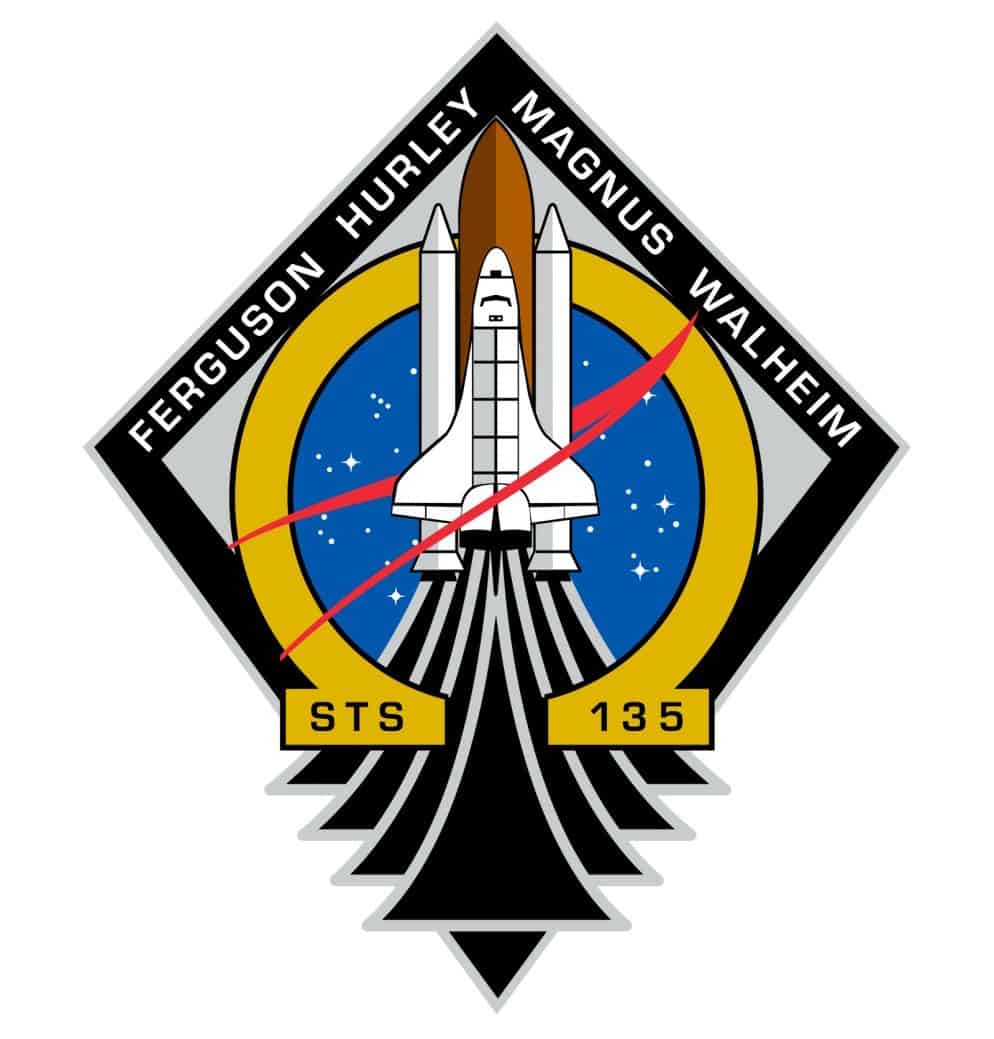
The image above is of the shuttle, taken shortly after the rotating service structure was rolled back yesterday at Launch Pad 39A at the Kennedy Space Centre in Florida (Credit: NASA/Bill Ingalls). Below is an image of the mission patch for this final iconic flight (Credit: NASA).

STS-135 Mission Patch.jpg

“The shuttle’s always going to be a reflection of what a great nation can do when it commits to be bold and follow through,” said astronaut Chris Ferguson, commander of the mission, from the cockpit of Atlantis minutes before the launch. “We’re completing a chapter of a journey that will never end. Let’s light this fire one more time, and witness this great nation at its best.”

Atlantis was the fourth orbiter built and had its maiden voyage on 3 October 1985. Atlantis had a number of firsts to its name – it was the first shuttle to deploy a probe to another planet, to dock to the ISS and the first with a glass cockpit! It conducted a final servicing mission to the Hubble Space Telescope in May 2009.

NASA has decided to retire its shuttle programme with this last flight because the vehicles are too costly to maintain. It now intends to contract out space transport to private companies. The hope is that this will free NASA resources to invest in a other programmes that will potentially send humans beyond the space station to the Moon, Mars and maybe even asteroids.

Atlantis is also carrying some rather unusual passengers – some simple yeast cells. The aim is to study the yeast cells as their genetic make up is remarkably similar to that of a human cell. This makes it an ideal system for studying genetic defects and understanding how these defects may manifest in human disease. In two separate experiments – conducted at the ISS – researchers will study the effect of microgravity on cell growth.

The video below has the crew of Atlantis talking about the “vibrancy of the ISS as a stepping stone for NASA’s plans for future human exploration beyond low Earth orbit”.

Happy 40th birthday, ILL

Jagged peaks at ILL in Grenoble
Behind the bike sheds: the view from ILL

By Hamish Johnston

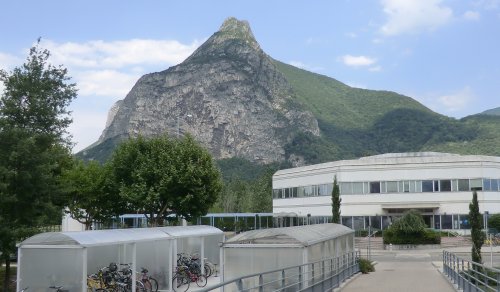
Yesterday I made a flying visit to what is arguably the world’s most famous lab for neutron science – the Institut Laue-Langevin (ILL). Nestled between jagged mountains at the edge of the French Alps, the reactor at ILL has been reliably churning out neutrons since the reactor in Grenoble first went critical in 1971.

Like all neutron sources, the majority of the facility’s 40 or so instruments don’t study the neutron itself – but rather use beams of neutrons to work out the structure and composition of objects as varied as railway tracks and human proteins.

tower.jpg

However, ILL is unique in that a significant chunk of the research that goes on there (about 15%) is devoted to the study of the neutron. To do this, ILL physicists make ultracold neutrons, or UCNs, which move so slowly that they would be overtaken in a race by a decent human sprinter.

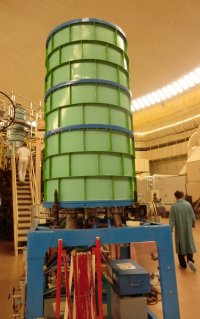
The amazing thing is that UCNs can be collected and stored in containers like the one pictured on the right. There they can be observed for relatively long periods of time to see, for example, if they change (or oscillate) into antineutrons. Such an oscillation is forbidden by the Standard Model of particle physics and seeing it could point towards new physics.

In Grenoble I interviewed two leading UCN physicists, Peter Geltenbort and Oliver Zimmer, so stay tuned to physicsworld.com for much more about UCNs. I was also lucky enough to have a tour of the reactor and one of ILL’s experimental halls guided by Peter and Oliver. You can see the photos that I took over on our Flickr page.

This year is the 40th anniversary of ILL and I recorded an interview with the facility’s scientific director Andrew Harrison. As well as telling me about the four new instruments being built at ILL, Andrew looked to the future and shared his vision of how ILL will play a complementary role to the European Spallation Source due to be built in Sweden in 2025. Again, stay tuned to physicsworld.com for more from Andrew.

Nanomagnet memories approach low-power limit

Tiny magnetic memory and logic devices that consume very little energy have been developed by researchers at the University of California, Berkeley. With further improvements, the devices could operate close to the “Landauer limit” of minimum energy consumption because they require no moving electrons to work – something that could revolutionize electronics.

Half a century ago the IBM physicist Rolf Landauer was the first to establish that information and computation are physical processes. He also showed that, contrary to the received wisdom at the time, performing computations does not require a minimum amount of energy but that erasing information does.

He used the newly developed information theory to calculate the minimum amount of energy that a logical operation (such as an AND or OR operation) would consume, given the limitations imposed by the second law of thermodynamics. This law states that an irreversible process – such as a logical operation or erasing a bit of information – dissipates energy that can never be recovered from the system. The minimum amount of energy was calculated to be 18 meV at room temperature, which is now known as the Landauer limit.

No moving electrons

Modern-day silicon-based computing chips rely on electric currents that unfortunately produce a lot of waste heat – mainly through the electrical resistance of moving electrons. However, microprocessors based on just nanomagnets would, in principle, require no moving electrons and so waste significantly less energy during operation. According to calculations performed by the researchers, such chips would dissipate energy at the Landauer limit during erasure operations. This is a million times less energy per operation than today’s computers require.

“One could, I think, build real circuits that would operate right at the Landauer limit,” says team leader Jeffrey Bokor. “Even if we could get within one order of magnitude, a factor of 10, of this limit, it would represent a huge reduction in energy consumption for electronics. It would be absolutely revolutionary.”

The nanomagnets employed by Bokor and colleagues are roughly 100 nm wide and 200 nm long. They can be used in binary computer memory thanks to the fact that the up and down orientation of the magnetic poles (north or south) can be used to represent “0” and “1”. More importantly, if multiple nanomagnets are packed close together, their north and south poles interact via ordinary dipole–dipole forces and so behave like transistors, something that allows for simple logic operations. Indeed, the researchers calculated that computation in a circuit consisting of 16 coupled nanomagnets would also dissipate energy at the Landauer limit.

However, there is still much to do before such nanomagnetic memories and logic see the light of day. For one thing, scientists need to find a way of dispensing with electrical currents altogether in such systems – at present, these currents are used to generate a magnetic field that erases or flips the polarity of the nanomagnet. “Ideally, new materials will make electrical currents unnecessary, except perhaps for relaying information from one chip to another,” explains Bokor.

Finding the right materials

The team is now working with several other research groups to find such materials. “For example, multiferroics show promise because you can use them to control magnetism directly with a voltage rather than an external magnetic field,” adds Bokor.

Another big problem will be to make the devices less susceptible to random fluctuations – such as thermal effects, stray magnetic fields and other types of noise – from the environment. Such a problem is inevitable in small devices that run on extremely low power.

“This is a very exciting paper,” Owen Maroney from Oxford University in the UK, who was not involved in the work, told physicsworld.com. “The models we use to derive the Landauer limit have often been so abstract that we worried that something might stop real physical systems from reaching it. It is great to see the technology developing to the point where building a scalable computer that operates in this way is looking like a realistic possibility. While there are clearly still a few more hurdles to pass, the result shows how developing nanoscience can lead to great benefits.”

The work was reported in Phys. Rev. Lett. 107 010604.

Free to download: July's Physics World

By Matin Durrani

PWJul11cover-iop.jpg

It is perhaps a little-known fact that Griffin – the main character in H G Wells’ classic novel The Invisible Man – was a physicist. In the 1897 book, Griffin explains how he quit medicine for physics and developed a technique that made himself invisible by reducing his body’s refractive index to match that of air.

While Wells’ novel is obviously a work of fiction, the quest for invisibility has made real progress in recent years – and is the inspiration for this month’s special issue of Physics World, which you can download for free via this link.

Kicking off the issue is Sidney Perkowitz, who takes us on a whistle-stop tour of invisibility through the ages – from its appearance in Greek mythology to camouflaging tanks on the battlefield – before bringing us up to date with recent scientific developments.

Ulf Leonhardt then takes a light-hearted look at the top possible applications of invisibility science. Hold on to your hats for invisibility cloaks, perfect lenses and the ultimate anti-wrinkle cream.

Some of these applications might be years away, but primitive invisibility cloaks have already been built, with two independent groups of researchers having recently created cloaks operating with visible light that can conceal centimetre-scale objects, including a paper clip, a steel wedge and a piece of paper. But as Wenshan Cai and Vladimir Shalaev explain, these cloaks only work under certain conditions, namely with polarized light, in a 2D configuration and with the cloak immersed in a high-refractive-index liquid. It seems that the holy grail of hiding macroscopic objects viewed from any angle using unpolarized visible light is still some way off.

The special issue ends with a look at something even more fantastic-sounding – the possibility of creating a cloak that works not just in space but in space–time. Although no such “event cloak” has yet been built, Martin McCall and Paul Kinsler outline the principles of how it would work and describe what might be possible with a macroscopic, fully functioning device that conceals events from view. These applications range from the far-fetched, such as the illusion of a Star Trek-style transporter, to the more mundane, such as controlling signals in an optical routing system.

But, hey, that’s enough of me banging on about the special issue. Download it for free now and find out for yourself. And don’t forget to let us know what you think by e-mailing us at pwld@iop.org or via our Facebook or Twitter pages.

P.S. If you’re a member of the Institute of Physics, you can in addition read the issue in digital form via this link, where you can also listen to, search, share, save, print, archive and even translate individual articles. How’s that for value?

Copyright © 2026 by IOP Publishing Ltd and individual contributors