With e-MERLIN facing the axe, what next for Jodrell Bank and UK astronomy?

The UK’s Science and Technology Facilities Council (STFC) recently announced funding cuts to a range of physics and astronomy projects as it seeks to reduce costs. One of the most high-profile casualties is e-MERLIN, a network of seven radio telescopes spread across the UK, including the iconic Lovell Telescope at Jodrell Bank.

To discover what the cuts could mean for UK science and the livelihoods of those affected, podcast host Andrew Glester caught up with two astronomers at Jodrell Bank: Simon Garrington, e-MERLIN director, and David Williams-Baldwin, an e-MERLIN research support scientist.

They discuss why the cuts have caused such alarm among scientists, how the UK astronomy community is mobilizing in opposition, and why the consequences could extend far beyond Jodrell Bank.

e-MERLIN combines signals from its telescopes to produce sharp radio images of the Universe – with a resolution comparable to that of the Hubble Space Telescope. As things stand, funding for the telescope array will run out in March 2028, putting the future of the network and scientific operations at Jodrell Bank in doubt.

It’s an uncertain time for an observatory that was granted UNESCO World Heritage status in July 2019 for its historical contributions and its technical and scientific ingenuity since the 1940s.

An STFC spokesperson emphasises that Jodrell Bank is “not closing” and “will continue to play an important role in UK science”. This includes the Square Kilometre Array Observatory that has its headquarters at Jodrell Bank as well as other radio astronomy research projects in the UK and elsewhere.

“We recognise the strength of feeling about Jodrell Bank and the e-MERLIN network, and the contribution they have made to UK science. The achievements of the scientists, engineers and staff who have supported e-MERLIN over many years are widely respected across the research community,” they add. “We are focusing on the next generation of radio astronomy to ensure UK researchers continue to be at the forefront of the field. Rising cost pressures mean that we have had to make difficult choices about STFC funding to make sure we are able to fund world class research sustainably into the future.”

Earthquake fault irregularities control rupture speed and influence ground motion

Earthquakes that propagate at higher speeds make the ground move more than it would in slower but otherwise comparable earthquakes, say geophysicists. Using physics-based models, Mohamed Abdelmeguid and colleagues at the California Institute of Technology in the US showed that so-called “supershear” ruptures produce stronger and longer-duration ground motion than equivalent subshear ruptures. Because models of ground motion that underpin infrastructure standards do not account for this effect, these models may need to be updated to accurately describe hazards such as the 2025 Myanmar earthquake, which produced supershear ruptures in both directions.

Geophysicists have identified two categories of earthquake based on how fast their ruptures propagate through the Earth’s crust. Shear waves, or S waves, travel at certain expected velocities (the shear-wave velocity) depending on the stiffness and density of the ground. When a rupture travels faster than the shear-wave velocity of the surrounding ground, it is termed a supershear earthquake. Otherwise, it is subshear.

Although Abdelmeguid notes that supershear ruptures were first predicted theoretically in the 1970s, and have subsequently been observed in both laboratory experiments and the real world, most previous studies focused on their underlying mechanisms and the transition from subshear to supershear. The new study, which appears in the Bulletin of the Seismological Society of America, goes a step further by examining how the ground motion in a supershear quake differs from that of an otherwise comparable subshear one. The question is relevant, Abdelmeguid says, because nearly 36% of strike-slip earthquakes during the past 15 years contained supershear rupture, yet existing models do not factor it in.

Supershear simulations

To address this gap, Abdelmeguid and colleagues developed a dynamic rupture model that generates simulated ground motion data and used it to identify the characteristics of supershear earthquakes. They found that prolonged supershear propagation produces what they term “a distinct spatial pattern of stronger and longer-duration shaking”. However, episodic supershear segments, where rupture speed intermittently changes between supershear and subshear, produce ground motion similar to subshear ruptures.

Simulations like these are important because some supershear rupture scenarios are poorly represented in the observational record. This record is used to develop ground motion models, so simulations can “reveal physical dependencies that may not be apparent from existing observations,” Abdelmeguid says.

Characterizing the 2025 Myanmar earthquake

The 2025 Myanmar earthquake – a supershear quake in which many regions experienced higher than expected ground shaking – is a case in point. It occurred on the 1200-kilometre-long Sagaing Fault, which lies at the boundary of the Burma microplate and the Sunda plate and is not far from Mandalay, the country’s second-largest city. At magnitude 7.7, it was the largest earthquake in Myanmar in over a century, and the long rupture meant that large parts of Myanmar and Thailand were affected, with thousands of deaths and injuries as well as severe damage to infrastructure.

Initial studies were inconclusive about whether this earthquake’s rupture exhibited intermittent or sustained supershear speed. This lack of consensus is partly because recording intermittent supershear rupture is challenging when near-fault sensors are sparse, as is the case in Myanmar (and indeed most countries, with notable exceptions such as Japan, Taiwan, New Zealand and parts of the US).

A new study published in PNAS addresses this question. Using satellite earth observations, teleseismic data and CCTV footage as well as the available near-fault seismic sensor data, researchers led by Lingling Ye at the Southern University of Science and Technology (SUSTech) in China modelled the rupture process of the Myanmar quake. The result, Ye says, is a “well-resolved rupture process” that “reveals previously unrecognized dynamic rupture features”. Notably, the team’s simulations showed that the rupture transitioned between supershear and subshear as it tore through around 460 kilometres of the country.

Influence of geometry and stress distribution

To understand the cause of these variations, the researchers examined the geometry and stress distribution along the fault. Based on an existing fault model, they calculated a parameter called fault misalignment, which acts as an indicator for irregularities in the fault geometry. Higher fault misalignment, for example, indicates higher bends and branches in the fault.

When the researchers overlaid fault misalignment with the observed rupture speed, they noticed that supershear speeds coincided with fault stretches that had lower misalignment. For fault stretches with higher misalignment, subshear speed prevailed, meaning that the rupture decelerates at locations with high fault misalignment, transitioning from supershear to subshear. The researchers also found that the rupture speed, whether supershear or subshear, responded to the varying levels of local stress, with higher stress levels inducing faster rupture speed.

Although not unique in exhibiting supershear behaviour, the 2025 Myanmar earthquake rupture propagated away from the epicentre on both sides, travelling around 80 kilometres to the north and 380 kilometres to the south. Initial studies debated whether the ruptures on both sides were supershear. The researchers found that the northern rupture propagation was not supershear and claim that its shorter rupture length is caused by a combination of the fault’s complex structure and low accumulated stress resulting from the magnitude 6.8 earthquake that struck in 2012.

“Every earthquake has unique behaviour”

In future work, Ye is eager to revisit the 2023 Turkey doublet earthquakes, which she says have many more near-fault strong motion observations than the 2025 Myanmar quake, as well as a now well characterized complex fault system. “Every earthquake has unique behaviour,” she says. “Determining the key features that control their rupture processes is still underway.”

For Abdelmeguid, who recently started his own research group at the University of Houston, US, understanding these complex rupture processes is important because it will ultimately improve our understanding of geophysical processes and the ground motion models that are used for engineering applications. “We are currently extending this work to examine ground motions generated by ruptures on more complex faults, including cases in which fault geometry and heterogeneity influence both ground motion and the dynamic process, as observed during the multiple earthquakes,” he tells Physics World.

  • This article was amended on 2 September 2026 to clarify the nature of the rupture propagation in the 2025 Myanmar earthquake. The researchers found that the northern rupture was subshear, not supershear as originally stated.


Encapsulated islet transplants restore blood sugar control in diabetic mice

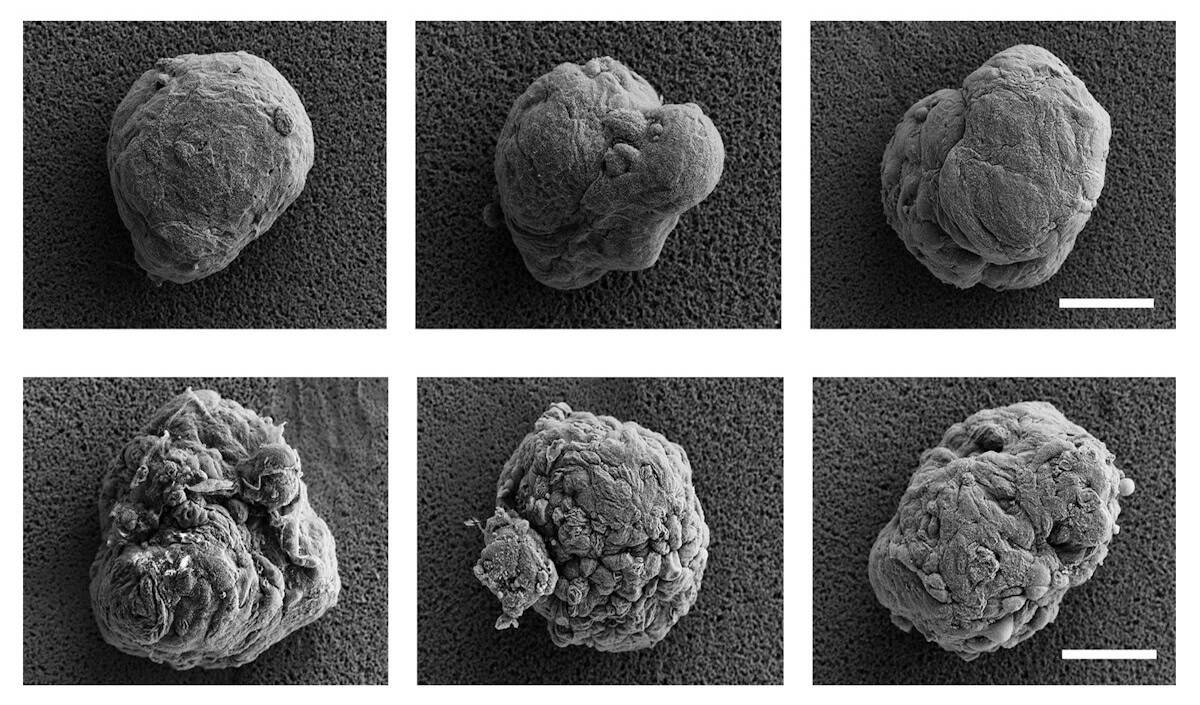
Uncoated and coated cell clusters

Islet transplantation, in which insulin-producing islet cells from a donor are implanted into a patient’s liver, is a promising therapy for type 1 diabetes. To prevent rejection of the donated cells, however, recipients need to continuously take immunosuppression drugs. Using a new type of cell encapsulation, researchers at The Pennsylvania State University demonstrated that diabetic mice could maintain normal blood glucose levels for 100 days, without requiring immunosuppressants. This represents a substantially longer time period than traditional cell therapies for diabetes.

The Penn State researchers developed their cell encapsulation process based on the molecular characteristics of the zona pellucida, a thin membrane that coats mammalian eggs. Once an egg is fertilized, biochemical reactions lead to hardening of the zona pellucida, which acts as a protective shield during embryo development. Here, biomimetic zona pellucida (BZP) encapsulation serves to hide the donor islets from the body’s immune system.

Pancreatic islets are clusters of five types of cells that work in tandem to regulate insulin and sugar levels in the body and prevent severe insulin deficiency. Islets harvested from healthy pancreases of deceased organ donors were first transplanted into Type 1 diabetes mellitus patients in 1974.

And in 2000, a landmark procedure increasing the mass of islets transferred and using steroid-free immunosuppression regimens was introduced by the University of Alberta in Edmonton, offering the hope of curing diabetes. But when implemented clinically, only 24% of recipients achieved insulin independence at 28 months with the Edmonton protocol.

Research on islet implantation continued unabated, particularly initiatives in islet encapsulation, using semi-permeable membranes to allow the entry of oxygen and nutrients and prevent the entrance of immune response cells. Most current work in this area uses large, 1.5 mm capsules. The Penn State team took an opposite tack: creating a thin 20-µm hydrogel capsule that spontaneously generates on the cell surface with 100% encapsulation efficiency.

Protection from immune attack

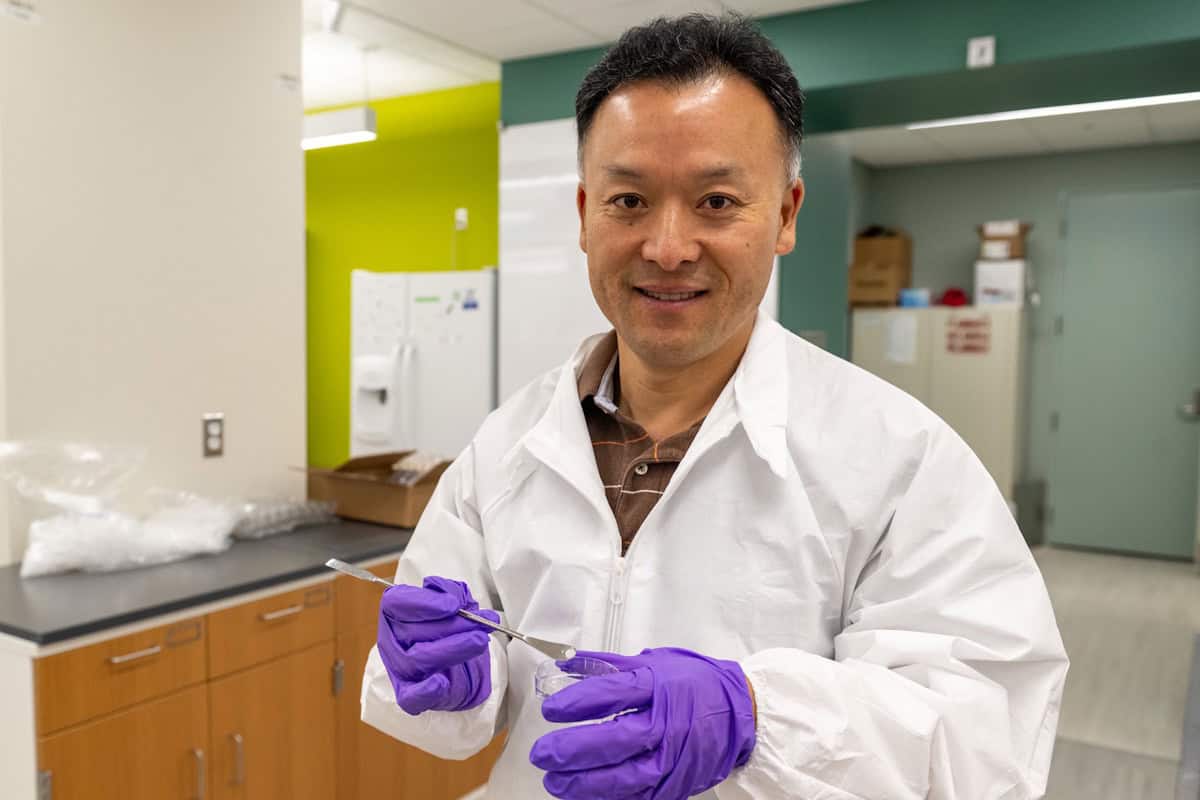
Principal investigator Yong Wang and colleagues spent eight years developing an ultrathin hydrogel layer that effectively lays against the curved edge of living cells or cell clusters without impacting their functionality. The islet encapsulation process takes place spontaneously in aqueous solutions under physiological conditions, without exposure to harsh physical, chemical or biological factors, ensuring that BZP development on the cell membrane does not cause any loss of cellular viability or function.

Yong Wang

Writing in Nature Biomedical Engineering, the researchers explain that they emulated the biological processes that harden the zona pellucida on a fertilized egg (calcium ion-induced glycoprotein cleavage, assembly and crosslinking on the egg surface). In spite of its thinness, the BZP protects the cell as effectively as the much larger 1.5 mm diameter capsules.

The small capsule size significantly reduces the potential transplantation volume, improving an organ’s ability to receive and accommodate the large number of islets needed to be effective. When coating a 100-µm islet, for example, a 20-µm-thick BZP uses only 1/71 of the polymer volume of a 500-µm microcapsule. The researchers also suggest that the reduced polymer volume used for cell protection by the thin capsule may be a safety advantage of BZP compared to larger capsules.

In vivo assessment

The researchers first examined whether BZP could reduce the level of foreign body response to polystyrene microparticles injected into the peritoneal cavities of mice. Compared with uncoated microparticles, the BZP-coated particles induced a lower immune system response. They examined BZP synthesized using two types of alginate (involved in crosslinking reactions during BZP formation and hardening): chemically modified ultrapure alginate (BZP-U) and regular alginate (BZP-R). Tests in mice verified that BZP-U significantly mitigated the foreign body response compared with BZP-R encapsulation.

Immunocompetent diabetic mice treated with BZP-U-coated islets had their blood sugar restored to healthy levels within seven days. Additionally, the majority stayed diabetes free for over 100 days without continuously needing systemic immunosuppression. By comparison, mice treated with uncoated islets could not maintain healthy blood sugar levels for more than seven days.

In addition to effectively regulating blood glucose levels, one of the biggest advantages of the BZP approach is that it eliminates the need for long-term systemic immunosuppression. Lantidra, the only islet transplantation treatment for Type 1 diabetes cleared by the US Food and Drug Administration, requires continuous immunosuppressants to stop immune system attacks. Such long-term immunosuppressant use can lead to increased risk of infection and other serious health issues, including cancer.

Wang and colleagues plan to further study the BZP approach to better understand the specific duration of resistance each islet transplant may offer, as well as its effect in large animals.

“Large animal studies will be necessary to fully demonstrate their potential in cell transplantation,” the researchers write. “When large animals are used, one needs to examine not only glucose levels but also other key biomarkers. Moreover, the long-term immune responses to BZP and BZP-encapsulated cells warrant further investigation to yield deeper insights into BZP optimization and improvement.”

Word wave puzzle no.8

Here’s how the game works:

    1. Enter a word guess – in this game the word has six letters.
    2. After submitting your guess, each letter in the guessed word is coloured to provide feedback:
      • Green: The letter is correct and is in the correct position in the target word.
      • Yellow: The letter is correct but is in the wrong position in the target word.
      • Grey: The letter is not in the target word at all.
    3. Using this colour feedback, refine your next guess.
    4. Continue guessing until you correctly identify the hidden word(s) or run out of attempts.

If you want a clue to the answer, read the article here.

Fancy some more? Check out our puzzles page.

Gamma Knife radiosurgery brings precision treatment to benign brain conditions

This episode of the Physics World Weekly podcast features Katharine Hunt, Head of Radiosurgery Physics at Sheffield Teaching Hospitals NHS Foundation Trust in the UK. She explains how Gamma Knife radiosurgery is being used to treat arteriovenous malformations (AVMs) and other benign brain conditions.

Sheffield is home to one of the world’s longest-running Gamma Knife centres, and Hunt shares the facility’s insights into treatment planning, dose precision, paediatric care, and long-term outcomes.

This podcast is sponsored by Elekta, which produces the Gamma Knife radiosurgery system.

X-ray camera catches spin waves in the act

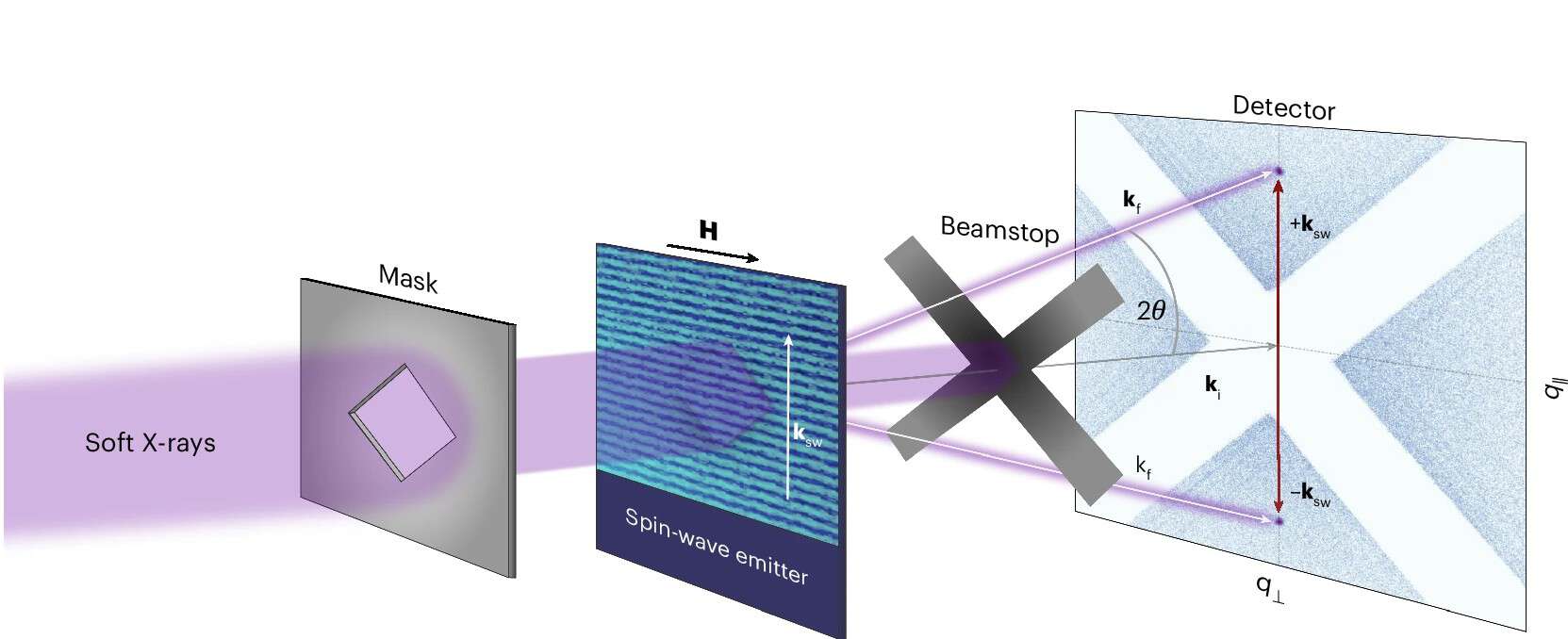
Schematic of magnon microscopy

A new microscopy technique that can probe short-wavelength spin waves has been developed by researchers in Europe. Dubbed magnon momentum microscopy, the technique uses X-rays to observe quantized spin waves (magnons) in magnetic materials. Unlike existing techniques, the new method can characterize nonlinear interactions involving short-wavelength magnons – interactions that could be used to create new “magnonic” technologies.

The research was done by a team including Steffen Wittrock, Bastian Pfau and Daniel Schick at Germany’s Helmholtz Center Berlin for Materials and Energy and the Max Born Institute for Nonlinear Optics and Short Pulse Spectroscopy. The team comprised researchers at those German institutes and at EPFL in Switzerland.

Every ferromagnetic material is full of tiny atomic magnets, all lined up and pointing in the same direction. Nudge one of them, and the disturbance travels through the material like a ripple across a pond, passing from one atomic magnet to the next. These disturbances are called spin waves, and are quantized in units called magnons. Magnons have both particle-like and wave-like properties and physicists believe that magnons could one day carry information inside computers more efficiently than electrical signals do today. Such technologies are dubbed magnonics.

Magnon behaviour is most interesting when the magnon wavelength is shorter than about 100 nm. At these wavelengths, magnon dynamics are dominated by short-range quantum exchange interactions, rather than the longer-range forces that govern magnons with longer wavelengths.

At high magnon intensities, magnons will collide, combine, and split into new magnons before heading off in completely different directions. These nonlinear interactions will be crucial for developing magnonic technologies, but existing tools have consistently fallen short at probing this regime. Previous techniques, for example, could only probe short-wavelength magnons from one direction at a time. What magnonics researchers needed was a way to probe all directions simultaneously with extremely high sensitivity.

Now, the German–Swiss team has created an instrument that does exactly that.

Mapping in momentum space

Their technique, called magnon momentum microscopy, uses soft X-rays as a probe. When a magnon travels through a magnetic material, it leaves a regular imprint on the material’s magnetization. Soft X-rays tuned at just the right wavelength scatter off this transient imprint.

The angle of scattering directly reveals the magnon’s direction and wavelength. A detector placed behind the sample records the full scattering pattern in one shot. The result is a map in momentum space. This is a single image in which every magnon direction and wavelength appears at once, rather than one at a time. The team acquires each full map in as little as 30 s. The technique can detect magnons driven by power levels more than a thousand times weaker than what previous X-ray methods required.

Watching waves multiply

The team demonstrated the technique using a sample of yttrium iron garnet (YIG), a standard material in magnon research. They directly observed a process called four-magnon scattering, in which two high-amplitude spin waves scatter off each other and populate new waves spreading out in every direction.

On the detector, four-magnon scattering shows up as a bright elliptical ring. The ring covers all directions in 2D momentum space in a single snapshot. Its shape is a very good match for theoretical predictions of the spin-wave dispersion. Dispersion is a function that relates the propagation speed of a spin wave to the frequency of that wave.  This agreement confirms both the physics and the precision of the new technique.

At higher driving powers, new waves appear at simple fractions of the driving frequency. These fractional harmonics go beyond standard theoretical descriptions. They point to a richness in nonlinear magnon behaviour that remains to be fully understood.

With its ability to capture the full directional landscape of spin waves in one measurement, and its sensitivity reaching down to the shortest wavelengths where exchange interactions dominate, magnon momentum microscopy opens a direct route into a regime of magnon physics that was previously out of reach. The research is described in Nature Physics.

Physics-based simulations could improve earthquake-damage predictions, why aren’t they being used?

Earthquake ground-motion predictions rely on statistical models built on historical records. This means that ground-motion measurements taken during previous earthquakes are used to predict the effects of future earthquakes. However, historical data can be sparse in some locations and if a region has not experienced a severe earthquake in the modern era, there will be no data for high-magnitude events. As a result, seismologists are keen on using physics-based simulations to predict ground motions, essentially filling in the gaps in historical datasets.

Although physics-based simulations of ground motions have been in development for while, they have rarely been used for engineering applications or building code development. With advancing computational capacities and geophysical understanding of earthquake cycles, the development and application of physics-based simulations have seen a surge of energy in the last few years.

As someone working with physics-based ground motions and enthusiastic about the latest research in the field, I arrived in Portland, Oregon in July for the quadrennial US National Conference on Earthquake Engineering (NCEE) hosted by the Earthquake Engineering Research Institute. This was my third NCEE – I was about to start my PhD when I attended the first time in 2018 in Los Angeles.

After a series of delays during my flight from London, I finally arrived in Portland in the quiet hours of the night. Only realising that I had about six hours before the first session starts in the morning.

Understanding the challenges

Regardless, I reached the venue at 9 am sharp, the Oregon Convention Center, with swollen (and perhaps red) eyes, to attend a workshop on “Earthquake ground motion simulation validation & utilization for engineering applications”. I was keen to understand why the validation and application of simulated ground motions are still challenging despite advancements in research and tools for simulations. A little sleep deprivation through jetlag did not deter me.

Current ground-motion models are used within a probabilistic framework, along with models of the fault systems and the earthquake magnitudes they can generate, to define probabilities of expected ground shaking. These statistical models do not capture the geophysical process but instead rely on a curated dataset collected in the short history of earthquake recordings. These datasets, likely, do not contain all possible earthquake magnitudes and ground shaking. Models based on these data are prone to bias, especially for scenarios where data are sparse. For example, the data gap is stark for higher magnitudes at shorter distances from the source, since we have only seen a handful of large earthquakes after earthquake recording started in the last century.

Physics-based simulations can meaningfully augment these datasets, and in turn, improve conventional ground motion models. Many such efforts have been made globally in the past decade. My PhD research deals with built environment impacts from a simulated magnitude 9 Cascadia subduction zone, which runs hundreds of kilometres along the coast of the Pacific Northwest of the US and southwestern Canada. Indeed, the subduction zone is about 200 kilometres west of where the conference was happening. Although this fault has never produced a magnitude 9 earthquake, or any significant earthquake, in the last century, there is geological evidence of several large magnitude earthquakes over a period of thousands of years.

“Different answers”

My research involved understanding how the built environment would be impacted by such a large earthquake on this fault. That research, and many others, showed that we can gain nuanced understanding of how ground shakes, impacts the built environment and cascades into landslides and tsunamis after an earthquake. As Stanford University’s Greg Deierlein, said during the workshop, “Simulations are most useful when they provide different answers compared to conventional methods.”

Despite their promise, physics-based simulations remain unused in most national seismic hazard models. And where they are used, the scale is negligible. The ingredient that is missing is trust – whether the simulations can represent complex fault geometry and rupture mechanism, how reliable are the velocity structure models, can the simulations reproduce empirical data. Trust, within the community of researchers and practitioners, is built on testing and validation.

Aptly, there was engaging discussions during the workshop around standardized validation protocols and open repositories of reproducible workflows. One key challenge for physics-based simulations is to establish that simulated ground shaking scales across various parameters in patterns that is empirically observed in the recordings. As Jonathan Stewart at the University of California Los Angeles, pointed out, “the trust on absolute amplitude [from physics-based simulations] is low, however, how does the [simulated] ground motion scale across various parameters is what is valuable.”

There was at least one session each day discussing methods of developing, validating, and applying physics-based simulation of ground motions. I presented my work on the final session, a closing act if you will, on using the simulated ground motions to reveal damage patterns across a building portfolio that conventional ground motion models cannot capture. It implies that we may have two very different views of risk depending on which models we use. This would make it challenging for insurance companies to correctly price the risk and for future infrastructure developments in the region.

With more encouragement and more questions than answers, I wrapped up five long-days of exchanging ideas, discussing careers, and catching-up with friends. While walking past beautiful murals and aisles of books in Powell’s Books on my last evening in Portland, I wondered how far simulated ground motions will travel by the time I come back for the next NCEE four years from now.

US orders universities to audit foreign research ties

The US Department of Defense (DoD) has given 30 US research universities until the end of the month to audit, and potentially cease, their partnerships with universities and military training institutions in “foreign entities of concern”.

If the institutions do not comply with the order, they risk losing funding from the Defense Advanced Research Projects Agency, the Office of Naval Research, and the Air Force Research Laboratory – losses that could potentially close entire academic research groups or departments.

The order does not specify the foreign entities it targets. But a list that the DoD published last month identified 130 universities and research institutes in China, Russia and Iran that it claimed to be wrongly appropriating US-funded technologies.

The DoD, which the Trump administration calls the Department of War, also noted that its order applies to “organizations associated with rebranded Confucius Institutes” – cultural programmes associated with US universities that began in 2004.

The DoD asserts that the audit process is designed “to protect American taxpayer-funded research investments from unauthorized technology transfer, intellectual property theft and adversarial exploitation” adding that it will allow the department to “better anticipate emerging threats, adapt to evolving adversarial tactics and maintain America’s position as a global leader in innovation”.

“The Department of War has zero tolerance for academic partnerships that compromise our national security,” notes Emil Michael, the DoD’s undersecretary of war for research and engineering. “Institutions that receive funding from American taxpayers must uphold the highest standards of research security, and these mandated audits will ensure accountability across the board.”

China tension

Those affected by the order include Harvard University, Massachusetts Institute of Technology, Cornell University and Johns Hopkins University.

The DoD has not indicated why it has chosen the 30 targets for audit. However, since it took office last year the second Trump administration has criticized prominent universities over issues such as antisemitism and their use of diversity, equity and inclusion.

Harvard has received particular ire from the administration, which has cut or delayed government grants to its departments while fighting the university in court.

A Republican majority House of Representatives committee issued a report on 13 August claiming that Harvard received over $630m from Chinese sources. The report also noted that the university had created a nonprofit organization, Harvard Global, to accept overseas grants that the university itself is not legally permitted to receive.

The DoD’s audit comes as the Trump administration prepares to welcome President Xi Jinping to the US late next month.

Reacting to the order, a statement by China’s embassy in Washington notes that it opposes what it calls the politicization of normal scientific, educational, and academic exchanges. “The US side should abandon the Cold War mentality and foster an open, fair, and non-discriminatory environment for educational, scientific, and people-to-people exchanges between China and the United States,” it declared.

Physics World contacted some of the universities affected by the order but did not receive a response.

The 12 August 2026 partial solar eclipse as seen from the Isle of Wight

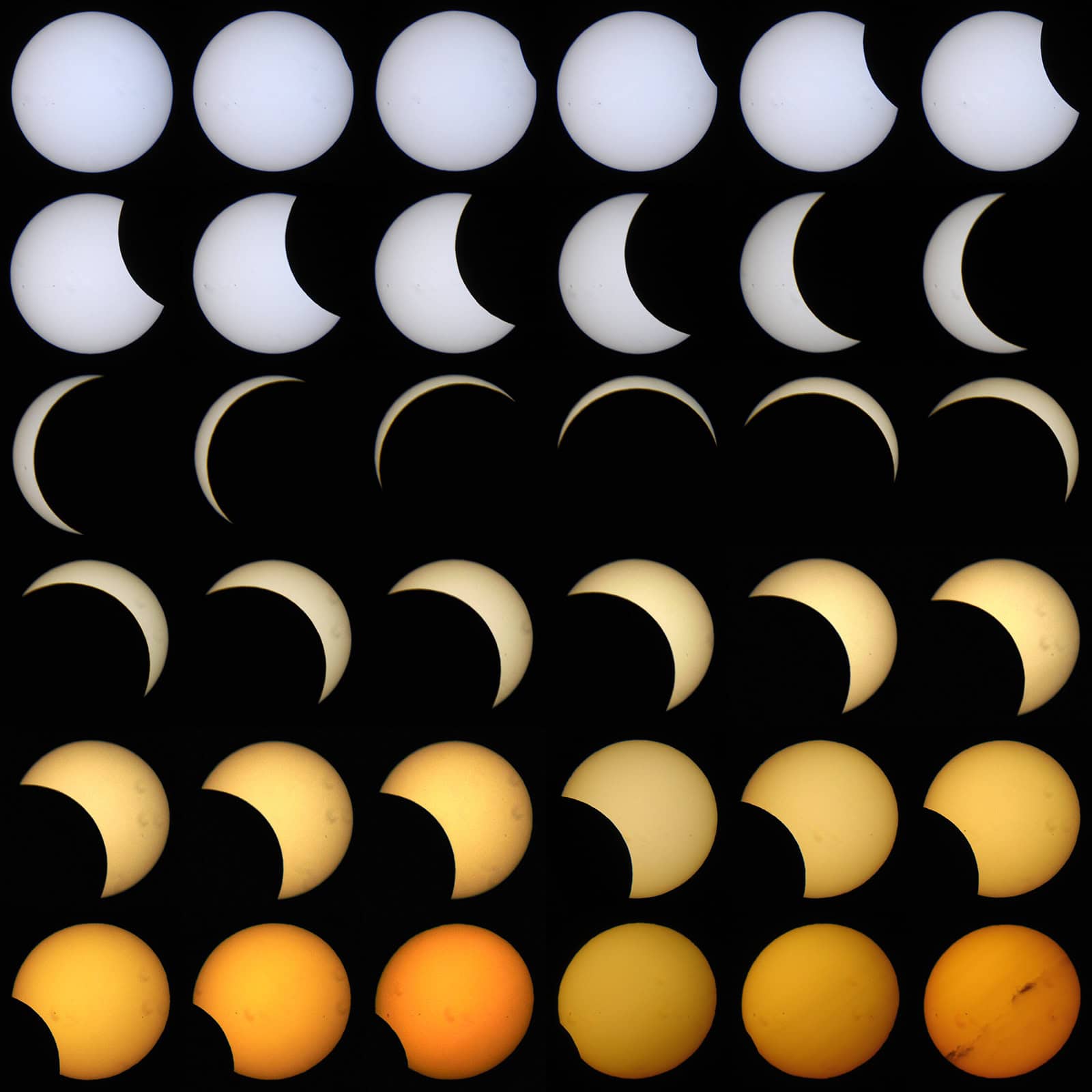
Photo montage of solar eclipse

The UK’s hot, dry summer provided widespread clear skies for the solar eclipse that took place on Wednesday 12 August 2026. It was not a total eclipse – you had to be in northern Spain for that – but Britain still enjoyed a partial eclipse between around 6 p.m. and 8 p.m. BST, depending on location.

With typically more than 90% of the Sun’s disc covered – and with the event occurring after many people had finished work – the circumstances were ideal for a rare, immersive mass-engagement with physics.

Many people had got hold of eclipse glasses in advance or searched through kitchen cupboards for a colander to produce shadow patterns

Widespread public-awareness raising by professional and amateur astronomical societies had led to a strong build-up to the event in mainstream and social media. As a result, much of the public was aware the eclipse was coming, and many people had got hold of eclipse glasses in advance or, failing that, searched through kitchen cupboards for a colander to produce shadow patterns.

Here in the UK, friends and families gathered on west-facing hills, parks and village greens that evening with folding chairs, smartphones, cameras, telescopes and colanders, to enjoy the spectacle over a picnic tea. In built-up areas of towns and cities, many sought out west-facing windows of homes and offices.

I’m an old-school visual observer and recorded the eclipse sequence using 20-year-old equipment

While the eclipse on the UK mainland was deepest in Cornwall, I took my chances on the Isle of Wight, just off the coast of southern England.

Amateur astrophotography has been revolutionized over the last few years thanks to specialized high-sensitivity astronomical CMOS cameras, but I’m an old-school visual observer and recorded the eclipse sequence using 20-year-old equipment.

The montage presented here contains 36 frames spanning the entire eclipse sequence and packs in a wealth of physics. Besides the obvious relative motion of the Earth, Moon and Sun, three sunspot groups are visible, approximately delineating the solar equator; the camera was aligned with the sunspot groups and the equatorial mount maintained this orientation.

The Moon’s sharp-edged silhouette is a reminder that it has no atmosphere, whereas the Sun is brighter in the centre than the edge. Known as “limb-darkening”, it arises because of the temperature gradient of the tenuous solar photosphere – and is a reminder that the perceived edge of the Sun is merely a wavelength-dependent opacity transition.

While we often describe the Sun as yellow, the transmission profile with the OD5 solar filter that I used here gives it a slightly silvery-blue tinge. But as the Sun sank lower in the sky during the evening, wavelength-dependent extinction and scattering reddened the light, so the silvery disc progressively turns distinctly yellow and then orange.

Along with the colour change, the solar disc takes on an oblate form in the final row of frames due to differential atmospheric refraction close to the horizon. Terrestrial clouds close to the local horizon are seen in the final frame.

For many people viewing an eclipse for the first time, talk of intersecting orbital planes is perhaps already too much physics for one evening, but for those who wish to look a little deeper, more questions – and more physics – pop up the closer you look. What have you spotted in the montage that I haven’t?

The technical stuff

I took these images using a portable 90 mm diameter Maksutov-Cassegrain telescope (a Meade ETX-90) on an equatorial mount with a battery-powered drive, a full-aperture glass OD5 solar filter, and a 25 mm focal-length eyepiece paired in eyepiece-projection mode with a 5 megapixel Sony Cyber-shot CCD digital camera.

The camera was set for manual operation: minimum ISO (100), minimum aperture (f/5.6), fixed focus (achieved at f/2.8), and manually adjusted exposure time (1/400 – 1/13 s). Image processing was minimal, conducted using ImageJ software, which is widely used in biomedical imaging.

Shadowing of the sensor by dust on the lens surfaces was partially corrected by dividing through by a normalized clear-sky exposure. Frames were cropped manually and re-scaled in intensity to compensate for increasing atmospheric absorption as the Sun sank towards the horizon, and for changes of exposure duration.

Radiation shielding vest could reduce cancer risk for astronauts on deep space missions

A radiation shielding vest tested during the uncrewed Artemis I flight in 2022 has been shown to significantly reduce the radiation dose that future astronauts or deep-space tourists might receive.

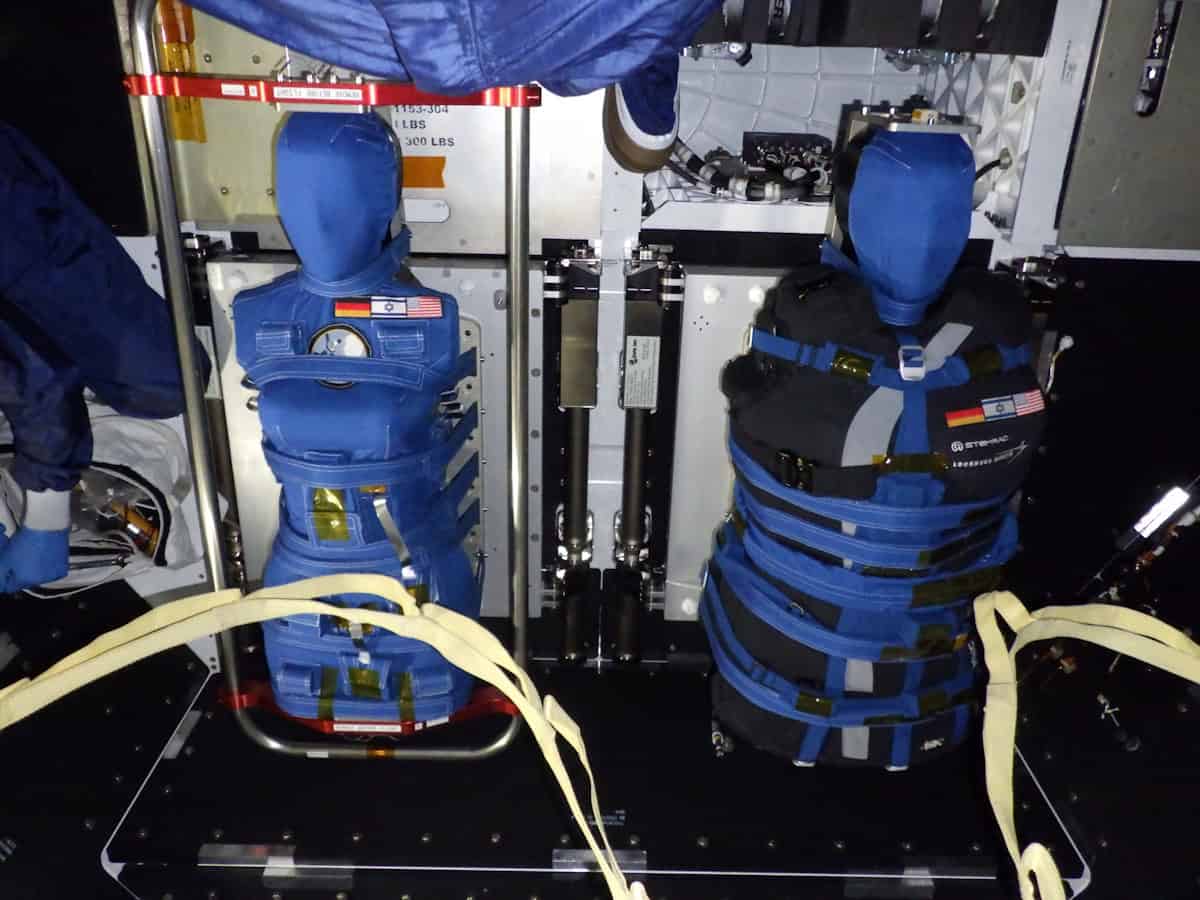
The data for this analysis were obtained via seating two human-tissue-equivalent female torso phantoms in the Orion crew capsule. While the “Zohar” phantom wore the new AstroRad vest, its travel companion “Helga” did not. Numerous radiation dosimeters placed in and on the phantoms allowed the received radiation dose to be compared.

“Exposure to radiation in space is unavoidable, and a single major solar particle event (SPE) can deliver more than one-third of NASA’s 600 millisievert career effective-dose limit. A three-year round trip to Mars would equal or exceed the career limit, which corresponds to a 3% mortality risk from radiation-induced cancer. So we developed the AstroRad vest to significantly reduce this hazard,” explains immunologist Oren Milstein, CEO of StemRad Radiation Protection, which began developing the vest with Lockheed Martin in 2015.

The Helga and Zohar dosimetry phantoms

The shielding thickness varies throughout the garment according to the radiation sensitivity of the underlying organs, with breasts, colon, lungs, ovaries, stomach and red bone marrow having concentrated shielding in the test vest. Milstein was inspired to develop this targeted architecture based on the experiences of his PhD supervisor, who treated the first responders to the 1986 Chernobyl nuclear power plant disaster.

With damage to bone marrow the accepted cause of death for all those emergency workers who lost their lives within months of the accident, “that heritage instilled in me a desire to protect people from radiation by selective shielding of the bone marrow,” Milstein explains, adding that the female focus of this experiment is because women have a higher predicted risk of radiation-induced cancer than men.

Astronauts currently shield from SPEs in “storm shelters” consisting of barricades of supplies, or by moving into areas containing more hardware against the walls. AstroRad provides a similar level of protection to the most robust shelter configuration while also “allowing the astronaut wearing it to move around the cabin and continue mission-critical tasks,” radiation physicist Jordan Houri, lead scientist for space exploration at StemRad, tells Physics World.

To maintain flexibility, the vest is constructed from thousands of hexagonal tessellated rods of high-density polyethylene (HDPE) sandwiched between two layers of elastic fabric. The shielding components can also slide past one another and stretch. HDPE was chosen for its high proportion of hydrogen – which is extremely effective at shielding against charged particle space radiation.

While Artemis I did not encounter a solar storm, Orion traversed the inner Van Allen belt, whose protons cover a similar energy range to those in SPEs. This enabled the team to construct a Monte Carlo model of the experiment for testing different radiation environments.

“We created digital twins of Helga and Zohar, the AstroRad vest, radiation detectors and spacecraft shielding,” explains Houri. “Using this model, we generated hundreds of billions of virtual protons and electrons representing the radiation environment of the inner Van Allen belt, before comparing the predicted detector responses directly with the measurements recorded during Artemis I.”

With close agreement found, the researchers then simulated measured SPEs from August 1972 and October 1989. As detailed in their recent Science Advances paper, this revealed that wearing AstroRad would reduce effective dose by around 60% in an August 1972-type scenario, and by almost 40% for a 1989-type SPE – sparing astronauts the dose equivalent from up to 193 and 131 days of deep space travel, respectively.

Combining these results with those from previous experiments, which tested the vests’ ergonomics on the International Space Station, is allowing the researchers to improve comfort and ease of motion, and reduce mass. They are also exploring whether lighter, empty vests could be filled with recycled polyethylene after launch.

Alongside the health benefits, reducing radiation exposure makes economic sense as it extends astronauts’ careers, concludes Milstein, who hopes that the AstroRad vests can help “make lunar habitation and Mars travel truly sustainable and not just a dream”.

Copyright © 2026 by IOP Publishing Ltd and individual contributors