

Translucent curtains soak up sound

Researchers in Switzerland have developed a new kind of lightweight curtain that can absorb sound waves while still letting light through. They say it is ideal for soaking up noise in offices, conference rooms or other places where natural light is needed.

Noise can be a major source of irritation at work or in the home, reducing productivity and making it hard to relax. Unfortunately, many of the materials used in interior design, such as glass and concrete, are what are known as acoustically hard. These materials reflect sound waves and so do not reduce levels of noise within a room.

On the other hand, acoustically soft, or porous, materials absorb a portion of the sound energy that strikes them. The fraction of energy absorbed depends on the frequency of the sound. Absorption occurs because air moving through such materials is slowed down by friction, which causes some of the sound energy to be converted into heat.

Lightweight and translucent

Usually, sound-absorbing materials are placed on the floor or ceiling, for example in the form of carpet or special kinds of tile. In places where the floor or ceiling cannot be modified, curtains can be used instead. But these are generally heavy and opaque. The new curtains, on the other hand, are lightweight and translucent.

The material for the curtains was designed using a computer model developed by researchers at Empa, the Swiss Federal Laboratories for Materials Science and Technology. The model was used to predict the acoustic behaviour of a variety of curtains, with properties such as a curtain’s size, porosity and mass per unit area altered to maximize sound absorption over a wide range of frequencies. Textile designer Annette Douglas then used the model to build an actual material – weaving together four or five different modified polyester yarns in such a way as to maintain the absorption characteristics while also ensuring fire resistance and light transmittance.

The material was then put to the test inside Empa’s reverberation chamber – a room in which sound waves are made to diffuse uniformly or randomly. With the curtain positioned 15 cm from a wall, the researchers found it could absorb up to five times as much sound as typical lightweight curtains. At low frequencies of about 200 Hz, it absorbed no more than about a fifth of the incident sound energy. However, at frequencies above 500 Hz (human ears having a maximum sensitivity between about 3000–4000 Hz) the material absorbed around three-quarters of the incident sound energy.

Astonished acousticians

“Acousticians are pretty astonished when they see the readings we are achieving with the new curtains,” says Kurt Eggenschwiler, head of Empa’s acoustics/noise-control division.

The curtains have been made into commercial products by silk weavers Weisbrod Zürrer and are now entering the German and Swiss markets. According to Douglas – whose company Annette Douglas Textiles sells the products – the curtains cost about 40% more than “a regular sheer fabric produced in Switzerland”.

Ken Gilbert of the National Center for Physical Acoustics at the University of Mississippi in the US thinks that the new curtain will “be well received and have a strong market”. He points out that sound-absorbing materials are generally used to reduce noise coming from objects within the room in question, whereas the new material will also be to reduce noise coming from outside through open windows. “This is an added bonus,” he says.

High-energy events in the Eternal City

By Edwin Cartlidge, Rome, Italy

Rome, the birthplace of nuclear physicist Enrico Fermi, is this week hosting a conference dedicated to discussing results from the NASA satellite that bears his name. Some 400 scientists have gathered in the Italian capital to discuss what the Fermi Gamma-Ray Space Telescope, launched in June 2008, can tell us about all manner of extreme celestial events – from the accretion of matter by supermassive black holes and ultra-energetic events known as gamma-ray bursts to the hypothesized collision of dark-matter particles.

First up on to the vast stage of the echoey Aula Magna at La Sapienza University was NASA’s Elizabeth Hays, who gave an overview of Fermi’s progress to date. Hays says she was happy to report that Fermi’s operations were “becoming almost mundane”, now that the satellite has been circling the Earth for over 1000 days, completing more than 16,000 orbits in that time, and collecting vast quantities of gamma-ray data in the process. (There is even now a Fermi app for the iPhone/iPad.)

Some of the gamma rays collected by Fermi have their origins on Earth, with Hays pointing out that radiation generated by charged particles during thunderstorms created something of a minor storm of their own on the Web with nearly half a million views of a NASA video explaining the process (see video above). Fermi’s principal source of gamma radiation is, however, outer space, and it surveys almost the whole sky in three hours, making increasingly detailed studies of bright sources and attempting to pinpoint the nature of weaker ones.

The first catalogue of distinct gamma-ray sources revealed by Fermi was released about a year ago and researchers have been working furiously to get a second, more precise catalogue published. As Dave Thompson of NASA’s Goddard Space Flight Center explained, this has taken a lot longer to produce than expected but he argues that when it comes out later on this month it will represent a “major revision” of the old catalogue, listing some 1888 active galactic nuclei and other gamma-ray sources.

Many of those who have made the trip to Rome will also be hoping that another high-profile – and very expensive – astroparticle mission will finally get to make the trip into space in the next few days or weeks. That mission is the cosmic-ray observatory known as the Alpha Magnetic Spectrometer, which is expected to launch on 16 May on the space shuttle Endeavour. As speaker Giovanni Bignami of the University of Pavia put it, “we are keeping our fingers crossed”.

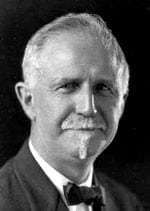
Willard Boyle: 1924–2011

Willard Boyle, who shared the 2009 Nobel Prize for Physics, has died at the age of 86. Boyle was awarded one half of the prize with George Smith for inventing the charge-coupled device (CCD) camera. Boyle and Smith were both working at Bell Laboratories in New Jersey when they made their discovery in 1969 – Boyle was director of device development at the lab and was Smith’s boss; Smith was a department head. The other half of the 2009 prize went to Charles Kao for his work on optical fibres.

Boyle was born in Amherst, Nova Scotia, on 19 August 1924. His family moved to a remote logging community in Quebec, where Boyle was home-schooled by his mother until the age of 14. After serving in the Royal Canadian Navy in the Second World War, he then attended McGill University, receiving a PhD in physics in 1950. Boyle joined Bell Labs in 1953, where he spent the rest of his career before retiring in 1979 and returning to his native Nova Scotia.

Like many Nobel laureates, the prize came late in Boyle’s life, when he was 85. As his long-time friend and Nova Scotia local councillor Ron MacNutt told the Canadian Broadcasting Corporation yesterday, Boyle “had some regret that that recognition came a little bit late for him to get out and do more of that, to talk to younger children in school”. An earlier award, MacNutt added, might have let Boyle influence even more people in his life.

Revolutionary pioneer

The invention of the CCD revolutionized photography because the devices allow images to be converted directly into digital data rather than using film. CCDs once formed the basis of all digital cameras, but have since been replaced by CMOS sensors in most low-cost applications such as mobile phones and some digital cameras. CCDs are also widely used in astronomy, with the Hubble Space Telescope, for example, having several CCD cameras on board, including in the Wide Field Camera, which was recently upgraded.

A CCD camera contains millions of light-sensitive cells that are arranged in rows and columns to form a matrix. Incoming light is converted via the photoelectric effect into an electron, which is stored in a capacitor, with the amount of stored charge in each cell being proportional to the intensity of light. The charges are then transported to the edge of the CCD matrix to be read out, allowing the image to be reconstructed from the contents of each pixel.

Boyle was made a Companion of the Order of Canada in 2010 and received several other awards for his CCD work – including the IEEE’s Morris N Liebmann Memorial Award, which he shared with Smith. He is survived by his wife Betty and three children.

Nanotech industry comes under fire

A UK researcher is calling into question the capability of the nanotech industry to turn fundamental research into robust technologies that can be produced on a large scale. Mike Kelly at the University of Cambridge argues that manufacturing constraints will prevent structures smaller than 3 nm in size from being mass-produced using “top-down” processes.

“There are many billions of dollars being spent on one-offs while the bull in the china shop is the ultimate challenge of manufacturability,” Kelly told physicsworld.com.

Kelly is making these claims after carrying out a case study of the production of vertical nanopillars, which have been touted for uses in sensors and displays. These components can be produced at present by two different top-down approaches: using a metal particle catalyst to grow the pillars; or by infilling holes in a resist layer that can be defined using lithography.

Intolerable variations

Kelly considered the variability in the properties of nanopillars created using these two production methods and found that a large standard deviation in size and shape started to creep in once the scale reached below 3 nm. This, he says, would lead to intolerable variations in their electronic, optical and other properties if the nanopillars were to be used in applications.

On the back of his findings, Kelly believes that, given specific tools for fabrication, some nanostructures are intrinsically unmanufacturable. “The statistics of small numbers means that currently used methods will simply produce artefacts with too big a variation between adjacent features to be useful for anything,” he said. “If I am wrong, and a counter-example to my theorem is provided, many scientists would be more secure in their continued working, and that is good for science.”

‘Perfect’ structures

Rod Ruoff, a materials scientist at the University of Texas at Austin, agrees that some nanostructures below certain sizes will not be sufficiently stable in their structures and chemistries for all applications. “It is thus valuable to raise questions about what length scales are realistic, for each technology, for each application,” he said.

But Ruoff disagrees that bottom-up processes cannot be used to produce consistent specifications in bulk, and he highlights carbon as a promising material. “One of the attractive features of carbon nanotubes and graphene is their relative chemical stability, and the fact that such nanostructures can in fact be ‘perfect’ in structure even at the Angstrom length scales.”

Order from disorder

This is a view shared by Philip Moriarty a nanomaterials researcher at the University of Nottingham in the UK, who says that the limitations of top-down fabrication are already well-recognized by academics and industrial scientists. “This has prompted an intense research effort focussed on exploiting so-called bottom-up techniques such as self-assembly and, in particular, directed self-assembly.”

By this, Moriarty is referring to processes in which disordered systems of components form organized structures as a consequence of specific, local interactions among the components. This directed self-assembly is described by some as a hybrid of top-down and bottom-up fabrication techniques.

Moriarty believes that Kelly has presented the “effective error bars” associated with nanofabrication, rather than a general theory. He also said that he disagrees fundamentally with the assertion that scientific research should be focused on what can be manufactured now. “Fundamental nano scientific research should not be constrained by our current understanding of the limits of nanomanufacturability.”

This research is described in the journal Nanotechnology.

Nano-antenna fashions charge from light

A new device that collects and focuses light before converting it into a current of electrons has been developed by researchers at Rice University in the US. The nano-optical antenna and photodiode – the first device of its kind – could potentially be used in a variety of applications such as photosensing, energy harvesting and imaging.

Conventional antennas, which are widely used to transmit radio or TV signals, can be used at optical frequencies as long as the device is shrunk to the nanoscale. Such optical nano-antennas work by exploiting “plasmonic modes”, which increase the coupling between light emitted by neighbouring molecules and the antenna.

Naomi Halas and colleagues have now taken advantage of these plasmonic modes to make the first optical nano-antenna that also works as a photodiode – a type of photodetector capable of converting light into either current or voltage. Halas’s team made its device by growing rod-like arrays of gold nano-antennas directly onto a silicon surface – so creating a metal–semiconductor (or Schottky) barrier formed at the antenna–semiconductor interface.

When light hits the antenna, it excites oscillating waves of electrons, known as surface plasmons (so-called because they travel near the surface of the metal). These energetic or “hot” electrons are then injected into the semiconductor over the Schottky barrier, thus creating a detectable photocurrent without the need for an applied voltage.

The resonators made by the researchers, who report their work in Science, have heights and widths of 30 nm and 50 nm, respectively, and are between 110 nm and 158 nm long. Each 15 × 20 array consists of 300 devices with a spacing of 250 nm between the antennas. The structure is surrounded by an insulating later of silicon dioxide and the ensemble is then electrically connected through an electrode made of indium tin oxide.

Applications galore

One advantage of the device is that the photocurrent generated is no longer limited to photons with energies above the band gap of the semiconductor, but instead to photon energies above the height of the Schottky barrier. The device can thus detect light below the band gap of the semiconductor, and at room temperature to boot. “The result is important because it enables a new way to capture and detect infrared photons using cost-effective, sustainable semiconductor materials such as silicon,” Halas told physicsworld.com.

The range of potential applications for this device is extremely diverse Naomi Halas, Rice University

As the plasmon resonance wavelengths in the device are in the near-infrared part of the electromagnetic spectrum, with shorter nanorods giving shorter resonance wavelengths, applications for the device could include silicon-based solar cells that would work in the infrared as well as in the visible parts of the spectrum. The fact that the devices work in the broad-infrared also means that they could be used to make low-cost silicon infrared-imaging detectors that might replace costly indium-gallium-arsenide detectors that work in the same spectral range.

“The range of potential applications for this device is extremely diverse,” says Halas. “For example, as it is capable of detecting sub-band-gap photons, it could find widespread use in on-chip silicon photonics that would no longer need to integrate additional semiconductor materials as detectors into chip designs – something that would also lower fabrication costs.” Halas adds that such nano-antennas could also be used in “unforeseen applications”, such as photosensing, energy harvesting, imaging and light-detection technologies.

Multiple valleys boost thermoelectric performance

Physicists in the US and China have boosted the performance of a common thermoelectric material by modifying its electronic band structure. The improvement was made by carefully adjusting the relative abundances of tellurium and selenium in a lead alloy. The result is a material with an all-time-high thermoelectric figure of merit of 1.8 – a result that could lead to new types of thermoelectric devices that can convert waste heat into useful electricity.

A thermoelectric generator converts heat directly into electricity and comprises two thermoelectric semiconductors – one n-type and the other p-type. Devices based on lead telluride (PbTe) have been used to generate electricity since the 1960s. These have been used on space missions – where radioisotopes provide the heat – and in commercial systems here on Earth where the heat is generated by burning gas or another fuel. In principle, thermoelectric systems could also capture waste heat from anything from solar panels to car exhausts to nuclear power stations, thereby improving the energy efficiency of these processes. But before this is can happen, scientists must boost the performance of thermoelectric materials.

To be of any use, a thermoelectric material must be good at conducting electricity but poor at conducting heat. It must also have a large thermopower, which is the ratio of the voltage to temperature difference across a material. These requirements are expressed in the thermoelectric figure of merit ZT, which should be greater than about 1.5.

Promising materials

PbTe-based materials have long been seen as good candidates because they have relatively high figures of merit, long lifetimes and can operate at the high temperatures that occur in car exhausts and similar environments. However, the figures of merit for these materials have remained stubbornly below one.

In this latest work, Jeffrey Snyder and colleagues at the California Institute of Technology and the Chinese Academy of Sciences have modified the electronic band structure of PbTe-based materials to achieve a figure of merit of 1.8 at 850 K – a value that they describe as “extraordinary”.

The team achieved this by taking advantage of the fact that doping PbTe with selenium causes the convergence of many “degenerate valleys” within the electronic band structure of the material. According to Snyder, increasing the number of degenerate valleys increases the speed at which the charge-carrying holes can pass through the material. The result is a boost in the electrical conductivity and therefore the thermoelectric figure of merit.

Many valleys

The commercial thermoelectric material (Bi,Sb)2Te3, for example, is known to have a valley degeneracy of six. However, by substituting about 20% of the tellurium atoms in PbTe with selenium, Snyder’s team achieved a valley degeneracy of 16. The result is a figure of merit of 1.8 for this p-type material.

Higher ZT values have been reported before, but Snyder told physicsworld.com that he believes that this is the highest ZT to be reproduced in independent laboratories. “While I would not be surprised if I am informed of other examples I may have missed, this is the highest ZT discussed in the thermoelectric community in the past five years,” he says.

Akram Boukai of the University of Michigan described the work as “compelling”, since, he suggests, it is the first time someone has succeeded in utilizing band degeneracy for simultaneously enhancing the electrical conductivity while not significantly affecting the thermopower. “I believe this may lead to practical devices since this was done using a bulk process amenable to large-scale manufacturing,” he says. However, he points out that a suitable n-type material must also be developed.

To make a practical thermoelectric generator – with a high overall figure of merit – both p- and n-type materials must be found with high average ZT values over a wide temperature range of about 50–500 °C. The ZT of samples made by Snyder and colleagues drops off rapidly with temperature, and the team is now working on improving this by further engineering the electron energy levels. Snyder says that the team has also made progress in creating a promising n-type material.

The research is reported in Nature 473 66.

ALICE in wonderland

A major part of the Large Hadron Collider’s appeal, which has brought it recognition far beyond the particle physics community, is the sheer “bigness” – of both the experiments and the questions they are designed to address.

This is undoubtedly true of the ALICE experiment, which is seeking to recreate the conditions that existed just a few picoseconds after the Big Bang. In doing so, the ALICE collaboration has recorded the highest temperatures and densities ever produced in an experiment on Earth.

In this interview with physicsworld.com, David Evans, the leader of the UK team working at ALICE, describes the huge engineering effort that went into constructing the detector. He goes on to explain how ALICE is designed to shed light on some of the biggest mysteries in physics, such as the nature of the strong interaction that binds quarks into protons and neutrons. Press “play” for the full story.

The first American in space

USPS.jpg
Celebrating 50 years of US manned spaceflight (Courtesy: USPS)

By Michael Banks

If you haven’t marked it in your diary yet, today marks the 50th anniversary of the first American in space.

On 5 May 1961 NASA astronaut Alan Shepard blasted off on a Redstone rocket from Cape Canaveral as part of the US Mercury manned space programme, which had the goal of putting a human in orbit around the Earth.

Shepard, one of seven astronauts chosen for the Mercury programme, successfully completed the 15 minute suborbital flight, which carried him to an altitude of 187 km. He became the second person in space after Yuri Gagarin’s successful orbit of the Earth on 12 April 1961.

To mark the anniversary, LIFE magazine has published 30 images taken on the day by LIFE photographer Ralph Morse, which includes 13 previously unseen photographs.

Indeed, Morse was dubbed by NASA astronaut John Glenn (who in 1962 went on to become the first American to orbit the Earth from space) as “the 8th Mercury astronaut” because he spent many years with the astronauts as they trained. You can view the slideshow of images here.

The United States Postal Service has also commemorated the anniversary by unveiling a pair of stamps. There is also one featuring a grinning Shepard (see image above), the other stamp features an image of the MESSENGER spacecraft, which successfully entered orbit around Mercury in March.

Talking about gravitation

roger_w_babson.jpg

By Tushna Commissariat

As I was looking through all that is new and exciting in the world of physics this morning, I came across this interesting paper titled “Persistence of black holes through a cosmological bounce”, recently published on the arXiv preprint server. The paper looks at the possibility of certain black holes persisting when the universe collapses in a “big crunch”, only to stick around for the universe to re-expand with a “big bounce”. The paper was written specifically for the 2011 Awards for Essays on Gravitation held by the Gravity Research Foundation. Upon investigation, I found another two submissions published on arXiv, entitled “Birkhoff’s theorem in higher derivative theories of gravity” and “Quantum gravity and the correspondence principle”.

The Gravity Research Foundation was founded by Roger W Babson, a graduate from the Massachusetts Institute of Technology, who had an interesting relationship with gravity. In his youth, his older sister drowned in a river near their home, prompting him to write an essay titled “Gravity – our enemy no. 1” wherein he claimed that it was gravity that killed her. “She was unable to fight gravity, which came up and seized her like a dragon and brought her to the bottom” he wrote.

Later he owed a debt of sorts to the theory of gravity as it helped him to predict the 1929 stock market crash based on the principle that if there was a strong upward action, there would follow a severe downward reaction. “What goes up will come down” he said. “The stock market will fall by its own weight.”

Gravity was a neglected area of physics in the 1940s. To energize the field, at the encouragement of his colleague George Rideout, he set up the Gravity Research Foundation, which handed out the first awards for the best essays submitted on gravity in December 1949. Previous prizewinners include Stephen Hawking (who has won it six times) and British science writer and astronomer John Gribbin (who was co-author of the winning paper, with Paul Feldman, when Gribbin was only 24) An archive of all winning essays can be found on the foundation’s website.

This year will be the 62nd year of the Essay Award and they will be announcing the top five prizewinners on 15 May, so all the best to the participants. And do look out for a follow-up blog!

Antimatter trap tightens its grip

Last year physicists working on the ALPHA experiment at the CERN particle-physics lab became the first to capture and store atoms of antimatter for long enough to examine it in detail. They trapped 38 antihydrogen atoms for about one fifth of a second. Now, the same team has posted a paper on the arXiv preprint server describing how it trapped 309 antihydrogen atoms for 1000 s. This boost in both number and trapping time should lead to important insights into the nature of antimatter.

Antihydrogen – the antimatter version of the hydrogen atom – is an atomic bound state of a positron and antiproton that was first produced at CERN towards the end of 1995. The study of antimatter is important in developing our understanding of the universe and in finding out why it contains so much more matter than antimatter.

With members from seven nations, the ALPHA team shared the Physics World 2010 Breakthrough of the Year award for its capture of antihydrogen. As well as extending the previous capture time by almost four orders of magnitude, the team has gained some interesting insights into the energy distribution of the captured anti-atoms.

Ground state first

The ALPHA team produced the antihydrogen by merging two clouds of cold plasmas: one containing positrons and the other antiprotons. By improving their trapping techniques, the researchers managed to hold the antihydrogen for more than 1000 s. These advances also meant that five times as many atoms were trapped per attempt. Calculations based on data from the experiment suggest that after about 0.5 s, most of the trapped antihydrogen atoms reach their lowest energy or ground state. As a result, the team says that its trapped sample is the first antihydrogen obtained in the ground state.

The researchers have also managed to make the first measurements of the energy distribution of the trapped anti-atoms. These data, along with computer simulations, should pave the way to a better understanding of trapping dynamics. The team carried out 40,000 simulated trapped antihydrogen events and compared them with the 309 experimental ones, to study the trapping and release processes.

Studying CPT violation

The ability to trap antihydrogen for long periods of time could lead to precision tests of charge–parity–time (CPT) violation, which could help explain why the universe contains so little antimatter. Other possible experiments include microwave spectroscopy of the antimatter and even laser and adiabatic cooling of antihydrogen to temperatures where gravitational effects are observable, according to the researchers.

The paper is currently under review for journal publication and therefore the ALPHA researchers were unable to comment further.

The research is described in arXiv:1104.4982.

For a detailed explanation about how the ALPHA experiment creates antimatter see “Antihydrogen trapped at CERN”.

Copyright © 2026 by IOP Publishing Ltd and individual contributors