ALICE in wonderland

A major part of the Large Hadron Collider’s appeal, which has brought it recognition far beyond the particle physics community, is the sheer “bigness” – of both the experiments and the questions they are designed to address.

This is undoubtedly true of the ALICE experiment, which is seeking to recreate the conditions that existed just a few picoseconds after the Big Bang. In doing so, the ALICE collaboration has recorded the highest temperatures and densities ever produced in an experiment on Earth.

In this interview with physicsworld.com, David Evans, the leader of the UK team working at ALICE, describes the huge engineering effort that went into constructing the detector. He goes on to explain how ALICE is designed to shed light on some of the biggest mysteries in physics, such as the nature of the strong interaction that binds quarks into protons and neutrons. Press “play” for the full story.

The first American in space

USPS.jpg
Celebrating 50 years of US manned spaceflight (Courtesy: USPS)

By Michael Banks

If you haven’t marked it in your diary yet, today marks the 50th anniversary of the first American in space.

On 5 May 1961 NASA astronaut Alan Shepard blasted off on a Redstone rocket from Cape Canaveral as part of the US Mercury manned space programme, which had the goal of putting a human in orbit around the Earth.

Shepard, one of seven astronauts chosen for the Mercury programme, successfully completed the 15 minute suborbital flight, which carried him to an altitude of 187 km. He became the second person in space after Yuri Gagarin’s successful orbit of the Earth on 12 April 1961.

To mark the anniversary, LIFE magazine has published 30 images taken on the day by LIFE photographer Ralph Morse, which includes 13 previously unseen photographs.

Indeed, Morse was dubbed by NASA astronaut John Glenn (who in 1962 went on to become the first American to orbit the Earth from space) as “the 8th Mercury astronaut” because he spent many years with the astronauts as they trained. You can view the slideshow of images here.

The United States Postal Service has also commemorated the anniversary by unveiling a pair of stamps. There is also one featuring a grinning Shepard (see image above), the other stamp features an image of the MESSENGER spacecraft, which successfully entered orbit around Mercury in March.

Talking about gravitation

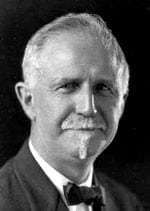
roger_w_babson.jpg

By Tushna Commissariat

As I was looking through all that is new and exciting in the world of physics this morning, I came across this interesting paper titled “Persistence of black holes through a cosmological bounce”, recently published on the arXiv preprint server. The paper looks at the possibility of certain black holes persisting when the universe collapses in a “big crunch”, only to stick around for the universe to re-expand with a “big bounce”. The paper was written specifically for the 2011 Awards for Essays on Gravitation held by the Gravity Research Foundation. Upon investigation, I found another two submissions published on arXiv, entitled “Birkhoff’s theorem in higher derivative theories of gravity” and “Quantum gravity and the correspondence principle”.

The Gravity Research Foundation was founded by Roger W Babson, a graduate from the Massachusetts Institute of Technology, who had an interesting relationship with gravity. In his youth, his older sister drowned in a river near their home, prompting him to write an essay titled “Gravity – our enemy no. 1” wherein he claimed that it was gravity that killed her. “She was unable to fight gravity, which came up and seized her like a dragon and brought her to the bottom” he wrote.

Later he owed a debt of sorts to the theory of gravity as it helped him to predict the 1929 stock market crash based on the principle that if there was a strong upward action, there would follow a severe downward reaction. “What goes up will come down” he said. “The stock market will fall by its own weight.”

Gravity was a neglected area of physics in the 1940s. To energize the field, at the encouragement of his colleague George Rideout, he set up the Gravity Research Foundation, which handed out the first awards for the best essays submitted on gravity in December 1949. Previous prizewinners include Stephen Hawking (who has won it six times) and British science writer and astronomer John Gribbin (who was co-author of the winning paper, with Paul Feldman, when Gribbin was only 24) An archive of all winning essays can be found on the foundation’s website.

This year will be the 62nd year of the Essay Award and they will be announcing the top five prizewinners on 15 May, so all the best to the participants. And do look out for a follow-up blog!

Antimatter trap tightens its grip

Last year physicists working on the ALPHA experiment at the CERN particle-physics lab became the first to capture and store atoms of antimatter for long enough to examine it in detail. They trapped 38 antihydrogen atoms for about one fifth of a second. Now, the same team has posted a paper on the arXiv preprint server describing how it trapped 309 antihydrogen atoms for 1000 s. This boost in both number and trapping time should lead to important insights into the nature of antimatter.

Antihydrogen – the antimatter version of the hydrogen atom – is an atomic bound state of a positron and antiproton that was first produced at CERN towards the end of 1995. The study of antimatter is important in developing our understanding of the universe and in finding out why it contains so much more matter than antimatter.

With members from seven nations, the ALPHA team shared the Physics World 2010 Breakthrough of the Year award for its capture of antihydrogen. As well as extending the previous capture time by almost four orders of magnitude, the team has gained some interesting insights into the energy distribution of the captured anti-atoms.

Ground state first

The ALPHA team produced the antihydrogen by merging two clouds of cold plasmas: one containing positrons and the other antiprotons. By improving their trapping techniques, the researchers managed to hold the antihydrogen for more than 1000 s. These advances also meant that five times as many atoms were trapped per attempt. Calculations based on data from the experiment suggest that after about 0.5 s, most of the trapped antihydrogen atoms reach their lowest energy or ground state. As a result, the team says that its trapped sample is the first antihydrogen obtained in the ground state.

The researchers have also managed to make the first measurements of the energy distribution of the trapped anti-atoms. These data, along with computer simulations, should pave the way to a better understanding of trapping dynamics. The team carried out 40,000 simulated trapped antihydrogen events and compared them with the 309 experimental ones, to study the trapping and release processes.

Studying CPT violation

The ability to trap antihydrogen for long periods of time could lead to precision tests of charge–parity–time (CPT) violation, which could help explain why the universe contains so little antimatter. Other possible experiments include microwave spectroscopy of the antimatter and even laser and adiabatic cooling of antihydrogen to temperatures where gravitational effects are observable, according to the researchers.

The paper is currently under review for journal publication and therefore the ALPHA researchers were unable to comment further.

The research is described in arXiv:1104.4982.

For a detailed explanation about how the ALPHA experiment creates antimatter see “Antihydrogen trapped at CERN”.

Vision of beauty

My childhood hero from the 1970s was the Six Million Dollar Man. Equipped with his superior bionic eye, he easily outwitted the villains as they stumbled through their evil plots using only their limited, natural vision. I reminisce about this TV character every year when I show a lecture theatre full of undergraduates the first slide in my “Physics of Light and Vision” course, which shows a face with cameras staring out of the eye sockets. I then invite my students to debate the pros and cons of artificial vision.

Technological advances over the past few decades have transformed this debate from the wild speculations of science fiction into the practicalities of science fact. For one thing, the number of photodiodes that capture light in digital cameras has escalated, driven by an exponential growth of “pixels per dollar”. Furthermore, surgeons can now insert electronic chips into the retina. The grand hope is to restore vision by replacing damaged rods and cones with artificial photoreceptors – and clinical trials to show this are already under way.

The striking similarities between the eye and the digital camera help towards this endeavour. The front end of both systems consists of an adjustable aperture within a compound lens, and advances bring these similarities closer each year. It works both ways. On the one hand, for example, some camera lenses now feature graded refractive indices similar to the eye’s lens. On the other, a laser-surgery technique called Lasik removes aberrations from the surface of the eye’s cornea (which acts as the first lens in the eye’s compound-lens system) in order to resemble the shape found in camera lenses. Meanwhile, a quick glance at the back of a camera shows that it is getting closer to the eye’s retina in terms of both the number of light-sensitive detectors and the space that they occupy. A human retina typically contains 127 million photoreceptors spread over an area of 1100 mm2. In comparison, today’s state-of-the-art CMOS sensors feature 16.6 million photoreceptors over an area of 1600 mm2.

However, there are crucial differences between how the human visual system and the camera “see”, both in the physical structure of the detectors and the motions they follow. For example, the neurons in the eye responsible for transporting electrical information from the photoreceptors to the optic nerve have a branched, fractal structure, whereas cameras use wires that follow smooth, straight lines. And while a camera captures its entire field of view in uniform detail – recording the same level of information at the centre of the image as at the edges – the eye sees best what is directly in front and not so well at the periphery. To allow for this, the eye constantly moves around, exploring one feature at a time for a few moments before glancing elsewhere at another, in a gaze pattern that is fractal; whereas the camera’s gaze is static with a pattern that is described by a simple dot.

The differences between camera technology and the human eye arise because, while the camera uses the Euclidean shapes favoured by engineers, the eye exploits the fractal geometry that is ubiquitous throughout nature. Euclidean geometry consists of smooth shapes described by familiar integer dimensions, such as dots, lines and squares. The patterns traced out by the camera’s wiring and motion are based on the simplicity of such shapes – in particular, one-dimensional lines and zero-dimensional dots, respectively. But the eye’s equivalent patterns instead exhibit the rich complexity of fractal geometry, which is quantified, as we will see, by fractional dimensions. It is important that we bear in mind these subtleties of the human eye when developing retinal implants, and understand why we cannot simply incorporate camera technology directly into the eye. Remarkably, implants based purely on camera designs might allow blind people to see, but they might only see a world devoid of stress-reducing beauty.

More than meets the eye

Early theories of human senses highlighted some of the unique qualities of the eye. The “detectors” associated with hearing, smelling, tasting and touching are all passive. They gather information that arrives at the body. For example, the ear and nose wait for sound waves and airborne particles to arrive before they respond. Consequently, the early Greek philosophers of the atomist school proposed an equally passive theory of human vision in which the eye collected and detected “eidola” – a mysterious substance that all objects shed continually.

Unfortunately, although the concept of eidola provided an appealing theory for human vision, it triggered an avalanche of scientific problems in terms of the world being viewed. For example, let us say I receive eidola from the Cascade Mountains seen from my office window in Oregon. Would the mountains not wear down, given that they must emit enough eidola for the other million people who also view the Cascades on a daily basis?

Luckily, optical theories emerged to save the atomists from their increasingly contrived models of the material world and gradually progressed towards the geometric optics that we enjoy today. But even the best optical theories suffered from a weakness: given that light rays bounce off a friend’s face, why can we not spot it immediately in a crowd – even though it is directly before our eyes? We are forced to conclude that the visual system is not passive but that it has to hunt for the information we need.

Hunting is a necessary strategy for the eye because the world relentlessly bombards us with visual stimuli. Our basic behaviour is composed of strategies aimed at coping with this visual deluge. For example, we walk round a corner at a distance that ensures that the scene emerges at a rate that we can process. However, our biggest strategy for coping lies in the way the photoreceptors are distributed across the retina and in the associated motion of our eyes.

If the eye employed the Euclidean design of cameras and distributed its photoreceptors in a uniform, 2D array across the retina, there would simply be too many pixels of visual information for the brain to process in real time. Instead, most of the eye’s seven million cones are piled into the central region of the retina. The cone density reaches 50 cones per 100 µm at the centre of the fovea, which is a pin-sized region positioned directly behind the eye lens. Unlike the camera’s passive collection of information, the eye instead has to move to ensure that the image of interest falls mainly on the fovea. Consequently, although the fovea comprises less than 1% of the retinal size, it uses more than 50% of the visual cortex of the brain.

We know a lot about how the eye moves in certain situations. If viewing a face, for example, we look first at the eyes and then the mouth. But little research has focused on how we search for information in a more complex scene. On reflection this seems to be an oversight, as the evolution of our visual system has been fuelled by natural scenery. Typical objects in these scenes each consist of structures that repeat at different magnifications. In other words, the complexity of what we have evolved to see is built up of self-similar, fractal objects such as plants, clouds and trees. How would we therefore search for something like a tiger hiding in a fractal forest?

Gazing patterns

To address the question of how we pick out the important bits of knowledge from the vast scene before our eyes, my collaborators Paul Van Donkelaar and Matt Fairbanks (also at the University of Oregon) and I used the remote-eye-tracking system shown in figure 1a, which uses an ordinary optical camera to track the position of a participant’s pupil. To detect where the participant is actually looking a beam of infrared light is shone onto the cornea and the position of the reflected ray is measured with a separate infrared camera. The participants spent time viewing a series of computer-generated fractal patterns (figure 1b). A computer algorithm then uses information from the cameras to calculate the participant’s gaze as a function of time and generates eye trajectories similar to that shown in figure 1c.

One of the intriguing properties of a fractal pattern is that its repeating structure causes it to occupy more space than a smooth 1D line, but not to the extent of completely filling the 2D plane. As a consequence, a fractal’s dimension, D, has a value lying between 1 and 2. By increasing the amount of fine structure in the fractal, it fills more of a 2D plane and its D value moves closer towards 2. We tweaked this parameter to generate various series of computer-generated fractal patterns, for which the dimension ranged from 1.1 to 1.9 in 0.1 intervals.

Our results showed that, when searching through the visual complexity of a fractal pattern, the eye searches one area with short steps before jumping a larger distance to another area, which it again searches with small steps, and so on, gradually covering a large area. This behaviour was observed throughout the D-value range from 1.1 to 1.9.

To quantify the gaze of the eye we again turned to fractals, as its trajectory is also like a fractal – a line that starts to occupy a 2D space because of its repeating structure. Simulated eye trajectories (figure 1d) demonstrate how gaze patterns with different dimensions would look. We employed the well-established “box counting” method to work out our values of D exactly. This involved covering each trajectory with a computer-generated mesh of identical squares (or “boxes”), and counting the number of squares, N(L), that contain part of the trajectory. This count is repeated as the size, L, of the squares is reduced. For fractal behaviour, N(L) scales according to the power law relationship N(L) ~ L–D, where D lies between 1 and 2. Our results showed that, in every instance, the eye trajectories traced out fractal patterns with D = 1.5, which is what is simulated in the middle panel of figure 1d. The insensitivity of the eye’s observed pattern to the wide range of D values shown to subjects is striking. It suggests that the eye’s search mechanism follows an intrinsic mid-range D value when in search mode.

A possible explanation for this insensitivity lies in previous studies of the foraging behaviour of animals. These studies proposed that animals adopt fractal motions when searching for food. Within this foraging model, the shorter trajectories allow the animal to look for food in a local region and then increasingly long trajectories allow it to travel to unexplored neighbouring regions and then on to regions even further away. The interpretation of this behaviour is that, through evolution, animals have found it to be the most efficient way to search an area for food. Significantly, fractal motion (figure 1d, middle) has “enhanced diffusion” compared with Brownian motion (figure 1d, right), where the path mapped out is, instead, a series of short steps in random directions. This might explain why a fractal trajectory is adopted for both an animal’s searches for food and the eye’s search for visual information. The amount of space covered by fractal trajectories is larger than for random trajectories, and a mid-range D value appears to be optimal for covering terrain efficiently.

Fractal therapy

Our finding that the eye adopts an innate searching pattern raises an intriguing question: what happens when the eye views a fractal pattern of D = 1.5? Will this trigger a “resonance” when the eye sees a fractal pattern that matches its own inherent characteristics? My collaborations with psychologists and neuroscientists support this intriguing hypothesis. Perception experiments performed on hundreds of participants over the past decade show that mid-D fractals are judged to be the most aesthetically appealing, and physiological measures of stress (including skin conductance measurements and electro-encephalography (EEG)) reveal that exposure to these fractals can reduce our physiological response to stress by as much as 60%. Furthermore, preliminary functional-magnetic-resonance-imaging (fMRI) experiments indicate that mid-D fractals preferentially activate distinct regions of the brain. This includes the parahippocampal area, which is associated with the regulation of emotions such as happiness.

Each year, the UK and the US each spend an average of $1000 per capita on stress-related illnesses, and so increased exposure to computer-generated mid-D fractals could present a novel, non-pharmaceutical approach to reducing society’s stress levels by harnessing these positive physiological responses. The current strategy is to use computer-generated images both for viewing on computer monitors and also for printing out and hanging on walls. The advantage of using large flat-screen monitors is that we can generate time-varying fractals, which we believe will be important for maintaining people’s attention. We are also starting a project in which we will work with artists to incorporate stress-reducing fractals into their work. To “train” the artists, we hope to develop software that can give the fractal dimension of any piece of art, so that the artists can use these to see if they are hitting optimal D values.

Crucial to our stress levels, though, is our daily exposure to nature’s mid-D fractals such as clouds, trees and river patterns, which prevent our stress levels from soaring out of control. According to our model, the physiological origin of this stress reduction lies in the commensurability between the fractal eye motion and the fractal scene, which in turn results from the non-uniform distribution of cones across the retina.

Adapting technology, not adopting

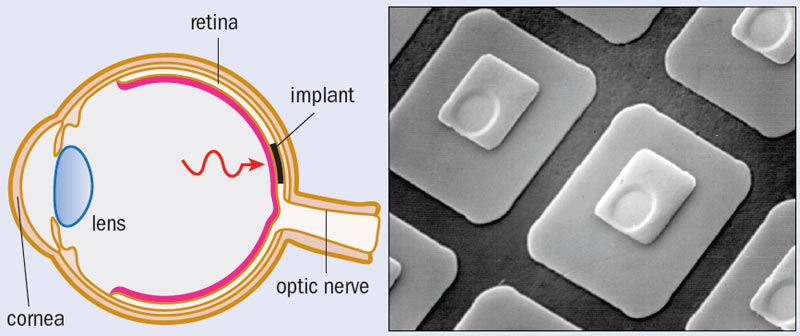
So what are the implications of the eye’s natural stress-reducing mechanism for retinal implants? Retinal diseases such as macular degeneration cause the rods and cones in the retina to deteriorate and lose functionality. Implants are inserted into the damaged region of the retina to replace damaged photoreceptors (figure 2). Referred to as “subretinal” implants, these state-of-the-art devices typically consist of a 3 mm semiconductor chip incorporating up to 5000 photodiodes. If we want to retain the stress-reduction mechanism, the distribution of photodiodes across the implant should mimic that of the retina. The point is that if the distribution were even, the eye would no longer need to move and so it would learn not to, and this lack of motion would prevent the stress reduction from kicking in. Unfortunately, current implant designs do simply feature the uniform distribution of photodiodes found in the passive camera. This discrepancy will have a growing impact as future chips replace increasingly large regions of the retina.

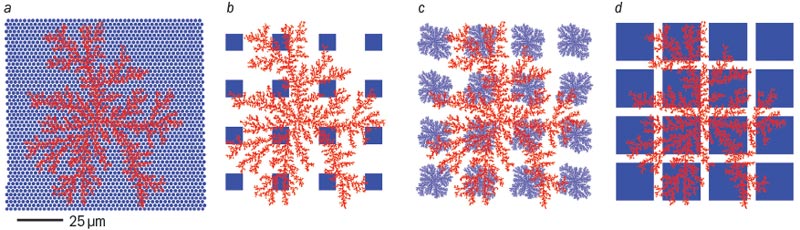
This flaw emphasizes the subtleties of the human visual system and the potential downfalls of adopting, rather than adapting, camera technology for eye implants. A similar downfall would result from assuming that the implant’s photodiodes should be connected to the retina using the Euclidean-shaped electrodes found in cameras. Figure 3 shows different patterns of “wiring” and how these interface with a retinal neuron. Although macular degeneration damages rods and cones, it leaves the retinal neurons intact and so these can be used to connect an implant’s photodiode electrodes to the optic nerve. Part a shows healthy photoreceptors, while parts b–d show a series of different shapes of electrodes that could be used in implants.

Retinal neurons are fractal in structure, and the simulated version in figure 3 characterized by D = 1.7 closely resembles the image of a real retinal neuron shown in figure 4a. If yield is defined as the percentage of electrodes that overlap with, and therefore establish electrical contact to, a neuron, then current retinal implants (figure 3b) have a yield of 81%.

Although this yield is greater than the 46% for the configuration in figure 3a, retinal implants do not match the performance of healthy human eyes. The artificial retina would still underperform compared with a healthy retina, as healthy retinas have a higher density of photoreceptors. The number of photoreceptors connected in figure 3a is 1050, compared with only 13 photodiodes in figure 3b. Artificial retinas must therefore be somehow brought up to speed.

One way to achieve this is to increase the yield beyond 81% for artificial retinas. Figure 3c shows the 94% yield achieved by replacing the square-shaped Euclidean electrodes with fractal electrodes. This yield increase could also be achieved by using larger square electrodes, as shown in figure 3d. However, this strategy would fail to take into account another striking difference between the camera and the eye. A camera manufacturer would never feed the wiring in front of the photoreceptors because it might hinder the passage of light to them. Yet this is exactly what happens in the eye. The layer of retinal “wiring” sits in front of the rods and cones, which means that light has to pass through this to reach the photoreceptors. As a consequence, the implant electrodes also have to sit in front of the photodiodes if they are to connect to the retinal neurons. The increased area of electrodes in figure 3d would therefore prevent the light from reaching the implant’s photodiodes.

In contrast, the fractal electrodes of figure 3c allow both high connection yield and high transmission of light to the photodiodes. This property results from the branching that recurs at increasingly fine scales. The fractal branches spread across the retinal plane while allowing light to transmit though the gaps between the branches, and a high D value maximizes this effect. As noted earlier, retinal neurons have a D value of 1.7.

Artificial neurons

Rick Montgomery (also at the University of Oregon) and I, in collaboration with Simon Brown at the University of Canterbury, New Zealand, employ a technique called nanocluster deposition to construct fractal electrodes with the aim of establishing an enhanced connection between retinal implants and healthy retinal neurons. In the technique, nanoclusters of material are carried by a flow of inert gas until they strike a substrate, where they self-assemble into fractal structures using diffusion-limited aggregation. These so-called nanoflowers (figure 4b) are characterized by the same D value as the retinal neurons that they will attach to.

During the deposition process, the nanoflowers nucleate at points of roughness on the substrate. Therefore, when nanoflowers are grown on top of the implant’s photodiodes, the surface roughness will be exploited to “automatically” grow the nanoflowers, making this a highly practical process for future implants. One challenge of the growth process lies in reducing nanocluster migration along nanoflower edges, which smears out the fine branches. This can be achieved by tuning the cluster sizes (which range from several nanometres up to hundreds of nanometres) and adjusting their deposition rate.

The nanoflowers can be grown to match the size of the photodiodes (20 µm), and will feature branch sizes down to 100 nm. Many of the gaps between the fractal branches will therefore be smaller than the wavelength of visible light, opening up the possibility of using the physics of fractal plasmonics to “super lens” the electromagnetic radiation into the photodiodes.

Significantly, the inherent advantages of the nanoflower electrodes lie in adopting the fractal geometry of the human eye rather than the Euclidean geometry of today’s cameras. Although the superior performance of the Six Million Dollar Man’s bionic eye is still in the realm of science fiction, the road to its invention will inevitably feature many lessons from nature.

At a glance: Artificial vision

  • Surgeons restore human vision by replacing diseased photoreceptors in the retina with semiconductor implants based on digital cameras
  • The physical structure and motion of the retina are based on nature’s fractal geometry, in contrast to the Euclidean geometry used by photosensitive chips in digital cameras
  • Nanocluster growth technology will be used to self-assemble artificial neurons on the surface of future retinal implants that mimic the fractal structure of the eye’s natural neurons
  • Pattern analysis reveals that the eye searches for visual information using a fractal motion, similar to that of foraging animals, that covers an area more efficiently than random motion
  • The spatial distribution of photoreceptors across an implant has to match that found in the eye in order to trigger a physiological stress-reducing mechanism associated with the eye moving its gaze to observe fractal scenes

More about: Artificial vision

E Cartlidge 2007 Vision on a chip Physics World March pp35–38
M S Fairbanks and R P Taylor 2010 Scaling analysis of spatial and temporal patterns: from the human eye to the foraging albatross Non-linear Dynamical Analysis for the Behavioral Sciences Using Real Data (ed) Stephen J Guastello and Robert A M Gregson (Boca Raton, CRC Press) pp341–366
S A Scott and S A Brown 2006 Three-dimensional growth characteristics of antimony aggregates on graphite Euro. Phys. J. D 39 433–438
R P Taylor et al. 2005 Perceptual and physiological responses to the visual complexity of fractals Nonlinear Dynamics, Psychology, and Life Sciences 9 89–114
G M Viswanathan et al. 1996 Lévy flight search patterns of wandering albatrosses Nature 381 413–415


Showcasing European science

By Matin Durrani, Munich, Germany

epl25venue.jpg

I’m sitting three rows from the back inside the gently lit conference room at the Bavarian Academy of Sciences and Humanities in Munich. The academy is housed in a grand, honey-coloured stone building that forms one wing of the huge Residenz complex, which was almost entirely rebuilt after the Second World War following the Allied bombing that left it and most of the city in ruins.

The Residenz, which looks glorious in the spring sunshine, is an appropriate and symbolic venue for the conference I’m attending, which has been organized to mark 25 years of the journal EPL.

Originally known as Europhysics Letters (it was rebranded in 2007), the journal was set up to promote and showcase the very best of European physics research. It may not yet match its great American rival – Physical Review Letters – as a journal containing short “letter” articles exploring the very frontiers of physics, but just as the Residenz was restored to its former glory, so EPL is playing a small part in rebuilding European physics.

Europe’s long realized that collaboration is the name of the game when it comes to science, with the CERN particle-physics lab being the shining example of what happens when nations work together. And so it is with EPL, which was begun in 1986 as a joint venture between the French and Italian physical societies, the UK’s Institute of Physics, which publishes physicsworld.com, and the European Physical Society.

The organizers have invited a string of top speakers – the full list is here – and bused and flown in over 100 students and postdocs from across Europe to create a good, international feel.

As for me, apart from consuming an extremely large number of fabulous mini chocolate croissants on offer in the coffee breaks, I’ve been filming some video interviews with Michael Schreiber, EPL’s current editor-in-chief, particle physicist Luisa Cifarelli, who is current EPS president, and David Delpy, chief executive of the UK’s Engineering and Physical Sciences Research Council. They will appear on this website in a few weeks’ time.

The conference dinner was held last night at one of Munich’s best known restaurants – the atmospheric Hofbraukeller – with a fabulous four-course buffet (it may have been five; I lost count).

Right, it’s coffee-break time – off for a few more of those croissants. I just hope my colleagues Fiona Walker, Claire Webber and Jo Pittam, who are also at the meeting, haven’t polished them off yet….

STM calculations put atoms in a different light

Using theoretical calculations of forces and currents, researchers in Spain and the Czech Republic have shown that the bright spots seen in scanning-tunnelling and atomic-force microscope images may correspond to the spaces between atoms and not to the atoms themselves. The result could help answer a decades-old question of whether such microscopy techniques actually image atoms or not.

Nanotechnology as a subject was born in the 1980s with the advent of microscopes capable of imaging materials on the atomic scale. For example, the development of the scanning tunnelling microscope (STM) allowed the distances between individual atoms to be resolved for the first time. An STM involves placing a tiny metal tip very near to the surface of interest and applying a voltage between the surface and tip. The tip is then scanned just above the surface and an image generated by measuring the current of electrons that tunnel between the tip and surface.

The images produced are actually spatial variations in the electron density of states of the surface near the Fermi level – the energy level of the most loosely held electrons in a solid. However, since the density of states does not always peak when the tip is directly above the atoms, it is not possible to know with absolute certainty whether the maxima (or bright spots) in STM images correspond to atoms or the hollow spaces between atoms. What is more, images of the same surface can appear completely different depending on the structure and composition of the STM tip, so interpreting the images obtained means that researchers need to understand the short-range chemical forces between this tip and a surface.

Perfect test beds

Rubén Pérez and colleagues at the Universidad Autonóma de Madrid and the Czech Academy of Sciences have now carried out an extensive set of first-principles calculations to map out the interaction between the tip and samples of single-wall carbon nanotubes and graphite. The unique mechanical and electronic properties of carbon-based materials such as fullerenes, nanotubes, graphene and nanoribbons makes them extremely promising for a wide range of technology applications and their simple honeycombed structure makes them perfect test beds for STM imaging.

Pérez and co-workers’ simulations combine density functional theory (DFT) calculations for the short-range chemical force between the tip and sample combined with semi-empirical atomistic approaches for the longer-range Van der Waal’s interaction between the two objects. “This methodology is particularly needed in the case where experiments seems to suggest that the Van der Waal’s interaction competes, and even dominates, over the short-range force in the distance range relevant for STM imaging,” explains Pérez.

The results show that in the “near-contact” regime, bright spots in the final STM images correspond to hollow positions between atoms rather than atomic sites themselves.

Better understanding of defects

According to the researchers, the findings will help them understand the fundamental mechanisms behind STM imaging and so better characterize defects in carbon nanostructures. Such defects, which include single-atom vacancies and dopants in graphene and carbon nanotubes, play a crucial role in the electronic and magnetic proprieties of these materials. The results should also help guide scientists in their choice of tip for stable, high-resolution STM imaging because different tips interact to a greater or lesser extent with the sample surface.

The team is now applying its methods to explore the electronic properties of epitaxial graphene on metals. “These calculations will also shed light on the possible magnetic state associated with defects in graphene and graphite – something that has been predicted in theory but not yet experimentally confirmed,” Pérez told physicsworld.com.

‘Excellent result’

“This is an excellent result from some of the foremost scanning-probe theorists in the world,” commented Philip Moriarty of the University of Nottingham in the UK, who was not involved in the work. “Scanning-probe-microscope images are notoriously difficult to interpret because the probe itself plays an integral role in the image-formation process. All scanning-probe microscopists working on atomic-resolution imaging (and manipulation) of surfaces and nanostructures will now be able to benefit from this work.”

The results were published in Phys. Rev. Lett. 106 176101.

Swan song for the Tevatron

By James Dacey at the APS April meeting, Anaheim, California

At the end of the September, the close of the US fiscal year, Fermilab’s star player, the Tevatron, is scheduled to be retired after a dazzling 25-year career.

Naturally, here at the APS April meeting there has been a lot of reflection on the achievements of this famous accelerator and the future of high-energy physics in the US.

Chris Quigg, a Fermilab physicist was presented here with the J J Sakurai prize for particle physics, and he told me that the discovery of the top quark was his pick of the Tevatron’s achievements.

“At the time that the collaborations made that discovery in 1995, what they did was almost impossible,” he said. “The number of events was very small, they had to master their backgrounds, and they had to be able to show that they could use a silicon vertex detector in the hadronic environment for the first time.”

On Sunday night the APS also assembled a special panel session to discuss how US physics is being affected by budgetary constraints. It included Fermilab director Pier Oddone and Carl Wieman who serves as chair of the Board on Science Education of the National Academy of Sciences.

All panel members seemed resigned to the fact that the decision not to extend the lifetime of the Tevatron will not be overturned, despite the continued appeals and the recent discovery by the CDF collaboration. Oddone spoke of how US high-energy physics will continue through involvement in the Large Hadron Collider (LHC) at CERN.

But Michael Lubell, APS director of public affairs, who chaired the session, made the provocative comment that big discoveries at CERN are seen as European achievements by the US government and the public. He argued that it will become increasingly difficult to convince US funding agencies to continue investing heavily in the LHC. “Let’s face it, what the government really wants to see is the American flag flying over CERN.”

I raised this issue yesterday with Mike Tutts, a physicist at Colombia University who is part of the ATLAS collaboration at the LHC. He feels that the big challenge will be communicating to the public the importance and excitement of the work being carried out at the LHC.

Topological insulator becomes insulating at the surface


Researchers at the University of Maryland in the US are the first to have observed an insulating state at the surface of bismuth selenide. This material is normally a strong “topological insulator”, which means that it is insulating in the bulk but conducting at the surface. The new finding could lead to applications in spintronics and even quantum-information technologies.

The conducting surface in bismuth selenide (Bi2Se3) arises from the topology of the material’s band structure and means that the electrons on the surface cannot be localized – that is, cannot become insulating. “A number of interesting properties are associated with this topological surface state,” explains team leader Michael Fuhrer. “These include the fact the surface state is completely spin polarized and any charge current present will necessarily carry a spin current.”

However, researchers have predicted that the conducting surfaces on the top and bottom surfaces of a Bi2Se3 slab should be able to couple if brought close enough together and that such contact should lead to an insulating state. “This is what we have now observed in our experiments,” says Fuhrer, “that very thin [3 nm] Bi2Se3 crystals are in fact conventional insulators.”

Confining electrons

The result is important because it means that electrons can be confined in the surface state of the material by creating insulating thin regions that surround conducting thick regions. Confining electrons in nanostructures in this way has been key in advancing nanoscience – in quantum dots in gallium-arsenide heterostructures, for example. “Normally, electrons at the topological-insulator surface state of Bi2Se3 cannot be confined by gate electrodes but thinning the material now means that we can confine these electrons and build quantum dots and quantum wires that could then be used as building blocks for quantum-information technologies,” says Fuhrer.

Insulating Bi2Se3 also has different optical properties to conventional Bi2Se3 because it has a direct band gap the size of which is determined by the coupling of the two surfaces. “If connected to conducting regions of Bi2Se3, this property could be used to make new and perhaps tunable sources and detectors in the infrared,” adds Fuhrer. “The spin-polarized nature of the surface state allows coupling of light to charge and spin – something that could be used to realize optically driven spin pumps, sources of circularly polarized photons or perhaps even sources of quantum-entangled two-photon pairs.”

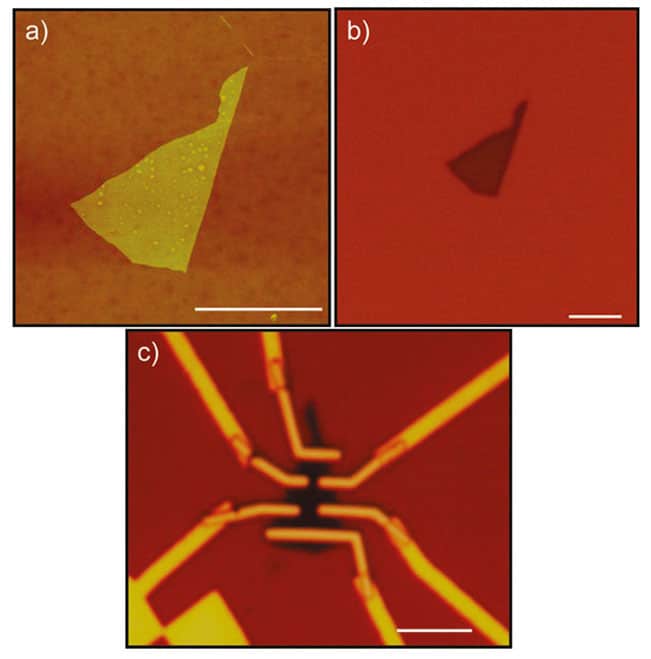
The Maryland researchers, who are at the Materials Research Science and Engineering Center, produced thin layers of Bi2Se3 by exfoliating (or mechanically peeling apart) thicker crystals of the material. Bi2Se3 is a layered material (like graphite) and easily cleaves to produce very thin pieces. They then made field-effect transistors from the material on a substrate of silicon dioxide over conducting silicon that then acts as the gate electrode for the devices.

The electron mobility of its ultrathin transistors is still quite low – around 10 cm2/Vs, which is much lower than that of silicon. According to the team, this value could be greatly improved, however, by epitaxially growing Bi2Se3 thin films.

“We are also looking at growing cleaner Bi2Se3 by molecular beam epitaxy and how to inject and detect spin currents in it,” says Fuhrer. “We are studying the sources of disorder in the material to improve its quality and are investigating the optical properties of thin Bi2Se3 in the infrared to understand its optoelectronic and optospintronic properties.”

The current results were detailed in Nano Letters.

Many universes, many theories

As a popular-science author, Brian Greene is nothing if not ambitious. In his first book, The Elegant Universe, he set out to explain string theory – one of the most complex and mind-bending areas of physics – in a way that non-scientists could understand. A few years later, he tackled the nature of space and time in The Fabric of the Cosmos. But Greene’s latest book The Hidden Reality goes further still, exploring one of the biggest questions of all: is our universe the only one that exists, or is it merely one among many?

In this special audio interview (below), Physics World reviews editor Margaret Harris talks to Greene about some of the multiverse ideas described in the book, and whether parallel universes will ever become part of accepted scientific theory. The book “does not argue for [the multiverse] in a monolithic way”, says Greene, a physicist at Columbia University in New York. Instead, he explains, it suggests that the possibility of parallel universes is something “worth thinking about, worth taking seriously” even though there are important questions about how to turn such speculations into science.

One of the most compelling reasons for taking multiple universes seriously, Greene says, is the fact that many different areas of physics seem to hint at their existence. “People in physics who are trying to work out the deepest laws that might describe the small, the big and everything inbetween are repeatedly coming upon the idea that there may be other universes,” he says. “It’s not that some unidirectional fringe approach to physics has suggested this possibility. If you study cosmology, or relativity, or quantum mechanics, or string theory, and you follow these theories far enough, they each bump into some variation on the theme of parallel universes.”

Of course, this common multiverse theme could be a cosmic red herring. Without solid predictions or experiments to test such theories, we cannot be sure. Greene acknowledges that falsifiability – the ability to prove a theory wrong – is “the key question” for proponents of the multiverse. Indeed, he argues that some variants of multiverse theory “stand outside science” because they can never be falsified, even in principle. However, he also notes that mathematics has long provided a guide for exploring ideas that are beyond our current ability to test, and many of those ideas have later been confirmed through experiment or observation.

In the near future, Greene hopes that data from collisions at CERN’s Large Hadron Collider will turn up what he calls “circumstantial evidence” that favours his preferred option of a string-based multiverse. He is also looking forward to getting back to physics. “I find that these books are a nice change of pace,” he says. “But I think it will be a long time before I embark on another one – if ever.”

The Hidden Reality


Copyright © 2026 by IOP Publishing Ltd and individual contributors