Why do women earn less than men?

mary_cook.jpg

By Matin Durrani

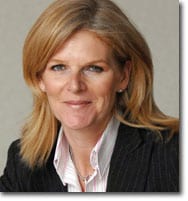
I went up to London yesterday (I’m never quite sure if one goes up or down to the capital but never mind) to attend a lecture at the Institute of Physics given by Mary Curnock Cook (right), who is chief executive of the University and Colleges Admissions Service (UCAS).

Entitled “Gender maps in education”, Cook’s presentation was this year’s memorial lecture given in honour of Elizabeth Johnson (1936–2003), a US-born condensed-matter theorist who did much to encourage women to pursue careers in science.

The memorial lectures always have women in science as their general theme and as head of UCAS – the centralized service in the UK for students applying to university or college – Cook had some fascinating data about how many women go to university and how well they do once they are there.

Cook’s starting point was that women who have a degree from a British university earn a total of £82,000 more over their lifetime than someone without a degree. Which sounds fantastic, until you realize that the equivalent “graduate premium” for men is a much larger: roughly £121,000.

So why the difference? Well, it’s complicated is the short answer – or, as Cook put it, “it’s the educational equivalent of a can of worms”.

But one reason is that more men than women study science, engineering, technology and medicine (STEM) subjects at university, which generally lead to jobs that have higher salaries than those jobs that don’t require a science degree.

However, the good news for women is that they are starting to catch up with men when it comes to pay: while men in their 40s earn quite a bit more than women of the same age, younger men who are currently in their 20s are on a par with women. We could, Cook speculated, have reached a tipping point: as those women get older, the overall differences in pay between the sexes – the “gender pay gap” – will even out.

What’s also interesting is that while some 40% of 18-year-old women in the UK go into higher education, just 32% of men of the same age go on to do degrees. On the other hand, men have a slightly better overall success rate of being accepted onto a course than women. That’s because men are more likely to study STEM subjects, which are generally less popular and hence easier to get into.

Cook was well aware that there’s a lot more one could say on this subject – and that a proper treatment would probably require a year-long academic study to get to the bottom of things. But the evening-out of the gender pay gap certainly sounds like a good thing.

Neutron target station takes the heat

When complete in 2019, the €1.48bn European Spallation Source (ESS) will be the most powerful source of neutrons in the world. With construction expected to start in 2013, and the facility fully open by 2025, the ESS will produce neutrons by accelerating protons in a linac to 2.5 GeV before smashing them into a seven-tonne target. The neutrons will then be cooled by a moderator and sent to 22 experimental stations to be used by researchers to probe the structure and physical properties of a wide range of solids, liquids and gases. The ESS will specialize in long wavelength, or “cold”, neutrons that suit experiments on large-scale structures such as polymers and biological molecules.

But one big problem for those designing the ESS is that this process of “spallation” will deliver so much energy – the proton beam will have a power of 5 MW – that the temperature of the target will jump by more than 100 °C in just 2.8 ms. Indeed, as the target becomes radioactive it will produce a decay heat of 35 kW even when there is no proton beam. Researchers at the ESS are therefore designing a proton target that can not only generate copious amounts of neutrons, but also be able to handle these extreme heat conditions.

Planning ahead

A neutron-rich material makes for a good proton target and ESS bosses are currently investigating two different options – a lead bismuth eutectics (LBE) alloy or tungsten. LBE is solid at room temperature but at the ESS’s operating conditions becomes liquid, which is similar to another possible target material – mercury. On the other hand, tungsten is solid up to 3000 °C and has a very high density of 19.25 g cm–3, giving it a high neutron yield. The material also has the advantage of longevity, with a life-span of three years or more, compared with six months for a lead–bismuth target.

As Physics World went to press, the ESS board was expected to decide which target to use, with tungsten the clear favourite having got the thumbs up from the ESS’s science advisory board in July. Indeed, tungsten is also already used at other neutron-scattering facilities including ISIS in Oxfordshire, which has a solid tungsten target about the size of a house brick. “The material is really the best you can pay for,” says Ferenc Mezei, head of the ESS’s target division. “There are other materials, iridium for example, that have a higher density but they are much more expensive.”

More power

There are some challenges to implanting a target given the heat created by the ESS’s huge proton-beam power of 5 MW, which will be around 20 times greater than that at ISIS. One proposed solution is to make the target rotate once every three seconds so that only a certain part is hit by the proton beam at any one time.

One design for the ESS’s target is to use a disc – 2.5 m in diameter and 13 cm high – made up of a solid inner hole and an outer ring. The beam will hit the disc edge-on, first encountering the outer layer, which is made up of around 10,000 small rods of tungsten each about 12 cm high and 1.5 cm in diameter. The beam then travels through the inner solid tungsten where it will lose energy so fast that it does not actually reach the centre of the disc. The advantage of using rods in the outer ring, rather than solid tungsten, is that in taking most of the proton beam, they distribute and reduce the stress of the whole target during its rapid rise and decrease in temperature.

The disc is made to rotate so that the 5 MW beam will be distributed such that a section of the disc sees – on average – about the same power density as that at ISIS. This allows that part of the target to cool down by 100 °C in around 3 s before it comes in contact with the beam again.

The sheer size of the target, and its activation, means that researchers cannot build a full prototype to test such high beam powers. However, in designing the ESS’s target, researchers can take solace from the fact that the technology has been tested before, for example at ISIS’s muon facility, which uses a small rotating graphite target to produce muons – heavier cousins of electrons.

“Rotating targets are around,” says Mezei. “So we are confident that this kind of technology will work”.

  • You can download a PDF of the October 2011 Physics World Big-Science Supplement here.

Open doors for physics graduates

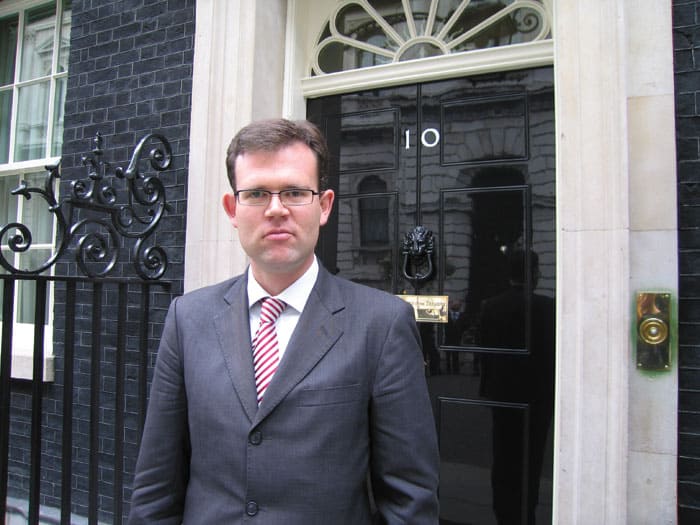
Jim Robinson

Studied: DPhil in semiconductor physics, University of Oxford, 2005
Now: senior policy adviser, UK Cabinet Office

I have always been interested in politics and current affairs, but I've also always loved physics. So after I obtained my MPhys from Oxford in 2002, I carried straight on with a DPhil, studying indium gallium nitride (InGaN) quantum dots for use in quantum-computing applications.

In the summer between finishing my MPhys and starting my DPhil, however, I also took part in a student-led summer programme that involved teaching English in China. This started me thinking about other possible careers, such as management. It also gave me a strong interest in Asia. I returned to the programme again in the summers of 2003 and 2004, and when an opportunity came to spend the final year of my DPhil at the University of Tokyo, I leapt at the chance to learn Japanese while also doing more research on InGaN.

Although I still enjoyed research, while I was in Japan it became clear that a career in science probably wasn't for me. There was the limited job security to consider, and sometimes it felt like only a handful of people in the world understood what I was working on. I felt I wanted to do something that would contribute to society in a more "hands on" way.

Quite a few of my friends were interested in the civil service, which linked to my interest in politics. So I applied to the civil service's "Fast Stream" programme – a graduate scheme that offers a series of varied one-year posts, combined with intensive training. After I was accepted, in early 2006 I was posted to the Department for Transport. I spent nearly five years there working on a variety of topics, including taking legislation to make bus travel free for the over-60s through Parliament, as well as plans for a new high-speed railway line from London to Birmingham. I also had a fascinating stint as a private secretary to the top civil servant in the department, a job that gave me an overview of everything from airports policy to vehicle safety.

Last year I moved to the Cabinet Office, the central department that works closely with the Prime Minister's office at Number 10 and co-ordinates policy across the government. I am based in the Office for Civil Society, which is taking the lead on the government's "Big Society" agenda. At the moment, I am working on a new way to deliver public services that involves using private investment to pay for early intervention, saving money for the public sector in the longer term. The job is fascinating. One day I might be briefing officials in Number 10, the next I could be working with local authority officers in the Midlands or talking to potential investors in the City of London.

My team's focus on "troubled families" meant that our profile was suddenly raised by the riots in August, and an announcement on our work later in the month got quite a bit of attention in the press. After weeks of building up to an announcement, it's always nice to see your work featured in the media, especially when linked to recent events.

Quite a few of my colleagues in the Cabinet Office are economists, but there are also a surprising number of physicists. Of course, I never use my experimental skills, but my more "generic" physics training tends to be quite useful for tasks such as understanding data, setting up spreadsheets and clearly explaining complicated concepts. Above all, I think my physics background helps me to understand how complicated systems fit together – the difference being that those systems are now in public policy. I do miss physics – and still read Physics World every month! – but I'm happy with the choice I've made.

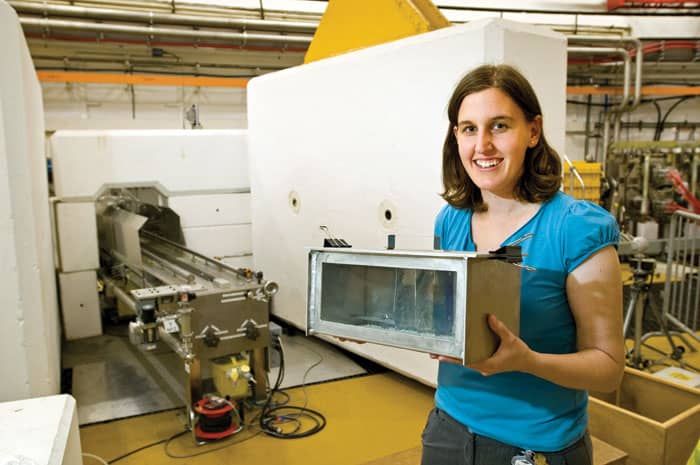
Hayley Smith

Studied: MPhys in physics with astrophysics, University of York, 2009
Now: accelerator physicist, ISIS Spallation Neutron Source, UK

I did not begin to consider my career options seriously until the start of my final year at university, when many high-profile companies begin hiring. This was because, unlike many of my peers, I had no firm ideas regarding my best move into the workplace. As I was still enjoying physics, I focused my efforts on science- or engineering-based roles. Quite soon, though, I decided that graduate schemes – which enable graduates to become established within their desired industry while receiving various training and development opportunities – seemed appealing. In fact, there were initially more than 30 that interested me, and it took me a while to narrow the field down to my current employer: the ISIS Spallation Neutron Source at the Rutherford Appleton Laboratory in Oxfordshire.

ISIS is operated by the UK Science and Technology Facilities Council, and it consists of a linear accelerator and synchrotron that combine to accelerate protons to 800 MeV. As an accelerator physicist I apply my physics knowledge every day. The work is varied: a mix of developing computer models/tools, and "hands on" operational duties in the ISIS synchrotron main control room. Development is a key factor in STFC's graduate scheme: there are many training opportunities to enhance non-technical skills – including the chance to sail a tall ship with fellow graduates for four days. Alongside being great fun, this also helped developed certain key competencies such as communication, teamwork and leadership skills. Travelling abroad for two accelerator physics courses, attending and displaying work at an international conference and being invited to spend a month working alongside colleagues at a similar facility in Japan have all contributed to my technical development and have been fantastic experiences.

After I complete my initial two years on the graduate scheme (which is accredited by the Institute of Physics, publishers of Physics World), I know I will continue to have opportunities at ISIS for challenging work and further personal development, including building the skills required to achieve chartered physicist (CPhys) status. People had always told me you could do a lot with physics, but I never really believed them. I do now: the variety is astounding!

My advice for current, or recent, physics graduates is to start researching early, because applications and assessment centres are time-consuming, requiring a lot of preparation. It is also good to take time to audit your skills and research all options thoroughly to find the ones that suit you best. One of the most useful exercises you can do is to identify your skills and match them to employer requirements. In my case, I gained relevant experience through the Summer Undergraduate Research Experience (SURE) programme at the University of Leicester, but I could also mention skills I had picked up in previous warehouse and clerical employment. After working on applications through the autumn term of my final year at university, I found myself in the very fortunate position of having two graduate scheme offers by Christmas. After choosing to go for STFC, I was able to concentrate fully on the remainder of my studies.

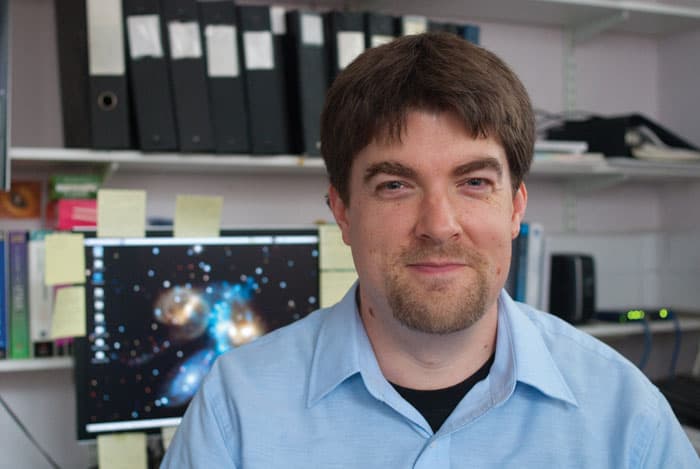
Ewan O'Sullivan

Studied: PhD in astronomy, University of Birmingham, 2002
Now: Marie Curie Fellow, University of Birmingham, UK

I really enjoyed my PhD and decided quite early on that I wanted to stay in academia when I finished. My career since then has been shaped by the fact that astrophysics is a very international field. The researchers I worked with as a PhD student at Birmingham all had international collaborators and regularly travelled to visit colleagues or use observatories in exotic locations – Hawaii, Chile, Australia. It was also clear that most UK astronomy groups expected candidates for long-term jobs to have worked overseas. I wanted to work in X-ray astronomy, which depends on satellite observatories because the atmosphere absorbs X-rays before they can reach the ground. I was lucky enough to finish my PhD just as two new satellites were being launched: NASA's Chandra X-ray Observatory and the European Space Agency's XMM-Newton. I applied for posts in the US and Canada, and was offered a postdoc position at the Harvard-Smithsonian Center for Astrophysics in Cambridge, Massachusetts – one of the world's leading centres for X-ray astronomy. Initially I expected to work there for two or three years, but I liked working at the centre and really enjoyed living in New England, so ended up staying for seven years.

A major benefit of working in the US was that I was able to apply for NASA funding for my own projects and fairly quickly found myself in a position to define my own research programme. Many postdocs are hired to work on a specific project and don't have much time for their own interests, but having my own funding meant that I was effectively my own boss, so I was able to try working in new areas, form new collaborations and decide for myself which scientific questions I wanted to explore. Living abroad also has its benefits. Quite apart from making friends I would never otherwise have met, I think I now have a much clearer view of how society works both in the UK and abroad, and of the place of scientists within it.

The downside is a lack of stability. Long-term jobs are scarce at the moment, and there is an expectation that you will be willing to move countries to take up a new post, which can be a problem if you have a partner or family. However, for me the benefits have been enormous. Thanks to a fellowship from the EU, I moved back to the UK in 2009, but next year I plan to take extended trips back to the US and also to India to learn low-frequency radio techniques.

Owen Dias

Studied: BSc in chemical physics, University of Bristol, 2006
Now: IT co-ordinator at a small electronics manufacturer, UK

I work for Danlers, a small Wiltshire-based firm that makes energy-saving electronic controls such as passive-infrared and time-lag switches. I actually started working for the company on a part-time basis when I was 16. My first job was building point-of-sale display boards to go in wholesalers, but in subsequent summers, I volunteered to build the company website. As time went on, I was given more and more responsibility for looking after IT for the company, and when I graduated in 2006 with a degree in chemical physics, I was offered a full-time post as the IT co-ordinator. I am now solely responsible for IT in the company, which means I have a wide variety of responsibilities, including setting up servers, technical support, staff training, IT purchasing and anything else you would file under IT.

While there aren't any obvious parallels between chemical physics and my work in IT, the thought process involved in problem-solving – not to mention the technical abilities needed to get various machines and simulations to work in experimental and theoretical environments – were all developed during my degree, and they have helped me immensely. Having a scientific degree has also opened doors for me to work on non-IT projects within the company's engineering department. This initially meant doing some lab work, including heat tests, electrical tests and tests aimed at finding product limitations – sometimes by blowing them up! Obviously, experimental technique and report writing plays a huge role in this. More recently, I have been project-managing the redesign of some of our products to take advantage of surface-mount technology, which allows us to use smaller mechanically placed components, which in turn means that we can make more compact and cost-efficient designs.

If any graduates are looking at small- to medium-sized enterprises (SMEs) for future employment, I would definitely recommend just getting a foot in the door, because opportunities are dependent on your skills and not on which department you are currently in. I really enjoy working in an SME environment because of the flexibility and variety of work that is available – I don't know any big business that would let people from their IT department blow stuff up in a lab!

Katherine Inskip

Studied: PhD in astrophysics, University of Cambridge, 2002
Now: postdoctoral researcher at the Max Planck Institute for Astronomy, Germany

When I was younger, I always knew I wanted to work abroad, and that I wanted to be both an astronomer and a mother. Today, I am doing all of those things...well, almost.

I am currently in the middle of my third post as a postdoctoral researcher, a mother to two young sons and living in Germany. Right now, I am on maternity leave for my second son. But for someone taking a career break, I am still surprisingly busy. I may have replaced the challenges of interpreting awkward data and assisting students with the challenges of interpreting an awkward baby and potty-training a toddler, but there is still science in my day-to-day life as well. There are papers to read (and write) and telescope observations to prepare for, although thankfully the observations will be done by observatory staff in "service mode", so I do not have to go to the Very Large Telescope in Chile myself. Weather permitting, the data should be delivered to me just in time for me to return to work. And there's always more work to be done, if you can find the time for it – but if I tried that, I think I would go crazy.

Combining a career with motherhood inevitably means making some sacrifices, especially when you have to put the needs of two small boys first. Conferences have become a particular difficulty. The networking and learning opportunities they present are marvellous, but without suitable childcare facilities, most of them are impossible for me right now. Even so, while I may not be keeping up with the literature as well as I would like, and my own research is temporarily on hold, thanks to the support of my colleagues, I hope I will not be too out of touch when I return to part-time work next year.

So what advice could I offer to my former student self on how to get where she wants to be in life? To be honest, I think she would have a thing or two to say to me instead – "What took you so long?" would probably sum it up. The best answer I can give is: don't be afraid to take risks. There is never a "good" time to start a family – if you want one, go for it. And don't stay in your comfort zone career-wise, either. Move institutes, move countries if possible – there's so much experience to be gained, in so many aspects of life. It's not an easy balancing act, to be sure, but it keeps me happy.

Chris King

Studied: PhD in semiconductor physics, University of Nottingham, 2008
Now: technical adviser at Sellafield Ltd, UK

I completed my PhD in December 2008 and started on the Sellafield Ltd graduate scheme in October 2009. Sellafield's primary focus is the safe decommissioning of nuclear "legacy ponds and silos" – facilities that in some cases date back several decades and that contain an assortment of historical material. Understanding the physical contents of these facilities and their chemistry, plus figuring out how to safely remove and process that material, are enormous technical challenges. Sellafield is also involved in the reprocessing of spent civil nuclear fuel, to separate out the uranium, plutonium and radioactive waste products.

I chose to enter via the graduate scheme for a number of reasons, including the fact that the months between the end of my PhD and the start of the scheme gave me an opportunity to travel. However, the main reason was that I had decided to move from academia into industry, and I saw a graduate scheme as the best way to experience a range of roles to help set the foundation for my subsequent career path. I was pleasantly surprised to find that several other PhD-holders had made the same decision.

As a technical adviser, my role is to provide general technical and scientific knowhow on a variety of projects across the Sellafield site. Projects I have been involved in to date include: designing on-plant trials to investigate ways of improving performance; modelling material flows through the plant; reviewing laboratory analysis strategies; ensuring the calibration of equipment; doing calculations; and analysing raw data. My job also has less-technical aspects such as producing management procedures that ensure that Sellafield complies with its own policies, regulator requirements and customer specifications. I use specific physics from time to time, but it is the wider technical skills and knowledge I learned at university – both as an undergraduate and during my PhD – that are key to my job.

Although I am back in a technical role now, participating in the graduate scheme meant that I spent 12 months on a secondment to the nuclear safeguards department, where I managed a site-wide programme with the main function of providing feedback to national and international regulators. This is an opportunity that would have been difficult to come by as a direct entrant, and I feel that this experience of "stakeholder relations" will be of huge use in my future career.

But are you a physicist?

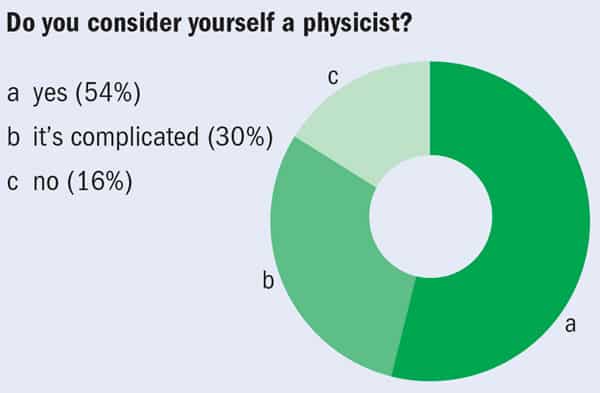
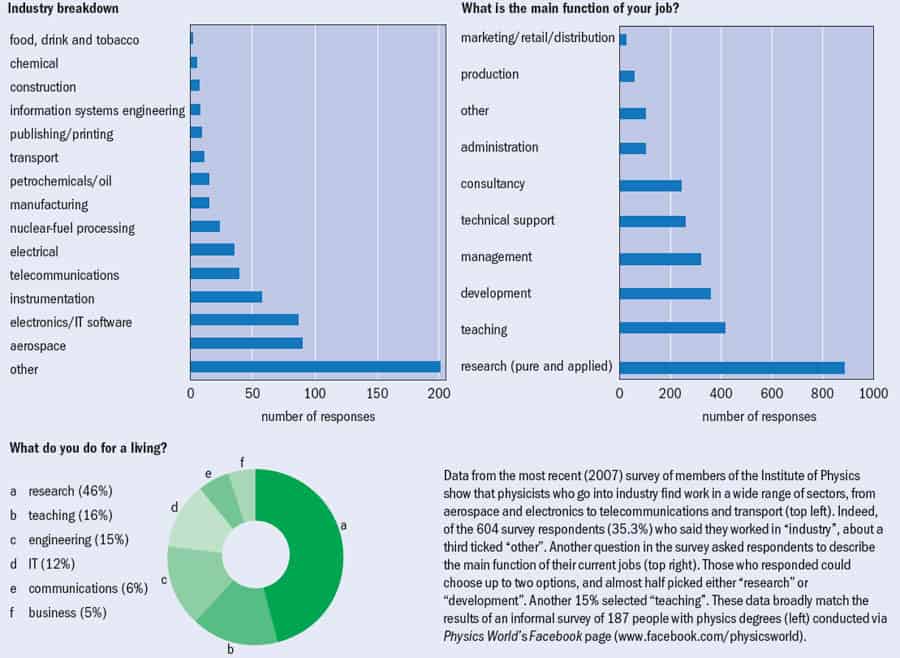
Do you need to have a job in physics to consider yourself a physicist, or is being a physicist more about training and habits of thought? With more than half of those who responded to the Institute of Physics' 2007 survey picking something other than research to describe the main function of their jobs, it seemed to be a relevant question – so we asked it. Below are some of the responses we received to a poll conducted on Facebook.

Yes

I joined a physics course despite everyone advising me to go for engineering; so yes, I'm obviously a physicist.
– Srikanth Suresh

I like to consider myself a physicist as I have the relevant training, read about it and think like it, but I fear since I haven't been in the lab for three years, my "physicistique" may have expired.
– Kate Oliver

It's complicated

If I were a quantum-mechanics guy, the best answers I could give you would be both "yes" and "no".
– Dan Lipford

I feel I can't call myself a physicist because I don't have anything hanging on the wall saying "Tom Sullivan is hereby a physicist".
– Tom Sullivan

Do I consider myself a physicist? Mmmm, well I'm pretty good at woodwork but I don't consider myself a carpenter, I'm pretty good with pipes and electricity but I wouldn't say I was a plumber or an electrician. I think to be a physicist you've got to specialize in it, rather than just be pretty good at it.
– Steve Douglas

No

I guess if you consider that everything we do is affected by physical laws and principles, then my answer would be yes, we're all physicists on that level. But ultimately I am not a physicist by trade, I am a law student. Shout out for the law of conservation of energy and for Bernoulli's principle, as they are my favourites!
– Amy Wheeler-Smith

I'm an archaeologist, a frustrated scientist in a sometimes deeply unscientific discipline. Physics is a hobby, and what a wonderful one it is.
– Rich McGregor Edwards

What physicists do: survey results

Data from the most recent (2007) survey of members of the Institute of Physics show that physicists who go into industry find work in a wide range of sectors, from aerospace and electronics to telecommunications and transport (top left). Indeed, of the 604 survey respondents (35.3%) who said they worked in "industry", about a third ticked "other". Another question in the survey asked respondents to describe the main function of their current jobs (top right). Those who responded could choose up to two options, and almost half picked either "research" or "development". Another 15% selected "teaching". These data broadly match the results of an informal survey of 187 people with physics degrees (left) conducted via Physics World's Facebook page (www.facebook.com/physicsworld).


How to make graphene

Graphene is the ultrathin form of carbon that was first discovered at the University of Manchester in 2004. It is often dubbed "the wonder material" on account of its incredible properties, which promise many applications – from ultrafast transistors to DNA sequencing. For discovering graphene and for their pioneering studies of the material, Andre Geim and Konstantin Novoselov shared the 2010 the Nobel Prize for Physics.

In this special video report, Physics World reporter James Dacey visits Geim and Novoselev's laboratory at the University of Manchester to learn how graphene is created and why it is so special. To begin, Dacey meets researcher Branson Belle who demonstrates the famous "Scotch tape" method for isolating graphene. This surprisingly simple technique involves placing a sample of graphite onto sticky tape and then folding and peeling the tape several times to create progressively thinner layers of graphite – eventually leading to a single layer of carbon.

Dacey then meets another graphene researcher, Aravind Vijayaraghavan, who places the sample under an optical microscope to explain how single-layer graphene is identified among thicker bits of graphite. "One of the nice things about graphene is that even though it's a two-dimensional material – the thinnest material in the world – we don't need an electron microscope to see it," explains Vijayaraghavan. Instead, by transferring the graphene to a silicon-based substrate, it creates the correct contrast to be able to identify thin sheets of carbon with a standard optical microscope. "With a bit of practise, you can just look at the screen and say 'right, that's a single layer'," he said.

Vijayaraghavan goes on to talk about some of the remarkable properties of graphene. "Despite the fact that it's the thinnest material that you can technically make it's also the strongest material – as in if you tried to rip it apart it takes more force than anything else," he said. Vijayaraghavan also talks about some of the unusual electrical and optical properties. "The electrons in graphene behave as if they are particles of light – so they don't get scattered".

The interview closes with Vijayaraghavan speculating about how these properties could lead to possible applications including ultrafast transistors and flexible electronic screens.

Magnet challenges for ITER

Generating power with nuclear fusion – slamming together hydrogen isotopes until they fuse into helium – has proved much harder to achieve than its nuclear-fission counterpart. But now, after more than 60 years of research, physicists hope they are on the home straight with the €16bn ITER experiment – a huge tokamak now under construction in Cadarache, France. The fruit of a worldwide collaboration involving China, the European Union (EU), India, Japan, South Korea, Russia and the US, ITER is a colossal machine that, once complete in 2019, will weigh as much as an aircraft carrier.

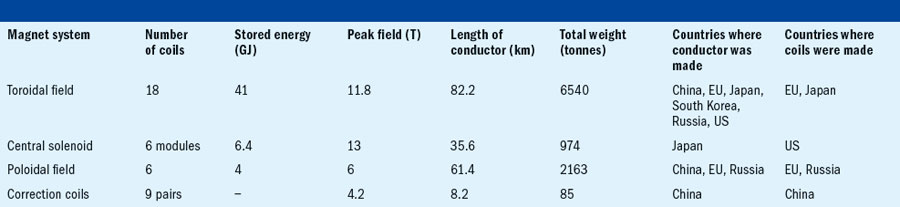
Fusion researchers hope that ITER will be the first tokamak to generate more power than is needed to keep it going – some 500 MW from a 50 MW input. Most of that input heats the fusion fuel – a 50:50 mixture of the hydrogen isotopes deuterium and tritium – to millions of degrees and applies a magnetic straightjacket to hold it in place while it burns. The magnets required to provide that field – 13 T at its strongest point – are now being built in factories across the globe (see table) and are proving to be a huge engineering challenge. They have to endure huge mechanical forces, thousands of current pulses, intense neutron bombardment and a thermal gradient that soars from 4 K to 150 million K across just a few metres. "It's the scale, not the science, that brings issues," says Neil Mitchell, head of ITER's magnet division.

When ITER was being designed back in the late 1980s and early 1990s, it was obvious that the reactor would have to use superconducting magnets because conventional magnets would need gigawatts of power to contain a plasma at a temperature of millions of degrees. A few tokamaks with superconducting magnets had been built before, such as France's Tore Supra, which began operating in 1988 and stores around 700 MJ of energy in its superconducting magnets. But none have been as big as ITER, which will have magnets that will store a whopping 50 GJ. Indeed, some of the coils are so large that they cannot be transported by road and so will be wound on site at a purpose-built plant.

Magnets in a spin

A tokamak such as ITER has several sets of magnets that perform different roles in confining the superhot plasma within the reactor vessel. The central solenoid is a coil positioned in the central hole of the torus. It acts as the "primary" of a giant transformer with the plasma itself being the "secondary" coil. Driving a current through the central solenoid induces the plasma to flow round the torus, creating a current. This current generates another magnetic field that then "pinches" the plasma current towards the centre and so keeps it away from the walls.

This pinching field is reinforced by "poloidal field" coils – six horizontal, circular coils around the outer edges of the tokamak similar to bands around a barrel. Then there are 18 "toroidal field" coils – huge D-shaped windings that wrap around the plasma. These generate a field parallel to the plasma current that gives it a twist so that the plasma spirals as it moves. This helps to stabilize the plasma and keep it away from the walls. Finally, there are sets of lower-energy "correction" coils that help to shape the plasma.

Despite the challenges of scale, Mitchell says that the magnet technology for ITER is "rather conventional" because it will use well characterized superconducting materials such as niobium tin (Nb3Sn) for the central solenoid and toroidal-field coils, and niobium titanium for the poloidal-field and correction coils. But making an ITER conductor is not just a matter of winding a few strands into a cable. Nb3Sn is a brittle material that must endure enourmous mechanical forces and 60,000 thermal cycles. "It's very much a challenge," says Chris Rey, the central-solenoid systems manager at the US ITER Office at the Oak Ridge National Laboratory in Tennessee. "It's expensive, so you can't make prototypes. You have to get it right straight out of the box."

Making the conductor starts with individual strands – each less than a millimetre across – composed of a mixture of niobium and tin that is encased in a copper shell. Three strands are then wound together to make a "triplet", and 32 triplets are bunched together make a "petal". Six petals arranged around a central pipe make a cable, roughly 4 cm in diameter, with the pipe allowing the flow of liquid helium to cool the cable to superconducting temperatures. The final part of the process involves encasing the cable in a metal jacket with a roughly square cross-section so that when the conductor is wound into a coil, the windings fit snugly together and cannot move. Prior to the ITER project, around 15 tonnes of this sort of superconducting cable were manufactured per year; ITER requires 400 tonnes – or around 80 km of cable.

To form magnets, the conductors are wound into a metal conduit in the required shape. The largest niobium–tin magnets are the toroidal-field coils that will be arranged vertically around the tokamak. Each one is 14 m tall and weighs 360 tonnes – roughly the mass of a jumbo jet. Once wound, the coils are heated to 650 °C for eight days so that the niobium and tin form the superconductor Nb3Sn.

Testing times

Despite their size, the coils still demand exquisite precision to create a perfect field for plasma confinement. The conductor must be carefully wound into an exact position in the conduit and then held there with an error of only a few millimetres. That sort of manufacturing control is made more difficult by the way that the ITER project is run. Because the seven members of the ITER collaboration all want a share of the industrial contracts, they agreed to divide up the manufacturing between them and each delivers their components to Cadarache "in-kind" without money changing hands. But this means, for example, that making the conductors for the toroidal-field coils has been split between six different member states and, because some of them have contracted more than one company to do the work, a total of 10 firms are involved. "Their grasp of the technology isn't even," says Mitchell. "There's a lot of negotiation and it's producing a lot of delay. The amount of testing we're doing is five times what was originally expected."

Outline of the ITER fusion reactor

That testing threw up a problem earlier this year when a sample of Nb3Sn conductor made in Japan for the central solenoid failed in tests earlier than expected. The specification requires the conductor to survive 60,000 current pulses during the 20-year life of the reactor. However, this particular sample began to fail after only 6000 pulses. "The conductor absolutely works," says Rey, "it's the lifetime that's not understood." The ITER organization at Cadarache has set up a task force to look into the problem and it will report back later this year.

ITER insiders are playing down the significance of the failed test. It took place at the SULTAN facility at the Paul Scherrer Institute in Villigen, Switzerland, where straight sections of conductor a couple of metres long are subjected to high fields and currents. While this shows that the samples are working, according to Rey it "doesn't accurately represent the conditions in ITER". A second sample of the same conductor is now being tested and is reportedly performing much better. An ITER spokesperson says that if the second sample maintains its performance to the end of the test, the conductor is likely to be approved for production next year.

Cost concerns

Another tough decision is whether or not to test the completed coils. In an ideal world, once wound, each magnet would be cooled to 4 K and have high current put through it to see if it worked as expected. Such an approach significantly reduces risk because when the reactor is built, most of the coils cannot be removed for repair or be replaced. But cold-testing such huge magnets – the largest has a diameter of 24 m – also hugely increases cost because it would require a purpose-built facility, much power and a lot of time. There are other risks too: testing one coil in the absence of all of the others might be easier but it would not then experience the full magnetic field of the entire magnet system, and so would have different stresses that could potentially bend it out of shape.

Each ITER member state that is making the magnets must decide for itself whether to do full cold tests on completed coils – and the consensus seems to be that it is not cost-effective. Rey says that the US is planning to test its coils – the six modules of the central solenoid – at a factory in Tallahassee, Florida, by cooling them to 80 K with liquid nitrogen. At that temperature the coil experiences 90% of the thermal stresses that it would encounter at 4 K. Once cool, researchers can test for helium leaks and do a voltage test that stresses the conductors' insulation. "Most large superconducting magnets fail on their insulation," Rey says. US ITER managers calculate that it would be cheaper to do the 80 K tests than to ship a faulty module back from France for modification.

But a lack of money will likely persuade project members not to carry out 4 K high-current tests. The US ITER project is still mulling it over – its budget is under severe strain in the current financial climate. The EU, too, is struggling to find its 45% share of the construction cost. In the end, we may not know for sure whether ITER's magnets work as planned until the day they are switched on at the end of the decade.

  • This article was first published in the October 2011 Physics World Big Science supplement

Making CERN’s best even better

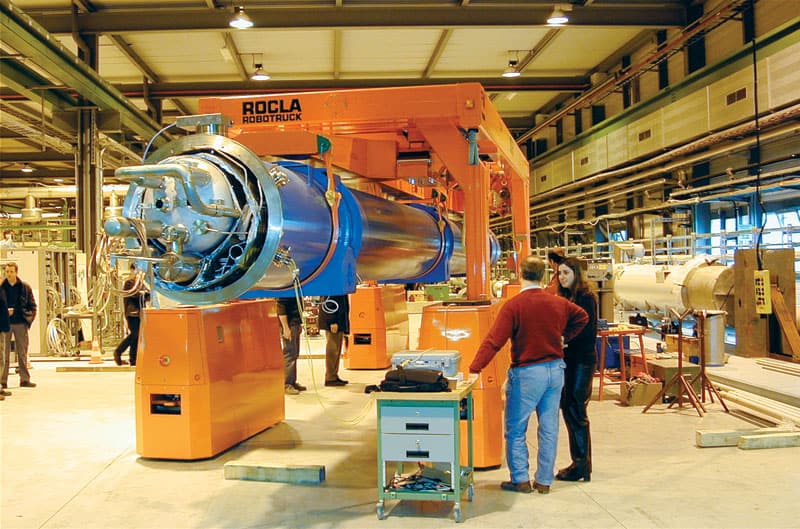
It is hard to imagine upgrading an instrument as big and complex as the SwFr6.5bn (€10bn) Large Hadron Collider (LHC) at the CERN particle-physics lab near Geneva. The 27 km-circumference collider, which was switched on in September 2008 after 25 years of planning and construction, was built to drive 2808 bunches of protons – each containing about 100 billion protons – into one another 40 million times per second inside four detectors the size of large buildings. A tiny fraction of head-on collisions, physicists hope, will hold clues about nature's fundamental structure, in particular what gave certain elementary particles their masses.

At full luminosity – a measure of the rate of particle collisions – of around 1034 cm–2 s–1, the LHC beam will store enough energy to melt a tonne of copper as it circulates within a whisker of highly sensitive and expensive components. To protect the accelerator and its detectors from stray protons, the LHC is equipped with around 100 movable carbon or tungsten collimators each with a small slit through which the beam can pass. Yet long before the LHC fired its first protons, CERN was planning ways to produce even more intense collisions that will improve the chances of discovering rare, new particles or forces.

The upgrade to the LHC – dubbed the High Luminosity LHC (HL-LHC) – will pack a beam luminosity more than 10 times the LHC's design goal: up to 5 × 1035 cm–2 s–1. The HL-LHC will therefore need more sophisticated collimation to avoid unacceptable heat loads and require upgrades to the LHC's injection system, which currently relies on CERN's more elderly accelerators and proton transit lines, to ensure beam quality and stability.

More bang for your buck

Lucio Rossi, HL-LHC co-ordinator, says that the project is the main R&D focus for CERN over the next 10 years, the other being the Compact Linear Collider – one possible design for the next big particle-physics experiment after the LHC. "[HL-LHC] will be like turning up the lights in a darkened room from the point of view of the experiments," he says. The realities of building, commissioning and operating the LHC have meant that its high-luminosity incarnation will not materialize until around 2022, however, with a price tag of around €1bn. Half of this money will go on upgrading the collider and half on refitting the LHC's four detectors – ALICE, ATLAS, CMS and LHCb – so that they can cope with the HL-LHC's harsh collision environment.

The LHC was designed to circulate two 7 TeV beams, generating 14 TeV collisions, but initially has been forced to operate at half this value after an unstable magnet interconnect evaporated during high-current tests just nine days after the LHC switched on in late 2008. Intervening in the LHC is no easy task because, when running, it is kept at a temperature of 1.9 K using 130 tonnes of liquid helium to ensure that the niobium–titanium cables that power its dipole magnets are below their superconducting transition temperature.

It takes months to warm the whole machine to room temperature and then to cool it back down, and three long shutdowns are planned during the next decade. The first, in 2013–2014, will involve fixing around 1000 defective interconnects so that the magnets can operate closer to their target bending field (8.3 T), which allows them to carry 7 TeV protons, while all 10,000 joints will be fitted with a lateral restraint to ensure stability. Further improvements are anticipated in the second shutdown, likely to happen in 2017 or 2018, while the HL-LHC and associated improvements in the detectors will mainly take shape during the third long shutdown scheduled for 2021.

As well as almost doubling the number of protons in each bunch, the HL-LHC relies on improved electromagnetic "optics" to bring the beams of protons into collision in the LHC's four detectors. Two key technologies are under development: high-field superconducting quadrupole magnets that squeeze the beam more tightly in the vertical and horizontal directions; and radio-frequency "crab" cavities that reduce the angle at which the bunches cross.

"The LHC luminosity upgrade is very demanding technologically, with the LHC already representing the apex of 30 years of work worldwide on superconducting magnets," explains Rossi. "Existing quadrupole magnets go up to 8 T, and it has so far taken six years of solid work by many US teams to build the first 11.5 T prototype, but we need 13 T and an even larger aperture." The magnets are mostly being developed by researchers at Fermilab in the US in conjunction with staff at CERN. The crab cavities present an even bigger challenge because they have never been used to kick a beam of protons in the transverse direction, not least at a steady rate of 40 MHz. Much of the R&D for crab cavities, which must be compact and have acute phase accuracy, is taking place at the Cockcroft Institute of Accelerator Science and Technology in the UK, with a test cavity that may be installed at the LHC during 2017–2018.

In addition to developing "radiation hard" electronics by making the semiconductor chips and associated hardware able to withstand higher radiation doses, CERN is considering moving power supplies near the detectors as far away from the beam as possible – ideally above ground, as opposed to their current location close to the detectors 100 m underground. The only way to carry the enormous 200 kA currents required is to use superconductors as well. But low-temperature superconductors, such as niobium alloys, are problematic for this application because the liquid helium required to cool them warms because of hydraulic pressure when suspended vertically. Instead, CERN may have to turn to high-temperature superconductors such as yttrium barium copper-oxide materials, which do not require liquid helium to get them into the superconducting state. "Longer high-temperature superconducting cables exist, but none carrying such high currents," says Rossi.

Detecting more events

The higher collision rate delivered by the HL-LHC demands major modifications to the ATLAS, CMS, ALICE and LCHb experiments, not least to deal with the increased radiation dose that they will suffer. At normal running, the two general-purpose ATLAS and CMS detectors are flooded with the debris from around 20 proton–proton collisions every time two bunches cross, which must be assessed in less than 25 ns (i.e. before the next bunch crossing) by a "trigger" to decide whether or not the collision is worth recording to disk. At the HL-LHC, however, this "event pile-up" will be more like 400 per bunch crossing, requiring much faster front-end electronics and data-acquisition systems.

The innermost layer of the LHC experiments – the semiconductor pixel detectors that track the collision debris just a few centimetres from the interaction region – will be replaced in all four experiments to cope with the onslaught. As well as being more radiation hard, the upgraded trackers will be more granular to reduce occupancy on pixels, for example by using better nanofabrication techniques to create smaller sensitive regions. Without this change, the vital task of picking out which particles are associated with a particular proton–proton collision (so-called vertex reconstruction or "vertexing") will be impossible.

"Ideally, you would have a zero-mass tracker so that the particles fly through it without losing energy, but that's not possible," says Craig Buttar of Glasgow University, who is a member of the UK ATLAS upgrade team. "Plus, you have all the services – the power cables, the optical signals for control and read-out, and the cooling system – to contend with." Both ATLAS and CMS are considering using pressurized carbon dioxide in place of current fluorocarbons to cool the upgraded inner detectors, for instance, because it takes up less space.

ATLAS researchers plan to add a new pixel layer to its existing tracker during the 2013–2014 shutdown to improve vertex reconstruction, and those working on CMS are planning similar intervention in 2017–2018. "For CMS, the new tracker is an enormous operation because we need to increase the number of channels by a factor of 10 without increasing the power," says Dave Newbold of Bristol University, who is software co-ordinator for the CMS upgrade. "Even without the luminosity upgrade, though, we would still have to maintain and improve our detectors. We might have spent 15 years building them, but they're never really finished."

The LHCb collaboration, which is devoted to the physics of B-mesons, is considering replacing its current particle-identification detector based on Cerenkov light, as well as a new tracker capable of better vertexing, although in general LHCb operates at a lower luminosity than ATLAS and CMS. Plans to upgrade the ALICE experiment, which is designed to study collisions between lead ions during dedicated LHC runs, are only indirectly linked to the HL-LHC because the detector has been optimized for a lead–lead luminosity of 1027 cm–2 s–1.

Despite taking up two decades of R&D at the edge of what is technologically possible, the HL-LHC will not be the end of the story for CERN's flagship collider: it is the stepping stone to an even more powerful machine perhaps some time in the 2030s incorporating new superconducting magnets with bending fields of 20 T that would allow a beam energy of 16.5 TeV per beam. The magnet technology does not yet exist, but in May 2010 CERN established a working group to explore the High Energy LHC (HE-LHC). With a likely price tag of several billion euros, HE-LHC will also require completely new accelerators to feed it, but the project's chances of success will depend on what the LHC and HL-LHC discover. "The HE-LHC will happen," says Rossi, "the question is when?"

  • You can download a PDF of the October 2011 Physics World Big-Science Supplement here.

Galaxy clusters back general relativity

A study of light coming from galaxy clusters has yet again given the thumbs up to the general theory of relativity, Albert Einstein's famous theory of gravity. Done by physicists in Denmark who measured gravitational redshift, the research appears to rule out some alternative models of gravity – particularly those that deny the existence of dark matter.

Since its publication in 1916, the general theory of relativity has defied all experimental attempts to prove it wrong. In the currently favoured "cosmological constant and cold dark matter" model (ΛCDM) of cosmology, general relativity has successfully explained many aspects of the universe, including the cosmic-microwave background, gravitational lensing and large-scale structure.

However, gravity acting on ordinary matter cannot explain all of the large-scale structure seen in the heavens. Galaxies appear to be bound together with invisible dark matter, which is thought to make up almost a quarter of the entire universe's mass–energy content. An even less well-understood entity, dark energy, appears to be accelerating the expansion of the universe, and is thought to account for nearly three-quarters of the mass–energy content. Meanwhile, the proportion in the universe of ordinary matter such as atoms seems to be a little under 5%.

Ailing theory

Many physicists expect to understand the nature of dark matter and dark energy in due course. However, others believe that these concepts are merely symptoms of an ailing theory and are looking at alternative models of gravity that can explain observations without invoking dark matter or dark energy. One alternative is modified Newtonian dynamics (MOND), and its generalized partner tensor–vector–scalar (TeVeS) theory, which is supposed to obviate the need for dark matter. Another is f(R) gravity, which does away with dark energy.

Now, Radoslaw Wojtak and colleagues at the University of Copenhagen have used data from the Sloan Digital Sky Survey to test these theories against one another. The study focuses on the gravitational redshift of galaxies within galaxy clusters. This quantity describes how much energy it costs photons to leave a cluster. As they leave and lose energy, the photon wavelengths stretch to the red side of the spectrum. Importantly, the different models of gravity predict different amounts of redshift.

Unfortunately, measuring the gravitational redshift is not easy. There are other sources of redshift including the universe's expansion and the individual motions of galaxies within a cluster. Wojtak and colleagues therefore calculated the average redshift as a function of distance from the cluster's centre – a process that should exclude these other sources.

MOND and TeVeS fail

The Copenhagen group discovered that the redshifts agreed with the predictions of both general relativity and f(R) gravity, the theory that tries to avoid dark energy. However, the error bars on the redshifts excluded MOND and TeVeS, the theories that try to avoid dark matter. This backs the conclusions of a separate galaxy study performed earlier this year – but the Copenhagen study has the added clout that it has not been based on any assumptions of the generally accepted ΛCDM model.

"I always find it remarkable how general relativity performs well in all the tests we can conceive," says Alberto Cappi, an astronomer at the Observatory of Bologna, Italy, who tried to perform a similar study in 1995. "Of course the error bars are large, and it is difficult to see a statistically significant trend…but it is true that the relativistic version of MOND [TeVeS] does not perform well in describing the data."

'Punching-bag proxy'

However, other astronomers point out that the Copenhagen group has not necessarily ruled out TeVeS. Hongsheng Zhao of the University of St Andrews, UK, thinks the researchers' detection is "still in the early stages", and that there may be other variations of TeVeS they have not looked into. Pedro Ferreira of the University of Oxford, UK, shares this concern. "I am not an advocate of TeVeS – never have been – but it is surprising how it has become the punching-bag proxy for alternative theories of gravity," he says.

Evan Scannapieco of Arizona State University in Tempe, US, says more data could be the answer. This might come from Euclid, a space telescope planned to be launched by the European Space Agency in 2017. "While there are other reasons to argue against [alternative] gravity models, at this point the constraint from the gravitational redshift of clusters is weak," says Scannapieco. "More detailed measurements are needed to rule out such models using this approach."

The study is described in Nature 477 567.

Slippery surface inspired by pitcher plant

If an unfortunate insect finds itself trapped inside a Nepenthes pitcher plant its chances of survival are pretty slim – these tube-shaped plants are lined with a slippery surface that causes victims to slide into a chamber filled with digestive juices. A group of researchers in the US has taken inspiration from these carnivorous plants to design a surface that is both slippery and highly repellent of external fluids. The scientists say their material would be cheap to produce in bulk and has a range of possible applications, including slippery pipes for the efficient transport of oil.

Nepenthes acquire their slipperiness from a thin lubricating film that lines the inside surface of these plants. These films are created when water or nectar becomes locked into microscale textures in the surface of the plant creating a continuous layer of lubrication. When the films come into contact with the oils on the feet of insects the friction is very low, making it difficult for these creatures to maintain their grip when attempting to climb out.

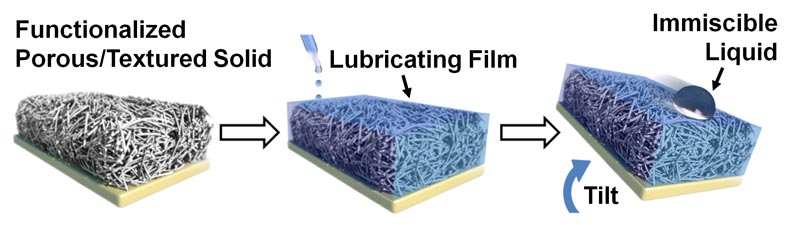
This technique for slipperiness used by Nepenthes has now been mimicked by Joanna Aizenberg and her colleagues at Harvard University who have created an "omniphobic" surface that repels oils as well as water. Described as a "slippery liquid-infused porous surface(s)", or SLIPS, the surface is fabricated out of a sponge-like material composed of a random network of nanofibres. The material was then coated in a lubricating film that is immiscible to a broad range of liquids. When a drop of complex fluid, such as crude oil or blood, was placed on the surface, it quickly slid off even if the surface was tilted only slightly.

Robust slipperiness

The researchers say that one big advantage of the new material over alternative slippery surfaces in industry is its robustness. Materials based on the water-repelling properties of lotus leaves, for instance, rely on a layer of trapped air, which can become unstable at high pressures – leading to a poor performance or permanent damage. "[Our] lubricating film is intrinsically smooth, making it almost perfectly slippery toward substances of any surface tension," Aizenberg told physicsworld.com. "Lotus-inspired surfaces have a much harder time repelling liquids with low-surface liquids, such as oils, since these tend to sink into the spaces between the textures." She believes that the smooth nature of SLIPS means it could be used to create stain-resistant coatings on optical surfaces, such as solar cells and sensors.

The group is now working closely with other academic institutions to study various features of SLIPS, including its performance at extreme temperatures and high-shear conditions. They are also seeking industrial partners to commercialize different aspects of the SLIPS technology. "The temperature and pressure stabilities of SLIPS make it ideal for energy-efficient, high-temperature transport of economically important fluids such as crude oil and biofuels," said Aizenberg. Aizenberg believes that SLIPS could also be used as ice-resistant coatings for instruments operating in refrigeration technologies, or even in polar environments.

Michael Nosonovsky, a biomimetics engineer at the University of Wisconsin-Milwaukee in the US, agrees that the technology shows a lot of promise. "One could use it for various purposes, such as household appliances, which will require much less cleaning or all applications where moving parts can stick together and prevent proper operation," he said. Nosonovsky envisages that in the longer run SLIPS could be used in applications where biofouling is undesirable, such as underwater hulls of ships and submarines.

Chuan-Hua Chen, a hydrodynamics researcher at Duke University in the US, is also impressed by the new design. "This is a clever way to develop the slippery surface, which reminds me of the lubricants used in automobile engines and hydraulic machinery," he said. Chen agrees that using a liquid lubricant eliminates a lot of problems associated with air-filled cavities, though he believes this feature could also be a weakness. "Lubricants would work well in enclosed machinery, but would have to be replenished if exposed," he explained.

This research is published in Nature.

Orbiting standards lab could improve climate predictions

Policy makers would be much better placed to combat the effects of global warming if scientists had access to accurate measurements of the Earth's radiation balance from a dedicated satellite, claims an international group of physicists. As well as collecting its own data, the spacecraft would also calibrate other Earth-observation satellites. The group is led by scientists at the UK's National Physical Laboratory (NPL) and it estimates that the satellite could cut a decade or more from the time needed to make useful projections of global temperature at the end of the 21st century.

Climate scientists have become increasingly convinced that much of the global temperature rise seen over the last 50 years or so is due to the emission of man-made greenhouse gases. But they are not able to predict with any certainty the extent to which temperatures will increase over the course of the coming century. Indeed, the 2007 report from the Intergovernmental Panel on Climate Change said the increase could vary anywhere from about 1 to 6 °C. This uncertainty stems from the fact that a variety of different models are used – each making different assumptions about the Earth's climate. One of the biggest single sources of uncertainty is the nature and magnitude of the feedback provided by changes to cloud cover as the planet warms.

Time cut in third

Reducing the uncertainties will involve continued space-based measurement of key climate variables such as cloud cover in order to compare these data with the values predicted by each of the various models. According to Nigel Fox of NPL, today's space-based instruments require an observing period of 30 or 40 years before the uncertainties can be restricted to a range of about 1–2 °C. At this point governments will know whether and when they need to take major steps to combat climate change, such as building large flood barriers, or whether more modest changes will do the job. However, he and colleagues from the UK, US and Switzerland argue that this period could be cut to just 12 years following the launch of a satellite known as TRUTHS.

TRUTHS would measure the intensity and spectral composition of radiation coming directly from the Sun and radiation reflected back into space from Earth – with an accuracy about 10 times better than existing satellites. At the heart of the spacecraft would be an instrument containing a black cavity that absorbs incoming light. The power of that light is obtained by measuring the cavity's temperature rise and then using an electrical heater to deliver a known power to cause the same increase in temperature.

This "electrical substitution radiometry" is already used in existing satellites, but is carried out at ambient temperatures, whereas the instrument inside TRUTHS would operate at about –250 °C. As such, it would be as accurate as radiometers used in metrology institutes on the ground. Although this accuracy will degrade with time, the TRUTHS instrument will remain more accurate than today's instruments.

Taking NPL into orbit

Another satellite would be calibrated by pointing it and TRUTHS at the same bright surface (such as a snow field) and comparing the values obtained by each. "We would be effectively taking NPL into orbit", says Fox, "just as if we were checking a customer's light meter against our reference light meter."

TRUTHS was first proposed to the European Space Agency (ESA) in 2002, and the proposal was updated last year with a €50–100m cost estimate. Since then a very similar but larger NASA mission called CLARREO has been put on hold, so Fox is hoping that ESA, or perhaps even the UK, will back the project on its own. "I've no doubt the mission will happen at some point," he says, "but it is a question of how quickly it will happen."

Some are unconvinced

However, Michael Mann, a climate scientist at Pennsylvania State University in the US, says he is "unconvinced that such a mission will provide any definitive answers". In particular, he believes it will be difficult for TRUTHS to quantify cloud feedbacks given the dominant natural year-to-year variability in cloud cover.

Michael Lockwood of Reading University in the UK is more persuaded. He believes that poor calibration between different satellites hampers our understanding of long-term climate change, adding that "future generations will curse us" for not paying more attention to the problem. And he thinks that TRUTHS could offer a way of improving such calibration for measurements of cloud and surface reflectance. But he says the detailed implementation of this improvement still needs to be worked out.

The research is described in Phil. Trans. R. Soc. A 369 4028.

Ferrofluid pump has no moving parts

Scientists in the US have developed a new way of pumping ferrofluids without the use of any mechanical components. They claim that their technique, dubbed "ferrohydrodynamic pumping", can be easily scaled up or down to be used in microfluidic devices or industrial-scale pumping devices, and anything in between.

Ferrofluids were developed by NASA in the 1960s as a way to non-mechanically pump fuel in space. They fall under the umbrella of "smart fluids" – fluids whose properties can be changed by applying a magnetic or electrical field. Today, ferrofluids have a wide range of applications, being used liquid 0-rings, in high-end audio speakers and computer circuitry, as well as biomedical devices.

Strange brew

Ferrofluids are colloidal liquids made of nanoscale ferromagnetic particles suspended in a carrier fluid. They respond to magnetic fields while retaining liquid properties and can be manipulated by external magnetic fields. The essential difference between ferrofluids and magnetorheological fluids (MR fluids), another type of smart fluid, is the particle size – the nanoparticles in the ferrofluid are suspended by Brownian motion and so, do not settle under normal conditions; while the particles in MR fluids are of the micron-scale and are too heavy to be suspended by Brownian motion.

When ferrofluids are exposed to a magnetic field, the bulk of the liquid becomes magnetized and its surface acquires a shape to minimize the energy of the system. Sometimes, exotic spikes form on the liquid's surface in the presence of strong magnetic-field gradients – which has been exploited in some interesting special effects and art projects. "If you have ever seen a movie scene in which there is a strange, black liquid creeping towards the protagonist, seemingly on its own accord – think X-Files – there is a good chance that the liquid is a ferrofluid," says Hur Koser, one of the authors of the study recently published in Physical Review B.

Fluid loops

Koser and colleagues of the University of Georgia and Massachusetts Institute of Technology in the US came up with their pumping design after Koser became interested in the designing of tiny magnetic-field generators during his PhD work. He says that a common query that puzzled his team then was, "Can these machines be used to pump fluids in microfluidic devices?" Creating a tiny motor to pump fluids is complex, but Koser realized that if the fluid itself was magnetic, it could be actuated and pumped without any motors. Koser and colleague Leidong Mao then used computer simulations to work out an experiment to demonstrate such actuated pumping, and built their device. "In retrospect, the experiment was the easy part. The difficulty was in taking into account all of the nonlinearities associated with ferrohydrodynamics in our computer simulations, which took considerably longer – almost years – to conclude," explains Koser.

The apparatus comprises a closed fluidic loop that they built using PVC pipes bought at the local hardware store. They added manual valves to the loop to stop the circulating flow whenever necessary as well as two pressure ports to measure the pressure created by the electrical windings – many turns of copper tape around the circumference of the tube – in a differential fashion. "We passed electrical current through the windings to create a magnetic excitation that travelled along the length of the tube on one arm of the fluidic loop. The currents were driven by a stereo amplifier, purchased from a local music store. The ferrofluid used was a cheap, commercially available formulation based on mineral oil and magnetite nanoparticles," says Koser, explaining just how simply their device was built.

Chain reactions

The electromagnetic coils generate a magnetic field, which the researchers refer to as a "travelling wave". Mao explains that these fields rotate the nanoparticles within the liquid. "We can control the strength, frequency and direction of the travelling waves, which in turn result in locally rotating magnetic fields within the ferrofluid. The field is set up to generate a gradient of nanoparticle rotation – those deeper inside the pipe rotate slower than those near the surface. This spin gradient sets up a shear gradient within the ferrofluid, propelling it linearly," he says. A large spin gradient means that each particle's rotations are highly coupled with those of its neighbours, while a zero-spin gradient means particle's rotations do not affect each other at all.

The researchers also noted a discrepancy between their simulations and observed pumping characteristics. They found that the individual nanoparticles could not have been responsible for the measured pumping because the flow that they observe requires coupling between the physical rotation of magnetic nanoparticles and the surrounding liquid medium. So they deduced that a small percentage of magnetite nanoparticles must have dynamically formed short linear, reversible chains caused by the travelling wave, and that it was the rotation of these chains that lead to the differences observed.

The pumping method that the researchers have developed can be used for almost all types of ferrofluids, whether oil or water-based. Because there is no secondary liquid to pump, the ferrofluid can be optimized individually for maximum shelf-life and optimum pumping. They believe that their technique could lead to compact, integrated and efficient liquid-cooling schemes based on ferrofluids that could be used in miniaturized cooling systems for computers. "Your laptop could be twice as thin and a third lighter and faster with more efficient cooling," says Koser.

Copyright © 2026 by IOP Publishing Ltd and individual contributors