Integrating electronics with the human body

By Louise Mayor

We’ve come a long way in the fields of both electronics and medicine. But the possibility of intimately combining these – integrating electronics with the human body – has so far remained in the minds of creators of cyborg characters such as the Terminator and Star Trek‘s Seven of Nine.

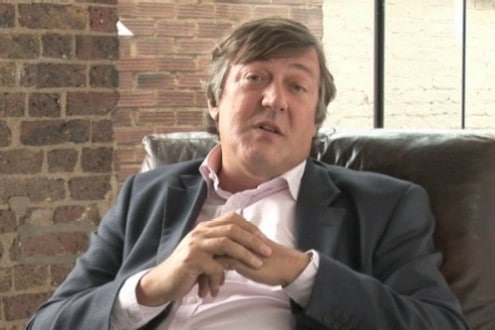
And there’s a reason for this, which I found out while recording this video interview with John Rogers from the University of Illinois at Urbana-Champaign. As Rogers explains, all known forms of biology are soft, elastic and curvilinear, whereas all known forms of electronic technologies are rigid, planar and brittle. “As a result,” he continues, “if you want to integrate electronics with biology – with human skin or tissue – you have severe challenges in a mechanics mismatch and a geometrical form mismatch.”

But this limitation is now being broken by Rogers and his team, who are developing electronics in formats that are much more tissue-like in their geometry and mechanical properties.

LED_pencil.jpg
LED array stretched over the tip of a pencil for scale. (Courtesy: John Rogers)

One specific type of device they’re developing is bio-integrated light-emitting diodes (LEDs), and as proof of principle they have already implanted an LED array under a mouse’s skin.

But does glowing skin bring anything to the table other than futuristic-looking tattoos? In the video, Rogers explains that they can be a diagnostic tool when used for spectroscopy – combining an LED array with sensors allows tissue to be diagnosed based on how it reflects and absorbs light.

But there are therapeutic uses too: Rogers is also interested in putting LEDs in the body along with certain classes of drugs that can be photoactivated. “So you introduce them into the body in an inactive form, and then you can activate them locally by exposing them to light,” he says, adding that there is also evidence emerging that phototherapy – simply irradiating tissue with light – can actually accelerate the wound-healing process.

The above video forms one of a four-part series filmed at the MRS Fall Meeting in Boston. In the video below, Amy Moll – MRS’s head of public outreach – explains why spreading the word about research like this is so important.

We also accosted conference delegates to hear their take on materials science, and had a more in-depth chat with incoming director of the National Science Foundation’s Division of Materials Research, Ian Robertson, about how the agency might allocate their 2011 budget of $320m.

Sun provides Earth with less energy than we thought

Researchers in the US claim to have the most reliable estimates yet of the amount of energy that the Sun provides to Earth – and it is less than previously thought. The findings will give scientists more robust solar data to feed into climate models, though much more work needs to be done to fully understand the relationship between the Sun and the Earth.

Historical and geological records reveal that the Sun has remained relatively stable for the past 250 years, with the total solar irradiance (TSI) fluctuating by less than 1% over the roughly 11-year solar cycle. And since the first space-based radiometers were launched in the late 1970s, scientists have been able to measure this irradiation directly. But to date, these space measurements have remained uncalibrated – researchers had to assume that their instruments function in the same way in space as they do on Earth.

Greg Kopp of the Laboratory for Atmospheric and Space Physics (LASP) in Boulder, Colorado, and Judith Lean of the Naval Research Laboratory in Washington DC say they have acquired a more reliable estimate of solar activity. They analysed data collected by NASA’s Solar Radiation and Climate Experiment (SORCE), a satellite launched in 2003 to investigate why solar variability occurs and how it affects Earth’s atmosphere and climate.

Simulating space on Earth

Crucially, Kopp and Lean were able to calibrate data collected by the Total Irradiance Monitor (TIM) instrument aboard this craft at a new calibration centre at LASP. This facility in Boulder enables researchers to verify their findings by recreating the conditions of interplanetary space with vacuum operations and high solar power levels. Kopp and Lean find that the TSI during the last solar minimum in 2008 was 1360.8 ± 0.5 W m–2, which is roughly 5 W m–2 less than the accepted value used in climate models.

“Although it seems small, this level of difference is very large for the instruments acquiring these measurements,” Kopp tells physicsworld.com. He says that while the latest finding is purely an improvement in instrument accuracy, it can help to inform climate studies about the influence of the Sun.

“The major climate models agree that the majority of climate change over the last century is caused by changes in greenhouse gases, while the Sun’s influence is responsible for about 15% of the observed warming over this time,” he says. “Prior to the 1900s, the Sun was responsible for much more of the changes in Earth’s climate.”

Little Ice Age

Indeed, geologists agree that over the course of Earth’s history, variations in the Sun’s energy output are likely to have influenced the climate on Earth. The “Little Ice Age”, for instance, which extended from the 16th to the 19th century, is often linked with a roughly 70-year stretch beginning in 1645 known as the Maunder Minimum when the Sun was particularly weak.

Friedhelm Steinhilber, a geologist at the Swiss Federal Institute of Aquatic Science and Technology, near Zurich, agrees that Kopp and Lean’s measurements of TSI are the most accurate to date. But he warns that the significance of the lower value is far from fully understood.

“The Sun’s influence on Earth’s climate is not so much the absolute value. It is the relative variation”. Steinhilber believes that the significance of solar fluctuations is only really felt over longer time periods, like that observed during the Maunder Minimum.

These findings are presented in a paper in Geophysical Research Letters.

Water isomers separated by spin

Physicists in Israel have used a modern version of the Stern-Gerlach experiment to separate out water molecules according to the relative spin of their constituent hydrogen atoms. This ability to generate a sample of water with a well-defined nuclear spin could, say the researchers, significantly increase the sensitivity, and hence applicability, of nuclear magnetic resonance (NMR).

Water molecules come in two varieties, or isomers, depending on how the spins of their two hydrogen atoms are oriented relative to one another. When the spins are parallel the molecules are known as “ortho” and when antiparallel they are called “para”. Scientists would like to know more about how the two isomers differ physically and also how they convert from one form to another. To do this, you must first separate the two isomers – something that has proven very difficult.

In 2002 Russian researchers brought water vapour into contact with a substrate and found that ortho-water tended to stick less well to the surface, so leaving the vapour rich in that isomer. However, other groups couldn’t reproduce the experiment, putting the result in doubt. Alternative approaches, such as using strong electric fields or lasers to separate out the isomers, have yet to bear fruit.

Stern-Gerlach revisited

The latest work, carried out by Gil Alexandrowicz and colleagues at the Israel Institute of Technology in Haifa, instead uses the principle exploited by Otto Stern and Walter Gerlach in their pioneering experiment of 1921. Stern and Gerlach were able to separate out a beam of silver atoms into two groups, according to what would come to be understood as the atoms’ spin, or intrinsic angular momentum. To do this they passed the beam through a magnetic field whose strength varied along an axis perpendicular to the beam – being stronger on one side of the beam than the other – meaning that the atoms were forced to one side or the other depending on whether they were spin up or spin down.

This latest experiment is a little more sophisticated, because the spin states of water molecules are slightly more complex than those of silver atoms. The spins of the two hydrogen atoms in each nucleus can combine in four different ways, leading to an ortho “triplet” with total spin 1 and a para “singlet” with total spin 0.

Through a hexapole

To distinguish between these different states, the Israeli group sent a beam of water molecules through a “hexapole” magnetic field, whose gradient, instead of becoming gradually stronger across the beam, goes to zero in the middle of the beam and increases linearly with radius. This arrangement works like a lens, focusing molecules with a total spin of 1 and a “spin projection” of 1 to a point a finite distance from the magnet while leaving the others (those with either a total spin of 1 and a spin projection of 0 or –1 or a total spin of 0) to follow diverging paths.

The team also had to find a way to slow down the beam such that the water molecules had time to be deflected significantly as they passed through the magnet. This the researchers did by mixing 3% water vapour with 97% krypton gas, the heavier krypton atoms having a lower velocity and tending to slow down the beam as a whole. They then placed a 0.5 mm-wide aperture at the expected focus of the beam, about 2 m away from the source, and scanned the aperture across the beam, recording how the water make-up varied as a result. Their measurements showed a focused beam with a diameter of about 1.5 mm, which contained about 97% ortho-water and just 3% para-water.

According to Alexandrowicz, this filtering of water molecules according to their spin could make NMR much more sensitive. NMR uses a powerful magnetic field to align the spins of magnetic nuclei, such as the protons in water, and then exposes these nuclei to radio pulses. Measuring the frequencies at which the nuclei precess around the field direction then provides information on the physical and chemical environment of the nuclei.

Surface NMR possible?

Unfortunately, however, even with a very strong field only a small fraction of the nuclei can be made to initially align, which means that the output signal is weak. So making measurements of a water sample in which almost all of the nuclear spins lie in the same direction would result in a far stronger signal. This, says Alexandrowicz, could expand the use of NMR, allowing it, for example, to be used in surface science – currently, only bulk water contains enough molecules to generate a measurable signal.

Alexandrowicz adds that the spin-selected beam would probably not be applicable to medical magnetic resonance imaging (MRI), because of both the small quantities of ortho-water that it produces and the fact that the spin polarization (isomer separation) is likely to be short-lived. He says that his group will now investigate exactly how long this spin polarization persists in thin layers of water molecules deposited on a surface using the magnetically focused beam, and will then look to carry out ultra-sensitive NMR studies in the near future.

The results are reported in Science 331 319.

There's something in the air

atmosphere.jpg
Thin blue line: BBC Radio explores our atmosphere (Courtesy: NASA)

By Hamish Johnston

Last night I listened to the second instalment of BBC Radio’s Thin Air, a three part series that looks at the wondrous properties of the Earth’s atmosphere.

In part two science journalist Gabrielle Walker looks at the various gases that make up air. What I found particularly fascinating is the account of how the atmosphere has evolved over billions of years to become what it is today.

Oxygen, for example, was initially a toxic waste-product of life rather than a life giver. For a long time it was absorbed by rocks, allowing early life to flourish, but then the rocks could take no more. The subsequent build-up of oxygen in the atmosphere is described as the worst pollution incident in the history of the planet by James Lovelock, who is one of the scientists interviewed on the programme.

The first episode looks at the atmosphere as a whole, weighing the air in the Albert Hall and discovering that blood boils above a certain altitude.

You can listen to the first instalment here.

The second episode can be found here, but only for six more days.

After that, the second (and eventually third) programme should be found here.

Single molecules probe tiny hotspots

Researchers in the US are the first to use single fluorescent dye molecules to probe the local electromagnetic fields inside nanoscale “hotspots” on metal surfaces. The imaging technique can identify structures as small as just 15 nm across with a resolution of less than 2 nm – which is much smaller than conventional optical microscopes can achieve.

When light is shone onto nanostructured metallic surfaces, such as those made from gold or silver, hotspots of concentrated light can appear where the electromagnetic field is very intense. Scientists have known about this surface enhancement for over 30 years and have used the effect in techniques like surface-enhanced Raman spectroscopy to image very small samples of molecules and even single molecules. Despite the success of the method, however, scientists struggled to measure the size of these hotspots and how they enhanced spectroscopic measurements.

There are two challenges when it comes to probing the hotspots. First, a hotspot is randomly located on the surface of a metal and is therefore very difficult to find. Second, a hotspot is smaller than the wavelength of visible light and so cannot be detected by an ordinary optical microscope, which normally cannot focus light to a spot smaller than half the wavelength of light – something known as the diffraction limit. More sophisticated imaging techniques, like near-field scanning optical microscopy (NSOM) and electron energy loss spectroscopy (EELS) are not up to the job either because they are limited by the size of their probes.

Ideal probes

Now, Xiang Zhang and colleagues at the University of California at Berkeley have overcome these problems by using single molecules, which the team believes are ideal probes for getting inside hotspots because they are smaller than a nanometre across.

The scientists begin by putting a sample – a rough metal film or metal nanoparticle clusters deposited on a quartz surface – in a fluorescent dye solution and allow the dye molecules to randomly adsorb onto the surface of the sample. The molecules disperse naturally in this way via Brownian motion. When the sample is then illuminated with a laser beam, many hotspots appear on the surface as expected.

By adjusting the concentration of the dye, the researchers ensure that, on average, only one dye molecule arrives at a hotspot at a time. When a single dye molecule binds to a hotspot, its fluorescence is greatly increased and it appears as a bright spot whose intensity can be measured to calculate the level of light enhancement. In this way, the team can obtain an image of the fluorescent enhancement profile of a single hotspot as small as 15 nm across with an accuracy of 1–2 nm. The team found that the light’s field strength decays exponentially from the hotspot peak. This result had been predicted by simulations before but never directly measured in an experiment until now.

‘Perfect tool’

“Our technique could be used to study light–matter interactions in a variety of nanostructures and materials, including nanoparticles, films and wires,” team member Hu Cang said. “It is the perfect tool to help design nano-optics devices and materials to control the flow of light at the nanoscale.”

He added that the hotspots could also be used to boost the sensitivity of biosensors, for example in single-molecule DNA sequencing by focusing the light to a single molecule and substantially suppressing the background noise. “They might also help to improve the efficiency of solar-energy devices by concentrating light to the nanometre-sized active sites in these devices where light is converted into chemical energy or electricity.”

The team says that it would now like to correlate its measurements with the morphology of the metal film and nanoparticle clusters measured using electron microscopes. “With the help of computer simulations, we hope to figure out how these hotspots defy the diffraction limit of light and concentrate light energy into such a small space.

Looking for a lower limit

And last but not least, no theory has yet predicted how small these hotspots can be so the researchers are busy examining other materials like silicon and titanium oxide in the hope of finding even smaller ones.

“Single-molecule imaging – or super-resolution fluorescence microscopy – was named ‘method of the year’ in 2008 by the journal Nature Methods. It has so far been used to primarily image biological samples, but we have shown that it can easily and successfully be extended to other areas,” added Cang.

The results are published in Nature 469 385.

US university settles religious discrimination case

A settlement has been reached in a case brought against the University of Kentucky by astrophysicist Martin Gaskell over his claim that the university illegally denied him a staff position on the basis of his evangelical Christian faith. The settlement now requires the university to pay $125,000 to Gaskell and his lawyers, who claimed that the decision meant Gaskell lost income and caused him “emotional distress”. The university admits no wrongdoing in the case, which was due to go to trial on 8 February. Meanwhile, Gaskell has taken a job at Chile’s University of Valparaiso, which he will start in March.

The case centred on Gaskell’s application in 2007 to become founding director of the University of Kentucky’s then-planned MacAdam Student Observatory. The controversy surrounding his candidature focused mainly on concerns, expressed in e-mails shared among University of Kentucky astronomers and biologists, that his statements indicated a belief in creationism or intelligent design rather than evolutionary theory.

Both sides agreed that Gaskell was a leading candidate for the job, but they disagreed on the reasons for his rejection in favour of astronomer Timothy Knauer, who is currently the observatory’s director. Gaskell asserted that he was rejected because of his faith and what he says was a misreading of his views on evolution. The university claimed, however, that the decision rested on issues of personality and communication skills.

“As the settlement makes clear, the university believes its hiring processes were, and are, fundamentally sound,” says University of Kentucky lawyer Barbara Jones, who adds that members of the university “all appropriately worked through the hiring process in a manner completely consistent with other positions”.

Gaskell’s lawyer Francis Manion says that the case has “shed some much-needed light” on a problem that is not just limited to the University of Kentucky. “It is simply untenable to think that an avowed Christian, evangelical or otherwise, or any other scientist of religious faith, is somehow incapable or less capable of performing his or her job in science education, research or outreach,” he says.

A matter of faith

Born in the UK, Gaskell describes himself as “a non-denominational evangelical”. His research focuses on supermassive black holes in quasars and active galactic nuclei. He has also lectured and written about the relationship between modern astronomy, the Bible, and creation. “I am not a creationist. The correct label for someone like me is ‘theistic evolutionist’,” Gaskell told Physics World. “I have never given a lecture on evolution or biology in my life. I’ve not published research papers on evolution, either.”

University of Kentucky faculty members saw the situation differently. Michael Cavagnero, head of physics and astronomy at Kentucky, claims that Gaskell gave a public talk on the University of Kentucky’s campus in 1997 “that contained, according to members of the university’s biology department, inaccurate and pejorative statements about contemporary scientific culture and its “hidden atheistic assumptions”, including erroneous statements concerning the theory of evolution by natural selection”. “I came to the conclusion that, while a talented astronomer, Dr Gaskell is a lousy biologist,” says Cavagnero.

Cavagnero adds that Gaskell’s “religious views played no role in the decision” not to appoint him. “Timothy Knauer’s personality and talents were ideally aligned to the staff position,” Cavagnero says.

The theory of everything on a T-shirt

E8 2.jpg

By Hamish Johnston

It’s what chic geeks are wearing this year, a T-shirt emblazoned with Garrett Lisi’s E8 theory of everything.

On the front of the shirt is a 2D projection of the E8 lattice, which itself occupies eight dimensions. The vertices of the lattice are decorated with colourful shapes, each representing a fundamental particle.

On the back of the shirt you’ll find a series of equations and Lisi’s signature. Indeed, Lisi was involved in the design, according to Tess Smidt who runs the California-based fashion house BlondeGeek.

E8 3.jpg

Tess is an undergraduate physics student at MIT and seems to run BlondeGeek in her spare time – or maybe it’s the other way round.

The firm’s other T-shirts include one sporting two bonded glucose molecules and the caption “How Sweet!”. Yikes, that’s a bit too sickly for me but I do like their “Evil geniuses prefer blondegeeks!” take on “Gentlemen prefer blondes”.

Garrett Lisi, by the way, is an independent researcher who burst onto the scene in 2007 when he published “An exceptionally simple theory of everything” on the arXiv preprint server.

Lisi’s theory has received a mixed response, with some leading physicists including the Perimeter Institute’s Lee Smolin praising it while others like Jacques Distler of the University of Texas find fault with it.

Lisi’s 2007 paper has not been published in a peer-reviewed journal, apparently because it has never been submitted.

He posted a related paper to arXiv last year, and this paper was also submitted for publication in the proceedings of the Conference on Representation Theory and Mathematical Physics, which was held in 2009 at Yale University.

You can see the slides from Lisi’s talk at the conference here.

Relativity's flaws revealed on Twitter

greaves-495px.jpg
Stephen Fry, wit, actor, Twitter giant (Courtesy: Wikimedia Commons)

By James Dacey

I visualize the social-networking site Twitter as a giant cocktail party where multiple conversations, all taking place at once, result in a cacophony of chitchat. Strolling around this gathering you come across crowded pockets where fans huddle round their favourite celebrities, looking for some juicy gossip or dazzling insight into their everyday lives. At the heart of all this you might spot a particularly attentive crowd gathered around the English actor and comedian, Stephen Fry, as he dishes out his devilishly sharp one-liners, always within the limit of 140 characters.

In reality, most of what Fry writes on Twitter is, as the man would say himself, Quite Interesting. But he does sometimes come out with some obscure gems, like yesterday when he drew the attention of his 2 million+ fans to this hilarious entry on Conservapedia about the supposed flaws in Einstein’s theory of relativity. For those not familiar with Conservapedia, it is promoted as “the trustworthy encyclopedia”, and directly contrasts itself with Wikipedia, which it criticizes on a number of points.

The Conservapedia entry comprises a list of 33 “counter-examples to relativity”, and I thought I would just pull out a couple.

Number 9: “The action-at-a-distance by Jesus, described in John 4:46-54”.

Number 21: “The lack of useful devices developed based on any insights provided by the theory; no lives have been saved or helped, and the theory has not led to other useful theories and may have interfered with scientific progress. This stands in stark contrast with every verified theory of science.”

I hope this blog entry doesn’t sound too sneering of people who might hold religious beliefs. And it is certainly not a bad thing to hope that science can lead to useful technologies that can help improve everyday lives. But these “counter-examples” on this ridiculous website give a completely false representation of the process of science. Besides, to say that relativity has no practical use is just plain wrong , as the accuracy of GPS systems depends on relativistic corrections, and these systems help to save plenty of lives. But there is no point in arguing with some people.

My sense of unease intensified when I read that Conservapedia boasts over 200 million views and more than 810,000 edits. Among the website’s guidelines it states that “we are neutral to the facts” and “everything you post must be true and verifiable”.

Just to give you a flavour of the site, here is Conservapedia‘s entry for “a liberal”: “someone who rejects logical and biblical standards, often for self-centered reasons. There are no coherent liberal standards; often a liberal is merely someone who craves attention, and who uses many words to say nothing”. Yep, that sounds both neutral and verifiable.

As for why Fry felt the need to tweet about this entry now…well it’s probably no coincidence that his picture appears on the Conservapedia homepage alongside an article on “atheism and obesity”. And why I wrote this blog entry giving Conservapedia more oxygen? Well, I’m not quite sure. Guess I was just quite angry.

Bridging the gap between biology and electronics

Biology is soft, elastic and curvilinear, whereas conventional semiconductor electronic devices are rigid, planar and brittle. As disconnects go, this is a big one – although that may be about to change.

John Rogers and his team at the University of Illinois at Urbana-Champaign are working around the mismatch in mechanics and geometry to realize tissue-like electronic devices – bendy, waterproof and biocompatible – that could one day be implanted in the human body to open up new frontiers in biomedicine.

“Because you can’t change the biology, we as materials scientists have focused on new ways to use semiconductor materials in electronic devices that have the shape and mechanical properties of human tissue,” he tells Louise Mayor, features editor of Physics World, in our latest video report.

For Rogers and colleagues, the ultimate goal is a new generation of implantable bioelectronics with applications ranging from advanced surgical devices to light-activated drug delivery and accelerated wound healing. Just press “Play” to get the full story.

This interview forms part of a series filmed at the MRS Fall Meeting in Boston. See also “Living in a material world”, “Funding the frontiers of materials science” and “Spreading the word: why science outreach matters”.

Hubble rap

By Hamish Johnston

If you’ve ever wondered what Edwin Hubble would be like if he was reincarnated as an English rapper, you are in luck.

The “science rapper” Zach Powers has made a video of his interpretation of how the great astronomer would rap about his discovery of the expanding universe.

Hubble was an American mid-westerner born and bred, but Zach portrays him with an English accent. Hubble had spent a few years at Oxford and was apparently a bit of an Anglophile – although I doubt he ever affected a south London drawl.

Zach, by the way, describes himself as “a native New Yorker and professional scientist”. Zach is working towards a PhD at the Mount Sinai School of Medicine where he studies the structure of chromatin proteins.

The rap and video are pretty good, and the physics is spot on. One of my favourite lines is:

“I’m stark raving mad for what do I see? The farther the star, the greater the velocity.”

If you enjoy the science rapper, you might want to check out “The PCR Rap” – that’s polymerase chain replication – which celebrates the work and lifestyle of Nobel laureate Kary Mullis. In this rap Powers sounds a bit like Lou Reed, just what you would expect from a native New Yorker.

Copyright © 2026 by IOP Publishing Ltd and individual contributors