A problem for the future

The archaeologists who excavated the tombs of the pharaohs were lucky. When they stumbled upon the remains of an ancient civilization, they found gold and valuable artefacts. Their descendents will not be so fortunate. When explorers go digging for our last remains, what they find may be valuable, and it will certainly tell them something interesting about our culture. But it could also kill them, because the longest lasting monuments of our civilization will probably be our nuclear-waste repositories, and the radioactive “treasure” they harbour will remain dangerous for thousands of years.

What does this say about us? This is the central question posed by the film Into Eternity – a fascinating and troubling documentary about a waste repository in southwest Finland called Onkalo, a name that means “hiding place”. Currently under construction, Onkalo is due to receive its first consignment of radioactive waste in 2020. When it is completely full, sometime in the early 22nd century, its entrance will be sealed. Its designers hope that it will remain that way for at least 100 000 years. But no human-built structure has ever lasted a 10th of this time, so every decision made about Onkalo rests on uncertain ground.

Subtitled “A film for the future”, Into Eternity explores this uncertainty in detail. The film, which will get its UK première in Sheffield at the Doc/Fest event in November, discusses the physics of radioactivity, the practicalities of interim and permanent storage, the requirements of the law, and the vexed question of how to keep our descendents safe from Onkalo. Between interviews with various Finnish and Swedish officials, filmmaker Michael Madsen takes us round the Onkalo site, including the unfinished tunnel, which will eventually stretch for 5 km and reach depths of more than 450 m.

The tunnel is a surreal place, covered in unintelligible markings and suffused with a dim blue light. One interviewee – a workman called Sami Savonrinne – likens it to a time capsule. We hear Savonrinne’s words as he crouches on the tunnel floor, a lonely figure in a high-visibility jacket preparing to blast away the next section of bedrock (see image). It is a striking image, one of many in this surprisingly beautiful film. The music is also well chosen, with a multinational soundtrack featuring music by the Finnish composer Jean Sibelius as well as Arvo Pärt, Kraftwerk and – to great effect, in the film’s final scene – Edgard Varèse.

Such artistry would be wasted if the interviews did not provide content to match. Fortunately, Madsen has put together a remarkably candid bunch of experts – some affiliated with Onkalo, others not – and they all have interesting things to say. One of the most fascinating discussions concerns the chances of Onkalo being found, and the consequences of any such “human intrusion”. The experts generally agree that the repository will, at some point, be forgotten – certainly by the next predicted ice age in 60,000 years, and probably well before then. As a result, says Onkalo’s senior manager of communications Timo Seppälä, “My personal belief is that no human intrusion will take place at any timescale ever.”

Timo Älkäs, the facility’s vice president for engineering, is more equivocal. Someone might break into Onkalo, he concedes, but if they did, they would have tools to measure the radiation. One of the external experts, Peter Wikberg of Sweden’s Nuclear Fuel and Waste Management Company, elaborates on Älkäs’ point: any civilization advanced enough to dig into Onkalo, he says, would also be advanced enough to know what it was dealing with.

That is a comforting thought, but his colleague Berit Lundqvist immediately casts doubt on it, noting that 16th-century Swedish miners were able to dig several hundred metres below the surface even though they were unfamiliar with steam engines, let alone radioactivity. Over such an immense stretch of time, we cannot assume that humankind will become ever more technologically advanced; any number of events could send our descendents back to the Middle Ages. The moderate-technology society that might follow is a nightmare scenario for Onkalo’s designers, one where “people may drill but may not understand”, concludes Mikael Jensen, an analyst with Sweden’s Radiation Safety Authority.

Would it help to warn them? Possibly – but there is no guarantee that a warning would be understood. Even if it is, the advice might not be heeded. As the film points out, one Norwegian rune stone, carved less than 1000 years ago, bears a warning that it “should not be touched by misguided men”. The stone was found lying face down.

Yet Finnish law states that the future must be informed, so it will be – in Finnish-language archives that are unlikely to last more than a fraction of Onkalo’s useful life. In the film, the task of explaining this legal lunacy falls largely to Esko Roukola, principal advisor for regulation at Finland’s Radiation and Nuclear Safety Authority. He looks distinctly uncomfortable about it. Asked if he trusts future generations, at first he squirms and waves the camera away. Eventually, he stammers “I cannot say that I trust but I cannot say that I don’t trust.” It is one of the film’s best lines, succinctly capturing the problem Onkalo’s builders face.

There are a few gaps in the film, mostly on the technical side. For a place that is meant to be stable and unchanging, the Onkalo tunnel appears to contain an awful lot of running water. It would have been nice to hear at least one expert explain in more detail how waste is to be kept segregated from groundwater over the next several thousand years. A more nuanced approach to the facility’s 100,000-year lifespan would also have been welcome. Half-lives being what they are, at some point Onkalo’s waste, though still hazardous, will no longer pose an immediate threat to life. How long will that take? 500 years? 1000? 10,000? The film does not say.

On a related note, it is a pity that Madsen’s interviewees give short shrift to the possibility of transmuting waste into less hazardous substances with shorter half-lives. Although Juhani Vira, Onkalo’s senior vice president for research, accurately points out that transmutation would not make all the waste disappear, it would certainly reduce the total volume and perhaps the required isolation period. This is not a small advantage. Building a handful of Onkalos to last 1000 years would be a manageable engineering problem. Building several hundred to last 100,000 seems dangerously close to a crime against the future.

Unfortunately, there does not seem to be an alternative: if we want nuclear power, we will get nuclear waste. Indeed, we have accumulated more than 200,000 tonnes of waste already, so even if we shut down all our nuclear power plants tomorrow, we would still have a massive problem. Places like Onkalo represent an implicit promise that we can keep this waste safe – not only in our own time, but for what might as well be an eternity. So are they the solution? Into Eternity has no answers, but it is a beautiful film about an ugly problem, and anyone interested in nuclear power should see it.

Nuclear fear revisited

In 1988 the science historian Spencer Weart published a groundbreaking book called Nuclear Fear: A History of Images, which examined visions of radiation damage and nuclear disaster in newspapers, television, film, literature, advertisements and popular culture. In his analysis, Weart noticed something odd about nuclear-disaster scenarios: we have seen them all before. He found that their imagery and plots eerily resemble those of pre-nuclear and even pre-technological disaster scenarios.

In involving arrogant scientists who play God by probing nature’s secrets with special machines before unleashing powers that they cannot control to destroy the world, these plots are suspiciously similar to earlier stories involving magicians or alchemists who play God by probing nature’s secrets with special devices or processes before eventually unleashing world-destroying powers that they cannot control. Tales of witches unleashing magical powers, Weart noted, have much to do with anxieties about socially disruptive classes of people. Likewise, fictional tales of technological apocalypse have much to do with anxieties about modern civilization, the role of technology and the social authority of scientists. The plot is what Weart calls “Faust’s sin of prideful power divorced from moral responsibility”; the new nuclear technology merely feeds the image by giving the dangerous scientist more expensive and flashier hardware to do it with.

Nuclear fear, Weart concluded, has less to do with our knowledge of atomic structure and its exploitation than with psychology, history and culture. His book explained why public discussions of nuclear power tend not to centre on issues but to be derailed by passions having nothing to do with either the technology or the wisdom of its use.

Has nothing changed? Weart raises this question in a forthcoming revision of his 1988 book and in the article “Nuclear fear 1987–2007: Has anything changed? Has everything changed?”, which appears in the new book Filling the Hole in the Nuclear Future edited by Robert Jacobs (2010, Lexington Books). Weart’s surprising answer, backed up by polls, surveys and media analyses, is that nuclear fear declined in the wake of two events of 1986. One was the start of détente after that year’s Reykyavik summit between presidents Reagan and Gorbachev. “A significant part of the fear of nuclear reactors is displaced fear of nuclear war,” Weart told me. “With the ending of the Cold War, it was natural for this general fear of being irradiated and blown up to diminish.”

The other event was the Chernobyl reactor disaster, coming seven years after the Three Mile Island accident. “[I]n a seeming paradox,” Weart writes in his recent article, “the worst civilian nuclear disasters in history ultimately brought a decline in public concern about nuclear power.” By silencing the utopian claims of nuclear-power proponents, fostering more cautious technologies, and curtailing reactor start-ups, the accidents leached energy from the anti-nuclear movement.

Those born after 1986, says Weart, “did not grow up in a world where talk of nuclear war, radiation, nuclear reactors and so forth showed up frequently in the news, and even sometimes in personal relations, in a context full of anxiety”. Indeed, nuclear reactors are now prosaic enough to be mocked in cartoons. “How many have first met a nuclear reactor in the introductory sequence of the perennially popular cartoon show The Simpsons, featuring a lovable but amusingly incompetent reactor operator?”

Changes afoot

So has everything changed? No. Nuclear fear is still potent, losing none of its old associations and gaining new outlets. “Nuclear terrorism”, Weart writes, “does trump all.” When the Bush administration wanted to mobilize public opinion for its 2003 invasion of Iraq, for example, its most effective tool was an appeal to (imagined) Iraqi weapons of nuclear, rather than biological or chemical, destruction. Nuclear threats are still the terrorist weapon of choice, both in popular culture – films and computer games – and also in the real world. “The complex of imagery walks in the real world, to no good result,” Weart writes.

Last summer, a right-wing blogger publicized a 2.5 minute video of Shirley Sherrod, a Department of Agriculture official in the Obama administration, seeming to admit to having mistreated a white farmer. The ugly, racist portrait that the video created was so repugnant that Sherrod was fired immediately, before even being consulted. The blogger, it turned out, had sharply edited a 20-minute speech to make it emotionally repellent. Anyone who listened to the entire speech understood that Sherrod’s message was about the need to treat everyone equally. It was a lesson in image manipulation. Sherrod was offered her job back afterwards, when her message was considered coolly and in context.

Reactors, too, are vulnerable to what one might call “Sherroding”. Nuclear fear cannot be switched off, for the associative and affective reasons that Weart identified. Until recently, the anti-nuclear movement had skilfully wielded powerful images of worst-case scenarios, mushroom clouds and genetically damaged children to create a “cultural hysteresis” in which nuclear reactors are equated with Chernobyl, and nuclear disasters with Hiroshima. Weart may be right to see a diminution of nuclear fear, but activists can still inflame it. His work helps lessen our dependence on historical events and, by giving us an understanding of the deep non-scientific roots of nuclear fear, helps us address it.

Given the planetary threat posed by global warming, and the possible use of nuclear power as an alternative to ultimately dangerous fossil-fuel technologies – which store their wastes in the atmosphere, for free – optimally addressing global safety requires the ability to debate reactor technology, its strengths and weaknesses, independently of that cultural hysteresis. Otherwise, there may be no afterwards in which to consider it coolly.

Absence of evidence

Just how dangerous is radiation? Scientists have been debating this question for decades yet, despite extensive studies, there is still controversy. The working assumption, which is currently accepted as the basis for regulation and legislation, is that radiation raises the risk of cancer at a rate that is directly proportional to dose at all dose levels. A consequence of this “linear no threshold” (LNT) model is that it assumes that there is no safe level of radiation dose. The other possibility is that below a certain threshold level, radiation is essentially harmless: any damage done by ionization and the consequent radiochemical and radiobiological effects is effectively and quickly repaired by the human body, with neither lasting harm nor elevated risk of cancer.

Conclusive evidence in favour of one model or the other would be of enormous interest. Scientists who design and operate nuclear power plants and radioactive-waste repositories would benefit from greater clarity. Medical physicists, who routinely weigh up the benefits of diagnostic tests and radiation treatments against the risks to patient health, would be on firmer ground – as would the politicians who approve the necessary regulations. But any changes in policy or clinical practice must be driven by data. Bold claims that radiation-protection regulations are a factor of 1000 too cautious may be appealing, but they should be dismissed out of hand unless they are supported by both a reasoned argument and unequivocal data.

In Radiation and Reason: The Impact of Science on a Culture of Fear, Wade Allison, a physicist at the University of Oxford, sets out a reasoned argument in favour of the threshold model, and against the LNT assumption outlined above. To support this argument, Allison provides examples from engineering and biology where there are indeed thresholds for irreparable effects. For example, an individual who suffers a bruise or laceration will recover completely from such a minor injury, but beyond a certain threshold, laceration is irreparable and possibly life-threatening. Why, Allison asks, should radiation carcinogenesis be different? After all, we know that damaged DNA can be repaired, and that in some cases irreparably damaged cells can be eliminated by apoptosis, or programmed cell death. Surely this is evidence that the LNT model is flawed?

In the course of researching this self-published book, Allison clearly became convinced that the radiobiological processes underlying carcinogenesis are well enough understood that the LNT assumption can be dismissed. However, the reader should be aware that the data he uses to support this argument have also been reported and discussed extensively by researchers in the field, and their conclusions were rather different. Notably, the L H Gray Conference in June 2008, which brought together international experts in radiobiology, epidemiology and risk assessment, concluded that “at the present time, although the possibility of a low-dose threshold cannot be ruled out, current thinking on radiation protection suggests it is likely that low doses of radiation will carry some risk”.

The threshold hypothesis set out in Radiation and Reason is based on observations from human populations. In particular, data on survivors of the Hiroshima and Nagasaki atomic bombings and those exposed to radiation in the aftermath of the Chernobyl incident show that the number of “excess” cancers is lower than would be expected from the LNT model. However, the evidence from radiotherapy patients, who Allison claims are safely exposed to doses many orders of magnitude higher than radiological-protection dose constraints, is not completely appropriate in this context, nor is it complete.

In radiotherapy, the volume of tissue irradiated to very high doses is typically less than 1% of the whole body. A much higher volume of tissue receives dose levels that can produce functional side effects (such as damage to the integrity of the skin or blood vessels, or reduced saliva production) rather than carcinogenesis. Allison correctly cites the repair processes for these side effects as being the mechanism whereby therapeutically effective doses can be delivered to tumours without doing irreparable damage to normal tissue.

Repairing functional damage is, however, very different from the repair at the molecular level that is necessary to reverse the genetic damage that leads to cancer. Moreover, there is also an unavoidable whole-body dose associated with radiation therapies – typically 4 mSv per day from leakage and scattered radiation. (In comparison, the average annual dose from background radiation is approximately 2.4 mSv.) This scattered radiation is known to induce “second cancers”, which can occur far away from the regions of high dose. For example, a large study of men with prostate cancer demonstrated an increased subsequent risk of lung cancer for those treated using radiotherapy compared with a matched cohort treated by surgery. Although the appearance of such cancers does not preclude the existence of a threshold, it does undermine the grounds for rejecting the LNT model on the basis that radiotherapy is risk-free.

The bottom line is that the scientific debate on the existence of a threshold cannot be resolved by population studies alone, simply because the data are so sparse (thankfully, since they stem largely from nuclear wars and accidents). As the old saying goes, “absence of evidence is not evidence of absence”. Resolution of the threshold question, if it is possible, will be indirect and will depend on quantitative basic radio_biology rather than epidemiology.

While the book draws on data from many applications of radiation, it is the nuclear-power industry that would, its author believes, benefit most from relaxed regulation. Yet Allison acknowledges that most of the vast expense involved in designing safe reactors and appropriate storage systems is directed at avoiding or reducing the risk of major incidents; as such, these costs do not depend on the existence of a threshold dose. The necessary storage time for fission products and other medium-half-life radioactive waste would be influenced by the level of a threshold, and by public and scientific acceptance of it. However, the costs of constructing a waste-storage facility will not be very sensitive to the threshold dose, nor to the timescale required. A facility built to last 500 years is unlikely to cost three times as much as one designed to last 150 years – another example of nonlinearity.

Radiation and Reason also poses questions of a sociological and political nature. Why, Allison asks, is radiation perceived as being particularly harmful? Can that perception be changed to ensure that nuclear power can be made more affordable and available, leading to worldwide societal benefits? In exploring these questions, the author suggests that overzealous regulation has persuaded the public to believe that radiation is more dangerous than it actually is. He argues that this has produced an ever-tightening spiral of constraints, which others have described as the “ratchet of radiation protection”. Perhaps, he says, the time has come to release it. In this respect, Allison may have a point: a relaxation of constraints may indeed be in order, and it should certainly be on the agenda.

However, such sensible thinking is undermined by Allison’s statements regarding would-be nuclear terrorists. In particular, his suggestion that terrorists will be deterred if regulations on the storage and use of radioactive materials are relaxed, in response to evidence of reduced risk, strikes me as fanciful. For one thing, it wrongly assumes that terrorism is based on rational behaviour. It also ignores the fact that if radiation were known to carry a lower risk than current thinking suggests, then terrorists would simply need to steal a bigger flask of radioactive material to cause the same effect.

So is this a book about science, the public understanding of science, or politics? Perhaps all three, but the author’s emotive language in stating that “the public need to know the truth” implies that in the past they have been told lies. This puts the matter squarely in the political domain. For scientists, the threshold debate is not about truth or lies; rather, it is about how to deal with facts in a world of uncertainty, where decisions have to be made on the basis of the balance of probabilities. Allison is acerbic in his criticism of international bodies such as the International Commission on Radiological Protection, but their conservatism is not an abrogation of scientific responsibility. Rather, it is a recognition that scientists have a responsibility to make judgments as well as reporting their results. Until the radiobiological and radiological-protection communities reach a consensus, it would be unreasonable to expect legislators to relax regulation and undertake an experiment that will take generations to mature.

Nuclear power – the road ahead

By Louise Mayor

PWOct10cover-iop_fullsize.jpg

Until recently, the phrase “nuclear power” conjured for me a hazy and somewhat ignorant vision, comprising images of cooling towers, diagrams of fission and a sense of subdued controversy, in which proponents from neither the pro- nor anti-nuclear lobbies seem to know more about the subject that I do from high-school days.

But for the past few months I have been immersed in the landscape of modern nuclear power in preparation for a special issue of Physics World, which should land on readers’ doorsteps any day now. It is also available as a free PDF download.

Something I really wanted to get to grips with, when it comes to nuclear power, is who has what, and where? Well, if you do too, check out our colour-coded nuclear power world map, based on data from the International Atomic Energy Agency. It’s on pages 38 and 39 of the “special issue”.

But where do we go from here? In the long term, newly built reactors could be based on the six designs that the Generation-IV International Forum – consisting of 13 Members including the Russian Federation, the US, China and the UK – identified to meet its goals. Physics World’s Rome correspondent Edwin Cartlidge writes about these in the feature “Nuclear’s new generation”.

We also review four concepts for radically different reactor designs, including the travelling-wave reactor endorsed by Bill Gates; and accelerator-driven sub-critical reactors, which we quiz Nobel-prize-winning physicist Carlo Rubbia about in a Q&A.

Not only are there new designs, but new fuel. Elsewhere in the special issue, award-winning science writer Matthew Chalmers looks at how India is seeking to exploit its vast reserves of thorium as an alternative to uranium.

As well as fission, nuclear power also covers the realm of fusion. In the feature “Hot fusion”, Steve Cowley, chief executive of the UK’s Atomic Energy Authority, looks at the challenges facing the ITER facility being built in southern France. He says that with predictions of net power gain at ITER, we should act now to reduce the time to commercial fusion.

Attitudes are key in an energy future with nuclear power in the mix – a future that is only feasible if it has support. With that in mind, check out the debate between climate scientists who go head to head on the merits of nuclear power. You’ll find this, and much more, in the October issue of Physics World.

Between the lines

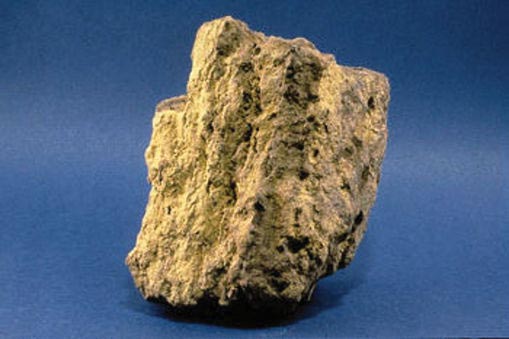
A lump of uranium ore

History of an uneasy element

Among the Bemba people of central Africa, the word “shinkolobwe” is slang for “a man who is easy-going on the surface but who becomes angry when provoked”. It is also the name of the Congolese uranium mine that yielded raw material for the atomic bomb that flattened Hiroshima. As historical coincidences go, this one seems almost too good to be true. Still, one can hardly blame author Tom Zoellner for seizing upon it in Uranium: War, Energy and the Rock that Shaped the World, a very readable (if somewhat chaotic) history of how this normally easy-going element has provoked anger on five continents. After a scene-setting visit to the Shinkolobwe mine, Zoellner’s description of the Manhattan Project will contain few surprises for anyone who has read more comprehensive histories. One notable exception is his explanation of how the scientists got the uranium for the bomb. This tale of costly enrichment programmes, dubious middlemen and colonial skulduggery has important ramifications for the entire subsequent history of uranium. In chasing this history, Zoellner goes to an impressive amount of trouble to tell some of the less-heralded stories of the uranium age, talking to prospectors from Darwin, Australia, to Moab, Utah, and to one of the last survivors of an East German uranium gulag, where political prisoners dug the ore that built the Soviet nuclear arsenal. The price they paid was high – thousands died from radiation, non-existent safety precautions and maltreatment – but it was scarcely lower for miners in the West, where labour was unforced but just as hazardous. The universally cavalier attitudes to radiation during this period are sobering to contemplate. The book’s final chapters cover a grab-bag of topics from endemic fraud in Canadian uranium stocks to the question of whether terrorists could get enough uranium to build a bomb. It is not a question Zoellner cares to answer directly, but some may feel that the facts speak for themselves: on his visit to Shinkolobwe, he found the still-productive mine almost completely unguarded.

  • 2010 Penguin £11.99/$16.00 pb 368pp

Questioning the cosmos

As a means of conveying scientific information, the “question and answer” format has a lot to recommend it: it is simple, straightforward and easy to follow. The downside is that books in this style tend to misjudge their audiences – after all, how do the authors know which questions readers want answered? For this reason, A Question and Answer Guide to Astronomy is a pleasant surprise. Written by engineer Pierre-Yves Bely and astrophysicists Carol Christian and Jean-René Roy (and recently translated from the original French into English), the book claims to give “simple but rigorous explanations” in “non-technical language”, and it does exactly what it says on the tin. Split into 10 sections, it answers hundreds of questions in fields ranging from planetary science (“What is the greenhouse effect?”) to astronomy and cosmology (“How do stars die?”). It also tackles trickier concepts such as “Can anything go faster than the speed of light?” and various big mysteries, including “What was there before the Big Bang?”. All the explanations are well expressed and usually aided by a full-colour illustration or photograph. Within explanations, the authors helpfully have embedded cross-references to other pages that may help to explain common concepts, allowing readers to skim through the questions focusing on the areas that interest them most. Towards the end, the book becomes more specialized, with 30 or so questions on telescopes followed by a propaganda-like section on how to get involved in astronomy. Despite this, the majority of the guide is informative, and by successfully tackling ideas that are often misunderstood, it makes for a worthwhile and enjoyable read.

  • 2010 Cambridge University Press £18.99/$28.99 pb 294pp

First you have to look for them

The ever-expanding catalogue of worlds discovered outside our own solar system contains all sorts of planets: hot, cold, icy, rocky – you name it. But what about watery planets? Or those lovely, not-too-cold, not-too-hot “Goldilocks” ones with an active geology and perhaps a biggish moon nearby, just to keep things interesting? In How to Find a Habitable Planet, James Kasting begins by describing various factors that geophysicists, astrobiologists and others have deemed necessary (or at least desirable) for producing planets capable of supporting life. He then examines the evolutionary histories of the planets we know best – the Earth, Venus and Mars – in an attempt to determine why they developed the way they did. The book’s second half looks at ways of finding new planets using indirect methods (like measuring the tiny gravitational wobble imparted to a star when a planet passes nearby) before moving on to the challenges associated with detecting them directly. Being able to separate the faint reflected light of individual planets from the much brighter light of their parent stars “turns out to be a tall order”, writes Kasting. As a planetary scientist at Pennsylvania State University in the US, Kasting was involved in a design study for a space-based telescope that would have examined light reflected from the surfaces of extrasolar planets for clues about their composition. Unfortunately, the mission was cancelled while it was still in the design phase, and NASA has not yet revived it. How to Find a Habitable Planet offers an eloquent explanation of why such a mission would still be desirable.

  • 2010 Princeton University Press £20.95/$29.95 hb 360pp

Weird science

Tired of biscuits that crumble into a soggy mess at the bottom of your teacup? Uncertain of the best technique for skimming stones across water? If you need answers to these pressing problems – plus advice on how to win at Trivial Pursuit and a rather invasive way to cure hiccups – then Dunk Your Biscuit Horizontally is the place to look. This light-hearted book of bite-sized strange science was compiled by the Dutch journalists Rik Kuiper and Tonie Mudde, and would make a great gift for anyone whose sense of humour encompasses both the scientific and the scatological. It is probably not one for younger children, though: the best cure for intractable hiccups turns out to be either good sex or “digital rectal massage”.

  • 2010 Summersdale Books £7.99 pb 128pp

The Nobel Prize in Timekeeping goes to…

nobeltime.jpg
By Hamish Johnston

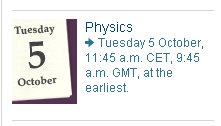
Forgive me for being a grumpy old man, but there is something on the Nobel Foundation website that is driving me crazy (see right).

The foundation seems to be saying that the physics prize will be announced at 11.45 CET and 9.45 GMT.

But how can this be? There is only one hour difference between CET (Central European Time) and GMT (Greenwich Mean Time).

Furthermore, Stockholm will still be on Central European Summer Time (CEST) next Tuesday.

So did they mean to say that the announcement will be made at 11.45 CEST, which is 9.45 GMT?

I sent an e-mail to the foundation asking as much, I’ll keep you posted.

Royal Society releases new guide to climate change

roysoc.jpg

By Hamish Johnston

The UK’s premier scientific organization, the Royal Society, has released a “new short guide to the science of climate change”.

Entitled Climate Change: a Summary of the Science, the 19-page document can be downloaded here.

The guide was produced in part because of pressure from 43 members of the society, who had complained that a 2007 report from the organization did not acknowledge fully areas of uncertainty in climate science.

As a result, the report has a more measured tone, but still asserts “There is strong evidence that the warming of the Earth over the last half-century has been caused largely by human activity.”

Georges Charpak: 1924–2010

The Polish-French physicist Georges Charpak, who won the Nobel Prize for Physics in 1992 for his work on particle detectors, died yesterday at the age of 86.

Charpak spent most of his career at CERN and it was there in 1968 that he developed a new approach to detecting charged particles. His multiwire proportional chamber increased the data collection speed by a factor of 1000 compared with previous techniques. The chamber quickly became a standard tool in particle physics and won Charpak the 1992 prize.

Charpak went on to develop a number of different particle detectors, some of which are used in biophysics and medical physics. More recently, he developed a radon detector that could help predict earthquakes.

Born in Poland in 1924, Charpak became a French citizen in 1946. After studying engineering at the Ecole des Mines in Paris, Charpak did a PhD in nuclear physics at the prestigious College de France. He spent his early years as a physicist at CNRS before joining CERN in 1959, from which he retired in 1991. Charpak was also an honorary fellow of the Institute of Physics, which publishes physicsworld.com.

Is the Canadian Government muzzling its scientists?

ohara.jpg

By Hamish Johnston

Back in April, Scott Dallimore of the Geological Survey of Canada did what most scientists can only dream of – he published a paper in the journal Nature.

The work describes a massive flood that occurred about 13,000 years ago when water from an immense glacial lake broke out and hurled towards the Arctic Ocean.

The work was covered in media outlets around the world and Dallimore’s co-authors were quoted widely. Sadly, Dallimore was denied his moment in the Sun because he was effectively prevented from speaking to reporters by his employer, the Canadian Government.

This apparent censorship in Canada is described in a comment piece in today’s edition of Nature by Kathryn O’Hara (pictured above), president of the Canadian Science Writers’ Association.

I say “effectively prevented”, because Dallimore could have spoken if the journalist’s questions and his answers were first vetted by the government. However, this can take several days or even months according to science writer Glen Blouin. When combined with Nature‘s embargo policy (which gives journalists only a few days to write their articles), it is unlikely that Dallimore could have been quoted when the story broke.

A quick survey of blogs and comments on this topic suggests that muzzling is not new. What seems to have changed is that scientists are now a target of the government’s information machine.

Why? It could have something to do with the fact that the current prime minister Stephen Harper and his Conservative Party have strong connections to the province of Alberta – a major oil producer and home to the controversial oil sands.

Years ago when I was in high school we were taught that Alberta is sitting on top of the world’s largest oil reserve – and we only had to wait until the price of oil was high enough to make extraction from the oil sands viable.

30 years on and we have reached that price point, but concerns about vast carbon dioxide emissions and other environmental issues have made the oil sands a political hot potato.

I’m guessing that there are some in Alberta and in Ottawa who want to make sure that government scientists don’t spoil the long-awaited bonanza.

Astronomers find 'potentially' habitable exoplanet

By Matin Durrani
gilese581.jpg

I’ve never done any astronomy but I imagine that looking for extrasolar planets must be fun. Given that researchers have so far discovered more than 400 of these distant beasts, tracking them down them can’t be all that hard, making the “reward/effort ratio” pretty high.

Of course, what we all want to know – from our puny, self-absorbed human perspective – is when will we spot the first truly Earth-like planet.

Well, a couple of weeks ago I was intrigued by a paper on arXiv by Samuel Arbesman from Harvard University and Gregory Laughlin from the University of California, Santa Cruz, who looked at the rate at which the first 370 extrasolar planets were discovered, did some jiggery-pokery in the form of a “bootstrap analysis”, and then worked out exactly when “the first potentially habitable planet with a mass similar to Earth” will be found.

The pair weren’t talking about vague dates in the future but had a very specific time in mind – with the likeliest date being, wait for it, “early May 2011”. Now that’s what I call having confidence in your data.

Today, though, astronomers in the US, who are part of the Lick-Carnegie Exoplanet Survey, report finding a new – and what they say is “potentially habitable” – Earth-sized planet, which may prove that Arbesman and Laughlin were, if anything, a bit too pessimistic.

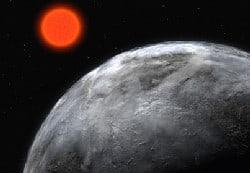
The new planet, dubbed Gliese 581g, is one of two new planets discovered around the star Gliese 581 – the red object pictured above. Gliese 581 lies some 20 light years away from Earth and is now known to have at least six planets around it, one of which is the grey object above.

The newly observed planet has got a mass of between 3.1 and 4.3 that of the Earth. Its radius is between 1.2 and 1.5 that of the Earth, while its surface gravity is 1.1 to 1.7 times that of the Earth.

The results were obtained by tracking 11 years of data on the star’s radial velocity and looking for tiny movements in response to the gravitational tug from orbiting objects.

The temperature’s a bit on the chilly side though – between about –31 °C and –12 °C. Still, the authors say Gliese 581g is in the “habitable zone” – defined as being far enough from the system’s star so that a planet gets just enough energy to keep water on the surface in liquid form.

You can read more about the finding in the original paper, which is due to be published in The Astrophysical Journal

So is this finding a big deal? Or just yet another, slightly dull exoplanet to add to the mix?

Copyright © 2026 by IOP Publishing Ltd and individual contributors