Superconducting trio get entangled

Two independent teams of physicists in the US have entangled three superconducting quantum bits (qubits) for the first time. Entangled trios are of particular interest to those building quantum computers because three is the minimum number needed to do quantum error correction – which is needed to keep quantum computers running.

Despite the promise of outperforming conventional computers on certain tasks, quantum computers can only be useful if physicists can work out how to entangle a relatively large number of qubits. So far researchers have managed to entangle as many as eight ion qubits and 10 photon qubits. But when it comes to entangling superconducting qubits, the limit so far has been just two.

Although they are difficult to entangle, superconducting qubits could have several advantages. In particular, they are completely solid state, which means that they are robust and can be implemented much like conventional electronic devices.

The new trios of entangled superconducting qubits were created by John Martinis and colleagues at the University of California, Santa Barbara, and by Robert Schoelkopf and his team at Yale University. The Santa Barbara team had previously devised a way of entangling two superconducting qubits back in 2006, while last year the Yale researchers had executed several quantum-computing algorithms using two entangled superconducting qubits.

Entangled transmons

The Yale physicists used qubits called “transmons”. Each transmon is made from two tiny pieces of superconductor connected by two tunnel junctions. The superconductors contain a large numbers of “Cooper pairs” of electrons that can move through the material without any electrical resistance.

The energy levels of the qubit are defined by the precise distribution of Cooper pairs between the two pieces of superconductor. One such energy state is denoted a logical “0” and another state “1”. Transitions between these two states occur by absorbing or emitting a microwave photon.

The Yale team made a chip containing four transmons that are coupled to a microwave waveguide. The four transmons are arranged as two two-qubit controlled-phase (C-phase) logic gates.
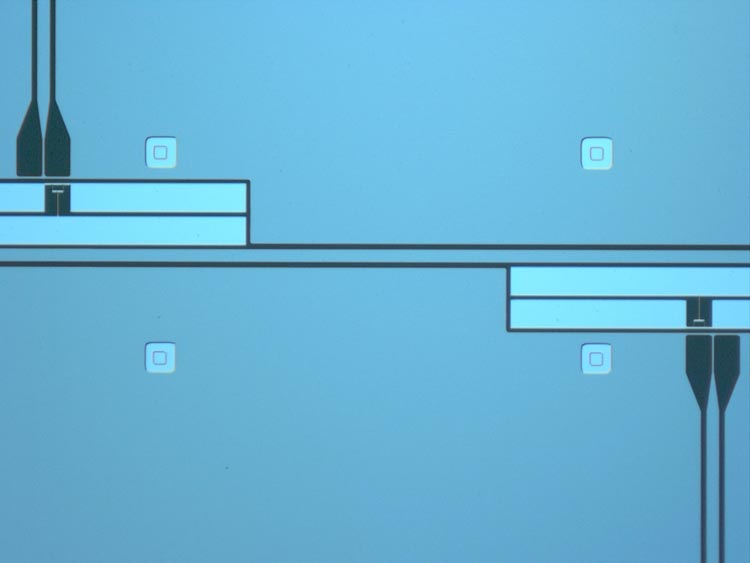
Making a GHZ state

The gates are used to entangle three of the qubits and create a Greenberger–Horne–Zeilinger (GHZ) state. This is a superposition of the state in which all three qubits are “0” and the state in which all three qubits are “1”. The GHZ state is made by first entangling two qubits using one C-phase gate. The other gate is then used to entangle the third qubit with the entangled pair.

The team verified the entanglement using quantum-state tomography. This involves creating the GHZ state, measuring the values of the qubits – and then repeating the entire process many times over. This is necessary because an individual measurement of the qubits puts the system into one of many possible states. Multiple measurements are needed to map out the probability that the system is in a certain state.

Oscillating phase

Meanwhile in Santa Barbara, Martinis, Matthew Neeley and colleagues used superconducting phase qubits to achieve three-qubit entanglement. A phase qubit is a single Josephson junction, which comprises two pieces of superconducting metal separated by a very thin insulating barrier. The two logic levels are defined by quantum oscillations of the phase difference between the electrodes of the junction.

The team created its GHZ state using a similar technique to the Yale group – except that it configured the microwave circuit to form two controlled NOT (CNOT) gates rather than C-phase gates.

The Santa Barbara group then reconfigured its circuit to create another type of entangled state called the “W” state. This is a superposition of the three states in which one of the three qubits is “1” and the other two qubits are “0”. “To create this state we excite just one qubit, putting a single quantum of energy into the system,” explains Neeley. “We then turn on a coupling interaction between all the pairs of qubits, which spreads that one excitation out among the three qubits.”

This interaction is created by connecting the qubits together using a network of capacitors. If the interaction is left on for just the right amount of time there is an equal probability of finding the excitation in any of the three qubits, Neeley told physicsworld.com.

Useful in different ways

Both the GHZ and W states are expected to play important roles in quantum computing. According to Neeley, W states are relatively robust compared to other entangled states. This is because the destruction of the quantum nature of one qubit does not necessarily destroy the entanglement of the other two qubits

GHZ could be particularly useful for quantum error correction, which protects a quantum computation from the destructive effects of noise. If one of the three qubits is inadvertently flipped, for example, this can be corrected by determining the value of the other two qubits.

“Error correction is one of the holy grails in quantum computing today,” explains Robert Schoelkopf. “It takes at least three qubits to be able to start doing it, so this is an exciting step.”
Predicting Nobel winners

simpsons.jpg


By Hamish Johnston

Over the last week or so we have been scratching our heads trying to come up with a new and exciting way of hyping up the impending physics Nobel prize announcement (one of the few things that we do hype here at Physics World).

In the past we have published our (ultimately wrong) predictions and invited readers to share their views on who will win the prize.

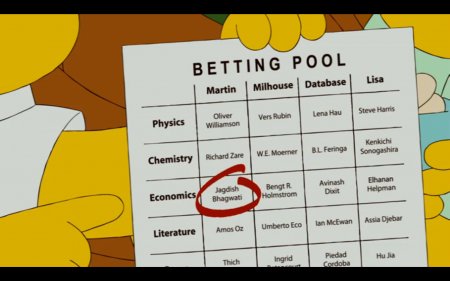
This year, I’m going to defer to the cartoon residents of Springfield, who have come up with predictions of their own.

There could be a distinguished physicist called Oliver Williamson, but I think Martin may have recycled his economics pick for 2009.

Energy, power, who cares?

By Matin Durrani

Here at Physics World HQ we’re more than happy with the concept of energy conservation.

So we have nothing against energy company E.ON’s attempt to get the public to reduce the amount of electricity they use by giving certain of their customers “energy monitors”.

eon2.jpg

These are small electronic gadgets that measure electricity consumption around the home in real time, allowing homeowners to keep close tabs on how much they are using.

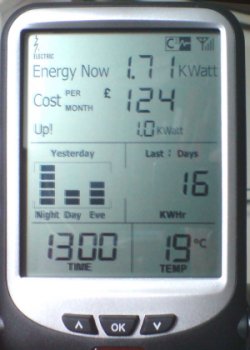
But I was shocked to get an e-mail today from physicist Steve Bolter, alerting me to the fact that E.ON’s “Energy Fit” energy monitors indicate “Energy Now” measured in – wait for it – kilowatts.

If you don’t believe me, take a look at the picture on the right.

Even worse, click on the video above, which shows a smiling Kevin Bryant from E.ON showing the Fiddis family how the unit works. At about 3.27 minutes, you’ll see our Kev tell the unsuspecting Fiddises that “you are using 580 watts of energy at the moment”.

It’s enough to make you scream – particularly from a company that should know better.

Vote for your favourite accelerator photos

desyphoto.jpg

By Hamish Johnston

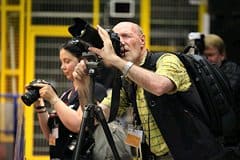
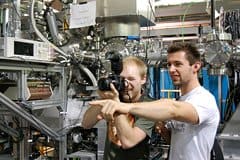
On 7 August five of the world’s leading accelerator labs opened their doors to amateur photographers in an event called the Particle Physics Photowalk.

The participating labs were CERN in Switzerland, DESY in Germany (pictured top right), Fermilab in the US, KEK in Japan and TRIUMF in Canada (bottom right).

The photographers were then invited to submit their best photographs and each lab selected three works to submit to the public.

You can vote for your favourite photos here.
triumfphoto.jpg

The winner will be announced after the voting closes on 8 October.

Which photo is my favourite?

I’m torn between Ali Lambert’s arrangement of paper clips standing up on what must be a very powerful magnet, and Hans-Peter Hildebrandt’s study of…well, I’m not sure what it is but it looks very nice!

Carl Wieman accepts White House science post

The Nobel-prize-winning physicist Carl Wieman has accepted a job with the Obama administration after being confirmed by the US senate as associate director for science in the White House Office of Science and Technology Policy (OSTP). Wieman, 59, reports to fellow physicist and OSTP director John Holdren, who joined the White House in 2009 from Harvard University. Wieman is the second physics Nobel laureate to be appointed by Barack Obama – the other being energy secretary Steven Chu.

The role of the OSTP is to advise the US president on the effects of science and technology on domestic and international affairs. Wieman, who shared the 2001 Nobel Prize for Physics with Wolfgang Ketterle and Eric Cornell for his work on atom optics, heads the OSTP’s science division. It comprises eight staff members, most of whom are science policy analysts.

Wieman is taking unpaid leave from the University of British Columbia (UBC), where he is director of the Carl Wieman Science Education Initiative (CWSEI). The 59-year-old physicist set up the CWSEI in 2007 to change the way that science is taught at UBC and other universities. Wieman thinks that a radical overhaul is essential because almost all the data from research in science education suggest that students in traditional lecture courses learn very little.

Testing physics education

The CWSEI is a test bed for Wieman’s idea that physics teaching must become more “scientific”. He believes that theories about how students learn and what can bring out the best in them must be based on proper quantitative measurements. Speaking in an interview with Physics World magazine in January 2007, Wieman warned that “if students go to classes and they sit there watching the lecturer writing equation after equation on the board, we know that they are going to leave science in droves, thinking this is really tedious stuff”. But, he added, a different result would be obtained through good teaching that requires students “to reason through ideas and argue their points of view”.

Wieman also maintains a research lab at the University of Colorado, where in 1995, he and Cornell coaxed a gas of ultracold rubidium atoms into a Bose–Einstein condensate – a state of matter in which all of the atoms condense into the same quantum ground state. This breakthrough has spurred the work of dozens of other research groups around the world, and could have implications across physics, from superconductivity to quantum computers.

Should we attach any weight to what Stephen Hawking says about God?

rees.jpgBy Hamish Johnston

“I know Stephen Hawking well enough to know he has read very little philosophy.”

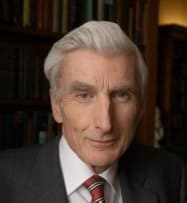
So says Martin Rees (pictured right), who as president of the Royal Society is seen by many as the voice of British science.

Rees – who like Hawking is a cosmologist – was speaking to the Independent‘s Steve Connor about politics, the fate of mankind and Hawking’s views on the existence of God.

You can read Connor’s piece here.

Relativity with a human touch

In the famous twin paradox, a sibling who journeys in a fast-moving spacecraft will return home younger than the sibling who remained on Earth. While this apparent slowing of time occurs whenever a body is set in motion, it had been much too small to be detected for movement on a human scale.

But now physicists in the US have used two of the world’s most accurate optical clocks to see this and other relativistic effects at speeds and distances on a human scale. The team has seen time slow down in a clock moving less than about 35 km/h relative to its twin. It has also showed that time speeds up in a clock that is hoisted a mere 33 cm above the other.

James Chin-Wen Chou and colleagues at the National Institute of Standards and Technology (NIST) in Boulder, Colorado used two clocks – each based on just one aluminium ion – to do their time dilation experiments. The first such clock was unveiled by the team earlier this year and has the ability to remain accurate to within one second in 3.7 billion years and the second has a similar accuracy.

Quantum logic readout

In both clocks the ion is trapped and cooled using electric fields and laser light. The frequency of the clock is given by a specific optical transition of the ion, which is measured by firing a laser at the ion and locking the laser onto that frequency at which the light is absorbed. This is done with the help of a single magnesium ion (beryllium in the second clock) that is entangled with the aluminium in a process called quantum logic spectroscopy (QLS).

To observe the time dilation at the heart of the twin paradox, the team set one of the aluminium ions into a slow oscillatory motion by adjusting the electric fields used to trap it. The ion in the other clock remained more or less stationary and when the team compared the frequency of the clocks it found that time on the moving ion slowed by a factor of about 10–16 when its average speed was about 10 m/s (35 km/h). The team repeated its measurements at different speeds between 0 and 40 m/s and found that the time dilation occurred exactly as predicted by special relativity.

The team then did a second experiment to try to see a consequence of Einstein’s general theory of relativity called “gravitational time dilation”. This occurs when one clock is elevated with respect to another and is therefore at a different value of Earth’s gravitational potential energy.

Jacking up a clock

This effect was measured by first running the clocks at a vertical difference of 17 cm and then jacking one of the clocks up by 33 cm and running them again. This revealed a shift of about 4 × 10–17 in the frequencies of the clocks – in agreement with general relativity. In human terms, this time difference adds up to about 90 billionths of a second over an 80-year life span.

To make these measurements, the team must run its clocks for tens of hours to get the required accuracy. Chou told physicsworld.com that the team is now trying to reduce this time. If successful, the clocks could be used to detect tiny variations in Earth’s gravitational potential. A network of such clocks placed around the world could, for example provide valuable information to geophysicists.

Gerald Gwinner of the University of Manitoba believes that such a network would be very useful. “The ability to connect such clocks via long-distance fibre links would indeed allow us to create a real-time network of gravitation monitors,” he explained. “Geophysics and environmental sciences could benefit enormously from such tools.”

Gwinner added that the NIST demonstration could help physicists explain time dilation to the public. “I will be able to tell the audience that now we can even see time dilation at the speed of waving an arm. Just like I waved my arm, they waved their ions back and forth.”

The work is reposted in Science 329 1630.

Graphene makes ‘supercapacitor’

Researchers in the US have made the first high-frequency AC “supercapacitors” containing graphene electrodes. The devices, which are much smaller than conventional capacitors, could be used in applications like computer processing units and other tiny integrated circuits.

Capacitors are devices that store electric charge. “Supercapacitors”, more accurately known as electric double-layer capacitors (DLCs) or electrochemical capacitors, can store much more charge thanks to the double layer formed at an electrolyte-electrode interface when voltage is applied.

Commercial DLCs are extremely powerful when compared with batteries but they are essentially DC devices – that is, they take several seconds to fully charge and then several seconds to fully discharge again. They operate efficiently at frequencies below about 0.05 Hz and are therefore good for applications like hybrid vehicles, which can take up to 10 seconds to charge (when braking) and 10 seconds to discharge (when accelerating). However, at higher frequencies, they become much less efficient and start to behave like resistors rather than capacitors. This is because the devices usually contain porous electrodes made from a high-surface-area conductive material, such as activated carbon, and the pores increase the resistance of devices.

Now, John R Miller and colleagues of JME Inc. in Shaker Heights and Case Western Reserve University, Cleveland, both in Ohio, have overcome this problem by developing the first DLC that contains vertically oriented high-surface-area graphene electrodes that aren’t porous at all. The device pushes the operating frequency of an electric double layer capacitor to well beyond 5000 Hz, which is a factor of 105 better than commercial DLCs. What’s more, it is six times smaller than low-voltage aluminium electrolytic capacitors and can be charged and discharged at high efficiency in times much shorter than 1 ms.

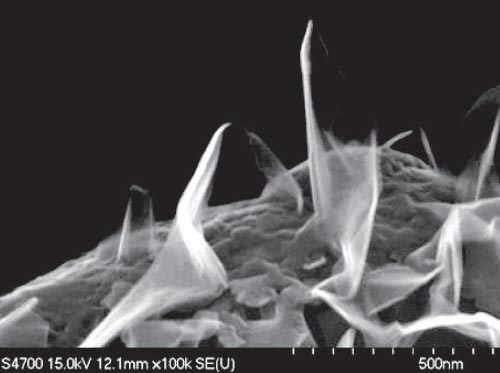
The researchers grew the graphene – 2D sheets of carbon just one atom thick – on a metal using a plasma-assisted chemical vapour deposition process.

Such vertically oriented graphene sheets are ideal in terms of structure for high-frequency DLC electrode applications, says the team. They have many edge planes that can provide between 50 and 70 µF/cm2 of capacitance compared with basal planes, which only provide 3 µF/cm2. These charge-storage edge planes are highly exposed and can thus be accessed directly, which means that charge can be stored over precise areas rather than being dispersed over larger regions. And last but not least, the nanosheet “stacked” structure ensures that pores are reduced – so minimizing resistance – and the sheets themselves are highly conducting.

“The bottom line is that these devices could lead to smaller higher-frequency capacitors for applications in low-voltage systems like CPUs and similar integrated circuits,” Miller said.

The research might also enable new classes of electronic circuit that use the much higher levels of capacitance that these devices make available, he adds.

The team, which includes scientists from the College of William and Mary in Williamsburg and the Defense Advanced Research Projects Agency, both in Virginia, now plans to improve how the graphene electrode material is grown and optimize the design of the capacitive devices.

The work was published in Science.

The Feynman Variations

By Hamish Johnston

imagine.jpg

The BBC has a wealth of archive material at its disposal – everything from Led Zeppelin performances to television programmes featuring the late physicist Richard Feynman.

The latter was featured earlier this week on the BBC Radio 4 show The Archive Hour, presented by particle physicist and media darling Brian Cox.

“As curious as he was clever”, is how Cox describes Feynman. In an archive recording, Hans Bethe calls Feynman “a magician”.

Feynman (1919–1988) is widely celebrated as the greatest physicist of his generation – the first generation after the founding of quantum mechanics.

Heisenberg, Shrödinger and Dirac were a tough act to follow, but Feynman did so with remarkable flair. He developed the path integral formulation of quantum mechanics, shared the 1965 Nobel prize for his work on quantum electrodynamics, and brought us Feynman diagrams.

Feynman was also a keen teacher and populizer of physics, which is what much of the BBC programme focuses on. It includes contributions from Steven Weinberg, Freeman Dyson and the filmmaker Christopher Sykes. In the 1980s, Sykes made a series of television programmes with Feynman called The Pleasure of Finding Things Out and Fun to Imagine, which you can also watch on the BBC website .

A fascinating insight into how Feynman explains science can be had from an exchange in which Sykes asks Feynman a simple question about why magnets repel each other. Feynman admits that there is no simple way of explaining why and trying to simplify the problem would do the questioner no service.

But the highlight of the programme is listening to Feynman speaking enthusiastically in his “Noo Yawk” accent about why he is curious about science – sounding more like a Borscht Belt comedian than one of the 20th century’s greatest thinkers.

There were no mother-in-law jokes, but Feynman did tell a funny story about his childhood summers in the Catskills.

Curious correlations seen by CMS


A subtle and unexpected signal in data from the Large Hadron Collider (LHC) in Geneva could mean that the proton accelerator is capable of creating a “hot soup” of interacting particles called a quark–gluon plasma.

The result comes as a surprise because physicists had believed that colliding protons at the LHC should not create such a plasma – hints of which have already been spotted by the RHIC accelerator in the US, which smashes heavy ions such as gold together.

Hundreds of particles

When two protons collide at 7 TeV at the LHC, hundreds of particles can sometimes be produced and detected. In order to understand the underlying physics, physicists look for correlations between the angles at which pairs of particles fly away from the point of impact.

Researchers using the Compact Muon Solenoid (CMS) experiment at the LHC had expected that a plot of the correlations would show a peak where the angles are zero, which would mean that the particles are leaving the collision point in a jet pointing in a specific direction. Instead, the peak seems to be riding on top of a ridge-like structure. This suggests that some particles are heading off in completely different directions – and correlations between pairs of these wayward particles are set by some sort of interaction between the particles when they were created in the collision.

One possible interpretation of the ridge is that the collision creates a dense fluid of many quarks and gluons – a quark–gluon plasma – which then condenses to produce the detected particles. The collective motion of the plasma could be transferred to the particles, resulting in the mysterious correlations. The problem with this explanation is that protons in the LHC shouldn’t create such a plasma.

New physics?

Another possibility is that CMS has caught sight of a hitherto unknown collective process that occurs when protons collide – something that would require a significant revision of our understanding of such collisions.

“Now we need more data to analyse fully what’s going on, and to take our first steps into the vast landscape of new physics we hope the LHC will open up,” said CMS spokesperson Guido Tonelli.

The exact nature of the quark–gluon plasma is of great interest to physicists because the universe is believed to have been such a hot soup shortly after the Big Bang.

The results are described in a preprint on the arXiv server.

Copyright © 2026 by IOP Publishing Ltd and individual contributors