

Royal Society president receives a witty defence

gaiablog.jpg
Jon Butterworth

By James Dacey

It’s a tactic you learn in the playground when you are being subjected to childish, baseless insults. Rather than try to engage your aggressor, defending yourself against their insults, you ridicule them by repeating what they say using a silly voice.

This is the tactic that British physicist Jon Butterworth has taken in response to a journalist’s scathing attack on science, scientists and its advocates in the media.

Butterworth was responding to an article written by Guardian columnist, Simon Jenkins, who – despite having no background in science – writes regular rants about the time and resources wasted on scientific research and its popularization in the media.

In his latest attack, published last Thursday, Jenkins attacked the astrophysicist and president of the Royal Society, Martin Rees, whom Jenkins describes as “shameless” in his pursuit of extra funds for science. Jenkins had become incensed after hearing Rees talk about all the things that CERN’s Large Hadron Collider can give back to society.

“Rees stuck to the party line that forbids him to say that £7bn and ‘thousands of scientists’ buried under a Swiss mountain might have been better employed on energy research,” he wrote. “Politicians must show a sense of ‘priorities and perspectives’, he said, but scientists do not do priorities. They just want money.”

Now, rather than pick apart Jenkins’ criticisms one by one, Butterworth – who holds a day job as a particle physicist at University College London – has retaliated by writing a spoof article, which mimics Jenkins’ style.

It opens with the following: “You know, there’s so much science on TV and in the papers these days. I mean, I share in the glory of science every bit as much as people who actually work at it. I certainly know much more than they do, after all, I used to edit the London Evening Standard.”

Buterworth explained his motives in a related opinion piece on the Guardian website. “The trouble is, Jenkins’ meanderings are such obvious nonsense that they unify the science community”.

“This is bad, because we either assume the flaws are obvious to everyone (they aren’t), or we respond with howls of outrage, which, however justified, can appear to bolster his claims that we think science should be above criticism.”

Butterworth comes to conclude that writing the spoof article was the best line of defence to show up how “vacuous” Jenkins’ attacks are.
Edward Witten wins Newton medal

String theory pioneer Edward Witten has won the 2010 Isaac Newton Medal of the Institute of Physics for “his many profound contributions that have transformed areas of particle theory, quantum field theory and general relativity”.

The international medal comes with a £1000 prize and is awarded for “outstanding contributions to physics”. It will be presented at a ceremony in London on Friday, where Witten will deliver the UK-based Institute’s 2010 Isaac Newton Lecture.

Witten is at the Institute for Advanced Study in Princeton, New Jersey, and is widely regarded as a leading figure in the development of string theory. String theory implies that elementary particles such as electrons and photons are just manifestations of a more fundamental layer of nature described by 1D strings 10–35 m in length. Originally formulated to describe the strong force acting on quarks and gluons, string theory soon became a potential “theory of everything” that could unify gravity with the other three forces in nature.

New methods of calculation

Representing particles as strings requires 10 or 11 dimensions, which makes it very difficult to do practical calculations such as working out what would happen when two electrons collide. Witten tackled this challenge by adapting the mathematics of particle physics to create new methods for performing calculations within string theory.

Professor Dame Jocelyn Bell Burnell, president of the Institute of Physics, said “Professor Witten’s originality, physical insight and mathematical power have revolutionized the subject. A most creative and productive theoretical physicist, he has had a tremendous impact in the areas of quantum field theory, general relativity and string theory.”

Witten, who is 58 and an American citizen, did his first degree in history at Brandeis University. He then moved to Princeton University where his PhD adviser was David Gross, another leading string theorist.

The long-term consequences of burying carbon dioxide

Picture-4.png
Courtesy: US Federal Government

By James Dacey

“Carbon in its light form will seek its way out of the ground or seabed. The present situation in the Gulf of Mexico is a poignant reminder of that fact.”

These are the words of Gary Schaffer, a geophysicist who works between three academic institutions in Chile and Denmark, referring to the idea of carbon sequestration.

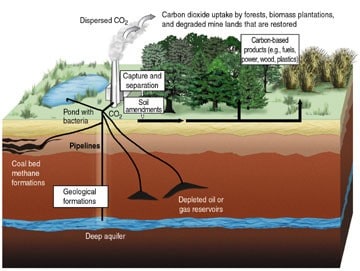
Large-scale sequestration projects would involve storing vast quantities of carbon dioxide beneath the ground as a way of reducing atmospheric levels of this greenhouse gas. Several types of site have been mentioned as potential carbon bunkers, including the deep ocean and depleted oil and gas reservoirs.

In fact, the idea is so popular that the European Union plans to invest billions of dollars within the next 10 years to develop large scale carbon capture and storage (CCS) facilities. The US is also keen with the Department of Energy funding 12 industrial CCS projects to conduct feasibility studies, four of which will be given the go-ahead to become operational by 2015.

But despite the political enthusiasm, it is not yet clear what the long term consequences of this solution would be and the potential impacts of gas leaking back into the atmosphere.

Schaffer has addressed this issue in a new paper published in Nature Geoscience.

By modelling a number of sequestration/leakage scenarios using a well known earth system model, Schaffer reaches several firm conclusions. These include the warning that CO2 stored in the deep ocean will return to the atmosphere within little time, so it will merely delay the inevitable warming effect. He also fears that this strategy would be unacceptably damaging to deep-sea wildlife.

Schaffer also looked at CO2 stored in reservoirs on land or beneath the ocean floor, finding that this may be more effective so long as CO2 leakage is restricted to 1% or less per thousand years.

He warns against thinking we can simply bury the gas again through “resequestration” because there are various engineering challenges in monitoring the rate of leakage. He is also worried about the burden resequestration would leave on future societies, comparing it to the long-term management of nuclear waste.

“The dangers of carbon sequestration are real and the development of this technique should not be used as an argument for continued high fossil fuel emissions,” says Schaffer.

“On the contrary, we should greatly limit CO2 emissions in our time to reduce the need for massive carbon sequestration and thus reduce unwanted consequences and burdens over many future generations from the leakage of sequestered CO2.”

New accelerator to boost isotope production

The TRIUMF nuclear and particle physics laboratory in British Columbia is to build an extremely intense electron linear accelerator in order to produce radioactive isotopes for fundamental research and medicine. In particular, it is hoped that the C$63m ARIEL facility, which got the go-ahead last week, will help secure supplies of the vital medical isotope technetium-99m.

Short-lived technetium-99m is used in about 80% of all nuclear-based medical diagnoses, generating gamma rays that can be used to pinpoint disease when the isotope is bound into special molecules and then ingested or injected. It is produced by the decay of molybdenum-99, which is currently exclusively manufactured in a handful of nuclear reactors worldwide via the neutron-induced fission of enriched uranium-235. Unfortunately these reactors are ageing and unreliable. For example, Canada’s NRU facility in Ontario normally supplies about 30% of the world’s molybdenum-99, but has been out of action for about a year. Furthermore, the highly enriched uranium used in this process poses a weapons proliferation risk.

The ARIEL project forms part of the Canadian government’s plans to modernize isotope production. At the heart of the facility will be a superconducting linear accelerator capable of generating electron beams with energies of 50 megaelectronvolts (MeV) and currents of 10 mA. The beam will be fired along an underground tunnel, at the end of which it will be directed onto a convertor material, producing an intense photon beam via the process of bremsstrahlung. These photons will then go on to strike a target made of, for example beryllium or uranium, shattering the nuclei within the target and generating a range of isotopes. The radioisotopes of interest will then be separated out.

Avoids reactor complications

As TRIUMF director Nigel Lockyer points out, this accelerator-based production of radioisotopes avoids the complications involved in siting, operating and maintaining a nuclear reactor. In addition, he says, accelerators can be easily switched on and off. According to Lockyer, as well as generating molybdenum-99 and other isotopes that could be potentially used in medical diagnoses, ARIEL will be used to carry out a range of physics research. This could include the study of magnetic materials and the investigation of exotic isotopes of tin beyond Sn-132 in order to better understand how the shell structure within nuclei evolves and breaks down.

Jerry Nolen, a physicist at the Argonne National Laboratory in the US, welcomes TRIUMF’s linear accelerator project as “a great addition to the lab’s radioactive-beam basic research programme”, adding that the development of this technology is useful in its own right. However, while he believes that the “photofission” process could meet a small part of Canada’s demand for molybdenum-99, he does not think that it will be competitive at the global level. This, he says, is due to the very high beam power required, which results from the reaction’s far smaller cross-section compared to that of the neutron-induced fission of uranium-235. Nolen also believes that target development will be “a very significant challenge”, but one that the Canadian lab will overcome.

ARIEL got the green light this week with the announcement by the province of British Columbia that it is to contribute C$30.7m to the project. This funding follows previous commitments by the national government. Construction is due to begin next month, with completion set for 2013 and then accelerator commissioning a year later. Routine isotope production is due to start in 2015.

Rocking the physics message

By Nick Thomas

TWG.jpg
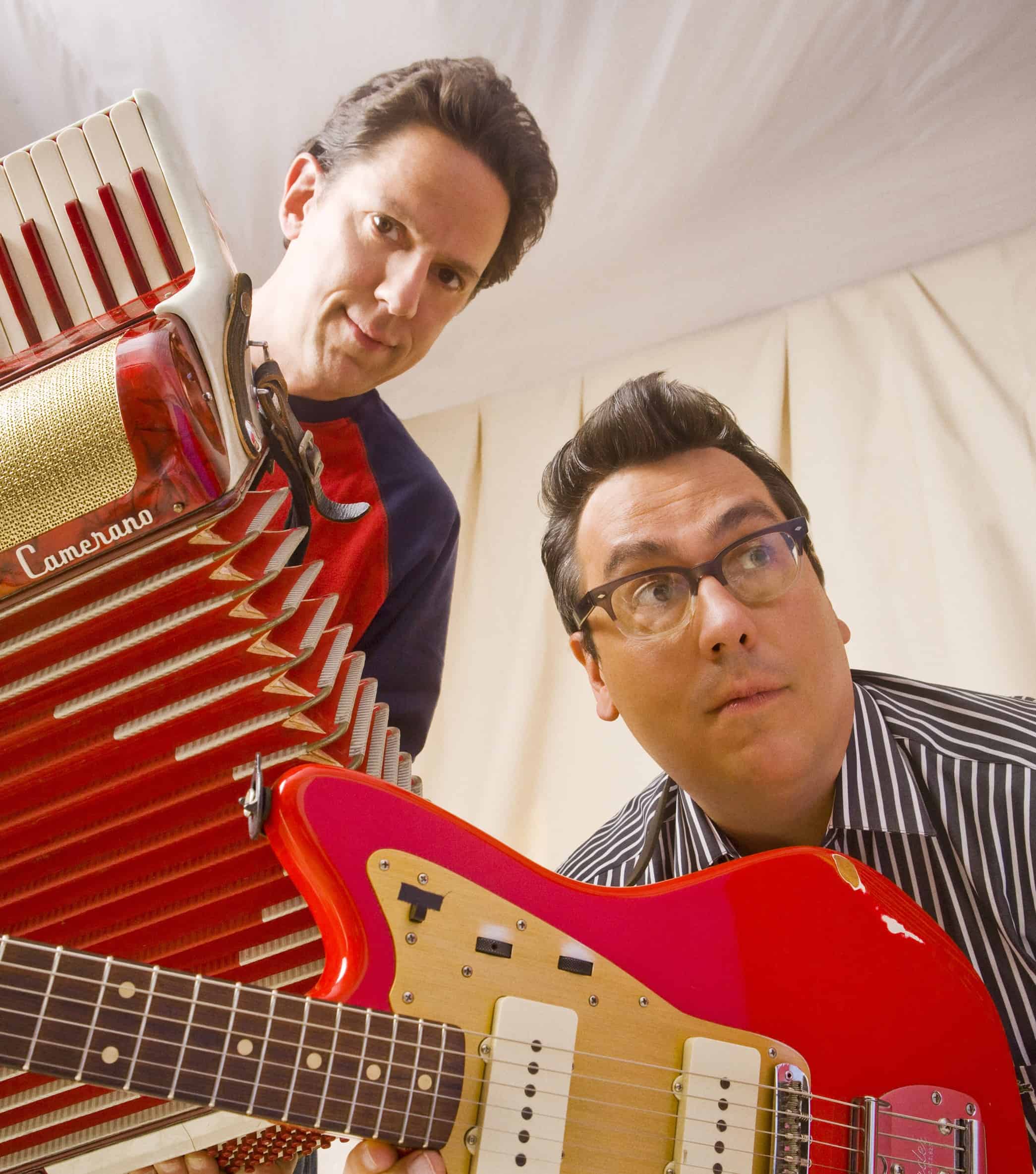
John Flansburgh and John Linnell from They Might Be Giants (Courtesy: Jayme Thornton)

If you are in London or Cambridge this weekend then you might want to pay a visit to the Royal Festival Hall on Saturday or the University of Cambridge’s Babbage Lecture Theatre on Sunday to see the US alternative rock band They Might Be Giants perform to their legions of loyal UK fans.

If you pop along to the gig do not be surprised to hear a number of songs with science lyrics. The New York based band has successfully combined entertainment and science education with their latest album entitled Here Comes Science, which was released last year.

I had a listen to their latest album and talked to the band ahead of their UK visit as well as asking physicists what they thought about the rock group.

They Might Be Giants, who in 1990 released the hit song “Birdhouse in your soul” that reached the dizzy heights of number six in the UK charts, consists of duo John Flansburgh and John Linnell, who formed the band in 1982.

What makes Here Comes Science especially appealing is the use of music, rather than just lyrics, to educate about science. “We’ve been performing science and history songs for a long time and were intrigued by popular scientific ideas,” Flansburgh told physicsworld.com.

Some tracks from the new album are simply repetitious to supposedly reinforce a basic scientific principle, such as the difference between speed and velocity. “Even a cursory definition of scientific ideas can be a mouthful for kids,” says Flansburgh. “So we tried to explain them in an appealing way. In the song “Speed and velocity”, we just repeat the difference over and over, so by the end kids will know what each is.”

The song “Meet the elements” on the album is a quick tour of the periodic table, and cranks out properties for over a dozen common elements, while “Science is real” and “Put it to the test” outline what science is and how it is done.

Flansburgh says that he and Linnell sought scientific advice when composing the lyrics, and are aware that a few bloopers slipped through. But They Might Be Giants generally get things right in their songs, for example, making the correct distinction between a meteor and meteorite in “What is a shooting star?”

Walter Smith, a physicist at Haverford College in Pennsylvania, says that a few of the physics-related songs are “brilliant” and would even be appropriate for high-school or college students.

“I really appreciate their goal of getting young kids thinking and talking about science through music,” says physicist Jacob Blickenstaff of the University of Southern Mississippi.

Brian Malow, a San Francisco based stand-up comedian with a fascination for science in popular culture has enjoyed their music for years. “They have a song called ‘Solid liquid gas’ which subtly conveys the difference between the three with music,” says Malow, referring to the progressively higher vocal tones as the states of matter are introduced – analogous to their respective increasing molecular motions.

Guy Consolmagno, an astronomer at the Vatican Observatory, has been following the band since the days of cassette tapes. “I first heard them when I was in Antarctica 15 years ago collecting meteorites, and several of the other members of my team had brought tapes,” says Consolmagno. “The songs on their new album are great fun, and that’s the most important message you can get across to kids: this stuff is as much fun as sports or rock-and-roll.”

Flansburgh is quite pleased with the reception the album has had. “The response has been extremely positive, especially from teachers,” he says. “The videos are on YouTube and teachers are using them in their classes. Because we’ve had so much success with our music for kids, we’ve been able to reach a larger audience than we ever could have imagined.”

So get down to London and Cambridge this weekend and see the band for yourself.

Climate change sceptics are less ‘credible’ scientists, finds survey

A survey of 1372 climate scientists has concluded that the overwhelming majority support the basic idea that humans are significantly affecting the Earth’s climate. The study also claims that the scientists, who are sceptical of anthropogenic climate change (ACC), tend to hold less “credible” publication records.

The survey, led by William Anderegg at Stanford University, included only researchers who have at some point written scientific assessments or signed public documents in relation to ACC. Participants were asked whether they were either convinced or unconvinced by the basic tenets of ACC as outlined by the Intergovernmental Panel on Climate Change.

Anderegg’s team finds that 97% of the respondents are convinced by the idea. What is more, the surveyors rank all the participants by the number of climate science publications, and find that only one of the top 50 scientists, and three of the top one hundred, remain unconvinced by the arguments of ACC.

Despite the clear-cut results, the survey has already received criticism with regard to its methods.

Lorraine Whitmarsh, a social science researcher at Cardiff University, welcomes the study as the first attempt to rate the “credibility” of climate scientists with different views about climate change. She is a bit concerned, however, about the selection process for the survey’s participants.

“The [survey] deliberately selects scientists who have signed high-profile public documents about their views, and so exclude those researchers ‘behind the scenes’, perhaps with less extreme views one way or the other,” she says.

Indeed, Whitmarsh points out that the survey excludes the 26% of researchers who are neither convinced nor unconvinced by the ACC arguments.

Andrew Russell, a climate researcher at the University of Manchester, says that the findings are “interesting”, but is not sure how they will help in the communication of climate science. “The science can and should win the argument on its own, he says.

Russell believes that the media is often to blame when it comes to over-emphasising the scale of scepticism towards ACC within the climate science community. “There are valid and truly sceptical questions that need asking of climate science but they don’t fit the narrative that parts of the media have constructed so they don’t get aired,” he says.

The research is published in Proceedings of the National Academy of Sciences.

Scientists face trial over L’Aquila quake

Over 5000 researchers have signed a letter sent to the Italian prime minister Silvio Berlusconi calling for an end to the investigation of seven scientists and technicians who were called upon to assess seismic activity ahead of the devastating earthquake that struck L’Aquila in the central Italian region of Abruzzo last year.

The scientists, who are members of the Major Risks Committee (MRC), are being investigated by L’Aquila prosecutors for gross negligent manslaughter following complaints by members of the public that they would have left their homes ahead of the quake were it not for reassurances provided by the MRC.

The letter, sent by the Italian National Institute for Geophysics and Vulcanology (INGV), calls the allegations “unfounded” and claims that years of research have shown that “there is currently no scientifically accepted method for short-term earthquake prediction that can reliably be used…for rapid and effective emergency actions”.

Under investigation

At the centre of the controversy is a meeting that was held by the committee on 31 March 2009, six days before the 5.8 magnitude quake that killed 308 people and flattened much of the city and surrounding villages.

Scientists have to focus on giving the best kind of scientific information. It is down to others to decide what action needs to be taken Warner Marzocchi, chief scientist at the National Institute for Geophysics and Vulcanology

The MRC reports to Italy’s Civil Protection Department and discusses risks of natural disaster. According to the official minutes of the meeting, which included representatives of the Civil Protection Department as well as INGV researchers and city officials, committee vice-chair Franco Barberi stated there were no grounds for believing a major quake was on the way. That was despite a series of smaller tremors that had been registered in the region for several months previously, including one measuring 4.2 on the Richter scale the day before the meeting.

Barberi also dismissed controversial claims made by Gioacchino Giuliani, a technician at the National Institute of Nuclear Physics, that Giuliani could predict earthquakes on the basis of levels of radon gas. Geophysicist Enzo Boschi, who is president of the INGV and one of the seven under investigation, also said at the time that a major quake in the near future was improbable, even if it could not be ruled out completely.

The seven individuals have been placed under formal investigation on the basis that their advice gave the city’s inhabitants a false sense of security. “Those involved were highly qualified individuals who should have provided the public with different answers,” L’Aquila’s chief prosecutor Alfredo Rossini told Italian TV news show Tg3 Abruzzo.

‘Ill-informed scapegoating’

Thomas Jordan, an earth scientist at the University of Southern California in Los Angeles, believes that the researchers were in no position to advise evacuation. Jordan, who chaired an international commission to review earthquake forecasting in Italy in the wake of the L’Aquila disaster, says that the best that can be done is to provide a probability that an earthquake of a certain size will occur within a particular region over a given time. He says that although the probability of a major quake in Abruzzo increased in the light of the earlier tremors, the absolute value of this probability was still no more than about 1% for the week beginning 31 March. “As the costs of false alarms are too high, these probabilities are too small to initiate actions such as mass evacuations,” he says.

Warner Marzocchi, chief scientist at the INGV, who is not under investigation, says that he and his colleagues had in fact started to test a new kind of statistical model to calculate such probabilities when the 31 March meeting was called, but that they were not then confident enough about it to make a forecast. “As scientists, we have to focus on giving the best kind of scientific information,” he says. “It is down to others to decide what action needs to be taken.”

This sentiment is shared by John McCloskey, a geophysicist at the University of Ulster in Northern Ireland, who believes that “ill-considered, ill-informed scapegoating of scientists” could harm research into earthquake forecasting. He maintains that Rossini would do better to investigate why it was that many relatively new buildings, which are supposed to be covered by strict building codes, collapsed during the quake.

Quantum dots for highly efficient solar cells

The efficiency of solar cells could be increased to more than 60% from the current limit of just 30% according to new work by scientists in Minneapolis and Texas. The new work involves capturing the higher-energy sunlight that is normally lost as heat in conventional devices using semiconductor nanocrystals, or quantum dots.

The maximum efficiency of conventional solar cells made from silicon-based semiconductors is limited by theory to around 31% – and the best performing affordable commercial devices are less than 20% efficient. This is because in typical devices, photons with energies above the semiconductor’s bandgap generate “hot” charge carriers (electrons and holes) that quickly cool to the band edges in a matter of just picoseconds, releasing phonons (vibrations of the crystal lattice, or heat). If the energy of these hot electrons could be captured before it is converted into wasted heat, solar-to-electric power-conversion efficiencies could be increased to as high as 66%, say scientists.

The first step towards doing this has already been demonstrated – by research done in 2008 by Philippe Guyot-Sionnest’s group at the University of Chicago who showed that hot electrons can be slowed down in semiconductor nanocrystals. Now, Xiaoyang Zhu at the University of Texas at Austin and colleagues at the University of Minnesota, Minneapolis, have discovered a second important step: how to capture the electrons before their energy is lost.

The team found that the electrons can be transferred from photo-excited lead selenide (PbSe) crystals to an adjacent electronic conductor made of titanium dioxide. The researchers demonstrated the effects in quantum dots made of PbSe but the method could work just as well for quantum dots made from other materials.

Electron transfer

PbSe was chosen because it has an extremely large Bohr radius of 46 nm. This means that charge carriers in PbSe quantum dots (which are less than 10 nm in size) are strongly confined in the dots and that their electron wavefunctions extend well beyond the nanocrystal’s surface. This “delocalization” allows electron transfer from the nanocrystals to an electron-accepting material placed nearby, such as TiO2. TiO2 was chosen because it is readily available as single crystals and can accept electrons easily.

The researchers began by making samples of one or two monolayers of PbSe quantum dots deposited on flat single-crystalline TiO2. The films were chemically treated with solvents to enhance electronic coupling between the two materials.

Zhu’s team tested PbSe nanocrystals with diameters ranging from 3.3 to 6.7 nm. By using UV photoelectron spectroscopy and optical absorption measurements, the researchers determined the energy of the lowest excited electronic states in the nanocrystals. They found that these states were always below the TiO2 conduction band, which means that hot electrons from the quantum dot can transfer from the PbSe to the TiO2.

‘Nice surprise’

The researchers didn’t expect to see hot-electron transfer in action, just the transfer of ordinary electrons. “We realized that, to improve the way in which we assemble solar cells based on quantum dots, we needed to understand the fundamentals of electron transfer from the quantum dots to semiconductors,” team member Eray Aydil told our sister website nanotechweb. “Zhu and our co-advised student Will Tisdale (who will soon obtain his PhD) developed the method reported here to detect this electron transfer. The fact that we ended up seeing hot-electron transfer was a very nice surprise.”

Aydil adds that much work still needs to be done before we see solar cells with efficiencies of over 60%. “I think all of us and everyone working in this field would caution against making predictions on when we will see (if ever) 66% efficient solar cells. However, if such high-efficiency solar cells based on hot-electron transfer are to be become a reality, we have shown the necessary first step.”

The team will now attempt to detect the transferred electrons as current and make solar cells that exploit hot electron transfer, even if the efficiency is still low.

The work was reported in Science.

Nanotubes boost battery performance

Carbon nanotubes could make ideal electrodes for lithium-ion batteries, boosting their power output by up to ten-fold compared with conventional devices, claim a group of researchers at Massachusetts Institute of Technology who have demonstrated the technique. They say that it will enable manufacturers to shrink batteries for portable applications such as ultra-light mobile phones and wearable electronics. In the longer term it could lead to high-performance batteries for larger applications such as hybrid electric cars and industrial machinery.

Lithium-ion batteries consist of two electrodes, the anode (which is negative) and the cathode (positive), separated by an electrolyte – a conducting material through which charged ions can move easily. During cell discharge, the positively charged lithium ions travel across the electrolyte to the cathode, so producing an electric current. When the batteries are recharged, an external current forces the ions to move in the opposite direction so that they can be stored at the anode.

These batteries are routinely used in portable electronics but their power output and charge-storage capacity still remain far below those of electrochemical capacitors. Batteries, however, have several advantages over capacitors, not least that they can store more charge and have a much lower rate of self-discharge.

A simple swap

Now, Yang Shao-Horn of the Massachusetts Institute of Technology (MIT) and colleagues have discovered a way to increase power output in these devices. They replace one of the electrodes in lithium-ion batteries by one made from multiwalled carbon nanotubes, which are tiny rolled up sheets of carbon atoms. The power output of the improved devices is now on a par with electrochemical capacitors at 100 kW kg–1, but their “gravimetric energy” (the amount of charge they can store) is up to ten-fold higher.

The new CNT electrodes can “grab” and store larger amounts of lithium charge than conventional electrodes, which have been made from many chemicals over the years including iodine and copper sulfide. For example, there are numerous oxygen groups that can undergo redox (oxidation or reduction) reactions on the surface of the CNTs. The CNT electrodes are also very stable. The researchers found that the material performed just as well even after 1000 cycles of charging and discharging.

Shao-Horn’s team made the new electrodes using a layer-by-layer fabrication technique in which a base material, such as ITO glass or metal foil, is dipped into solutions containing carbon nanotubes. The nanotubes are made negatively or positively charged, for the electrodes, by treating, or “functionalizing”, them with simple organic compounds, such as carboxyl (COOH) and amine (NH2) groups. These CNT layers are placed alternately on a surface and bind strongly together because the positively charged tubes attract the negatively charged ones, to make stable and robust films after a simple heat treatment.

Bridging the technology

“We now hope to make thicker electrodes – up to 50 µm across – with the same performance characteristics,” Shao-Horn told physicsworld.com. The electrodes made so far are only a few microns in size, which limits their use to small, portable, applications.

Yury Gogotsi of Drexel University, also in the US, who was not involved in the work, believes that there are many potential applications for these high performing batteries. “Bridging the performance gap between batteries and electrochemical capacitors is an important task, and the MIT group has made an important step in this direction,” he says.

“There is still much work to do though. The data presented in this new work may only be valid for relatively thin films and individual electrodes with no packaging and it may be completely different for a real-world battery with its multiple parts and outer container”, he adds.

The results were published in Nature Nanotechnology.

Exoplanet mass calculated directly

Researchers in the Netherlands and in the US are the first to measure directly the mass of a planet orbiting a star other than our Sun. In developing their new technique, they also discovered that this planet, which is approximately the same size as Jupiter but closer to its star, is being tormented by a raging storm.

Previous attempts to gauge the mass of such exoplanets have relied on estimations, where astrophysicists look at the slight “wobble” of a star caused by the gravitational pull of the planet. The extent of this movement can be used to estimate the planet’s mass as a proportion of the stellar mass – which itself is an estimate based on its spectral characteristics and distance from Earth.

Ignas Snellen of Leiden University led a team in developing a more accurate method by focusing on the atmosphere of an exoplanet. They demonstrate the technique on HD 209458b, a well known “hot Jupiter” some 150 light-years from Earth. Because this planet sweeps between Earth and its host star, every three and a half days, it changes the star’s chemical spectrograph as recorded on Earth. By comparing the star’s spectrograph before and during a transit the researchers can calculate the chemical content of the planetary atmosphere.

Doppler shift

Using the Very Large Telescope (VLT) in Chile, fitted with the CRIRES spectrograph, Snellen’s team was able to hone in on the planet’s carbon-monoxide (CO) signal, which was predicted to produce many spectral lines over these wavelengths. They were able to detect a small Doppler shift in the CO gas. From this they could calculate that the planet is orbiting its star at a velocity of 140 km s–1.

With relative ease, Snellen’s team was then able to calculate the masses of both star and planet using Newton’s law of gravitation, knowing also the velocity of the host star due to its orbit round the centre of mass of the system. “This is exactly the same method used to calculate the mass of binary star systems, except one of the bodies here is an exoplanet,” says Snellen.

Obtaining more accurate values for exoplanet masses could enable researchers to glean more information about the nature of exoplanets. “The mass is one of the most important parameters of the planet. It is by measuring the mass, together with other properties such as orbital period and eccentricity and radius, that we learn what exoplanets are made of, and how they form and evolve,” says Susan Aigrain, an exoplanet researcher at the University of Oxford in the UK.

A raging storm

The second result of this research is the discovery of an intense wind at high altitudes in the planet’s atmosphere. The researchers see that during the planet’s transit in front of the star, the whole CO signal is blue-shifted with respect to the velocity of the star, suggesting that the atmosphere is moving towards us. This observation fits with the prediction that hot gases from the planet’s day side flowing towards its cooler night side.

“Exoplanet atmospheres will be among the richest topics to explore over many years to come. Some examples of what we want to learn more about include cloud formation and weather in exoplanet atmospheres,” says Markus Janson, another exoplanet researcher at the University of Toronto.

The researchers intend to develop their research by building a more detailed profile of this exoplanet’s atmosphere. They have already secured a further 155 hours’ operational time on the VLT to be spread over the next two years.

Snellen hopes that in the longer term, his group’s technique could be used to investigate more Earth-like planets, which are significantly smaller and therefore more difficult to observe. “From looking at our own planet we can see that life has a very large influence on the composition of the atmosphere, especially with the presence of oxygen and ozone,” he says.

This research is published in this week’s Nature.

Copyright © 2026 by IOP Publishing Ltd and individual contributors