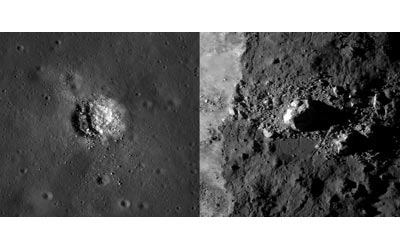
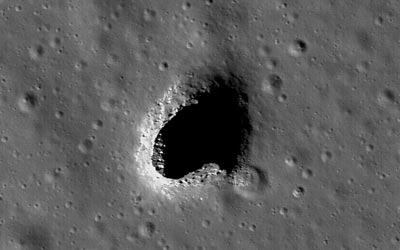
The Lunar Reconnaissance Orbiter (LRO) has been sweeping around the Moon for one full year, and to celebrate the occasion NASA has compiled a set of 10 images dubbed “cool things seen in the first year of LRO”.
The mission was launched on 19 June 2009 with the aim of gathering a variety of data on the lunar environment. It has seven on-board instruments, including a camera that can map the Moon with a resolution of about 50 cm. NASA hopes this will help in preparing for a new generation of longer-duration manned expeditions to the Moon.
The coolest image
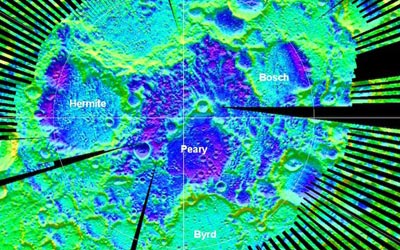
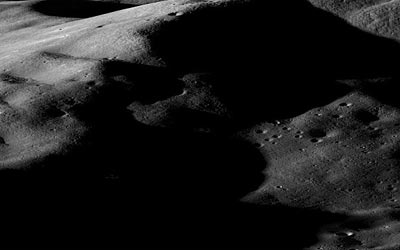
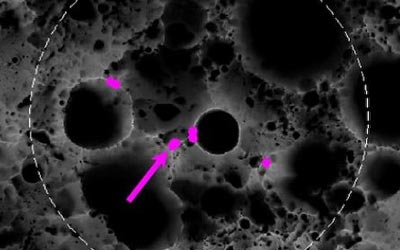
The 10 selected images include the discovery of the coldest known place in the solar system. Diviner, LRO’s temperature instrument, located the site in the floor of the Moon’s Hermite crater and measured the temperature at –248 °C – 64° cooler than the surface of Pluto (the previous record-holder).
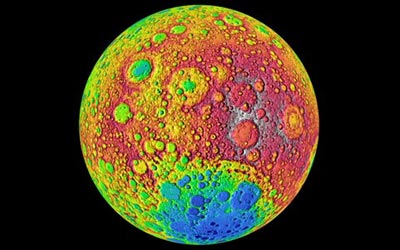
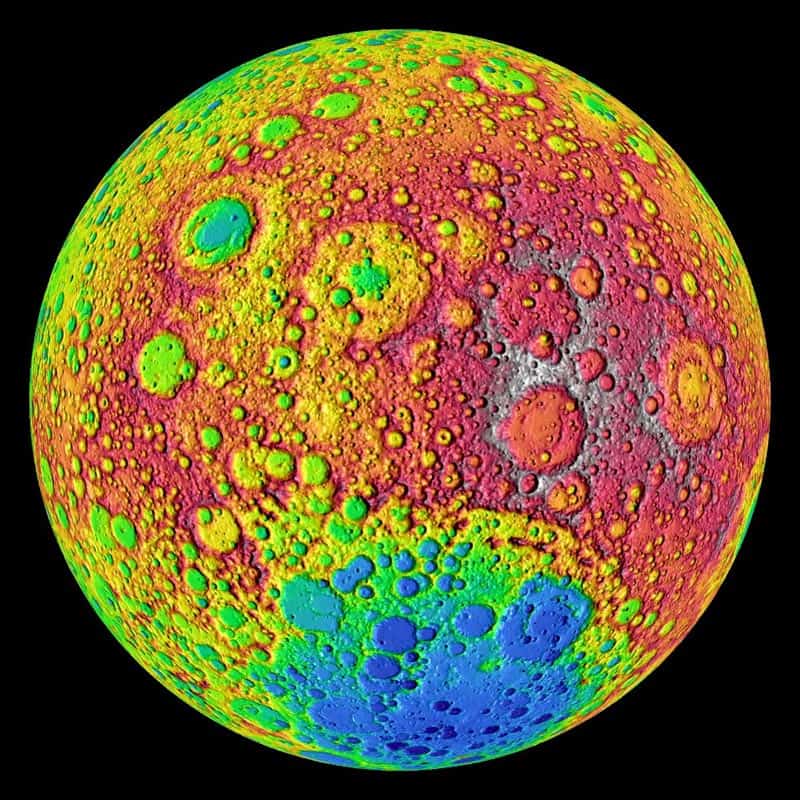
Another notable image is a view of the far side of the Moon. Although several spacecraft – including Japan’s SELENE mission – have already imaged the lunar far side, the LRO has looked more closely at the topography of this half of the Moon, which is entirely obscured from Earth. This side is rougher than the near side and has many more craters including one of the largest known impact craters in the solar system, the South Pole-Aitken Basin.
“The mission has gone very smoothly, with the LRO spacecraft performing flawlessly and all instruments meeting their success criteria,” Richard Vondrak, LRO project scientist at NASA’s Goddard Space Flight Center in Maryland, told physicsworld.com.
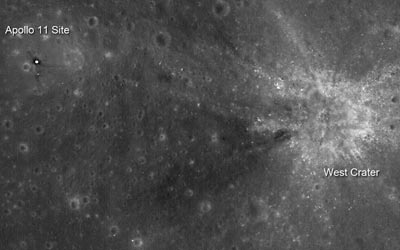
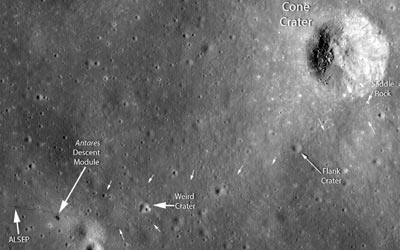
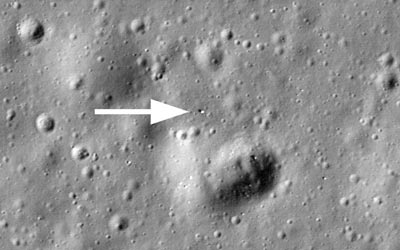
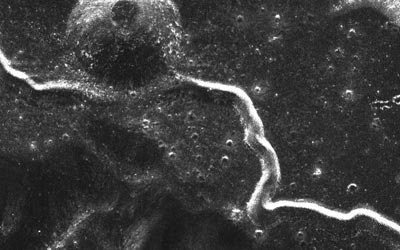
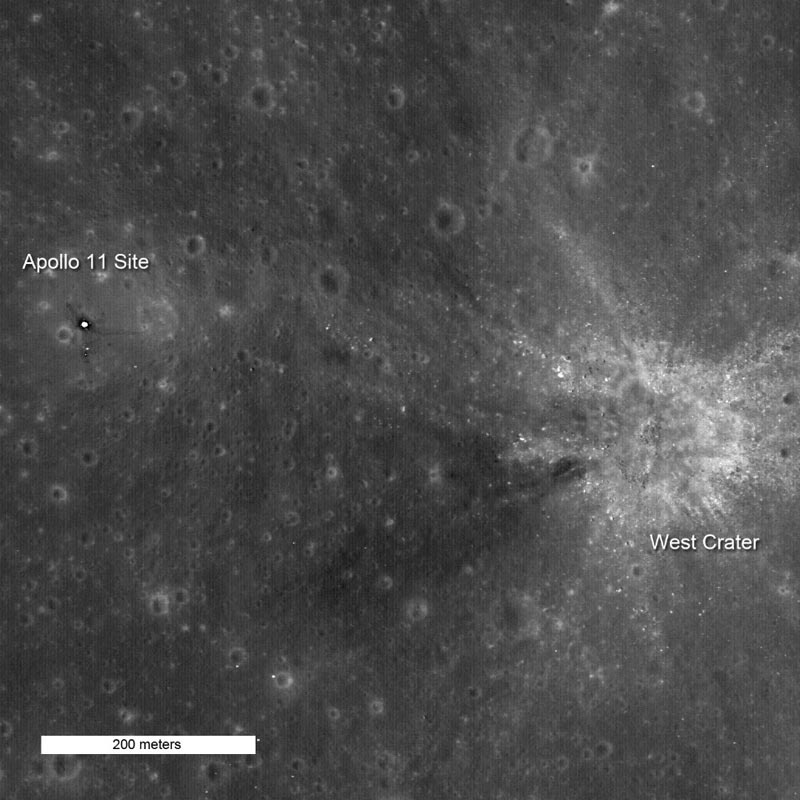
Three of the images are remnants from the space race. On the US side, the researchers discovered the first footsteps taken by Neil Armstrong and Buzz Aldrin and the route taken by the Apollo 14 astronauts who trekked to the rim of a cone crater. On the Russian side, the LRO spotted a Russian robotic that navigated 10 km over the lunar surface before it lost contact in September 1971.
“I’d like to think that these pictures will finally convince the conspiracy theorists who claim that the Apollo missions were faked but I suppose they’ll just say that the LRO pictures are fake too – you can’t win,” says Marek Kukula, the public astronomer at the UK’s Royal Observatory Greenwich.
I’d like to think that these pictures will finally convince the conspiracy theorists who claim that the Apollo missions were faked but I suppose they’ll just say that the LRO pictures are fake too – you can’t win Marek Kukula, UK public astronomer
Kukula believes that all of the space agencies understand the need to disseminate their discoveries to the general public. “For a start, they’re publicly funded so they have a duty to tell taxpayers what they’re getting for their money,” he says. “And the excitement and adventure of space missions has a major role to play in inspiring young people to take up careers in science and engineering.”
LRO completes one year of its exploration mission in September, when it will then begin a two-year science mission. Vondrak says that his team plans to operate the spacecraft in a more robust manner with the hope of obtaining more oblique images of the Moon’s geological features and to obtain more information about the Moon’s atmosphere.
More information about these 10 images can be found here.
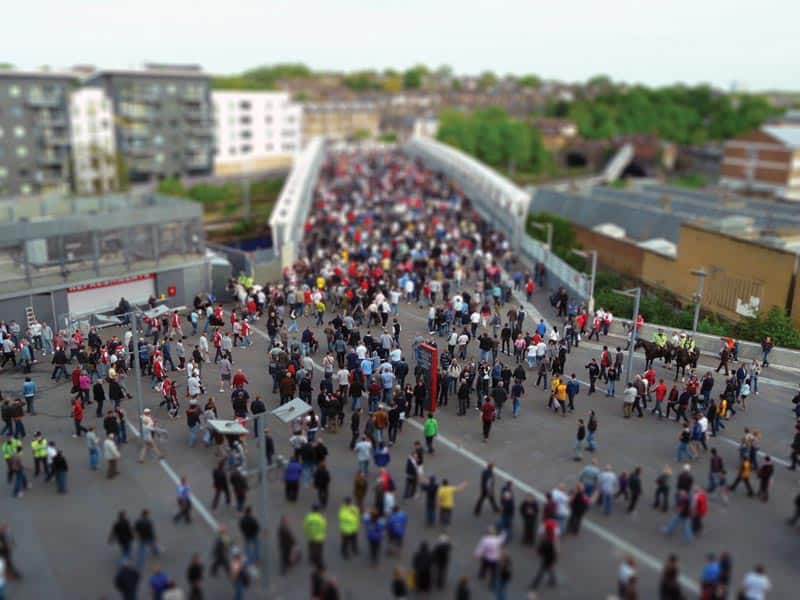
As 50,000 dejected England supporters watch their team trudge off the pitch after crashing out of the FIFA World Cup, fans console each other with pats on the back and talk of future glory, while comforting children with tear-stained red-and-white faces. But their thoughts soon turn to a new issue: how to get out of the stadium. As the venue’s architects will have designed exit routes for just this purpose, leaving is not usually a problem. But if fans need to evacuate fast because of, say, a bomb threat or other emergency, even the best exit strategies can become obsolete. If only two exits are available out of four, can the streams of spectators be redirected in such a way that nobody gets hurt? Worryingly, we cannot definitively say “yes”.
However, a new project called Hermes, funded by the German Federal Ministry of Education and Research, aims to protect and save lives by developing an “evacuation assistant” that could allow stadiums and other venues hosting large events to be cleared quickly and more safely than is possible now. The Hermes system is designed to use information about a current situation to predict what will happen when extrapolated to the future. It involves feeding data into a computer program about the availability of rescue routes and the distribution of people as determined using video cameras linked to image-processing software. Computer algorithms modelling crowd dynamics are then used to predict potentially dangerous situations such as bottlenecks, allowing evasive action to be taken to stop these from happening.
But why are physicists like me involved in this research? The answer is that modelling pedestrians has a lot in common with modelling some other physical systems (see “Particle people” box). In particular, a crowd can be treated like a many-particle system, and ideas from statistical physics can be used to model collective effects without having to know the physiological and psychological features of each individual. Pedestrian dynamics is, however, a complex subject, although the phenomena behind how a crowd moves are simple enough to understand. After all, we are all pedestrians ourselves, moving among other people on a daily basis and making countless split-second decisions about where to go next.
Pedestrian traffic jams
The simplest (and most annoying) example of collective behaviour is when people get clogged up at bottlenecks. Pedestrian jams like these are the consequence of a simple exclusion principle: no two people can occupy the same space at the same time. Bottlenecks are simply areas where the capacity to accommodate people is reduced locally, such as exits or narrowing corridors. But they can also occur in less obvious, dynamic structures, such as when two or more streams of pedestrians merge. Identifying bottlenecks is an important task for safety analysis because such jams limit the maximum possible flow of people and thus strongly influence evacuation times.
One self-organization phenomenon that can frequently be observed in everyday life (watch out next time you go shopping!) is the dynamic formation of lanes. These occur in “counter flow”, where two groups of people move in opposite directions.
Figure 1: Zipping along
By self-organizing into lanes, walkers avoid interactions with oncoming pedestrians and can thus move faster than is otherwise possible. This happens effortlessly and requires neither communication nor a preference for moving on either the left or right. However, such a preference does exist empirically, with the favoured side usually corresponding to the side of the road people drive on. Another observation, which is somewhat surprising, is that the total flow in a counter-flow situation can be larger than if one of the lanes is turned around and everybody moves in the same direction.
When flows intersect at an angle other than head on, patterns of diagonal lane stripes can form in which clusters of pedestrians move in the same direction and with the same speed. Another intersecting flow phenomenon is the formation of short-lived “people roundabouts” that make the motion more efficient. Even if these require pedestrians to detour around the roundabout rather than walking in a straight line to their destination, they allow a “smoother” motion and an overall shorter journey time.
When counter flow and bottlenecks are combined, such as at crowded doors, the direction of motion is oscillatory. In other words, once one pedestrian is able to pass the bottleneck it becomes easier for others to follow in the same direction, until somebody is able somehow to squeeze through in the opposite direction and the flow direction changes again.
Being in an extremely dense crowd can be very unpleasant. The forces can quickly change direction and push you around like a helpless punchball without you being able to do anything about it. Such situations can lead to tragedies as people who stumble and fall are often not able to get back onto their feet. A famous example of this is the “hajj” pilgrimages to Mecca, which have seen more than a thousand pilgrims die over the last 20 years.
Putting people under the microscope
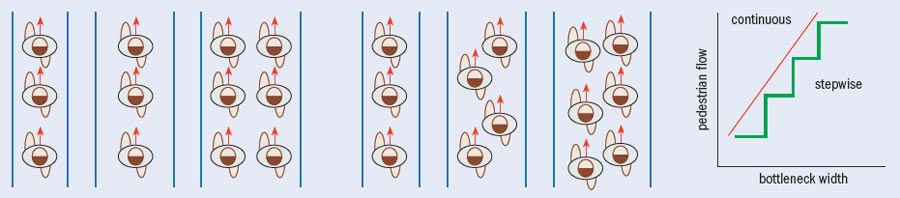
When it comes to designing exit routes from stadiums, it is important to know how the pedestrian flow at bottlenecks changes as the constriction gets wider or narrower. Although studies of this flow–width dependence go back to the beginning of the last century, even qualitative models are still controversial. Some experiments have been interpreted as flow increasing in a stepwise fashion with width, where flow only increases if an additional lane is formed. However, other experiments suggest a continuous increase of flow with width, which can be understood by the “zipper effect”.
To find out what is really going on, several lab experiments have recently been performed to study pedestrian bottlenecks, crossing streams and an important characteristic for building design called the “flow–density relation”. The latter is the number of people passing a fixed point during a certain time interval (the pedestrian flow rate) as a function of pedestrian density. In such experiments, researchers would ideally like to know the trajectories of every participant, from which, in principle, most quantities of interest could then be derived. However, in experiments with 250 individuals it is rather difficult to extract people’s trajectories by simply watching video footage. Therefore, researchers led by Maik Boltes at the Jülich Supercomputing Centre in Germany have developed special software called PeTrack (pedestrian tracking) that allows the trajectories of individuals to be determined automatically. The software currently requires the test subjects to wear a particular colour on their head for detection purposes, but future versions might enable tracking without such markers.
Figure 2: Pedestrian tracking. (Courtesy: Hermes)
To find out what happens in a real sports stadium, the Hermes research group recently performed experiments in the Esprit Arena – home to the German second-division football team Fortuna Düsseldorf – using more than 350 volunteers, most of whom were students. We wanted to understand how the stands empty, how large groups of people behave on stairs and how different flows merge and interact. The results helped us to identify interactions between pedestrians and also how people respond to their physical surroundings. This information is essential for developing an accurate, calibrated model that can be used for safety analysis.
While experiments under non-evacuation conditions are vital to our understanding of pedestrian dynamics, we do also need to know what happens in an emergency, as there may be major differences. The problem is that empirical studies of emergency situations are very hard – even under lab conditions. Indeed, if they are made too realistic, they can be dangerous. Nevertheless, such experiments are sometimes necessary. New aeroplane designs, for example, have to pass an evacuation test in which all passengers can get off the plane in less than 90 s. In the certification trials for the Airbus 380, more than 30 of the almost 900 participants were injured; fortunately, only one injury was serious (a broken leg).
Naively, one might assume that passengers will be able to leave a plane faster if they are highly motivated. However, this is not always the case and the evacuation time depends strongly on the width of the exit. For narrow exits, it turns out that when passengers co-operate, they can exit faster than when they compete with one another to get off. But for wider exits, the opposite is true.
The reason for this surprising observation is friction – not just physical contact (people getting stuck), but also psychological effects such as moments of hesitation where different pedestrians want to move to the same destination but are not sure who should go first. Since no two people can occupy the same space simultaneously, these conflicts have to be resolved in some way. Indeed, modelling dynamics, especially near bottlenecks such as exits, becomes more realistic if not all conflicts are resolved immediately. Both these psychological and physical frictions lead to effects such as the formation of “arches” of the type seen in granular materials. These structures look similar to the barrel vaults found in bridges and other self-supporting structures held together by friction.
Another psychological phenomenon often associated with emergency situations is “panic”. Usually we associate panic with selfish and aggressive actions, and a breakdown of social order that is contagious in large groups. However, safety engineers have reviewed hundreds of disasters and found that, in the vast majority of cases, such behaviour has played no – or almost no – role in the tragic events. Instead, the opposite is usually observed, with most people acting co-operatively and altruistically even under extreme conditions. This has led experts to conclude that “panic” is the most abused terminology besides “chaos”, with the term “crowd disaster” being a more appropriate characterization.
But what happens in a real crowd disaster? Obviously one cannot deliberately recreate such events, and although some empirical data do exist in the form of reports from survivors or even video footage, it is almost impossible to derive quantitative results from these. Some researchers have, however, carried out evacuation experiments with animals to study the influence of “panic”, in which mice and ants were exposed to external hazards – water and repelling liquids, respectively. The animals showed a clear tendency towards herding, i.e. a preference for one of the available exits – a behaviour also seen in humans. After all, we might follow others because we think that they know the best way out, and in a dangerous situation we can feel more secure around others.
Particle people
Courtesy: Salomon Salvador
People in a crowd might like to think they choose their own paths, but it turns out that we can borrow theories of many-particle systems from physics to accurately describe how crowds move and flow. Although variants of fluid-dynamical theories have long been used to study pedestrian streams, most modern models are microscopic, i.e. they distinguish between individual people.
Currently two main classes of model are used. The first is a deterministic approach that deals with forces and continuous variables. The idea of a description in terms of forces is based on the observation that a moving person can lead others to deviate from a straight path. Seen from a physics point of view, this implies acceleration and therefore the action of some “social” force. For pedestrian motion, social forces are repulsive and reflect the personal space of an individual. At higher densities, however, physical forces also play a role. Conceptually, social forces are quite different from physical forces because Newton’s laws are not necessarily obeyed. In general, the third law is not satisfied – as can be illustrated dramatically in the extreme case of stalking; here even the sign of the forces is different!
The second class of model is a stochastic framework in which we make decisions about where to move with some probability, reflecting the fact that two people can behave very differently when in exactly the same situation. In this model, people are generally described as cellular automata existing in a 2D grid of cells. A natural space discretization is given by the space occupied by a pedestrian in a dense crowd. Assuming a maximum density of 6.25 people per square metre, this corresponds to an area of 40 × 40 cm2 per person. Personal space is realized through an exclusion principle that allows each cell to be occupied by no more than one person. Time is also discrete and a single step is usually identified as the typical reaction time of a pedestrian – about 0.3 s. The dynamics in these models are defined in terms of transition probabilities to neighbouring cells.
The so-called floor-field model is a cellular automaton that goes a step further in implementing the rules. The probabilities are dynamic and depend on both the current and past particle configuration. Implicitly, it is assumed that pedestrians leave a trace, or footprints, that others have a tendency to follow, albeit subconsciously. This idea is analogous to the process of “chemotaxis”, as used by ants and other insects for communication. They leave a chemical trace to guide other individuals to food sources. The general principle in both cases is that a motion in the direction of stronger “fields” (pheromones or footsteps) is preferred.
In the evacuation assistant described in the main text, part of the research involves finding a suitable combination of force-based and floor-field models. The force-based model gives a more accurate representation of the geometry of the building, while the floor-field model is much faster in simulations.
Assisting with an evacuation
These studies of pedestrian dynamics are vital in understanding and thus being able to model the movement of people in the predictive code of our Hermes evacuation assistant. This system, which is still being developed, will not only provide data on the distribution of people in a stadium and the availability of rescue routes, but will also predict how they will leave. The first step involves obtaining accurate information about the current state of the crowd using ticket sales and a camera system that automatically counts people, giving the distribution of people in the facility. The stadium’s safety and security management system then provides Hermes with up-to-date information about, for example, the availability of emergency exits, the condition of fire doors and whether any smoke alarms have gone off. This information is subsequently fed into an evacuation simulation based on our models. Since the simulations run faster than real time, we can forecast areas where high densities and clogging could occur with potentially tragic consequences. This information is then sent to firefighters, police and security services, who can decide whether to take evasive action such as redirecting pedestrian streams in order to avoid congestion. A prototype of the evacuation assistant is currently being developed and the first components have already been completed. The first test, hopefully under normal conditions and not an emergency, will be performed in the summer of 2011.
Figure 3 Here we go, here we go, here we go! (Courtesy: Hermes)
Although a dynamic system like an evacuation assistant can have an enormous impact on the safety of mass events, sometimes static solutions through appropriate design of the facilities are helpful. An unexpected suggestion to improve evacuations is to put columns in front of exits, which should help to reduce friction effects and prevent arching. This idea works, at least in theory, as long as the presence of the columns does not change the behaviour of the people leaving.
While models of pedestrian dynamics have now become quite realistic, a lot still remains to be done. Quantitative predictions are difficult because so far there is not enough reliable empirical data to calibrate the models. However, reliable qualitative predictions are possible. These are sufficient at least to predict bottlenecks, and so can be used for forecasting as part of the evacuation assistant. Commercial simulation programs for evacuations are already available, but they have been found to produce largely deviating results, even by a factor of two in the simplest scenarios. What makes our project unique is the close co-operation between experimentalists and modellers, and the physics perspective that allows us to identify analogies with physical theories that can be built on and adapted.
So next time you leave a stadium, or any other large and crowded building, rather than dwelling on defeat you could take a moment to imagine yourself as not a person but a particle.
At a glance: Crowd dynamics
Understanding how people move in crowds is important for architects wishing to design stadiums from which spectators can leave as quickly and safely as possible
Physicists can play a role in this effort because crowds are essentially many-particle systems that can be modelled using both force-based and statistical physics
When designing exit routes from stadiums, a key issue is knowing how pedestrian flow at bottlenecks changes as the constriction narrows or gets wider
Researchers in Germany are developing an “evacuation assistant” that feeds live crowd data into software based on pedestrian models to provide stadium managers with information that can help them to decide how best to empty the facility
More about: Crowd dynamics
A Schadschneider, D Chowdhury and K Nishinari 2010 Stochastic Transport in Complex Systems: From Molecules to Vehicles (Elsevier, Amsterdam)
A Schadschneider et al. 2009 Evacuation dynamics: empirical results, modeling and applications Encyclopedia of Complexity and System Science ed A R Meyers (Springer, Berlin)
On 17 January 1794 a French doctor and botanist named Joseph Dombey stepped aboard the Soon, a brig departing from Le Havre for Philadelphia. Dombey bore a letter of introduction from the Committee of Public Safety, the executive body that ruled France during the Reign of Terror. Dombey was carrying to the US Congress a copper length prototype – newly named the metre – and a copper kilogram, which were intended to help the US reform its system of weights and measures.
The French revolutionaries had chosen their emissary well. Dombey had an engaging personality and a wealth of scientific learning that would surely impress the Americans. “He had integrity, courage and a sense of adventure,” writes the historian Andro Linklater in his 2002 book Measuring America (Walker and Co.) “He was the ideal choice in every way but one – his luck was phenomenally bad.” Had Dombey succeeded, today we might not be in the ludicrous situation of the US – the world’s largest economy – persisting with non-SI units.
Metrological opportunity
As a young man, Dombey (1742–1794) was an avid student of medicine and natural history, and became a physician. In 1776, at the age of 34, he was assigned to a Spanish botanical expedition to South America, during which he built up a collection of specimens of plants from that continent, in the process earning himself a seat in the French Academy. His experiences on this excursion were challenging – he contracted dysentery, and was forced to delay publishing his findings until after his Spanish colleagues. Disgusted with the politics of botany, he retired to Lyon to practise medicine in a military hospital.
Not a good choice. During the revolution, Lyon was an enclave of resistance to the Reign of Terror, and was attacked and punished by the revolutionaries. Dombey watched his patients dragged from the hospital and guillotined. Worried about his sanity, well-connected friends arranged another expedition for him – to the US, to collect botanical specimens and to bring samples of the new, rational system of weights and measures to France’s ally.
The US had inherited its weights and measures from Britain, but their flaws were well known, and influential American statesmen had been seeking to reform the US system for years. One was Thomas Jefferson, the first US secretary of state (1789–1793) and an admirer of French science and culture. In 1790 he asked Congress to adopt a decimal system of weights and measures similar to the one the French were about to adopt. In 1791, in his first presidential address to Congress, George Washington noted that “a uniformity in the weights and measures of the country is among the important measures submitted to you by the Constitution”.
The following year, Congress appointed a committee that recommended Jefferson’s proposals. It was a key moment for US metrological reform. Western nations were being seized, settled and surveyed – and any delay in implementing a new system would make it harder to overturn the existing one. But while Congress considered the committee’s recommendation, it had other pressing business and put off taking a vote. This is how matters stood when Dombey set sail in January 1794.
Never-ending journey
Due to a series of misfortunes, Dombey never made it to American shores. In March, as the boat neared Philadelphia, a fierce storm damaged the brig and drove it south to the Antilles, where it had to land at Point-à-Pitre in Guadeloupe. This French colony was as politically divided as France itself. Its governor was royalist, but Point-à-Pitre was full of revolutionary sympathizers.
Dombey was helpless to avoid becoming a political pawn. The presence of an emissary of the revered Committee of Public Safety from the home country inflamed the fervour of the locals against the governor, who had Dombey arrested and imprisoned. A mob amassed to demand the release of the man who was an official representative of the French government.
Dombey’s release incited the mob to take revenge against his captors. Standing on the bank of a channel, Dombey tried to stop the violence, but was pushed off the bank into the water. He was unconscious when fished out, and caught a raging fever. The governor took Dombey into custody, interrogated him and put him back aboard the Soon.
Right after it left the harbour, the ship was attacked by British privateers who seized its cargo and took the crew hostage. Despite disguising himself as a Spanish sailor, Dombey was recognized and imprisoned for ransom at the British colony of Montserrat, where in April – still ailing – he died and was buried. Back in France, the Committee of Public Safety was occupied with its own troubles, nobody was concerned by the absence of news from Dombey, and it learned of his fate only in October.
Dombey’s metre and kilogram are apparently lost, though the National Institute of Standards and Technology in Washington, DC – which still seeks US conversion to SI – has in its collection other prototype standards that were made in France at about the same time.
The critical point
In 1794 a strong political push might have settled things in the metric system’s favour. “The sight of those two copper objects,” Linklater writes, “so easily copied and sent out to every state in the Union, together with the weighty scientific arguments supporting them, might well have clarified the minds of senators and representatives alike. The vibrant, determined personality of Dombey could have created an immediate empathy. And today the US might not be the last country in the world to resist the metric system.”
For a country to switch to a new measurement system is an immensely difficult undertaking requiring strong leadership, political will and the right social climate. All these were present in the US in 1794, but the moment was not exploited. It will be a long time before the US has a similar chance again.
Steven Weinberg is a thinker of immense breadth and depth, a “scientific intellectual” of a kind that has become all too rare. One of the world’s leading theoretical physicists, he shared the 1979 Nobel Prize for Physics for his work on the unification of electromagnetism with the weak force responsible for radioactivity. By then, he had already made his first foray into popular-science writing, discussing cosmology – not his primary specialty – in The First Three Minutes. In 2001 he extended his reach, setting out his trenchant views on subjects ranging from physics to the culture wars in a book of essays called Facing Up: Science and Its Cultural Adversaries.
Now, in his latest collection of essays, Lake Views: This World and the Universe, Weinberg has gone even further afield, writing again about physics but also more generally about science and philosophy, about defence and space policy, and about politics and (lack of) religion. Each of the essays dissects one of these subjects with the same logic, clarity and single-mindedness that his colleagues appreciate in Weinberg’s research papers.
For physics students, Weinberg’s essay on Einstein’s ill-fated quest for a theory unifying gravity and electromagnetism should be required reading. He also cogently covers the twists and turns of what Einstein called his “greatest mistake”: the cosmological constant, which has recently turned out to be one of Einstein’s deepest insights – a salutary example of the principle that whatever is not forbidden by symmetry is generally compulsory. Similarly, students of physics and maybe others will value Weinberg’s expositions of the Standard Model, dark energy, the multiverse and the search for a “final theory”. Another interesting physics essay is about J Robert Oppenheimer, whose steely combination of intellect and principle, we learn, inspired Weinberg to pursue a career in theoretical physics.
Weinberg’s lawyerly dissection of Steven Wolfram’s claims to have initiated a new type of physics is also instructive. Very politely, and very systematically, he demolishes Wolfram’s specific assertions about cellular automata while emphasizing the intrinsic interest of this aspiration. Many feel the urge to overturn the hegemony of quantum field theory, but Wolfram’s ideas were insufficiently original and powerful to subvert it. For the time being, it maintains its tyranny as the basic framework for describing fundamental physics.
For me, one of the most stimulating essays in this collection is that on the nature of scientific explanation. All would-be philosophers of science would be well advised to read it carefully. Yet Weinberg has not entirely given up on social science; indeed, in a separate essay, he waxes optimistic about an impending truce in the “culture war” between scientists and sociologists of science. I wish I could share this rosy view, but as the recent Large Hadron Collider “black hole” scare and the ongoing climate debate indicate, the authority of science is still continuously challenged.
Another set of essays that I appreciated greatly was that on missile defence and space policy. Weinberg is a well-read amateur military historian with extensive experience as a Jason consultant for the US military, but he is no hawk. Instead, his dealings with the military–space–industrial complex seem to have sensitized him to the insanities in schemes for antiballistic-missile defence and manned spaceflight, and he pulls few punches in condemning them here. After reading one particularly excoriating passage, I almost pity any hapless Air Force general or politician who might, at some point, be on the receiving end of Weinberg’s inquisition.
His observations on the mentality that leads to such misguided thinking are also instructive. Indeed, one of the most fascinating essays in the volume describes how the pursuit of glory has led repeatedly to poor military choices. Reading this, I could not help but reflect that theoretical physicists are similarly prone to making poor judgements when motivated by searches for personal glory – with the notable exception of Weinberg himself.
All of the essays in this group will tread on some political toes, particularly in Weinberg’s now native state of Texas, where he contemplates the views across the lake by his house. His remarks about Israel are sure to tread on a few more: one can only imagine the discussions in student unions that might arise from his assertion that “the greatest miracle of our time is the rebirth of Israel in its ancient home”. A staunch atheist with a Jewish background, Weinberg waxes indignant at the UK’s old National Association of Teachers in Further and Higher Education (NATFHE, now part of the University and College Union), which in 2006 voted for an academic boycott of Israel. The action was subsequently revoked, but not before Weinberg had cancelled his plans to attend a conference in Durham.
On that occasion, Weinberg’s sense of grievance and subsequent actions were understandable. However, his decision (which he describes in a footnote) to cancel attendance at a 2007 Imperial College conference that honoured his old friend Abdus Salam – this time because the National Union of Journalists voted for a boycott of Israeli products – left many of its participants disappointed and perplexed. We hope to see Weinberg return to the UK soon, as he says he doubtless will.
There is much material for reflection in these essays – for the person in the street as well as for the student, postdoc, senior scientist, philosopher or politician. If more of us could view the subjects of these essays as rationally and coolly as Weinberg does on his lakeshore, our world and our public discourse would be the better for it. To many, the most poignant essay in this collection may be the last one, in which Weinberg takes on religion. Less provocative than the biologist Richard Dawkins, Weinberg is nevertheless an outspoken atheist, who finds “a certain honour, or perhaps just a grim satisfaction” in facing up to an uncaring universe “with good humour, but without God”. At the end, one is left with an intriguing mental image: Weinberg gazing calmly into the metaphysical distance across his Texas lake, quietly prepared to meet his final theory.
Black holes always make for an interesting read. This is true for both professional researchers and for members of the public, whose fascination with these curious objects has filled so many shelves in bookshops’ science sections. Yet before the appearance of Fulvio Melia’s Cracking the Einstein Code, little had been written about the man who did so much to explain them: the New Zealand mathematician Roy Kerr, who gave us the full solution for astrophysical black holes in 1963 but has largely shunned the limelight ever since.
Melia’s book is a lively journey through the golden age of black-hole mathematics, concentrating on Kerr as one of the era’s lesser-known heroes. It was Kerr who solved Einstein’s field equations of general relativity for rotating objects, and hence successfully described how space warps around such bodies. This was a key advance, as the existing Schwarzschild and Reissner–Nordstrom solutions – discovered almost 50 years earlier – had only described bodies that were spherically symmetric, and hence had zero angular momentum. Such assumptions cannot be true for any object in the universe, so before Kerr’s breakthrough many physicists were sceptical about general relativity’s applicability to “real” astrophysical objects. It was Kerr’s important generalization that paved the way for scientists to accept the possibility of black holes, once observational evidence for their existence began to emerge in the 1960s and 1970s.
The book gets off to a bit of a rocky start, when for some reason Melia asserts that Zeno’s arrow paradox – which amounts to “how can an arrow move when snapshots show it standing still?” – requires special-relativistic principles to resolve. Although some philosophers continue to push this as a mystery, to me Aristotle’s answer is perfectly reasonable: during a very short time an arrow moves a very short distance, but it is not stationary, and if you add up the short distances over short times you get motion. Melia’s arguments to the contrary make an odd diversion, but fortunately this does not affect the rest of the book.
After this initial hiccup, Melia takes us on a quick and well-written tour of general relativity, including a good discussion of the often-overlooked contributions of Emmy Noether. This is a well-paced section, and my only suggestion would have been to include a little bit about Wallace Campbell’s eclipse expedition to Australia in 1922. Melia properly discusses Arthur Eddington’s better-known 1919 expedition, which made Einstein a star, but it was Campbell’s later observations that truly clinched the case for the light-deflection predictions. Overall, however, this is an excellent overview chapter, spanning the time between Einstein’s first attempts at a theory of gravity and the expected detection of gravitational waves within a few years from now.
The heart of the book begins in the fifth chapter, “An unbreakable code”, in which Melia gives the reader a feel for the state of general relativity in the early 1960s. At that time, it was widely viewed as an extremely complicated theory; and with only a handful of experimental confirmations, it did not attract many people to work on its intricacies. Its intrinsic mathematical beauty, however, proved sufficient to persuade a select few to seek solutions to Einstein’s nonlinear field equations. One of those was Kerr, then newly arrived at the University of Texas at Austin.
It was at this point in the text that I became most interested in what Melia had to say – particularly because Kerr (now retired and living in his native New Zealand, where he spent most of his career) has lent his support to this book in the form of an afterword. I work professionally on astrophysical applications of general relativity, and am therefore familiar with Kerr’s solution, but I knew virtually nothing about the man himself.
Melia’s portrait reveals a gifted but modest man who is deeply interested in the solutions to problems but (to his occasional detriment) not particularly concerned about getting credit for the solutions or even publishing them. Melia also offers a number of warm anecdotes about Kerr’s early career; for example, in 1951 Kerr scored a disappointing 298/600 in the mathematics portion of a scholarship exam for the University of New Zealand (now the University of Canterbury). It turns out, however, that this happened because he received a nearly perfect score on the first of the two required mathematics papers, but a zero on the second because he mistakenly turned up in the afternoon for a morning exam!
The pursuit of the Kerr solution itself is described with verve, and should be accessible and informative to specialists and non-specialists alike. I was unaware, for example, that Kerr was initially dissuaded from attempting to formulate a solution because others told him that they were hot on the trail. The ranks of “others” included Ted Newman of the University of Pittsburgh, who later modified Kerr’s solutions to account for electrically charged bodies. At one point in the pursuit, Newman thought he had proved that solutions of the desired type did not exist. When Kerr discovered a mistake in Newman’s proof, he worked full-bore to find them, using numerous elegant techniques that were not described in his eventual one-and-a-half page paper.
The fact that general relativity was something of a backwater at the time meant that few physicists and astronomers realized the magnitude of Kerr’s accomplishment. One who did was the great Indian astrophysicist Subrahmanyan Chandrasekhar, who shared the 1983 Nobel Prize for Physics and who wrote that the revelation of the Kerr solution was “the most shattering experience” of his entire scientific life. Gradually, other astronomers came to appreciate the full extent of Kerr’s legacy: simply put, the Kerr solution describes all astrophysical black holes, the only properties of which are mass and angular momentum. These are thus the simplest macroscopic objects in the universe, and the only creatures in the astrophysical zoo that can be described with mathematical exactness.
During their brief history, black holes have gone from being a dream in the 1960s to being broadly accepted by most in the 1980s. More recently, researchers have come to understand that supermassive black holes exist in most galaxies, and may play a crucial role galactic development and in the evolution of vast galaxy clusters. Melia, himself an astrophysicist at the University of Arizona, describes this progression well. He also adds a human touch by discussing Kerr’s life post-discovery, and offers a tantalizing sketch of the vistas that still await us in the study of black holes.
At 150 pages, Cracking the Einstein Code is a quick and invigorating read. It presents a lively and personal account of a subject that is a perennial favourite, and of a man who deserves more recognition. I recommend it for both scientists and anyone interested in the frustration and triumph that mark the course of scientific progress.
Coming to Lindau could be your yearly treat if you win that Nobel gong
By Matin Durrani in Lindau, Germany
OK so you want to be a Nobel prize-winner?
Well here’s a seven-point checklist presented by Ivar Giaever at the 60th Lindau Nobel Laureate Meeting. In case you’d forgotten or had never heard of him (surely not?), the Norwegian-born Giaever shared the 1973 Nobel Prize for Physics at the age of 44 with Brian Josephson and Leo Esaki for their work on tunnelling in solids.
So to bag that top gong and the all-expenses-paid trip for you and your other half to the Swedish capital, here are what Ivar reckons are the required attributes:
· be curious
· be competitive
· be creative
· be self-confident
· be critical
· be patient
· and above all, be lucky.
Strikes me, there are a few key things missing, like, er, being clever. And, if I was being cynical, as you’d expect me to be, then it probably doesn’t hurt to have a couple of chums on the Nobel committee who can put in a good word for you.
Moving to the US wouldn’t be a bad idea either, if past experience is anything to go by. And don’t be an astronomer or geophysicist, who have never done that well on the Nobel gong front.
Showcasing fakes at the National Gallery in London
By Michael Banks
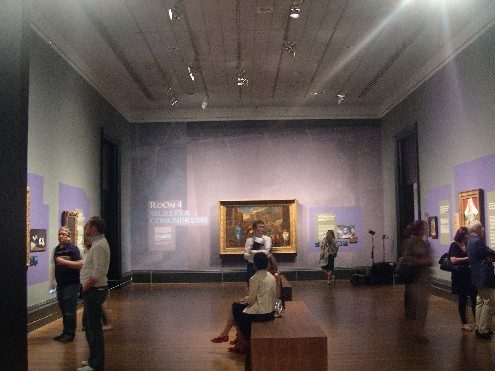
It might seem a strange idea to have an exhibition showcasing fake works of art as well as pieces that have been significantly modified over time. But that is all part of a new exhibition at London’s National Gallery looking at how science can help to restore art as well as spot fake art pieces.
Yesterday I attended the opening of the gallery’s new exhibition Close Examination: Fakes, Mistakes and Discoveries. The exhibition, which is free to enter, is open to the public starting today and runs until 12 September.
We were shown around the exhibition’s six rooms by Ashok Roy, the National Gallery’s director of science. Each room in the exhibition explains how science is used to establish the originality of art pieces. This could be by using X-ray or infrared radiation to discover hidden drawings beneath the layers of paint to Raman spectroscopy, which can be used to identify the make up of pigments that are used in the paint.
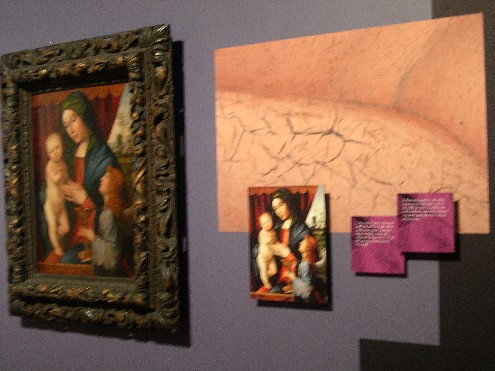
One of the first paintings Roy showed us was The Virgin and Child with an Angel – in the first room of the exhibition dubbed “deception and deceit” – that was created in the 15th century by the Italian painter Francesco Francia.
To give the appearance of ageing, cracks were drawn on the painting
The painting was given to the National Gallery in 1924 and thought to be an original. However, after another, smaller version of the same painting appeared at an art auction in 1954, art historians deduced that the work owned by the National Gallery was a copy.
Roy showed that the copy was actually quite elaborately done. Indeed, when researchers studied it using infrared radiation they saw a carefully drawn outline underneath the painting as if it was an original.
Roy and his team then examined it further by taking a small sample from the top right-hand corner of the painting to deduce what elements were involved in the pigments. They discovered that the painting had been covered by a material called shellac – a resin that can simulate the appearance of age.
With the help of a microscope they also noticed “cracks” in the painting that had been drawn on to give it a look of authenticity. All the evidence pointed towards a fake painting that had likely been made in the middle of the 19th century.
As well as the ability to spot copies or fakes, another interesting aspect of the exhibition is to see how paintings have been modified over time to satisfy changing tastes.
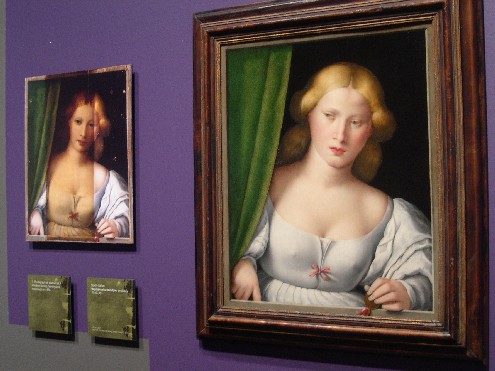
Woman at the Window before and after restoration
Woman at the Window, created by an unknown Italian artist between 1510 and 1530, shows a young brunette woman looking out from behind a curtain. When the image was carefully restored by removing a varnish and then a surface paint, it revealed that the brunette woman was actually a blonde whose expression had also been changed. As scientists deduced that all these changes were performed in the 19th century, Roy says that it was probably carried out to satisfy Victorian tastes of the day.
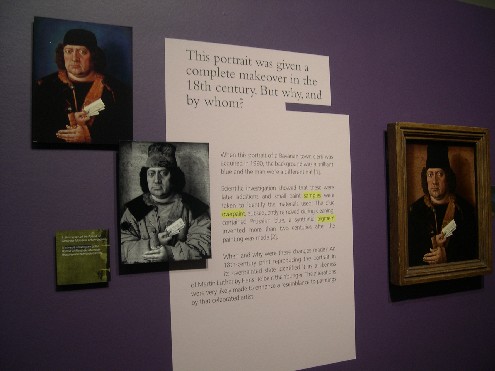
Another painting in this room is a portrait of Alexander Mornauer, which was finished between 1464 and 1488. The painting was acquired by the gallery in 1990 and had a blue background – a colour that was not used widely in the 15th century. Roy and his team analysed a small sample of the background to find that it contained prussian blue – a pigment only invented between 1704 and 1710.
But it is not only chemical analysis of pigments or infrared radiation that are used to test the authenticity of paintings. Roy showed a work in the “mistakes” room – A Man with a Skull – that was acquired by the National Gallery in 1845 and was supposed to be a painting by the German artist Hans Holbein the Younger.
Researchers studied what the blue pigment contained (used as the background in the top left image) in the portrait of Alexander Mornauer and removed it to reveal the original background
Rather than peering into the layers of paint on canvas with X-rays or infrared radiation, researchers instead looked at the painting’s frame. As the panel of the frame was made of oak, Roy and his team carefully measured the widths of individual tree rings on the frame to estimate the date when the tree was felled.
By comparing their measurement with a master chronology of oak tree ring growth, Roy and his team could estimate that the tree used for the frame was felled around 1560. As Holbein died in 1543, it was concluded that the painting was not by him but by the Flemish painter Michael Coxcie.
The final room in the exhibition is devoted to recovering works of art. One of the images on show is Madonna of the Pinks by Raphael. Until 1991 the whereabouts of Raphael’s original masterpiece was unknown as only copies survived. One such copy was held in Alnwick Castle in Northumberland.
The National Gallery’s director, Nicolas Penny, was surprised that the painting was held in a rather elaborate frame given that it was a copy. So the painting was sent to the National Gallery’s team of scientists who studied it with infrared radiation to reveal a very detailed drawing underneath the layers of paint. The infrared image also showed subtle changes in the costume and the background landscape in the original drawing to how it finally ended up, indicating that Raphael changed his mind as he worked – ruling out the possibility that it was a copy.
Robert Laughlin believes mankind faces two big hurdles
By Matin Durrani in Lindau, Germany
I mentioned in my previous blog from the 60th Lindau Nobel Laureate Meeting that after my interview with Carlo Rubbia, he headed off to a session on particle physics. In fact, the session was called “What will CERN teach us about the dark energy and dark matter of the universe” and was chaired my former colleague Matthew Chalmers, who was features editor of Physics World until 2007.
Keeping Rubbia and his fellow Nobel laureates on the panel in shape can not have been easy for Matthew, who also had heavyweights David Gross, John Mather, Gerard ‘t Hooft, George Smoot and Martinus Veltman to contend with, plus a live link to the CERN control room that conked out a couple of times.
I’m not quite sure what the conclusion of the debate was – if there was one – although most amusing was Veltman’s comment that “all this stuff about dark matter is total bullshit”. George Smoot also seems to have shaved off his trademark beard – try a Google search.
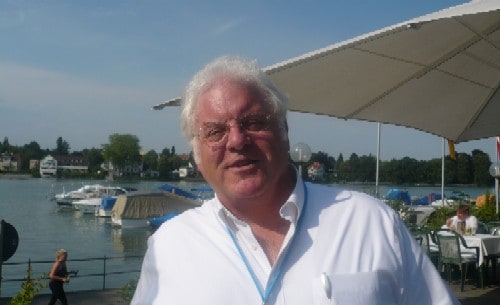
One Nobel prize-winning physicist who was not at the debate was Robert Laughlin (pictured), who shared the 1988 prize for his work on quantum fluids with fractional charges. Obviously he’s not a particle physicist and so one would not have expected him to attend, but he’s certainly ruffled a few feathers in the past with this views on fundamental physics.
Laughlin believes, for example, that while the reductionist approach to physics – so beloved of all particle physicists – works up to a point, it only goes so far. He reckons that nature is instead regulated by “powerful and general principles of organization” such as symmetry breaking and that these cannot be deduced mathematically from first principles, being “emergent” in nature.
Laughlin presented those views on emergence in a great (but sadly little known) book he published in 2005, A Different Universe: Reinventing Physics from the Bottom Down, in which showed how you cannot really understand nature by reducing it to a set of ever-smaller component particles that interact with each other according to certain laws. Just think about high-temperature superconductivity of the working of the brain.
But sitting out on the sun-drenched terrace at the conference venue on the shores of Lake Constance, while Veltman and pals were arguing inside over whether CERN would spot dark matter and supersymmetry, Laughlin revealed that he’s just finishing a new book on a very different topic to his last – what we will do when coal runs out.
Tentatively called When Coal is Gone, it presents Laughlin’s view that mankind faces two big hurdles. The first is what we will do when there is no more oil, which could be in 60 years’ time. (Answer: start turning coal into fuel for cars or planes, even though this will consume more energy than it generates.) The second is what we will do when there is no more coal. (Answer: start extracting carbon from the air or oceans.)
Apologies if that’s a grotesque and gross simplification of what are probably much more clearly thought-out and nuanced arguments but that, I think, is the gist of his book.
As far as Laughlin is concerned, nothing can really beat the energy density of carbon-based fuels and that, because we have all got so used to them, there’s no way anyone would choose to do without them in future. After all, plot national GDP against energy consumption and you have pretty much a straight line, albeit with a few outliers. (Energy, in other words, is essential to economic growth and unless we all start eating carrots from our garden and stop travelling anywhere and give up buying big new televisions, the global demand for energy will just keep on rising.)
There’s a lot more he had to say which I’ll have to turn into a more coherent article at some point. We need, for example, to separate out our thinking on energy and climate change. Nuclear power will still play a role in the future, while the need for energy will dictate the future of the global geopolitical system.
But Laughlin is great company, is well read, and has one stream of thought after another. Indeed, here’s one question he posed that got me thinking: if the Earth’s core is so hot, why are the oceans so cold?
Europe’s €450m GAIA satellite is suffering serious technical problems that could hinder its ability to create the largest and most precise 3D chart of our galaxy. Researchers are now in a race against time to ensure that the European Space Agency (ESA) mission will be able to map a billion stars within the Milky Way in extremely high resolution, which should provide a better understanding of the evolution and dynamics of our galaxy.
Due for launch in 2012, the five-year-long GAIA mission will orbit around the Sun from a point in space known as the second Lagrange point L2. It will have two cameras and a spectrometer, which will jointly use an array of 106 CCDs as photon detectors to determine the positions, distances, proper motions and brightness variations of stars. But to do their job, these CCDs need to avoid contamination from energetic particles mainly resulting from solar flares that could otherwise limit how well GAIA can detect faint light from stars.
The radiation issue is a top-level risk for GAIA and cannot be cured by changing the type of CCD or by shielding Giuseppe Sarri, GAIA’s project manager
“When a CCD is subject to high-energy protons in space, its silicon structure is modified by the creation of holes in the material,” says Giuseppe Sarri, GAIA’s project manager. Sarri notes that when this happens, the electrons generated by incoming stellar photons impinging on the CCD “disappear” and then reappear a millisecond to a second later. While this effect is normally negligible for what he terms “normal” missions, the effect could be “dramatic” if GAIA is to measure stellar positions with accuracies down to just a few microarcseconds. ESA reports that this problem may well get worse by the expected solar maximum in 2012, when solar activity is greatest.
ESA, however, says it has been aware of the problem for at least a decade. Since 2005, researchers have been addressing the issue of how radiation damage could rearrange the charges on GAIA’s CCDs as they are in the process of being electronically read. “The radiation issue is a top-level risk for GAIA and cannot be cured by changing the type of CCD or by shielding,” says Sarri. “Calibration is the only way to understand exactly which parameters play a role in changing the CCDs’ behaviour.”
Concern over ESA’s handling of the radiation issue caused Michael Perryman, former GAIA project scientist, to resign from the agency in 2008. But GAIA science-team member Lennart Lindegren, an astronomer at Lund Observatory in Sweden, is confident that GAIA’s unprecedented accuracy will be feasible. GAIA researchers will continue to perform tests and calibrations until at least 2011, which will include irradiating the CCDs at space-like temperatures. Lindegren admits, however, that they can never be certain of success until the spacecraft is in orbit and starts sending back data.
I was tipped off before arriving here in southern Germany for the Lindau Nobel Laureate Meeting – motto “educate, inspire, connect” – that if you’re a member of the press and want to meet any Nobel laureates, you basically have to fix things up in advance, despite the presence of a helpful press office.
Many of the laureates are a law unto themselves and so just turning up and trying to track them down for a quiet half hour with them is not easy – particularly when there are almost 700 students swarming around the “Inselhalle”, where most of the events are taking place.
It was just as well I’d been given that advice because it meant that I was able to spend a decent hour interviewing the Nobel prize-winning Italian particle physicist Carlo Rubbia.
Unlike the students here, he wasn’t cooped up in one of the cheap-and-cheerful hotels or guest houses in Lindau itself, but had been put up – along with all the other laureates – at the suitably grand four-star Hotel Bad Schachen further up along the shores of Lake Constance, where a suite can set you back €389 a night.
Rubbia, who was CERN boss from 1989 to 1993, is now 76 but shows no signs of slowing down. He’s heavily involved in the Gran Sasso National Laboratory in Italy, which recently opened its ICARUS detector that is designed to study neutrinos fired from the CERN lab in Geneva.
Carlo Rubbia
Sitting in the hotel lobby with a glass of mineral water, Rubbia also outlined his passion for the idea of using beams of neutrons to turn long-lived radioactive waste into shorter-lived waste – so-called nuclear transmutation – and potentially even generating electricity in the process. And he has ideas about using thorium as a nuclear fuel as well.
Like most – I’d guess all – Nobel laureates, science has never been just a job for Rubbia, but his hobby and his life. Indeed, he joked that he couldn’t imagine whiling away his hours on the golf course in retirement.
Still, being wined, dined and generally feted by the organizers of the Nobel laureates meeting has got to be one of the benefits of a hugely successful career in science.
And then Rubbia was off to a round-table discussion about particle physics, of which more later. As for me, I’ll have to listen again to my recording of the interview and hopefully fashion it into a coherent article. But not right now, as I’m desperate to get out of the sweltering press tent – Lindau is in the midst of a heatwave – and cool off.