The laser at 50

By Matin Durrani

PWMay10cover-iop.jpg

Regular users of this site will be well aware that we are currently celebrating the 50th anniversary of the invention of the laser.

It was on 16 May 1960 that Theodore Maiman – then a 32-year-old engineer-turned-physicist at Hughes Research Laboratories in the US – eked out the first pulses of light from a pink-ruby crystal, since which the laser has become a workhorse of physics and ingrained in everyday life.

To celebrate the laser anniversary, we’re offering a free PDF download of the May issue of Physics World (right), which you can get by following this link.

Packed with great laser features, we relive the race to build the world’s first working laser – a story still laced with controversy. Find out about the technological impact of lasers in fibre optics and the quest for green-wavelength laser diodes that could let mobile phones project images onto any surface.

Basic research gets a look-in, too – in terms of both ultrahigh power lasers to promote fusion as well as ultrafast lasers that can probe the motions of atoms and molecules. And don’t miss our special, colour-coded timeline of laser history.

And if that’s not enough, don’t forget you can also view a series of great video interviews with leading laser experts via the physicsworld.com multimedia channel.

If I can recommend just one of the videos, it’s the one with Tom Baer, former president of the Optical Society of America, in which he overviews 50 years of laser physics, and makes some predictions about the next 50. Watch it here.

Of course, we’re not the only ones to be marking the laser anniversary. Thanks to the efforts of my colleague Joe Winters at the Institute of Physics press office, today’s edition of the Sun – the UK’s best-selling newspaper – has a great article marking the laser anniversary. Check it out via this link.

But don’t spend too long at the Sun – for the real deal on lasers, you really mustn’t miss the May issue of Physics World.

Herschel sheds light on star and galaxy formation

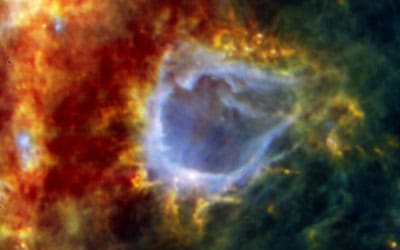
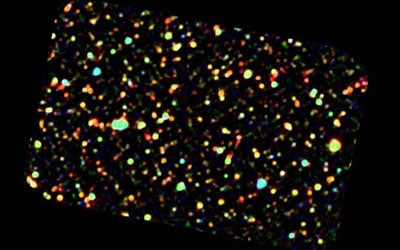
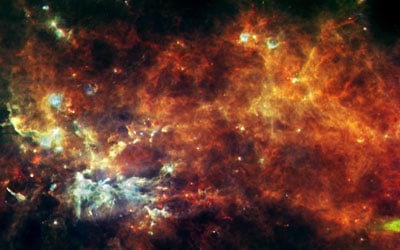
The first scientific results from the Herschel infrared space observatory have been unveiled by the European Space Agency (ESA). Some images reveal billowing clouds of gas and dust that astronomers believe will go on to form stars and planets. Others provide new views of the early universe, showing distant galaxies that are invisible to the likes of the Hubble Space Telescope.

Launched in May 2009, Herschel is a far-infrared and submillimetre telescope that probes the universe’s coolest objects, from the era when the first stars and galaxies were formed to the present day. It started taking data in July last year and the new images include those of the star-forming cloud RCW 120, which Herschel has discovered contains an embryonic star that could evolve into one of the largest in the Milky Way.

The star is already 8–10 solar masses and is surrounded by about 2000 solar masses of dust that it could suck in. “This star can only grow bigger,” says Annie Zavagno of the Laboratoire d’Astrophysique de Marseille, adding that its discovery could help astronomers improve current theories of star formation, which limit star size to about eight solar masses.

Meanwhile, at the farthest reaches of the universe, Herschel has so far discovered more than 1000 distant galaxies. These galaxies emit large amounts of infrared radiation, and the Herschel images show that these objects are responsible for more than half of the cosmic infrared background radiation originating from that part of the universe.

Unlike the Milky Way, which creates about three new stars per year, some of these ancient galaxies are forming thousands of stars per year. “We can use these results to study what controls star formation in these distant galaxies, and how galaxies like the Milky Way formed,” says Dieter Lutz of the Max Planck Institute for Extraterrestrial Physics in Garching, Germany.

Piercing the veil

These star-forming regions are hard to see because they are usually shrouded in gas and dust that blocks visible light. But as infrared radiation pierces this veil, Herschel has the resolution to reveal the details of how clouds of cool atoms and molecules coalesce into stars. Furthermore, the clouds themselves emit mostly infrared radiation and therefore Herschel should shed light on both the origins of these clouds and how they evolve into stars.

Herschel operates in Earth orbit because water vapour in the atmosphere absorbs much of the infrared radiation from space – and because the Earth itself emits vast quantities of infrared radiation that can swamp ground-based telescopes. Sensitive to light with wavelengths of 55–670 µm, its mirror is 3.5 m across – the largest ever deployed in space. Infrared radiation is detected using instruments that must be cooled to temperatures of near absolute zero using liquid helium. The mission will end when the coolant runs out, which is likely to be some time in 2012.

All images courtesy of the European Space Agency.

iPhone goes nuclear

iphone.jpg

By Hamish Johnston

There really is an iPhone app for everything…

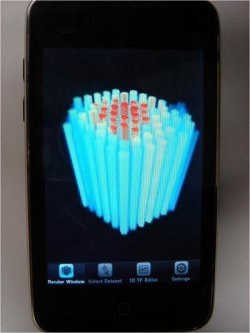
Researchers at the University of Utah’s Nuclear Engineering department have used an iPhone visualization application – or app – to display simulations of nuclear reactor cores (see right).

Called ImageVis3D Mobile, the app was first developed by the university’s Scientific Computing and Imaging (SCI) Institute to look at medical CT or MRI scans.

Now it seems that Tatjana Jevremovic and colleagues have come up with a way to use the app to visualize the results of reactor simulation software named AGENT (Arbitrary Geometry Neutron Transport).

Jevremovic’s ultimate goal is to develop a secure way for nuclear engineers in academic settings to share simulation data with those at commercial power plants.

Although the ImageVis3D can be downloaded for free from the Apple App Store, don’t expect to be simulating reactor cores anytime soon – to do that you’ll need access to the university’s computers.

Dark matter ‘no result’ comes under fire

A war of words has broken out in the dark-matter community over a report posted on the arXiv preprint server earlier this week. The preprint from the XENON100 collaboration poured cold water on claims that dark matter has been detected by two other experiments – but now the report itself has been attacked by other researchers in the field.

On Monday the XENON100 collaboration published an analysis of the first experimental results from its dark-matter detector. It reported no evidence of dark matter, the substance thought to constitute over 80% of mass in the universe. The experiment covered a similar parameter range as dark-matter searches DAMA and CoGeNT, which have previously claimed possible evidence for dark matter. As a result, the XENON100 team concluded that both the DAMA and CoGeNT evidence could be excluded.

But now the DAMA and CoGeNT collaborations claim that the XENON100 researchers’ analysis is flawed, and that their original evidence for dark matter should remain intact. Indeed, the CoGeNT collaboration is even requesting that the XENON100 collaboration retract its preprint. “These results cannot be defended,” CoGeNT spokesperson Juan Collar of the University of Chicago told physicsworld.com.

Flash evidence

The past couple of years have seen several experiments turn up evidence for dark matter. In 2008 the DAMA collaboration, based at the Gran Sasso laboratory in Italy, found what seemed to be the tell-tale flashes of dark-matter particles – known as weakly interacting massive particles, or WIMPs – colliding with sodium-iodide nuclei buried in huge underground detectors. The flashes were less frequent in winter than summer, suggesting that the Earth’s orbit was periodically taking our planet with and against our galaxy’s prevailing “wind” of dark matter.

Earlier this year, the CoGeNT collaboration based in the Soudan underground laboratory in Minnesota, US, reported more tantalizing evidence. It had recorded hundreds of charge bursts inside a germanium detector, consistent with WIMPs striking the germanium nuclei.

The XENON100 experiment – also in Gran Sasso – seemed to have the potential to uphold or overturn such results. Using liquid xenon as a detector material, which is much heavier than sodium-iodide and therefore more susceptible to WIMP collisions, the researchers needed only take data over a matter of days. Moreover, they claim that it has the lowest background noise of any dark-matter experiment.

In their preprint, the XENON100 researchers explained how over an 11 day period last year they found no WIMP collisions. In particular, they described an upper limit on the possible WIMP mass as a function of the probability or “cross section” of the WIMP interaction. This upper limit excludes the fairly low-mass WIMPs of between 7 and 20 GeV, as seen by DAMA and CoGeNT.

Sagging efficiency?

But the CoGeNT and DAMA collaborations believe that the XENON100 results are unreliable at such low energies. They say that the efficiency of the XENON100 detectors to record dark-matter interactions, which the XENON100 collaboration calculates to be constant, in fact drops with decreasing energy. If true, this would mean that the xenon detectors are unable to rule out DAMA and CoGeNT’s evidence for low-mass WIMPs.

We invite the XENON100 researchers to reconsider their claims Dan McKinsey, Yale University

“The onus of unequivocally demonstrating the existence of [loss-mass WIMP interactions] is on the XENON100 collaboration,” wrote CoGeNT’s Collar together with Dan McKinsey, a dark-matter physicist at Yale University, in a comment uploaded to the arXiv server yesterday. “Attempts to substitute this with a biased analysis represent a lack of consideration for the many efforts made by other dark-matter researchers working towards similar ends. We invite the XENON100 researchers to reconsider their claims.”

Rita Bernabei, spokesperson for the DAMA collaboration, also rejects the XENON collaboration’s conclusions. “[Its] result has no impact on the [DAMA] evidence for dark-matter particles in the galactic halo,” she says. “In fact, no direct model-independent comparison is possible among experiments that use different target materials and approaches, and have different sensitivities to different dark-matter candidates and scenarios.”

For me the best answer is not in words but in measurements Elena Aprile, XENON100 collaboration

But Elena Aprile, spokesperson for XENON100, thinks Collar’s claims about efficiency are wrong. “For me the best answer is not in words but in measurements,” she explains. “I understand that he feels not too good about our results, [and] in the end he can say all he wants, but there is simply no sign of hypothetical 7 GeV WIMPs in our data, and we state that very clearly. It is not about [the detector efficiency], on which they dwell for most of their response with some misleading and arbitrary statements. There is absolutely no reason why we should consider McKinsey data more than our own.”

The real test of the XENON100 collaboration’s analysis will be its peer review in Physical Review Letters, where they have submitted it for publication. In the meantime, they are preparing a response to the criticisms which they will soon upload to arXiv.

The XENON100 preprint can be read at arXiv: 1005.0380 and the comment at arXiv: 1005.0838.

Saudi Arabia to create renewable energy ‘city’

Researchers have welcomed a plan by Saudi Arabia to build a new renewable-energy “city” as a sign of the oil-rich nation’s commitment to developing alternative fuel sources. The King Abdullah City for Atomic and Renewable Energy (KACARE) will be based in the nation’s capital Riyadh after the Saudi ruler, King Abdullah, issued a royal decree in April to order its creation. It will serve as a centre for renewables research and for co-coordinating national and international energy policy.

While it is not yet clear when KACARE will be opened, the King has appointed a president for the city – Hashim bin Abdullah Yamani, a former minister for commerce and trade. In a statement to the Saudi Press Agency, Yamani said, “Establishment of the city will contribute to achieving sustainable development in the kingdom through exploiting the science, research and industry of atomic and renewable energy for peaceful purposes.”

The announcement to create the new city comes just six months after the official opening of the King Abdullah University of Science and Technology (KAUST), a multi-billion dollar research centre with energy and environment amongst its core research activities. Both these projects have received the financial backing of the King Abdullah. Since coming to the throne in 2005, the King has been aware that while the country’s oil and gas reserves are deep they are not infinite – and that Saudi Arabia must use its current wealth to prepare for a future with dwindling fossil fuels. His vision for KAUST is to provide a world-class university that can develop, among other things, more sustainable technologies.

More focused approach

It makes a whole lot of sense to diversify [Saudi Arabia’s] energy future, particularly by seeking to utilize solar energy – KSA sits in a region of high solar intensity and minimal cloud cover Tony Eastham, director of labs, KAUST

With KACARE, King Abdullah wants to create a more specialized centre that focuses on harnessing the nation’s other natural resources. Given its desert climate, Saudi Arabia is keen to develop a solar energy infrastructure, and it is also looking to develop nuclear energy, an approach mirrored by the other member states of the Gulf Cooperation Council – the United Arab Emirates, Quatar, Bahrain, Kuwait and Oman. KACARE will also be given the responsibility of drafting a national policy for nuclear power, as well as supervising the use of atomic energy and nuclear waste. It will represent Saudi Arabia at the International Atomic Energy Agency (IAEA).

The creation of KACARE is welcomed by Tony Eastham, the director of labs at KAUST who agrees that Saudi Arabia is right to realize that its oil reserves will not last forever. “It makes a whole lot of sense to diversify its energy future, particularly by seeking to utilize solar energy – KSA sits in a region of high solar intensity and minimal cloud cover,” he says.

Eastham is keen to build links between KAUST and KACARE from the outset. “We and KACARE need to develop collaborations with the best in the region and the best in the world. No-one has an exclusive on great ideas – we need to listen, be aware of what is happening worldwide, and form partnerships to stay at the leading edge of energy science and technology,” he says.

Wider cultural change?

Chukwumerije Okereke of the Smith School of Enterprise and Environment at the University of Oxford thinks that the creation of KACARE could be symbolic of a wider cultural change among the oil-producing nations of the Middle East. He believes that Saudi Arabia and the other countries belonging to OPEC (Organization of the Petroleum Exporting Countries) are coming to realize that sustainability and climate change are now key national issues.

Okereke says that the OPEC countries have previously been somewhat “retrogressive” in international climate negotiations and he blames this on a lack of effective policy-making in these countries. “In so many cases, climate change was framed as a win-lose situation – if you act on climate change, by investing in new technologies, you lose out on your economy.” But he believes there are signs to show that the situation is changing. “There have been various announcements and ‘noises’ over the past five years from countries including Kuwait and the United Arab Emirates to suggest that they are willing to consider renewables now.”

Once KACARE is inaugurated by King Abdullah, it will have an independent annual budget, but will be able to draft budgets for programmes lasting for more than a year if required. Financing the centre will be made through allocations of the state budget, and revenues achieved by the KACARE in addition to grants and endowments if accepted by the city council.

“The city will first attempt to specify priorities and national policies in the field of atomic and renewable energy to build a strong scientific and technologic base in the fields of power and desalinated water, in addition to medical, industrial, agricultural and mineral fields,” says Hashim bin Abdullah Yamani, the future KACARE president.

The cool universe

chair.jpg
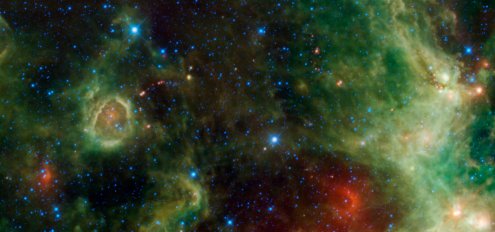
It’s dusty out there: image taken by NASA’s Wide-field Infrared Survey Explorer

By Hamish Johnston

This morning the BBC’s Melvyn Bragg gathered three of the UK’s top astronomers for a chat about the “cool universe” – the vast amounts of matter between the stars that is invisible to optical telescopes.

This dust and gas is best studied using instruments sensitive to infrared radiation – technology that only really got going in the 1960s and works best in space, away from Earth’s infrared glow.

Bragg was joined by Carolin Crawford of Cambridge University, Paul Murdin of Liverpool John Moores University and Imperial College’s Michael Rowan-Robinson, who explained what these infrared telescopes have revealed.

They described a “dynamic universe” in which gas and dust created by the death of past stars is recycled to create stars – and planets – of the future.

“As a result of the new research, we are now beginning to see first-hand the way our planet was formed when the solar system was born,” says Bragg.

You can listen to the broadcast here.

Bacteria band together to beat the system

Physicists in the US are the first to show that E. coli bacteria can work together to swim through a tiny ratchet that would normally block individual organisms. The research, which combines experiments on live bacteria with theoretical modelling, could help scientists to gain a better understanding of how micro-organisms move in confined spaces such as the human gut.

E. coli are rod-shaped bacteria about 2 µm long that can be found in the large intestines of warm-blooded animals. Like many other micro-organisms, E. coli can move using whip-like structures called flagella. This movement often occurs in response to changes in the local concentration of certain chemicals – a process called chemotaxis.

Now, however, Robert Austin, Guillaume Lambert and David Liao at Princeton University in the US have shown that groups of E. coli make collective use of chemotaxis in order to navigate through tiny barriers. The team came to this conclusion by watching how the bacteria move through a microchannel that is 100 µm wide and about 13 mm long.

The microchannel is divided into 85 succesive chambers by walls, which act like microscopic ratchets. If a bacterium swims in one direction through the ratchet, it is guided by funnel-shaped structures into the next chamber. But if a bacterium swims in the opposite direction – against the bias – it is likely to be blocked from entering the next chamber.

Bacterial bands

In their experiment, Austin and his team introduced bacteria into the chamber at one end of the microchannel, in which most of the ratchets were arranged to prevent the micro-organisms from reaching the other end. When fewer than about 200 bacteria were in the first chamber, none of the micro-organisms could swim to the opposite end of the microchannel.

But at higher concentrations, the bacteria formed “travelling bands” that worked together to find their way through the ratchets. For example, when 1000 bacteria were present, the band was able to travel the entire length of the microchannel in about two hours.

The team believes that this collective behaviour is related to how the bacteria modify their environment by consuming nutrients. As the micro-organisms consume the local food supply, a nutrient gradient builds up that directs the bacteria towards regions of plenty – and ultimately through a reverse-bias ratchet and into the next chamber.

To understand how the bacteria were beating the ratchets the team used a model based on the “Keller–Segel equations”, which were formulated 40 years ago to explain why chemotaxis causes some micro-organisms travel in bands through capillary tubes. At low bacterial densities, the equations predict an exponential decline in the number of bacteria as a function of distance along the microchannel, which is exactly what the researchers saw in their experiments. Above a certain concentration, however, the Keller–Segel equations predict that the chemotaxis will cause bacteria to make their way through the microchannel in a pulse – which is exactly what the team saw.

Collective benefits

Lambert and Liao told physicsworld.com that they believe that the ability to beat ratchets could have important implications for our understanding the behaviour of some micro-organisms. For example, the ability to remain trapped until their numbers reach a critical level could benefit those micro-organisms whose survival hinges on collective behaviour.

“In other words, we could ask whether the trapped state is ‘a failure to escape’ or instead a ‘success’ in remaining sheltered,” say the researchers.

According to Lambert and Liao, natural environments such as tissue could include a variety of asymmetric barriers and therefore trapped and travelling configurations of micro-organisms could occur in biological systems.

The discovery could also have important implications for the design of “cancer traps” – ratchets that could someday be placed in the body to prevent the migration of cancer cells. “Our results with bacteria lead us to ask whether cancer cells might achieve densities sufficient for escaping the traps,” say Lambert and Liao.

Breeding better escapers

The team is now planning to find out if it can breed a strain of bacterium that is better at escaping the ratchets than the wild-type strain used in previous experiments. “Our system provides a relatively simple selection pressure, which could allow us to relatively easily select only for cells which can escape the funnels,” the researchers say.

Jane Hill, an environmental microbiologist at the University of Vermont in the US, describes the work as “interesting” and suggests that it could be relevant to the large intestine, where bacteria may be trapped between structures called microvilli. However, she points out that microvilli are larger than the ratchets in the Princeton experiment.

The work is described in Phys. Rev. Lett. 104 168102.

Physicists study how moral behaviour evolved

A statistical-physics-based model may shed light on the age-old question “how can morality take root in a world where everyone is out for themselves?” Computer simulations by an international team of scientists suggest that the answer lies in how people interact with their closest neighbours rather than with the population as a whole.

Led by Dirk Helbing of ETH Zurich in Switzerland, the study also suggests that under certain conditions, dishonest behaviour of some individuals can actually improve the social fabric.

Public goods such as environmental resources or social benefits are often depleted because self-interested individuals ignore the common good. Co-operative behaviour can be enforced via punishment but ultimately co-operators who punish will lose out to co-operators who don’t punish because punishing requires time and effort. These non-punishing co-operators then lose out to the non co-operators, or free riders. With free riders dominant the resource is depleted, to the detriment of everyone – a scenario known as “tragedy of the commons”.

How, then, does co-operation arise? Some researchers have proposed that co-operators who punish could survive through “indirect reciprocity”, the idea that working for the common good will enhance a person’s reputation and ensure that they benefit in the future. Helbing’s group, however, has shown that this is not needed for co-operation to flourish.

Emergent phenomena

They came to this conclusion by focusing on how individuals behave with their nearest neighbours, rather than a wider group that is representative of the entire population. Like nearest-neighbour models of magnetism – which are often more realistic than mean-field approximations – they say that this approach captures “emergent” phenomena that would otherwise be lost.

Their game-theory-based model comprises a square lattice of tens of thousands of points, each representing an individual. Each individual could adopt one of four strategies – co-operate without punishing free riders; co-operate and punish (“moralist”); free ride; or free ride but also punish other free riders (“immoralist”). Initially, the four strategies are distributed randomly among individuals and the system evolves to find out which behaviour wins in the long run.

This evolution is influenced by three variables – the fines that penalize free riders; the cost of administering punishment; and the “synergy factor”, which stipulates how much the sum of individual contributions is enhanced by collective action.

The computer program picks an individual at random and calculates how much it stands to gain relative to its four nearest neighbours, given the strategies employed by each neighbour. The exercise is then repeated for the neighbours themselves. The strategy employed by each individual was then modified in light of the success of their neighbours, so that individuals could imitate those who performed better than themselves.

Intriguing results

Running the simulation for up to 10 million iterations yielded some intriguing results. As expected, if the punishment fine to cost ratio and synergy factor were low then everyone would eventually become a free rider, just as moralists would prevail if the fine was set high enough. However, they also found that moralists could win out over non-punishing co-operators even if the cost of administering punishment was relatively high. This was because imitation of better-performing neighbours soon led to small clusters of both co-operators and moralists in a sea of free-riders. With moralists better than co-operators at dealing with free riders they came to dominate, even though they would lose out if placed in direct competition with the non-punishers.

An “unholy collaboration” between moralists and immoralists was also seen whereby individuals adopting these strategies could coexist at the expense of both co-operators and free riders. This, the researchers found, would occur if the cost of punishment was low, the synergy not particularly high, and the fines moderately high. As they point out, this scenario is supported by the real-life existence of immoralists.

New type of collective behaviour

Helbing’s colleague, Attila Szolnoki of the Institute for Technical Physics and Materials Science in Budapest sums up the work, “The contribution of statistical physics to this research field could be to realize that large numbers of players can result in a new type of collective behaviour that cannot be derived from two-player analyses. Computer models can therefore be considered as pre-experiments that help to design more sophisticated lab experiments.”

The team is currently building a laboratory capable of carrying out game-theory experiments with up to 36 people, which should allow them to test the predictions of their model.

Herbert Gintis, an economist and game-theory expert at the Santa Fe Institute and Central European University in Budapest, believes that Helbing and colleagues are right to incorporate small-scale interactions into their model. But he says that they should also factor in genetic relations between people because individuals’ behaviours depend on whether or not they are dealing with a close relative.

UK election: a guide for the science vote

By Michael Banks

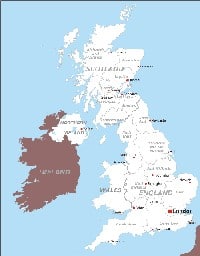
Tomorrow the UK will have a general election and while physicsworld.com does not endorse a particular party, we have put together some of the science-based pledges from the three main parties – Conservative, Labour and Liberal Democrat.

UK map.jpg

In March, the campaign for science and engineering in the UK (CASE wrote to the main parties to ask them to set out their policies for science and engineering in advance of the election. Here are some of the responses as well as what the parties’ manifestos and their science representatives have to say.

So if you are still undecided about who to vote for then maybe the parties’ science policies will help you to decide where to put that cross on the ballot paper tomorrow.

Conservatives led by David Cameron

Response to CASE: “To provide real incentives to get more good science teachers into out school, we will pay off the student loan obligations of top STEM graduates for every year they spend in the classroom.

“We will postpone the Research Excellence Framework by up to two years, while we review the evidence behind the new system.

“I want the next Conservative government to act early, sensitively and intelligently so that scientific research can move forwards within the boundaries set by Parliament.”

What Adam Afriyie, shadow minister for innovation, universities and skills, says: “Our science base is a valuable national asset. Economically, politically and socially, it underpins the prosperity and wellbeing of our nation.”

What the Conservative manifesto says: “Initiating a multi-year science and research budget to provide a stable investment climate for research councils.”

Labour led by Gordon Brown

Response to CASE: “We will continue to support curiosity driven research, which has underpinned the breadth and excellence of UK science over the last ten years. In setting research priorities, we respect the Haldane principle.

“The success of UK science has also been underpinned by a ring-fenced science budget and a ten-year framework.

“Scientific advice should be at the heart of government and society. We have chief scientific advisers in almost all government departments. And for the first time the science minister sits at the cabinet table.”

What Paul Drayson, minister for science and innovation, says: “Science isn’t peripheral to the decision facing the country. It is central: to growth, to prosperity and well-being.”

What the Labour manifesto says: “We are committed to a ring-fenced science budget in the next spending review.”

Liberal Democrats led by Nick Clegg

Response to CASE: “Liberal Democrats would abolish tuition fees over a six year period. We see them as unfair and a regressive tax on education.

“We are committed to not cutting science spending in the first year of a new parliament. We are also committed to not allowing the science budget to be raided once it is fixed for the given Comprehensive Spending Review period.

“Liberal Democrats believe that public policy should be evidence-based as far as possible. Advisers must feel able go give their advice without fear of being bullied if it is not what a minister or tabloid newspaper editor wants to hear.”

What Evan Harris, Liberal Democrats spokesperson for science, says: “We recognize that science, technology, and engineering have to be key drivers of our economy as we move out of recession.”

What the Liberal Democrat manifesto says: “In the current economic climate it is not possible to commit to growth in spending, but Liberal Democrats recognize the importance of science investment to the recovery and to the reshaping of the economy.”

Making rain with lasers

Firing extremely powerful laser pulses through humid air can stimulate the formation of clouds, according a team of European scientists. They say that the effectiveness of this method is much easier to gauge than traditional cloud-seeding techniques and that it could provide a practical means of triggering rainfall.

Cloud seeding is practised in many countries around the world and usually involves adding small particles to the atmosphere from ground stations, aircraft or rockets, in order to increase rainfall or reduce hail. This can be done by using molecules of silver iodide as nuclei around which supercooled water in higher-altitude clouds freezes, forming ice crystals that fall from the sky when heavy enough. Alternatively, compounds such as sodium, lithium and potassium salts can be released into lower altitude clouds in order to encourage the aggregation of small water droplets.

Although cloud seeding could have major practical benefits, it remains controversial because scientists have not been able to establish whether it really does change rainfall significantly. Among the many uncertainties are limitations in both our understanding of natural rainfall fluctuations and our knowledge of the extent to which pollutant aerosols stimulate precipitation.

Filaments of light

Philipp Rohwetter of the Free University of Berlin and colleagues in Germany, Switzerland and France believe that they can overcome these problems to some extent by seeding clouds using laser beams. To demonstrate their idea they used the portable Teramobile infrared laser with beam pulses lasting just 10–13 s and a power of 5 × 1012 W. Such pulses are intense enough to modify the refractive index of air, which causes the beam to focus itself. This further increases the intensity, producing filaments of light that are intense enough to ionize the air and initiate condensation.

The researchers fired the laser into both the atmosphere and into a controlled environment – a cloud chamber filled with ambient air. In both cases they illuminated the trajectory of the beam with a second, lower-powered laser, which would experience greater scattering if more droplets were present.

That is indeed what they found – the scattering of the second laser increased each time a pulse from the first laser was fired. They observed this pattern in over 900 laser flashes, providing, they say, a clear proof of the pulsed laser’s cloud seeding capability that cannot be established for traditional seeding techniques.

Sweeping the beam

According to team member Jerôme Kasparian of the University of Geneva, several years will be needed to turn this physical demonstration into a practical technique. In particular, he says, a more powerful laser will probably need to be developed to take advantage of a sweeping effect that they have noted – that ionization continues for a few seconds after the laser has stopped flashing and so by sweeping the beam it should be possible to seed a larger volume of air.

More importantly, the researchers need to establish the physics behind the effect in order to know how to optimize the laser’s wavelength, pulse duration and other parameters. They are certain that the ions in the laser-induced plasma contribute to condensation but they also believe that condensation might occur on molecules of sulphuric acid and nitric acid, which are formed when electrons from the plasma generate the OH radical that then oxidizes sulphur dioxide and nitrogen, respectively.

The experiments, however, do not convince other researchers. Bill Cotton of Colorado State University in the US describes the results as “intriguing” but maintains that Rohwetter and colleagues have “grossly overstated their case for impacts on real cloud formation and, especially, on precipitation”. In particular, he points out that the air in the cloud chamber had a relative humidity of 230% whereas that in the atmosphere rarely exceeds 101%, meaning that droplet formation in the chamber would not necessarily imply droplet formation in the atmosphere.

This view is supported by Dan Breed of the National Center for Atmospheric Research in Colorado, who says that, on the other hand, laser-enhanced condensation in air with a relative humidity of less than 100% would be very transient and therefore unlikely to generate significant amounts of new cloud droplets, let alone precipitation. “The leap to modifying clouds and even larger jump to influencing precipitation is very speculative and I believe fairly unrealistic,” he claims.

The research is described in Nature Photonics doi:10.1038/nphoton.2010.115.

Copyright © 2026 by IOP Publishing Ltd and individual contributors