Adaptive-control algorithms take condensed-matter physics into the 21st century

What do robotic manufacturing, global positioning systems and artificial intelligence have in common with scanning probe microscopy? A lot more than you might think — at least according to Adam Kollin and John Keem of the US-based firm RHK Technology. Founded 20 years ago by Kollin, the company makes software and hardware systems for ultra-high-vacuum scanning-probe microscopes (SPMs) — as well as the microscopes themselves.
The first scanning probe microscope (SPM) was built in 1981 by Gerd Binning and Heinrich Rohrer at IBM’s research labs in Zürich, for which the pair were awarded the 1986 Nobel Prize for Physics. SPMs work by scanning a tiny tip across a surface and then creating an image from measurements made at regular intervals. Although Binning and Rohrer measured the electric current that tunnels between tip and surface, modern-day SPMs can take other data too — including optical and magnetic-force measurements.

To ensure that the appropriate measurements are made, all SPMs need sophisticated controllers to ensure that the tip is in the right place at the right time. Now, however, RHK is about to launch its fully digital next-generation controller, dubbed R9, which does away with the myriad jumper cables associated with many physics experiments. It replaces them with virtual instruments implemented in field-programmable gate arrays (FPGAs) — digital processors that can be reprogrammed on the fly. Designed for specialists and novices alike

According to Kollin, who is president of the company, the overall goal of R9 is to deliver a system that is both “enabling and engaging” to the user. This is a challenge because the company’s controllers and SPMs are used by many different people — from those who specialize in making precision spectroscopic measurements on tiny nanostructures to physicists who only occasionally use an SPM to characterize samples destined for other uses. Some of the firm’s controllers are even used by graduate students who have never seen an SPM — let alone used one.

And, of course, any controller worth its salt must deliver on the fundamental challenge of SPM — moving a tiny probe tip around a surface with picometer accuracy while measuring extremely small but crucial values.

With previous controllers, RHK set out to produce a system that could be used to control any SPM. This was a radical approach at a time when other companies made controllers specifically for their own instruments. Kollin’s solution was to integrate all the requisite electronics in a single cabinet and use internal jumper cables to allow the user to set the appropriate configuration for a specific microscope making a specific measurement.

“We could run any kind of microscope and no one to this day can do that,” explains Kollin.

“The greatest strength of our software was that it was written by a research physicist — and its greatest weakness was that it was written by a research physicist” Adam Kollin

While this approach was very flexible, Kollin is the first to admit that it was not particularly engaging. Indeed, the prospect of rearranging a jumble of jumper cables to modify an experiment could be challenging to student and veteran alike. The software that ran the controller was also becoming too deep and complex for the novice. As Kollin quips, “the greatest strength of our software was that it was written by a research physicist — and its greatest weakness was that it was written by a research physicist”.

“Technically the measurements were correct — and it was far better and more capable than any other instruments that people were using before”, continues Kollin. The problem is that the system had so many menus that very few users had the time or energy to figure out how to exploit the full value of the system. “We were pouring millions of dollars into the software and the less demanding user-physicist treated it like Microsoft Word — they use the equivalent of spell-check and print and ignore the other 99.9% of its capabilities.”

According to Kollin, the software’s menu-based system and the jumble of jumper cables did not provide the user with a good understanding of what the controller was actually doing. “There was too steep a learning curve for casual users,” he explains. “We were losing sales in this sector — potential customers were complaining ‘my students will never figure this out’. After being told this a few times, Kollin committed the company to making a system that is easy and fun to use for a novice — but that still offered the experienced user the power and flexibility to do their own highly specialized experiments.

Continuous knowledge

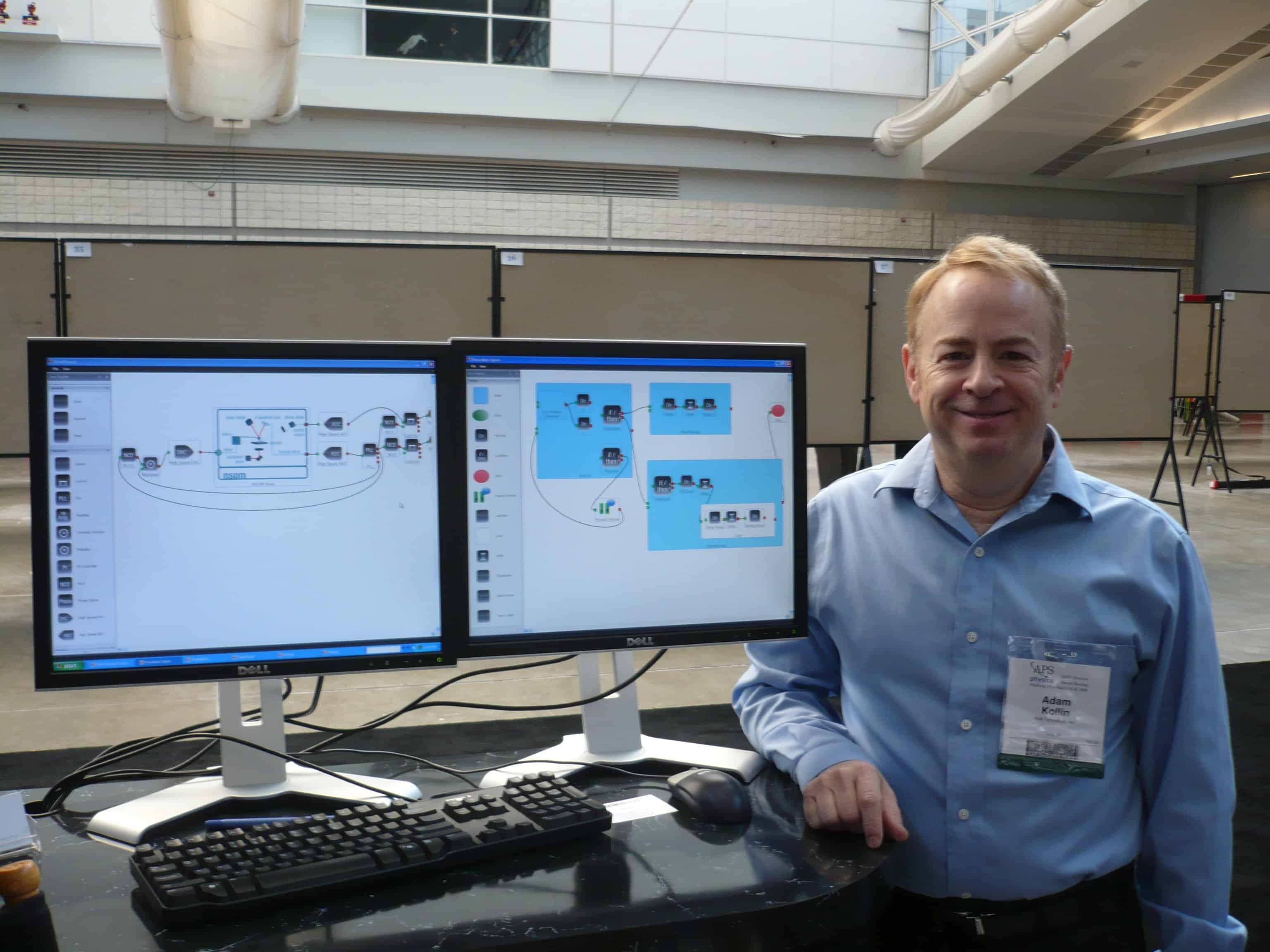
To do any SPM experiment, a user must first configure the microscope, which means understanding what all those jumper cables do so they can be connected properly. “With R9 you can do this graphically on a computer screen,” explains Kollin. “If you want one piezo tube [an actuator that controls the position of the SPM tip] you drag its icon over with the mouse. Or you can drag over two — software knows that if you have two tubes, then you need controls for both.”

“Every real experiment that gives real data in a real amount of time has a unique configuration vector” John Keem

Once the microscope has been configured, the system can then be set to gather data in myriad different experimental configurations. According to Keem, who trained as a physicist and is now RHK’s engineering project manager, the “core intellectual construct” used by R9 to keep track of all the parameters in an experiment is a “configuration vector” — which defines the entire state of the experiment as one point in a phase space of parameters. “Every real experiment that gives real data in a real amount of time has a unique configuration vector,” explains Keem.

This vector — which includes all input parameters to the SPM; excitations made on the sample and how it responded; as well as the algorithm that is operating the system — is recorded every 20 ns and stored using data-compression techniques.

As a result, a physicist can know exactly what was going on in the experiment on a continuous basis, rather than seeing a SPM image as a time-averaged representation of the sample. “A real SPM experiment can never be a snapshot,” explains Keem. “The reality is that each point in the image is taken at a certain time and the next point is taken a little bit later, and under slightly different conditions. We keep that information, whereas all other systems throw much of this valuable information away. It’s really exciting to be able to offer that to physicists.”

Big benefits

As well as being useful for studying dynamical processes, Keem says that this time-series approach could also help researchers use SPM to manufacture nanostructures. “Let’s say a nanostructure can be built today in one minute using an SPM — but you want to build 1000 structures in a second. This is unachievable unless you understand the time-dependent nature of how the structure responds to the SPM during the building process — information that can then be used to create a highly efficient manufacturing process.”

Another benefit of constantly monitoring all experimental parameters is that a measurement can be made as soon as the position of the tip is in the right place to a desired precision — and then the system can move on to the next point. The time spent waiting for the tip to settle down is often chosen arbitrarily by the researcher. If it is too short precision is lost; too long and precious experimental time is wasted. Instead, R9 makes these decisions using real-time data and artificial intelligence algorithms.

Such algorithms are used routinely today in technologies as diverse as mobile-phone networks, precision milling machines and even particle accelerators and telescopes. However, they are normally not used by condensed-matter physicists, chemists and biologists — even though commercial tools are available to build these systems very quickly. “We have found a way to allow our customers to benefit from these well developed tools,” says Kollin.

To get the most out of these technologies, RHK has teamed up with Oakland University in Michigan to create a nanotechnology lab that focuses on the development of adaptive control systems for SPM. The lab brings together physics, computer science and mechanical engineering students to work on problems such as performing a finite-element-analysis of an SPM to see if models used to develop adaptive controls are accurate.

“Mechanical engineers know about optimizing a 17° of freedom system and holding it to 0.01% accuracy,” says Kollin. “We need these people to help us get there on our SPMs.”

But for Kollin, developing R9 has been just as much about re-examining how physicists usually solve experimental problems. “Physicists are using 20th-century tools to solve 21st century problems. We know that 21st-century tools are available,” he concludes. “With R9 we can now reconfigure systems on the fly, where physicists would shut down the experiment to reconfigure it.”

R9 will be released later this year.

Austria performs U-turn over CERN pull-out

The Austrian chancellor Werner Faymann has said that Austria will not be pulling out of the CERN particle–physics lab after overruling the science minister’s decision last week to leave CERN.

Researchers in Austria were left shocked when Johannes Hahn, Austrian science minister, announced on 8 May that the country would cut its funding for CERN worth around €20m per year.

They warned that Austria would become “second–class” citizens at CERN if the pull-out went ahead and quickly started an online petition in protest, which so far has received over 32 000 signatures.

Austria has been a member of CERN for over 50 years — a whole host of Austrian scientists are linked to CERN and will continue to do so in the future Werner Faymann, Austrian chancellor

Now, however, Austria, a founding member of CERN, will not leaving the 20-strong membership of CERN. “Austria has been a member of CERN for over 50 years — a whole host of Austrian scientists are linked to CERN and will continue to do so in the future,” said Faymann at a new conference with Hahn.

“I am pleased and also relieved,” Christian Fabjan, director of the Institute for High Energy Physics at the Austrian Academy of Sciences in Vienna, told physicsworld.com. “I think the chancellor gave overriding importance to Austria’s standing as an international partner.”

The threat of a pull-out comes only months before the Large Hadron Collider (LHC) — the world’s biggest particle accelerator — is due to start up following a magnet failure shortly after it turned on last September.

Austrian contributions

Austria has contributed to building the Compact Muon Solenoid, one of the four big detectors at the LHC, which will search for the Higgs boson and look for evidence of physics beyond the Standard Model, such as supersymmetry, or extra dimensions. Austria currently supplies 2.2% of CERN’s budget with the rest coming from the lab’s other 19 member states. However, the €20m that Austria spends on CERN makes up 70% of Austria’s funding for international research.

Physicists in Austria were particularly angry as the science budget has been increased by 15% this year, while the cost of membership at CERN currently amounts to around 0.5% of the total science budget.

The proposed pull-out led to a storm of protest in the Austrian media with the popular daily newspaper Oesterreich running the headline: “CERN clash: government in a black hole”, which pictured Hahn and Faymann falling through space.

Austria would have been the third country to leave CERN. Yugoslavia, one of the 12 founding members left in 1961 and never rejoined, while Spain joined in 1961, left in 1969 and then rejoined in 1983.

Chip targets cold atoms

A new method to trap atoms on a chip has been developed by researchers in the UK. The technique involves capturing cold atoms directly from a room temperature gas of rubidium — and could lead to the development of “atom chips” that can deliver just one atom or photon at a time.

“Atom chips” are tiny devices for manipulating and studying ultracold atomic gases at temperatures just few millionths or billionths of a degree above absolute zero. Although much progress has been made recently in the development of such chips, the methods required to load the atoms remain complicated.

In most schemes, atoms are first cooled and trapped far from the surface of the chip and then transported to the chip in a series of complex steps that often lead to many of the atoms being lost on the way.

Now, Joseph Cotter and colleagues at Imperial College London have succeeded in integrating magneto-optical traps onto an atom chip by etching pyramid-shaped structures in a silicon wafer. The pyramids provide a way of trapping cold atomic gases directly onto the atom chip.

The technique requires only a magnetic field, which can be produced by simple wire structures on the chip itself, and an incident trapping laser to capture atoms from a room temperature vapour.

Direct cold atom trapping

“The technique is much simpler than existing atom trapping methods and is the first observation of direct cold atom trapping from a background vapour inside a microfabricated structure on an atom chip,” Cotter told nanotechweb.org.

And that’s not all: it is also easy to make arrays of these devices within the same chip. This allows the researchers to create and probe many individual atom sources at the same time.

The devices could act as single atom and single photon sources, which are important in the field of quantum information processing. “We also intend to use these devices as a starting point for trapping molecules on a chip,” said Cotter.

The team is now working on making a single atom source and using the pyramids as part of a fully integrated atom chip.

The work was reported on arXiv.

Canadian reactor shuts down…again

nru.jpg
NRU is not getting any younger

By Hamish Johnston

In December 2007, medical physicists in North America were starting to worry about the dwindling supply of molybdenum-99 — from which the medical isotope technetium-99 is made.

The problem was that the NRU reactor in Chalk River, Ontario had been shut-down by Canada’s nuclear regulator over safety concerns — and the reactor was (and probably still is) the continent’s sole supplier of molybdenum-99.

The reactor was restarted after about a month when the Canadian government over ruled its own officials and production resumed.

But now, the reactor has stopped again thanks to a heavy water leak that was discovered on Friday. Atomic Energy of Canada, which owns the facility, is repairing the leak but says that NRU will be out of commission for more than one month.

The company also said that it will stop shipping medical isotopes from NRU on 23 May — and molybdenum-99 has a half-life of just 66 hours.

NRU produces isotopes for MDS Nordion — I just looked at their website and there is no mention of any possible shortages.

Recently, Nordion joined forces with the TRIUMF lab in Vancouver to explore the possibility of making molybdenum-99 using an accelerator.

If this scheme works, I think NRU deserves a dignified retirement after 52 years of service to physics — including supplying neutrons to the winner of the 1994 Nobel Prize in Physics.

Indeed, even I worked briefly at NRU in the late 1980s — the reactor seemed ancient even back then and its shut-down seemed imminent!

Mathematical typesetting gets XML makeover

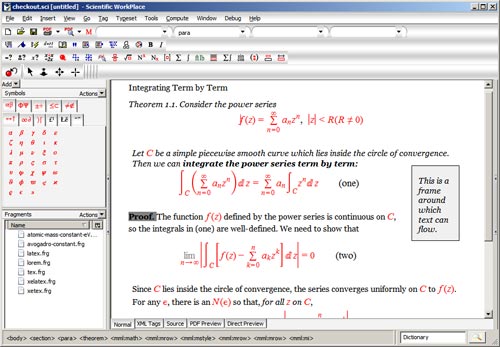
Since its creation in 1985, LaTeX has been an extremely popular typesetting system amongst physicists, mathematicians, economists and anyone else who has to deal with complicated mathematical formulae in their papers. “A lot of authors are very keen on LaTeX,” observed Barry MacKichan, founder of MacKichan Software and a former mathematics professor at Duke University. “They often try to do things in [Microsoft] Word, for example, and then get very frustrated and go back to LaTeX.”

LaTeX itself is open source but specialist software companies like MacKichan Software help researchers to use it. For the past 28 years the company in various forms has been developing word-processing tools and since 1988 it has been working on tools based on LaTeX.

Things are changing though: later this year the company hopes to begin the final testing of a new suite of products. These tools will still read LaTeX files and output LaTeX files if the users want them to. Behind the scenes though, the internal processing will be based on XML (extensible markup language), a flexible text format for transporting and storing data on the Web and in other applications.

This is a major move for the small software company; its four programmers have been working on the migration for the past four years and it was a research project for a couple of years before that. MacKichan insists that it is an important step though.

“We needed a more flexible architecture,” he explained. “Our current products were developed in the early nineties and much has changed since then, especially with the centrality of the Internet. Many of the decisions we made initially were because of limitations in the technology such as PCs with just 1 MB of memory. Such initial design constraints were holding us back in developing our software.”

The move to XML should make the products more user friendly, according to MacKichan. “In the existing products, users could start documents very easily without knowing any LaTeX but if they wanted to do more complex things such as changing the margins they would need to know some LaTeX,” he said. In contrast, the new XML-based products will have a WYSISYG (‘what you see is what you get’) interface and users will have much more control over the formatting of their documents without needing to know any LaTeX.

The move to XML also opens up the possibilities for new and enhanced features such as greater “searchability”. In addition, the new MacKichan tools are based on the open-source Mozilla code base, which underpins a wide range of internet applications such as the Firefox Web browser, the Thunderbird email client, both from the Mozilla Foundation. Mozilla open-source code is also used within popular social networking sites like Facebook and Second Life.

There are challenges with this approach though: “The Mozilla code base is huge. By building our product on top of that we get a lot of functionality but there is a lot to learn too,” said MacKichan. Nonetheless, he said that the company has now completed most of the difficult XML features and has proved that the concept works. Now, he believes, it is simply a case of filling in the product details, testing it and ironing out any bugs.

The development will affect all three of the company’s products. Scientific WorkPlace provides mathematical word processing, LaTeX typesetting and computer algebra and this will be the first package to get the XML make-over. This will be followed by MacKichan’s other two products: are Scientific Word, which has the mathematical word processing and LaTeX typesetting; and Scientific Notebook, which includes the mathematical word processing and computer algebra. As these two products are subsets of WorkPlace, the XML migration will simply involve picking the appropriate parts of the parent product, according to MacKichan.

MacKichan reports positive initial reactions from users. “Generally people are interested and supportive. Everybody seems quite eager to see it.”

And once this suite of products is out, what next? “We take a big breath,” joked MacKichan. After that though, there is plenty more to do. “It is very easy to add new features now. We will see what people want us to add the most. This might be exact diagrams, much better support for bibliographies or better integration with other products. We can take advantage of other products based on the Mozilla code base. We will also be producing different extensions for physicists or economists, for example,” he said. “There are many possibilities that we are mostly ignoring in the first release.”

Traditionally, the main applications of the LaTeX system and tools such as those from MacKichan Software have been in preparing scientific papers. LaTeX is still the preferred submission format for many journals with high levels of mathematical content, although XML is increasingly making its mark in this area too.

MacKichan would also like to see his company’s tools used more in teaching too though; people are already using the existing product to write books and lecture material. Users can include interactive features such as multiple choice tests that look different to each student and MacKichan would like to extend such uses. “We’ll have a scripting language built into the product and my hope is that people will use this as a teaching platform.” qq

Optical modelling points the way to PDT progress

Photodynamic therapy (PDT) has been the “next big thing” in targeted cancer treatment for too long. Although clinical studies of the technique – which uses a light-activated drug to kill cancer cells – have often yielded dramatic tumour destruction without permanent damage to surrounding healthy tissue, the fact remains that PDT still has some way to go before it can be considered a mainstream treatment modality in the oncology clinic.

Among a posse of researchers looking for ways to fast-track progress are medical physicist Claudio Sibata and his team at the Brody School of Medicine at East Carolina University (ECU) in Greenville, NC, US. One of the main thrusts of ECU’s research is the development of robust software protocols and optical diagnostics for the planning and monitoring of the photodynamic treatment process. Ultimately, Sibata and his colleagues are hoping that their endeavours will yield big rewards in the shape of improved therapeutic outcomes and “personalized” PDT treatment regimes.

If the end-game is clear, then so too are the challenges that must be tackled along the way. Chao Sheng, an ECU researcher who specializes in optical modelling of PDT, highlights three parameters that complicate PDT dosimetry and treatment planning: the number of photons deposited in the target tissue; the concentration of photosensitizer that accumulates in the target tissue; and the local oxygen situation.

“All three parameters must be measured and quantified to optimize patient response,” he told OLE. “Our research at ECU is focused on doing just that and developing a practical dosimetry model that will help clinicians to plan treatments according to the individual patient situation.”

The mainstay of ECU’s dosimetry modelling work is an off-the-shelf software package called the Advanced Systems Analysis Program (ASAP) BIO Toolkit from Breault Research Organization (BRO) in Tucson, AZ, US. One of the attractions of ASAP BIO is the software’s integration of 3D models of the patient’s organ geometry with models of light sources and tissue optical properties in a single package. “ASAP BIO is a powerful and modular software platform for running Monte Carlo simulations quickly,” Sheng added. “I can easily define the target medium, light source and boundary conditions.”

Right now, Sheng and his colleagues are using ASAP BIO to simulate the light dose deposited in tissue. Simulation, he explains, yields a number close to the actual photon energy dumped in the target tissue, which in turn determines the treatment outcome. “For example, if we have a laser with 100 mW/cm2 output and the tumour is 2 mm beneath skin, the actual light fluence rate received by the tumour will not be 100 mW/cm2. The deposited dose could be higher or lower – it depends on tissue optical properties, tissue geometry and other parameters. We can use ASAP to build up a model similar to the patient situation and calculate the optimum laser output to prevent over- or under-treatment.”

Measurement science

The reference points for ECU’s simulation work with ASAP BIO are provided by laboratory investigation 7mdash; and more specifically, custom tools and methodologies to measure tissue optical properties (e.g. scattering coefficient and absorption coefficient) in vivo within a specified range of error. A case in point is a reflectance-based technique that uses a linear-array fibre-bundle probe to map a series of spatial reflectance values (sequentially measured by a spectrometer connected to a fibre-optic switch).

In parallel, the ECU team has developed a model that relates these reflectance profiles to optical properties of a turbid medium based on Monte Carlo simulations (using ASAP BIO) and tissue-phantom experiments. Preliminary results show good correlation between the known optical properties of the phantom and the measured optical properties, such that the system is now being used to study ex vivo bladder-tissue samples.

“Knowing the difference between the light dose delivered and the dose actually deposited in tissue will help physicians to minimize treatment outcome variation,” noted Sheng. “In addition, the photosensitizer dose can also be derived from the change in tissue absorption coefficient before and after drug application.”

Over time, Sheng is hopeful that ECU’s refinement of ASAP BIO simulations will help to improve the clinical and commercial prospects of PDT technologies, though he cautions that improved therapeutic efficacy isn’t a given. “Even if we fully understand the light dose and photosensitizer dose in tissue, the treatment outcome could still vary owing to different biological responses to the photochemical reactions. Nevertheless, our project, including the ASAP BIO simulations, will help to increase what we know about PDT mechanisms and also improve clinical planning.”

Briefing: back to basics on PDT

PDT is a two-stage process that exploits the activation of a photosensitive drug by using light to destroy cancer cells.

In the first step, a photosensitizer is administered to the patient, either topically or via injection. After an appropriate time period, depending on the particular drug used and the targeted treatment area, much of the photosensitizer will have preferentially accumulated in the abnormal tissue.

The second stage is the irradiation of the tumour site with light of a wavelength that will be absorbed by the photosensitizer. Once activated, the drug produces cytotoxic singlet oxygen, which damages cellular membranes and causes cell death. By careful targeting of this light (most commonly provided by a laser), PDT selectively destroys abnormal tissue.

For more information about ASAP and to view bio-optics software demonstrations, visit www.breault.com/bio.

• This article originally appeared in the April 2009 issue of Optics & Laser Europe magazine.

‘Knowledge engine’ hits the Web

Here’s a little test: if an electron beam were coming towards you with an energy of 1 GeV, how much lead would you need to stop it?

It’s not an easy question to answer. Even if you knew the formula that links the kinetic energy of electrons to their stopping distance in lead, you would have to do a little maths before you found the correct result. But now there might be an easier way: go to Wolfram Alpha, an internet “computational knowledge engine” that officially launches today.

The brainchild of Steven Wolfram, a British physicist and founder of Wolfram Research in the US, Wolfram Alpha has a goal “to make all systematic knowledge immediately computable and accessible to everyone.” Unlike search engines it gives a single, straight answer to a query, and unlike user-edited encyclopaedias, such as Wikipedia, it is almost totally reliable — or so the makers say.

“We’re not going to claim that we’re perfect, but we want to be a very credible source,” senior developer John McLoone told physicsworld.com. “We won’t allow people to arbitrarily upload data into it…So we don’t have to worry about Wikipedia’s fundamental problem, which is whether you can trust what’s in there.”

Four pillars

The idea is simple enough. All you do is type your question into the input field, press enter, and — usually — out drops the answer. There is information on practically any topic, although there tends to be more on the sciences. So you can ask anything from “What is the median household income in Wisconsin?” (about $46,000) to “Where is the International Space Station now?” (orbiting just over the Philippines). If you’re still interested, the range of a 1 GeV electron in lead is, apparently, 29.72 mm.

The site rests on the workings of four distinct “pillars”. The first pillar comes in the form of curators, who have scoured data that are freely available in the public domain, cross-referenced them and put them in the same format. Then there are experts in different fields, who have coded the data with useful meanings. On top of that are numerous algorithms for presentation and, finally, interpreting the syntax of the input.

One of the key things about Wolfram Alpha is that it will generate answers that don’t exist right now John McLoone, Wolfram Research

But, according to McLoone, none of it would have been possible without “Mathematica”, the computational software Wolfram Research has sold and developed for 20 years. “It handles all of the web-page production and parallelization needed to scale up to the size of site we have,” he explains. “More importantly, there’s all of the data manipulation, analysis and computation that’s layered on top of the raw data.”

‘Google killer’?

Some blogs have already referred to the knowledge engine as a “Google killer”, although McLoone prefers to see the site tackling a unique market. “One of the key things about Wolfram Alpha is that it will generate answers that don’t exist right now, which is where a search engine can’t possible help,” he says. “If there isn’t a page with the answer written on, you can’t search for it.”

The system is not foolproof, however. For example, if you type, “How long does it take to get from Earth to Mars at 100 m/s?” it assumes you are referring not to the Red Planet but to the tiny borough of Mars in Pennsylvania, US, and returns the dubious answer “1 day 1 hour 30 minutes”. Or type “Plot y > |x + 1|” and the plot comes up correct but the axes display some jumbled scales.

Anthony Laing, a PhD student at the University of Bristol, UK, says he tried some specific questions in quantum physics following the instructions on the site but got nothing back. “I think it needs filling up, so to speak,” he adds. “It’s a nice idea though and I’m interested enough to keep trying it from time to time.”

Wolfram Alpha is free online, but there will be “professional” versions which, for a monthly fee, will give users access to greater computing resources and the ability to upload and export their own data. The project is also being funded by partners and sponsors, who are presently anonymous.

Do satellite galaxies point to modified gravity?

A recent study of the satellite galaxies surrounding the Milky Way casts doubt on existing models of dark matter — according to its authors in Germany, Austria and Australia. The locations of the galaxies suggest that they should not contain any dark matter — but the motions of their constituent stars cannot be explained without invoking the elusive dark stuff. According to the researchers, this contradiction could provide support for alternative theories of gravity such as modified Newtonian dynamics (MOND).

The need for dark matter came to light when astronomers realized that galaxies were rotating at abnormally high speeds – and would otherwise be torn apart in the absence of hidden mass to provide ‘gravitational glue’. Dark matter is fundamentally different from normal “luminous” matter because it seems to interact only through gravity. However, direct proof of its existence has not yet been found.

As a result some physicists have proposed alternative theories to explain galactic rotation — theories that dispense with dark matter and assume that our current understanding gravity is not complete. Now Manuel Metz and Pavel Kroupa at the German Aerospace Centre in Bonn along with colleagues at the University of Vienna and Australian National University have found new evidence that could support such theories.

Where are the dwarfs?

The team looked at satellite companions of the Milky Way — dwarf galaxies that contain as a few as a thousand stars. Simulations that assume the existence of cold dark matter – the leading theory of dark matter — predict that the Milky Way should be surrounded by about 500 satellites, which are more or less spherically distributed. But according to Metz, “We instead observe about 30 satellite galaxies that are arranged in a remarkably thin disc-like structure, perpendicular to the Milky Way”. In addition, the galaxies seem to rotate in one direction, a feature that is not predicted by dark matter theory according to Metz.

While the low satellite count could have occurred simply because other galaxies are too faint to see, Kroupa told physicsworld.com that these spatial and rotational properties are inconsistent with the satellites being dark–matter dominated.

Instead, the results imply the satellites are ancient “tidal dwarf galaxies” that formed when a very young Milky Way collided with another young galaxy. Astronomers believe that long arms of hot gaseous and stellar material were thrown out and new dwarf galaxies were formed within these by condensing out of the hot gas.

However, this hot material should not include cold dark matter, because it does not participate in the collision process. Indeed, the dark matter from both galaxies should carry on as if the collision never occurred — something that has been famously seen in bullet clusters.

However, this presumed lack of dark matter appears to be in direct contradiction to another observation made by the team – the stars within the satellites are moving much faster than predicted by Newton’s law of gravity. This would imply that the galaxies are held together by a preponderance of dark matter. So what’s the way out of the dilemma?

‘Changing the laws of motion’

“This can only be remedied by changing the laws of motion when the accelerations are very weak,” says Kroupa. “How this can be achieved has to do with the nature of gravity, where we have an incomplete understanding.”

This is where alternative gravitational theories such as MOND might come into play. By modifying Newton’s law of gravity for weak gravitational fields, dark matter is not needed to explain these mysterious observations.

Other cosmologists are cautious. “MOND is one way out of the satellite problem but it has problems of its own,” says Ken Freeman at the Australian National University in Canberra. “It works quite well for individual galaxies but it does not work for large clusters of galaxies, which are also very rich in dark matter in Newtonian theory.”

The research will be published in The Astrophysical Journal and Monthly Notices of the Royal Astronomical Society.

Antarctic input to rising oceans ‘overestimated’

Sea–level rises resulting from the collapse of the unstable western Antarctic ice sheet (WAIS) under climate change could be half the generally accepted value, according to researchers from the UK and the Netherlands.

Jonathan Bamber of the University of Bristol, together with colleagues from the Delft Institute of Earth Observation and Space Systems and the Delft University of Technology, has used updated survey data and theory to calculate that the maximum contribution to sea levels would be about 3 m, and not 5 to 6 m as had been assumed. However, the calculations suggest that any sea–level rise would be 25% worse along the Pacific and Atlantic seaboards of the US.

“If [this research] is correct, it constrains the potential impacts of sea–level rise over the coming centuries,” says Robert Nicholls at the Tyndall Centre for Climate Change Research at the University of Southampton. “As the WAIS has the potential to collapse relatively quickly this has important implications for worst case sea–level scenarios.”

Runaway effect

Sea-level rise is one of the more dangerous symptoms of climate change. Scientists estimate that a rise of just 1.5 m would be enough to displace 17 million people in Bangladesh alone. The rise would be caused partly by the expansion of water as it warms, but mostly it would result from the melting of glaciers, including ice sheets.

Three places are host to major ice sheets: Greenland, east Antarctica and west Antarctica. Of these only the WAIS is inherently unstable, which means that a little warming could potentially detach vast regions of the land ice and let it collapse into the ocean — a runaway effect that would take place over hundreds, not thousands, of years.

The 5–6 m estimate for a contribution to sea levels due to such a collapse was made over 30 years ago, and Bamber says it has “fallen into the vocabulary” of climate–change scientists ever since. Now, with recent observations that provide more accurate tomographical data of the bed and surface of the ice sheet, Bamber’s group has been able to revise the volume of ice that could fall into the oceans. The researchers assumed the most unstable regions — and therefore the regions prone to collapse — would be those grounded below sea level where the bedrock slopes downwards inland (see figure).

Bamber’s group calculated a collapse of the ice sheet would give a maximum sea-level rise of 3.3 m, and claim the previous study “overestimated.” However, they calculated that the change in the Earth’s gravity field due to the lost ice over the Antarctic means that oceans would build up greatest at a latitude of 40°, particularly along the western Atlantic and eastern Pacific. This peak would be 25% greater than the mean, and would exist regardless of the total sea–level rise.

‘Good news is offset’

Richard Alley, a geoscientist at Penn State University who specializes in ice sheet stability, described the study as “very nice work,” although he thinks it will not change researchers’ understanding of ice–sheet systems or potential sea-level rises “hugely.”

“In the absence of a suite of well-validated ice–flow models to assess the future path of ice–sheet loss in response to emissions scenarios, Bamber et al have revisited the data on the susceptible versus ‘safe’ parts of the ice sheet relative to the marine instability,”

“By doing the calculation very well, they find a reduced potential contribution from the [the WAIS],” Alley told physicsworld.com. “Although, this ‘good news’ is partially offset by an improved calculation showing that most of the coastal people of the world live in places that will see somewhat larger sea-level rise than the global average,” he warned.

Alley also points out that Bamber’s group has not provided any estimate of how rapidly sea levels could rise or how much sea levels could rise in total, although Bamber told physicsworld.com that they are working on that next.

Richard Tol, an economist who looks at the impacts of climate change, thinks the study is “very important” because it suggests sea–level rise might be small enough to be contained by dikes, which take governments longer to install depending on how high they are required. In addition, he says it “breaks the trend of ever more gloomier scenarios of climate change and its impacts.”

This research was published in Science

Bright white light from organic LEDs

In the pursuit of environmentally-friendly lighting, organic LEDs have long been touted as an attractive option. They could be significantly more efficient than conventional lighting and unlike fluorescent tubing they don’t contain toxic mercury. Now, researchers in Germany have created the first LED from organic materials that is more efficient than traditional lighting.

Light emitting diodes emit monochromatic light when their electrons combine with holes to form “excitons”. Standard LEDs made from inorganic materials have already found widespread application in screens and commercial lighting because of their high efficiency. For example, the Water Cube swimming arena at last summer’s Beijing Olympics used nearly half a million red, green and blue LEDs.

In recent years researchers have also started to develop a new wave of LEDs using organic materials such as polymers. As well as being eco-friendly to dispose of, these LEDs also have the advantage of generating photons across a range of colours resulting in white light. Now, a team of physicists have redesigned the internal structure of organic LEDs to produce significantly brighter white light.

Bright lights

“It is clear that novel light sources, like organic LEDs, should have an efficiency as high as possible, since lighting uses significant parts of the electricity consumed in buildings — 22 percent in the US,” said Karl Leo, one of the researchers at the University of Dresden.

One promising way of creating white light is to coat an LED with phosphor, which converts monochromatic light into red, green and blue light. The drawback until now has been a lack of efficiency; 80 percent of the photons generated remain trapped in the LED emission substrate and the surrounding phosphor.

Leo and his team have overcome this problem by optimizing the coupling between these phosphor and polymer layers. By integrating blue, green and red phosphor into the heart of the emission layer, they have created a system that allows significantly more photons to escape.

Efficiency matters

Standard fluorescent tubes generate light with a power efficiency of 60-70 lumens per Watt but until now the most organic LEDs had an efficiency of just 44 lumens per Watt. Publishing their findings in Nature, the team from Dresden report a power efficiency of 90 lumens per Watt, with a potential maximum of 124.

“This is a benchmark because it would be good to replace all fluorescent tubes and compact fluorescent lamps in the world with a more environmentally friendly light source,” said Colin Humphreys, the Goldsmiths Professor of Materials Science at Cambridge University.

However, Humphreys also warned about the economic aspects that need to be developed. “For panel lighting, at the present time it is cheaper to use a matrix of inorganic LEDs based on gallium nitride behind a diffusing panel,” he said.

Leo told physicsworld.com that his team are working closely with their spin-off company Novaled AF to further develop both the quality of light and the energy efficiency. “We would like to test deeper blue emitters, to avoid the somewhat yellow colour coordinates we have now,” he said.

Copyright © 2026 by IOP Publishing Ltd and individual contributors