An electro-active polymer hydrogel can be made to “memorize” experiences in the same way as biological neurons do, say researchers at the University of Reading, UK. The team demonstrated this finding by showing that when the hydrogel is configured to play the classic video game Pong, it improves its performance over time. While it would be simplistic to say that the hydrogel truly learns like humans and other sentient beings, the researchers say their study has implications for studies of artificial neural networks. It also raises questions about how “simple” such a system can actually be, if it is capable of such complex behaviour.
Artificial neural networks are machine-learning algorithms that are configured to mimic structures found in biological neural networks (BNNs) such as human brains. While these forms of artificial intelligence (AI) can solve problems through trial and error without being explicitly programmed with pre-defined rules, they are not generally regarded as being adaptive, as BNNs are.
Playing Pong with neurons
In a previous study, researchers led by neuroscientist Karl Friston of University College London, UK and Brett Kagan of Cortical Labs in Melbourne, Australia, integrated a BNN with computing hardware by growing a large cluster of human neurons on a silicon chip. They then connected this chip to a computer programmed to play a version of Pong, a table-tennis-like game that originally involved a player and the computer bouncing an electronic ball between two computerized paddles. In this case, however, the researchers simplified the game so that there was only a single paddle on one side of the virtual table.
To find out whether this paddle had contacted the ball, Friston, Kagan and colleagues transmitted electrical signals to the neuronal network via the chip. At first, the neurons did not play Pong very well, but over time, they hit the ball more frequently and made more consecutive hits, allowing for longer rallies.
In this earlier work, the researchers described the neurons as being able to “learn” the game thanks to the concept of free energy as defined by Friston in 2010. He argued that neurons endeavour to minimize free energy, and therefore “choose” the option that allows them to do this most efficiently.
An even simpler version
Inspired by this feat and by the technique employed, the Reading researchers wondered whether such an emergent memory function could be generated in media that were even simpler than neurons. For their experiments, they chose to study a hydrogel (a complex polymer that jellifies when hydrated) that contains free-floating ions. These ions make the polymer electroactive, meaning that its behaviour is influenced by an applied electric field. As the ions move, they draw water with them, causing the gel to swell in the area where the electric field is applied.
The time it takes for the hydrogel to swell is much greater than the time it takes to de-swell, explains team member Vincent Strong. “This means there is a form of hysteresis in the ion motion because each consecutive stimulation moves the ions less and less as they gather,” says Strong, a robotics engineer at Reading and the first author of a paper in Cell Reports Physical Science on the new research. “This acts as a form of memory since the result of each stimulation on the ion’s motion is directly influenced by previous stimulations and ion motion.”
This form of memory allows the hydrogel to build up experience about how the ball moves in Pong, and thus to move its paddle with greater accuracy, he tells Physics World. “The ions within the gel move in a way that maps a memory of the ball’s motion not just at any given point in time but over the course of the entire game.”
The researchers argue that their hydrogel represents a different type of “intelligence”, and one that could be used to develop algorithms that are simpler than existing AI algorithms, most of which are derived from neural networks.
“We see this work as an example of how a much simpler system, in the form of an electro-active polymer hydrogel, can perform similar complex tasks to biological neural networks,” Strong says. “We hope to apply this as a stepping stone to finding the minimum system required for such tasks that require memory and improvement over time, looking both into other active materials and tasks that could provide further insight.
“We’ve shown that memory is emergent within the hydrogels, but the next step is to see whether we can also show specifically that learning is occurring.”
“For a successful technology, reality must take precedence over public relations, for nature cannot be fooled.” So stated the Nobel laureate Richard Feynman during a commission hearing into NASA’s Challenger space shuttle disaster in 1986, which killed all seven astronauts onboard.
Those famous words have since been applied to many technologies, but they are becoming especially apt to nuclear fusion where public relations currently appears to have the upper hand. Fusion has recently been successful in attracting public and private investment and, with help from the private sector, it is claimed that fusion power can be delivered in time to tackle climate change in the coming decades.
Yet this rosy picture hides the complexity of the novel nuclear technology and plasma physics involved. As John Evans – a physicist who has worked at the Atomic Energy Research Establishment in Harwell, UK – recently highlighted in Physics World, there is a lack of proven solutions for the fusion fuel cycle, which involves breeding and reprocessing unprecedented quantities of radioactive tritium with extremely low emissions.
Unfortunately, this is just the tip of the iceberg. Another stubborn roadblock lies in instabilities in the plasma itself – for example, so-called Edge Localised Modes (ELMs), which originate in the outer regions of tokamak plasmas and are akin to solar flares. If not strongly suppressed they could vaporize areas of the tokamak wall, causing fusion reactions to fizzle out. ELMs can also trigger larger plasma instabilities, known as disruptions, that can rapidly dump the entire plasma energy and apply huge electromagnetic forces that could be catastrophic for the walls of a fusion power plant.
In a fusion power plant, the total thermal energy stored in the plasma needs to be about 50 times greater than that achieved in the world’s largest machine, the Joint European Torus (JET). JET operated at the Culham Centre for Fusion Energy in Oxfordshire, UK, until it was shut down in late 2023. I was responsible for upgrading JET’s wall to tungsten/beryllium and subsequently chaired the wall protection expert group.
JET was an extremely impressive device, and just before it ceased operation it set a new world record for controlled fusion energy production of 69 MJ. While this was a scientific and technical tour de force, in absolute terms the fusion energy created and plasma duration achieved at JET were minuscule. A power plant with a sustained fusion power of 1 GW would produce 86 million MJ of fusion energy every day. Furthermore, large ELMs and disruptions were a routine feature of JET’s operation and occasionally caused local melting. Such behaviour would render a power plant inoperable, yet these instabilities remain to be reliably tamed.
Complex issues
Fusion is complex – solutions to one problem often exacerbate other problems. Furthermore, many of the physics and technology features that are essential for fusion power plants and require substantial development and testing in a fusion environment were not present in JET. One example being the technology to drive the plasma current sustainably using microwaves. The purpose of the international ITER project, which is currently being built in Cadarache, France, is to address such issues.
ITER, which is modelled on JET, is a “low duty cycle” physics and engineering experiment. Delays and cost increases are the norm for large nuclear projects and ITER is no exception. It is now expected to start scientific operation in 2034, but the first experiments using “burning” fusion fuel – a mixture of deuterium and tritium (D–T) – is only set to begin in 2039. ITER, which is equipped with many plasma diagnostics that would not be feasible in a power plant, will carry out an extensive research programme that includes testing tritium-breeding technologies on a small scale, ELM suppression using resonant magnetic perturbation coils and plasma-disruption mitigation systems.
The challenges ahead cannot be understated. For fusion to become commercially viable with an acceptably low output of nuclear waste, several generations of power-plant-sized devices could be needed
Yet the challenges ahead cannot be understated. For fusion to become commercially viable with an acceptably low output of nuclear waste, several generations of power-plant-sized devices could be needed following any successful first demonstration of substantial fusion-energy production. Indeed, EUROfusion’s Research Roadmap, which the UK co-authored when it was still part of ITER, sees fusion as only making a significant contribution to global energy production in the course of the 22nd century. This may be politically unpalatable, but it is a realistic conclusion.
The current UK strategy is to construct a fusion power plant – the Spherical Tokamak for Energy Production (STEP) – at West Burton, Nottinghamshire, by 2040 without awaiting results from intermediate experiments such as ITER. This strategy would appear to be a consequence of post-Brexit politics. However, it looks unrealistic scientifically, technically and economically. The total thermal energy of the STEP plasma needs to be about 5000 times greater than has so far been achieved in the UK’s MAST-U spherical tokamak experiment. This will entail an extreme, and unprecedented, extrapolation in physics and technology. Furthermore, the compact STEP geometry means that during plasma disruptions its walls would be exposed to far higher energy loads than ITER, where the wall protection systems are already approaching physical limits.
I expect that the complexity inherent in fusion will continue to provide its advocates, both in the public and private sphere, with ample means to obscure both the severity of the many issues that lie ahead and the timescales required. Returning to Feynman’s remarks, sooner or later reality will catch up with the public relations narrative that currently surrounds fusion. Nature cannot be fooled.
If humans released enough engineered nanoparticles into the atmosphere of Mars, the planet could become more than 30 K warmer – enough to support some forms of microbial life. This finding is based on theoretical calculations by researchers in the US, and it suggests that “terraforming” Mars to support temperatures that allow for liquid water may not be as difficult as previously thought.
“Our finding represents a significant leap forward in our ability to modify the Martian environment,” says team member Edwin Kite, a planetary scientist at the University of Chicago.
Today, Mars is far too cold for life as we know it to thrive there. But it may not have always been this way. Indeed, streams may have flowed on the red planet as recently as 600 000 years ago. The idea of returning Mars to this former, warmer state – terraforming – has long kindled imaginations, and scientists have proposed several ways of doing it.
One possibility would be to increase the levels of artificial greenhouse gases, such as chlorofluorocarbons, in Mars’ currently thin atmosphere. However, this would require volatilizing roughly 100 000 megatons of fluorine, an element that is scarce on the red planet’s surface. This means that essentially all the fluorine required would need to be transported to Mars from somewhere else – something that is not really feasible.
An alternative would be to use materials already present on Mars’ surface, such as those in aerosolized dust. Natural Martian dust is mainly made of iron-rich minerals distributed in particles roughly 1.5 microns in radius, which are easily lofted to altitudes of 60 km and more. In its current form, this dust actually lowers daytime surface temperatures by attenuating infrared solar radiation. A modified form of dust might, however, experience different interactions. Could this modified dust make the planet warmer?
Nanoparticles designed to trap escaping heat and scatter sunlight
In a proof-of-concept study, Kite and colleagues at the University of Chicago, the University of Central Florida and Northwestern University analysed the atmospheric effects of nanoparticles shaped like short rods about nine microns long, which is about the same size as commercially available glitter. These particles have an aspect ratio of around 60:1, and Kite says they could be made from readily-available Martian materials such as iron or aluminium.
Calculations using finite-difference time domains showed that such nanorods, which are randomly oriented due to Brownian motion, would strongly scatter and absorb upwelling thermal infrared radiation in certain spectral windows. The nanorods would also scatter sunlight down towards the surface, adding to the warming, and would settle out of the atmosphere and onto the Martian surface more than 10 times more slowly than natural dust. This implies that, once airborne, the nanorods would be lofted to high altitudes and remain in the atmosphere for long periods.
More efficient than previous Martian warming proposals
These factors give the nanorod idea several advantages over comparable schemes, Kite says. “Our approach is over 5000 times more efficient than previous global warming proposals (on a per-unit-mass-in-the-atmosphere basis) because it uses much less mass of material to achieve significant warming,” he tells Physics World. “Previous schemes required importing large amounts of gases from Earth or mining rare Martian resources, [but] we find that nanoparticles can achieve similar warming with a much smaller total mass.”
While the team’s research is theoretical, Kite believes it opens new avenues for exploring planetary climate modification. It could inform future Mars exploration or even long-term plans for making Mars more habitable for microbes and plants. Extensive further research would be required, however, before any practical efforts in this direction could see the light of day. In particular, more work is needed to assess the very long-term sustainability of a warmed Mars. “Atmospheric escape to space would take at least 300 million years to deplete the atmosphere at the present-day rate,” he observes. “And nanoparticle warming, by itself, is not sufficient to make the planet’s surface habitable again either.”
Kite and colleagues are now studying the effects of particles of different shapes and compositions, including very small carbon nanoparticles such as graphene nanodisks. They report their present work in Science Advances.
It’s official: after endorsement from 57 countries and the support of international physics societies, the United Nations has officially declared that 2025 is the International Year of Quantum Science and Technology (IYQ).
The year has been chosen as it marks the centenary of Werner Heisenberg laying out the foundations of quantum mechanics – a discovery that would earn him the Nobel Prize for Physics in 1932. As well as marking one of the most significant breakthroughs in modern science, the IYQ also reflects the recent quantum renaissance. Applications that use the quantum properties of matter are transforming the way we obtain, process and transmit information, and physics graduates are uniquely positioned to make their mark on the industry.
It’s certainly big business these days. According to estimates from McKinsey, in 2023 global quantum investments were valued at $42bn. Whether you want to build a quantum computer, an unbreakable encryption algorithm or a high-precision microscope, the sector is full of exciting opportunities. With so much going on, however, it can be hard to make the right choices for your career.
To make the quantum landscape easier to navigate as a jobseeker, Physics World has spoken to Abbie Bray, Araceli Venegas-Gomez and Mark Elo – three experts in the quantum sector, from academia and industry. They give us their exclusive perspectives and advice on the future of the quantum marketplace; job interviews; choosing the right PhD programme; and managing risk and reward in this emerging industry.
Quantum going mainstream: Abbie Bray
According to Abbie Bray, lecturer in quantum technologies at University College London (UCL) in the UK, the second quantum revolution has broadened opportunities for graduates. Until recently, there was only one way to work in the quantum sector – by completing a PhD followed by a job in academia. Now, however, more and more graduates are pursuing research in industry, where established companies such as Google, Microsoft and BT – as well as numerous start-ups like Rigetti and Universal Quantum – are racing to commercialize the technology.
Abbie Bray “Theorists and experimentalists need to move at the same time.” (Courtesy: Henry Bennie)
While a PhD is generally needed for research, Bray is seeing more jobs for bachelor’s and master’s graduates as quantum goes mainstream. “If you’re an undergrad who’s loving quantum but maybe not loving the research or some of the really high technical skills, there’s other ways to still participate within the quantum sphere,” says Bray. With so many career options in industry, government, consulting or teaching, Bray is keen to encourage physics graduates to consider these as well as a more traditional academic route.
She adds that it’s important to have physicists involved in all parts of the industry. “If you’re having people create policies who maybe haven’t quite understood the principles or impact or the effort and time that goes into research collaboration, then you’re lacking that real understanding of the fundamentals. You can’t have that right now because it’s a complex science, but it’s a complex science that is impacting society.”
So whether you’re a PhD student or an undergraduate, there are pathways into the quantum sector, but how can you make yourself stand out from the crowd? Bray has noticed that quantum physics is not taught in the same way across universities, with some students getting more exposure to the practical applications of the field than others. If you find yourself in an environment that isn’t saturated with quantum technology, don’t panic – but do consider getting additional experience outside your course. Bray highlights PennyLane, which is a Python library for programming quantum computers, that also produces learning resources.
Consider your options
Something else to be aware of, particularly for those contemplating a PhD, is that “quantum technologies” is a broad umbrella term, and while there is some crossover between, say, sensing and computing, switching between disciplines can be a challenge. It’s therefore important to consider all your options before committing to a project and Bray thinks that Centres for Doctoral Training (CDTs) are a step in the right direction. UCL has recently launched a quantum computing and quantum communications CDT where students will undergo a six-month training period before writing their project proposal. She thinks this enables them to get the most out of their research, particularly if they haven’t covered some topics in their undergraduate degree. “It’s very important that during a PhD you do the research that you want to do,” Bray says.
When it comes to securing a job, PhD position or postdoc, non-technical skills can be just as valuable as quantum know-how. Bray says it’s important to demonstrate that you’re passionate and deeply knowledgeable about your favourite quantum topic, but graduates also need to be flexible and able to work in an interdisciplinary team. “If you think you’re a theorist, understand that it also does sometimes mean looking at and working with experimental data and computation. And if you’re an experimentalist, you’ve got to understand that you need to have a rigorous understanding of the theory before you can make any judgements on your experimentation.” As Bray summarises: “theorists and experimentalists need to move at the same time”.
The ability to communicate technical concepts effectively is also vital. You might need to pitch to potential investors, apply for grants or even communicate with the HR department so that they shortlist the best candidates. Bray adds that in her experience, physicists are conditioned to communicate their research very directly, which can be detrimental in interviews where panels want to hear narratives about how certain skills were demonstrated. “They want to know how you identified a situation, then you identified the action, then the resolution. I think that’s something that every single student, every single person right now should focus on developing.”
The quantum industry is still finding its feet and earlier this year it was reported that investment has fallen by 50% since a high in 2022. However, Bray argues that “if there has been a de-investment, there’s still plenty of money to go around” and she thinks that even if some quantum technologies don’t pan out, the sector will continue to provide valuable skills for graduates. “No matter what you do in quantum, there are certain skills and experiences that can cross over into other parts of tech, other parts of science, other parts of business.”
In addition, quantum research is advancing everything from software to materials science and Bray thinks this could kick-start completely new fields of research and technology. “In any race, there are horses that will not cross the finish line, but they might run off and cross some other finish line that we didn’t know existed,” she says.
Building the quantum workforce: Araceli Venegas-Gomez
While working in industry as an aerospace engineer, Araceli Venegas-Gomez was looking for a new challenge and decided to pursue her passion for physics, getting her master’s degree in medical physics alongside her other duties. Upon completing that degree in 2016, she decided to take on a second master’s followed by a PhD in quantum optics and simulation at the University of Strathclyde, UK. By the time the COVID-19 pandemic hit in 2020, she had defended her thesis, registered her company, and joined the University of Bristol Quantum Technology Enterprise Centre as an executive fellow.
Araceli Venegas-Gomez “If you have a background in physics and business, everyone is looking for you.” (Courtesy: Qureca)
It was during her studies at Strathclyde that Venegas-Gomez decided to use her vast experience across industry and academia, as well as her quantum knowledge. Thanks to a fellowship from the Optica Foundation, she was able to launch QURECA (Quantum Resources and Careers). Today, it’s a global company that helps to train and recruit individuals, while also providing business development advice for for both individuals and companies in the quantum sphere. As founder and chief executive of the firm, her aims were to link the different stakeholders in the quantum ecosystem and to raise the quantum awareness of the general public. Crucially, she also wanted to ease the skills bottleneck in the quantum workforce and to bring newcomers into the quantum ecosystem.
As Venegas-Gomez points out, there is a significant scarcity of skilled quantum professionals for the many roles that need filling. This shortage is exacerbated by the competition between academia and industry for the same pool of talent. “Five or ten years ago, it was difficult enough to find graduate students who would like to pursue a career in quantum science, and that was just in academia,” explains Venegas-Gomez. “With the quantum market booming, industry is also looking to hire from the same pool of candidates, so you have more competition, for pretty much the same number of people.”
Slow progress
Venegas-Gomez highlights that the quantum arena is very broad. “You can have a career in research, or work in industry, but there are so many different quantum technologies that are coming onto the market, at different stages of development. You can work on software or hardware or engineering; you can do communications; you can work on developing the business side; or perhaps even in patent law.” While some of these jobs are highly technical and would require a master’s or a PhD in that specific area of quantum tech, there are plenty of roles that would accept graduates with only an MSc in physics or even a more interdisciplinary experience. “If you have a background in physics and business, everyone is looking for you,” she adds.
From what she sees in the quantum recruitment market today, there is no job shortage for physicists – instead there is a dearth of physicists with the right skills for a specific role. Venegas-Gomez explains that graduates with a physics degree in many fields have transferable skills that allow them to work in “absolutely any sector that you could imagine”. But depending on the specific area of academia or industry within the quantum marketplace that you might be interested in, you will likely require some specific competences.
As Bray also stated, Venegas-Gomez acknowledges that the skills and knowledge that physicists pick up can vary significantly between universities – making it challenging for employers to find the right candidates. To avoid picking the wrong course for you, Venegas-Gomez recommends that potential master’s and PhD students speak to a number of alumni from any given institute to find out more about the course, and see what areas they work in today. This can also be a great networking strategy, especially as some cohorts can have as few as 10–15 students all keen work with these companies or university departments in the future.
Despite the interest and investment in the quantum industry, new recruits should note that it is is still in its early stages. This slow progress can lead to high expectations that are not met, causing frustration for both employers and potential employees. “Only today, we had an employer approach us (QURECA) saying that they wanted someone with three to four years’ experience in Python, and a bachelor’s or master’s degree – it didn’t have to be quantum or even physics specifically,” reveals Venegas-Gomez. “This means that [to get this particular job] you could have a background in computer science or software engineering. Having an MSc in quantum per se is not going to guarantee that you get a job in quantum technologies, unless that is something very specific that employer is looking for.”
So what specific competencies are employers across the board looking for? If an company isn’t looking for a specific technical qualification, what happens if they get two similar CVs for the same role? Do they look at an applicant’s research output and publications, or are they looking for something different? “What I find is that employers are looking for candidates who can show that, alongside their academic achievements, they have been doing outreach and communication activities,” says Venegas-Gomez. “Maybe you took on a business internship and have a good idea of how the industry works beyond university – this is what will really stand out.”
She adds that so-called soft-skills – such as demonstrating good leadership, teamwork, and excellent communication skills – are very valued. “This is an industry where highly skilled technical people need to be able to work with people vastly beyond their area of expertise. You need to be able to explain Hamiltonians or error corrections to someone who is not quantum-literate and explain the value of what you are working on.”
Venegas-Gomez is also keen that job-seekers realize that the chances of finding a role at a large firm such as Google, IBM or Microsoft are still slim-to-none for most quantum graduates. “I have seen a lot of people complete their master’s in a quantum field and think that they will immediately find the perfect job. The reality is that they likely need to be patient and get some more experience in the field before they get that dream job.” Her main advice to students is to clearly define their career goals, within the context of the booming and ever-growing quantum market, before pursuing a specific degree. The skills you acquire with a quantum degree are also highly transferable to other fields, meaning there are lots of alternatives out there even if you can’t find the right job in the quantum sphere. For example, experience in data science or software development can complement quantum expertise, making you a versatile and coveted contender in today’s job market.
Approaching “quantum advantage”: Mark Elo
Last year, IBM broke records by building the first quantum chip with more than 1000 qubits. The project represents millions of dollars of investment and the company is competing with the likes of Intel and Google to achieve “quantum advantage”, which refers to a quantum computer that can solve problems that are out of reach for classical machines.
Despite the hype, there is work to be done before the technology becomes widespread – a commercial quantum computer needs millions of qubits, and challenges in error correction and algorithm efficiency must be addressed.
Mark Elo “There are some geniuses in the world, but if they can’t communicate it’s no good in an industrial environment.”
“We’re trying to move it away from a science experiment to something that’s more an industrial product,” says Mark Elo, chief marketing officer at Tabor Electronics. Tabor has been building electronic signal equipment for over 50 years and recently started applying this technology to quantum computing. The company’s focus is on control systems – classical electronic signals that interact with quantum states. At the 2024 APS March Meeting, Tabor, alongside its partners FormFactor and QuantWare, unveiled the first stage of the Echo-5Q project, a five-qubit quantum computer.
Elo describes the five years he’s worked on quantum computing as a period of significant change. Whereas researchers once relied on “disparate pieces of equipment” to build experiments, he says that the industry has changed such that “there are [now] products designed specifically for quantum computing”.
The ultimate goal of companies like Tabor is a “full-stack” solution where software and hardware are integrated into a single platform. However, the practicalities of commercializing quantum computing require a workforce with the right skills. Two years ago the consultancy company McKinsey reported that companies were already struggling to recruit, and they predicted that by 2025, half of the jobs in quantum computing will not be filled. Like many in the industry, Elo sees skills gaps in the sector that must be addressed to realize the potential of quantum technology.
Elo’s background is in solid-state electronics, and he worked for nearly three decades on radio-frequency engineering for companies including HP and Keithley. Most quantum-computing control systems use radio waves to interface with the qubits, so when he moved to Tabor in 2019, Elo saw his career come “full circle”, combining the knowledge from his degree with his industry experience. “It’s been like a fusion of two technologies” he says.
It’s at this interface between physics and electronic engineering where Elo sees a skills shortage developing. “You need some level of electrical engineering and radio-frequency knowledge to lay out a quantum chip,” he explains. “The most common qubit is a transmon, and that is all driven by radio waves. Deep knowledge of how radio waves propagate through cables, through connectors, through the sub-assemblies and the amplifiers in the refrigeration unit is very important.” Elo encourages physics students interested in quantum computing to consider adding engineering – specifically radio-frequency electronics – courses to their curricula.
Transferable skills
The Tabor team brings together engineers and physicists, but there are some universal skills it looks for when recruiting. People skills, for example, are a must. “There are some geniuses in the world, but if they can’t communicate it’s no good in an industrial environment,” says Elo.
Elo describes his work as “super exciting” and says “I feel lucky in the career and the technology I’ve been involved in because I got to ride the wave of the cellular revolution all the way up to 5G and now I’m on to the next new technology.” However, because quantum is an emerging field, he thinks that graduates need to be comfortable with some risk before embarking on a career. He explains that companies don’t always make money right now in the quantum sector – “you spend a lot to make a very small amount”. But, as Elo’s own career shows, the right technical skills will always allow you to switch industries if needed.
Like many others, Elo is motivated by the excitement of competing to commercialize this new technology. “It’s still a market that’s full of ideas and people marketing their ideas to raise money,” he says. “The real measure of success is to be able to look at when those ideas become profitable. And that’s when we know we’ve crossed a threshold.”
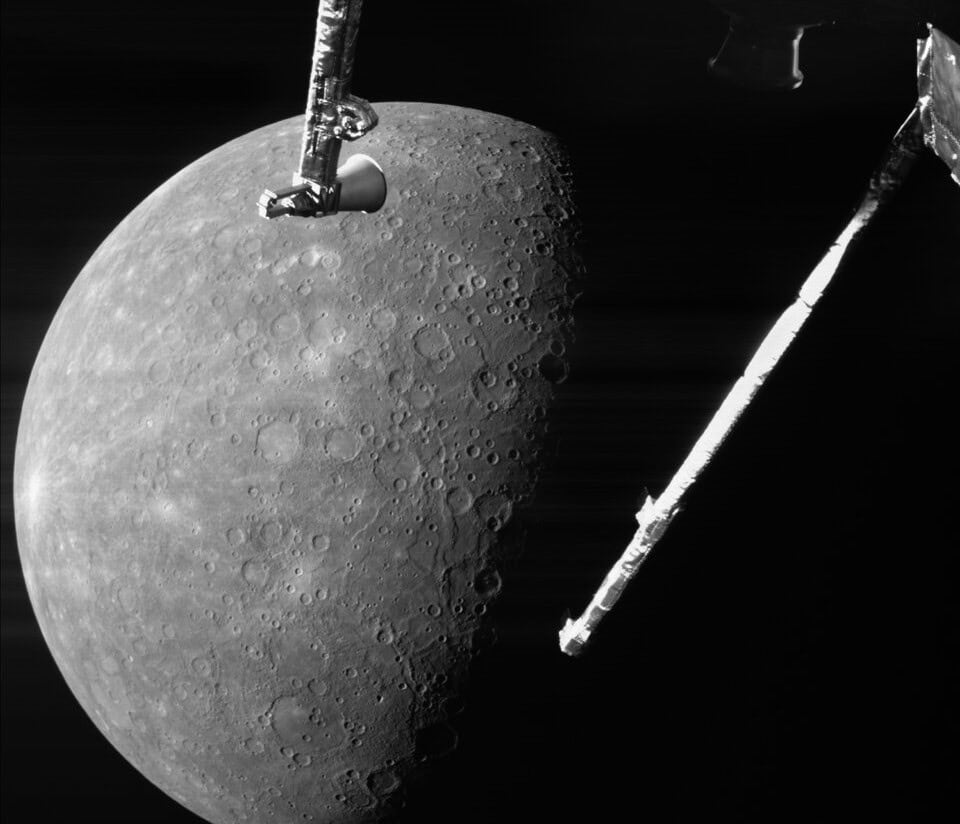
The BepiColombo mission to Mercury – Europe’s first craft to the planet – has successfully completed its fourth gravity-assist flyby as it uses the planet’s gravity to enter orbit around Mercury in November 2026. As it did so, the craft captured its best images yet of some of Mercury’s largest impact craters.
BepiColombo, which launched in 2018, comprises two science orbiters that will circle Mercury – the European Space Agency’s Mercury Planetary Orbiter (MPO) and the Japan Aerospace Exploration Agency’s Mercury Magnetospheric Orbiter (MMO).
The two spacecraft are travelling to Mercury as part of a coupled system. When they reach the planet, the MMO will study Mercury’s magnetosphere while the MPO will survey the planet’s surface and internal composition.
The aim of the BepiColombo mission is to provide information on the composition, geophysics, atmosphere, magnetosphere and history of Mercury.
The closest approach so far for the mission – about 165 km above the planet’s surface – took place at on 4 September. For the first time, the spacecraft had a clear view of Mercury’s south pole.
The winged messenger: BepiColombo will carry out its next flyby on 1 December (Courtesy: ESA/BepiColombo/MTM)
One image (top), taken by the craft’s M-CAM2 camera, features a large “peak ring basin” inside a crater measuring 210 km across, which is named after the famous Italian composer Antonio Vivaldi. The visible gap in the peak ring is thought to be where more recent lava flows have entered and flooded the crater.
BepiColombo will now conduct a fifth and sixth flyby of the planet on 1 December and 8 January 2025, respectively, before arriving in November 2025. The mission is planned to operate until 2029.
This episode of the Physics World Weekly podcast looks at quantum computing from two different perspectives.
Our first guest is Elena Blokhina, who is chief scientific officer at Equal1 – an award-winning company that is developing hybrid quantum–classical computing chips. She explains why Equal1 is using quantum dots as qubits in its silicon-based quantum processor unit.
Next up is Brandon Grinkemeyer, who is a PhD student at Harvard University working in several cutting-edge areas of quantum research. He is a member of Misha Lukin’s research group, which is active in the fields of quantum optics and atomic physics and is at the forefront of developing quantum processors that use arrays of trapped atoms as qubits.
Are you keen to advance your scientific career? If so, it helps to have a big network of colleagues and a broad range of unique collaborators, according to a new analysis of physicists’ publication data. The study also finds that female scientists tend to work in more tightly connected groups than men, which can hamper their career progression.
The study was carried out by a team led by Mingrong She, a data analyst at Maastricht University in the Netherlands. It examined the article history of more than 23,000 researchers who had published at least three papers in American Physical Society (APS) journals. Each scientist’s last paper had been published before 2015, suggesting their research career had ended (arXiv:2408.02482).
To measure “collaboration behaviour”, the study noted the size of each scientist’s collaborative network, the reoccurrence of collaborations, the “interconnectivity” of the co-authors and the average number of co-authors per publication. Physicists with larger networks and a greater number of unique collaborators were found to have had longer careers and been more likely to become principal investigators, as given by their position in the author list.
On the other hand, publishing repeatedly with the same highly interconnected co-authors is associated with shorter careers and a lower chance of achieving principal investigator status, as is having a larger average number of coauthors.
The team also found that the more that physicists publish with the same co-authors, the more interconnected their networks become. Conversely, as network size increases, networks tended to be less dense and repeat collaboration less frequent.
Close-knit collaboration
In terms of gender, the study finds that women have more interconnected networks and a higher average number of co-authors than men. Female physicists are also more likely to publish repeatedly with the same co-authors, with women therefore being less likely than men to become principal investigators. Male scientists also have longer overall careers and stay in science longer after achieving principal investigator status than women, the study finds.
Collaborating with experts from diverse backgrounds introduces novel perspectives and opportunities
Mingrong She
“Collaborating with experts from diverse backgrounds introduces novel perspectives and opportunities [and] increases the probability of establishing connections with prominent researchers and institutions,” She told Physics World. Diverse collaboration also “mitigates the risk of being confined to a narrow niche and enhances adaptability” she adds,”both of which are indispensable for long-term career growth”.
Close-knit collaboration networks can be good for fostering professional support, the study authors state, but they reduce opportunities for female researchers to form new professional connections and lower their visibility within the broader scientific community. Similarly, larger numbers of co-authors dilute individual contributions, making it harder for female researchers to stand out.
She says the study “highlights how the structure of collaboration networks can reinforce existing inequalities, potentially limiting opportunities for women to achieve career longevity and progression”. Such issues could be improved with policies that help scientists to engage a wider array of collaborators, rewarding and encouraging small-team publications and diverse collaboration. Policies could include adjustments to performance evaluations and grant applications, and targeted training programmes.
The study also highlights lower mobility as a major obstacle for female scientists, suggesting that better childcare support, hybrid working and financial incentives could help improve the mobility and network size of female scientists.
What does Shrinivas Kulkarni finds fascinating? When I asked him that question I expected an answer related to his long and distinguished career in astronomy. Instead, he talked about how the skin of sharks has a rough texture, which seems to reduce drag – allowing the fish to swim faster. He points out that you might not win a Nobel prize for explaining the hydrodynamics of shark skin, but it is exactly the type of scientific problem that captivates Kulkarni’s inquiring mind.
But don’t think that Kulkarni – who is George Ellery Hale Professor of Astronomy and Planetary Sciences at the California Institute of Technology (Caltech) – is whimsical when it comes to his research interests. He says that he is an opportunist, especially when it comes to technology, which he says makes some research questions more answerable than others. Indeed, the scientific questions he asks are usually guided by his ability to build technology that can provide the answers.
Kulkarni won the 2024 Shaw Prize in Astronomy for his work on variable and transient astronomical objects. He says that the rapid development of new and powerful technologies has meant that the last few decades been a great time to study such objects. “Thirty years ago, the technology was just not there,” he recalls, “optical sensors were too expensive and the necessary computing power was not available.
Transient and variable objects
Kulkarni told me that there are three basic categories of transient and variable objects. One category covers objects that change position in the sky – with examples including planets and asteroids. A second category includes objects that oscillate in terms of their brightness.
“About 10% of stars in the sky do not shine steadily like the Sun,” he explains. “We are lucky that the Sun is an extremely steady star. If its output varied by just 1% it would have a huge impact on Earth – much larger than the current global warming. But many stars do vary at the 1% level for a variety of reasons.” These can be rotating stars with large sunspots or stars eclipsing in binary systems, he explains.
It might surprise you that every second, somewhere in the universe, there is a supernova
The third and most spectacular category involve stars that undergo rapid and violent changes such as stars that explode as supernovae. “It might surprise you that every second, somewhere in the universe, there is a supernova. Some are very faint, so we don’t see all of them, but with the Zwicky Transient Facility (ZTF) we see about 20,000 supernovae per year.” Kulkarni is principal investigator for the ZTF, and his leadership at that facility is mentioned in his Shaw Prize citation.
Kulkarni explains that astronomers are interested in transient and variable objects for many different reasons. Closer to home, scientists monitor the skies for asteroids that may be on collision courses with Earth.
“In 1908 there was a massive blast in Siberia called the Tunguska event,” he says. This is believed to be the result of the air explosion of a rocky meteor that was about 55 m in diameter. Because it happened in a remote part of the world, only three people are known to have been killed. Kulkarni points out that if such a meteor struck a populated area like Southern California, it would be catastrophic. By studying and cataloguing asteroids that could potentially strike Earth, Kulkarni believes that we could someday launch space missions that nudge away objects on collision courses with Earth.
Scanning the skies The Zwicky Transient Facility uses a camera attached to the Samuel Oschin Telescope at the Palomar Observatory. (Courtesy: Caltech Optical Observatories)
At the other end of the mass and energy range, Kulkarni says that studying spectacular events such as supernovae provides important insights into origins of many of the elements that make up the Earth and indeed ourselves. He says that over the past 70 years astronomers have made “amazing progress” in understanding how different elements are created in these explosions.
Kulkarni was born in1956 in Kurundwad, which is in the Indian state of Maharashtra. In 1978, he graduated with an MS degree in physics from the Indian Institute of Technology in New Delhi. His next stop was the University of California, Berkeley, where he completed a PhD in astronomy in 1983. He joined Caltech in 1985 and has been there ever since.
You could say that I live on adrenaline and I want to produce something very fast, making significant progress in in a short time
A remarkable aspect of Kulkarni’s career is his ability to switch fields every 5–10 years, something that he puts down to his curious nature. “After I understand something to a reasonable level, I lose interest because the curiosity is gone,” he says. Kulkarni adds that his choice of a new project is guided by his sense of whether rapid progress can be made in the field. “You could say that I live on adrenaline and I want to produce something very fast, making significant progress in in a short time”.
He gives the example of his work on gamma-ray bursts, which are some of the most powerful explosions in the universe. He says that this was a very fruitful field when astronomers were discovering about one burst per month. But then the Neil Gehrels Swift Observatory was launched in 2004 and it was able to detect 100 or so gamma-ray bursts per year.
Looking for new projects
At this point, Kulkarni says that studying bursts became a “little industry” and that’s why he left the field. “All the low-hanging fruit had been picked – and when the fruit is higher on the tree, that is when I start looking for new projects”.
It is this restlessness that first got him involved in the planning and operation of two important instruments, the Palomar Transient Factory (PTF) and its successor the Zwicky Transient Facility (ZTF). These are wide-field sky astronomical surveys that look for rapid changes in the brightness or position of astronomical objects. The PTF began observing in 2009 and the ZTF took over in 2018.
Kulkarni says that he is fascinated by the engineering aspects of astronomy and points out that technological advances in sensors, electronics, computing and automation continue to transform how observational astronomy is done. He explains that all of these technological factors came together in the design and operation of the PTF and the ZTF.
His involvement with PTF and ZTF allowed Kulkarni to make many exciting discoveries during his career. However, his favourite variable object is one that he discovered in 1982 while doing a PhD under Donald Backer. Called PSR B1937+21, it is the first millisecond pulsar ever to be to observed. It is a neutron star that rotates more than 600 times per second while broadcasting a beam of radio waves much like a lighthouse.
“I was there [at the Arecibo Observatory] all alone… it was very thrilling,” he says. The discovery provided insights into the density of neutron stars and revitalized the study of pulsars, leading to large-scale surveys that target pulsars.
When you find a new class of objects, there’s a certain thrill knowing that you and your students are the only people in the world to have seen something
Another important moment for Kulkarni occurred in 1994, when he and his graduate students were the first to observe a cool brown dwarf. These are objects that weigh in between gas-giant planets (like Jupiter) and small main-sequence stars. “When you find a new class of objects, there’s a certain thrill knowing that you and your students are the only people in the world to have seen something. That was kind of fun.”
Kulkarni is proud of his early achievements, but don’t think that he dwells on the past. “This is a fantastic time to do astronomy. The instruments that we’re building today have an enormous capacity for information delivery.”
Pioneering observations The image on the left shows the brown dwarf GL229B (small central object) as seen by Kulkarni and colleagues in 1994. On the right shows a similar image taken by the Hubble Space Telescope in 1995, confirming the discovery. The large object on the left of both images is a red dwarf star. (Courtesy: T Nakajima (Caltech)/S Durrance (JHU)/S Kulkarni (Caltech)/D Golimowski (JHU)/NASA)
He mentions images released by the European Space Agency’s Euclid space telescope, which launched last year. He describes them as “gorgeous pictures” but points out that the real wonder is that he could zoom in on the images by a factor of 10 before the pixels became apparent. “It was just so rich, a single image is maybe a square degree of the sky. The resolution is just amazing.”
And when it comes to technology, Kulkarni is adamant that it’s not only bigger and more expensive telescopes that are pushing the frontiers of astronomy. “There is more room sideways,” he says, meaning that much progress can be made by repurposing existing facilities.
Indeed, ZTF and PTF both use (used) the Samuel Oschin telescope at the Palomar Observatory in California. This is a 48-inch (1.3 metre) facility that saw first light 75 years ago. With new instruments, old telescopes can be used to study the sky “ferociously” he says.
Kulkarni told me that even he was surprised at the number of papers that ZTF data have spawned since the facility came online in 2018. One important reason, says Kulkarni, is that ZTF immediately shares its data freely with astronomers around the world. Indeed, it is the explosion in data from facilities like the ZTF along with rapid improvements in data processing that Kulkarni believes has put us in a golden age of astronomy.
Beyond the technology, Kulkarni says that the very nature of the cosmos means that there will always be opportunities for astronomers. He muses that the universe has been around for nearly 14 billion years and has had “many opportunities to do some very strange things – and a very long time to cook up those things – so there’s no shortage of phenomena to explore”.
Great time to be an astronomer
So it is a great time to consider a career in astronomy and Kulkarni’s advice to aspiring astronomers is to be pragmatic about how they approach the field. “Figure out who you are and not you want to be,” he says. “If you want to be an astronomer. There are roughly three categories open to you. You can be a theorist who puts a lot of time understand the physics, and especially the mathematics, that are used to make sense of astronomical observations.”
At the other end of the spectrum are the astronomers who build the “gizmos” that are used to scan the heavens – generating the data that the community rely on. The third category, says Kulkarni, falls somewhere between these two extremes and includes the modellers. These are the people who take the equations developed by the theorists and create computer models that help us understand observational data.
“Astronomy is a fantastic field and things are really happening in a very big way.” He asks new astronomers to, “Bring a fresh perspective, bring energy, and work hard”. He also says that success comes to those who are willing to reflect on their strengths and weaknesses. “Life is a process of continual improvement, continual education, and continual curiosity.”
Twisted fibres are more efficient at capturing and transporting water from foggy air than straight ones. This finding, from researchers at the University of Oslo, Norway, could make it possible to develop advanced fog nets for harvesting fresh water from the air.
In many parts of the world, fresh water is in limited supply and not readily accessible. Even in the driest deserts, however, the air still contains some humidity, and with the right materials, it is possible to retrieve it. The simplest way of doing this is to use a net to catch water droplets that condense on the material for later release. The most common types of net for this purpose are made from steel extruded into wires; plastic fibres and strips; or woven poly-yarn. All of these have uniform cross-sections and are therefore relatively smooth and straight.
Nature, however, abounds with slender, grooved and bumpy structures that plants and animals have evolved to capture water from ambient air and quickly transport droplets where they need to go. Cactus spines, nepenthes plants, spider spindle silk and Namib desert beetle shells are just a few examples.
From “barrel” to “clamshell”
Inspired by these natural structures, Vanessa Kern and Andreas Carlson of the mechanics section in Oslo’s Department of Mathematics placed water droplets on two vertical threads that they had mechanically twisted together. They then recorded the droplets’ flow paths using high-speed imaging.
By changing the tightness, or wavelength, of the twist, the researchers were able to control when the droplet changed from its originally symmetric “barrel” shape to an asymmetric “clamshell” configuration. This allowed the researchers to speed up or slow down the droplets’ flow. While this is not the first time that scientists have succeeded in changing the shapes of droplets sliding down fibres, most previous work focused on perfectly wetting liquids, rather than partially wetting ones as was the case here.
Once they understood the droplets’ dynamics, Kern and Carlson designed nets that could be pre-programmed with anti-clogging properties. They then analysed the twisted fibres’ ability to collect water from fog flowing through an experimental wind tunnel, plotting the fibres’ water yield as a function of how much they were twisted.
Grooves that work as a water slide
The Oslo team found that the greater the number of twists, the more water the fibres captured. Notably, the increase was greater than would be expected from an increase in surface area alone. The team say this implies that the geometry of the twists is more important than area in increasing fog capture.
“Introducing a twist allowed us to effectively form grooves that work as a water slide as it stabilises a liquid film,” Kern explains. “This alleviates the well-known problem of straight fibres, where droplets would get stuck/pinned.”
The twisted fibres would make good fog nets, adds Carlson. “Fog nets are typically made up of plastic fibres and used to harvest fresh water from fog in arid regions such as in Morocco. Our results indicate that these twisted fibres could indeed be beneficial in terms of increasing the efficiency of such nets compared to straight fibres.”
The researchers are now working on testing their twisted fibres in a wider range of wind and fog conditions. They hope these tests will show which environments the fibres work best in, and where they might be most suitable for water harvesting. “We also want to move towards conditions closer to those found in the field,” they say. “There are still many open questions about the small-scale physics of the flow inside the grooves between these fibres that we want to answer too.”
Slice of the action Zume tried – but failed – to break into the huge pizza-delivery business by cooking its products in mobile kitchens, as shown here in Cupertino, California, in 2018. (Courtesy: iStock/Michael Vi)
“The $500 million robot pizza start-up you never heard of has shut down, report says.”
Click-bait headlines don’t always tell the full story and this one is no exception. It appeared last year on the Business Insider website and concerned Zume – a Silicon Valley start-up backed by Japanese firm SoftBank, which once bought chip-licensing firm Arm Holdings. Zume proved to be one of the biggest start-up failures in 2023, burning through nearly half a billion dollars of investment (yes, half a billion dollars) before closing down.
Zume was designed to deliver pizzas to customers in vans, with the food prepared by robots and cooked in GPS-equipped automated ovens. The company was founded in 2015 as Zume Pizza, delivering its first pizzas the year after. But according to Business Insider, which retold a story from The Information, Zume struggled with problems like “stopping melted cheese from sliding off its pizzas while they cooked in moving trucks”.
It’s easy to laugh, but the headline from Business Insider belittled the start-up founders and their story
It’s easy to laugh, but the headline from Business Insider belittled the start-up founders and their story. Unless you’ve set up your own firm, you probably won’t understand the passion, dedication and faith needed to found or join a start-up team. Still, from a journalistic point of view, the headline did the trick in that it encouraged me to delve further into the story. Here’s what I think we can learn from the episode.
A new spin on pizza
On the face of it, Zume is a brilliant and compelling idea. You’re taking the two largest costs of the pizza-delivery business – chefs to cook the food and premises to house the kitchen – and removing them from the equation. Instead, you’re replacing them with delivery vehicles that make the food automatically en-route, potentially even using autonomous vehicles that don’t need human drivers either. What could possibly go wrong?
Zume, which quickly raised $6m in Series A investment funding in 2016, delivered its first pizzas in September of that year. The company secured a patent on cooking during delivery, which included algorithms to predict customer choices. It also planned to work with other firms to provide further robot-prepared food, such as salads and desserts.
By 2018 the concept had captured the imagination of major investors such as SoftBank, which saw the potential for Zume to become the “Amazon of pizza”. The scope was huge: the overall global pizza market was worth $197bn in 2021 and is set to grow to $551bn by 2031, according to market research firm Business Research Insights. So it should be possible to grab a piece of the pie with enough funding and focused, disruptive innovation.
But with customers complaining about the robotic pizzas, the company said in 2018 it was moving in new directions. Instead, it now planned to use artificial intelligence (AI) and its automated production technology for automated food trucks and would form a larger umbrella company – Zume, Inc. It also planned to start licensing its automation technology.
In November 2018 the company raised $375m from SoftBank, now making it worth an eye-popping $2.25bn. It then started focusing on automated production and packaging for other food firms, including buying Pivot – a company that made sustainable, plant-based packaging. By 2020 it was concentrating fully on compostable food packaging and then laid off more than 500 staff, including its entire robotics and delivery truck teams.
Sadly, Zume, Inc was unable to sustain enough sales or bring in enough external funding. Investment cash started running precariously low and in June 2023 the firm was eventually shut down, leaving “joke” headlines about cheese sliding off. How very sad for all involved, but this was only a small part of the issues the company faced.
Inside Zume
Many have speculated where it all went wrong for Zume. To me, the problem seemed to be execution and understanding of the market. The food industry is dominated by lots of dominant established brands, big advertising budgets and huge promotions. When faced with these kinds of challenges, any new business must work out how to compete, break into and disrupt this kind of established market.
Once I looked into what happened at Zume, it wasn’t quite as amazing as I initially thought. To my mind, the logical thing would have been to have all the operations on the truck. But according to a video released by the company in 2016, that’s not what they did. Instead, Zume built an overly complex robot production line in a larger space than a traditional pizza outlet to make the pizzas.
The food was then loaded onto trucks and cooked en-route in a van equipped with 56 automated ovens. Each was timed so that the pizza would be ready shortly before it arrived at the customer’s address. Zume had an app and aimed to cut the delivery time from order to delivery to 22 minutes – which was pretty good. But the app in itself wasn’t a big innovation; after all Domino’s first had one as far back as 2010.
In American start-up culture, failure is not an embarrassment. It’s seen as a learning experience, and looking at the mistakes of history can yield some valuable insights. But then I stumbled upon a really great article by a firm called Legendary Supply Chain that spelled out clearly what happened. Turns out, what really went wrong was Zume’s lack of understanding of the drivers and economics of the pizza-delivery business.
The 3Ps of pizza
Pizzas have a tiny profit margin. But Zume created massive capital costs by developing automation systems, which meant they’d have to sell loads of pizza to make enough return on investment. Worse still, using FedEx-sized trucks to deliver individual pizzas was inherently wasteful and impractical. That’s why you’ll usually see most pizza delivery drivers on bicycles, mopeds or cars, which are a far more cost-effective means of delivery.
You could say that Zume re-invented the wheel by re-creating – at great cost – the automation you find in frozen-pizza factories and applying it to a much smaller scale operation. It also seems that the firm didn’t focus enough on the product or what the customers wanted – and instead seemed to solve problems that didn’t exist. In short, the execution was poor and the $400m raised rather went to managers’ heads.
Countless successful companies prove what’s vital are the “3Ps”: product, price and promotion. People buy pizza on an impulse. For me, whenever the idea of a pizza pops into my head, I want something that’s yummy, saves me from cooking and perhaps reminds me of Italian holidays. According to customer feedback, Zume’s pizza was only “okay”. Apart from the cheese occasionally sliding off, it wasn’t any better or worse than anything else.
As far as price was concerned, Zume’s pizzas ought to have been cheaper to make and deliver than rival firms. However, Zume charged a premium price on account of the food being slightly fresher as it was cooked while being delivered. Customers, unfortunately, didn’t buy into this argument sufficiently. I’m not sure what Zume did to promote their products, but with all that money sloshing around, they certainly had more than enough to create a brand.
Zume’s failure won’t be the last attempt to disrupt or break into the pizza-delivery market – and learning from past mistakes could well help
I’m sure Zume’s failure won’t be the last attempt to disrupt or break into the pizza-delivery market – and learning from past mistakes could well help. In fact, I can see why putting sufficiency low-cost automation on a fleet of small vans – coupled with low-cost, central supply depots – might make the economics more favourable. But anyone wanting to revolutionize pizza delivery will have to map out the costs and economics of pizza delivery to get funded and have some good answers to where Zume went wrong.
The odds for start-up success are not good. As I’ve mentioned before, almost 90% of start-ups in the UK survive their first year, but fewer than half make it beyond five years. To get there – whether you’re making pizzas or photodetectors – you’ll need a good plan, a great team, a degree of luck and good timing to compete in the market. But if you do succeed, the rewards are clear.