Experts

Expertise, argue Cardiff University sociologists Harry Collins and Robert Evans, is “the pressing intellectual problem of the age”.

Can this really be true? Surely everyone knows what an expert is: an authority to whom a layperson can comfortably defer for advice. Scientists, who are usually regarded as experts par excellence, could be forgiven for not seeing expertise as a problem, for they are routinely involved in dispensing and using expertise. It seems odd to claim that expertise might be more of an intellectual problem than, say, creating a unified theory of gravity, decoding the genome or understanding the early universe.

But expertise – what it is and what role it plays – is surprisingly difficult to describe when looked at carefully. The difficulties appear both inside science and out, but they are revealed most dramatically in the use of scientific expertise in law and politics. At a trial, each side digs up its own expert witnesses, all of whom say that they represent the scientific community and that the experts on the other side are untrustworthy hired guns – intellectual mercenaries if you like – with the jury left to guess which side to believe. In politics, controversies such as the existence of global warming and the safety of nuclear power generate conflicts over who selects experts, whose advice is tainted by ideology, and what the scope and limits of testimony should be.

Recently the subject of expertise has attracted much scholarly attention. A book entitled Rethinking Expertise, by Collins and Evans, is due out this autumn (University of Chicago Press), while their perspectives, along with others, are included in an anthology entitled The Philosophy of Expertise, a book co-edited by Evan Selinger and me (Columbia University Press). And Collins, who has edited a forthcoming issue of the journal Studies in History and Philosophy of Science on the subject, is hosting a workshop in Cardiff this month to discuss the role of expertise in everything from interdisciplinary physics projects to the implementation of technical advice about how to prevent dolphins from being snared in fishing nets.

A periodic table of expertise

Collins grew interested in expertise during his 30-year sociological study of the hunt for gravitational waves (Physics World December 2004 pp10–11, print edition only). One day while he was having lunch with some gravitational-wave physicists, Collins noticed that, although he had never studied physics beyond A-level, he was engaged in a seamless conversation with them. “They are never going to give me a job,” he told me recently, “but from the conversation it would have been hard to spot who was the physicist and who the outsider.”

The experience motivated him to draw a distinction between contributory expertise, possessed by active practitioners of a field, and interactional expertise, whereby someone can speak knowledgeably about a subject without being able to contribute new ideas to it. “It’s more than talking the talk but less than walking the walk,” he told me. “It’s like ‘walking the talk’.”

Collins first noticed interactional expertise in his own field, where sociologists often acquire it when they study how people in other fields behave. But he found that interactional expertise is also widespread inside science. It is essential, for instance, in projects where people have to interact across disciplinary borders, and where managers and peer-reviewers must make decisions in areas in which they are not trained. “There would be no science without interactional expertise,” Collins says. “It is impossible for every expert to possess every technical skill they need to work in a big collaboration.”

The concept proved so valuable that Collins and Evans set out to develop a systematic theory of forms of expertise, and compiled what they ambitiously named a “periodic table of expertises” – an attempt “to classify all the kinds of expertise that might be brought to bear on a technological problem”. It includes about a dozen types of expertise that range from categories such as language speaking that everyone must have to live in a society, to more specific, higher-level and domain-restricted categories such as contributory and interactional expertise.

But the pair’s most ambitious and controversial aim is ultimately to help facilitate the resolution of public controversies with a scientific dimension. When politicians try to resolve such controversies, two simple and tempting choices present themselves: let the public decide; or take the matter out of the public’s hands and assign it to specialists. “The first choice risks technological paralysis” Collins and Evans write in their article in the expertise anthology, while “the second invites popular opposition”. They hope that their analysis of expertise can help define better the kinds of people who should be allowed to participate in decision making about the technical aspects of controversies.

The critical point

Would an improved understanding of expertise be sufficient to resolve debates about global warming and nuclear power? No, for technical aspects are generally not what drives such controversies: perception and prejudice; self-interest; and utopian visions are vitally important in framing them.

Collins and Evans know this. They mean only to lay the groundwork for better institutional tools to handle controversies. At first glance their position appears drearily commonsensical: experts are likely to make better technical judgments than the rest of us; and governments should defer technical issues to experts even though experts are sometimes wrong. Still, some sociologists have severely criticized Collins and Evans for this view, which they see as undemocratic, elitist and a throwback to the days when the word of experts was unquestioned.

But the importance of starting on the right foot for solving the controversies that surround issues like global warming and nuclear power is what leads Collins and Evans to claim that expertise is “the pressing intellectual problem of the age”.

• The Studies of Expertise and Experience workshop is on 16–18 August in Cardiff, UK: www.cf.ac.uk/socsi/expertise

Fears over factoids

Did you know that when the Large Hadron Collider (LHC) comes online at CERN next spring, it could end up creating mini black holes that destroy the Earth? This is not something from a Dan Brown novel, but from a TV documentary broadcast as part of the BBC’s Horizon series in the UK on 1 May – a programme that has been running for 40 years and is supposedly the flagship of TV science in the country. Although the documentary itself was fairly measured, the producers began the programme with the black-hole claim and used it in their publicity for the show.

Physicists who recall superb Horizon documentaries of the past – for example, on the discovery of the W and Z bosons – will have been disappointed that such a marvellous project as the LHC should have been sensationalized in this way. It was disheartening that the programme makers felt the need to rehash these unnecessary concerns over black holes being produced in particle accelerators, which physicists had already dismissed before the Relativistic Heavy Ion Collider (RHIC) came online at the Brookhaven National Laboratory in 2000 (Physics World July 2000 pp19–20, print edition only).

Meanwhile, another Horizon documentary, broadcast on 10 April, claimed that one reason for sending humans to the Moon is so that we can mine it for helium-3 as a fuel for fusion power back on Earth. The need to bring helium-3 back from the Moon has even been briefly referred to in Physics World (May 2007 pp12–13, print edition only) and, more worryingly, has been presented to US congressional committees, including the Science and Technology Committee of the House of Representatives in 2004.

As a particle physicist, I am of course interested in the LHC; and as the chair of a working group set up by the British National Space Centre to look into the future of UK space science – including the possibility of humans returning to the Moon – I am also intrigued by the helium-3 story. Both of the claims bother me and, on investigation, each is revealed as an example of what I call “factoid science” – myths of dubious provenance that propagate, become received wisdom and could even influence policy. So what is the reality and what can physicists do to correct such mis-information?

Strangelet statistics

The story of the LHC as an Armageddon machine would be laughable were it not so serious. Aficionados of Dan Brown – whose novel Angels and Demons was set partly at CERN – might believe that the Geneva lab produces antimatter capable of making weapons of mass destruction. But I did not expect to find similarly outlandish statements used to promote Horizon. As the programme’s website puts it: “Some scientists argue that during a 10-year spell of operation there is a 1 in 50 million chance that experiments like the LHC could cause a catastrophe of epic proportions.” The site then invites the public to take part in a poll on whether the LHC should be turned on or not, based on this “probability”.

While the LHC will create the most energetic collisions ever seen on Earth, cosmic rays at these and even higher energies have been bombarding our and other planets for billions of years without mishap. When I asked the producers of Horizon where they had obtained the 1-in-50-million statistic, I was told it had been taken from a “reliable source”: Our Final Century by Cambridge University cosmologist Martin Rees. But when I read his book, it became clear that the programme’s research had sadly been incomplete. On page 124, Rees discusses a paper published in 1999 by CERN theorists Arnon Dar, Alvaro de Rújula and Ulrich Heinz that uses the fact that the Earth and the cosmos have survived for several billion years to estimate the probability of colliders producing hypothetical particles called “strangelets” that might destroy our planet (1999 Phys. Lett. B 470 142).

Rees fairly describes their conclusions as follows: “If the experiment were run for 10 years, the risk of catastrophe was no more than 1 in 50 million.” In other words, the chance of disaster is one in at least 50 million (as no disaster has occurred); this is rather different from saying, as Horizon does, that there is a “1 in 50 million” probability of a catastrophe happening from the moment the LHC switches on.

Moreover, when Dar and colleagues wrote their 1999 paper, a committee of eminent physicists appointed by the Brookhaven lab was also investigating if RHIC could produce strangelets (arXiv:hep-ph/ 9910333v3). That study used not just information from cosmology but also data from collisions between heavy ions (albeit at lower energies than RHIC would obtain) to show that the chances of catastrophe are at least one part in 1019.

Furthermore, these figures refer specifically to strangelets being produced at RHIC, as Rees makes clear, and have nothing to do with the question of whether we should risk creating black holes. Indeed, why does Horizon talk about black holes at all? The only reason can be that a theory does exist that posits that mini black holes could be produced in a collider. But if one mentions this theory, then one must include the whole of it, which clearly states that mini black holes pose no hazard whatsoever because they do not grow but evaporate and die.

As if any more evidence was needed that colliders are safe, CERN also set up an “LHC safety-study group” to see if its new collider could create black holes or strangelets. It concluded – in an official CERN report published in 2003 (CERN-2003-001) – that there is “no basis for any conceivable threat” of either eventuality, which is as near as science can get to saying zero. Unfortunately, the Horizon programme made no mention of these serious and time-consuming enquiries even though CERN’s press office gave the programme’s researchers a copy of the lab’s 2003 report. Instead, the public has been led to believe that scientists are prepared to embark on experiments that could spell the end of the planet.

Helium errors

Let me now turn to the helium-3 factoid. At most fusion experiments, such as the Joint European Torus (JET) in the UK, a fuel of deuterium and tritium nuclei is converted in a tokomak into helium-4 and a neutron, thereby releasing energy in the process. No helium-3 is involved, so where does the myth come from? Enter “helium-3 fusion” into Google and you will find numerous websites pointing out that the neutron produced in deuterium–tritium fusion makes the walls of the tokomak radioactive, but that fusion could be “clean” if only we reacted deuterium with helium-3 to produce helium-4 and a proton.

Given that the amount of helium-3 available on Earth is trifling, it has been proposed that we should go to the Moon to mine the isotope, which is produced in the Sun and might be blown onto the lunar surface via the solar wind. Apart from not even knowing for certain if there is any helium-3 on the Moon, there are two main problems with this idea – one obvious and one intriguingly subtle. The first problem is that, in a tokomak, deuterium reacts up to 100 times more slowly with helium-3 than it does with tritium. This is because fusion has to overcome the electrical repulsion between the protons in the fuel, which is much higher for deuterium– helium-3 reactions (the nuclei have one and two protons, respectively) than it is for deuterium– tritium reactions (one proton each).

Clearly, deuterium–helium-3 is a poor fusion process, but the irony is much greater as I shall now reveal. A tokomak is not like a particle accelerator where counter-rotating beams of deuterium and helium-3 collide and fuse. Instead, all of the nuclei in the fuel mingle together, which means that two deuterium nuclei can rapidly fuse to give a tritium nucleus and proton. The tritium can now fuse with the deuterium – again much faster than the deuterium can with helium-3 – to yield helium-4 and a neutron.

So by bringing helium-3 from the Moon, all we will end up doing is create a deuterium– tritium fusion machine, which is the very thing the helium aficionados wanted to avoid! Undeterred, some of these people even suggest that two helium-3 nuclei could be made to fuse with each other to produce deuterium, an alpha particle and energy. Unfortunately, this reaction occurs even more slowly than deuterium–tritium fusion and the fuel would have to be heated to impractically high temperatures that would be beyond the reach of a tokomak. And as not even the upcoming International Thermonuclear Experimental Reactor (ITER) will be able to generate electricity from the latter reaction, the lunar-helium-3 story – like the LHC as an Armageddon machine – is, to my mind, moonshine.

Rising pressure

Does any of this matter beyond raising the blood pressure of some physicists? All publicity is good publicity, some might say. But I believe we should all be concerned. The LHC factoid has now been repeated in the New Yorker and in various reviews of the Horizon documentary. Even some nonphysics colleagues are asking me to explain what it is all about. If Horizon claims to be the flagship TV science series on which the public rely to form their opinions, I would hope that their researchers do their research, and that the editors then take due account of it.

The factoids about mining the Moon for fusion fuel and of the LHC Armageddon make a cautionary tale. A decade from now it is possible that committees of well-informed scientists and rather less-well-informed politicians, with public opinion weighing on their minds, will be deciding on our involvement in mega-projects such as the next huge accelerator, human space exploration, or even a post-ITER commercial fusion plant.

Decision making driven by public opinion that is influenced by factoids already has a dire history in the bio-medical arena: the controversy over whether to give children a combined immunization against measles, mumps and rubella (MMR) being the most recent example. My advice is that if you see an error in the media, speak out, write to the editors and try to get corrections made. It is an opportunity to get good science in the news.

Islamic science

Most physicists, particularly those in western nations, probably do not give religion a great deal of thought. A minority of physicists do, however, have firmly held religious beliefs and think long and hard about reconciling those beliefs with their scientific knowledge, as our report on a recent meeting on “God and physics” in Cambridge makes clear (p10, print edition only). There is much to admire in their deep thinking, which has been recognized by physicists being awarded the Templeton prize for progress in religion six times in the last eight years.

But in Muslim nations, religion plays a far bigger role in everyday life than it does in the West. Indeed, today Islam is actually holding back scientific progress by placing too great an emphasis on studying and interpreting the pages of the Koran, as the leading Iranian physicist Reza Mansouri points out (see “A way forward for Islamic science”). Those students in his country who do study science at university tend to learn a very narrow curriculum by rote, rather than being encouraged to think for themselves. Low investment in science – even in oil-rich Gulf states – and restrictions on freedom of expression compound the problem.

It was not always thus. Muslim scholars made huge contributions in areas like astronomy, optics and mathematics between the 8th and the 13th centuries, with Islam encouraging rigorous intellectual enquiry. Why science in the Islamic world fell from grace is a topic of considerable debate among historians, with the advances made in Renaissance Europe certainly playing a part in halting progress.

But whatever the reasons, the key for Muslim nations now is to rebuild their scientific strengths through increased public funding – no mean feat when their governments fail to see the merits of such investment – and by encouraging links between scientists in those countries and in the West. Placing a greater focus on a few, world-class labs rather than spreading money thinly around will help too. These solutions are essentially no different to what is needed in other parts of the developing world. But given the great untapped potential in the 1.3 billion or so people who live in the Islamic world, that rebuilding – long though it may take – is a worthwhile task.

Once a physicist: Sergi Jordà


How did you first become interested in physics?

As a child I was always inventing weird artefacts or constructing houses out of balsa wood with the idea of becoming an architect. Then as a teenager I had a kind of ideological conflict, thinking that the nice architectural projects that were worth working on were mostly for the rich. Somehow this brought me into physics, although at that time, the subject didn’t mean much more to me than bricks slipping on inclined planes.

Where did you study physics and how much did you enjoy it?

I studied at the University of Barcelona in the early 1980s. The sad truth is that by concentrating on passing the exams, I didn’t have much time to enjoy the deeper concepts. Near the end of my studies I was tutored by a disciple of the Belgian chemistry Nobel laureate Ilya Prigogine and I started to really appreciate nonlinear thermodynamics, and complex and chaotic systems.

How and when did you become interested in computer music?

While studying physics, I also played the saxophone – a sort of free jazz – and in my third year at university I discovered that I loved computer programming. Then, in my fourth year, I came across a snapshot of an audio spectrogram on the back cover of an album by Laurie Anderson. I had studied the Fourier transform in an abstract way (no-one ever talked about sound during my five years of physics), so I could intuitively understand what the image was about: sound, and therefore music, could be “understood” by computers. I soon imagined that computers could be used for making music – even free jazz. And believing that computers were far better suited than me to repetitive and unexciting tasks, I gave up practising scales on the saxophone and started programming.

How did your career develop after you graduated?

By then I was already sure that I wanted to become a computer musician, although I didn’t know how to proceed. I first survived as a computer programmer, then started teaching programming in private schools. Meanwhile, I studied anything I could find on computer music and made my own music programs that I started using in performances. In the 1990s I worked on multimedia projects and computer art, before returning to academia to teach in the computer-science faculty and do research into real-time musical interaction between humans and computers.

What are you working on at the moment?

For the last four years I have been working on the reactable, together with Günter Geiger, Martin Kaltenbrunner and Marcos Alonso from the Music Technology Group at my university. The reactable is an electronic musical instrument conceived for collaborative computer-music performance and improvisation. It is based on a circular table around which several musicians share control of the instrument by rotating, moving and caressing physical artefacts on its luminous surface.

What are some of your career highlights?

In the 1990s I had a successful collaboration with Catalan theatre group la Fura dels Baus, which gave birth to FMOL, a software program for online musical collaboration that can be considered as the precursor of the reactable. But the reactable itself is by far my most successful creation and also the most accomplished. It is the fruit of 20 years of work in the field; and the fact that an artist such as Björk used it extensively for her last world tour is enormously gratifying.

How has your background in physics helped you in your career?

Somehow it made me feel confident about the potential of human knowledge and understanding. It gave me the illusion that anything, with the possible exception of humans themselves, can be understood – no matter how complex it seems or how long it may take.

Physicists at Aldermaston

The Atomic Weapons Establishment (AWE) is the home of the UK’s nuclear deterrent and is responsible for the entire lifecycle of the country’s warheads from research and design through assembly to in-service support and, finally, decommissioning and disposal. AWE also plays a vital role in national security and international monitoring of the Comprehensive Test Ban Treaty. Its core mission is to build and maintain the warheads for the submarine-launched Trident ballistic-missile system that forms the UK’s sole nuclear deterrent. It is also required to maintain the capability to design a warhead to replace Trident, should it ever be required.

In order to perform all these tasks, AWE carries out world-class science in some of the most challenging fields, including explosive detonation, hydrodynamics, high-strain-rate deformation behaviour, radiation physics and computer modelling. The AWE site at Aldermaston in Berkshire includes all the facilities needed to carry out this science – extremely fast supercomputers, areas for explosive trials and experimental facilities for high-energy-density physics. It employs researchers in not just nuclear physics, but all branches of the subject: from atomic and condensed-matter physics to astrophysics and quantum physics.

AWE is currently investing in its building and facilities in order to support Trident safely and reliably for the next 20 years. But behind all these facilities are the people. AWE currently employs 4300 staff and 1500 contractors across its sites in Aldermaston and nearby Burghfield, and it prides itself on recruiting only the best people in science, engineering and technology. Maintaining the UK’s nuclear deterrent is not textbook science – everything AWE does is innovative. It carries out experiments on materials under extreme temperatures, strain rates and pressures that are over in the blink of an eye. AWE needs technical experts in a wide variety of physics fields to be able to understand and model the phenomena of interest.

Explosive research

I applied to work at AWE after completing my undergraduate degree in physics at Lancaster University in 1993. I was looking for a career in physics research, and AWE seemed to offer everything I wanted. I was recruited into the hydrodynamics department as a research scientist and spent the first few years carrying out experiments in the explosive facilities researching the detonation of condensed high explosives. During this time AWE sponsored me to carry out a part-time MSc in numerical methods at the Royal Military College at Shrivenham. I also had the opportunity to publish my work and travel to many conferences around the world.

In 2000 my team and I moved to the theoretical- physics area on site, where I started leading a team of scientists looking into models of shear strength in condensed matter. At this time I also embarked on a company-sponsored part-time PhD in non-equilibrium thermodynamics. Within two years I was asked to lead the theoretical material-modelling group, consisting of some 25 staff – quite a leap for a mere scientist! In January this year I moved back to the hydrodynamics division to head up its science group of 50 full-time employees. I have lots of opportunities to develop in both technical and business matters, and I travel regularly to work with AWE’s international counterparts. No two days are ever the same.

Most of the physicists at AWE work within the Directorate for Research and Applied Science. The directorate has about 1100 staff, of whom some 600 are scientists – a mixture of physicists, chemists, materials scientists, computational scientists and mathematicians. There is a roughly even split between theoretical and experimental staff, although we all work closely together to deliver integrated programmes.

Although the science and technology we need is self-contained at AWE, we do have active external collaborations, consultancies and contracts. We work with UK universities to employ summer students and foster graduate and postgraduate research, thus helping to develop the scientists of the future. We also contract work out to industry, thereby helping to invigorate technological advances in the UK as a whole. We have regular audits of our technical work, which allow top academics and experienced workers in industry access to our work, and we take on board their suggestions for future research directions. There is also an ongoing peer-review process with our colleagues in the US weapons laboratories that allows the exchange of data, ideas and staff under the auspices of the 1958 US/UK Mutual Defence Agreement.

Continuing development

Many scientists at AWE say that working in a technical area at Aldermaston is like being back at university but with higher pay and greater job security. AWE encourages its researchers to publish externally, to attend and speak at prestigious international conferences, to write textbooks, to assist the research councils with paper reviews and funding approvals, and to advise and direct UK technical policy. Substantial funding is also allocated to blue-sky work, where it is relevant to the core business.

AWE has a recognized graduate scheme for all recently graduated scientists and engineers that lasts about two years. The focus is on learning more about the wider company and workplace skills. An attractive remuneration package goes along with this. AWE continues to take professional development very seriously beyond the first few years, with on-the-job mentoring by experienced staff, funding for higher education and postdoctoral work, and placements at international facilities. The company vision is to be “internationally recognized for science, engineering and technology”, and as such AWE constantly strives for excellence – mediocrity simply will not do.

Poincaré, Perelman and proof

The public’s view of the mathematician as a reclusive genius toiling away for years at an arcane problem is one that will not go away. The media have enthusiastically seized on this image since the depictions of Andrew Wiles in Simon Singh’s best-seller Fermat’s Last Theorem and John Nash in the film A Beautiful Mind. Last summer in Madrid it surfaced again in the form of Grigori Perelman and the Poincaré conjecture. Not that Perelman was in Madrid – that was exactly the point.

The occasion was the award of the Fields medals, the mathematicians’ equivalent of the Nobel prizes. King Juan Carlos was centre stage, flanked by political and mathematical dignitaries, as an audience of thousands strained to identify the dark-suited young men at the front waiting to receive the four medals. The second name to be announced was that of Perelman, “for his contributions to geometry and his revolutionary insights into the analytical and geometric structure of the Ricci flow”.

“I deeply regret”, the announcer continued, “that Dr Perelman has declined to accept the Fields medal”. Where was Perelman? Presumably he was back in his apartment in St Petersburg, working hard on the next challenging problem.

The events leading up to this point form the subject of this book by Donal O’Shea, a mathematician at Mount Holyoke College, Massachusetts. It would be impossible to describe the step-by-step evolution of Perelman’s result. What might his diary say? “Morning: proved A implies B; afternoon: B implies C; evening: found a counterexample to A.” So instead the author gives a broad history of this area of mathematics, tailored to culminate with the famous conjecture that states that “a simply connected three-dimensional manifold is homeomorphic to the sphere”.

Therein lies the challenge for the author: to explain both the concepts and the history for a general readership in the manner of Singh’s successful book on Wiles and Fermat. While Singh’s task was to explain number theory to the layperson, O’Shea’s is to deal with geometry. This should be easier and less dependent on formulae, but quite quickly it becomes clear that pictures and diagrams have their limitations when two dimensions give way to three. Fortunately, the author’s lively style carries the reader quite successfully through this short book.

Geometry for many readers means the ancient Greeks, and that is where O’Shea starts. The Poincaré conjecture concerns a “three-sphere”, the analogue of a sphere in 4D space. We cannot sit in four dimensions and look down on such an object, but nor could the Greeks see the two-sphere that is the Earth. Nevertheless, they not only knew our planet’s shape but measured its diameter. O’Shea focuses too on Euclid, in particular his clumsy “parallel postulate”. The discovery in the 19th century of non-Euclidean geometry where the postulate fails is a theme of the book: it led mathematicians to rethink what geometry consisted of. By 1850 the existence of different types of geometry was recognized, but they were all homogeneous – all points looked the same.

Then in 1854 came Bernhard Riemann, clearly the author’s hero. His controversial lecture of that year, “On the foundations that underlie geometry”, portrayed a different world: non-linear, non-homogeneous and existing in any number of dimensions. This was the concept of a manifold: a mathematical space that is constructed by “gluing together” local patches that are Euclidean into a more complex global structure. My local space, yours and everybody else’s join together to give a 3D manifold: it might be a three-sphere, it might be more complicated. O’Shea’s subtitle, “In search of the shape of the universe”, suggests that Perelman has solved that problem too, but that is hardly likely to be the case.

Henri Poincaré made his name in celestial mechanics and differential equations, but he was also one of the founders of algebraic topology. Topology concerns the properties of objects that are unchanged by continuous deformation. The wording “simply connected” in the Poincaré conjecture is such a property: it means that a closed curve can be continuously shrunk to a point. One can easily visualize doing this on the surface of a two-sphere like the Earth, but not on a doughnut, where a curve looping round the hole cannot be shrunk. In two dimensions the sphere is the only surface that is simply connected, and Poincaré’s famous conjecture of 1904 asked whether the same was true in three dimensions.

As the field of topology developed in the 20th century, reputations were made and then broken by attempts to prove this conjecture. Finally it was proved in all higher dimensions, and only Poincaré’s original problem was left; it was clear that there was something special about three dimensions. The prevailing view of 3D topology changed radically in the 1980s when US mathematician Bill Thurston showed that many three-manifolds could be systematically broken up into pieces, each of which had a type of homogeneous geometry. He conjectured that this procedure should apply much more widely and it is this that Perelman actually succeeded in proving. It implies the Poincaré conjecture as a special case (just as Wiles’ proof of Fermat’s theorem was a special case of the Shimura–Taniyama– Weil conjecture).

What technique did Perelman use that evaded the other topologists? Not to use topology! He used instead the “Ricci flow equation” – a geometrical version of the heat equation pioneered by mathematician Richard Hamilton. Given an irregular distribution of temperature in a body, the heat equation describes the temperature at subsequent times. The flow of heat tends to smooth out the initial irregularities. Perelman’s idea was to start with an arbitrary manifold and “follow the flow”, thereby hoping to get something regular and homogeneous like a sphere or a non-Euclidean geometry. But it does not work like that, as Hamilton knew, because the solution blows up in finite time. Perelman showed that when this happens, you can modify the manifold in a controlled way and start the flow again, then repeat. Eventually you have either cut the space up into Thurston’s pieces or arrived at a homogeneous geometry – simple connectivity then gives you a sphere.

O’Shea’s book describes well the progress and personalities involved in this long process, and sensibly puts anything vaguely technical into 45 pages of notes at the end. Disappointingly for a subject so geometrical, the illustrations are of poor quality. Maps are shrunk so much as to be illegible and many illustrations are idiosyncratic line drawings. On the other hand, O’Shea includes an intriguing engraving from The Divine Comedy – I had no idea that Dante had described the three-sphere.

The book goes on to describe other events in Madrid last summer, as articles in the press suggested that the proof might be incomplete and that other researchers were claiming credit. (Note the absence of the words “Poincaré conjecture” in the citation – even the Fields medal committee could not decide.) Such disputes in the abstract world of pure mathematics rarely make the news, but journalists were on hand and the leading character was intriguingly absent.

Perelman in fact never published his proof in a peer-reviewed journal, but instead placed his articles on the preprint server arXiv.org. He followed this up by answering questions in detail on a lecture tour of the US, and confirmation of the validity of his proof is now emerging from various research groups around the world.

Proof is a delicate issue and always has been: the venerated logic of Euclid’s Elements had to be adjusted by David Hilbert; Poincaré’s own work was littered with errors; and there was a famous (though soon corrected) gap in Wiles’ proof. But time, like the flow equation, smooths these out. The same is true of accreditation. Who was Euclid anyway? For all we know he may have been a committee. But who cares now? We possess the propositions, lemmas and theorems to appreciate and use. So when the barbarians have come and gone again, we will still have a theorem, not a conjecture, which tells us that a simply connected three-manifold is a sphere.

Testing the elements of the Big Bang

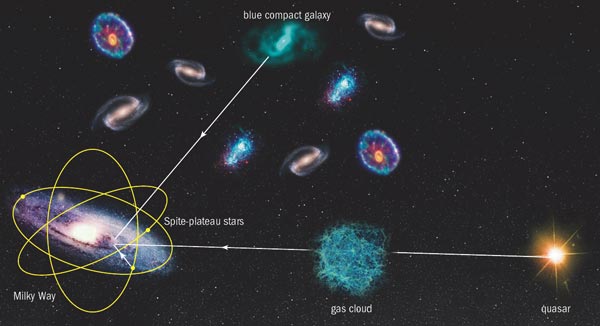
The nitrogen and oxygen that we breathe, the carbon that makes biochemistry possible, and the calcium in our bones have one striking thing in common: they were all synthesized inside stars. Indeed, the same is true of virtually all the chemical elements that we encounter in everyday life, from the rarest gases to the heaviest metals. One big exception is hydrogen: almost all hydrogen nuclei are protons that emerged from the Big Bang almost 14 billion years ago. Another is light nuclei such as deuterium and lithium, which were produced in a process called Big Bang nucleosynthesis that occurred when the universe was only a few minutes old. The fact that these elements have been around since the beginning of time is surely one of the most fascinating facts in astrophysics.

Big Bang nucleosynthesis (BBN) began when the universe had cooled sufficiently that protons and neutrons, which had just formed from the primordial plasma, were able to combine into deuterium nuclei. The deuterium then underwent further nuclear reactions to form helium-4 nuclei each containing two protons and two neutrons, along with tiny quantities of deuterium, helium-3 and lithium-7. Indeed, by the end of BBN (a period of a few minutes) a quarter of the ordinary matter in the universe had been converted into helium-4, while all but a minuscule fraction of the rest was left as hydrogen (see “How Big Bang nucleosynthesis works”).

Since the amounts of these nuclei produced depended on the temperatures and densities of the universe when it was just a few minutes old, we can get a handle on early cosmic evolution by measuring their abundances today (see “Observing abundances”). In particular, BBN models provide an estimate of the mean baryon density of the universe, which is a fundamental parameter in cosmology. We know from measurements of the motion of galaxies show that the total mass density of the universe is six times the baryon density inferred by BBN, which clearly indicates that most of the matter in the universe is not made of ordinary baryonic matter containing protons and neutrons but of something more mysterious called dark matter.

Such disagreement between BBN and experiment could also hint at new physical processes that may have been active during the nucleosynthesis. For example, if fundamental particles that have never been seen in the lab were present in the early universe, then their effects may be discernable in the elemental abundances we observe today. For these reasons, BBN is vital to studies of the overall structure of the universe, the history of matter since the Big Bang, and the close connection between particle physics and cosmology.

Despite its success in determining the baryon density of the universe and in explaining the large abundances of helium that we observe, BBN still faces major challenges. Recent measurements of the cosmic background radiation, which reveals the universe as it was when atoms formed about 380,000 years after the Big Bang, and of the large-scale distribution of galaxies have greatly increased the precision of cosmological data. So far it seems that the observed primordial abundances – particularly those of lithium – do not quite tally with BBN theory. The goal now is to bring BBN into line with the new precision of cosmology, and to improve our understanding of the astrophysical environments where the primordial abundances are observed.

Back in time

The first version of BBN theory was proposed by George Gamow and Ralph Alpher in the 1940s in an attempt to explain the origin of all the chemical elements. They assumed that the early universe was very hot and full of neutrons: nuclei then formed by capturing neutrons one at a time, with the occasional nucleus undergoing beta decay to produce a nucleus of higher atomic number plus an electron and a neutrino. As the probabilities of many of these reactions were not known at the time – some were even kept secret due to their relevance in atomic-weapons research – Gamow and Alpher had to guess many of their cross-sections. In doing so, however, the pair made the extremely optimistic assumption that some, then unknown, process would have a high enough probability to create nuclei larger than helium-4 – despite the fact that no stable nucleus with a mass number equal to five exists.

Gamow and Alpher’s calculations matched well the trend observed in the solar system, where nuclear abundances decrease as a function of atomic mass. Furthermore, Alpher and colleagues predicted the existence and temperature of the cosmic microwave background by realizing that a gas of hot photons would have been present during BBN. Those photons, the researchers correctly argued, would have been stretched by the expansion of space to the microwave region of today’s electromagnetic spectrum.

This early version of BBN eventually included most of the aspects of modern BBN theory, such as the role of weak interactions and the dependence of nuclear abundances on the baryon density. As a model for the origin of all the elements, however, it reached a dead end in the early 1950s when researchers recognized that a fully articulated version of this theory was doomed to make lots of helium-4 but not much else. Then in 1957 it was buried for good, when Alastair Cameron and Fred Hoyle, among others, showed that almost all of the chemical elements were, in fact, synthesized inside stars.

In 1964, however, Hoyle and Roger Tayler showed that BBN provided a simpler explanation for the large observed abundances of helium-4 than Cameron and Hoyle’s stellar explanation, since the latter required the existence of a gigantic population of now-extinct stars. When the cosmic microwave background was discovered the following year, it was immediately clear that the Big Bang model was correct and that BBN should therefore have taken place in the hot conditions of the first few minutes. Jim Peebles of Princeton University in the US responded to this discovery by performing the first “modern” calculation of BBN by using nuclear-reaction rates that were by then better known than in Gamow’s day. Although our knowledge of these rates has improved again since then, our basic understanding of BBN remains the same.

The power of BBN as a window on the early universe was recognized in the 1970s. At that time several astrophysicists, including Hubert Reeves at the Institute d’Astrophysique in Paris and Johannes Geiss, now at the International Space Science Institute in Bern, realized that because the amount of deuterium produced in BBN depended strongly on the mean baryon density of the universe, we could learn something about the universe on the largest scales by measuring the amount of deuterium much closer to home. Within a few years, several measurements of the amount of deuterium in our galaxy had set an upper limit on the baryon density of about 4 × 10–31 g cm–3.

Then in 1977 Gary Steigman, now at Ohio State University, James Gunn, now at Princeton University, and the late David Schramm of the University of Chicago showed that BBN could constrain the number of different types of neutrino that exist in nature (today we know that there are three neutrino species: the electron, muon and tau neutrinos). Each additional neutrino species, they argued, would have increased the density of the early universe and made it expand faster, thereby changing the dynamics that set the ratio of neutrons to protons at the start of BBN to favour more neutrons. This, in turn, would have led to more helium-4. At a time when laboratory measurements suggested that there might be thousands of neutrino species (although most particle physicists did not really believe there were this many), Steigman and co-workers were able to claim that there were no more than four. This was a major success for BBN theory and contributed to a growing awareness of the close links between particle physics and cosmology – even if many particle physicists saw it merely as evidence for the chutzpah of cosmologists!

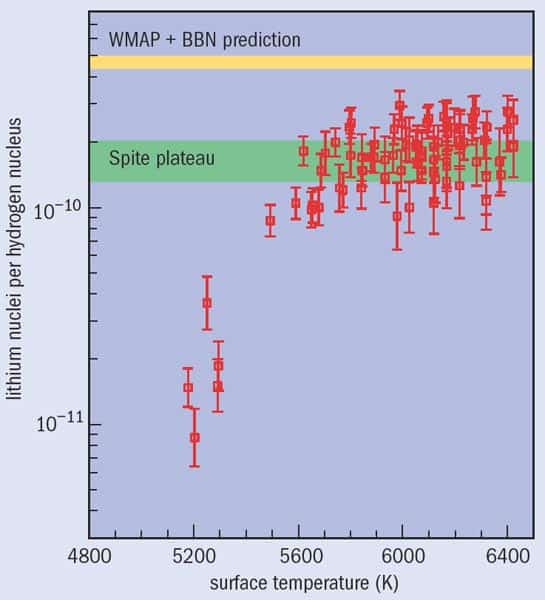
By 1982 astrophysicists had obtained good estimates of the primordial helium-4 abundance, as well as limits on the abundances of helium-3 and deuterium (see “Observing abundances”). Then François and Monique Spite at the Observatoire de Paris discovered that certain old stars in our galaxy with very thin convective envelopes – rapidly circulating regions of a star in which material is well mixed – all contained roughly the same amount of lithium-7. Since spectroscopic measurements show that stars in this “Spite plateau” contain only very small amounts of nuclei synthesized in previously existing stars, the stars must have formed out of nearly primordial gas. This meant that the amount of lithium-7 in Spite-plateau stars could be interpreted as the amount of lithium-7 synthesized during BBN.

Measurements of light-element abundances continued to advance, and by 2000 they implied a mean baryon density of 2 × 10–31 g cm–3, give or take a factor of three. On the one hand, this was a remarkable case of diverse and difficult-to-obtain data all converging to some value. On the other hand, the formal error bars reflecting known sources of uncertainty had become so small that the data points technically disagreed with one another. While it was easy to imagine further systematic errors that could bring the results closer together, due either to the observational techniques or to effects involving the history of the material being observed, it was much harder to quantify them.

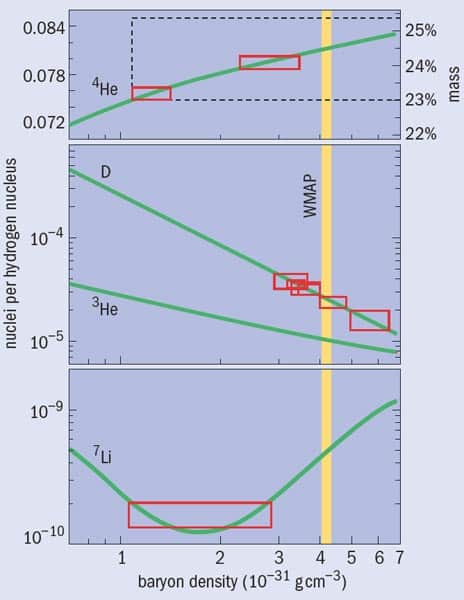
Measurements of deuterium in distant concentrations of gas lying between us and even more distant quasars favoured a mean baryon density of about 4 × 10–31 g cm–3, while the simplest interpretation of the lithium plateau and some of the helium-4 data favoured values nearer 1 × 10–31 g cm–3 (see “Measuring up to data”). As for the primordial abundance of helium-3, the post-BBN history of these nuclei is too uncertain to be able to constrain the mean baryon density. This disagreement prompted a vigorous programme of research by several groups in an attempt to improve the measurements and resolve the remaining discrepancies. In the mean time, however, precision cosmological data had started to give BBN a run for its money.

Elemental light

By the early 2000s, in the midst of the often heated debate over what to make of the different abundance measurements, BBN was no longer the only way to determine the mean baryon density of the universe. In 1992 the COBE satellite revealed that the temperature of the cosmic microwave background varies by a few tens of microkelvin on angular scales of 5° or more, thus providing evidence for density fluctuations in the early universe that may have seeded cosmic structure. Then in 2000 the BOOMERANG and MAXIMA experiments detected fluctuations on angular scales smaller than 1°. A key prediction of Big Bang theory, these fluctuations are the imprints left by acoustic waves that propagated through the plasma just before neutral hydrogen atoms first formed, some 380,000 years after BBN when the cosmic microwave background was born. And since the properties of the plasma depend on the baryon density, the amplitudes of these fluctuations provided the first strong independent crosscheck of the baryon density predicted by BBN.

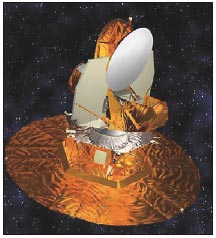
The initial BOOMERANG and MAXIMA results favoured a higher baryon density than the BBN value: (6.0 ± 2.0) × 10–31 g cm–3. However, combined with the more recent data from the Wilkinson Microwave Anisotropy Probe (WMAP) – which measured temperature fluctuations on scales down to 0.3° – the current most precise value is (4.1 ± 0.1) × 10–31 g cm–3. While this independent measurement settled an ongoing debate within the BBN community over the value of the baryon density, it brought the issue of systematic uncertainties in BBN into sharper focus (see “Measuring up to data”).

For example, the baryon densities inferred from the WMAP data and from measurements of the primordial deuterium abundance agree very closely. But the primordial deuterium abundance has been measured in only eight locations so far; and although the results all cluster around a value of 3 × 10–5 per hydrogen atom, their dispersion around that average is wider than would be expected given their error estimates. Such a variation with location is not what one would expect from BBN, which should have happened in the same way everywhere according to Big Bang theory. We probably need more data in order to understand this slight discrepancy, but this is easier said than done because the only way to identify and measure the primordial deuterium abundance is to spend huge amounts of observing time on the world’s largest telescopes.

There are similar discrepancies between BBN theory and the primordial helium-4 abundance. Unlike the deuterium abundance, the amount of helium-4 produced in the BBN model increases very slowly as a function of the mean baryon density of the universe, which means it has to be measured with a precision of a few per cent to be useful for BBN studies. To do this, astronomers study the brightness of certain spectral lines emitted by atoms in a plasma in a distant galaxy, from which they can derive a consistent set of parameters that characterize the plasma (see “Observing abundances”). Different research groups tend to use slightly different sets of lines to determine these parameters and they handle data in different ways. Somewhat disconcertingly, different groups have produced conflicting results.

In the 1990s the largest difference was between the results of Yuri Izotov at the Academy of Sciences of the Ukraine and Trinh Thuan at the University of Virginia in the US (right-hand, larger box in “Measuring up to data” figure) and a larger data set compiled by Steigman with Keith Olive and Evan Skillman of the University of Minnesota based on earlier observations (left-hand box). However, it is likely that the uncertainties of both approaches have been underestimated and that the discrepancy lies somewhere in a laundry list of small corrections such as how much light is scattered by dust between us and the plasma. The allowed range of the helium-4 abundance therefore probably spans the results of both groups (dotted box in “Measuring up to data”). Again, more precise observations may be needed, or perhaps we require a fundamental change of approach to find a solution with which everyone can agree.

Today the biggest mysteries of BBN involve lithium. For the baryon density provided by WMAP, BBN predicts that there are 4.7 × 10–10 lithium-7 atoms for every hydrogen atom, while the Spite-plateau stars contain only about 1.4 × 10–10. Several explanations for this discrepancy have been proposed, but no-one knows the right answer. Either some important physical process is missing from BBN theory, some astrophysical mechanism destroys large amounts of lithium-7 after BBN, or there is something is wrong with our interpretation of stellar spectra.

The problem with lithium

To solve the lithium mismatch, some physicists have turned their attention to BBN models that incorporate exotic ideas from particle physics. Many theories that seek to unify the fundamental forces in nature – most popularly based on supersymmetry or on models with extra space–time dimensions – predict the existence of heavy particles not yet seen in the laboratory. If these particles were unstable and decayed within a year after BBN, they may have produced large effects on the nuclear abundances by providing neutrons, protons and energy for a second round of nucleosynthesis involving different reactions at much higher energies.

In one example, last year Jonathan Feng at the University of California at Irvine and co-workers proposed such a model whereby “normal” supersymmetric particles such as neutralinos (the supersymmetric partners of force-carrying particles like photons and Z bosons) decay to form particles called superWIMPs, which may constitute present-day dark matter. But many variations are possible as long as the decay products include protons, neutrons and photons. The energetic particles created in the massive-particle decays interact with the BBN nuclei created months earlier. In this way, particles with appropriate masses and decay properties can destroy two-thirds of the beryllium-7 produced intermediately during BBN, and since beryllium-7 nuclei decay after BBN to produce the primordial lithium-7, Feng’s proposal could provide a neat solution to the lithium shortfall.

The hope underlying such exotic particle-physics models is that the lithium problem might provide the first sign of some new fundamental physics. BBN studies could then guide accelerator experiments such as those at the upcoming Large Hadron Collider at the CERN particle-physics lab. Unfortunately, BBN does not offer enough information to do this decisively, other than delineating what is possible and impossible. Indeed, most researchers in the field of light-element abundances would probably favour more mundane solutions to the lithium problem, even if such solutions are less interesting to particle physicists.

Answers from astrophysics

One such alternative possibility is to tweak the thermal models of the atmosphere of a star that are used to infer its composition from observations. For example, in 2004 Jorge Meléndez, now of the Australian National University, and Iván Ramírez of the University of Texas claimed that the models for the Spite-plateau stars depend on poor estimates of the stellar surface temperatures, and proposed a severe “rescaling” of these estimates that shift the lithium measurement towards agreement with the WMAP data. This proposal has met with much scepticism from colleagues, however, mainly because the rescaling procedure leads to temperatures that disagree with other measurements such as the intensities of hydrogen emission lines. In any case, rescaling can at best only be a partial solution to the lithium problem, since it only raises lithium abundances by a factor of 1.4 – not the factor of three required.

Perhaps the most likely explanation for the apparent lack of lithium is that the stars we observe have been gradually destroying their lithium over the 10 billion years or more since they formed. Astronomers can only observe the outside of a star – the top of the convective envelope. However, any lithium in a star that is exposed to temperatures above about 2.5 × 106 K is rapidly destroyed by the nuclear reaction 7Li + H → 24He. Therefore, lithium can only be completely preserved in the convective envelope if the whole envelope is too cold to burn it, and if lithium is not mixed between the surface layer and the deeper, hotter layers of the star. Although the Spite-plateau stars have been chosen to satisfy these criteria, there could be unexpected processes going on inside them.

But how could lithium on the surface of a star be mixed from the surface zone into the stellar interior? Several mechanisms are known that could potentially mix the convecting and non-convecting parts of stars, but it is difficult to compute the rates of these processes from first principles. The most stringent constraint on a mixing model is that it must maintain the observed tight bunching of plateau stars that have the same average lithium-7 abundance (see “The lithium discrepancy”).

In a series of papers that was published between 2002 and 2004, Olivier Richard and collaborators at the Université de Montréal in Canada proposed such a mixing model that has since gained observational support. It suggests that all nuclei heavier than hydrogen settle very slowly out of the convective envelope under the action of gravity. In particular, the model makes specific predictions for settling as a star evolves, which are revealed as variations of surface composition as a function of mass in stars that formed at the same time.

By spring 2006, Andreas Korn of Uppsala University in Sweden and colleagues had used the European Southern Observatory’s Very Large Telescope (VLT) in Chile to study 18 chemically primitive stars in a distant globular cluster called NGC 6397 that were known to have the same age and initial composition. From this the researchers showed that the iron and lithium abundances in these stars both varied according to stellar mass as predicted by Richard’s model. In fact, the model indicated that the observed stars started out with a lithium abundance that agrees with the WMAP data. Corroboration of these results is vital because if the result stands up to scrutiny based on a wide range of data, then we have solved the lithium problem.

Looking for lithium-6

Another way to determine the amount of lithium-7 destroyed in stars is to observe the element’s other, less stable, isotope: lithium-6. Lithium-6 is not made in detectable quantities by BBN but instead comes from collisions between nuclei in cosmic rays and in the interstellar gas. Since lithium-6 is even more easily destroyed than lithium-7, detecting it allows us to place limits on the destruction of lithium-7.

In 2006 Martin Asplund and co-workers at the Mount Stromlo Observatory in Australia made extensive observations of lithium-6 in plateau stars using the VLT. In each of the nine stars where they found lithium-6, roughly 5% of the lithium consisted of this isotope – which was larger than expected although at the limit of what was detectable with the equipment. This has huge implications not only for BBN but also for the history of cosmic rays in the galaxy and for stellar astrophysics. For example, the production of such large amounts of lithium-6 must have required an enormous flux of cosmic rays early in the history of our galaxy, possibly more than could have been provided by known acceleration mechanisms. Moreover, if the plateau stars have truly destroyed enough lithium-7 to bring the WMAP prediction of the mean baryon density into agreement with that obtained with the observed Spite plateau, the greater fragility of lithium-6 implies that the stars initially contained lithium-6 in quantities comparable to the observed lithium-7 plateau.

All of these facts make the lithium-6 observations an uncomfortable fit for BBN, stellar physics and models of cosmic-ray nucleosynthesis – particularly since the production of large amounts of lithium-6 via cosmic rays has to be accompanied by a similar production of lithium-7. Although lithium-6 can be produced in some of the exotic particle-physics scenarios mentioned earlier, it is vital that we independently confirm Asplund’s results. Indeed, the hunt for primordial lithium (of both isotopes) is currently ongoing at the VLT, as well as at the Keck Observatory and the Japanese Subaru Telescope, both in Hawaii. Although such observations are right at the limit of what can be achieved with these instruments, the pay-off could be enormous: if the lithium-6 results stand, we will require an extensive re-examination of what we think we know about stars, cosmic rays and BBN.

Window on the early universe

Better measurements of the primordial abundances combined with precise cosmological data are leading to a shift in the way BBN is studied. Within their estimated errors of about 10%, the abundances of helium-4, deuterium and lithium-7 disagree with BBN theory. But within the “believable” range of poorly quantified additional uncertainties, such as those arising from our ignorance of certain astrophysical environments, the measurements tell us that BBN is correct.

Our task now is to remedy that ignorance and, if discrepancies persist, to figure out what that means for the physics of the early universe. Even if the lithium problem turns out to be an early sign of new particles or other fundamental physics, a definitive answer will still depend on a better understanding of the Spite-plateau stars. In other words, it would be prudent to exhaust all astrophysics explanations before overhauling BBN based on as-yet-undiscovered fundamental physics.

For nearly three decades BBN was the linchpin in the argument for non-baryonic dark matter in the universe. It remains our clearest window on the universe for times less than a year after the Big Bang and – through its measurement of the baryon density – an important crosscheck of the cosmological data provided by both the microwave background and surveys of galaxy distributions. However, now that the cosmic microwave background has provided more precise measures of the mean baryon density than BBN, largely due to WMAP, the role of BBN in astrophysics is changing.

The new situation has increased the number of constraints on BBN, potentially improving its strength as a test of particle-physics models. Indeed, the first test for any extension to the Standard Model of particle physics is that it preserves the even incomplete success of BBN. In the next few years, projects like the follow-up to the Sloan Digital Sky Survey, SEGUE, and the RAVE programme at the Anglo-Australian Observatory will measure the compositions of roughly a million stars in our galaxy. This large sample of stars with diverse ages, compositions and histories will be used to reconstruct the tangled histories of the assembly of our galaxy and of its atomic nuclei, much as palaeontologists use fossils to reconstruct the history of life on Earth. BBN provides the initial setting for this story of our origins.

More about: Big Bang nucleosynthesis

M Asplund et al. 2006 Lithium isotopic abundances in metalpoor halo stars Astrophys. J. 644 229–259
T Beers and N Christlieb 2005 The discovery and analysis of very metal-poor stars in the galaxy Ann. Rev. Astron. Astrophys. 43 531–580
A Korn et al. 2006 A probable stellar solution to the cosmological lithium discrepancy Nature 442 657–659
D Lambert 2004 Lithium in very metal-poor dwarf stars – problems for standard Big Bang nucleosynthesis? arXiv:astro-ph/0410418v1
D Schramm and M Turner 1998 Big Bang nucleosynthesis enters the precision era Rev. Mod. Phys. 70 303–316 BBN site: bigbangonline.org

At a Glance: Big Bang nucleosynthesis

  • Big Bang nucleosynthesis (BBN) is the process during which the light nuclei deuterium, helium-3, helium-4 and lithium-7 were produced in the first few minutes of the universe
  • For many years BBN provided the most reliable way to determine the mean baryon density of the universe – a central parameter in cosmology that revealed that the universe is mostly made of “dark” matter rather than ordinary protons and neutrons
  • A major component of the hot Big Bang model, BBN can be tested by measuring the abundances of certain light nuclei present in very old cosmic material
  • Current measurements of the abundances of light nuclei give inconsistent values for the baryon density of the universe, with lithium in particular challenging our understanding of both the stars in which it is observed and of BBN theory itself
  • Precision measurements of the cosmic microwave background provide an independent measure of the baryon density, and allow more stringent tests of the BBN model


Atoms store 2D images for record time

Normally, if a “probe” laser beam is shone onto a gas of atoms at such a frequency to make the atoms jump into a higher energy state, the light will be absorbed by the atoms and then re-emitted in different directions when the atoms return to the ground state. But if a second “pump” laser beam that is tuned to a different excited energy state is shone onto the atoms at the same time, the probe beam passes through the atom cloud unimpeded – an effect known as electromagnetically-induced transparency (EIT).

In 2001, researchers found that if the pump beam is turned off momentarily while the probe beam is in the gas, the probe beam could remain stored there until the pump beam is turned back on again . Now, Nir Davidson and colleagues from the Weizmann Institute of Science and the Technion-Israel Institute of Technology have shown that EIT can also be used to store and retrieve a 2D image.

The group starts by splitting the light from a diode laser in two beams – the probe and pump – polarized at 90° to each other, and then sends the beams to a cell of vaporized, room-temperature rubidium-87 atoms. However, the path of the probe beam is interrupted by a 2D mask, which effectively “imprints” its image onto the atoms by limiting those that are excited into higher energy states.

Just as the probe beam begins to leave the gas of atoms, the group switches off the pump beam, and then switches it on again some time later. They then direct any light leaving the gas to a CCD camera after filtering off the pump light using a polarizer.

Experimenting with masks depicting the numbers “2”, “6” and “9”, Davidson and colleagues found they could store the images in the gas for up to 9 µs and still pick them up on the camera – almost three orders of magnitude longer than a US group demonstrated earlier this year using a different technique. This, they say, is the longest that an image could be stored before the diffusion of atoms would make the image indecipherable.

To overcome this limitation, the group tried borrowing a technique from semiconductor manufacturing called phase-shift lithography, which is used to etch high-resolution features without any spreading due to refraction. In image storing, flipping the phase of the light between different parts of the image causes neighbouring features of the image to cancel-out, thus making the image “immune” to atomic diffusion.

Using this phase-shifting technique, Davidson and colleagues could store images of three lines separated by 340 µm and still resolve them after they were retrieved on the camera 30 µs later.

The Israel group now want to try changing the shape of the probe-beam light field from a simple bell-shaped “Gaussian” curve to something more elaborate, which would mean 3D information – something akin to a movie – could be stored. According to the researchers, this system would also have enough capacity to be used as a memory device for photon states used in quantum computing.

Wrinkles winkle out film thickness

The new technique has been developed by Thomas Russell and colleagues at the University of Massachusetts along with collaborators in the Netherlands and Chile. They studied a number of polystyrene films of known thicknesses ranging from 31 to 233 nm. Each film was floated in a dish of water and a tiny drop of water (less than 1 mm radius) was placed at its centre.

The capillary force between the drop and the film created a series of wrinkles that radiated out from the centre of the drop (see Radiating wrinkles). The researchers discovered that the number of wrinkles was a well-defined mathematical function of the radius of the water drop and the thickness of the film. Large drops created more wrinkles than small drops, and thin films had more wrinkles than thick films. Once this relationship was established, the thickness of an individual film could be determined by simply counting the wrinkles and measuring the diameter of the water drop.

The team then added varying amounts of a chemical compound to the polystyrene, which changed its elasticity. By measuring the average wrinkle-length in films of different elasticity and thickness, the researchers discovered that wrinkle-length is a function of the elasticity and the thickness of the film.

As a result, the elasticity and the thickness of a film could be determined by simply measuring the length of the wrinkles and counting their number. Currently, elasticity and the thickness must be measured separately using expensive and time-consuming tests such as stress-induced buckling and X-ray reflectivity. “Anyone can do the [wrinkle] measurement with a cheap optical microscope”, said Russell. He also told physicsworld.com that the technique could be used on any material that can be made into a thin film.

New statistical analysis confirms human role in climate change

Most of the evidence for human-induced or “anthropogenic” climate change has come from climate models, which simulate the dynamics of the atmosphere using complex fluid-flow equations. Given inputs of temperature and other climate data from instruments and older proxy records, such as tree rings, these equations are solved numerically using short time increments.

Although all climate models indicate that the Earth’s temperature will continue to rise, some climate-change sceptics have suggested that the anthropogenic influences are exaggerated. For example, because the simulations divide the atmosphere into a 3D lattice with a coarse resolution, they cannot take into account the effects of clouds, which can both reduce or enhance warming.

Rather than trying to simulate the atmosphere as climate models do, Verdes has used statistics to assess man’s role in climate change.

Verdes started with data records of the past 150 years of the three main natural components thought to be involved in global warming: temperature anomalies, volcanic activity and the energy received from the Sun. To see if these were the only significant components, he looked for trends between the data – that is, if changes in volcanic activity and solar output could account for the changes in temperature. Verdes then checked whether the addition of an external driving force, such as human activity, resulted in a better description of the data.

To do this Verdes used a theory known as nonlinear time-series analysis, whereby the existence of a slowly-varying driving force can be deduced without any knowledge of internal dynamics. First, he assumed the driving force was zero and chose a generic function to fit the data computationally. He then introduced a non-zero driving force and estimated different profiles that would improve the accuracy of the fit.

Verdes found that the driving-force profile that produced the best fit almost exactly matched records of greenhouse gas and aerosol emissions (see Driving force). In other words, fitting the data using the natural components alone left a hole that could be filled by our anthropogenic components. “The coincidence is remarkable,” he said.

The results add weight to the consensus of the Intergovernmental Panel on Climate Change, which came to the conclusion earlier this year that humans are to blame for rising temperatures.

Verdes thinks that his statistical approach should “enrich the continuing debate on the future of our climate.”

Copyright © 2026 by IOP Publishing Ltd and individual contributors