Fermilab’s guest composer is inspired by neutrinos, poetry and physics collide at the LHC

Fermilab, the US particle-physics facility on the outskirts of Chicago, has just named its guest composer for 2024. According to the lab, the pianist Mischa Zupko “will create music to interpret particle science in new ways” by collaborating with Fermilab scientists; the Civitas Ensemble chamber musicians; and the saxophonist Timothy McAllister.

Fermilab goes on to say that Zupko “is eager to work with Fermilab scientists to musically explore projects such as the Deep Underground Neutrino Experiment”. His goal is to create a physics-inspired composition that will be recorded and then released in 2026.

Looking forward to the task ahead, Zupko says, “From what I have come to understand, the ability to imagine, in a physical sense, phenomena relating to the behaviour and interaction of elementary particles is impossible, but the attempt to imagine, is where the beauty lies”.

This is not the first time that Zupko has been inspired by science. In 2016 he recorded Eclipse: Chamber Music of Mischa Zupko, with violinist Sang Mee Lee and cellist Wendy Warner. This work explored musical aspects of the universe; cosmic phenomena; and mathematical models. The previous year, a recording called “From twilight” was release by Zupko. It was inspired by the evening sky.

Poet goes round the LHC

Staying on the subject of physics-inspired artists, I have just listened to a programme on BBC Radio 4 in which the British poet Paul Farley visits the Large Hadron Collider (LHC) at CERN in Geneva. This is the final episode in a five-part series called In the Loop, in which Farley explores structures in which people or things go round in circles.

At the LHC, Farley talks to the physicists Melissa Yexley and Simon Albright about how the collider works and why it is smashing particles together at very high energies. The pair describe the Standard Model of particle physics as we know it, and how research at facilities like the LHC could reveal new physics beyond the Standard Model.

The discussion of loops in physics  is then broadened out by Paddy Regan, who talks to Farley about the orbits of the planets and the role that angular momentum plays in keeping the solar system moving.  The episode then moves away from physics and into the world of dance, when the dance teacher Karen Michaelsen talks about the social relevance of linking hands and dancing in circles.

While I didn’t learn much about particle or planetary physics from the programme, I was fascinated by the various discussions of the roles that loops play in human thought.

In the Loop was first broadcast last year and in the addition to the LHC, Farley has visited a traffic roundabout; a stone circle; and the imaginary loops of the artist MC Escher. There is also an episode about rollercoasters in which I learned the amazing fact that the Grand National rollercoaster in Blackpool is one of two surviving “Möbius loop” rollercoasters.

Breaking barriers: embracing neurodiversity in neutron science

It was during my PhD studying metal-organic magnets at Durham University that I first started to realize that my approach to research made me different from my peers. I liked to work on lots of different projects at once and I was able to quickly switch between tasks in a way that other people sometimes struggled to understand. Looking back, I recognize that this was a sign of neurodivergence – in my case dyslexia and Attention Deficit Hyperactivity Disorder (ADHD) – though I wasn’t aware of this at the time.

Fortunately, I had two fantastic supervisors who encouraged my ability to see the big picture and I completed my PhD in 2013. I enjoyed pulling together lots of different strands of research rather than focusing on the details of a single project. However, having this kind of support hasn’t always been my experience. Though I now work as a researcher, as a teenager I wasn’t allowed to do a maths A-level and I was discouraged from doing physics because I wasn’t seen as being “quick and able” enough to cope with these subjects.

I have seen that many disabled scientists still feel that they have to camouflage and try to fit in, even if this negatively impacts their work. But neurodiversity has shaped my career; it has not only determined my choice of research projects but has also led me to my current role as the chair of the Disability Matters network at UK Research and Innovation (UKRI) – the umbrella body for the UK’s main research councils.

A different perspective

In fact, some people had originally discouraged me from doing a PhD in the first place. My first degree was in chemistry and my chosen path meant switching to physics at postgraduate level, which sometimes made me feel alienated from my colleagues.

However, I drew a lot on my knowledge of chemistry during my PhD, and I think that coming in with a different perspective benefited my work. In addition, being neurodivergent made the transition easier because I was used to switching between subjects and adapting to unfamiliar ways of thinking. My experience underscores why it’s so important to include people from diverse backgrounds in scientific research. This is true not only for subject area and neurodivergence but also for other characteristics like race and gender.

After my PhD, I took a postdoc position in China, studying organic-based magnetic and superconducting materials under high-pressure conditions. I worked at the Institute of Solid State Physics in Hefei, part of the Chinese Academy of Sciences. I then did a second postdoc in Australia, in a role that was split between the Australian National University and the Australian Nuclear Science and Technology Organisation (ANSTO). I was involved in a huge range of research projects – I investigated solid-state organic and inorganic materials using techniques ranging from neutron spectroscopy to electron-spin resonance. But while I was there, I started to realize the limitations of postdoc work – producing results and pursuing the interests of someone else – when I was so driven by my own passions.

On returning to the UK in 2015, I joined the ISIS Neutron and Muon Source, and I’ve been here for eight years. Now I am building my own research programme, with the freedom to create a diverse and exciting portfolio, stretching from molecular and physical chemistry to quantum materials .

Tackling barriers for disabled scientists

However, there is still a lot to be done for neurodivergent researchers in the UK. For example, people with ADHD may struggle to manage organizational tasks, and I’m still pushing back against the idea that just because some things – such as writing and replying to e-mails – take longer for me than my neurotypical colleagues, I somehow haven’t earned my place as a researcher.

This frustration led me to become involved in disability advocacy in my workplace. The research sector is so important, and when you encounter barriers you have the opportunity to stand up and demand change. That’s where my work as chair of the UKRI Disability Matters network comes in. The network spans all of UKRI, encompassing research councils and facilities including the ISIS Neutron and Muon source. The network was set up in 2021 to make UKRI a more disability-inclusive workplace. I have found that many workplaces want to support disabled people, but they often don’t know what to do. One of our roles is to provide this expertise, as well as be a safe space for disabled colleagues to voice their concerns.

Diversity of thought benefits everyone, but when the focus is on the short-term costs of making changes, disabled people are often deterred from asking for what they need

As a researcher at the ISIS Neutron and Muon source, I also have the opportunity to put my beliefs into practice and foster a supportive environment for my colleagues. It’s important to take the initiative and ask people whether they have everything they need, and we should be willing to listen and make adjustments. Diversity of thought benefits everyone, but when the focus is on the short-term costs of making changes, disabled people are often deterred from asking for what they need.

My experience shows that it is individual researchers themselves who understand what they need to succeed better than anyone else. That’s a message I want to share with others, and I am always happy to talk about my experience as a disabled researcher with individuals and organizations. Being the chair of the UKRI Disability Matters network is one of the proudest parts of my career.

First-in-human study reveals potential of biology-guided radiotherapy


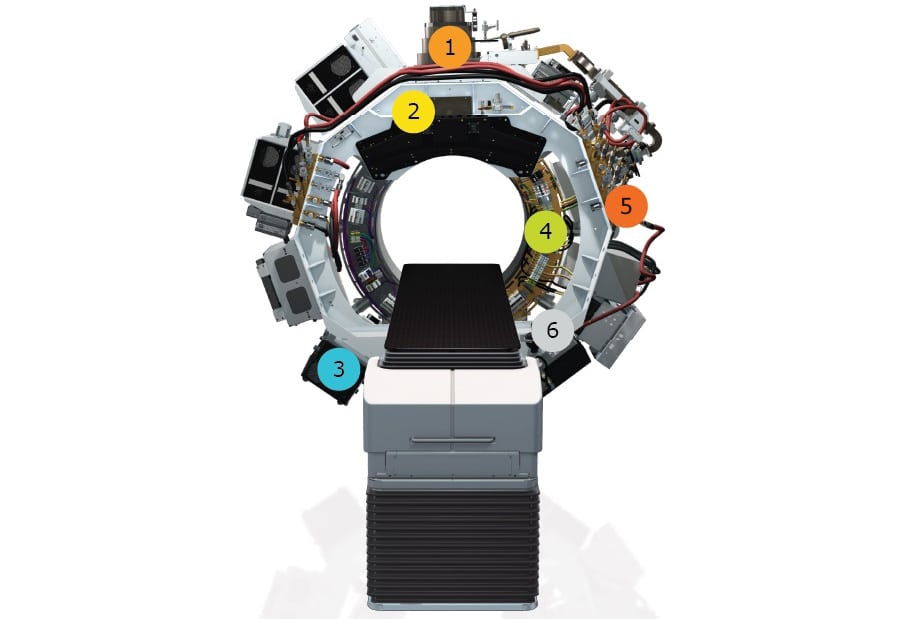
The RefleXion X1 radiotherapy system

SCINTIX biology-guided radiotherapy (BgRT), performed on the RefleXion X1 linac, is a radiation delivery modality that uses real-time positron emission tomography (PET) to guide radiotherapy beamlets to radiolabelled tumours. Such guidance offers the potential to compensate for motion during treatments, reduce treatment volumes for moving tumours and increase intra-fraction treatment accuracy. In a first-in-human study, researchers in the US have now shown that SCINTIX dose distributions calculated from PET data were accurate and deliverable to lung or bone tumours.

Radiotherapy is often not considered an option for patients with multiple metastases, due to toxicity concerns and workflow issues relating to administering multiple treatments in a single session. In the future, PET-guided radiotherapy may be able to treat such patients by increasing delivery efficiency and reducing treatment margins related to motion and setup uncertainties.

The research team, headed up at Stanford Medicine and UT Southwestern Medical Center, identified a suitable dose of the radioactive tracer 18F-fluorodeoxyglucose (FDG) to perform SCINTIX therapy, and validated that the SCINTIX algorithm provides accurate dosimetry. The findings, reported in the International Journal of Radiation Oncology, Biology, Physics, support data submitted for US Food and Drug Administration (FDA) clearance of SCINTIX, obtained in 2023.

SCINTIX therapy uses a radiolabelled tumour as its own fiducial marker for targeting. BgRT technology differentiates itself from other types of real-time tumour tracking during radiotherapy by enabling the tumour to “communicate” its current position directly to the linac, using radiotracer uptake as a biological fiducial.

The RefleXion X1 is a hybrid imaging–therapy system that also delivers intensity-modulated radiotherapy, stereotactic body radiotherapy (SBRT) and stereotactic radiosurgery. The system’s integral PET detectors (comprising 64 scintillation multi pixel counter modules) are employed at three points in the BgRT workflow: to collect PET data from the patient for use in treatment planning; immediately prior to radiation delivery to evaluate whether the tumour’s PET avidity is consistent with the imaging-only session; and during BgRT delivery to guide the therapeutic beam.

Following CT imaging for initial patient set-up, real-time PET detects outgoing tumour emissions and delivers radiation beamlets to the tumour location with a response latency of 350–400 ms. The ability to conform radiation delivery to a moving tumour results in a tracked dose distribution characterized by high dose falloff and reduced dose to normal tissues.

First-in-human study

The BIOGUIDE-X study, led by Lucas Vitzthum and Murat Surucu from Stanford, and Daniel Chang of the University of Michigan, included two sequential groups of participants, all of whom had at least one FDG-avid targetable tumour in the lung or bone. The study in cohort I confirmed that a 15 mCi injected dose of FDG provided an adequate activity concentration (median of 5 kBq/ml) to enable SCINTIX therapy.

Using this dose, the researchers created emulated treatment fractions for cohort II – five patients with lung tumours and four with bone tumours. They used an emulated delivery technique in which PET data collected on the RefleXion X1 before the patient’s first and last SBRT fractions are converted offline to linac machine instructions and then “delivered” in silico to the patient’s CT anatomy. This generates an emulated dose distribution and dose–volume histogram (DVH) that can be compared with the approved treatment plan.

The researchers generated a SCINTIX treatment plan that met all clinical criteria for all nine participants. The activity concentration, normalized target signal and predicted DVH requirements at the PET pre-scan evaluation were met in 17 of the 18 emulated deliveries. Sixteen of the 17 evaluable emulated deliveries resulted in SCINTIX dose distributions that were comparable to the physician-approved treatment plan; the other was just below the 95% threshold for accuracy. All of the dose distributions, regardless of tumour location or SBRT fraction, were physically deliverable by the machine hardware.

“By mapping out the clinical workflow for SCINTIX BgRT and studying the emulated SCINTIX administration for patients at both the outset and conclusion of their SBRT regimen, we’ve gained valuable insights into how the RefleXion system would respond to each patient’s PET emissions through radiotherapy,” says Surucu.

Vitzthum tells Physics World that the next steps “include evaluating the performance of SCINTIX for tumours outside of the bone and lung. These sites include lymph nodes and soft-tissue metastases such as liver or adrenal metastases. We are also evaluating SCINTIX with alternate radiotracers, including prostate-specific membrane antigen.”

Kink in cosmic ray spectrum puzzles astrophysicists

Using observations from the GRAPES-3 muon detector, physicists in India and Japan have explored a poorly understood region of the cosmic ray energy spectrum in unprecedented detail. Fahim Varsi at the Indian Institute of Technology Kanpur and colleagues identified a previously unseen feature in the form of a kink in the spectrum. The observations suggest a need to rethink the origins of cosmic rays.

Composed mainly of protons and helium nuclei, cosmic rays are highly energetic particles that constantly bombard Earth’s atmosphere. As they interact with the atmosphere, cosmic rays produce showers of secondary particles, including electrons, photons, and muons – which rain down on Earth.

Cosmic rays were first identified in 1912, in Nobel prize-winning observations done by Victor Hess. Yet even over a century after their initial detection, we still have much to learn about the nature of these particles. While astronomers believe that cosmic rays originate from a number of different sources including stars, supernovae and active galactic nuclei, their origins are not fully understood because the particles are deflected by magnetic fields as they travel great distances to Earth.

Precise measurements required

“Cosmic rays are known to be the most energetic particles in the universe,” says team member Pravata Mohanty at the Tata Institute for Fundamental Research in Mumbai. “Precise measurement of the shape of the elemental energy spectrum in cosmic rays is required to advance our understanding of their origins, acceleration, and propagation.”

One particularly glaring gap in understanding lies in the middle of the cosmic-ray spectrum at energies in the 100 TeV–1 PeV range. In this window, the particles are too energetic to be picked up directly by space-based detectors, but not energetic enough for large numbers of shower particles to reach detectors on Earth.

To explore this energy range in more detail, Varsi’s team examined observations from the GRAPES-3 experiment. This is a muon observatory located in the south of India that comprises an array of scintillating detectors. The facility sits at 2200 m above sea level, making it easier to detect muons before they interact with the atmosphere.

“GRAPES-3 contains a large area detector, enabling us to measure the elemental composition of cosmic rays through the muon component in cosmic ray showers,” Mohanty explains. “With a detection area several thousand times larger than the space-based detectors, GRAPES-3 ensures exceptionally high statistical precision in measurements.”

Four-year study

The researchers evaluated about 8 million shower events observed across a 460-day period in 2014 and 2015. Owing to the complexity of their analytical and error correction techniques, the analysis took four years to complete. The team says its results provide the first detailed view of the mid-energy window.

“The study measured the proton spectrum in cosmic-rays from 50 TeV to 1.3 PeV, effectively connecting observations from both space-based and ground-based measurements,” Mohanty describes.

Among the most striking features spotted by Varsi’s team was a kink in the energy spectrum at around 166 TeV, with more cosmic protons than expected detected at slightly higher energies. Previously, ground-based experiments had detected a similar kink at around 3 PeV, which was thought to be the maximum energy for cosmic rays originating from galaxies.

Up to this point, researchers had generally assumed that the proton energy spectrum in the observed region can be described by a simple power law. However, the team’s discovery appears to shatter this assumption.

“It suggests the possibility that one class of sources, commonly believed to be supernova remnants, may effectively accelerate cosmic rays up to the observed kink, while another class becomes predominant beyond the kink,” Mohanty explains.

By building on these results, Varsi’s team hopes that new models could soon emerge to account for these effects. If achieved, they could help to strengthen our understanding of how cosmic rays emerge, accelerate, and propagate across intergalactic distances.

The research is described in Physical Review Letters.

Bionic jellyfish and more efficient windfarms: a conversation with John Dabiri

Jellyfish have a very simple, yet very effective way of swimming – and this has attracted the attention of the aeronautics engineer John Dabiri at the California Institute of Technology. In this episode of the Physics World Weekly podcast, Dabiri talks about his work on the artificial enhancement of jellyfish. He also explains how fluid dynamics can be used to boost the efficiency of windfarms, and explores the possibility that swimming organisms play important role in the mixing of the oceans.

Dabiri and Caltech’s Simon Anuszczyk describe their bionic jellyfish in a paper that has been accepted for publication in the journal Bioinspiration & Biomimetics. The accepted manuscript can be read here: “Electromechanical enhancement of live jellyfish for ocean exploration”.

Wearable device could help predict preterm birth

Preterm birth – when a baby is born before the 37th week of pregnancy – can result in considerable health and development problems. Identifying the risk of premature delivery could enable interventions to delay labour onset or treatments to improve respiratory and nervous system function at birth. But preterm birth is difficult to predict: few screening options exist and those that do are used infrequently.

To overcome these limitations, researchers from wearables specialist WHOOP and West Virginia University have investigated whether maternal heart rate variability (HRV) measured using the WHOOP strap could provide a digital biomarker for preterm birth. The WHOOP strap is a commercial wearable device that continuously monitors a range of physiological parameters, including HRV, the fluctuation in the time intervals between consecutive heartbeats.

“We chose [to examine] heart rate variability because it is a non-invasive and reliable indicator of the autonomic nervous system’s activity,” explains Emily Capodilupo, senior vice-president, data science and research at WHOOP.

In previous research by Shon Rowan and colleagues at West Virginia University, data from the WHOOP strap revealed that maternal HRV steadily decreased during pregnancy until approximately 33 weeks of gestation, at which point it started to increase. This work, however, only included pregnancies delivered at term.

The latest study, led by Capodilupo and described in PLOS One, examined both term and preterm pregnancies. The aim was to determine whether the same trends in maternal HRV were observed, and whether the HRV inflection point is an indication of time to delivery or simply a feature of gestational age.

The study cohort included 241 women who gave birth between March 2021 and October 2022, with 220 term and 21 preterm births. All women wore a WHOOP strap during their pregnancy and recorded a mean of 99.9 (±19.3) days of data from week 24 until the birth. For each participant, the researchers derived daily HRV values by averaging measurements taken at 30 s intervals throughout the night. They then analysed weekly averages to capture trends over time and assess changes in HRV relative to the eventual delivery date.

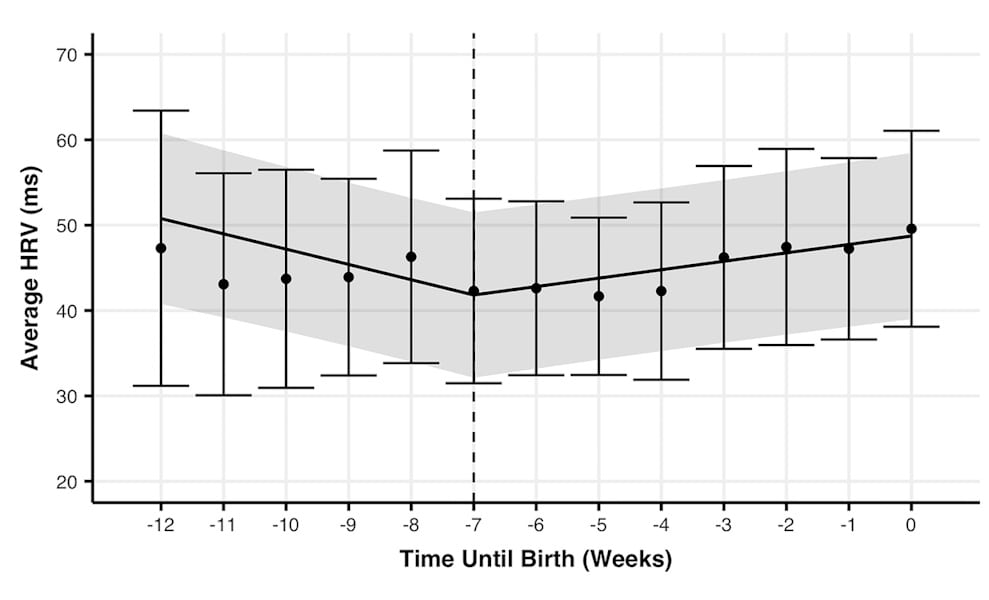
Mean maternal heart rate variability by weeks until birth

After splitting the subjects into preterm and term groups, they analysed the mean weekly HRV data using two mixed-effect spline models: the first relating HRV to gestational age (from week 24 until the reported date of birth); and the second relating HRV to weeks until birth (from the birth date backward until week 24). Data for each group were fit to a linear spline model with a knot (the point of inflection between two linear fits) at either 33 gestational weeks or seven weeks from birth, for the first and second models, respectively.

While trends in HRV were associated with both gestational age and weeks until birth, the researchers found that for both term and preterm pregnancies, the maternal HRV inflection was more strongly correlated with weeks until birth. They suggest that monitoring changes in nightly maternal HRV could help detect an increased risk of preterm delivery, flagging the need for further tests and medical interventions where required.

“Our study found maternal HRV trends inverted seven weeks before delivery, which means that monitoring for that inversion could potentially provide early indication of a probable delivery date,” says Capodilupo.

Continuous monitoring using a non-invasive wearable device could prove particularly important for pregnant people in medically underserved areas, where premature births have comparatively worse outcomes. Knowledge of the likely delivery date may help patients access a properly equipped delivery facility in a timely fashion.

The researchers note, however, that the current dataset is underpowered for individual-level predictions, as the data analysis was conducted using average values from women in each group. “While [our results] provide insights at the group level, further research with a larger dataset would be required to individually assess the utility of watching for an inflection point,” Capodilupo explains.

With this in mind, the team is now undertaking a larger investigation into the value of HRV for predicting preterm birth. “This study suggests that further research is warranted to better understand this phenomenon at an individual level and the extent to which the timing of an inflection point in maternal vital signs predicts future preterm birth,” Capodilupo tells Physics World.

Ultracold four-atom molecules are bound by electric dipole moments

Weakly bound tetratomic molecules that are more than 3000 times colder than any previous four-atom molecules have been created using a newly developed “electroassociation” technique. The work, which is based on a 2003 proposal, could make it possible to assemble even larger molecules at ultracold temperatures, open up studies in superfluidity and superconductivity, and even find applications in quantum computing.

In 2003, theoretical physicist John Bohn of JILA in Boulder, Colorado was part of a team led by the renowned experimentalist Deborah Jin, who died in 2015. They were studying the effects of magnetic fields on ultracold fermionic gases. The researchers discovered that the atoms formed weakly bound diatomic molecules when they tuned the value of the field across a so-called Feshbach resonance at which the binding energy was equal to that of the molecules. This process subsequently became known as magnetoassociation.

Then, in 2008, a team led by Jin and her University of Colorado colleague Jun Ye demonstrated the conversion of these fragile dimers into ground-state molecules using a three-level laser cooling technique called stimulated Raman adiabatic passage (STIRAP). The two techniques have subsequently been used by countless other groups to create ultracold dimers for a plethora of applications such as the study of quantum chemistry.

Magnetoassociation only works, however, on particles with magnetic dipole moments – which means they must have unpaired electrons. Jin’s group was working with potassium atoms, which are magnetic. Once they associate to form diatomic potassium molecules, they no longer respond to magnetic fields.

Why not electroassociation?

In the same year, Bohn and colleague Aleksandr Avdeenkov published a theoretical paper suggesting that it might be possible to induce non-magnetic molecules to pair up if they had an electric dipole moment: “Magnetoassociation was something that existed, so we thought, well, why not electroassociation?” says Bohn, “We didn’t give it any more thought than that.”

In 2023, however, using a modified version of Bohn’s original proposal, Xin-Yu Luo of the Max Planck Institute for Quantum Optics in Germany and colleagues placed strongly bound, ultracold sodium potassium molecules (produced by magnetoassociation and STIRAP) in an oscillating external microwave field. At specific field values, they found spectroscopic evidence of a resonant state unlike anything previously seen between pairs of molecules. In this state the two molecules danced in parallel as their own electric dipole moments modified the applied potential. The resulting interaction was repulsive at short distances but attractive at long distances, resulting in a bound state that was about 1000 times larger than the diameters of the individual molecules. At the time, however, the researchers only had evidence that the state existed – not any controlled means to place particles into it.

Circularly polarized microwaves

In the new work, the Max Planck researchers and colleagues at the Institute of Theoretical Physics, Chinese Academy of Sciences found that, by applying a circularly polarized microwave field to sodium potassium molecules at temperatures around 100 nK before increasing the ellipticity of the field, they could induce some of them to form tetramers. The team also managed to dissociate the tetramers and, by looking at the shape of the dimers released, image the tetramer wavefunction. They describe this in Nature.

“The binding energy is radio-frequency scale,” says Luo, “It’s more than 10 orders of magnitude weaker than typical chemical bond energy.”

The researchers now hope to use STIRAP to create strongly bound tetramers. This will be no easy task, says Luo, because it requires a suitable intermediate energy level, and tetramers have many more energy levels than dimers. “Even for me it’s an open question whether we can find a suitable state in the forest of energy levels,” says Luo. If they can, however, it holds out the tantalizing possibility of repeating the technique to build ever-larger molecules.

The researchers are also looking to cool their molecules further into a Bose–Einstein condensate (BEC). They would then become a powerful tool for studying the crossover between the BEC state and the Bardeen–Cooper–Schrieffer (BCS) state of superconductivity. This crossover is crucial to understanding high-temperature superconductivity. Such a tool would allow physicists to tune the constituents of the condensate between fermionic dimers and bosonic tetramers simply by tuning the microwave field. This would allow them to turn a BEC into a degenerate Fermi gas that supports Cooper pairs.

Further into the future, the system could even be useful in quantum computing as theoretical predictions suggest it should support topologically protected Majorana zero modes that could be used to create noise-resistant qubits.

Bohn describes the work of Luo and colleagues as fantastic, adding “Not only is it well done, but it’s something that a lot of people have been hoping for for a long time.” After reading the group’s 2023 paper, he collaborated with two colleagues to develop a theoretical framework, described in Physical Review Letters in July 2023, for achieving electroassociation based on the group’s results, and showing the ideal rate at which to alter the fields. “While we were doing that, they already did the experiment,” he says; “Evidently they figured that out just fine on their own.”

Are we ready for the quantum economy?

Earlier this week I went to a roundtable in London hosted by the UK government’s Office for Quantum to gather views from industry and academia about adapting the UK workforce to quantum technologies. The Quantum Skills Taskforce Workshop was co-hosted with techUK, a UK-based trade organization for the technology sector. Featuring 60 participants from academia and industry, the day featured lively discussion and debate about what the next decade has in store for the UK quantum sector.

All major economies around the world now seem to have their own quantum plan and the UK is no exception. In fact, the UK is onto its second National Quantum Strategy, which was launched in March 2023 by the Department for Science, Innovation and Technology (DSIT). Setting goals for the UK to become a “quantum-enabled economy” by 2033, it also established an Office for Quantum within the DSIT.

It’s an ambitious plan that would see a network of accessible quantum computers realized by 2035, with the capability for a quantum internet in the future. Quantum technologies would also be used in navigation and sensing, as well as by healthcare providers for diagnosis and monitoring. In addition, the strategy sets out plans for regulation of the quantum industry and frameworks for encouraging quantum businesses to set up in the UK.

This will mean more of the UK workforce using quantum skills in their everyday jobs, from engineers to software developers and possibly even journalists. But according to the DSIT, the demand for these skills outstrips the supply. Participants at the workshop identified areas of skill shortages and proposed solutions that could be implemented by the government. Represented at the event were universities, technology companies and non-profit organizations.

Some employers said they struggled to recruit skilled technicians for areas such as cryogenics and vacuum technology

In 2021 research from the Institute of Physics found that more than half of physics-related jobs do not require a degree. This was a recurring theme in the workshop – some employers said they struggled to recruit skilled technicians for areas such as cryogenics and vacuum technology. As part of their National Quantum Strategy, DSIT has pledged to increase the number of dedicated apprenticeships in quantum technology and to expand initiatives like the National Physical Laboratory’s apprenticeship scheme. There was also discussion about the best way to attract and retain overseas talent, as well as the importance of quantum literacy in preparing students and young people in the UK for jobs in quantum.

In addition, the importance of preparing undergraduates and PhD students for work outside of academia was discussed, with industry links to Centres of Doctoral Training (CDTs) being highlighted. DSIT has announced plans to double the number of quantum CDTs, training over 1000 students over the next decade.

Though it is still associated by many people with abstract physics, the consensus was that quantum technology will one day become an everyday tool, as commonplace as traditional electronics is now. This could transform everything from civil engineering to transport and healthcare, but making the transition out of the lab will mean adapting the existing workforce and preparing the next generation of students.

Superfluidity: the mysterious quantum effect that became a backbone of experimental physics

The effects of quantum mechanics are all around us, but the quantum properties of matter are generally only apparent at the microscopic level. Superfluid helium is an exception, and some of its bizarre characteristics can be seen with the naked eye. As John Weisend – an engineer at the European Spallation Source and Lund University – explains in his book Superfluid, these properties have made this curious substance an essential component of many cutting-edge technologies. Far from being a scientific curiosity, superfluid helium is used by researchers and engineers in multi-tonne quantities today.

In his book, which I enjoyed reading, Weisend explores how superfluid helium has played an important role in some of the most important scientific breakthroughs of the past 100 years. These include the discoveries of the Higgs boson at CERN and the inhomogeneities in the cosmic microwave background radiation – both of which led to physics Nobel prizes.

While Superfluid is aimed at the non-physicist, I found that there was lots to interest me as someone with a background in condensed-matter physics. Indeed, Weisend goes well beyond the physics, and provides a clear and concise description of how superfluid helium is used by engineers in scientific experiments. The book is illustrated using original technical drawings, which gives it a warm and historical feel.

Liquid helium and the birth of cryogenics

The strange properties of superfluid helium-4 (also known as liquid helium II) arise because of the quantum rules governing the symmetry of the wave functions of helium atoms. Electrons, which are fermions, cannot occupy the same quantum state, but the same is not true for helium-4 atoms. When chilled to below about 2 K, large numbers of the atoms can occupy the lowest energy (ground) state.

When this happens, the atoms form a superfluid. Superfluids can flow uphill and through very small openings, they conduct heat very efficiently, and will not boil like conventional liquids. Weisend explains that these properties make helium II extremely useful for cooling things to very low temperatures.

The book is illustrated using original technical drawings, which gives it a warm and historical feel

Superfluid begins in the late 19th century with the race to liquify gases such as oxygen, nitrogen and hydrogen – a race that created the modern field of cryogenics. Helium proved to be a challenge because its boiling temperature of 4.2 K is much lower than other gases. Furthermore, helium was only isolated on Earth in 1895 and was in short supply until 1903, when it was found in natural gas.

But a breakthrough came in 1908 when the Dutch physicist Heike Kamerlingh Onnes became the first to liquefy helium. Onnes then used his findings to chill various materials and measure their properties, which led to his discovery of superconductivity in 1911. He bagged the 1913 Nobel Prize for Physics for his work in cryogenics.

Hints of superfluidity may have been spotted by Onnes when he saw evidence of a phase transition in liquid helium as the substance cooled. But despite this initial experimental success, it remained difficult to liquify helium until well into the 1930s, when the superfluid property of zero viscosity was first measured.  This was done by both the Soviet physicist Piotr Kapitza and independently by the Canadian researchers Jack Allen and Don Misener. In a move that has not been forgiven by some Canadian physicists, including this reviewer, only Kapitza was awarded the 1978 Nobel Prize for Physics for the discovery.

One of the most fascinating aspects of helium II is that many of its unique and useful properties can be understood using a relatively simple model that describes it as having superfluid and normal-fluid components. This two-fluid model was developed in the late 1930s by German-born Fritz London and Hungarian Laszlo Tisza, and it is remarkably good at explaining how heat and mass are transferred by helium II – and Weisend also does a great job of describing the two-fluid model in his book.

The full-blown quantum-mechanical description of helium II was developed by Soviet theoretical physicist Lev Landau in 1941, for which he bagged a Nobel prize in 1962. Weisend describes the theory as difficult to understand and wisely does not attempt an in-depth explanation in his book.

Keeping cool

While physicists had a good understanding of helium II by the 1940s, it wasn’t until the 1960s when the unique properties of the substance began to be exploited by scientists and engineers – and Weisend devotes much of Superfluid to these applications. He explains that the two most useful features of helium II are its very low temperature and its very high heat conduction, the latter being due to a unique phenomenon called “internal convection”.

When helium II is in a temperature gradient, the normal component of the fluid moves away from the hot region, whereas the superfluid component moves towards it. Weisend explains that this process makes helium II an incredible thermal conductor – it is nearly 1000 times more efficient than copper at removing heat. Another benefit of internal convection is that heat is transported so quickly that bubbles cannot form in helium II as it warms, so there is no danger of explosive boiling.

Despite its strange quantum properties, helium II flows through large pipes much like a normal fluid, so it is relatively straightforward to handle. However, the superfluid component can pass very easily through tiny pores, whereas the normal fluid cannot. The result is the “fountain effect”, which can be used to pump helium II without any mechanical means.

The upshot is that helium II can very efficiently cool a wide range of materials to temperatures at which they become superconducting. Superconductors can carry large electrical currents without heating up, and Weisend looks at two very fruitful applications of helium II-cooled superconductors in his book.

From underground to outer space

The first to emerge was the superconducting radio-frequency (SRF) cavity, which was developed in the 1960s to accelerate charged particles. An SRF cavity is essentially a chamber in a superconducting tube that resonates with an RF signal. As RF energy is pumped into the cavity, a huge oscillating electric field is created along the tube. If a charged particle is introduced to the cavity at just the right time, it will be accelerated. Indeed, when several different cavities are connected, very high accelerations can be achieved.

Helium II can very efficiently cool a wide range of materials to temperatures at which they become superconducting

Weisend explains how the pioneering work on SRFs was done at Stanford University in the US, where the Stanford Superconducting Accelerator was built in the 1960s. The book also describes how, in the 1980s, scientists building the Continuous Electron Beam Accelerator Facility (CEBAF) in the US eschewed a room-temperature acceleration scheme and took a chance on helium II-cooled SRFs. In the 1990s, the Tera Electron Volt Energy Superconducting Linear Accelerator (TESLA) project at DESY in Germany led the drive to develop SRFs for an International Linear Collider (ILC), which could be a successor to the Large Hadron Collider (LHC).

In the interim, many other labs have embraced helium II-cooled SRFs, including CERN. As well as cooling SRFs at CERN, the LHC’s magnets are chilled using helium II. Weisend points out that the magnet-cooling technology used at CERN and other labs was pioneered for a very different application, the quest to create nuclear fusion in a magnetically confined hydrogen plasma. This was done at Tore Supra, which was a French tokamak that operated from 1988 to 2010 and has since been upgraded and renamed WEST. The tokamak is located at Cadarache, where the ITER fusion power demonstrator is currently being built with magnets that will be cooled by normal liquid helium, rather than helium II.

Another superfluid engineering feat that Weisend covers in detail is the Infrared Astronomical Satellite (IRAS), which was launched in 1983 and was the first significant use of helium II in space. Weisend explains how IRAS designers overcame significant challenges including developing a way to vent helium vapour when it is mixed in with blobs of liquid in a low-gravity environment.

IRAS maintained superfluid cooling for 300 days while discovering many infrared objects. Its success inspired future missions that used helium II, including the Cosmic Background Explorer (COBE). This launched in 1989, and led to George Smoot and John Mather being awarded the Nobel Prize for Physics in 2006 for discovering the anisotropy of the cosmic microwave background.

As well as looking at the past and present of helium II, Superfluid looks to the future. Weisend points out that the era of helium II in space is probably over because of the development of mechanical coolers that can reach very low temperatures. He also briefly touches on the other helium superfluid, helium-3, and how it can be used together with helium II to cool things to very low temperatures in a dilution refrigerator.

While we may not be launching superfluids into space anymore, Weisend makes it clear that there are many future applications here on Earth. Indeed, helium II-cooled fusion power plants could help decarbonize the economy and next-generation accelerators could soon give us a view of physics beyond the Standard Model.

  • 2023 Springer 150pp $29.99pb

Monocrystalline gold brings electronic devices near the efficiency limit

Gold has long been a popular way of enhancing the photosensitivity of electronic devices such as biosensors, imaging systems, energy harvesters and information processors. So far, the gold used has been polycrystalline, but in the past few years various research groups have finessed techniques for producing monocrystalline gold.

Researchers led by Anatoly Zayats at King’s College London, UK and Giulia Tagliabue at École Polytechnique Fédérale de Lausanne in Switzerland are now reporting that electrons in these new monocrystalline gold films behave significantly differently from electrons in polycrystalline gold. “We had surprises that we did not expect,” Zayats tells Physics World. The differences, he adds, could bring significant benefits for applications.

Plasmonic practicalities

Gold makes a useful photosensitizer because it supports a resonant response in which the oscillating electromagnetic field of the incident light makes electrons slosh back and forth collectively. This collective motion is termed a plasmon, and as the oscillation comes out of phase, energy in the plasmon passes on to electrons and positively-charged holes in the gold. Thanks to this transfer of energy, the electrons develop an effective temperature much higher than the material’s equilibrium temperature. It is these “hot” electrons that are so useful at initiating chemical reactions, signalling photon detection, stashing energy and so on. The main challenge is to extract them before they lose their energy.

For the most part, gold films are produced by sputtering the material onto a substrate, producing polycrystalline microstructures. Although the chemical processes required to grow monocrystalline gold have been known for some time, Zayats points out that “there is nothing for free in this world”, and the trade-offs are steep. Notably, for monocrystalline gold layers less than 100 nm thick, the maximum lateral dimensions are just a few micrometres, which restricts applications.

In the past couple of years, however, chemical processes have improved to the point that microflakes spanning hundreds of micrometres with less than 20 nm thickness are possible. These improvements prompted Zayats and his collaborators to explore what advantages they might have for plasmonic applications.

Double whammy

To investigate the possible benefits of monocrystalline gold microflakes, Zayats and his colleagues compared polycrystalline and monocrystalline versions using pump and probe pulses spaced just femtoseconds apart. These pulses enabled them to monitor the ultrafast decay processes of the hot electrons. They found that the electrons stayed hot much longer in the monocrystalline flakes, whereas in the polycrystalline flakes, the presence of grain boundaries led to more electron scattering and greater energy loss.

The researchers also found they could extract hot electrons much more efficiently from monocrystalline gold. Because the angle for total internal reflection of an electron incident on a gold surface is small, the surface of polycrystalline gold is deliberately roughened to increase the chances that an electron will hit the surface at an angle that allows it to escape and be extracted. In contrast, the surface of the monocrystalline gold was atomically smooth, yet the efficiency of electron extraction was close to the theoretical limit of 9%. The researchers attribute this to the longer hot electron lifetime, which means that the electrons have so many more encounters with the surface in a highly energetic state that they will eventually escape.

In contrast, Zayats notes that polycrystalline films take a double hit. “The energy of the electrons is lower and extraction efficiency is lower,” he says. When they began their experiments to compare the polycrystalline and monocrystalline flakes, he adds, it was not at all clear these effects would be so striking. Indeed, some of the team questioned the point of carrying out the experiments at all.

Fundamental differences

The study also revealed more nuanced differences. For instance, the researchers were able to detect the effects of the evanescent distribution of electrons that blurs the interfaces of materials, removing the sharp boundaries that appear in simple “toy” models. These evanescent electrons interact with phonons – lattice vibrations – in the adjacent substrate material. For thinner gold films these evanescent electrons make up a larger proportion of the electrons in the gold film, so the electrons overall lose their energy faster. However, the reverse is the case when the excitation laser power is ramped up because they are hotter and take more knocking around with phonons to cool down.

The results additionally indicated a change in band structure due to the longer-lived hot electrons. Although theory does suggest that mutual interactions between hot electrons and between hot electrons and lattice atoms might lead to this effect, it was not clear it would be noticeable at the moderate laser energies in the study. “You can imagine if you have high powers you start melting,” says Zayats. “To observe it at these low excitation powers, it was interesting.”

Pan Wang, an optical engineer at Zhejiang University who was not directly involved in the study, describes it as “really impressive”. “These results are of great importance for a deeper fundamental understanding of non-equilibrium carrier dynamics in monocrystalline metals and provide a useful guideline for designing high-performance hot-carrier devices,” he tells Physics World. Referring to recent work showing that such films can be made even thinner, he adds that it would also be “very interesting” to investigate ultrafast carrier dynamics in nanometre-thick monocrystalline gold.

The results appear in Nature Communications.

Copyright © 2026 by IOP Publishing Ltd and individual contributors