In this webinar we will cover what is new in the release of version 7.3.1 of RadCalc.
In the first version, the RadCalc Portal simplifies your workflow with a patient dashboard. It offers tools for quick acknowledgment and approvals, and additionally, track the machine performance with automatic fractional log file QA.
The benefits of attending this webinar, ran by Carlos Bohorquez, are:
Learn how to find our newest releases, the importance of reading change logs, and how to best reach us for questions.
Get to know the new automation features and new workflows with the RadCalc Portal.
Explore how patient-specific QA in RadCalc goes beyond the secondary check to the machine performance and validation of the dose delivered pre-treatment and in vivo dosimetry.
New Documentation will be discussed, as well as an updated technical support e-mail address.
Carlos Bohorquez, MS, DABR is the product manager for RadCalc at LifeLine Software Inc, a part of the LAP Group. An experienced board-certified clinical physicist with a proven history of working in the clinic and medical device industry, Carlos’ passion for clinical quality assurance is demonstrated in the research and development of RadCalc into the future.
Pink Floyd’s classic album The Dark Side of the Moon was released in 1973 and spent a total of 981 weeks on the Billboard 200 list of top-selling albums in the US. The album is also famous for its iconic cover, which is a very simple depiction of a beam of white light being split into its constituent colours by a prism. But it turns out that this illustration is very much an artistic interpretation of optical refraction – rather than what happens in real life.
In this episode of the Physics World Weekly podcast, the physics teacher Tom Tierney explains how his students analysed the album cover and learned a lot about the physics of refraction and the optical properties of materials. He also talks about how the album cover fits into a long tradition of the incorrect depiction of how prisms bend light – something that may have emerged to make the process easier to visualize.
A new breast-imaging technique known as “panoramic breast MRI” could expand the use of breast MR imaging as a follow-up exam to investigate suspicious mammography findings. The approach is expected to improve image quality, simplify clinical workflow, be more cost-effective and aid image interpretation using a panoramic visualization of breast MR images.
In a step towards clinical adoption of this technology, researchers from the Medical University of Vienna have designed a prototype MRI coil that can be worn like a sports bra. The BraCoil, described in Investigative Radiology, is a vest-like receive-only coil array made of flexible coil elements for 3 T MRI. The design is suitable for a large range of body shapes and breast sizes, sufficiently covering both breasts and allowing for assessment of axillary lymph nodes. Importantly, the BraCoil enables MR imaging in both the supine (patient lying on their back) and prone (patient lying on their front) positions.
The adjustable BraCoil is designed to improve comfort, reduce preparation and acquisition time, and increase the signal-to-noise ratio (SNR) of the resulting images. The ability to perform supine imaging provides consistency in breast shape with other imaging and therapeutic modalities. To improve the display efficiency, the team proposes using the coil together with a panoramic reconstruction of the images, similar to that commonly employed in panoramic dental X-ray.
Principal investigator Elmar Laistler, from the university’s High Field MR Centre, and colleagues note that their BraCoil design, together with the high field strength of 3 T MRI, yields high SNR. This provides images with high resolution to better detect small lesions in the breast; it also has benefits for MR techniques such as diffusion-weighted imaging (DWI).
The BraCoil comprise a 28-channel, receive-only coil array, with an overall size of 55 x 25 cm. The array is organized into seven four-channel modules, enclosed by 3D-printed interface housings and textile layers. Each module contains four circular, single-gap, 8 cm-diameter coaxial coils made from thin and highly flexible coaxial cable. This design weighs less and is much easier to handle than commercially available breast coils, and does not require bulky positioning support.
Laistler and colleagues conducted a pilot study to assess the capabilities of the BraCoil and compare its performance with a 16-channel dedicated breast coil and a semi-flexible 18-channel multipurpose coil. Their specific objectives were to measure SNR and signal homogeneity in the breast volume, to assess acceleration possibilities and to determine whether panoramic reconstruction can reduce the number of slices to be read. The study included 12 healthy volunteers with variously sized breasts and one patient with suspected breast cancer.
The researchers found that the BraCoil produced an up to three-fold improvement in SNR compared with standard coils, with the highest performance seen for smaller-breasted patients. Parallel imaging techniques enabled acceleration factors of up to 6 × 4 to be employed. Panoramic visualization of supine breast images reduced the number of slices to be viewed by a factor of 2.1– 3.7 compared with axial images acquired by a standard coil in the prone position.
Because of the matching breast geometry between ultrasound and panoramic breast MRI with the BraCoil, a lesion originally not found in ultrasound could be localized in second-look ultrasound. This enabled ultrasound-guided biopsy (a much less costly option than MR-guided biopsy) to be successfully performed.
“We envision that panoramic breast MRI will be performed as a follow-up exam of suspicious findings on a mammogram. We do not expect it to replace mammography in general,” Laistler tells Physics World. “But in the long term, I do think that panoramic breast MRI can replace mammographic screening for certain subgroups, such as patients with dense breasts and/or young patients under 45 years at intermediate or high risk.”
Laistler says that the main reason breast MRI has not yet replaced X-ray mammography is its higher complexity, lack of accessibility and cost. “The conventional big and heavy breast coils are difficult for technologists to handle, and fail to deliver high-quality images in smaller breasts,” he explains. “Also, a contrast agent has to be injected to achieve sufficient sensitivity and specificity. DWI is the most promising candidate method to reliably detect cancer without contrast agent. But it is a technique that is demanding in terms of SNR and is susceptible to image artefacts from hardware imperfections.”
“Our goal in developing the BraCoil is to make breast MRI more cost effective and robust by easier handling for the technologist, shorter set-up time, and faster image acquisition and interpretation,” says Laistler. “With future improved acquisition and reconstruction techniques, our vision is to even enable MRI breast cancer screening without the need for contrast agents.”
The researchers are currently conducting a study of about 60 patients with breast cancer to investigate the clinical performance of panoramic breast MRI. The next generation of the BraCoil will have additional coverage of the clavicular lymph nodes and an improved handling concept. Together with collaborators from Université de Lorraine, research is under way to develop motion detection and correction techniques to make supine panoramic breast MRI more robust against image blurring arising from breathing motion.
Sound is very much a part of the classical, macroscopic world – so we normally do not think of sound as a quantum phenomenon. However, for some of the quietest sounds possible, quantum mechanics kicks in. Now, a team of researchers at the Pritzker School of Molecular Engineering at the University of Chicago and the US’s Argonne National Lab has shown how sound can be used to create two quintessentially quantum effects: superposition and interference. As a result, sound-based technologies could soon be used to create quantum computers.
Just as electromagnetic waves are quantized as particle-like photons, sound waves can be quantized as particle-like phonons. However, unlike photons, which are fundamental particles, phonons are collective excitations that involve large numbers of atoms or molecules. Nevertheless, these collective excitations obey the laws of quantum mechanics. Now, Chicago’s Andrew Cleland and colleagues have shown that the quantum nature of phonons could potentially be used to perform complex computational tasks.
“A phonon represents the collective motion of an astronomical number of atoms,” Cleland says. “And they all have to work together in order to obey quantum mechanics. There was this question in the back of my mind, will this really work? We tried it, and it’s kind of amazing, but it really does work.”
Splitting a phonon
The team created single phonons as propagating wavepackets on the surface of a lithium niobate chip. The phonons were created and detected using two superconducting qubits, which were located on a separate chip, and coupled to the lithium niobate chip through the air. The two superconducting qubits were located either of the chip, with a two-millimetre-long channel between them hosting the travelling phonons.
In the middle of the phonon’s path, the team created a beamsplitter, which is a device that splits a beam of phonons into two beams travelling in two different directions. Because of the quantum nature of phonons, the beamsplitter can put a phonon into a quantum superposition of a phonon that took one path and a phonon that took the other path. The researchers demonstrated their ability to create such a superposition by sending both “halves” back through the beamsplitter and observing an interference pattern.
Next, they turned their attention to reproducing the “Hong-Ou-Mandel effect”, which lies at the heart of photonic quantum computing architectures. Normally, this involves sending two photons into a beam splitter from opposite directions. Quantum interference dictates that both of photons will always emerge in the same direction from the beamsplitter. The Chicago group was able to demonstrate this effect using phonons.
A new tool
Quantum computers are currently being developed using several different types of qubits, including trapped ions, superconducting circuits and photons. Unlike ions and superconductors, photons do not interact with each other – two light beams can just pass through each other unaffected. This means that it is difficult to perform two-qubit operations with photons. Instead, photonic platforms create large clusters of highly entangled photons, and use classical measurement of some of those photons to perform computations.
Because of their similarity to photons, phonons are expected to be capable of the same types of quantum information processing as photons, and Cleland and colleagues have shown that this should be possible. However, phonons do differ from photons in several key ways. Phonon qubits require cryogenic cooling and suffer from much higher loss rates. Nevertheless, this platform offers an important advantage that traditional photonic implementations do not: the phonon state is detected by a superconducting qubit in a fully quantum way, preserving all the superposition and entanglement information. The researchers hope that this will prove useful in the development of future quantum technologies.
“We’re trying to put it out there,” Cleland says, “that you can build a system where you can optical-style quantum computing on a small system and you could integrate that directly with a standard gate-based quantum computer”. Cleland explains that this is important because this direct integration cannot be done with photons.
Others agree that this has potential. “Part of the appeal of investigating these platforms with phonons is that they could potentially allow you to do conversion between microwaves and visible light and that is definitely very exciting,” says Nicolás Quesada, who is an expert in photonic quantum information at Polytechnique Montréal and who was not involved in the research.
A new family of ferroelectric materials could be used to make more energy-efficient microelectronics devices. This is the finding of researchers at Carnegie Mellon University and Pennsylvania State University, both in the US, who studied how the polarization of crystalline materials called wurtzites switches when an electric field is applied.
The recent observation of ferroelectricity in wurtzites contradicted a 100-year-old belief that these materials were pyroelectric and piezoelectric, and that their polarization could thus not be switched with an electric field. The discovery also sparked interest among electronics engineers because wurtzite-based switches could have applications in logic, memory, high-power, acoustic and electro-optical devices. A further attraction is that wurtzites would be easy to integrate with mainstream semiconductor platforms (including complementary metal-oxide semiconductor or CMOS electronics), making it possible to save energy by changing the architecture of microcircuits.
There is a problem, however. The strength of the electric field required to switch a wurtzite’s polarization, and thus for it to operate as a switch, is dangerously close to the strength of the electric field at which the material breaks down. This does not leave much room for manoeuvre.
Nonpolar polarization reversal mechanism
In the new study, researchers led by Elizabeth Dickey of Carnegie Mellon’s materials science and engineering department studied electric-field-induced polarization switching in a wurtzite composed of aluminium and nitrogen alloyed with boron (chemical formula Al0.94B0.06N). The team used scanning transmission electron microscopy to image columns of aluminium, boron and nitrogen atoms as they move in response to the field. Atomistic calculations performed by Ismaila Dabo and colleagues at Penn State helped the team fully interpret this experimental data and use it to glean information about the material’s energy landscape during the switching process.
The team’s analysis, which is detailed in Science, reveals a polarization reversal mechanism in which puckered aluminium/boron nitride bonds adopt alternating polarities, such that the net polarity is zero. These alternating polarities come about thanks to the presence of the boron, which creates significant structural distortions over small distances. These disordered domains then provide low-energy pathways that nucleate a switching process that is mediated by the nonpolar state. Such switching is absent in aluminium nitride films not alloyed with boron, the researchers say.
“Understanding the atomic-scale structure in this class of materials and how this structure affects polarization reversal (ferroelectric switching) will help us better understand how to further refine the properties of these structures via compositional or microstructural engineering,” Dickey says. “This will allow us to ultimately lower the electric field under which these materials switch, which is a limiting factor in moving them into applications.”
The researchers are now applying their experimental approach to other novel ferroelectric materials for which theory predicts that switching pathways will exist. “We also aim to use our method to understand how interfaces, such as electrode interfaces, modify the ferroelectric domain nucleation,” Dickey tells Physics World.
It includes a 39 m main mirror – made up of 798 hexagonal segments – as well as four smaller mirrors. Engineers and construction workers are currently assembling the structure of the telescope dome while the telescope mirrors are being built by companies in Europe.
“Reaching 50% completion is no small feat, given the challenges inherent to large, complex projects, and it was only possible thanks to the commitment of everyone at ESO, the continued support of the ESO member states and the engagement of our partners in industry and instrument consortia,“ notes ESO director general Xavier Barcons.
Construction of the ELT began in 2014 when the top of Cerro Armazones was flattened to allow the space for the giant telescope. Yet officials are confident that completing the remaining 50% will be much quicker than the first half, which was affected by the COVID-19 pandemic.
Despite years of campaigning, women are still wildly under-represented in science. According to UNESCO, only one third of scientific researchers are female. In physics, the imbalance is even starker, with women making up under a quarter of undergraduate physicists in the UK and only 10% of physics professors. At every step in their careers, we see fewer and fewer women represented: of all the Nobel-prize winners in science, just 4% are female.
So how did we get into this terrible situation and why are so many women being forced out of science? Those are among the questions tackled in Not Just For The Boys: Why We Need More Women in Science by Athene Donald, who has spent more than 50 years in physics and is currently master of Churchill College, Cambridge. This book is her personal manifesto, in which she sets out her vision for the future of science, technology, engineering and mathematics (STEM). Most importantly, as a successful physicist in her own right, she outlines what everyone can do to shape the future.
The book begins by striding through the experiences and views of some of the most famous female scientists from the past four centuries. These range from Margaret Cavendish, Caroline Herschel and Mary Sommerville to Nobel-prize-winners like Christiane Nüsslein-Volhard, May Britt-Moser and Donna Strickland. Those early pioneers fought against significant barriers in pursuit of their passion, but Donald cleverly chooses to highlight events in those scientists’ lives that echo the experiences of women today.
For example, she mentions how female scientists get comments on their appearance while their scientific contributions are dismissed. She notes how women are sometimes paid less than men in the same position and how some female scientists need to conceal their learning to fit into society’s idea of “femininity”. Despite the significant progress we have made since the 17th century, the invisible barriers that women face are as insidious as ever.
Athene Donald describes the key issues confronting women today and how they are put off – and pushed out of – science at every stage of their lives
Donald then describes the key issues confronting women today and how they are put off – and pushed out of – science at every stage of their lives. From the influence of toys, parents and teachers during childhood, to the bias in citations, reference letters and funding allocations as a professional scientist, Donald covers it all. Many will find the breadth of this book informative and thorough, particularly for those not familiar with the topic; parents, teachers, politicians and male scientists are the target audience here.
Big impact Athene Donald speaking at a conference at Churchill College Cambridge in September 2022 to mark her retirement after a 50-year career in physics. (Courtesy: Matin Durrani)
The best part of this book is how Donald weaves her own experiences through many of the issues she discusses. With the help of quotes from other top research scientists, her personal anecdotes humanize the real-life consequences of bias, which can hit even those who have reached the top of their field.
In one notable story, Donald recounts how she was harassed at a conference by a senior male scientist. He equated her studies of the microscopic structure of starch (for which she is now renowned) with domestic science, belittling the serious physics she was studying, and implying that this “mere cookery” was the only thing she was capable of as a woman. Despite this disturbing incident occurring more than 25 years ago, Donald still remembers how it made her feel at the time.
This story is a perfect example of how incidents of sexism and misogyny can create ripples through peoples’ lives that are still felt decades later. But what also comes across throughout the book is Donald’s love of science. She talks with enthusiasm about how fun and exhilarating scientific research can be, something that shines through in the stories from her early career.
This passion has clearly fuelled Donald’s lifelong campaign for gender equality in STEM. Not only is science losing potential scientists, but women are also missing out on inspiring and exhilarating careers. Anyone can be a scientist, Donald argues. They just need curiosity, creativity, resilience and a little bit of luck. As it stands, however, women need more resilience than men to break through the barriers they face.
A theme that runs throughout the book is the importance of male allies and supporters
A theme that runs throughout the book is the importance of male allies and supporters. Returning to the harassment she experienced at that conference all those years ago, Donald describes how much of a difference it made to have a male friend witness the event. Afterwards, he was able to reaffirm the fact that Donald had done nothing to warrant this attack and that she should not feel any guilt or blame for what happened.
This particular male colleague went on to support her in making a complaint to the conference organizers, which ultimately caused the senior scientist to be barred from attending that particular event ever again. Donald also talks personally about how important it was for her husband – a research mathematician – to take a step back from his career to allow hers to flourish after they had children.
Donald’s vision for the future of STEM is simple: mediocre women should be able to enjoy the same success rates as mediocre men. The trouble is that when women have multiple negative experiences in science, they can end up deciding to leave the profession. Even though those experiences individually might seem insignificant, it all just gets tiring when you face them again and again. Small acts of support and allyship can, however, create major change.
We’re not talking huge self-sacrifice. It could just be physicists standing up against inappropriate behaviour. It could be nominating women for prizes. Or it could be refusing to serve on single-sex panels or conferences without an appropriate number of women invited speakers. All such actions can play a part in creating change. In fact, if you want to help build a future where women scientists can simply be scientists, but still aren’t sure what you can do, reading this book is a good place to start.
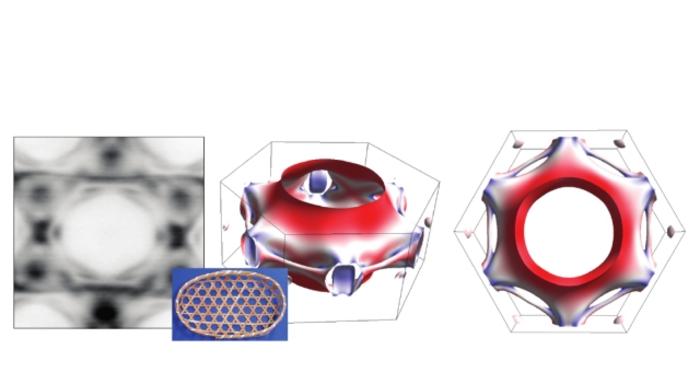
Three perspectives of the surface on which the electrons move. (Courtesy: University of Bologna)
An international team of physicists has succeeded in measuring a property of the electron known as topological spin winding for the first time. The team obtained this result by studying the behaviour of electrons in so-called kagome metals, which are materials that have unique quantum properties related to their physical shape, or topology. The work could advance our understanding of the physics of superconductors and other systems that contain strongly correlated electrons.
Kagome metals are named after a traditional Japanese basket-weaving technique that produces a lattice of interlaced, symmetrical triangles with shared corners. When the atoms of a metal or other conductor are arranged in this kagome pattern, their electrons behave in unusual ways. For example, the wavefunctions of the electrons can interfere destructively, resulting in highly localized electronic states in which the particles interact strongly with each other. These strong interactions lead to a range of quantum phenomena, including magnetic ordering of unpaired electrons spins that can produce, for example, ferro- or antiferromagnetic phases, superconducting structures, quantum spin liquids and abnormal topological phases. All these phases have applications in advanced nanoelectronics and spintronics technologies.
In the new work, researchers led by Domenico Di Sante of the University of Bologna in Italy studied the spin and electronic structure of XV6Sn6, where X is a rare-earth element. These recently-discovered kagome metals contain a Dirac electronic band and a nearly flat electronic band. At the point at which these bands meet, an effect called spin-orbit coupling creates a narrow gap between the bands. This spin-orbit coupling also creates special type of electronic ground state at the material’s surface.
To investigate the nature of this ground state, Di Sante and colleagues used a technique known as spin angle-resolved photoemission spectroscopy (spin ARPES). In this technique, high-energy photons generated by a particle accelerator, or synchrotron, strike the material from different directions, causing it to absorb light and emit electrons. The energy, momenta and spin of these emitted electrons can be measured, and the data used to map the material’s electronic band structure.
Polarized surface electronic states
By combining these measurements with advanced density functional theory (DFT) calculations, the researchers confirmed that the kagome geometry in TbV6Sn6 does indeed give rise to a gap between the Dirac band and the nearly flat band. Such a gap is common to all kagome lattices that show spin-orbit coupling, but while physicists had known about the gap’s existence for years, no one had previously measured a property called topological quantum spin curvature that results from the gap and is related to the curved space in which electrons reside.
“In the same way that the space-time of our universe is curved by matter, stars, galaxies and black holes, the space in which the electrons move can also be curved,” Di Sante explains. “We have detected this curvature in kagome metals.”
The new work represents a first step towards a thorough characterization of this curved space – a key goal in the field of quantum geometry, Di Sante adds. “This is a property of quantum materials that we’ve started exploring only recently and we already know that quantum geometry is also intimately linked to superconductivity and other fascinating phenomena,” he says. “We hope that the protocol we have introduced here will help to shed light on the physics of quantum materials.”
Language is central to our personal identities, and connects us others, and with our ancestors. But language is highly dynamic. Words and language structures evolve over time, sometimes leading to new dialects and languages. How and why does this occur? What can online communication tell us about regional variations? Why are so many languages at risk of extinction?
These types of questions have traditionally been lacked by the field of linguistics. But physicists – who have never been shy about crossing academic boundaries – are also starting to grapple with these sorts of questions. This video looks at the interdisciplinary field of language dynamics and how tools and knowledge from physics are leading to breakthroughs in understanding.
Find out more about the growing influence of physics in linguistics in a feature article ‘The physics of languages’, available now on the Physics World website.
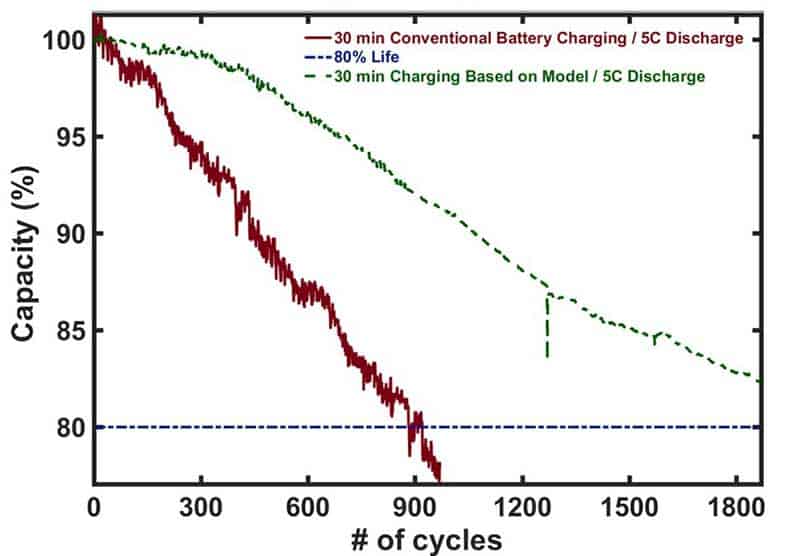
Fast charging is researched heavily for the widespread implementation of lithium-ion batteries for electric vehicles. However, charging at high currents accelerates several parasitic reactions that lead to the degradation of the cell, affecting its lifetime. These reactions lead to loss of lithium inventory, loss of active material, and increased impedance in the cell. Examples of these side reactions include the growth of the solid-electrolyte interphase (SEI) layer, transition metal dissolution, and deposition, lithium plating, and solvent oxidation. These mechanisms degrade the cell and reduce its cycle life.
Physics-based multi-scale battery models solve for equations that govern the charge and mass balances within the cell. Using these detailed mathematical models, it is possible to study material degradation mechanisms and predict their impact on capacity loss under several operating conditions. These models can be used to design new batteries with appropriate materials and design parameters suited for any given purpose.
More critically, these models can be integrated with battery management systems (BMS) to control the cell’s performance. These models can further be used to design novel charging protocols that enable safe and optimal cell performance, and suppress cell material degradation. The BMS monitors and maintains the voltage, current and temperature, and estimates the internal states of the cell. Model-based BMS algorithms require fast codes that can predict and estimate battery parameters in real time and control the battery’s performance under different loads.
Currently, the BMS implements equivalent circuit models that inadequately predict the cell’s performance for various conditions and design parameters. This webinar presents the current efforts to move the models for BMS for current and next-generation batteries.
An interactive Q&A session follows the presentation.
Venkat Subramanian is the Ernest Dashiell Cockrell II Professor of Engineering in the Department of Mechanical Engineering and Material Science Engineering, at the University of Texas at Austin (UT). Prof. Subramanian is an elected fellow of The Electrochemical Society, where he has served as an elected chair of the ECS Industrial Electrochemistry and Electrochemical Engineering (IE&EE) Division, and elected technical editor. He is also a past elected chair of Area 1e: (Electrochemical Engineering) of the AIChE. His group aims to be the world’s leading group in model-based Battery Management Systems (BMS).