Modern society relies on large-scale chemical processes for producing fuels and chemicals that drive many key sectors, including transportation, agriculture, and manufacturing, among others. To date, fossil resources have served as the primary feedstock and provided the vast majority of the energy demanded by the global economy. There are many challenges to the current paradigm, as modern processes are generally not sustainable, and while they provide for billions, there are billions of others who have minimal access to the modern energy system.
This talk describes efforts to enable a future paradigm involving sustainable chemical processes for producing fuels and chemicals based on renewable resources. Examples include hydrogen (H2) production from water, CO2 conversion to carbon-based fuels and chemicals, and ammonia production from N2 and/or nitrate.
A key focus of this webinar is the fundamental design and development of catalyst systems that can execute desired chemical transformations with high activity, selectivity, and durability, plus the integration of such catalysts into devices that can achieve high-performance, paving the path ahead for new, sustainable technologies.
An interactive Q&A session follows the presentation.
Thomas Francisco Jaramillo is an associate professor of chemical engineering and of energy science engineering at Stanford University, along with a faculty appointment in Photon Science at SLAC National Accelerator Laboratory. He serves as director of the SUNCAT Center for Interface Science and Catalysis, a joint partnership between Stanford and SLAC. Prof. Jaramillo’s research efforts are aimed at developing catalyst materials and new processes to improve sustainability in the energy and chemical sectors. A key emphasis is engineering catalyst materials at the nano- and atomic-scale to induce desired properties, and then on designing and developing new technologies that employ them. Examples include electrified processes to convert water, N2, and CO2 into valuable molecular products such as hydrogen (H2), ammonia-based fertilizers, and carbon-based products (e.g. fuels, plastics) for use in transportation, agriculture, energy storage, and in the chemical industry, among others. The overarching theme is the development of cost-effective, clean energy technologies that can benefit society and provide for economic growth in a sustainable manner.
Thomas has authored more than 200 publications in peer-reviewed literature in these areas. His efforts have earned him a number of honours and awards including the 2021 Paul H Emmett Award in Fundamental Catalysis from the North American Catalysis Society; the 2014 Resonate Award from the Resnick Institute; 2011 Presidential Early Career Award for Scientists & Engineers; 2011 U.S. Department of Energy Hydrogen and Fuel Cell Program Research & Development Award; 2011 National Science Foundation (NSF) CAREER Award; and 2009 Mohr-Davidow Ventures Innovator Award. He is on the annual list of Highly Cited Researchers by Clarivate Analytics, ranking in the top 1% by citations (2018–present).
Thomas is from Carolina, Puerto Rico, earning a BS in chemical engineering at Stanford University and MS and PhD degrees in chemical engineering at the University of California, Santa Barbara (UCSB). He then pursued post-doctoral research as the Hans Christian Ørsted Postdoctoral Fellow at the Technical University of Denmark, Department of Physics, prior to joining the Stanford faculty.
Several unique phenomena that could benefit quantum computing have been observed in quantum dots made from bilayer graphene. The research was done by Christoph Stampfer at RWTH Aachen University and colleagues in Germany and Japan, who showed how the structure can host an electron in one layer and a hole in the other. What is more, the quantum spin states of these two entities are near perfect mirrors of each other.
A quantum dot is a tiny piece of semiconductor with electronic properties that are more like an atom than a bulk material. For example, an electron in a quantum dot is excited into a series of quantized energy levels – much like in an atom. This is unlike a conventional solid, in which electrons are excited into a conduction band. This atom-like behaviour can be fine-tuned by adjusting the size and shape of the quantum dot.
A quantum dot can be made using tiny pieces of graphene, which is a sheet of carbon just one atom thick. Such quantum dots can be made of just one sheet of graphene, two sheets (bilayer graphene) or more.
Interesting spin qubits
One promising application of graphene quantum dots is to create quantum bits (qubits) that store quantum information in the spin states of electrons. As Stampfer explains, the development of graphene quantum dots has important implications for the development of quantum computers. “Graphene quantum dots, first recognized in 2007, emerged as interesting hosts for spin qubits, which can employ both electron and hole quantum dots to facilitate long-range coupling,” he says. Holes are particle-like entities that are created in a semiconductors when an electron is excited. “This breakthrough has laid the foundation for a promising quantum computing platform based on solid-state spin qubits,” he adds.
Now, Stampfer and colleagues have pushed the idea further by fabricating quantum dots from bilayer graphene. Here, each graphene layer functions as an individual quantum dot, but closely interacts with its counterpart in the other layer.
Bilayer graphene can trap electrons and holes when an external voltage is applied across them – creating a unique gate structure. Following recent efforts to reduce disorder in bilayer graphene’s molecular structure, Stampfer’s team has now reached a new milestone in this line of research.
Gate tunability
“In 2018, this approach first made it possible to fully utilize the unique electric-field-induced band gap in bilayer graphene to confine single charge carrier,” Stampfer explains. “By further improving the gate tunability, it is now possible to make quantum dot devices that go beyond what can be done in quantum dot materials including silicon, germanium or gallium arsenide.”
A key advantage of bilayer structures are the properties of spin states of the quantum dot’s electrons and holes. Through their experiments, the team discovered that the states of the individual electrons and holes in one of the graphene layers are almost perfectly mirrored in the pair found in the other layer.
“We show that bilayer graphene electron-hole double quantum dots have an almost perfect particle-hole symmetry,” Stampfer continues. “This allows for transport through the creation and annihilation of single electron-hole pairs with opposing quantum numbers.”
These results could have important implications for quantum computing systems that use electron-spin qubits. This is because is should be possible to couple such qubits together over longer distances, while reading out their spin symmetrical states more reliably. This could ultimately enable quantum computers to become far more scalable, sophisticated, and resistant to errors than existing designs.
Stampfer’s team also envisage many possible applications beyond quantum computing. predicting how bilayer graphene quantum dots could provide a basis for nanoscale detectors for terahertz waves, and could even be coupled to superconductors to create efficient sources of entangled pairs of particles.
Through their future research, the researchers will now aim to delve deeper into the capabilities of bilayer graphene quantum dots; potentially bringing their widespread application in quantum technologies a step closer.
Bright ideas As a physicist, you may need to come up with a “big idea” for your research project, to get a grant or to persuade a company to finance it. (Courtesy: iStock/Anastassiia)
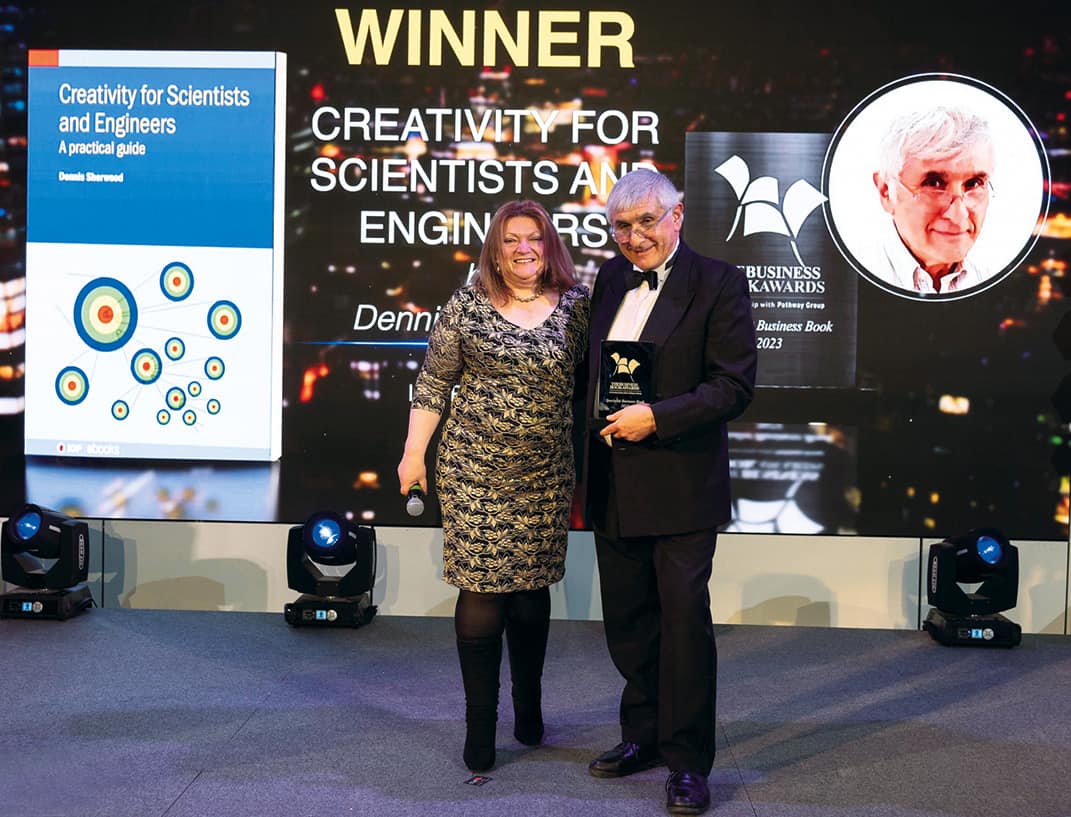
Most people would agree that creativity plays an important role in a successful scientific career. But what exactly do we mean by creativity? And how can scientists become more innovative? Physicist, consultant and author Dennis Sherwood has made it his life’s work to delve into the creative process, and help others tap into their own creativity. He runs Silver Bullet Machine – a consultancy that helps companies solve problems, generate and implement new ideas, and grasp new opportunities. Sherwood is also the author of Creativity for Scientists and Engineers: a Practical Guide (published by IOP Publishing, which also produces Physics World), which includes a number of strategies to increase scientific creativity. The work was named best “Specialist Business Book” at the 2023 Business Book Awards.
How do you define creativity in science and how does one go about developing it? We know it when we see it, but it’s a struggle to define it
The question, “What is creativity?” has kept philosophers busy for centuries. In many ways it is a difficult question, but to me creativity is just having an idea. It’s as simple as that. An idea, of course, is something imaginary. It happens within one’s own head. It’s a vision of a future that doesn’t exist yet. So whenever you do have an idea, you are being creative. And, of course, that’s enormously valuable and pervades everything that a scientist does.
Ideas are often easy to come by, but it can be harder to make them work. Do you separate out the “Eureka” moment from what’s involved in getting something to happen?
Yes, there’s a real distinction between creativity, which is having the idea in the first place, and innovation, which is shaping that idea into something real. So I might have a fantastic idea for a better mousetrap or a light bulb. I’ll get excited about that and I’ll drive my wife mad talking about it. But until I can build that better mousetrap or make the light bulb work, it’s just an idea in my head. So creativity is step one in a four-step process. The second step is evaluation. Does that idea have any kind of legs? Is it worth spending time, emotional energy, money and other resources to take things further? Stage three is development – solving all of the problems to make it work. The fourth step is implementation – for example, getting a paper published, a piece of music played at a concert, or a product brought to market.
Creativity is embedded in each of those steps. And one of the great examples, of course, is the light bulb itself. I think the first observation that the passage of electricity causes a light effect goes way back to the 1700s. In 1802 Humphry Davy was the first person to create the incandescent light bulb by using a platinum wire connected to a powerful battery. But it wasn’t until many years later that Thomas Edison patented his working light bulb in 1880. So in those nearly 80 years scientists were busy addressing all of the problems that arose from the fundamental idea, and much creativity was needed, for example to design a vacuum pump so that you could extract the air from the envelope of the bulb, so the filament wouldn’t burn up.
In your book, you look at some specific examples of creativity in physics. Could you tell us about those?
Physicists can benefit from creativity all over the place. If you are a researcher, you need to come up with the “big idea” for your research project, get a grant or persuade a company to finance it. You’re then into the actual work itself, where you will need to solve all the different problems that crop up. If you are building a team, then you need to be inventive in ensuring everyone works well together. If you are a physics teacher, creativity is enormously valuable in thinking of more exciting ways to put complex concepts across to students.
And creativity is also something you need on a personal level too. For example, when I attend conferences I’m usually happy by myself. Although one of the reasons for going to a conference is to network and to meet people, for many years I was too shy to go up to someone and introduce myself – I just couldn’t do it. So I needed to have the idea in my head that it was something I should try at the very least. When I recognized that, and started talking to people at conferences, I found that most were pretty civil and spoke to me nicely. All those fears that I had of rejection went away.
Of course creativity plays a vital role in physics itself, right from the days of Archimedes, who famously had to determine the volume of an irregular object in the form of a gold crown that perhaps had some silver substituted in it. While Archimedes understood the concept of density, and could measure the crown’s total weight, the problem was figuring out how to measure the volume of that abstract object. Inspiration is said to have struck him in the bath, when he noticed the displacement of the water as he got in, and the original Eureka moment was born.
Another great example comes from the creativity displayed by Johannes Kepler, as he looked at Tycho Brahe‘s data and attempted to determine the orbits of planets. To do this, he had to throw all his preconceptions away, for his original intent was to prove that the orbits were circles. When he realized that the data wouldn’t fit, rather than saying “the data are wrong”, he changed his mind, so discovering that the orbits are elliptical. That scientific discovery was hugely creative. But to me, changing his mind, despite deeply-held beliefs, is even more creative.
Is it possible to have ideas deliberately, now?
Yes. Sometimes, of course, you get lucky, and you can rejoice when it happens. But you can’t rely on that when you’ve got to get that research proposal in, or write your PhD thesis. That’s when you need to know how to make creativity deliberate, and something that you can tap into at will. There’s a widespread belief that it is more about intuition or that “light bulb” moment. You might choose to go for a walk by a river bank, because that worked for Albert Einstein, and you may have a flash of inspiration, or you may not. But there is a way to make idea generation deliberate and systematic.
Over the years I’ve read many books about creativity and I was particularly fascinated by the Hungarian author Arthur Koestler. His 1964 book The Act of Creation is a fascinating study on the processes of discovery, invention, imagination and creativity across the arts and sciences. Koestler felt that the “act of creation” is not that of the Old Testament God – it does not create something out of nothing. Rather, it synthesizes, recombines and shuffles together already existing facts, faculties, skills and knowledge to form a new pattern.
The main goal is knowing how to make creativity deliberate, and something that you can tap into at will
I found that to be a really powerful statement, and it highlighted that in most cases creativity isn’t a Eureka moment out of the blue. It may look like that at the end, but what is actually happening is you take already existing fragments of knowledge and mix them together in different ways – a bit like playing with Lego bricks – you can put them together in all sorts of different ways.
Indeed, every physicist takes things that already exist and recombines them into new patterns. And when some new knowledge comes along, you can bring that into the mix too and go further. When doing this, you may sometimes have to deconstruct an existing pattern to reveal new truths. So the more knowledge you have (or have access to), the more likely you are to be creative and ready to re-shape that knowledge – perhaps throwing some things away, perhaps exploring different patterns.
Isaac Newton famously said that he stood on “the shoulders of giants”, which is acknowledging the component parts that he brought together. Deconstructing what we know and seeking new patterns is absolutely key.
What are some of the barriers to creativity that scientists face, and do you have any tips for overcoming them?
Whether it’s in academia or industry, the initial barrier is not understanding the fundamentals of the creative process in the first place. If you haven’t come across what I call “Koestler’s Law” – that statement about recombining existing elements – then you may not know how to go about it.
Very often, creativity requires you to deconstruct existing knowledge first. So another big barrier is when someone is unwilling to do that themselves or to allow someone else to challenge their knowledge – especially if they are senior. The history of science is full of people who came up with novel concepts that were in opposition to the established wisdom at the time.
If you are running a team or a lab, and want creativity to flourish, focus on building an environment with the right conditions for that to happen. There are a couple of chapters in my book that specifically look at how to address this issue in the particular context of academic communities.
What are some of the factors that influence the creative process, and what can research institutions do to boost novel ideas?
There are all sorts of pressures on people that influence their creativity, such as the way in which academics have to apply for grants and get funding. If a postdoc is attempting to get a position at a faculty and knows that the main metric they will be judged on is a large body of published papers, then that will be the main motivation. To achieve that, the postdoc is, understandably, likely not to want to take too many risks. But since creativity is necessarily uncertain, that increases the pressure to play safe, and this will inevitably limit creativity.
Those pressures within academia – from getting grants to getting promoted – often squeeze creativity out. In fact, about a decade or so ago the Engineering and Physical Sciences Research Council (EPSRC), which provides government funding in the UK, felt that researchers were playing it too safe in their grant applications, and formed a committee to address the issue. One recommendation was that the EPSRC should create a grant where people like me could work with academic teams on a programme now called “Creativity@home”. Its main aim is to “generate and nurture creative thinking that might lead to potentially transformative research”. My consultancy is a preferred supplier and over the last 10 years I’ve done lots of great assignments. This was a deliberate attempt by the EPSRC to encourage scientists to be a bit bolder and more creative.
The more knowledge you have, the more creative you can be. And that is why the creativity of teams is much more effective than that of an individual. There is a greater shared repertoire, which opens the door for more new thoughts and ideas.
From computers to the Internet, and with the recent growth of AI systems, we all have new tools at our disposal. Do you think that technology is making people more creative, or is creativity a conserved quantity in humanity?
All the things you mention should enrich creativity because there is more raw material to be creative with. Certainly some aspects of creativity are being taken over by AI – there are, for example, already many programs that can create music. But it’s all very well to use AI to discover a credible new pattern of notes of music, or words in an essay, or component parts for a new product. The richest creativity, however, comes from having the power to change my mind, and no AI agent is ever going to replace that. That will always be a purely human endeavour.
Only last month we had a design for a LEGO quantum computer and now comes a micro model of the Belle II experiment at the KEK particle-physics lab in Japan. The miniature brick version of the experiment, which was made in Germany by a team led by Torben Ferber at the Karlsruhe Institute of Technology (KIT), is made from 75 pieces and apparently takes less than 10 minutes to build. Despite being small, the design still includes details of Belle II’s particle identification system as well as the iconic blue and yellow coloured octagon shape of the detector. Torban and colleagues have published a parts list and building instructions in case you get the urge to create your own model.
It seems like the University of Nottingham physicist Phil Moriarty is everywhere these days. In April, he reviewed a book about “quantum woo” for Physics World; and he also appears in this month’s Physics World Stories podcast pondering the question “Will AI chatbots replace physicists?”.
Moriarty is also a heavy-metal guitarist and he has joined forces with some fellow musicians to release a song and video about the antithesis of quantum woo: “Shut up and calculate”.
The phrase is attributed to the American physicist David Mermin and arose out of the vagueness that surrounds the definition of the Copenhagen interpretation of quantum mechanics. This interpretation of the quantum world has dominated physics since it was first developed in the 1920s by Werner Heisenberg and Niels Bohr, working in the Danish capital.
While quantum mechanics is an incredibly successful theory, physicists continue to struggle with the bizarre and non-intuitive nature of the quantum world. Shut up and calculate became an almost pejorative response to attempts to find deeper philosophical meaning within quantum mechanics – an endeavour that did in some cases lead to quantum woo.
Today, however, some of the more mysterious aspects of quantum mechanics – including entanglement and superposition – form the basis of practical quantum technologies. Indeed, today physicists are more likely to say “shut up and contemplate” the wonders of the quantum world. Perhaps that could be Moriarty’s next song.
When discussing the capabilities of the latest AI chatbots, a physicist may argue: “Okay, they’re impressive at regurgitating texts that sound increasingly human. But we physicists don’t have much to worry about. It will be ages before the bots learn to grapple with physical concepts and the creativity required to do real physics!”
Such a view is almost certainly misguided. In a recent paper uploaded to arXiv, Colin West from the University of Colorado Boulder reported that the latest version of ChatGPT (built on GPT-4) scored 28 out of 30 on a test designed to assess students’ grasp of basic Newtonian mechanics. The previous version (GPT-3.5) managed just 15 correct answers, and neither version had any explicit programming regarding the laws of physics. Can you imagine the improvement 20 years from now?
In the latest episode of the Physics World Stories podcast, Andrew Glester considers how the exponential improvement in GPT (and other large language models) will change the way we teach and practise physics. Should we be excited or scared? Should physics courses ban or embrace the use of AI chatbots? What are the skills that future physics will need? Will physics cease to exist as a discipline in the way we understand it now? These are just some of the existential questions tackled by two guests from the University of Nottingham: Philip Moriarty, a nanotechnology specialist; and Karel Green, an astronomy PhD student and Physics World contributor.
Shining star Moiya McTier was the first person at Harvard University to major in both astrophysics and folklore. (Courtesy: Mindy Tucker)
What skills do you use every day in your job?
As a freelance science communicator, giving talks, hosting podcasts and writing books, the skill I use most often is deciding where to start and end a story to most effectively explain a concept. It’s a fine line to walk, because I don’t want to insult the audience by beginning too early and basic, or lose them by starting too advanced.
I have to figure out what my audience already knows and guess at what they’re interested in to teach them something new. If I’m giving a talk, I’ll do this by asking if they’ve heard of a topic, and then I will adapt my speech based on their responses and questions. This skill comes with practice and adjusting to countless confused audience stares. My advice is to check in with your audience early and often so you know if you’ve lost them.
What do you like best and least about your job?
To me, there is no greater thrill than standing on a stage in front of a crowd full of curious people. I love the spotlight almost as much as I love sharing my knowledge with others. The attention is fun, but the most rewarding part is the moment when I can see the light of understanding flick on in someone’s eyes as I’m explaining a concept.
The thing I like least about my job is describing it to other people. Most people don’t know what a science communicator is, so I compare myself to Bill Nye or Carl Sagan, which works about 70% of the time. But when I keep talking, their confusion turns into “what do myths have to do with science” and “what do you mean you don’t teach at a university?”
Lately, I’ve just been calling myself an author!
What do you know today, that you wish you knew when you were starting out in your career?
I wish I had known how long everything would take. I never expected my dreams to come true overnight, but I definitely underestimated how long it takes to grow a podcast audience, write a book, or get a TV deal (I’ve been working on that last one for more than three years).
Now I understand that building something from scratch will always take longer and be a less direct path than you want it to be, so I’ve got to hone my skills and grow my platform while I wait. I’ve learned to be patient and think of the rejections as “not for now”s, but I would have saved myself a lot of frustration if I had known from the start that the timescale was years instead of months.
Drug delivery A device containing nine ultrasound emitters is implanted into the skull during tumour resection to open the blood–brain barrier for delivery of chemotherapy drugs. (Courtesy: Carthera)
Low-intensity pulsed ultrasound with simultaneous administration of intravenous microbubbles (LIPU-MB) may effectively enable delivery of drugs across the blood–brain barrier (BBB) into the human brain. That’s the conclusion of a study from Northwestern University Feinberg School of Medicine in Chicago. The researchers report that the chemotherapy drug albumin-bound paclitaxel was safely delivered into the brains of 17 patients with recurrent glioblastoma, in a phase 1 dose-escalation clinical trial.
The study, reported in Lancet Oncology, provides the first direct evidence that LIPU-MB substantially increases the brain concentration of a systemically administered drug in humans. The researchers conclude that large-volume BBB opening is safe, reproducible, and can be repeated over multiple cycles of chemotherapy.
The BBB limits the penetration of many chemotherapy drugs, making treatment of malignant brain tumours challenging. The drug paclitaxel, for example, is approximately 1400 times more potent than the standard chemotherapy agents used for gliomas — but it cannot cross the BBB. In high-grade gliomas, however, tumour cells infiltrate into the parenchyma where they are protected from exposure to drugs. As a result, 80–90% of glioblastomas recur within the 2 cm margin of peri-tumoural brain around the tumour resection cavity.
Principal investigator Adam Sonabend, of the Northwestern Medicine Malnati Brain Tumor Institute, and colleagues conducted their study to evaluate the safety and maximal tolerated dose of albumin-bound paclitaxel after LIPU-MB-based opening of the BBB. They also aimed to assess the effect of LIPU-MB-based BBB opening on paclitaxel concentrations in peri-tumoural brain tissue.
The study included 17 patients whose recurrent glioblastoma was unresponsive to one or more previous treatments. Several of these patients were also participants in a separate clinical trial investigating LIPU-MB with carboplatin chemotherapy.
Following standard tumour resection, all patients had a SonoCloud-9 device (from CarThera) implanted into a window in their skulls, attached to the bone with surgical screws. The device, consisting of nine 1 MHz ultrasound emitters, is connected to a pulse generator via a single-use transdermal needle and cable. To open the BBB, the pulse generator activated the device for 4 min 30 s, with simultaneous intravenous injection of microbubbles for 30 s. Patients were awake during the sonication procedure. Immediately afterwards, the researchers intravenously administered chemotherapy over 30 min.
The researchers found that most BBB integrity was restored within 60 min after LIPU-MB. As such, they advise that patients need to be infused within this time frame to optimize penetration of the administered chemotherapy drug.
The first sonication treatment for each patient began one to three weeks after their surgery, followed by up to six subsequent cycles at three-week intervals. To assess safety and maximal tolerated dose, the researchers evaluated albumin-bound paclitaxel dose levels of 40, 80, 135, 175, 215 and 260 mg/m2. In total, they performed 68 cycles of LIPU-MB-based BBB opening across all patients.
The primary endpoint of the study was dose-limiting toxicity during the first cycle of sonication and chemotherapy. Following BBB opening, some patients experienced immediate yet transient grade 1–2 headaches and other grade 1–2 neurological deficits. No dose-limiting toxicity was observed for doses of up to 215 mg/m². At 260 mg/m², one patient developed grade 3 encephalopathy during the first cycle (considered a dose-limiting toxicity) and another had grade 2 encephalopathy during the second cycle. In both cases, the toxicity resolved when doses were reduced and treatment could continue. An additional patient developed grade 2 peripheral neuropathy during the third cycle at a dose of 260 mg/m2.
The researchers also acquired biopsy samples of sonicated and non-sonicated brain tissue from a subset of patients who needed to undergo additional neurosurgery. “Measurements of absolute drug concentrations in the human brain is especially important in gliomas because the peri-tumoural brain, where the BBB is intact, is infiltrated by glioma cells,” they explain.
Pharmacokinetic studies showed that LIPU-MB increased the brain-to-plasma ratio of paclitaxel by 3.6 times compared with non-sonicated brain samples, while the increase seen with carboplatin was 5.8 times higher than in non-sonicated samples. The researchers also determined that LIPU-MB combined with albumin-bound paclitaxel infusion leads to paclitaxel concentrations that are cytotoxic for half of the human glioma cell lines.
The team is currently undertaking a phase 2 clinical trial to investigate the delivery of albumin-bound paclitaxel plus carboplatin following surgical resection. “This emerging technology and approach has the potential for repurposing many existing drugs that are not considered for treatment of brain disease as they currently do not cross the blood–brain barrier,” comments Sonabend.
In this episode of the Physics World Weekly podcast the instrument scientist Roland den Hartog talks about the challenges of deploying superconductor-based detectors on satellites to do X-ray astronomy. Based at the Netherlands Institute for Space Research (SRON) in Leiden, he also explains how astronomers use X-rays to observe the “hot and energetic universe”. This involves studying a range of objects from huge galaxy clusters to compact objects such as black holes and neutron stars.
Den Hartog is currently developing X-ray detectors for the European Space Agency’s Athena mission, which will launch in 2035. He explains that a primary goal of Athena is to gain a better understanding of the astrophysical origins of the elements by detecting the distinctive X-rays that they emit.
Metasurface performance: A schematic diagram of the proposed metasurface spectrometer based on a wavelength dependent multi-foci metalens model. (Courtesy: Ruoxing Wang, Muhammad Afnan Ansari, Hammad Ahmed, Yan Li, Wenfeng Cai, Yanjun Liu, Songtao Li, Jianlong Liu, Li Li, and Xianzhong Chen)
A new optical spectrometer is super-compact thanks to a metalens that focuses light at multiple wavelengths. The new device can detect light spectra with a resolution of 1 nm, and unlike its bulkier predecessors, it could be integrated onto a chip, with potential applications in security and information processing.
Imaging spectrometers that operate in the visible, near and short-wave infrared (VNIR/SWIR) regions of the electromagnetic spectrum are routinely deployed in fields such as atmospheric science, ecology, geology, agriculture and forestry. They work by recording a series of monochromatic images, then analysing their spectrum over a given imaging area.
One of the advantages spectrometers have over traditional cameras is that they are very good at controlling chromatic aberrations such as blurring or distortion that come about because light is spread over a region of space (dispersion) rather than focused to a point. They can do this because they contain additional optical elements such as a diffraction grating or a prism rather than just a lens and a detector.
The snag, however, is that these extra elements, together with the large volume over which the light must propagate, makes spectrometers relatively bulky. That means they can’t be carried on small satellites or drones.
A compact spectrometer
Researchers led by Xianzhong Chen from the Institute of Photonics and Quantum Sciences at Herriot-Watt University, UK, have now developed a compact spectrometer that can detect light spectra with a resolution of 1 nm over a broad range of wavelengths. It accomplishes this feat thanks to a planar nanostructure called an optical metasurface that can manipulate the amplitude, phase and polarization of incident light on a subwavelength scale.
The metasurface in the Herriot-Watt device consists of gold nanorods that are patterned atop an indium tin oxide-coated silicon dioxide substrate using standard electron beam lithography and lift-off processes. An individual device measures just 300 µm x 300 µm, and Chen explains that it is based on a novel lens design that accurately maps the wavelengths of an incident light beam to different positions on the flat focal plane of the lens. Using this design, it is possible to split and focus light with high-resolution control over its dispersion.
According to the researchers, who describe the new metalens spectrometer in Light Science & Applications, the compact and ultrathin nature of their device mean that it could be used in on-chip integrated photonics where spectral analysis and information are processed in a compact platform.
“Optical spectroscopy plays a very important role in various fields of science and technology with a wide range of practical applications,” Chen says. “The approach we propose is flexible and robust and provides a new scheme to control dispersion under illumination of both mono- and polychromatic incident light beams,” he tells Physics World.
The researchers are now working on improving the resolution and operating bandwidth of their metasurface spectrometer by increasing the sample size to millimetre scales. “This will increase the radius of the multi-foci ring and include more wavelength-dependent focal points,” Chen says.
Hundreds of physicists met in London this week for the ninth Future Circular Collider (FCC) Conference. Held at the Millennium Gloucester Hotel London in South Kensington, the five days of talks focused on the latest developments on the FCC – a huge proposed particle collider that would succeed CERN’s Large Hadron Collider (LHC). If built, the collider would cost around £11bn and involve the construction of a 100 km underground tunnel at the current CERN site to house an electron–positron collider (FCC-ee).
Supporters hope that construction would begin in the early 2030s and last just over a decade, with the FCC-ee complete in 2045. The FCC-ee would focus on creating a million Higgs particles in total to allow physicists to study its properties with an accuracy an order of magnitude better that what is possible today with the LHC.
Once the physics programme for the FCC-ee is complete, estimated in 2063, the same tunnel could then be used to house a proton–proton collider, dubbed FCC-hh. The FCC-hh, which would begin operation in the 2070s, would use the LHC and its pre-injector accelerators to feed the collider that could reach a top energy of 100 TeV – seven times greater than the LHC.
CERN originally released a four-volume conceptual design report for the FCC in early 2019, while the following year CERN Council approved a feasibility study and a more detailed costing of the FCC. It also gave a green light to continued research and development into the magnet technology that will be required for such a machine at higher energies.
Make it so
This week’s meeting saw experts from academia and industry review the latest progress on the FCC and set the goals for the coming years. In a plenary address on Monday, CERN director-general Fabiola Gianotti confirmed the current schedule is on track. “I believe FCC is the best project for CERN’s future,” noted Gianotti. “We need to work together to make it happen.”
If given the green light, construction could begin in 2033 and occur in parallel with the operation of a major £1.1bn “high luminosity” upgrade of the LHC – dubbed HL-LHC – that will increase the collider’s luminosity by a factor of 10 over the original LHC. HL-LHC, which will begin operation in 2029, is set to finish it work in the early 2040s.
Michael Benedikt and Frank Zimmermann from CERN gave an update on the feasibility study, which involves hundreds of physicists based in 150 institutes spread over 34 countries.
Physicists and engineers have been working on the optimization of the ring placement layout, choosing between about 100 different variations based on geology, land availability, access to roads as well as infrastructure needs such as water, electricity and transport.
They found the “lowest risk” option was a 90.7 km ring, allowing the FCC to have two or four collision points. Access to the tunnel is being reduced from 12 points in the conceptual design report to eight in the feasibility study. In February, engineers began environmental studies and the preparation of geological investigations based on this blueprint.
A mid-term review of the feasibility study is expected to be complete later this year and in February 2024, the CERN Council will hold a special meeting to analyse the study’s progress as well as an updated costing for the facility.
The feasibility study for the FCC is expected to be complete in 2025 with possible CERN approval for the project three years later. A final decision would, though, depend on the outcome of an update to the European Strategy for Particle Physics in 2026.