Photonics West 2023 saw Robert Bourdelais, senior global development manager, introduce three new developments from MKS-Newport. These were: the ODiate high-performance optical filter line – for precision deposition and spectral performance; the design and assembly business – where MKS-Newport takes engineered components and then adds value to them to meet customers’ needs; and finally OptoFlash, a new filter-based spectrometer platform.
These new products and services will feed into MKS-Newport’s four primary markets – semiconductors, analytical instrumentation, health and science, and research and development. As Bouderlais explains in this video filmed at Photonics West: “We customize our technology and our solutions depending upon each of these individual market needs.”
Researchers have developed a sunlight-powered hydrogel with a loofah-like structure that can rapidly purify large quantities of water contaminated with oils, metals and microplastics. The material, which functions even when it is cloudy, could supply enough drinking-quality water to meet a person’s daily requirements.
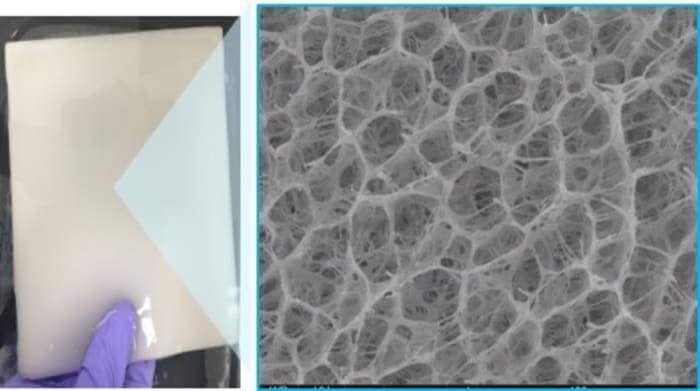
Hydrogels show much promise for applications like water purification, but current techniques cannot generate sufficient quantities of water because of the closed-pore structures of the materials studied so far. In contrast, natural loofahs, which many people use to exfoliate the skin, have large, open and interconnected pores. Water can thus filter at a significantly accelerated rate through these structures.
In the new work, a team of researchers led by Rodney Priestley and Xiaohui Xu from Princeton University fabricated a loofah-like solar absorber gel (LSAG) with an interconnected open-pore structure. The gel can produce drinking-quality water from various contaminated sources at a rate of around 26 kg/m2/h, which is high enough, they say, to meet the daily water needs of a person.
The researchers made their LSAG from poly(N-isopropylacrylamide) (PNIPAm), polydopamine (PDA) and poly(sulfobetaine methacrylate) (PSBMA) using an ethylene glycol-water solvent.
“We developed the loofah-inspired PNIPAm hydrogel by free radical polymerization using the mixed solvent as the polymerization medium,” explains Xu. “We then functionalized the PNIPAm with PDA and PSBMA via an in situ polymerization approach, yielding a multifunctional and highly durable solar absorber material to purify water.”
Sun-driven hydrogel: A porous hydrogel inspired by loofah sponges absorbs polluted water at room temperature and then rapidly releases purified water when heated. (Courtesy: ACS Central Science 2023, DOI: 10.1021/acscentsci.2c01245)
From hydrophilic to hydrophobic
The researchers tested their loofah-like solar gel by immersing it in a solution of contaminated water at less than its lower critical solution temperature (LCST), the temperature below which the gel is hydrophilic. They observed that the gel swelled by absorbing large amounts of the water while simultaneously capturing contaminates.
They then exposed the gel to simulated sunlight of between 0.5 and 1 kW/m2 (0.5–1 sun), raising its temperature above its LCST. This causes the gel to switch from a hydrophilic state to a hydrophobic one, thereby allowing the purified water to be rapidly released, says Xu. Indeed, the gel released roughly 70% of the stored liquid in just 10–20 min.
According to the researchers, who report their work in ACS Central Science, the new solar absorber gel could open a “new paradigm for solar water production with the potential to meet daily human demand”.
The team is now working on developing an antibacterial hydrogel that can efficiently kill water-born bacteria. “We will also be testing our gel’s ability to purify water contaminated with PFAS [per- and polyfluoroalkyl substances],” Xu tells Physics World.
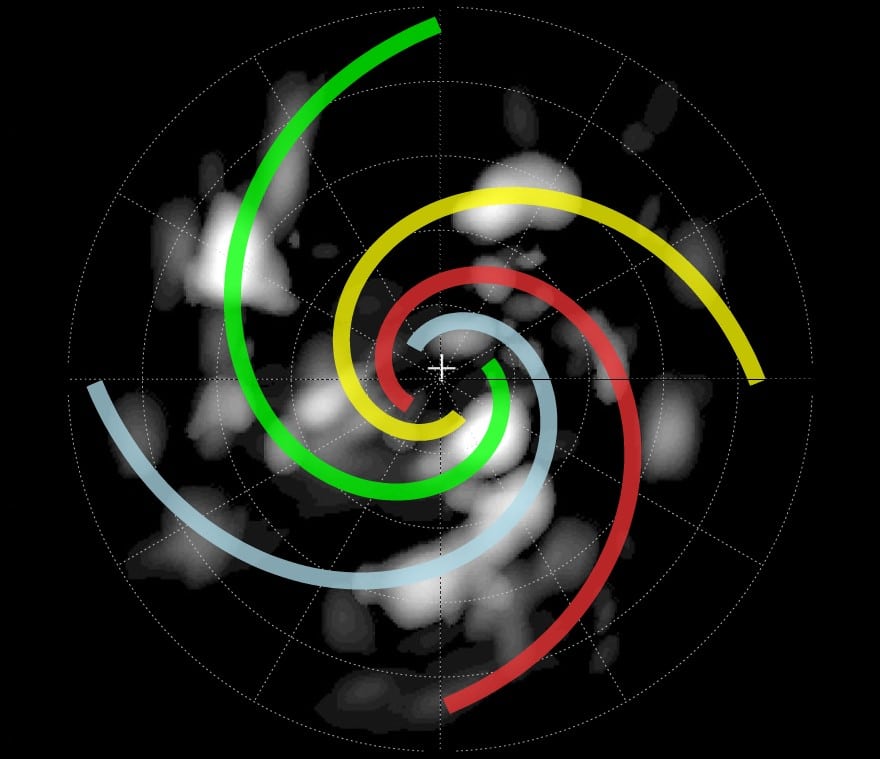
In a twist: image of the protostar’s accretion disc with coloured curves showing the spiral arms. (Courtesy: RA Burns et al/Nature Astronomy)
For the first time, spiral arms of gas and dust have been seen within a disc swirling around a massive protostar, feeding it with irregular bursts of material. The observations, made by a network of 25 radio telescopes across ten different countries, provide new insights into how the most massive stars form.
The protostar is called G358.93-0.03-MM1 and is located in a star-forming region in the Milky Way about 22,000 light–years away. The young star’s mass is about eight times that of the Sun and growing. At this mass and greater, a star will explode as a supernova at the end of its life. However, only 1% of stars are considered high mass and why so few massive stars form is a longstanding puzzle of astrophysics.
“There has been a school of thought that high-mass star formation must be totally different to low-mass stars,” Ross Burns, of the National Astronomical Observatory of Japan (NAOJ), tells Physics World. “But what we’re generally finding over time is that there’s not much difference.”
A manifestation of masers
Massive protostars can be difficult to observe because they are often hidden by dense agglomerations of gas and dust at the heart of the most intense star-forming regions. However, in January 2019 increased microwave emission was detected coming from G358.93-0.03-MM1 in the form of methanol masers. These are naturally occurring microwave equivalents of lasers.
Burns leads the Maser Monitoring Organisation, which is an international association of astronomers who study masers. Burns and colleagues assembled an impressive array of radio telescopes to observe G358.93-0.03-MM1’s maser activity.
The network imaged the protostar six times over the course of 2019. In a 2020 paper, Burn’s team released the preliminary results from the first two observations, made in February 2019, which showed that an accretion burst had occurred in which a large amount of gas had fallen onto the growing protostar. This had ignited thermal pulses that radiated through the surrounding accretion disc, exciting the masers at increasing distance from the star. Burns describes this as “heat wave mapping”.
Now, having analysed data from the other four sets of observations taken between March and September 2019, Burns’ team have published a new paper that shows that the methanol masers are embedded within a pattern of spiral arms within the accretion disc, extending from a distance of 50 AU from the star out to 900 AU (135 billion km).
Spiral arms in accretion discs around massive protostars had previously been suggested because they solve several problems, says Burns.
Pushing against accretion
“The main difference between high-mass and low-mass star formation is that the high-mass stars produce a lot more radiation, they’re a lot hotter, so they typically push against accretion,” he says.
Above eight solar masses, this outward radiation pressure should oppose any further accretion and prevent the protostar from acquiring anymore mass. However, astronomers have observed massive stars up to several hundred times the mass of the Sun, so clearly something can override the outward radiation pressure and allow growth to continue.
Accretion from a disc, rather than material falling on the star from all directions, can counter this outward pressure, but spinning discs tend to contain a lot of angular momentum that needs to be shed in order for accretion to take place. Spiral arms can remove this excess angular momentum, but while spiral arms have been seen in star-forming discs around low-mass protostars before, they had never been seen around high-mass protostars.
“We’ve always assumed that the spiral arms are there but there has never been an observational approach capable of revealing them, until now,” says Burns.
Like a galaxy’s spiral arms, the arms are probably formed by the destabilization of the disc through the self-gravity of denser pockets of material. The arms channel clumps of material towards the protostar, where they accrete onto it, prompting a blast of heat like the one that sparked the masers into activity.
Initial mass function
A greater understanding of high-mass star formation could ultimately help solve the mystery of why massive stars are so rare. The most common stars in the universe are the smallest, which are the M-dwarfs, and the more massive a star is, the fewer in number they seem to be. Astronomers call this distribution of stellar masses the initial mass function (IMF), but why it is skewed so much towards smaller stars remains a puzzle.
Even more intriguing is that the IMF may have been different in the past. The JWST’s observations of very old galaxies shows then to be more luminous than expected. One explanation is that the IMF may have been different 13.5 billion years ago, with conditions somehow more favourable towards forming massive stars that are intrinsically more luminous. Therefore, understanding the process by which massive stars form today, and the environments in which they form, could help us better understand the IFM whether it may have been different in the early universe.
Burns is keen to point out that the research was done by astronomers in 21 countries, including some currently at war with each other or on opposite sides of diplomatic relations.“Given the geopolitical climate, I think it is great that we are showing that academic research is continuing through groups of people of so many nations”.
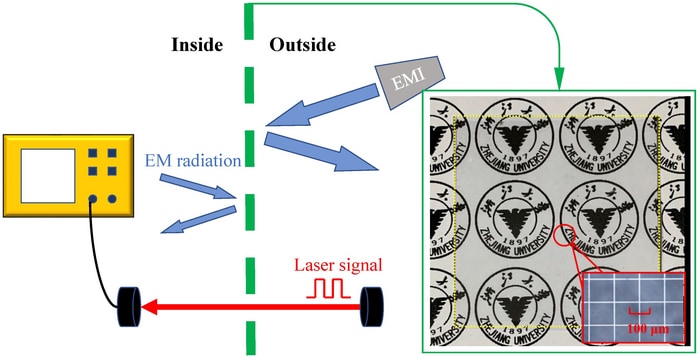
EMI shield: A transparent and flexible silver mesh allows high-quality infrared wireless optical communications while also exhibiting efficient electromagnetic interference shielding in the microwave radio region of the electromagnetic spectrum. (Courtesy: Liu Yang, Zhejiang University)
A flexible, transparent material that blocks electromagnetic interference (EMI) while allowing high-quality infrared wireless signals to pass efficiently through could be employed in free-space optical communications applications that require EMI shielding. The material, made of a silver mesh on a polymer substrate, is self-cleaning and resistant to corrosion, enabling its use in both indoor and outdoor settings.
Electromagnetic radiation from different electronic devices can interfere and adversely affect device performance. EMI shielding is often used to prevent this, but the shielding can also block the wireless signals required for communications. What’s more, many conventional transparent EMI shields only allow visible signals to pass through, which are not suitable for wireless optical communications because of the large background noise at these wavelengths. A shield that is transparent over a broad wavelength band covering the important near-infrared or mid-infrared optical communications range would be better, but has been lacking so far.
The new device, made by Liu Yang and colleagues from Zhejiang University in China, can for the first time, efficiently shield EMI in the X band (a frequency band in the microwave region) with an average shielding effectiveness of up to 26.2 dB, while allowing high light transmission in a broad wavelength range from 400 to 2000 nm.
The researchers fabricated silver meshes with thicknesses of up to 220 nm on a transparent and flexible polyethylene substrate using standard microprocesses including ultraviolet lithography, physical vapour deposition and lift-off, all of which are precisely repeatable and scalable. They then covered the mesh with a 60-µm-thick layer of polydimethylsiloxane to prevent chemical corrosion and improve mechanical flexibility. This layer also allows the mesh to be “self-cleaning”, says Yang.
“High-quality free-space optical (wireless) communication mainly benefits from the high transparency and low haze at the optical communications wavelength of 1550 nm,” she tells Physics World. “Thanks to the low sheet resistance of our silver mesh, the incident electromagnetic wave is mainly reflected with little transmitted. This means a high shielding effectiveness.”
The technology could be used whenever both EMI shielding and remote communications are required at the same time. And thanks to the fact that it is stable to chemicals, mechanically flexible and self-cleaning, the silver mesh could be widely employed both indoors and outdoors – even on corrosive and free-form surfaces, explain the researchers.
They do admit, however, that the structure, which is detailed in Optical Materials Express, is only a prototype and there is much room for improvement. “Materials that are more conductive, more transparent and which have a lower haze are needed, especially at optical communications wavelengths,” says Yang.
“As discussed in our publication, exploring materials to extend the free-space optical communications to longer wavelengths is also a future research direction because atmospheric interferences can be greatly reduced in the mid-infrared regime. A much higher communication may thus be achieved.”
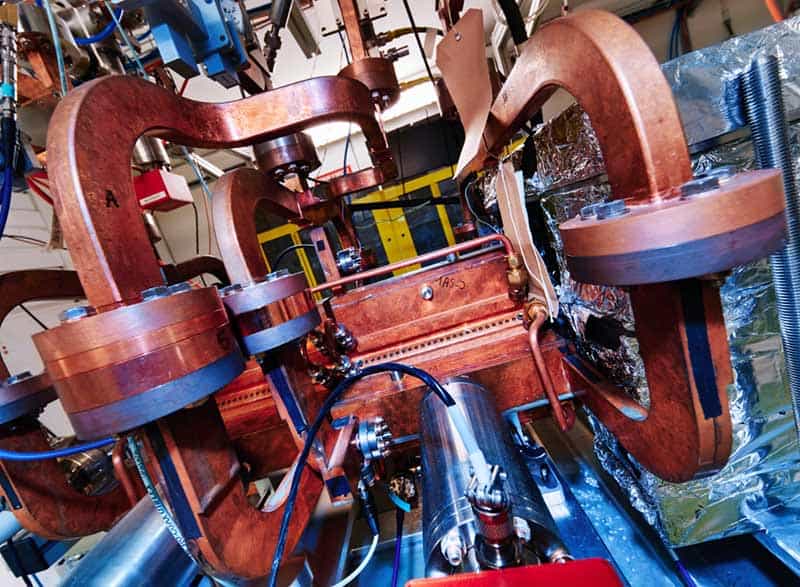
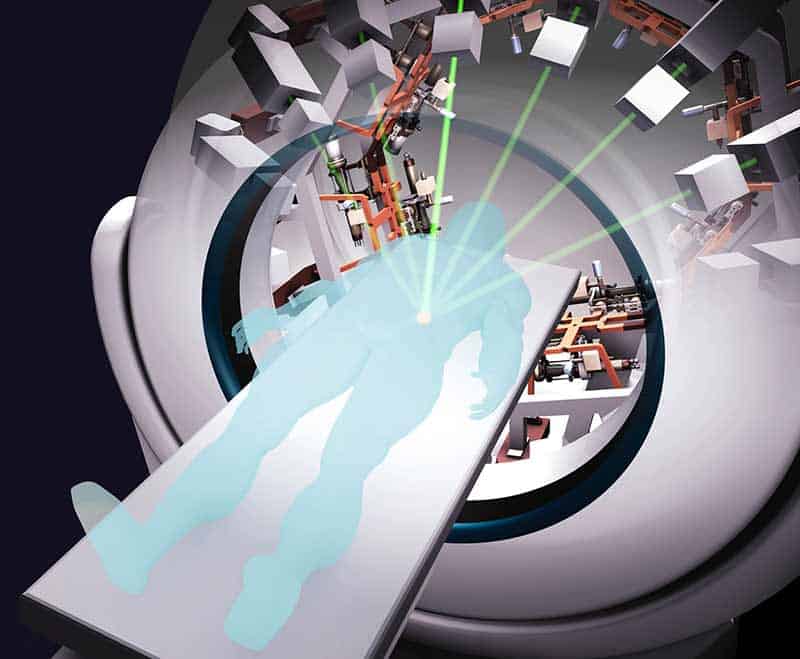
The potential of FLASH radiotherapy is being clearly demonstrated in experiments and clinical trials have started for skin and intraoperative treatment using low-energy electrons. Generalizing FLASH therapy to treat large, deep-seated tumours requires new radiation delivery infrastructure. A collaboration between Lausanne University Hospital (CHUV), CERN and PMB/THERYQ is developing such a facility. The facility uses >100 MeV electrons and draws heavily on the accelerator technology developed by the CLIC linear collider project. The webinar will describe the major features and status of the project.
Focus on FLASH technology week
During the last week in March, Physics World focused on FLASH – bringing you updates on some of the latest research advances in the field and hosting two keynote webinars highlighting cutting-edge developments in FLASH technology. Our other FLASH webinar is also available to watch now:
Walter Wuensch is a principle researcher at CERN currently leading the development of high-performance linac technology for multiple applications including the CLIC linear collider and a broad range of next-generation compact accelerators including XFELs, Inverse Compton Sources and medical linacs. The accelerator technology development is complemented by both theoretical and experimental investigations of the fundamental processes that occur at high gradients including field emission and breakdown. The investigations are illuminating long-standing mysteries and the newly gained understanding are being applied to a range of applications the electron linacs, RFQs and high-voltage systems.
The Goethe-Institut, opposite Imperial College in London, is not the kind of place you would expect to encounter cutting-edge avant-garde art. With its Neoclassical façade and a history of providing German language classes, it hardly seems the type of venue to host an event that includes musicians like Peter Gabriel and Brian Eno, along with a number of quantum physicists. But the sounds emanating from its lecture theatre last December were a far cry from the institute’s traditional image: drones, bleeps and bursts of wild beats more akin to the soundtrack of an experimental underground movie.
This was, in fact, the sound of quantum computing.
Where quantum physics meets music Eduardo Miranda (centre) at the Goethe-Institut in London, December 2022. (Courtesy: Goethe-Institut London | Photo: Pau Ros)
The event was attended by about 150 people, who were listening to an improvised musical performance orchestrated by the Brazilian composer and computer scientist Eduardo Reck Miranda, who is based at the University of Plymouth in the UK. In one piece, Miranda and two colleagues were each using their own laptops, which were connected to a quantum computer over the Internet, to control – via hand gestures – the state of a quantum bit (qubit). When that state was measured, the result dictated the characteristics of the sounds created by synthesizers back in London.
If that sounds bizarre – well, yes it truly did.
I want to develop machines that will help me be creative and will challenge my normal way of doing things
Eduardo Miranda, University of Plymouth
In quantum computing, information is encoded in superposition states of entangled qubits, which allows some calculations to be carried out far more efficiently than is possible with classical machines. Although these devices are still prototypes mostly confined to the laboratories of tech giants such as IBM and Google, composers like Miranda are keen to discover what the new technology can offer them. “I want to develop machines that will help me be creative and will challenge my normal way of doing things,” he says.
Quantum computing, Miranda believes, “promotes a different way of thinking, [which in turn] will lead to different ways of thinking about music.” It’s a view shared by Bob Coecke – another of Miranda’s collaborators – who is a physicist at the Oxford-based quantum computing company Quantinuum. “If you change the way you look at things, and the language you use, you come out with completely new ideas,” says Coecke.
I’m fascinated to know how [this music] works.
Brian Eno, musician
Quantum music is currently a decidedly niche field – but one that is attracting some high-profile interest. Indeed the Goethe-Institut event was convened to mark the launch of a new book edited by Miranda, Quantum Computer Music, which claims to be the first-ever book on the subject (Springer, 2022). Coecke, meanwhile, is planning a quantum art/science mash-up in Oxford this year with Miranda and the Italian theorist Carlo Rovelli.
“I’m fascinated to know how [this music] works,” said Eno after the Goethe-Institut performance in an interview with the institute. “It’s difficult for me to make a judgement, because you don’t know how much of those decisions were made by humans, and how much is coming out of that different kind of intelligence.”
A natural partnership
The idea of using computer-like algorithms in music dates back to the 1840s, when scientist and mathematician Ada Lovelace first speculated about using Charles Babbage’s Analytical Machine – a kind of steampunk calculating device made from intricate arrays of brass cogs and camshafts – to “compose elaborate and scientific pieces of music of any degree of complexity or extent”. In some ways it was a natural partnership, for much of music itself has an algorithmic and mathematical basis, reflected by the symmetries apparent in the works of Baroque composers such as Johann Sebastian Bach.
Digital transformation The notion of using quantum computers for artistic purposes is part of a tradition that stretches back to Ada Lovelace, who wondered almost two centuries ago if Babbage’s Analytical Engine could be used to create music. (Courtesy: Shutterstock/Libor Píška)
The use of chance and probability in “automated” composition became popular even earlier, in the Musikalisches Würfelspiel (musical dice games) of the 18th century, in which small pieces of music were assembled using dice rolls. One composition allegedly written by Mozart in 1787 may be an example of the genre. It would have been played by the performers rolling dice many times, with the number thrown on each occasion corresponding to a particular pre-written section of music. The result was a randomly stitched together composition that differed in every performance, which you can listen to at bit.ly/3HivOLk.
It was the element of randomness that attracted modern composers to computers in the early days of digital machines. In the 1950s and 1960s, John Cage was at the centre of a group of tech-loving New York-based musicians that included Yoko Ono and the late Japanese composer Toshi Ichiyanagi, whose ambiguous 1960 score IBM for Merce Cunningham was inspired by the punch cards of early computers. On display at the Museum of Modern Art in New York, his score is as much a work of art as an actual piece of music – how (if it all) it should be interpreted is up to any potential performer.
Cage was also one of several artists involved in the Experiments in Art and Technology collective, which included engineers from Bell Laboratories in New Jersey, where Cage would hang out to get ideas. By using chance, he explained, he hoped to avoid the trap of repeating himself in his compositions.
For now we’re doing [quantum music] in a very naïve way because the machines are limited.
Bob Coecke, Quantinuum
In the 1960s and 1970s the Greek-French composer Iannis Xenakis – a student of the French composer Olivier Messiaen – incorporated computers, algorithms and various stochastic processes into his composing methods. Meanwhile, the Paris-based IRCAM institute, founded by composer Pierre Boulez, became a hub of avant-garde music in the 1970s, making extensive use of computers, signal generators, magnetic tape and other electronic resources.
Digital-information technology is now central to the production and reproduction of mainstream music. Some of the signal-processing algorithms and hardware that are ubiquitous in music and video today were developed at Bell Labs – and it would be hard to imagine the modern music industry without that kind of digital tech. It was surely inevitable, then, that as quantum computers morphed over the last two decades from a theoretical proposal to real machines, musicians would be curious about what these devices might do for them.
A quantum revolution
Publicly available quantum computing resources are, however, relatively limited, so Miranda is restricted to using a seven-qubit, cryogenically-cooled IBM Quantum device housed in New York, accessed via the cloud. Miranda admits that there is nothing, so far, in the quantum algorithms he uses to craft his compositions that couldn’t also be simulated with a classical computer. “For now we’re doing [quantum music] in a very naïve way because the machines are limited,” adds Coecke.
Still, as Miranda explains, some of the algorithms he is developing would already be computationally expensive and slow on classical devices, and hard to implement live in real time in a concert. But speed of computation is not really the main issue when it comes to using quantum physics to compose music. Currently the big appeal of quantum algorithms is, rather, as a source of randomness in musical choices.
Strange impact The weird physics behind quantum computers could transform how we make music. (Courtesy: iStock/Sandipkumar Patel)
As with some earlier computer-based music, particular parameters of the musical score, such as the pitch or duration of a note, can be assigned to random choices made by the machine. But whereas classical computers offer only a kind of algorithmically generated pseudo-randomness, quantum devices access the genuine randomness involved in the outcome of a quantum measurement. The universe, you might say, makes the choices. What’s more, this can be done in real time.
How do we grow and develop if we don’t explore other avenues?
Craig Stratton, violinist
Miranda imagines a composer assigning a particular algorithm to a piece of music, which is then played out via a quantum computer during a performance. In other words, the quantum computer can be remote, as it was at the London event, but simply sends its measurement results back to, say, a classical tone generator. “You set up the conditions, but you’re not completely sure what it will produce until the piece is performed,” Miranda says. “The performance will be unique for that particular moment.”
The Goethe-Institut event showed other ways in which quantum music might work. In one piece, the British violinist Craig Stratton improvised a short tune. The pitch and duration of each note were represented as quantum states that were then sent to the IBM computer in New York. There, the device processed the states to formulate a response that was “re-musicalized” and played back in London by a tone synthesizer (in that event using a saxophone sound) moments later.
Deep-learning AI algorithms for such musical “call-and-response” improvisation have already been devised. But according to Miranda, those algorithms tend to produce mere pastiches of the music they are trained on. Quantum computers, in contrast, will probably behave “more like a partner than an imitator”. Indeed the computer-generated melodic responses to Stratton’s improvisations sounded little like the stimuli that provoked them, retaining just a few tantalising echoes of the initial sounds.
Stratton, who found the process intriguing, believes that quantum computers certainly have a place in the development of music. “How do we grow and develop if we don’t explore other avenues?” he asks.
Bloch heads
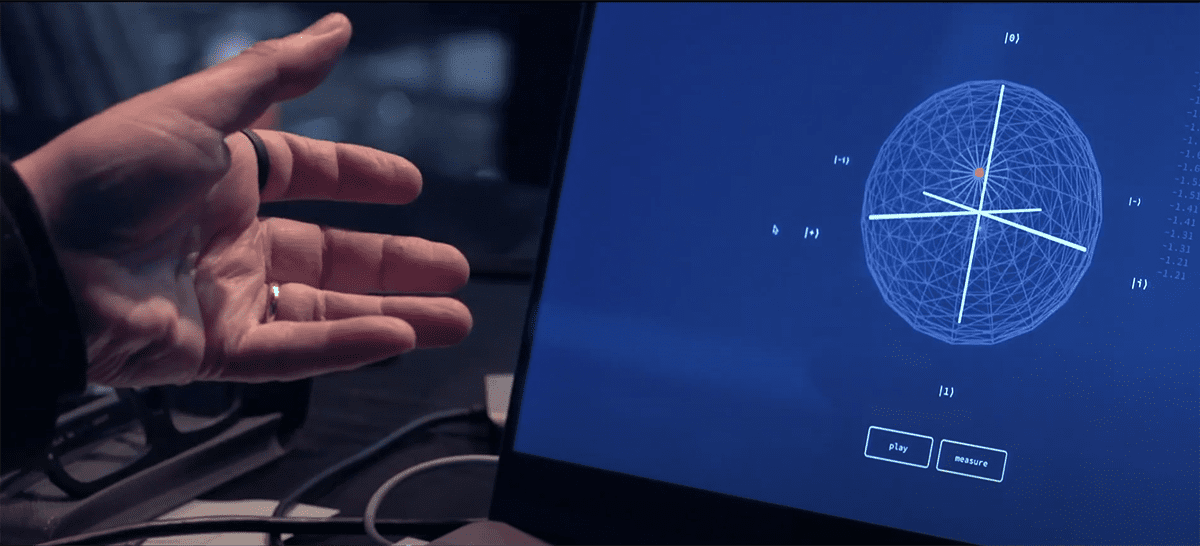
In another piece, Miranda and his Plymouth colleagues Pete Thomas and Paulo Itaborai used various computer interfaces to manipulate “Bloch spheres”. Named after the Nobel-prize-winning physicist Felix Bloch, these spheres are geometrical figures that describe the vector components of a two-level quantum system (the points on the surface being pure states and those on the inside being mixed states). At the London event, Miranda and Itaborai wore a movement-sensing ring and glove to transmit control signals by hand gestures to a laptop, while Thomas used a panel of knobs.
That’s handy By wearing a movement-sensing ring and glove, performers at the Goethe-Institut event in London were able to “measure” the qubit in an IBM quantum computer in New York, thereby “collapsing” it into an output state, the value of which determined the sound generated by three synthesizers back in London. (Courtesy: Goethe-Institut London)
These signals were fed to a quantum circuit running remotely on the IBM quantum computer, which allowed the musicians to rotate the orientation of a Bloch sphere (a visual representation of which was projected onto a screen behind the performers). At certain times the performers could choose to “measure” their qubit, thereby “collapsing” it into a definite but fundamentally unpredictable output state. (You can have a go yourself on a classical simulation of the process at bit.ly/41fXVnr).
The sound that results will always be surprising. We don’t know what it will be until we do the measurement
Eduardo Miranda, University of Plymouth
The value of this state was then used to determine the parameters of the sound generated by three sound synthesizers assigned to each performer. “The sound that results will always be surprising,” Miranda says. “We don’t know what it will be until we do the measurement.” The three performers then responded to what they heard with their subsequent hand movements, making the outcome a constant collaboration both between each musician and their instrument and also with each other.
Miranda calls the performance a rehearsed improvisation. “We practised it before a few times and agreed to a few things we would do, pretty much like what jazz players do,” he says. On this occasion all three qubits were independent, but Miranda is keen to find ways of entangling the qubits so that each is dependent on the others – making the musicians themselves literally coupled in new ways.
A new kind of music
Melody maker Maria Mannone, who is a theoretical physicist at the University of Palermo, is part of a growing band of researchers at the cross-over between quantum physics and music. (Courtesy: Maria Mannone/Lu Zang)
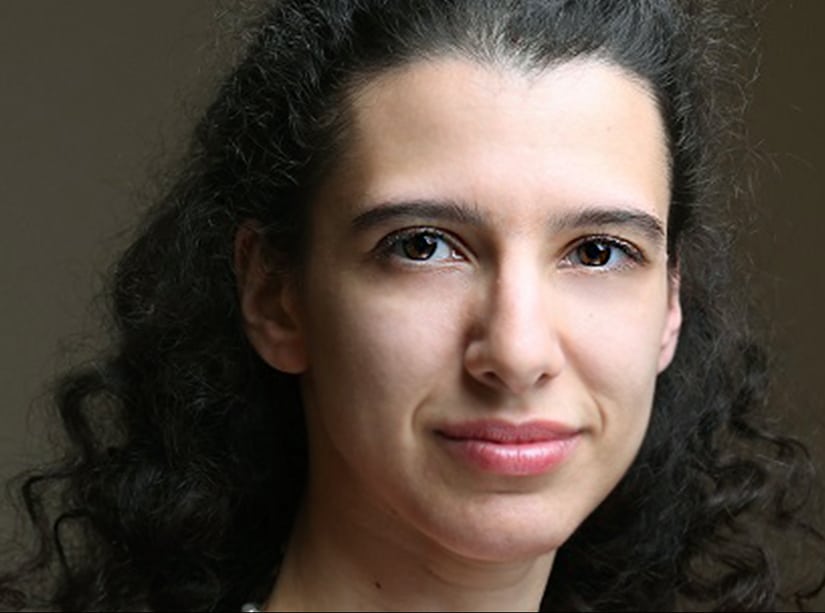
Harnessing quantum computing for making music is “like learning how to play a new musical instrument” says Maria Mannone, a theoretical physicist working on quantum information at the University of Palermo in Italy, who is also a composer. “We have to learn how to play the music we want, but, at the same time, the specific features of the new instrument can create constraints and suggest particular ideas.”
Miranda suspects that one way to exploit the possibilities is to get a quantum computer to come up with unexpected musical fragments that provide the kernels of ideas for the composer to develop, rather in the way in which AI-generated music is currently being used. “I’m trying,” he says, “to get the machine to give me material that I wouldn’t come up with myself – ideas that I can work with.”
Everything, especially in the sciences, can be a source of inspiration
Maria Mannone, University of Palermo, Italy
One of the current obstacles to the expansion of the field is the sheer unfamiliarity and technical complexity of quantum mechanics itself. Miranda’s new book Quantum Computer Music is not a manual for the faint-hearted, being filled with wavefunctions and matrix algebra. Musicians will be daunted, while the physicists and engineers who understand the theory tend to have little knowledge of musical traditions.
But he hopes that user-friendly interfaces will be developed that will lower the entry barrier, just as they have for computing generally. Miranda’s qubit rotations, for example, are controlled by simple hand gestures, rather like the way in which the theremin – an electronic musical instrument – is played.
Another approach is being pioneered by Jim Weaver, a quantum scientist at IBM’s Yorktown Heights Research Center in New York, who has developed the Quantum Toy Piano. It’s a musical tool that uses a quantum computer to generate melodies and harmonies probabilistically, using the inherent randomness of measuring qubit states to assign the notes.
Weaver has already developed such ideas into the Quantum Music Playground, in which a user-friendly interface allows the user to manipulate quantum states to create multi-instrument compositions. “[People] can fiddle around until the music sounds the way they’d like it to,” Weaver says. “It’s music of the Bloch spheres,” he quips, alluding to the old notion of a cosmic “music of the celestial spheres” (the idea that the relative movements of the Sun, Moon and planets are a form of music).
This system actually runs on a classical simulation of quantum states conducted by a conventional computer, rather than a real quantum device. This is because it requires complete knowledge of the quantum state – which can’t be done for a real qubit because a measurement collapses the state. Weaver, who sees the tool as educational as well as musical, hopes it can help students (and musicians) develop an intuition for quantum-computing algorithms. The work might not only change music but benefit quantum science too.
Another option for overcoming the technical barriers will be for musicians to embed themselves in the quantum research community. That’s the approach taken by the American composer Spencer Topel, who in 2019 was artist-in-residence at Yale Quantum Institute, home to quantum-technology experts such as Michel Devoret and Robert Schoelkopf. During his stint at Yale, Topel created a live performance in which the music was produced from measurements of the dynamics of the superconducting quantum devices used as qubits in most current quantum computers.
Musicians could benefit from learning a bit of quantum mechanics, too. “Composers have to be knowledgeable,” Mannone points out, “because everything, especially in the sciences, can be a source of inspiration.” Indeed the level of knowledge required need not be so daunting. As she points out, some of those now writing quantum code for other applications “do gorgeous work while having only a basic knowledge of quantum gates and principles”.
In her own work, Mannone has used quantum physics to analyse music – for example, by using a technique developed to quantify the memory of open quantum systems to measure the amounts of repetition and similarity that appear in musical compositions (Journal of Creative Music Systems doi.org/10.5920/jcms.975).
Hear all about it
If you’re wondering where you might be able to hear quantum music for yourself, Miranda has his sights set on a live performance at a concert hall through a forthcoming collaboration with the London Sinfonietta. He also foresees this kind of composing infiltrating less formal settings such as clubs, perhaps via the “live coding” movement, a new performance art in which DJ-like coders write programs to control audio-visual media in an improvised and interactive way, perhaps combined with dance, poetry and music (you can listen to an example at bit.ly/3Z8hUDg).
To stimulate the growth of the community, in November 2021 Miranda collaborated with IBM Quantum and Quantinuum to host the first International Symposium on Quantum Computing and Musical Creativity. “We don’t yet know what the possibilities for quantum music are,” said Quantinuum’s founding chief executive Ilyas Khan in the Goethe-Institut event – and it may be that as quantum music matures it will bear little resemblance to what today’s pioneers are doing. “These first two to three years are experimental,” he says.
Miranda hopes that it might become possible to express – in sound – quantum concepts such as entanglement and coherence that are hard to intuit intellectually. “That’s the holy grail,” he says. “I want to achieve this but I don’t know how.” But for Coecke, it’s all about catalysing a switch to quantum thinking. “If you put things together in the quantum world, suddenly a new universe of possibilities emerges.”
This webinar will introduce the novel biological phenomenon of FLASH and its potential to improve the therapeutic index of cancer radiation therapy. It will then discuss recent advances in particle accelerator science that underlie the PHASER technology platform under development. PHASER is designed to translate FLASH to patients with cancer, enabling ultra-rapid delivery of radiation with high dose conformity to large volume, deep-seated tumours in the body. The implications for improved cancer outcomes and critically needed broader access to curative cancer care will be addressed.
Focus on FLASH technology week
During the last week in March, Physics World focused on FLASH – bringing you updates on some of the latest research advances in the field and hosting two keynote webinars highlighting cutting-edge developments in FLASH technology. Our other FLASH webinar is also available to watch now:
Billy W Loo, Jr, MD, PhD, is a professor of radiation oncology, a member of the Molecular Imaging Program at Stanford (MIPS) in the Department of Radiology, and a member of the Stanford Cancer Institute, in the School of Medicine. He is a physician-scientist radiation oncologist and bioengineer who directs the Thoracic Radiation Oncology Program at Stanford.
His clinical specialties are state-of-the-art radiation therapy for lung/thoracic cancers, including stereotactic ablative radiotherapy (SABR) and 4-D image-guided radiation therapy for lung tumours. Dr Loo is a recognized expert in thoracic cancers serving on multiple national committees (including as writing member, chair, or vice-chair) that publish clinical guidelines on the treatment of lung cancer and other thoracic malignancies, including the National Comprehensive Cancer Network (NCCN), American College of Radiology (ACR), and American Society of Radiation Oncology (ASTRO).
His clinical research is in clinical trials and implementation of new treatment techniques for lung cancer, and development of new medical imaging methods for measuring organ function and predicting response to cancer treatment. As part of this work, he leads a clinical and preclinical research programme in molecular imaging, particularly using novel PET tracers for tumour hypoxia (EF5), tumour proliferation (FLT), and neuroinflammation (PBR06). He also co-leads clinical trials of novel applications of SABR including treatment of pulmonary emphysema and cardiac arrhythmias.
Since conceiving of a fundamentally new approach to delivering ultra-rapid, ultra-precise radiation therapy, pluridirectional high-energy agile scanning electronic radiotherapy (PHASER), Dr Loo’s major laboratory research focus has been to co-lead a collaborative effort between the Stanford Cancer Institute and SLAC National Accelerator Laboratory to develop PHASER into a transformative yet clinically practical technology. This programme comprises both technology development and fundamental research on the radiobiology of extremely rapid FLASH radiation therapy to optimize the biological therapeutic index.
Radial force: image of the rotating, gas-filled bulb with superimposed lines and arrows showing the convection cells. (Courtesy: J Koulakis et al/Physical Review LettersI/i>)
Sound waves have been used in the lab to mimic the role that gravity plays in driving convection in huge rotating bodies such as stars and planets. The new experiment was created by Seth Putterman and colleagues at the University of California Los Angeles and it allowed the researchers to create gravity-driven circulation patterns.
Convection within rotating planets and stars plays an important role in the internal dynamics of these huge objects. Here on Earth, for example, convection in the outer core is believed to create our planet’s magnetic field and convection in the atmosphere drives weather patterns. In the Sun, convection is believed to be responsible for creating solar flares.
Some aspects of stellar and planetary convection are difficult to simulate using computers. Instead, researchers have tried to create small versions of this convection in the lab. However, it has proven challenging to create a radial force with the appropriate strength to play the role of gravity. Indeed, some researchers have gone so far as to do their experiment on the International Space Station to try to create a useful force.
Microwave heating
Back on Earth, Putterman and colleague’s new experiment uses a rotating spherical bulb that is filled with a weakly ionized sulphur gas. The gas is heated using microwaves and this causes the gas at the centre of the bulb to be warmer than the cooler and denser gas at the edge of the bulb.
The team then modulate the microwaves to create sound waves inside the bulb. As the sound waves pass through the gas, the density gradient creates a radial force that tends to pull the cool gas at the edge of the bulb towards the centre – just as gravity pulls a fluid towards the centre of a planet.
As the bulb rotates, the inward moving cool gas is replaced by warmer gas that moves towards the edge of the bulb. This results in the formation of a pattern of convection cells surrounding the bulb’s axis of rotation. By carefully tuning their setup, Putterman’s team could generate distinctive convection patterns, featuring cells of circulating fluid that strongly mimic the patterns that are believed to exist within stars and planets.
By adapting this technique further, the team hopes that future studies could simulate gravity-driven convection with far greater accuracy than existing setups – helping them to better understand the vital role that convection plays in systems with large-scale circulation.
Scientists from France have used muon-imaging techniques to carry out a 3D reconstruction of a nuclear reactor. The researchers say that the technique, the first time it has been used in such a way, could be extended to non-destructively image other large objects.
Muons are charged subatomic particles that are around 200 times heavier than electrons. Muon radiography – or muography – analyses how muons in cosmic rays penetrate objects and exploits this information to produce 2D images. The technique is similar to X-ray radiography used in medical imaging with the cosmic-ray radiation taking the place of artificially-generated X-rays and muon trackers the place of radiographic plates.
Depending on their energy, muons can traverse metres of rock or other materials, making them ideal for imaging thick and large structures. Indeed, the technique has been successfully used in the past to produce 2D images of nuclear reactors, pyramids and volcanoes.
Determining local densities
In their latest work, researchers led by Sébastien Procureur from the Université Paris-Saclay and the French Alternative Energies and Atomic Energy Commission (CEA), used four telescopes to observe a decommissioned nuclear reactor in France from different angles. They then combined the different 2D images to obtain the 3D structure of the reactor using a modified tomography reconstruction algorithm that was originally developed for medical applications.
“Each image provides a measure of the density of the object, but integrated in the direction of observation,” explains Procureur. “By moving the telescopes, we can access a large number of densities integrated in different directions and can then determine the local densities.”
The technique was able to produce an accurate 3D reconstruction of the nuclear reactor. “Compared to medical imaging, in which the volume to be imaged is much smaller and the number of available 2D images is several hundred or even several thousand, we have shown in our work that we can obtain relatively precise 3D information on an object that is more than 30 m long with less than just 30 images,” says Procureur.
He adds that while the technique will never be able to resolve small cracks in such structures, the information obtained remains inaccessible with other non-invasive methods. The muon technique could be used to image reactors, either in operation or during their decommissioning phase. Indeed, it could be help in post-accident inspections, such as those carried out after the Fukushima accident.
Beyond nuclear reactors, the method could also be of interest for soil studies, prospecting mines to locate ores, civil engineering and archaeology. The researchers, who report their work in Science Advances, say they are now working on analysing another reactor to improve the accuracy of their 3D reconstruction. “There is still much work to be done on optimizing the measurements,” says Procureur.
The team also hopes to work on other applications of muon imaging. In 2015, the researchers proposed an experiment to monitor the water level in a water tower using muons and a few years later, a company asked them to apply the technique to remotely monitoring water levels in reactor pools. “If we hadn’t done our experiment in 2015, the company would never even have known that such a technique existed,” says Procureur. “I believe it is essential to continue with experiments that may, at first glance, seem far-fetched.”