Biofinder could detect signs of extraterrestrial life

A highly sensitive instrument has picked up strong bio-fluorescence signals from fossilized organisms that perished millions of years ago. According to its developers, the new Compact Color Biofinder would be similarly handy at detecting signs of life on other planetary bodies and could therefore play a critical role in future missions by NASA and other space agencies.

Biological materials such as amino acids, proteins, lipids and even sedimentary rocks all emit bio-fluorescence signals that can be detected using special cameras. The Compact Color Biofinder, which was developed by Anupam Misra from the Hawai’i Institute of Geophysics and Planetology at the UH Manoa School of Ocean and Earth Science and Technology (SOEST), improves on these older cameras by detecting minute amounts of bio-residues that cling to rock. It can also work at a distance of several metres and scan large areas quickly.

“The first version of Biofinder was made using a large sensitive ICCD [intensified charge-coupled device] detector,” Misra says. “Since the signals from this instrument were very strong, I thought a smaller colour CMOS camera could be used. Thanks to the sensitive, low light CMOS detectors available today, this is now possible.”

Simple working principle

Biofinder’s working principle is simple, Misra tells Physics World. All bio-fluorescence has a very short lifetime of less than 20 nanoseconds, so the system first illuminates an area using an expanded pulsed laser beam with a pulse width of a few nanoseconds. The CMOS camera then takes a fluorescence image using the shortest exposure time (1 µs for the present detector). The system then waits for the next laser pulse to repeat the measurement.

“Our laser fires 20 laser pulses in one second,” Misra explains. “Hence, the system takes 20 image-frames per second and runs at video speed.” The detection limits are below ppm levels at a target distance of one metre, he adds.

Detecting bio-residue in fish fossils

In their work, which they detail in Nature Scientific Reports, Misra and colleagues studied bio-residues in fish fossils from the Green River formation, which dates from the Eocene era 56-33.9 million years ago. They found that the fossils still contain considerable amounts of residue, implying that this organic matter has not been fully replaced by minerals in the fossilization process, even after such a long time.

The team backed up the findings from the Biofinder fluorescence imagery with measurements using a range of other techniques, including Raman and attenuated total reflection Fourier-transform infrared (ATR-FIR) spectroscopies, scanning electron microscopy (SEM), energy dispersive X-ray spectroscopy (SEM-EDS) and fluorescence lifetime imaging microscopy (FLIM).

The results confirm that biological residues can survive millions of years, Misra says, and that biofluorescence imaging is effective at detecting these trace residues in real time.

“Critical in future NASA missions”

The search for life – be it existing or extinct – on other planets is a major goal for planetary exploration missions, and the researchers hope that their technology will one day become a part of missions designed to look for biomarkers on distant worlds. Indeed, they are now applying to get their instrument space qualified.

“If the Biofinder were mounted on a rover on Mars or another planet, we would be able to rapidly scan large areas quickly to detect evidence of past life, even if the organism was small, not easy to see with our eyes, and dead for many millions of years,” Misra says. “We anticipate that fluorescence imaging will be critical in future NASA missions to detect organics and the existence of life on other planetary bodies.”

Study co-author Sonia J Rowley adds that the Biofinder’s capabilities would also be important for NASA’s Planetary Protection programme, which aims to detect contaminants such as Earth microbes on outbound spacecraft as well as any extraterrestrial biohazards that might make the return journey.
Chorizo shines like a star in telescope prank, game creates mechanical versions of electronic circuits

We’ve all been amazed by the incredible images taken by the James Webb Space Telescope. So when leading French physicist Etienne Klein tweeted an image of Proxima Centauri, the closest star to the Sun, people drooled over what looked like a giant, red ball of fire with mysterious white spots. In fact, the object was just a slice of Spanish sausage from Klein’s fridge. As a research director at France’s atomic- and alternative-energy commission (CEA), Klein had posted the image as a joke. He’d wanted to show how we should be sceptical about images we see and not always take comments from supposed figures of authority at face value. Although Klein did apologise for his prank, it looks like his plan worked.

Editor’s note: A follow-up blog about “chorizogate” can be read here.

In the world of physics, spintronics refers to experiments and devices that manipulate the spin of the electron. For example, exploring ways of using spin to create computer chips and memories with the potential to use much less energy than conventional electronics.

Now, I have just discovered a game called Spintronics that teaches children – and anyone else interested – about electronics. Currently in development by the US-based company Upper Story the game has nothing to do with the spintronics of physics research – with the possible exception that they both take advantage of angular momentum.

Chains and gears

Spintronics provides players with chains, gears and other mechanical components that can be connected to create analogues of electronic circuits. Instead of electrons flowing through Spintronics circuits, the gears and chains conduct a mechanical current. When running, the circuits resemble a Heath Robinson/Rube Goldberg contraption.

Some of the analogous components will be immediately obvious to a physicist. For example, in a Spintronics circuit the role of an inductor is played by a flywheel. Just as an inductor opposes change in the current flowing through it, conservation of angular momentum tends to oppose change in the rotational velocity of a flywheel.

The folks at Upper Story have created diagrams to help you mimic just about any electronic circuit and have also created a full set of analogous units. Voltage, for example, is expressed in units of force, whereas current is expressed in units of speed.

Small dynamic range

The small dynamic range of Spintronics means that it cannot be used to simulate all electronic systems. The mechanical equivalent to resistance, for example is limited to the 50–5000 Ω range. Another drawback of Spintronics is size. A Spintronics transistor is about a billion times larger than its modern electronic equivalent, so don’t expect to be doing any large-scale integration. However, Upper Story points out that their transistors are smaller that the first valves (vacuum tubes) that were used to switch electrical current in the early 1900s.

According to Upper Story, the company is currently taking orders for Spintronics and the first products will be shipped to customers in October 2022. You can watch a video about Spintronics at Kickstarter.

China sets out its climate ambitions

As the COVID-19 pandemic rampaged across the world in 2020, resulting in lockdowns and a bold race to create the first vaccine, Chinese president Xi Jinping was keen to tackle another huge scientific issue: the climate. In a surprise announcement to the UN general assembly in September 2020, he announced a bold plan to transition the country from one of the world’s biggest greenhouse gas emitters to a “net zero” carbon society by 2060. 

That ambitious aim came as a shock to many in the country, including regional government officials who are still processing what the goal means and what policies they need to adopt to meet it. Since Xi’s speech, however, dozens of carbon neutrality institutes across the country have already sprung up. In December 2020 the Institute of Atmospheric Physics in Beijing unveiled its carbon neutrality research centre – the first of its kind in China – that aims to strengthen monitoring technologies for carbon emissions. Prominent universities including Tsinghua, Fudan and Shanghai Jiao Tong followed suit, creating their own institutes aimed at fostering carbon-neutrality policies. 

In March the Chinese Academy of Sciences (CAS), meanwhile, proposed an action plan to put China at the forefront of climate change endeavours. This would be achieved, CAS noted, by developing technologies to boost the cleaner use of fossil fuels and safer nuclear energy, as well as the integration of renewable energy into existing power grids. But implementing such initiatives represents a tough challenge. “Meeting China’s carbon goals requires a profound, systematic socio-economic revolution, in which [scientists] have a major role to play by joining force across disciplines and making technological breakthroughs,” said CAS vice president Tao Zhang when announcing the plan.

Part of that net-zero struggle is China’s current reliance on coal. It makes up around 60% of the country’s electricity generation and cutting back on this heavily polluting type of power generation will be key to a net-zero carbon society. That may well require the rapid implementation of carbon capture, usage and storage (CCUS). This involves installing decarbonization facilities in the chimneys of coal-power plants where carbon is collected and transformed before being buried underground or at sea.

Scientists in China have been studying CCUS technologies since 2004 and have so far built 35 demonstration projects that have a total average injection capacity of 1.7 million tonnes of carbon per year. By 2060 that injection capacity is projected to be around 1–3 billion tonnes. Yet CCUS technologies have potential risks including during storage and transportation. Ning Wei from the CAS Institute of Rock and Soil Mechanics in Wuhan, who has been working in this field for some two decades, says that China is lagging behind in some key CCUS technologies such as the monitoring and risk assessment of leaks to prevent the outflow of carbon dioxide, which his team are now working to address. 

The wide implementation of such technology is likely to make energy more expensive – at least in the short term. Wei says that the cost for coal-fired power production is expected to rise by 20–30 cents per kilowatt-hour if CCUS is widely implemented. However, once these technologies have matured, it is hoped that such costs will drop by 50%.

Renewable base

It may come as a surprise to some that China is the world’s leading producer of renewable energy, with around a quarter of demand met by hydro, wind and solar energy. Yet China is not resting on its laurels, with plans to expand its renewable sector by building so-called “green energy bases” in its north-western desert regions. The country aims to have one third of its electricity from renewables by 2025, with a combined wind and solar capacity of 1200 GW by the end of the decade. “The view from west is one of amazement – and some envy,” says technology policy expert David Elliott from Open University in the UK. 

As renewable energy can be intermittent and unstable, a major challenge is integrating it into the power grid. This has prompted researchers to examine different energy-storage techniques. “Energy storage is key to the wide application of renewable energy because it gives a certain degree of flexibility to the power system that requires rigid real-time balance,” notes Xianfeng Li from the CAS Institute of Chemical Physics in Dalian. Li has been studying “flow batteries”, one of the most promising solutions for stationary energy storage thanks to its high energy density and low costs. His team is looking to use advanced materials and design to improve their efficiency and reliability while lowering the costs of commercialization and industrialization. “We would like to see stronger funding for the development of energy-storage technologies, a better-defined market mechanism for such technologies and products, and a top-level innovation centre to lead the country’s efforts in energy storage research,” adds Li. 

Some researchers believe that nuclear power could be a low-carbon option to fill that intermittency gap. China currently produces 55 GW of nuclear capacity across 53 nuclear power plants – about 5% of the country’s electricity generation – but helping to achieve net zero could require installing 560 GW of nuclear power by 2050. That would be a huge challenge, however, with officials urging the government to approve at least six projects a year to bring total capacity up to 180 GW by 2035. 

To do so, China is pushing ahead with fourth-generation nuclear reactors. In September 2021 an experimental reactor opened on the outskirts of the Gobi Desert. It uses thorium as fuel and molten salts as the primary coolant to achieve relatively safe and cheap energy generation. Two months later a demonstrative high-temperature gas-cooled nuclear reactor was connected to the power grid in Shidao Bay, in the eastern coastal province of Shandong, which marked the world’s first use of pebble-bed reactor technology in nuclear reactors. Not everyone, however, thinks nuclear power is the answer to net zero. “I feel it’s an expensive, dangerous diversion,” notes Elliott.

While China’s emissions reduction tends to focus on the energy supply side, the demand side deserves equal attention. This includes how to persuade more people to use electric vehicles and how to integrate solar panels into residence buildings. Above all, for a country that emits more greenhouse gases than any other nation, curbing emissions calls for a paradigm shift not only in government, industry and academia, but also from every citizen. 

China has already made carbon reduction a quantitative goal for national development – a move that will require the country to turn its back on fossil fuels and focus on renewable energy and possibly nuclear – and in the coming decades carbon neutrality will become a national strategy. And while scientists are seeking to develop better technologies to meet that goal, Daizong Liu from the World Resources Institute’s Beijing Office believes that China could manage it without needing to do so. “According to our calculation, China will be able to reduce 89% of its emissions simply by the massive application of existing technologies,” adds Liu. “An entire generation will work together to achieve it.” 

Helical light tells chiral molecules apart

A new optical technique that is very efficient at distinguishing between molecules that are mirror images of each other could have major applications in areas such as drug development, biochemistry and toxicology. Being able to differentiate between such molecules is critical in these areas because the different mirror-image forms, or enantiomers, often produce very different effects in the body.

At present, the main way to distinguish between enantiomers is by sending circularly-polarized light through a sample. Molecules of one “handedness”, or chirality, will absorb more such light than their mirror image, producing a tell-tale difference in the transmitted light. This circular dichroism (CD) method is routinely employed in analytical chemistry, biochemistry and in the pharmaceutical, cosmetic and food industries. Its chief drawback is that the signals produced are very weak, and the sample ideally needs to be in the gas phase. This can be a problem for chemistry and biochemistry experiments that are mainly carried out in aqueous solutions.

Helical rather than circular dichroism

The new method, developed by researchers at Switzerland’s Paul Scherrer Institute, the École polytechnique fédérale de Lausanne (EPFL) and the University of Geneva, overcomes these problems because it works using a form of dichroism, helical dichroism (HD), that involves the shape of light (that is, its wavefront) rather than its polarization.

“One can imagine an optical vortex as a light beam, where the wavefront is twisted like a screw along the propagation direction,” says team leader Jérémy Rouxel, who is now at the Université de Saint-Etienne in France. “Just like a screw, the direction of this wavefront can go in one direction or another, comparable to a left- and a right-handed thread.”

Unlike in CD, which is strongly limited by the fact that light can only be left- or right-polarized, HD has the advantage that optical vortices can twist multiple times within one wavelength of the used light. This can enhance the dichroic signal strongly and can also be used to determine the degree of chirality of a molecule.

Distinguishing between enantiomers

In their study, Rouxel and colleagues used helical X-ray light from the cSAXS beamline at the Swiss Light Source to study a powdered form of a chiral metal complex called iron-tris-bipyridine. This compound absorbs and scatters light with left and right helical vortices differently, Rouxel explains.

“The central point here was to create X-ray optical vortices for the experiment, and to measure the difference in X-ray absorption with the various possible vortices,” Rouxel tells Physics World. “We did this using a special diffractive optical element called a spiral Fresnel zone plate. With this lens, it is possible to focus the light onto a sample and to generate the optical vortex at the same time.”

The team’s experiments showed that the signal derived from HD was several orders of magnitude stronger than that possible from CD. The researchers are now studying other molecules to improve the reliability of the technique and, in Rouxel’s words, “establish it for the community”.

“We also plan to implement it for more liquid samples, which will make HD even more interesting for chemistry research,” Rouxel reveals. “Finally, we have to study more extensively how the dichroism varies as a function of the threading degree.”

The work is detailed in Nature Photonics.

Artificial muscles offer a route to greener air conditioning, breakthroughs in semiconductor physics and hidden consciousness

In this episode of the Physics World Weekly podcast, Paul Motzki of Germany’s University of Saarland explains how artificial muscles have been used to create a new and environmentally friendly refrigeration technology.

Also this week, Physics World editors chat about a breakthrough in the study of the promising semiconductor cubic boron arsenide, a new technique that can reveal hidden consciousness in brain-injured patients, and a scary study about rocket stages that fall from the sky.

Bipolar transistors go organic

Researchers in Germany have created the first bipolar transistor made from an organic semiconductor. The new transistor boasts outstanding performance, a vertical architecture and a high differential amplification, and could find applications in high-performance thin-film and flexible electronics where data must be analysed and transmitted at high speeds.

Transistors are used throughout modern electronics as switches to control the flow of charge carriers – electrons or holes – through a circuit. Bipolar transistors are special because they make use of both electrons and holes, and this extra capability means they are well-suited to high-speed and high-power applications. Building them from organic semiconductors, rather than inorganic ones, could give electronics designers the scope to make such high-speed and high-power devices flexible and transparent.

A team led by Karl Leo of TU Dresden has now taken a step towards this goal by constructing an organic bipolar junction transistor from highly ordered (crystalline) thin films of an organic semiconductor called rubrene. This material has a high charge mobility, meaning that charge carriers move through it extremely fast and over long distances.

Layer by layer

Bipolar junction transistors consist of three terminals separated by semiconducting materials that are either p- or n-type. In the devices, these semiconductors are arranged alternately, in either a pnp or a npn configuration.

Leo’s group had previously made both p- and n-type rubrene films, but in the latest work, it took the additional step of engineering these films on a very thin crystalline rubrene layer around 20 nm thick. The films then act a seed for subsequent p- and n- layers as well as layers that are i-type – that is, they are neither n- or p- and thus carry neither negative nor positive charge carriers. “While such films had been made before, we are the first to electrically dope them and realize complex device stacks,” Leo explains.

Device characterization

The researchers estimate that the transition frequency of their new device – essentially, a measure of its speed – is 1.6 GHz. This is much higher than that the record for organic field-effect transistors (OFETs), which is 40 MHz for a vertically configured device and 160 Hz for a horizontally configured one. However, Leo notes that the device’s speed per voltage is a more relevant measure of its performance. “Here, the new device with about 400 MHz/V is almost a hundred times faster than previous organic transistors,” he says.

What is more, Leo tells Physics World that the team’s new transistors can be used to determine an important device parameter for organic materials: the minority carrier diffusion length. This parameter, which is key for optimizing device efficiency, is the distance that the minority carrier (electrons in p-type semiconductors; holes in n-type semiconductors) can travel before it recombines with a carrier of opposite charge. In silicon, this quantity can be many microns in length. The value for organics was expected to be much smaller, but in this class of materials it was basically unknown, Leo says.

In the highly ordered layers employed in this work, the TU Dresden team determined that the minority carrier diffusion length was 50 nm, long enough to make the transistors work well. However, Leo stresses that further studies are still needed to determine which parameters of the material control this quantity and how it can be optimized.

According to the researchers, the new transistor could be used in applications such as signal processing and wireless transmission in which data must be analysed and transmitted at high speed. They are now working to reduce the leakage current in the device, which would allow them to measure its operating speed directly. “We also wish to generalize the application of the highly ordered layer technique to other devices,” Leo reveals.

The team describe the work in Nature.

Photothermal surgical dressing prevents skin cancer recurrence

A highly effective surgical dressing designed for patients with skin cancer could speed up the healing process after surgery. Developed by researchers in the UK and China, the dressing also exploits photothermal effects to prevent tumours from reappearing.

Photothermal therapy (PTT) has emerged as a promising technique for treating skin cancer. It involves injecting tumours with conductive nanomaterials that convert light into heat, and then illuminating them with specific wavelengths to kill cancer cells. For large tumours, this treatment must be carried out in combination with surgery, leaving wounds that must be treated with surgical dressings to prevent infection.

Recently, more advanced treatment methods have been proposed in which PTT is integrated directly into the surgical dressings. The hope is that these materials could promote healing in the skin, while preventing tumours from re-emerging after treatment. The theorized designs for these dressings are based around the photothermal material reduced graphene oxide (rGO). This material can be synthesized by bonding oxygen-containing groups to single-layer graphene sheets, and then subjecting them to a process that reduces their oxygen content.

Currently, this technique faces a major roadblock: rGO is toxic to living cells, meaning it can’t be used directly in surgical dressings. Before the reduction process, graphene oxide can be made more biocompatible by combining it with biomolecules like peptides and proteins. However, in order to enhance its photothermal response, the material must then endure a harsh reduction process: carried out in a sealed reactor at temperatures exceeding 180°C, in an environment of pure ethanol. While reducing the material’s graphene oxide, this also destroys the more delicate biomolecular structures attached to it.

The team, led by Yuanhao Wu at the University of Nottingham, has now developed a new technique that allows the reduction process to occur at lower temperatures. It involves an assembly of graphene oxide flakes, encased in a protein biopolymer named “elastin-like recombinamer” (ELR), which is known for its ability to promote skin repair and heal wounds. By controlling the molecular interactions between these structures, the team produced a multi-layered graphene oxide core, surrounded by an ELR shell.

Afterwards, the researchers exposed this structure to a disinfectant containing 70% ethanol. Typically, this liquid would penetrate straight through bacteria and the protein shells of viruses. In this case, it passed straight through the ELR shell to interact with the pure graphene oxide inside. This allowed the team to trigger the reduction process at far lower temperatures of 85°C, while leaving the ELR’s structure intact.

Altogether, the final structure combined the high PTT efficiency of rGO with the capacity to promote tissue regeneration. As an added bonus, the material was sterilized through its treatment with ethanol.

The researchers validated their approach using in vivo experiments in mice, demonstrating that the dressings could prevent tumour recurrence and promote wound healing after tumour resection. The material only needed 15 s exposure to near-infrared light every 48 hr to be effective.

Wu’s team hopes that the unique dressings could lead to practical post-surgery treatments that patients with skin cancer could deliver at home: both speeding up the healing of their surgical wounds, and preventing tumours from re-emerging as their skin regenerates.

The study is described in Advanced Functional Materials.

Hello interflexionality: what I learned from the 14th Gathering for Gardner

How can a set of spinning tops be made to equal Euler’s equation? Kenneth Brecher – a retired physicist from the Massachusetts Institute of Technology – revealed all at the 14th Gathering for Gardner (G4G14), which was held from 7–10 April in Atlanta, Georgia. Inspired by Martin Gardner (1914–2010), who wrote the Recreational Mathematics column for Scientific American between 1957 and 1981, the biennial conferences bring together an unusual mix of scientists, artists and magicians.

First held in 1993, the conferences are always called “G4G” plus the suffix of the series number; this year’s event was thus G4G14. In fact, the series number – in this case, 14 – is always a playful and recurring theme in many of the 100 or so talks. These are strictly limited to six minutes each, forcing presenters to be amusing, concise and instructive. As a member of the board of directors of the G4G conferences, I have given several myself.

The talks are strictly limited to six minutes each, forcing presenters to be amusing, concise and instructive.

Brecher, a self-styled “topaholic”, used G4G14 to reveal a pancake-shaped ellipsoid that he had made out of brass. He’d dubbed it eTop because its diameter divided by maximum thickness equals Euler’s number e (2.718…). Brecher also explained how he’d created an imaginary top or “iTop”. Decreeing it to be the least imaginable object you could think of, he’d made it by machining a thin, almost 2D “tippe top”
(a top that flips over when spun). He got the largest laugh, though, when spinning both tops – and two others from previous G4Gs – in a way that represents the Euler equation: eiπ = –1.

A question of handshakes

Brechner’s talk followed the conference’s opening address, which was given by Skona Brittain, a mathematician from the SB Family School in Santa Barbara. She’d written her talk before the pandemic when she’d assumed that a nice opening activity for delegates would be to shake hands and introduce themselves. How many different ways, she asked, could n pairs of people sitting around a table shake hands simultaneously without crossing their arms? She showed the answer is the nth “Catalan number” (a sequence of numbers in combinatorics) with the answer at a typical 8-person table being 14 different ways. The audience applauded the solution, fist- and elbow-bumping in this wary post-pandemic era.

Adam Atkinson – another mathematician – described the science behind the inventions of Daedalus, the pseudonym of New Scientist columnist David Jones (1938–2017), who would propose outlandish improvements to everyday activities such as drinking, swimming and seeing. Can someone, Jones once pondered, survive in the Sahara desert by extracting water from the air? Yes – just build a 2.4 km tall column of a deliquescent substance such as sulphuric acid and install a semi-permeable membrane at the bottom. The pressure will make a constant stream of water flow out the base.

Can one swim and breathe at the same time without scuba gear? Sure! Squeeze xenon to the density of water and mix it with oxygen (the snag being you’d need the world’s supply of xenon and you’d vomit). Want to see the back of your head without a mirror? Replace the atmosphere with sulphur dioxide, which increases the index of refraction so it can make light bend around the Earth.

Miquel Duran, a chemist from the University of Girona in Spain, used his six minutes to explain how he uses playing cards to teach concepts and calculations from quantum mechanics. Other speakers discussed the mathematics of various topics: snowflake growth, fibre arts, topological dancing, origami toroids, Escher-like mathematical walkable structures, and stretchable rulers for measuring graphically depicted graphs without digitizing them. Others, meanwhile, talked about mathematics education, explaining how they react to complaints that maths is “boring/useless/difficult” or only for people who “don’t look like me”. 

Lew Lefton, a mathematician and computer scientist from the Georgia Institute of Technology, spent his allotted time with a series of one-liners that made the audience chuckle. “You either believe in the law of the excluded middle or you don’t.” Laughter. “That’s the only time that joke has ever got a laugh.” Laughter. “That was my 14th joke.” Laughter. “That was my 15th joke.” Laughter. “Now you know the rest of my set by induction.” More laughs.

As Dr Matrix pro-14 in Atlanta, I cited the indispensable role that 14 plays in human culture and science.

During his long career, Gardner invented a fictitious numerologist named Dr Matrix, who believed that numbers govern real objects and events. A traditional event at the G4Gs is the appearance of two versions of Dr Matrix, one of whom speaks for the series number and the other against it. As Dr Matrix pro-14 in Atlanta, I cited the indispensable role that 14 plays in human culture and science, naming important people (such as Donald Trump) who were born on the 14th. I also pointed out key events that occur on that day – including Valentine’s Day – and the number’s significance in religion, such as the 14 stages of the cross.

As Dr Matrix anti-14, Stony Brook philosophy graduate student Delicia Kamins named famous people, such as Stephen Hawking, who had died on the 14th, pointing out that Valentine’s Day is often a disaster for couples, and noting that the 14 stages of the cross involve suffering.

The critical point

Initially, participants at the G4Gs were those who had been directly inspired by Gardner’s column. As time went on, and especially following Gardner’s death, attendees gradually became more and more drawn by the spirit of the conferences. I’d define that spirit as “interflexionality” – a word I’ve invented based on terms such as interdisciplinarity and intersectionality (where structures overlap yet depend on each other) coupled with flexion (the bending required to make something happen).

Interflexionality involves playing at the intersection of different fields; it might be fun but the activity enriches those other fields. As one presenter said: “Don’t apologize for doing useless research.”

Start out strong with the Physics World Careers 2023 guide

A degree in physics opens up so many doors, that it can be hard to know what path to follow when you graduate – or where to even start. Physics World Careers 2023 is here to help, by bringing you case studies of physicists working in business and academia. From what physicists do day-to-day and how they got there, to their tips and advice for a successful career; our free-to-read 110-page guide covers it all.

As always, we also have a comprehensive “Employer directory”, where you can find out more about companies and institutions currently hiring physics graduates.

Our “Career development” section offers more general advice about planning for the future. Don’t miss the article by Carol Davenport, who reveals the 16 key “soft skills” you should keep up to scratch. Too often physicists think career success is all about how much physics you know, when what also counts are attributes like open-mindedness, curiosity and resilience. Her article could give you that vital edge when it comes to landing that dream job you’ve always wanted.

In the “Case study” section, you’ll find articles by or about physicists who work in a range of different sectors. Sure, physics can lead to a conventional career in academia – and even, in the case of Lia Merminga, to become head of one of the world’s biggest particle-physics labs. But physics graduates also end up in everything from fibre-optic research and navigation technologies, to metrology and the start-up sector.

Finally, check out our “Ask me anything” section, where we bring you bite-sized tips from physicists at different stages of their career journey.

If you’re ready to start your job search, do check out the Physics World Jobs site, where you can find vacancies in physics and engineering, for people at all career stages. You can also sign up for the Physics World careers newsletter, sent out every two months. To subscribe, simply sign into your free Physics World online account and tick the “Careers bimonthly” box.

We hope you find Physics World Careers 2023 a useful guide to your many options.

Click on the cover below to find out more.


Thermal vacuum testing helps small-satellite research telescopes look to the stars

US technology start-up Rydberg Vacuum Sciences (RVS) continues to chart a forward trajectory as a “go-to” equipment provider in the emerging test-and-measurement ecosystem supporting the development and validation of small-satellite space missions – broadly instruments with a mass ranging from 1 to 500 kg. More precisely, RVS is carving out a specialist niche in the provision of affordable, off-the-shelf thermal vacuum bake-out and thermal vacuum cycling products – core enabling technologies in the preflight qualification workflow for small satellites and their constituent components, subsystems and instrumentation.

The evolving market context here is instructive, one in which small-satellite developers are opening up commercial and scientific opportunities in applications as diverse as astronomical observation, remote sensing, environmental protection and asset tracking and logistics. At the heart of it all, small-satellite innovation is proceeding at pace, with established and new-entrant manufacturers, as well as academic research groups, squeezing more and more functionality into ever-decreasing payloads while further lowering the barriers to entry to the space industry.

Testing for mission-readiness

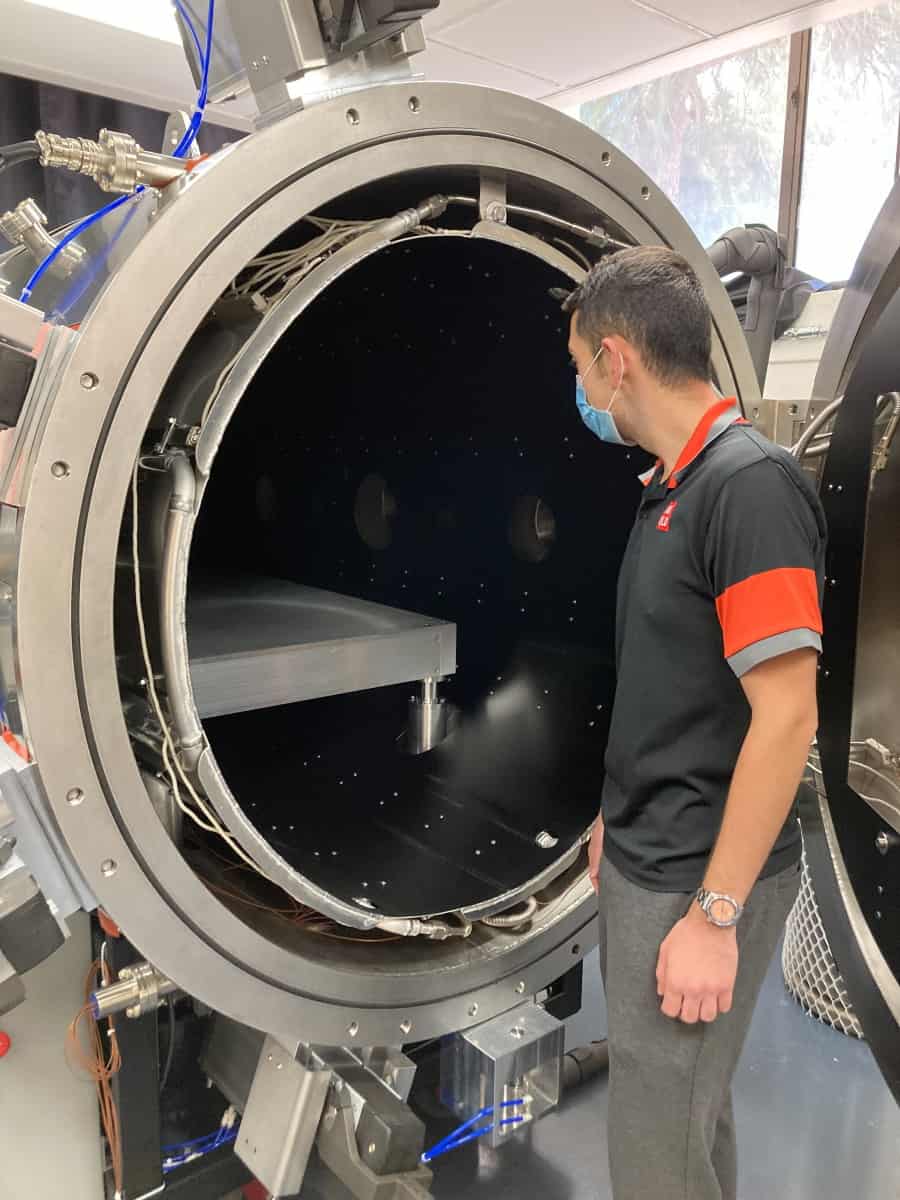
All of this translates into relentless downward pressure on the capital and operational expenditure of satellite developers and their engineering teams – not least when it comes to the exacting test programmes needed to qualify satellite systems for launch and, ultimately, long-term operation in orbit. A case study in this regard is the Center for Astronomical Adaptive Optics (CAAO) at the Steward Observatory, the research arm of the department of astronomy at the University of Arizona (Tucson, AZ). The CAAO team is also the latest addition to the growing network of RVS customers and, as such, has been putting the vendor’s thermal vacuum (TVAC) test chamber through commissioning and acceptance over the past couple of months.

“We’re building prototype research instruments – including adaptive optics systems, advanced IR and UV detectors, and high-performance cryostats – that will be incorporated into future space-based small-satellite telescopes,” explains Ewan Douglas, assistant professor and assistant astronomer at the Steward Observatory. Douglas, for his part, heads up a broad-scope research effort spanning space instrumentation, wavefront sensing and control, and high-contrast imaging of extrasolar planets and debris disks. “The TVAC chamber’s testing capabilities will enable us to advance the technical- and mission-readiness of our scientific instruments and satellite payloads,” he adds. “In this way, we hope to make University of Arizona responses to NASA funding proposals that much more compelling.”

The operational detail

For any prelaunch test programme, instrumentation developers like Douglas and his CAAO colleagues will typically generate a model of the temperature extremes a small-satellite mission is likely to experience once in orbit. That’s followed by an exhaustive programme of laboratory-based thermal vacuum testing – essential for iteration and validation of the modelling and to ensure that any localized heating/cooling units are having the desired effect on front-line research instruments and their associated hardware.

RVS TVAC chamber

In this scenario, the RVS TVAC chamber allows developers to evaluate technology performance along multiple coordinates. A thermal vacuum cycling test, for example, will see the craft’s hardware and instrumentation put through its paces and subjected to a “step-and-repeat” programme of extreme hot and cold temperatures in a high-vacuum environment, while a thermal balance test aims to demonstrate the effectiveness of the craft’s thermal control systems for maintaining the temperature of key systems within predefined limits. There’s also a vacuum bake-out requirement, in which the satellite hardware is heated to high temperature under high vacuum to quantify levels of material outgassing (the products of which can adversely affect the functioning of on-board imaging systems, thermal radiators, solar cells and the like).

Herein lies another opportunity. For even while the CAAO team is pushing the performance limits of its space-based instrumentation, a parallel commitment to cost-reduction remains very much part of the R&D mix – not least in the deployment of commercial off-the-shelf (COTS) hardware and software (rather than the development of bespoke technology solutions). “A key use-case for the TVAC chamber involves taking COTS products – say an optical detector or an onboard computer – and making sure that they still work in a space-like environment,” says Douglas. “Space-qualified COTS technologies are fundamental to driving down the overall cost of small-satellite astronomy missions.”

Delivering versus requirements

Equally important is the emphasis that RVS puts on its own off-the-shelf thermal vacuum systems. Put another way, that means thermal testing at a palatable price-point while also ensuring that ease-of-use is paramount. “In responding to our call for proposals, RVS was competitive on price and delivered versus desired functionality,” notes Manny Montoya, CAAO technical manager, who heads up a diverse team of engineers, technicians and machinists supporting the research of Douglas and other astronomers at Steward Observatory.

The functionality in question covers a general-purpose vacuum test chamber that any small-satellite mission on the Tucson campus can use to investigate the effects of temperature extremes in high vacuum. What’s more, the TVAC chamber also gives Steward Observatory astronomers the ability to access vacuum regimes as low as 10-8 Torr – an essential requirement when qualifying high-end instrumentation destined for scientific missions like Aspera. This NASA project, led by Steward Observatory astronomer Carlos Vargas, is developing an extreme-UV astrophysics small satellite that will map the warm-hot-phase coronal gas around nearby galaxy halos (and, in turn, shed light on galaxy formation and evolution).

Another CAAO must-have is vibration isolation, so that Douglas and his team can evaluate precision adaptive optics systems inside the TVAC test chamber. In this respect, RVS proposed a novel solution comprising an optical table suspended by pneumatic legs outside the vacuum chamber – a configuration that isolates the optics under test by dampening any vibrations coming through the building floor (from passing road traffic, for example, or from doors opening and closing).

“In responding to the request for proposals,” concludes Montoya, “RVS did a great job of understanding CAAO’s technical requirements and adapting the TVAC system accordingly – testament to the company’s extensive technical domain knowledge on thermal vacuum testing for research and industry applications.”


Copyright © 2026 by IOP Publishing Ltd and individual contributors