High-resolution diamond sensor maps electrical currents in the heart

A diamond-based sensor that maps out the subtle electrical currents inside the heart has been developed by researchers in Japan. Led by Takayuki Iwasaki at the Tokyo Institute of Technology, the team based its device on the fluorescence of nitrogen-vacancy (NV) centres in diamonds. They used their sensor to measure the magnetic fields created by electrical currents travelling in the hearts of living rats and the researchers say that the device’s 5.1 mm resolution is unprecedented.

Some heart diseases including tachycardia and fibrillation are caused by imperfections in how electrical currents are conveyed through the heart. To diagnose these conditions, cardiologists use magnetocardiography (MCG): a contactless technique the remotely measures the magnetic fields produced by electricl currents in the heart.

The resolution of MCG is limited by factors including sensor size and operating temperature. For example, superconductor-based sensors are very good at detecting small magnetic fields, but they must be kept at very low temperatures. As a result, these sensors must be kept some distance away from the heart and therefore cannot resolve currents on the millimetre scale. This means that they cannot fully resolve the intricate rotational waves produced by ventricular arrhythmias.

Atomic-scale defects

To create a higher-resolution sensor, Iwasaki’s team used nitrogen vacancy (NV) centres – which are atomic-scale defects in diamond.  In an NV centre, a pair of adjacent carbon atoms in the diamond lattice is replaced by a nitrogen atom and an empty space. An NV centre is essentially an isolated quantum spin that is very sensitive to an external magnetic field. What is more, it emits fluorescent light in a way that is dependent upon the intensity and direction of the field. These properties can be combined to create a magnetic sensor with an optical readout.

Iwasaki and colleagues created a sensor from a diamond chip with a high density of NV centres. Operating at room temperature, they positioned the sensor just a few millimetres from the hearts of live rats. The NV centres were illuminated with a green laser and a photodiode was used to capture the emitted fluorescent light. Iwasaki’s team also developed a mathematical model to translate the fluorescence measurements into the corresponding magnetic fields. This allowed them to produce detailed 2D images of electrical activity in the hearts, achieving a resolution of 5.1 mm. The researchers hope that their sensors could make it far easier for cardiologists to study the origin and progression of many different types of heart condition in patients – potentially leading to new methods for diagnosing and treating these diseases. With further improvements, the sensor could also be used to detect even more subtle electric currents produced in other parts of the body.

The research is described in Communications Physics.

A spoonful of sugar makes the dendrites go down

Aqueous zinc batteries are promising alternatives to their lithium-ion cousins, but they suffer from one of the same problems: the formation of dendrites. These needle-like structures form on the surface of the zinc anode and grow into the electrolyte, causing the battery to short or, in some cases, even ignite. A team of researchers in China has now shown that adding ordinary table sugar (sucrose) chemically modified with hydroxyl groups to the electrolyte can slow down the growth of zinc dendrites by changing the solvent environment. What is more, the sucrose also forms a protective coating on the anode and slows down its corrosion.

Lithium-ion batteries are the most widely employed batteries today in portable electronics and electric vehicles, but the flammable and toxic organic electrolytes they contain are a cause for concern. Lithium is also expensive compared to some other, more common metals, and the global supply is victim to various uncertainties. Zinc batteries, which are normally formed with aqueous electrolytes, are an attractive substitute because zinc is cheaper, less toxic, more easily recycled and more widely available than lithium. They also have a high energy density, with a high specific capacity (820 mAh/g and 5 855 mAh/cm3) and a favourable redox potential (−0.76V versus the standard hydrogen electrode) of the Zn anode.

The problem is that when the zinc ion (Zn2+) concentration on the surface of the anode drops to zero, dendrites begin to grow on it. The presence of these structures causes the battery’s electrochemical performance to deteriorate and can be dangerous if left uncontrolled.

Modifying the solvent environment

Recent studies have shown that modifying the solvent environment (or “solvation structure”) by, for example, introducing salts or including fewer water molecules, can increase the speed at which Zn2+ ions move in response to an electric field and therefore suppress dendrite growth. However, such adjustments unfortunately decrease the ionic conductivity of the battery system, leading to poorer overall performance.

In the new study, researchers led by nanotechnology expert Meinan Liu of the University of Science and Technology of China found that introducing sucrose containing hydroxyl groups is an effective way of regulating the solvation structure of Zn2+ ions, which enhances the speed at which the ions propagate without decreasing ionic conductivity. The sucrose can also stabilize the aqueous electrolyte while at the same time absorbing onto the Zn anode to form a protective layer on it. This impedes the corrosion of the electrolyte on the Zn anode, they say.

“Sucrose with hydroxyl groups strongly interacts with Zn2+ compared to water molecules in the electrolyte,” explains Liu. “It can therefore replace some of the water molecules and coordinate with Zn2+, so regulating the solvation structure of the ions.”

Dendrite formation reduced

“The modified Zn2+ solvation structure has an important influence on the kinetics of the ions, including the rate at which they diffuse through the electrolyte,” she tells Physics World. “Our experimental results clearly demonstrate that the transference number of Zn2+ ions increases with the introduction of sucrose. This enhanced mobility of the ions helps reduce the formation of dendrites as mentioned.”

According to the researchers, their technique could help scientists develop high-performance Zn batteries and brings a safe, environmentally-friendly, Zn battery closer to reality.

Looking ahead, Liu and colleagues say they plan to focus on developing electrolytes with good ionic conductivity that work at lower temperatures. They detail their present study in Nano Research.

Earth’s crust grew faster when our planet passed through the Milky Way’s spiral arms, study suggests

Artistic impression of the Milky Way

The rate at which Earth’s continental crust builds up goes through cycles, peaking around every 200 million years when the solar system travels through one of the Milky Way’s spiral arms. That is the conclusion of an international team of researchers, who argue that crustal production is boosted when more high-energy comets crash into the Earth. They say that these comets are dislodged from the Oort cloud by the influence of regions of space with dense interstellar clouds.

“As geologists, we normally think about processes internal to the Earth being really important for how our planet has evolved,” says team member and isotope geologist Chris Kirkland of Australia’s Curtin University. “But we can also think about the much larger scale and look at extraterrestrial processes and where we fit in the galactic environment.”

So far, Earth is the only planet that we know has continents and active plate tectonics. These features have helped make Earth hospitable to life because they influence the atmosphere, hydrosphere and biosphere.

Ancient crust

In their study, Kirkland and colleagues analysed zircon crystals deposited in the North American craton in Greenland and the Pilbara craton in western Australia — two regions that preserve some of Earth’s oldest continental crust, which dates to the Archean Eon.

By measuring the decay of uranium within the crystals, the team established a timeline for the formation of the cratons, spanning from around 2.8–3.8 billion years ago. They also looked at hafnium isotopes, which allowed them to identify times of juvenile magma influx associated with crust production. Analysis revealed a longer period, 200-million-year-long oscillation in the data, which correlates with Earth’s motion through the Milky Way. This finding is also mirrored in oxygen isotope data.

More specifically, they found that the observed rate of crustal production tracks the solar system repeatedly passing into the Milky Way’s spiral arms. “Our solar system and the four spiral arms of the Milky Way are both spinning around the supermassive black hole at the galaxy’s centre, yet they are moving at different speeds. The spiral arms orbit at 210 km/s, while the Sun is speeding along at 240 km/s, meaning our solar system is surfing into and out of the galaxy’s arms,” the researchers.

Stellar traffic jam

“You can think of the spiral arms as dense regions that slow the passage of stars, much like a traffic jam, which only clears further down the road,” they said, adding: “This model results in approximately 200 million years between each entry our solar system makes into a spiral arm of the galaxy.”

Every time the solar system makes one of these entries, Kirkland and his team propose that interactions occur between the galaxy’s relatively dense spiral arms and the Oort cloud of icy planetesimals that surrounds the solar system. This increases the rate at which comets are ejected from the Oort cloud, with some of these icy bodies ending up hurtling towards Earth. These comets strike the Earth with considerably more energy than the more frequent meteorites that come from the asteroid belt.

Kirkland points out that this higher energy is important because it results in greater melting of the crust upon impact. “When it hits, it causes larger amounts of decompression melting, creating a larger uplift of material, creating a larger crustal seat.”

Spherule beds

Further evidence linking periods of increased crustal generation with higher rates of comet impacts come in the form of spherule beds. These are deposits containing small spheres formed either directly from molten impact ejecta or rained out from rock and vapour plumes in the wake of an impact event. The researchers note that the known ages of spherule beds around the globe also correspond with the solar system’s movement into the Milky Way’s spiral arms around 3.25–3.45 billion years ago. The dating of additional spherule deposits in the future could provide more evidence to support the hypothesis.

The team hopes that its findings will motivate further investigation of how forces from outside the solar system have shaped the planet on which we live. “It’s very hard to prove these things,” says team member and astrophysicist Phil Sutton of the UK’s University of Lincoln. He adds, “We want to make that link and start the conversation to look at geological processes beyond the Earth, beyond the solar system, and what might drive those. We didn’t just form in isolation.”

The study is described in the journal Geology.

New device entangles free electrons with photons

The quantum entanglement of a free electron with a photon has been achieved by researchers in Germany and Switzerland. The team, led by Armin Feist at the Max Planck Institute for Multidisciplinary Sciences, achieved the feat using a new experimental setup, which combines elements of photonics and electron microscopy.

Entanglement in quantum mechanics occurs when two or more particles are described by a single quantum state – giving the particles a much closer relationship than allowed by classical physics.

In the rapidly-growing field of quantum technology, the ability to establish entanglement between particles is often crucial. One particularly important application of entanglement is “heralding”, whereby the detection of one particle in an entangled pair indicates that the other particle is available for use in a quantum circuit.

Hybrid pairs

Entangled particles do not need to be identical, and a new class of hybrid quantum technologies are emerging that rely on the entangled pairs of different particles – photons and electrons, for example. However, developing practical ways of entangling hybrid pairs remains a challenge.

Feist and colleagues have addressed this issue by creating a new experimental setup that features a ring-shaped optical microresonator that is placed on a photonic chip. Using an electron microscope, the researchers also created a beam of high-energy electrons, which passes tangentially to the ring. As they pass the ring, the electrons interact with the evanescent field of the microresonator. This results in the creation of photons within the ring. Crucially, each of these new photons is entangled with an electron in the beam. These photons are then extracted from the ring using an optical fibre.

To test their setup, Feist’s team collected the electrons and their corresponding photons in separate detectors, then measured the coincidence between their quantum states. As they hoped, the detector confirmed that the electron–photon pairs had become entangled during the interaction process.

The team hopes that their technique could inspire innovations in electron microscopy. Through heralding, it could allow researchers to probe the interaction between electron beams and atomic-scale samples by studying the effects of the interaction on the entangled photons. These photons would be far easier to measure directly than the electrons – and this could enhance the sensitivity and imaging capabilities of electron microscopy.

More broadly, their approach could extend the toolkit of quantum information science to include free electrons – potentially opening new possibilities for innovations in quantum computing and communications.

The research is described in Science.

Better coffee from multispectral imaging, a battery made from crab shells

Some physicists take the quality of their coffee very seriously while others will settle for any old bean as long it keeps them alert during an overnight experimental run. Now, they could use multispectral imaging and artificial intelligence to select their beans, thanks to research done in Brazil.

According to the Specialty Coffee Association of America, a specialty coffee must achieve a score of 80 or more out of a possible 100 on the association’s quality scale. Coffee is usually tested at three stages – raw beans, roasted beans and tasting coffee made from the beans. This is done by sending raw beans to three independent people (called cuppers) who do the tests.

This is an expensive and time-consuming process, so Winston Pinheiro Claro Gomes at the University of São Paulo and colleagues have developed a much more hi-tech way of sorting coffee beans. The team developed its system by first doing multispectral imaging measurements on 16 different samples of green coffee beans. This technique illuminates a sample with light at several different wavelengths and then measures the light reflected by the sample – and also fluorescence from the sample.

Looking for differences

Ten of the samples were award-winning specialty beans, and six were standard beans bought at a local market. Artificial-intelligence systems were then used to look for differences and similarities between the multispectral images of the higher and lower quality samples.

The analysis revealed that the better beans tended to be more uniform in shape when viewed with visible light, whereas poorer beans tended to have more intense fluorescence signals. The team believes that these signals are related to the myriad chemical compounds (including caffeine) that are found in coffee. Variations in the levels of some of these compounds can be used to distinguish between different types of bean, so the team is hopeful that its technique could soon be used to identify beans with the potential to be specialty coffees.

The research is described in Computers and Electronics in Agriculture.

As the Brazilian research shows, nature provides use with a bounty of useful chemicals and materials. One such material is chitin, which occurs in the exoskeletons of animals such as insects and crustaceans. Chitin has found a number of industrial and medical uses and could even be used as a building material on Mars.

Environmentally friendly

Now, Liangbing Hu at the University of Maryland and colleagues have used a chitin-derived material called chitosan to create a battery electrolyte. An electrolyte is the material in a battery through which ions flow as the battery is charged and discharged. It is often made from toxic or flammable chemicals, so researchers are trying to develop new materials that are more environmentally friendly.

A key feature of the team’s new electrolyte is that it can be biodegraded by microbes in about five months. What is more, the chitosan can be derived from crab shells and other seafood waste – and even from some types of fungi – making it a sustainable product.

Hu and colleagues used the electrolyte to create a battery that is based on zinc rather than lithium, the latter being a much rarer metal. Hu says that well-designed zinc batteries are cheaper and safer than their lithium counterparts. Indeed, their zinc and chitosan battery has an energy efficiency of 99.7% after 1000 battery cycles – which the team says makes it a viable option for storing energy generated by wind and solar systems.

The battery is described in Matter.

Pulsed electromagnetic field protects against radiation-induced bone loss

Radiotherapy is one of the most common cancer treatments, effectively prolonging survival times and increasing cure rates for cancer patients. However, radiotherapy-induced bone damage – including reduced bone mass, increased bone fragility and higher risk of fractures and osteonecrosis – remains a common problem that currently lacks effective countermeasures.

Radiation causes this damage by supressing the growth, survival and maturation of bone-forming cells called osteoblasts, thus inhibiting bone formation. One potential remedy could be exposure to non-invasive electromagnetic fields (EMFs), which are known to stimulate osteoblast growth and differentiation, and could mitigate the effects of irradiation. Now a research team in China has identified the optimal EMF waveform to maximize the efficacy of such a treatment, reporting the findings in Science Advances.

Da Jing, from Fourth Military Medical University, and colleagues first subjected bone cells to EMF stimulation using various waveforms, including sinusoidal EMF, single-pulsed EMF and pulsed-burst EMF (PEMF). To assess the cells’ response, they monitored real-time intracellular calcium ion (Ca2+) signalling, one of the earliest cellular responses to external stimuli.

The team found that PEMF induced more robust intracellular Ca2+ signalling in irradiated osteoblasts than the other waveforms, characterized by unique Ca2+ oscillations with multiple Ca2+ spikes. Further analyses showed that a previously unidentified PEMF waveform with a magnetic field intensity of 2 mT and a frequency of 15 Hz elicited the strongest response in osteoblasts. In contrast, this PEMF waveform had no effect on other types of irradiated bone cell (osteoclasts and osteocytes).

Next, the researchers investigated whether PEMF delivered using these optimal parameters could mitigate radiation-induced bone loss in vivo. In studies on rats, they exposed one hindlimb to two 8 Gy doses of focal radiation (one day apart) and used micro-CT to assess the bone structure 45 days later. The irradiated limbs exhibited significant trabecular bone loss, including a roughly 50% decrease in bone volume fraction and bone mineral density compared with the unirradiated side.

Micro-CT images of rat femora

A second group of rats received daily whole-body PEMF (2 hr/day) for the 45 days following irradiation. This treatment restored bone mass and mechanical properties in irradiated hindlimbs to the level of non-irradiated limbs, by rescuing osteoblasts. The team note that PEMF had no effect on the animals’ body weight or food intake.

Having shown that PEMF exposure could mitigate radiation-induced bone loss, it’s also essential that the PEMF does not adversely impact the tumour treatment. With this in mind, the researchers compared the sensitivity of osteoblasts and various tumour cells (breast cancer, colon cancer, malignant melanoma and osteosarcoma cells) to PEMF.

Irradiation reduced cell viability and promoted apoptosis in all of the cell types. Crucially, although PEMF improved osteoblast viability and inhibited osteoblast apoptosis, it had no effect on viability or apoptosis in any of the tumour cells at any time point.

The researchers attribute this selectivity to the presence of primary cilia – sensory organelles that detect and translate extracellular mechanical cues – that act as PEMF sensors. These primary cilia are highly abundant in osteoblasts, but absent in most tumour cells. In an experiment where the generation of primary cilia in irradiated osteoblasts was blocked, the PEMF-mediated increase in osteoblast survival and differentiation almost completely disappeared.

“Considering that, among all bone cell types, osteoblasts are particularly sensitive to radiation, this PEMF regimen, which induces the specific activation of osteoblasts, seems to be a promising and highly efficient approach against radiation-induced bone damage,” the researchers conclude.

Slimmed-down terminal transmits quantum keys from space

Researchers in China have achieved a major milestone in space-to-ground quantum key distribution (QKD) by demonstrating a functional QKD terminal with half the mass of a previous system. After sending the new terminal into space to orbit the Earth aboard the Tiangong-2 space laboratory, scientists at Hefei National Laboratory and the University of Science and Technology of China (USTC) conducted a series of 19 experiments between 23 October 2018 and 13 February 2019, successfully transmitting quantum keys between the satellite and four stations on the ground on 15 separate days.

Like other QKD terminals, the device in this study relies on the quantum behaviour of light to create the kinds of encryption keys needed to protect data. “QKD employs the fundamental unit of light – single photons – to encode information between two distant users,” explains Jian-Wei Pan, a physicist at USTC and a co-author of a paper on the research in Optica.  “For example, the transmitter can randomly encode information on the polarization states of photons, such as horizontal, vertical, linear +45°, or linear –45°. At the receiver, similar polarization state decoding can be performed, and the raw keys can be obtained. After error correction and privacy amplification, the final secure keys can be extracted.”

Future-proof security

The new slimmed-down QKD terminal is good news for users with high security requirements. Although traditional public-key cryptography is currently one of the best means of encryption, it relies on the fact that classical computers simply cannot solve certain problems in a reasonable amount of time. However, these intractable mathematical functions only work if the hacker is using a classical computer. As Pan points out, a quantum computer in the future could simply use Shor’s algorithm to crack even the best current cryptography methods.

If quantum computers can break classical encryption, one possible solution would be to use quantum encryption instead, when applicable. “QKD provides an information-secure solution to the key exchange problem,” says Pan. “The quantum no-cloning theorem dictates that an unknown quantum state cannot be cloned reliably. If the eavesdropper tries to eavesdrop in QKD, she unavoidably introduces disturbance to the quantum signals, which will then be detected by QKD users.”

Paul Kwiat, a physicist at the University of Illinois at Urbana-Champaign, US, who was not involved in the research, adds that any attacks on QKD must be made at the time of transmission. “In this sense, QKD is sometimes described as ‘future proof’ – it doesn’t matter what computation power some adversary develops 10 years from now (which would matter for public key cryptography); all that matters is the capabilities an eavesdropper has when the quantum key is initially distributed,” says Kwiat, who leads the quantum communications division at Q-NEXT, a research consortium focused on quantum information challenges.

Daylight limitation

While previous QKD work has been conducted with a different device on the Micius satellite, in the latest study the researchers were able to reduce the terminal’s mass by integrating the QKD payload with other systems such as control electronics, optics, and telescopes. This is a major step forward, but members of the Hefei–USTC team aren’t finished. One challenge they mention in their paper is that they cannot currently run the terminal during the day. This is because scattering of sunlight creates background noise that is five to six orders of magnitude more than what is seen in experiments conducted at night. That said, Pan and his colleagues are working on technologies like wavelength optimization, spectral filtering, and spatial filtering to enable daylight QKD operation.

Pan states that the team has big plans, hopefully culminating in the creation of a global satellite-ground-integrated quantum network that can provide services to users worldwide. Following the success of this work, the team will begin constructing a quantum satellite constellation composed of several low-orbit satellites, a medium-to-high orbit satellite, and the ground-fibre QKD networks. “We think our work will contribute to an attractive area of research on how to construct the optimal satellite constellation,” says Pan.

Staying grounded: are shoes the most dangerous human invention?

There are many websites out there that list “the world’s most dangerous inventions”, but one in particular has caught my eye. So, what creation does it reward with this ominous title? Nuclear weapons perhaps? Cigarettes? Maybe motor cars? No, none of these – the world’s most dangerous invention is apparently shoes. 

Some people believe that isolating ourselves from the Earth by wearing shoes, or indeed even being indoors, causes illness. They argue that you get health benefits by maintaining physical contact with the planet, because you are exchanging electrons with the surface and keeping your body at “Earth potential”. To back their reasoning, these “earthing” supporters claim that primitive people didn’t suffer from today’s illnesses because they didn’t wear shoes and they slept on the ground. (Mind you, life for primitive people was extremely short and hard so it’s difficult to say whether earthing was of benefit to them.) 

A whole industry has built up to supply household items with metal wires woven into them and earthed to keep us grounded

The anti-shoe brigade therefore encourage us to walk barefoot outdoors or stay “electrically connected” to the Earth in some other way. Indeed, a whole industry has built up to supply household items with metal wires woven into them and earthed to keep us “grounded” – this includes everything from bedsheets, pillows and footrests to yoga mats and shoes with copper contacts on the soles. You can even buy an earthed mat for your dog to sit on. 

Results have been published in science journals, apparently showing that grounding improves mood, quality of sleep and immune function, while reducing stress and tension, and producing other health benefits. In one study published in Psychological Reports: Mental & Physical Health (116 534), 40 subjects were randomly assigned to relax on a comfortable chair fitted with carbon-fibre pads, some of which were earthed and some were not. Those subjects who were earthed reported higher pleasant and positive moods compared with the unearthed control group. 

The devices designed to keep you at Earth potential use the earthing circuit of your house wiring and have a 100,000 Ω resistor in the cable. Manufacturers don’t explain the purpose of the resistor but it is presumably a safety device to suppress any current surge. For example, if for any reason your house circuit is not properly earthed then, should a fault develop in the house wiring, an earthed bed sheet would become live at mains potential and you could be electrocuted, which would detract somewhat from the healthy image the companies are trying to present for these products. 

One of the pro-earthing websites states: “Just as the Sun gives us warmth and vitamin D, the Earth underfoot gives us food and water, a surface to walk, sit, stand, play and build on, and something you never ever thought about – an eternal, natural and gentle energy. Think of it as vitamin G – G for ground. What does that mean to you? Maybe the difference between feeling good and not so good, of having little or a lot of energy, or sleeping well or not so well.” 

In practice it’s hard to understand why connecting your body to Earth would have any effect at all. When shuffling across a carpeted floor you lose (or gain, depending on the materials involved) several billion electrons but as soon as you touch an earthed metal object you get them all back (or give them all up). 

Even if you don’t touch an earthed metal object you won’t stay charged for long. Most materials conduct electricity to a greater or lesser extent, and certainly all those you encounter day-to-day, including sheets and blankets, will have some level of conductivity. All shoes, even those with plastic soles, have a degree of conductivity, as those unfortunate people who were wearing shoes when they received electric shocks can confirm. It’s simply not possible to maintain a significant charge imbalance between your body and the rest of the world. All day every day all of us are grounded already. 

The published studies demonstrating the claimed benefits of earthing deserve careful reading. In the Psychological Reports paper, for example, there were 27 subjects in the treated group and 13 in the control group. These numbers are too small to reach a definitive conclusion, and the researcher has introduced the extra complication of having two groups of different sizes. Some of the publications are also found in unreviewed pay-to-publish journals, or journals devoted to alternative medicine, and therefore can lack the proper scientific rigour to back them up. 

One article written by a believer in earthing talked about “beneficial electrons from the Earth flowing into your body and producing healing”. Someone then wrote a rather tongue-in-cheek response in the comments section:

“There is an excellent source of free electrons – indeed you can get a lifetime’s supply or more in a millisecond! With my patented copper Electron Capture Pole, you can now gather copious free electrons directly from a height of 15,000 metres in cumulonimbus clouds! Gather the purest free electrons from high in the upper atmosphere! It’s everything you need to create the perfect connection between you, the sky and the Earth! You’ll be more grounded than you could ever imagine possible! It’s like literally touching the sky!” 

The UK must stay in the EU’s Horizon research programme

When voters in the UK decided by a narrow margin in 2016 to leave the European Union (EU), it was clear to me that, despite all the turbulence that lay ahead, the country simply had to remain part of the EU’s €95bn Horizon scientific research programme.

Over the years, the UK has done incredibly well from its membership of Horizon, not only taking the lead on numerous multinational research projects but also securing far more money for research than it ever contributed.

The statistic that always caught my eye was that, in the seven years to 2013, UK scientists won €1.7bn in grants from the EU’s European Research Council – more than any other country.

The UK and EU’s Brexit deal, signed at the end of 2020, initially looked promising as it said that the UK would remain part of Horizon as an “associated” member. Whether you’d wanted to leave the EU or not, that seemed a sensible and pragmatic compromise.

Sadly, the partnership was never actually signed off and since then it’s become a political bargaining chip, particularly surrounding the status of Northern Ireland, as Michael Allen describes in the September issue of Physics World magazine, which is now out.

It should come as no surprise that the uncertainty over whether the UK remains part of Horizon has led to grant money being held up and British-based scientists having to give up leadership positions on Horizon projects.

The UK government has, thankfully, drawn up contingency plans if the country doesn’t end up being part of the current Horizon programme, which started last year.

But as the uncertainty drags on, the UK’s reputation as a desirable place to do science is increasingly under threat, not helped either by EU citizens no longer being able to move freely to Britain. Scientists will always “follow the money” and other European nations will increasingly be seen as a more desirable place to work (if they aren’t already).

Indeed, with the UK and Ireland being part of a common travel area that dates back to long before the EU existed, I wonder how many British physicists will be tempted to start looking for jobs in Ireland?

Unsurprisingly, few of the concerns over UK science have been discussed by the contenders to succeed Boris Johnson as Conservative prime minister. Science rarely gets mentioned in political campaigns and it’s been even lower than usual on the agenda in the tussle between Liz Truss and Rishi Sunak to win the backing of Conservative party members. But as we all know, a strong economy needs a strong base of science and innovation.

Wouldn’t it be great if the new prime minister ended the uncertainty and agreed with the EU that the UK should remain a member of Horizon? It would send out a strong signal that the country is back in business and wants to be at the heart of European science.

Unfortunately, I’m not holding my breath.

For the record, here’s a full rundown of what is in the issue. Remember that if you’re a member of the Institute of Physics, you can read the whole of Physics World magazine every month via our digital apps for iOSAndroid and Web browsers. Let us know what you think about the issue on TwitterFacebook or by e-mailing us at pwld@ioppublishing.org.

• Quantum consciousness put in doubt – An underground experiment at the Gran Sasso National Laboratory casts doubt on Roger Penrose’s ideas on the role of coherent superpositions in the brain, as Edwin Cartlidge reports

• UK science in limbo over Horizon – With the UK still wrangling over joining the €95bn Horizon Europe programme, researchers are warning that the impasse is accelerating the brain drain, as Michael Allen finds out

• Quantum computing gets down to business – Martijn Boerkamp reports how investments into quantum computing have ballooned in the past year, bringing huge expectations for the sector

• Tackling grade inflation – With more physics students than ever before getting top grades, Peter Main calls for new ways of measuring university performance to avoid “grade inflation”

• Nobel truth – Physicists and philosophers of science often appear to operate in different spaces. Robert P Crease reports from a meeting where they were, for once, in the same quantum state

• The power of photonics – James McKenzie marvels at the wonders of photonics, which is so much more crucial to everyday life than it first appears

• Hertha Ayrton: pioneering inventor and suffragette – Physicist, mathematician, engineer, inventor and suffragette: Hertha Ayrton was many things at a time when women were expected to simply keep house and raise a family. Anita Chandran explores the life of this remarkable scientist, who died a century ago next year

• Knitting space-time out of quantum entanglement – Clara Aldegunde goes on an intellectual journey to understand how quantum phenomena may thread together the fabric of space–time, giving rise to our reality

• Democratizing the quantum computing ecosystem – Krysta Svore, vice-president of Microsoft Quantum, talks to Tushna Commissariat about the company’s journey to quantum advantage

• Why Schrödinger failed at Oxford – Matin Durrani reviews Schrödinger in Oxford by David Clary

• A possible hope for our climate – Hamish Johnston reviews Pandora’s Toolbox: the Hopes and Hazards of Climate Intervention by Wake Smith

• Ask me anything – Careers tips from astroscientist Nicholas Attree and Sara Fry, the head of sustainability and of safety, health, environment at Atlas Copco’s Vacuum Technique business area.

• Staying grounded – When static electricity meets pseudoscience by Chris Holt

Hydrogel improves safety and efficacy of microwave ablation

Microwave ablation (MWA) is a minimally invasive cancer treatment that kills tumour cells using heat generated by exposure to microwave energy. MWA is currently used to treat several types of solid tumours, including hepatocellular carcinoma, pulmonary cancer, colorectal cancer liver and pulmonary metastases. But despite rapid advances in the field, the high powers needed to ablate a tumour can damage surrounding tissues, limiting MWA’s clinical application. As such, the use of additional functional agents to increase the tumour heating efficacy of MWA while sparing normal tissues has become a hot topic.

To address this problem, researchers from the Institute of Functional Nano & Soft Materials (FUNSOM), at Soochow University in China fabricated a sodium alginate hydrogel cross-linked with calcium ions to serve as a bifunctional material that enhances microwave ablation efficacy and stimulates anti-tumour immunity. They describe their findings in Science Advances.

High calcium concentration

Hydrogel in its native form is a highly absorbent, soluble polymer, and synthetic hydrogels are fast becoming attractive biomedical materials owing to their excellent biocompatibility with human cells and tissues. Previous research indicated that free-standing ions located inside the networks of hydrogel polymers can act as microwave-susceptible agents, because of the ion confinement effect within the gel layers. This finding suggests that hydrogels could be further adapted for MWA applications.

To achieve this, the researchers cross-linked sodium alginate (ALG) with calcium chloride (CaCl2) solution to form ALG-Ca hydrogels. By introducing a high concentration of calcium ions into the hydrogel network, they leveraged their oscillating properties under electromagnetic radiation to increase the efficiency of microwave heating.

The researchers evaluated the microwave susceptibility of these ALG-Ca hydrogels by recording temperature increases after microwave irradiation. They also tested the hydrogels’ ability to concentrate the heating zone, to ensure that the thermal energy is dissipated within the ablation target.

The microwave-sensitive ALG-hydrogel demonstrated excellent tunability. By adjusting the concentrations of calcium ions and ALG, the calcium ion-surplus ALG hydrogel not only enabled effective microwave heating at a significantly reduced power density, but also concentrated the heat inside the injection zone, thereby showing great promise for reducing the side effects of conventional MWA.

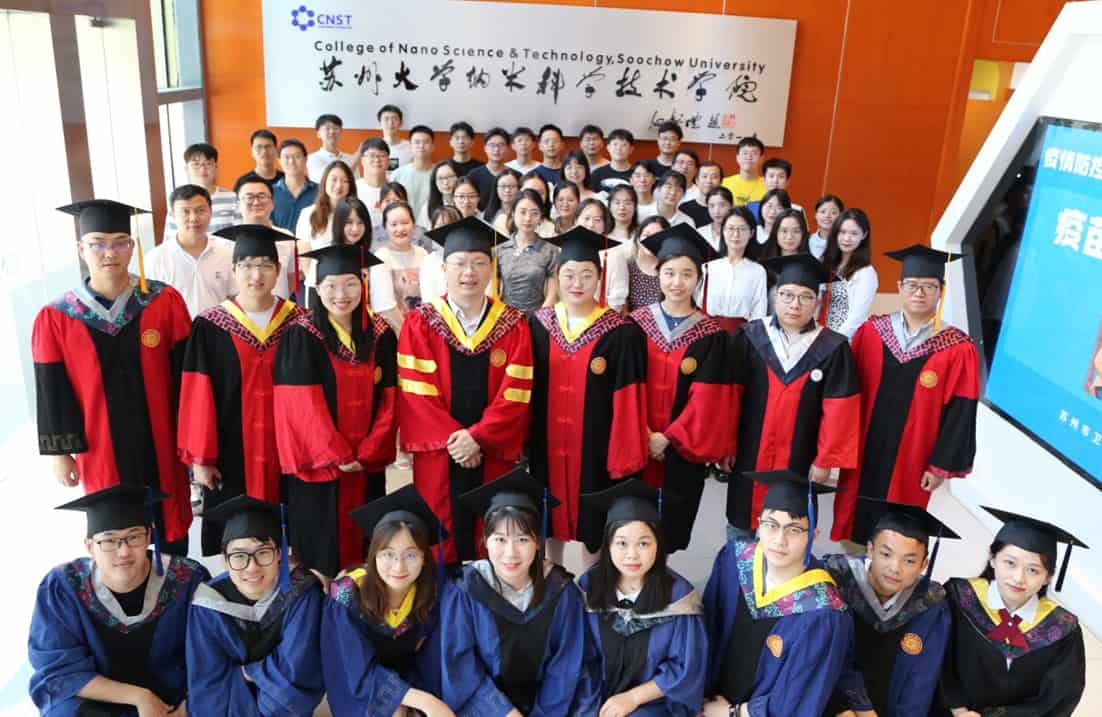
Soochow University team

The team investigated the treatment efficacy of this calcium-infused hydrogel combined with MWA in several groups of tumour-bearing mice. Tumours in mice injected with the calcium-infused hydrogel and exposed to microwave energy were fully ablated compared with those in mice treated with plain hydrogel and microwaves. The ALG-Ca-treated mice also showed no noticeable tumour recurrence for up to 60 days. Similarly, rabbits with larger tumours showed improved tumour suppression after ALG-Ca injection and MWA.

Furthermore, the calcium-infused hydrogel generated a pro-inflammatory microenvironment that activates anti-tumour immunity in mice. This suggests that the ALG-Ca hydrogel may also act as an immunostimulatory biomaterial to promote the maturation of dendritic cells – specialized cells that boost immune response – with comparable potency to a commercial immune boosting agent.

Principal author Zhuang Liu, head of FUNSOM’s Laboratory of Advanced Biomaterials and Nanomedicine, says that the metallo-alginate hydrogel holds great promise for future clinical translation to extend the clinical applications of MWA.

Copyright © 2026 by IOP Publishing Ltd and individual contributors