Helen Edwards: pioneer of Fermilab’s Tevatron

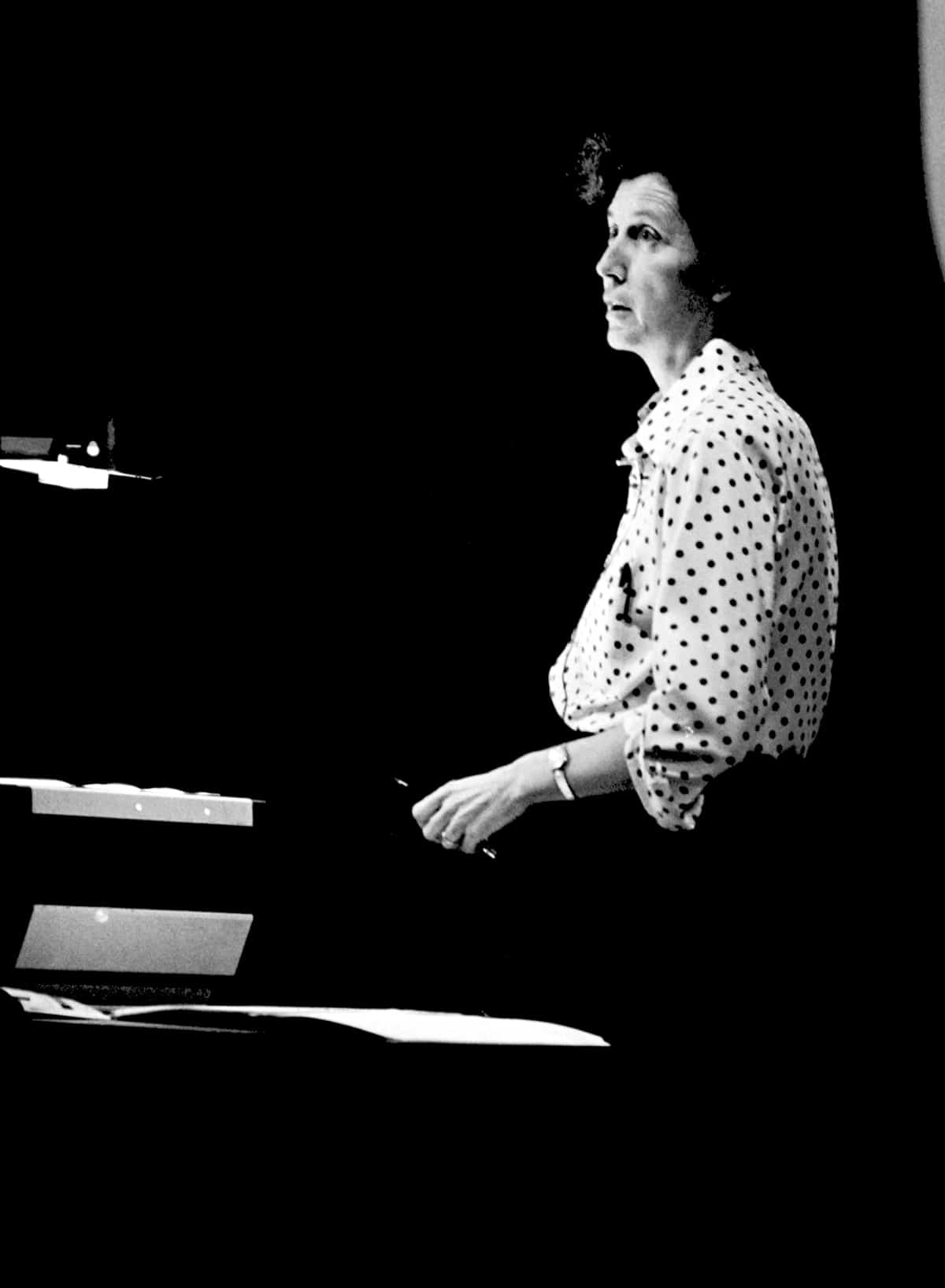
Helen Edwards speaking at the 12th International Conference on High-Energy Accelerators at Fermilab in 1983

There remains much about the world that is unknown, on scales from the immensely large to the extremely small. The physics of the Standard Model concerns itself with the latter, looking beyond molecules and atoms to examine the fundamental building blocks of nature: elementary particles. These are what give matter its structure, lead to electricity and magnetism, and give light to the universe.

But proving the existence of an elementary particle is no mean feat as they can be extremely short lived or interact only weakly with their surroundings. To detect them, scientists must often build immense, complex and highly sophisticated instruments such as particle colliders. In these powerful machines, particles are accelerated to relativistic speeds and then made to strike one another, with scientists inferring the existence of elementary particles by analysing the results of the collisions.

One such accelerator was the Tevatron, a synchrotron 6.3 km in circumference constructed in the 1980s at Fermi National Accelerator Laboratory (Fermilab) in Illinois, US. Until it was supplanted by CERN’s Large Hadron Collider (LHC) in 2009, the Tevatron was the world’s highest-energy particle accelerator, and it still is the second most powerful to have ever existed.

The techniques she pioneered allowed us to push the frontiers of particle physics

Helen Thom Edwards was the accelerator scientist who oversaw the construction and implementation of the Tevatron, from planning right until the end of its scientific operation. During her career, which spanned more than 40 years, the techniques she pioneered allowed us to push the frontiers of particle physics. A discerning physicist, Edwards was a force of nature in the field, and an ardent proponent of international collaboration.

A search for “new physics”

Born on 27 May 1936 in Detroit, US, Edwards began her physics career at Cornell University, where she obtained her bachelor’s and master’s degrees and then did a PhD in experimental physics, in which she sought to increase the energy of particle accelerators. After completing her studies, Edwards remained at Cornell as a research associate in the Laboratory for Nuclear Studies, where she was heavily involved with commissioning the university’s 10 GeV electron synchrotron. Edwards worked initially under the supervision of Robert Wilson, before he left to become founding director of Fermilab.

In 1970 Wilson appointed Edwards as associate head of the Booster Section at Fermilab, and she later became head of the Accelerator Division. While at Fermilab, Edwards’ primary responsibility was designing, constructing, commissioning and operating the Tevatron, which used superconducting magnets to accelerate protons and antiprotons up to 99.999954% of the speed of light (see box “Fermilab’s teraelectronvolt accelerator”). To achieve this was an incredible scientific and engineering challenge, and one that Edwards took in her stride. She was active in the hands-on, nitty-gritty, experimental work required to construct the accelerator, as well as having a formidable scientific intuition.
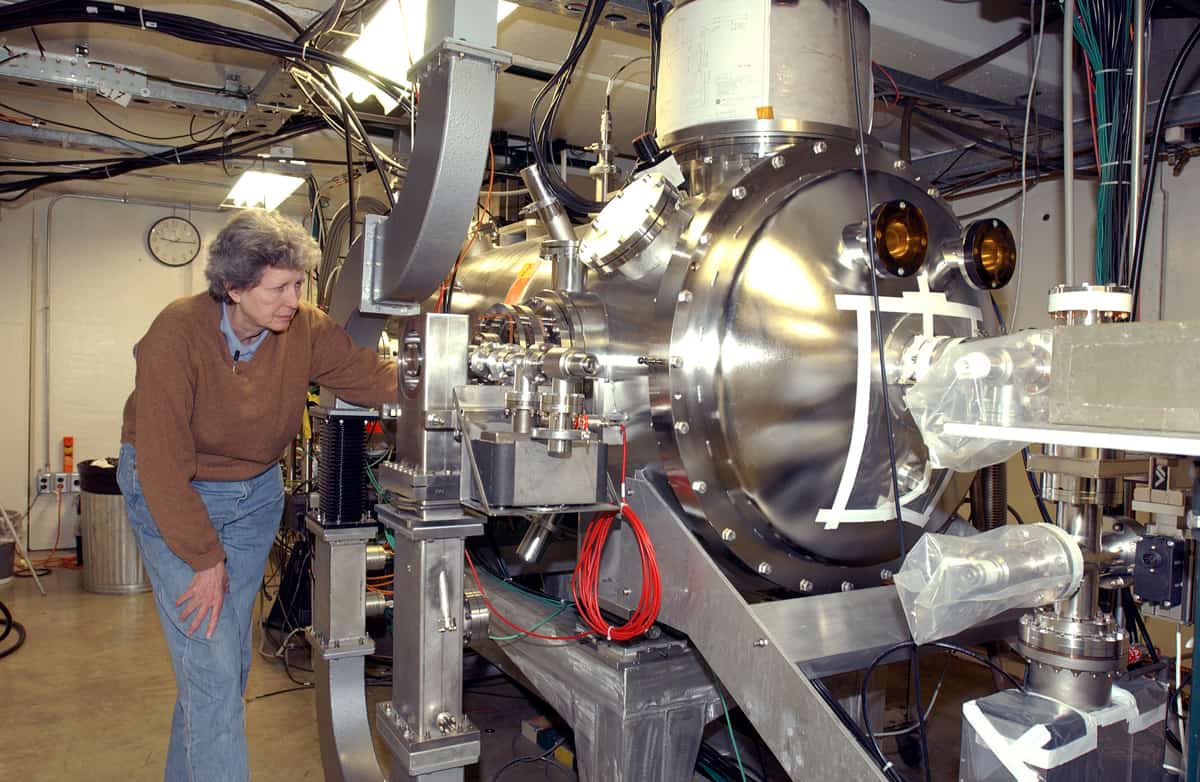
Helen Edwards working on research and development of superconducting magnets and cavities

“She was always absolutely right,” wrote Timothy Koeth in Fermilab’s obituary for Edwards following her death on 21 June 2016 at the age of 80. Now at the University of Maryland, Koeth studied under Edwards during her time at the Tevatron. “She had this intuitive and innate grasp of the material, and she was never wrong in the 20 years I knew her. She understood complex systems from every aspect – operational or technological.”

The Tevatron finally switched on and began delivering beams of accelerated protons and antiprotons in 1983, some 13 years after Edwards had joined Fermilab. Among the Tevatron’s accomplishments was the discovery of the Bc meson in 1998, the top quark in 1995 and the tau neutrino in 2000. These were all in part due to the constant improvement of the instrumentation at the synchrotron, which Edwards played a crucial part in implementing.

Fermilab’s teraelectronvolt accelerator

The Tevatron was a synchrotron that could accelerate protons and antiprotons to energies of up to 1 teraelectronvolt (TeV), giving rise to its name. It began operations in 1983 and was the world’s largest proton–antiproton collider until it was decommissioned in 2011. It was also the world’s most powerful particle accelerator until the Large Hadron Collider (LHC) at CERN broke energy records in 2009.

Tevatron’s accelerator consisted of a ring of superconducting magnets, 6.5 km in circumference, built directly underneath Fermilab’s first accelerator, the Main Ring. To achieve superconductivity, the entire Tevatron ring had to be cooled to near 4 K using liquid helium. The facility had two detectors that began working in 1992: the Collider Detector at Fermilab (CDF) and the DZero (DØ) experiment.

Both DØ and CDF were used to study the collisions of protons and antiprotons using different technologies. Sitting at four storeys in height, and weighing 5000 tonnes each, these behemoths could detect collisions occurring close to the speed of light, which result in unstable flashes of energy that decay into stable particles, replicating the moments just after the Big Bang.

Physicists at the Tevatron observed the first proton–antiproton collisions in 1985, and the implementation of CDF and DØ in 1995 led to the study of even smaller particles. Perhaps the most famous discovery at the Tevatron was that of the top quark in 1995, verified by scientists working on both the CDF and DØ experiments. Scientists also measured the top quark’s mass, later allowing them to determine the mass of the elusive Higgs boson.

In 2000 the Tevatron was responsible for the discovery of the tau neutrino, an unreactive particle that took three years of data analysis to uncover. Its scientists also proposed a new mechanism for the asymmetry between matter and dark matter in the universe by investigating the decay of a particle known as the neutral B meson.

Incredible forward momentum

It wasn’t just her depth of knowledge that marked Edwards out – it was also her ceaseless drive to make science happen as efficiently and effectively as possible. She was deeply determined – active in the design of the Tevatron magnets, the implementation of accelerator components, and in physically diagnosing issues in the Tevatron tunnel (see box “Pioneer of a new era of accelerator science”). She would frequently work all night to ensure instruments were calibrated to a high standard.

But, like many scientists before her, Edwards would get frustrated by the trappings of red tape. “She didn’t put up with bureaucracy when she wanted something done and knew it could be done,” says her former colleague Paul Czarapata, now deputy chief engineer of Fermilab and Accelerator Division associate head. “She didn’t ask for permission or for forgiveness,” Czarapata continues with a smile. “She demanded both.”

He describes an occasion when Edwards needed to take a piece of “fairly expensive” equipment to the technical division for some work, but was told it would take over a week to have it packaged, boxed and transported. “She asked me for a hand getting it over,” explains Czarapata. “Half an hour later I go outside and there’s a garbage can sitting there with packing foam all around and the component inside. I looked and said ‘well, it could probably bounce about in there’ and she considered it and said ‘yeah, you’re right’, so she added more foam. We then lifted it into the back of a van and she climbed in too to hang on to it.”

What high-energy physicists were trying to do at Fermilab had never been done before. Part of the enormous instrumentation required for the Tevatron was a system of alternately poled superconducting magnets to align the accelerated particles. The resulting field had to be strong enough to hold orbiting particles for long enough that they could collide, making it the world’s first large-scale superconducting system. But cooling such a large ring to cryogenic temperatures was a challenge for the Tevatron team, which suffered many setbacks.

Any small fluctuations in temperature could turn a superconducting magnet into a regular one, but – with so many magnets to keep track of – it was hard to find the errors. Edwards persisted, an encouraging presence with a determination that the Tevatron accelerator would function as intended. Indeed, Edwards and her team worked so hard on the Tevatron’s delivery that they became known as the “tunnel rats” because they would not see daylight for weeks, arriving underground before sunrise, and leaving after sunset.

Edwards had a formidable reputation at Fermilab, and was known for being extremely capable at managing the strengths, weaknesses and personalities of those involved in her team to obtain the best results. She had a long-sighted way of approaching science that demanded a very fast-paced way of working. At the time, and especially being a woman in the very masculine field of experimental physics, it would not have been easy to command the respect of so many people in such an intensive research environment.

“I noticed that most men were just terrified of her because they were standing in her way,” Czarapata continues, recounting the times that Edwards felt held back by bureaucracy. “But if you were someone who worked with her, you were just far and away in a good place. She respected you.”

Pioneer of a new era of accelerator science

Helen Edwards adds her signature to a commemorative sign

Helen Edwards first worked as a research associate at Cornell University’s 10 GeV Electron Synchrotron, where she was involved with developing the technique of “resonant beam extraction”. Introduced in the 1950s, it focused on efficiently extracting high-energy particle beams from circular accelerators.

Edwards joined Fermilab staff in 1970, helping to bring the facility’s 8 GeV Booster Accelerator into operation with Roy Billinge. The machine’s 96 magnets bent proton beams around a circular path, and its design underpins Fermilab’s current Booster. After completing tens of thousands of revolutions in milliseconds and gaining energy with each revolution, the protons were fed into the Main Ring – Fermilab’s first primary accelerator, which began operation in 1972 and went on to deliver protons to its successor Tevatron until 1997.

Edwards is known for overseeing the implementation of the Tevatron or, as it was frequently called, the “Energy Doubler”. This new synchrotron was constructed in the same tunnel as Fermilab’s Main Ring accelerator with the promise of delivering at least twice as much energy in its particle beam. Perhaps the greatest design challenge the Tevatron team faced was establishing the large network of superconducting magnets required. Small misalignments in the coils used for generating the magnets could cause them to “quench”, no longer acting as superconductors. These misalignments could be caused by disruptions as small as the process of turning on the cooling systems. Solving these issues was Edwards and her team’s triumph.

To build the over 774 superconducting magnets used in the Tevatron, Edwards and colleagues purchased 95% of all the niobium-titanium produced in human history in the form of superconducting wire. They developed a special configuration known as the Rutherford wire, consisting of 23 strands, which had the perfect mechanical form for use in a magnet. As a result of the quantities of niobium-titanium needed for the Tevatron, its commercial production became standard, making superconducting wire readily available and paving the way for the implementation of MRI machines in hospitals.

A tight scientific unit

Although Edwards might appear intense and intimidating, she was also a serene person, deeply committed to nature. “She was very gentle, but it ended at the gate,” Czarapata says, referring to the entrance to the Tevatron site. Once Edwards crossed the threshold, her laser-sharp focus would descend, and all niceties were abandoned. None more so than with her husband, Don Edwards, who was also an accelerator scientist at Fermilab.

“When they were in the control room together, people used to clear out,” Czarapata continues. “People would back away to far corners because the two of them would be butting heads over some topic. They were often on opposite sides of the fence. But when they crossed the gate to go home, it was different.”

Helen and Don Edwards’ careers rose in parallel, and between them they ran five separate commissioning teams focused on getting the Tevatron up and running. The two later endowed a chair in physics at their alma mater, Cornell University, and continued to work together at both Fermilab and the DESY lab in Hamburg, Germany. Edwards viewed them as a tight scientific unit, and when awarded the 2003 Robert R Wilson prize from the American Physical Society, she said, “I believe this award is for my husband as much as for myself, as we have worked effectively as a team over the years.”

Helen Edwards with two of her research assistants

Edwards was also committed to her PhD students and had a great love of teaching. Always surrounded by graduate students, she was a hands-on mentor, whether that involved explaining a theoretical concept or demonstrating how to do things. If asked a technical calculation about the accelerators, she would briefly disappear into her office and produce a full calculation 20 minutes later.

Edwards went out of her way to create opportunities for her students and trusted them to work on even the most difficult and involved of experimental procedures from the start. In her lab, a PhD student could be expected to work with high voltages, beams of electrons, high-energy radio-frequency signals and extremely high-pressure vacuums. She encouraged students to take the lead on talks and travelling to conferences, and had little patience for taking the spotlight in public.

“It was a form of paradise,” wrote Koeth in 2016. “Every time there was a tour at [Fermilab], she had me give it. She was a very good instructor.”

DESY and the Superconducting Super Collider

In 1989, once the Tevatron accelerator was constructed, Edwards began working as technical director for the Superconducting Super Collider, an 87 km circumference synchrotron that was planned in Texas. After developing the site-specific design, Edwards parted from the project in 1991. Although the SSC was later abandoned part-way through construction due to rising costs, the developments that she made in accelerator technology underpinned the formation of the Fermilab Accelerator Science and Technology (FAST) facility for designing and testing accelerators, which still operates today.
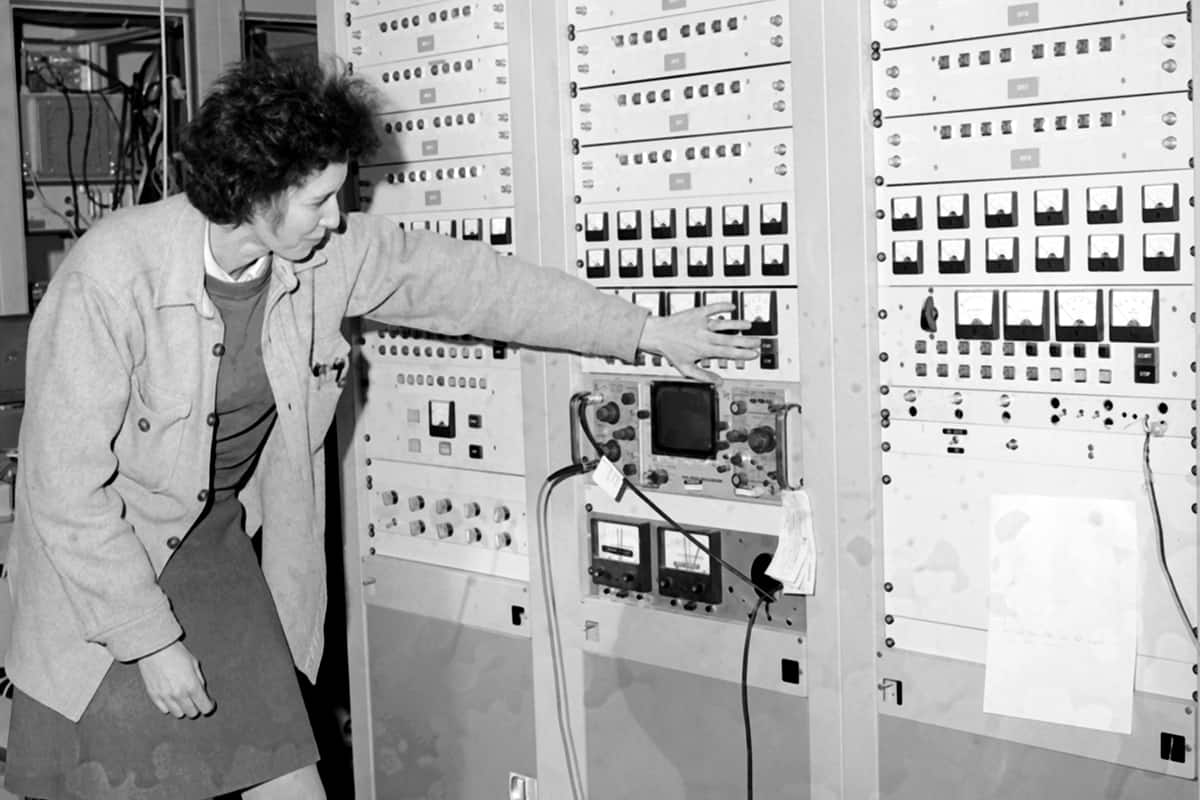
Helen Edwards monitoring display panels in 1971

During her career, Edwards also helped to design the Teraelectronvolt Energy Superconducting Linear Accelerator (TESLA) at DESY. For this, she brought decades of expertise, and her contributions eventually led to the construction of the lab’s FLASH free-electron laser, which still produces world-class science.

Helen and Don retired to Montana in the early 1990s, though both continued to work as guest scientists at Fermilab. The first thing Helen did was build a birch bark canoe from scratch. She was an avid lover of the natural world and deeply environmentally conscious. She rigged trail cameras all around the remote woodlands near her home, to capture photographs of wildlife from elk to cougars in their most undisturbed form. She even took photos of the rings of Saturn from a backyard telescope with a camera coarsely rigged to it. Whenever she was back in the lab, she would immediately show her colleagues the photographs with excitement.

The last days of the Tevatron

In 2011, after 28 years of operation, the Tevatron was finally decommissioned. Having overseen its life – from commissioning to scientific productivity – it was fitting that Edwards should be the person to officially switch the accelerator off. When doing so, she wore a cowboy hat and boots because a former director of Fermilab had once referred to the Accelerator Division as “a bunch of cowboys”. The rest of the team donned their Stetsons too.

For Helen, her best achievement was always the next one

Paul Czarapata
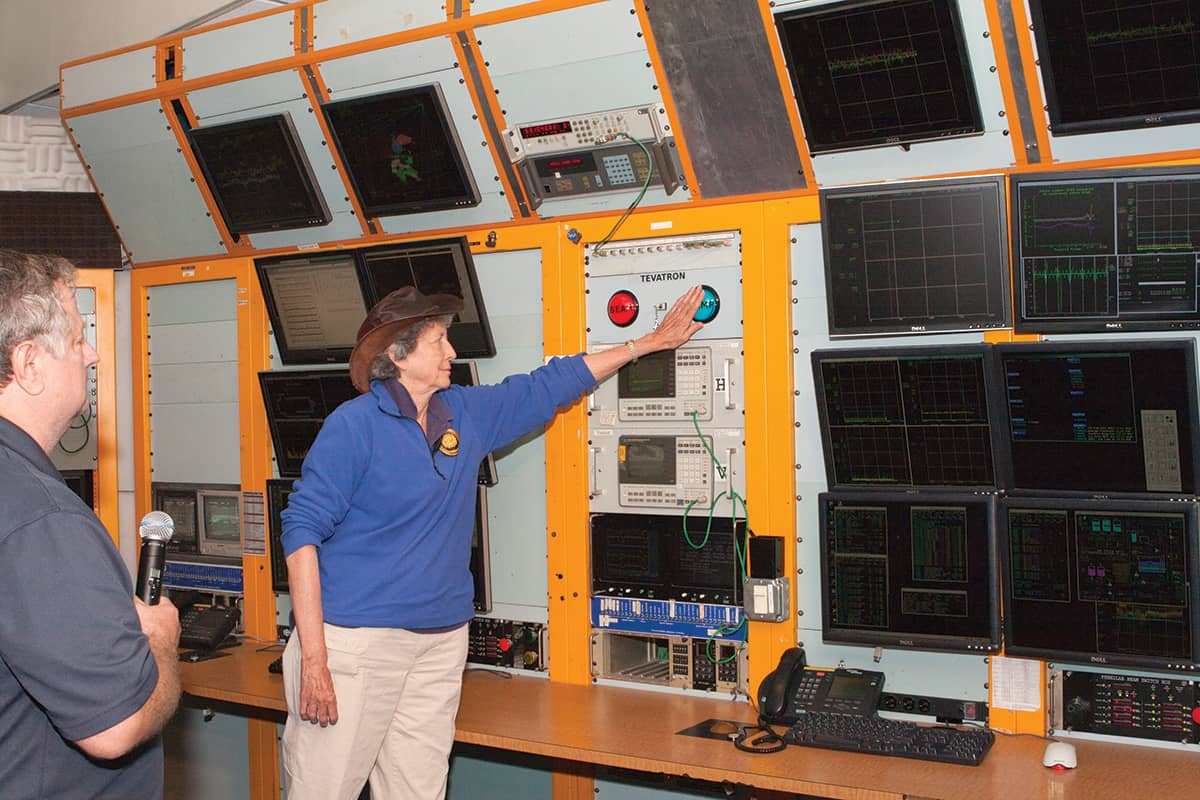
Helen Edwards presses the off switch on the Tevatron beam

But the Tevatron wasn’t going out without a last laugh: as Edwards pressed the switch, the beam refused to turn off. Her second attempt succeeded, and several hundred scientists who were watching the decommissioning from Fermilab’s auditorium breathed one last sigh of relief. Having spent so long working on the Tevatron, Edwards must surely have felt bittersweet about seeing the accelerator come to a halt. But Czarapata says that she never looked back or focused on the things she had already achieved. “I don’t think she thought about it that way,” he says. “For Helen, her best achievement was always the next one.”
Spins freeze in monocrystalline magnet

Spin freezing in Mn2Ga2S5

A newly fabricated two-dimensional material with the chemical formula Mn2Ga2S5 could find use in spintronics applications thanks to a phenomenon known as spin frustration. The material could also be used to study the fundamental physics of 2D magnetism and spin-disordered states, say the researchers at the Chinese Academy of Sciences in Hefei who fabricated it.

Spin frustration is a hot topic in magnetism research, explains Zhe Qu, a physicist at the Hefei Institutes of Physical Science’s High Magnetic Field Laboratory and the leader of the team that created the material. In frustrated magnetic systems, individual particles cannot arrange their magnetic moments (or spins) into a regular and stable pattern. This behaviour contrasts with that of ordinary ferromagnets, in which all the spins point in the same direction, and antiferromagnets, in which the spins point in alternating directions. Such frustration can lead to many novel phenomena by suppressing conventional magnetic orders, including highly degenerate ground states, strong fluctuations, cooperative paramagnetism and spin-disordered states at low temperatures.

Researchers have discovered a myriad of 3D spin-frustrated materials, most of which have their atoms arranged in three-dimensional triangular, face-centred cubic, hexagonal close-packed or kagome lattices.  Until now, however, only a few spin-frustrated 2D materials had been found. 

No long-range order 

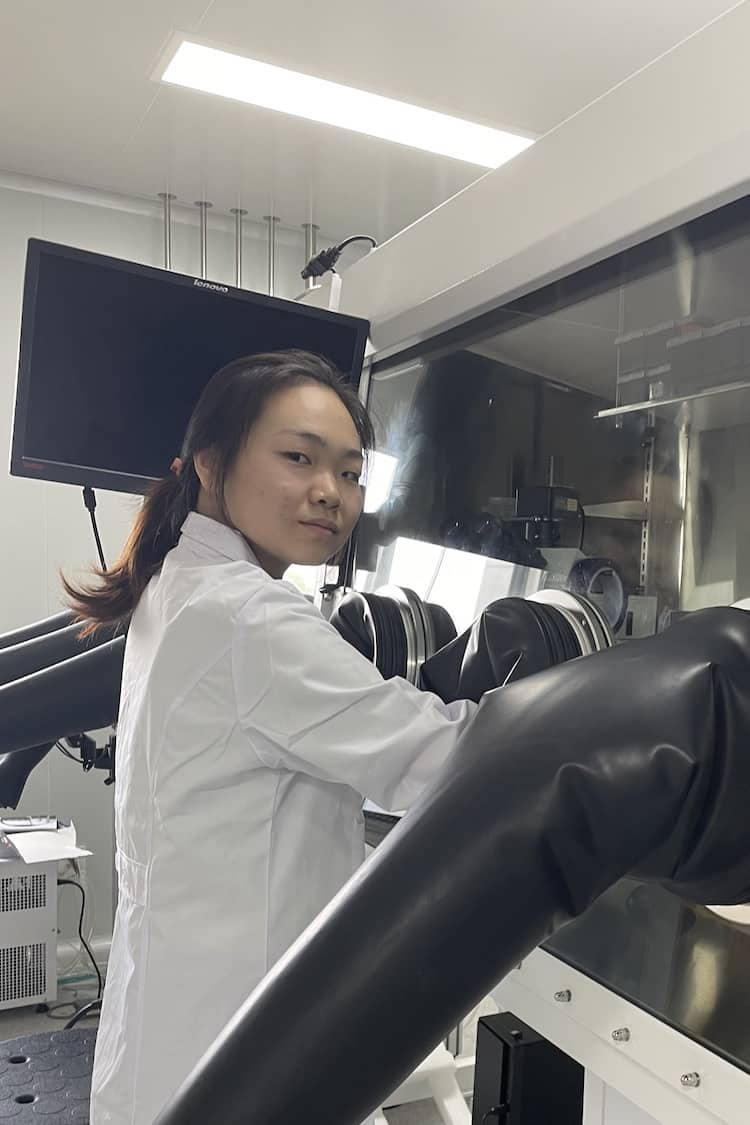
Qu and colleagues synthesized their single-crystalline Mn2Ga2S5 using a common method known as chemical vapour transport (CVT). This method involved mixing the manganese, gallium and sulphur in the correct stoichiometric molar ratio of 2:2:5 and putting them into a quartz ampoule using iodine as the transport agent. They then vacuum-sealed the ampoule and placed it in a tube furnace containing two temperature zones with a gradient of 1050–950 °C between them. After seven days, they allowed the sample to cool down to room temperature. The result was a large quantity of soft, dark brown single crystals that are easily sliced into 2D layers held together by weak van der Waals forces.

When the researchers subsequently cooled the material down to 2K, they did not observe any long-range order developing. Instead, they found that the spins “freeze” at a temperature of around 12 K. This effect stems from the competition between exchange interactions (which are responsible for the emergence of ferromagnetism) and the material’s 2D crystalline structure. The result is a “frustration index” of around 22, indicating that the system is highly frustrated. The researchers explain that the spin frustration within the crystals comes from the buckled Mn2+ honeycomb lattice within the van der Waals layer.

The researchers, who detail their work in Chinese Physics B, say they are now planning to search for frustrated 2D magnetism in related materials.

Meta-atoms act like road signs for light waves

Usually, when light travels through a material, it produces an image. But when it passes through a new material developed by researchers at the Australian National University (ANU), it produces two completely independent and different images – as different, in fact, as the iconic outline of the Sydney Opera House and the continent of Australia. This unusual effect is possible thanks to nanoscale structures within the material that manipulate a light wave’s direction of travel in a way that could have applications for information processing and communications.

The nanoscale structures used in this research are ultrathin films comprising arrays of tiny dielectric structures that behave much like atoms. Known as metasurfaces, such structures are often employed in the design of miniaturized optical components, and they can also be used to control the direction in which light can and cannot travel at the nanoscale. For instance, some of these “meta-atoms” allow light to flow only from left to right, while others permit travel only from the right to the left, explains project leader Sergey Kruk of the ANU’s Nonlinear Physics Centre. They can also block the path taken by light in either direction. 

Asymmetric images

In the latest work, Kruk and colleagues designed their all-dielectric metasurfaces to interact with light in an asymmetric way. For example, when they shone infrared light through one such structure, an image of Australia appeared in the visible range of the spectrum. When they flipped the metasurfaces around and looked again, they saw instead an image of the Sydney Opera House.  

This optical magic trick occurs because of the complex interplay between the material’s nonlinear properties and magneto-electric coupling between artificially engineered optical modes, Kruk says. “Nonlinear optics studies how materials interact with very bright, high-intensity beams of light, such as those produced by lasers,” he explains. “These nonlinear interactions may be completely different to how weak and moderately bright light (for example, that from the Sun, or from a light bulb) interacts with materials”.

The researchers constructed their metasurfaces from four types of asymmetric nonlinear resonators, which are nanocylinders that react to light via the electric dipole and the magnetic dipole. These nanocylinders are composed of two layers of materials, amorphous silicon and silicon nitride, that have different optical constants. In this arrangement, the magneto-electric coupling comes from the asymmetry introduced by the difference in the refractive indices between the two layers.

“Rather like road signs” 

The atoms in the metasurface control the flow of light rather like road signs control traffic on a busy road, Kruk says. This ability to guide light at the nanoscale ensures that it “goes where it’s supposed to go and doesn’t go where it’s not supposed to”, he explains. 

Such control could have practical applications, Kruk continues. “A wide deployment of tiny components that can control the flow of light could potentially bring technological and social changes similar to transformations brought about in the past by the development of tiny components that control the flow of electricity, which are known as diodes and transistors,” he says.

According to the team, which also includes physicists from Paderborn University in Germany, Southeast University in China and A*STAR Singapore, the metasurfaces could be used in technologies associated with information processing and communication – including the Internet you are probably using to read this article.

“Currently, our information technologies rely heavily on our ability to perform traffic control of electrical currents inside modern computer chips,” Kruk says. “We design and fabricate incredibly sophisticated networks of billions and trillions of semiconductor diodes and transistors that act as road signs and traffic lights for electrical currents, enabling modern computing.”

“Our research suggests it may be possible to control traffic of beams of light similar to how we control electrical currents,” he tells Physics World. “When dealing with information, if we employ beams of light instead of electrical currents, many tasks can be performed faster and more efficiently.”

Preserving the colour of light

In this early-stage work, Kruk and colleagues focused on a nonlinear optical process (known as third harmonic generation) that changes the colour of light. For future applications, however, it might be more useful to stick to a single colour. The researchers say they are therefore working to develop optical nanostructures that preserve colour while displaying similar functionalities. “This will be based on different nonlinear optical phenomena associated with so-called self-action effects,” Kruk reveals. “While nonlinear optics of bulk materials has been well researched, we are only beginning to understand nonlinear optics of materials structured at the nanoscale.”

The work is detailed in Nature Photonics. 

Long-lived PET tracer could ease biology-guided radiotherapy

Biology-guided radiation therapy (BgRT), in which PET images of the tumour target are used to guide beam delivery, has gained momentum over the last 10–15 years. BgRT, which is currently awaiting approval from the FDA for clinical use, is performed using the positron-emitting PET tracer 18F-FDG. But as Arutselvan Natarajan from Stanford University explained, this may not be the optimal approach.

Natarajan shared an example workflow for a BgRT treatment, pointing out that it typically requires administration of five to seven separate doses of the short-lived 18F-FDG (which has a half-life of about 110 min). “We want to develop an alternative approach, using one injection, a single dose of a long-lived isotope,” he explained. “A long-lived isotope would be very good to track, direct and deliver radiotherapy.”

To achieve this, Natarajan and colleagues combined the positron-emitting isotope 89Zr (which has a half-life of 78 h) with an antibody to create the PET tracer 89Zr-Panitumumab (89Zr-pan). Antibodies are particularly suited to this application as they exhibit high tumour specificity and uptake. Early studies in mice demonstrated that it is possible to track the 89Zr-pan PET signal for nine days following tracer injection.

The researchers tested the use of 89Zr-pan for PET in mice with implanted tumours. They injected the animals with 0.2 mCi of the tracer two weeks after tumour induction, and then delivered 5 Gy doses to the tumour on days 1 to 6 after administration, performing sequential PET/CT and radiotherapy. Assessing the tumour volume revealed that in control mice, which did not receive radiotherapy, tumour growth was considerable. The irradiated mice, on the other hand, showed clear tumour shrinkage following treatment.

The researchers also analysed the PET images to determine the stability of the PET signal in tumours following radiotherapy. They observed a progressive reduction in PET signal after irradiation compared with the signal from non-irradiated animals, with tumour uptake 50% lower in treated mice than controls. Fortunately, this decrease was not enough to affect the ability of BgRT to track the tumours.

To determine whether 89Zr-pan could track tumours in human patients, despite the observed signal decrease, the researchers applied two criteria for clinical BgRT: an activity concentration (AC) above 5 kBq/ml, and a normalized target signal (NTS) above 2.7.

Natarajan pointed out that extrapolation from mouse to human could be more complex than simple scaling. However, based on a coarse rescaling of the mouse data to obtain hypothetical 89Zr-pan uptake values in equivalent human tumours, computations showed that the AC threshold was achieved on days 2 to 6 following tracer administration, while the NTS level was met on days 1 to 9. As such, the team concluded that BgRT could be feasible in equivalent human-sized tumours for roughly five consecutive days following a single tracer injection.

“The 89Zr immunoPET tracer has potential to guide BgRT,” Natarajan concluded. “What is important is that compared with FDG PET, long-lived-isotope-based BgRT has potential to use a single dose to track or treat for up to nine days, based on preclinical trial results.”

‘Optical plucking’ manoeuvres single gold atoms into chemical reactions

A new phenomenon whereby the energy from light confined to a nanocavity can “pluck” atoms from a gold surface, allowing them to form complexes with functional groups, has been discovered by researchers in the UK. Their experimental work is not readily transferable to industrial chemistry, but it could provide invaluable insights for research and development in multiple areas of science.

Transient bonds between molecules and metal surfaces are vital to areas such as electrochemistry, molecular electronics and most importantly catalysis. Researchers know that light can assist this process, but the exact mechanistic details are uncertain.

“You’ve got a surface science community, and these are people who do scanning tunnelling microscopy, often at low temperatures, looking at an adsorbed atom on a surface,” explains Jeremy Baumberg of the University of Cambridge. The positions of molecules can be tracked but, Baumberg points out, “you don’t see any chemical functionality typically”. He adds, “From the other end you have chemists, and they’re interested in the reaction of the molecules against a surface, but they don’t really know how that’s happening.”

Functionalized gold surfaces

In their new experiments, Baumberg and colleagues covered gold surfaces functionalized by various molecules with bare gold nanoparticles, creating 1 nm-thick nanocavities in the gap at the interfaces between the nanoparticle facets and the planar surfaces. They then irradiated the nanoparticle-covered surfaces with 633 nm light. Light interacts strongly with the gold surfaces through the plasmonic interaction, in which the oscillating electromagnetic field of the light couples to the oscillating electron density in a metal. This creates a strong electromagnetic field in the nanocavity.

Surface-enhanced Raman spectroscopy showed that, within this nanocavity, atoms could occasionally jump out of the gold surface, leaving behind an even smaller “picocavity” and a flare in the electromagnetic field intensity. “Five years ago, we would have told you that you were insane if you believed that you could confine light to the scale of a single atom,” says Baumberg.

The researchers considered whether the electromagnetic field gradient of the optical forces themselves could be responsible for this phenomenon, which they have termed optical plucking. They concluded, however, that these forces would be far too weak. Similarly, a simple optical heating model would require that the light heat the gold surface to around 12,000 K, whereas observations suggest it remains at room temperature.

Lightning rods

In the model that best fits their observations, the molecule behaves as a lightning rod, and the light decreases the energy barrier for the atom to escape by channeling electrons into the gold surface: “It doesn’t decrease it to completely zero, but it decreases it enough that there’s a chance that, just from the random thermal vibrations around, the atom can leap over that barrier and into the molecule’s clutches.”

In a paper published in Science Advances, the researchers describe how they studied non-reactive functional groups and found that the picocavities could sometimes persist for over a minute, although the flares died down much sooner. “We’ve been investigating a whole zoo of other molecules, and particularly if the molecules can undergo chemical reactions you see much more complicated things going on,” explains Baumberg. “We were trying here to have the [most stable] system we could. Even when there’s no ostensible chemical reaction, this molecule is still doing something to this metal surface.”

Theoretical physicist Peter Nordlander of Rice University in Texas is impressed with the team’s accomplishments. “Baumberg has seen these picocavities and flares in previous experiments,” he says, “but he couldn’t say anything about important properties like the formation time or the lifetime because individual molecules can sit parallel to a surface or tilt, so he had five or six spectra and they were all a little bit different…What is new here is the development of a very clever experimental method to take a massive amount of spectra very quickly so he can do averaging and the very clever application of statistical analysis to extract these very central concepts.”

Nordlander suggests, however, that the requirement to put the molecule in a nanocavity means that the set-up used here is unlikely to be directly useful in industrial chemistry, and Baumberg agrees. “The really nice thing is that we now have tools to start seeing what’s going on in these tightly confined spaces,” says Baumberg. “But we can’t do theory for this yet – there’s theory in the paper, but it’s a bit of cobbled together classical and quantum theory: colleagues tell me we’re likely 10 years off being able to do these calculations properly.”

Hot and cold mattress for a better sleep, video referees struggle with offside decisions

Today it is cool and raining here in Bristol, but earlier this week the temperature reached 36.9 °C in the city – which is extremely hot for this part of the world. Like many Bristolians, I found it difficult to sleep and I tossed and turned all night.

If only I had access to a new mattress and pillow system that has been developed by bioengineers at the University of Texas at Austin. Described in The Journal of Sleep Research, the system monitors the temperature of different parts of the body including the neck, hands and feet. It then gently adjusts the temperature at different points on the body to encourage blood flow from the body’s core to its extremities. The idea being that a cooling core encourages one to doze off faster and enjoy a better sleep.

The team has patented the technology and is seeking commercial partnerships with mattress manufacturers.

Tricky decisions

The offside rule in association football/soccer can be difficult for fans to understand – and sometimes tricky for referees to apply. The rule prevents players from hanging around the opposition’s goal waiting for a passed ball, which would make for a boring game.

Deciding whether an offside offence occurs involves observing the location of the ball as well as the locations and actions of several players. Because a play can look different from different angles, referees’ judgements are often hotly contested.

Many football leagues now use video assistant referee (VAR) technologies to give the referee in charge more information. This involves stopping play and having an assistant referee review video taken from different angles.

Motion capture systems

Now Pooya Soltani at the University of Bath’s Centre for Analysis of Motion, Entertainment Research and Applications has used optical motion capture systems to assess the accuracy of VAR systems.

The UK-based researcher filmed a football player receiving the ball from a teammate, viewed from different camera angles, whilst recording the 3D positions of the ball and players using optical motion capture cameras.

Participants viewing the clips were asked to determine the exact moment of the kick and judge whether the ball receiver was offside. The study found that, on average, the participants thought the ball was kicked 132 ms later it actually was. It also found that participants were more accurate in their judgements when viewing the pitch at certain angles.

“VAR is really useful in helping referees make accurate decisions, but this study has shown it has definite limitations,” says Soltani. He presented his findings at the 40th Conference of the International Society of Biomechanics in Sports, which is currently being held in Liverpool.

Visualizing physics: IUPAP100 photo contest showcases stunning images

It’s easy to take physics for granted, after all it’s all around us, constantly governing how everything interacts. Despite this – or perhaps because of it – most of us go about our daily lives without thinking about it. We rarely contemplate the principles that we rely on for the world to behave as we expect it to.

If you want to break out of this obliviousness – if only temporarily – then take a moment to admire the winning entries in the IUPAP100 photo contest. The competition was organized by the International Union of Pure and Applied Physics (IUPAP) “to celebrate the beauty of physics and the fun that can be encountered in its practice”.

The winning photos were presented last week during IUPAP’s centennial symposium in Trieste, Italy. In each category, there were prizes for first, second and third place, and a further three honourable mentions.

The first category, “at a glance”, included photographs taken with a camera. Some of these capture physical phenomena like surface tension in a visually striking way. Others showcase various physics projects, from major international experiments to education initiatives bringing science to people in remote corners of the world.

The winner in this category was “chasing ghost particles at the South Pole” (main image) by Yuya Makino, a researcher working on the IceCube Neutrino Observatory, which is based in Antarctica.

In 2020, Makino worked as one of two “winterovers” – collaborators who spend a year at the South Pole operating the telescope facility. The photo shows him walking towards the facility, following a trail of flags that are placed as a guide for the winterovers, in case of extremely harsh weather conditions.

The breathtaking backdrop shows the starry sky and the Aurora Australis. This photo simultaneously exhibits the beauty of astronomical phenomena and humans’ extraordinary endeavours to explore nature.

Drying drops

The second category, “beyond our eyes”, included images taken using special photographic techniques, such as scanning electron microscopy. These images reveal phenomena that we can’t see in day-to-day life, taking us on a trip deeper into what’s going on in the world around us.

The winner in this category is “anatomy of a drying drop” (see below) by Paul Lilin, a PhD student at the Massachusetts Institute of Technology. Though visually captivating, at first sight it’s difficult to identify what this photo is. A spherical shape appears to glow in orange and pink, with a pattern of lines curving outwards from an off-centre point, and smaller lines segmenting the outer edge.

“Anatomy of a drying drop” by Paul Lilin

The photo is in fact a drop of water with nanoparticles suspended in it, left to dry on a glass surface and imaged from below. As the water evaporates, the nanoparticles rearrange, eventually leaving a solid deposit covering the area when the drop is fully dried. The fascinating physics behind the nanoparticle patterns can help to explain craquelures (fine cracking) seen in old paintings.

IUPAP’s centennial celebrations are linked with the UNESCO International Year of Basic Sciences for Sustainable Development (IYBSSD2022). Some of the IUPAP100 photos were displayed outside UNESCO’s headquarters in Paris in a public exhibition at the opening of the IYBSSD.

A photo that received an honourable mention in the “at a glance” category was even chosen as the cover photo of UNESCO’s IYBSSD2022 Exhibition Book. The photo, “Raman spectroscopy of solids”, shows the photographer, David Lockwood, aligning bright green lasers in his lab.

You can see all winning entries and honourable mentions here.

Vacuum supplier sets science-based targets for greenhouse gas reductions

Sara Fry

The Swedish company Atlas Copco, which owns the Edwards vacuum instrumentation brand, has set science-based targets to reduce greenhouse gas emissions that are in line with the goals of the 2015 Paris Agreement on Climate Change. As well as aiming to reduce carbon emissions from the company’s direct operations by 46% by 2030 (compared to 2019 levels), the company has committed to reducing emissions in its supply and product chains. Sara Fry, who is Head of Safety Health Environment at Atlas Copco’s Vacuum Technique business area, which is in located in Burgess Hill, West Sussex in the UK, answers questions about the company’s plans.

Why has Atlas Copco set these targets? 

Atlas Copco is committed to being part of the solution for a better tomorrow, so setting science-based targets to reduce greenhouse gas emissions in line with the Paris Agreement is a very public declaration of our ambition. 

Science-based targets are targets set by companies to reduce their greenhouse gas emissions. The targets are calculated based on what we know from independent climate science, and they ensure that a company’s emissions are in line with the Paris Agreement. Setting high-ambition targets at the company level helps governments to achieve their targets and it shows our intention to contribute to limiting the global temperature increase. To ensure that we stay focused on our science-based targets, we have organizational key performance indicators for our direct and indirect emissions, which are reported annually.

What are the benefits to the company from setting the targets?

Playing a leading role in the transition to a low-carbon economy gives us a competitive advantage as we challenge ourselves to develop and deliver even more energy-saving solutions for our customers. We also reduce our risk of exposure to regulatory pressures due to carbon prices, which are expected to rise over time. 

Having our targets validated by an independent organization, like the Science Based Targets Initiative (SBTI), also adds transparency and external credibility to our goals. The drivers for this come from within the organization and these targets are an extension of our long-standing commitment to reducing our environmental impact. Our employees have a keen interest in the environmental credentials of the company they work for, and of course customers and investors want to deal with companies that have strong sustainability programmes.

You have set a target of 46% for the company’s direct carbon reduction target, how will that be achieved?

If we are to succeed, it’s vital that everyone in the company understands what we are doing and why, so training and communication is important. Within Atlas Copco Vacuum Technique, all employees complete two online training sessions – one on our environmental goals in general and one specific to our science-based targets.  In addition, we have been running a series of briefings for all senior site and divisional managers to ensure they are clear on our targets and what they need to do to support the effort.

We are also reducing our direct carbon emissions (known as scope 1 and scope 2 emissions), which mainly come from our use of electricity and natural gas. We are doing this by moving to low-carbon, renewable sources of energy – a journey that began several years ago. In 2021, 58% of all energy used in Atlas Copco operations was from renewable sources. As we implement our science-based targets, we will need to increase this further.

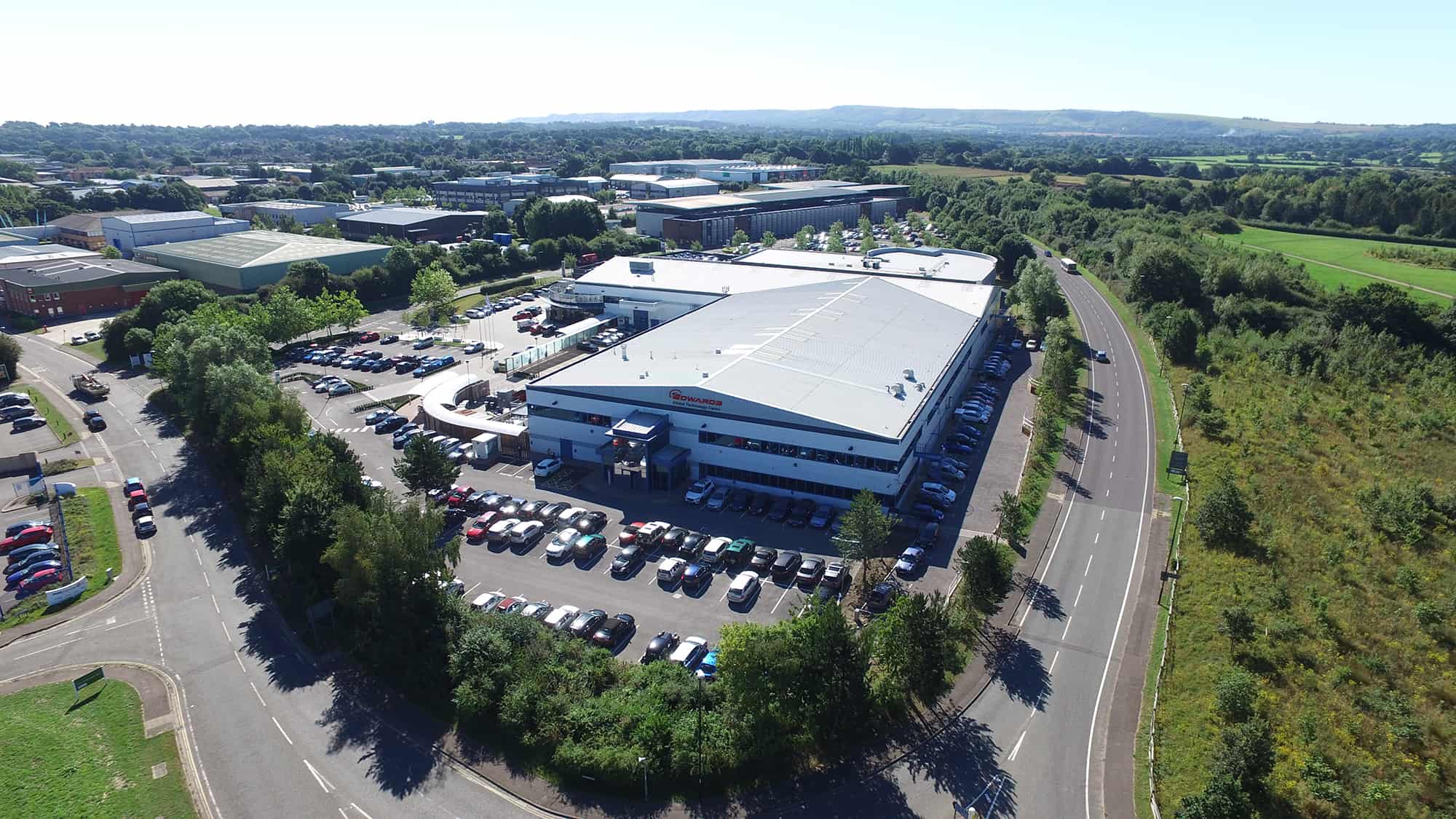
Edwards Global Technology Centre in Burgess Hill, UK

Our next challenge will be to eliminate the use of natural gas, which we mainly use for heating. One option is to move to electrically powered air- or ground-source heat pumps. We are also investigating the use of biogas generated from waste and accredited by renewable energy certificates.

We also have many local initiatives at our worldwide locations. At Vacuum Technique’s UK head office where I am based, for example, we offer a free shuttle to the railway station, electric vehicle charging points for employees, and we have just launched a salary-sacrifice programme to encourage employees to buy electric vehicles. 

Can you give an example of how you are reducing carbon emissions related to the  development and manufacture of vacuum components.

In Atlas Copco Vacuum Technique, our first manufacturing facility to use 100% renewable electricity was Gamma Vacuum in Shakopee, Minnesota, US, which achieved that goal four years ago. In 2021 we transitioned our large Edwards and CSK factories in South Korea to fully renewable energy, which reduced our annual carbon emissions by around 16 000 tonnes.

Today, we have moved nearly all our product companies to 100% renewable electricity backed by regulated renewable energy certificates. This is not always easy because in some countries there is limited availability of renewable electricity. 

When we build a new factory, we design it to comply with a green building certification system, usually either LEED or BREEAM. This involves including features such as solar panels, high levels of insulation and rainwater harvesting.  

Over 90% of the company’s indirect carbon emissions are from the electricity powering your products at customer locations. How are you helping customers reduce these emissions?

There are three main ways and the first is to provide the most energy-efficient products possible. Energy efficiency is at the core of the innovations in many of Atlas Copco’s products and even higher gains are possible through the support we provide on how to use our products and through our service offer. 

The Edwards Atlas abatement system

One example is the Edwards iXM range, which is our latest low-power dry pump technology for the semiconductor industry. We can offer the low-emission benefits of the iXM range to customers with legacy equipment via our iXM Hybrid service upgrade. Pumps currently in use can be returned to a local service technology centre, where they are converted to use the iXM low power mechanism. The pumps are then re-installed with no change to customer connections or settings – and they use 25% less energy

The iXM Hybrid product is currently deployed at a world-leading semiconductor customer, and it has reduced their carbon emissions by around 700 tonnes in the first 20 months of operation. The same project could deliver a total reduction of around 13 000 tonnes at the completion of the full five-year deployment programme.

The second way we are helping our customers reduce emissions is by supplying intelligent systems to optimize energy use. For example, our Genius Portal allows 24/7 remote access to an operating vacuum pump. This provides customers with important insights into up-time and energy consumption. Similarly, Edcentra is an equipment monitoring and analytics platform for the semiconductor industry that analyses operational data to optimize performance and therefore reduce emissions.

The third way we minimize emissions associated with the use of our products is to work with customers to encourage their use of low-carbon, 100% renewable electricity. Indeed, many of our larger customers are already doing as part of their own environmental commitments.

In 2021, Atlas Copco’s installed base of abatement products prevented emissions of gases equivalent to around 19 million tonnes of carbon dioxide at customer facilities

What about the direct emissions of greenhouse gases by some of your customers?

Some semiconductor manufacturing processes use gases such as perfluorocarbons and sulphur hexafluoride, which are of high environmental concern because of their persistence and high global warming potential (GWP). These substances may have GWPs thousands of times higher than that of carbon dioxide, making them very potent global warming gases.  Our Edwards and CSK ranges of abatement systems prevent the emission of these gases and help our customers reduce their emissions.

In 2021, Atlas Copco’s installed base of abatement products prevented emissions of such gases equivalent to around 19 million tonnes of carbon dioxide at our customers’ facilities. In addition, our partnerships in developing recycling technologies for our customers’ process gases can further reduce their carbon footprints.

What role does reuse and recycling play in your strategy?

Our organization’s second largest indirect carbon impact, after the energy use of products at customer locations, is the embodied carbon in the materials and components used to make our products. As a result, Vacuum Technique is committed to supporting the circular economy through the reuse, recovery and recycling of these materials.  

Our business area has six divisions, and two of these are service divisions that are entirely focused on the remanufacture, repair and servicing of our products. When our products need replacing, we offer ways to refurbish them for reuse – we refurbish over 35 000 products each year. 

At the end of their life cycle, our vacuum products can be disassembled so that their primary materials can be recycled – keeping them out of landfills. We also aim to reuse or recycle our production waste wherever possible.  In 2021, 93% of all waste generated in Atlas Copco was reused or recycled.

Do you have carbon emissions in mind when you are developing new vacuum products?

Yes, we have a requirement that all new product developments include a target to minimize carbon emissions. Our engineering teams use a carbon footprint tool to calculate the lifetime emissions of new products and compare this to previous generations. The same tool can help customers determine the environmental benefits of upgrading to a newer design of product. 

Finally, I would like to point out that our vacuum technologies enable the manufacturing of a wide range of environmentally friendly products that support the transition to a low-carbon society. For example, vacuum is essential to the production of solar cells and low-energy solid-state lighting.

You are a chartered member of the Institute of Physics, how does that fit with your work on sustainability and science-based targets?

I am a physicist by training, but when I first started working in the field of safety, health and environment many years ago, it seemed a long way away from physics. 

However, in recent years the discipline has evolved to include sustainability and that’s closely linked to physical principles – whether it’s climate science, science-based targets and carbon accounting, or sustainable materials and sustainable buildings. So, there is a very close fit between being a member of the Institute of Physics and my current work.

Bountiful exotic hadrons at the LHC inspire new naming convention

Earlier this month the Large Hadron Collider (LHC) began its third experimental run after being shut for upgrades to both the collider and its experiments. The LHC is now running at a higher energy than before, but perhaps more importantly, it is running at a much higher rate of particle collisions.

This means that physicists working on the LHCb experiment are looking forward to discovering more exotic hadrons as well as learning more about the many tetraquarks and pentaquarks that they have already found.

This week’s guests on the Physics World Weekly podcast are LHCb collaboration members Elisabetta Spadaro Norella of Italy’s INFN in Milan and the University of Milan and Tim Gershon at the UK’s University of Warwick. They describe some of the exotic hadrons that have been recently discovered by LHCb and explain why the collaboration has published a new “Exotic hadron naming convention”. The two particle physicists also look forward to future discoveries at LHCb.

Polarization switch makes ultrafast photonic computer

Materials that switch from one phase to another when illuminated by light with different polarizations could form a platform for ultrafast photonic computing and information storage, say researchers at the University of Oxford, UK. The materials take the form of structures known as hybridized-active-dielectric nanowires, and the researchers say they could become part of a multiwire system for parallelized data storage, communications and computing.

Because different wavelengths of light do not interact with each other, fibre optic cables can transmit light at multiple wavelengths, carrying streams of data in parallel. Different polarizations of light also do not interact with each other, so in principle each polarization could similarly be employed as an independent information channel. This would allow more information to be stored, dramatically increasing information density.

But while wavelength-selective systems for transmitting data are common, polarization-selective alternatives have not been widely explored, explains study lead author June Sang Lee. “Our work shows the first prototype of programmable device using polarizations and it maximizes the density of information processing,” he tells Physics World. Photonics has a huge advantage over electronics in this respect, he adds, since light travels faster than electrons and functions over large bandwidths. “Indeed, the computing density of our device is several orders of magnitude larger than that of conventional electronics.”

Functional nanowires

The new photonic computing processor consists of functional nanowires made of a phase-change material, Ge2Sb2Te5(GST), and silicon, which acts as a dielectric. The researchers connected the nanowires, each of which is 15 µm long and 180 nm wide, to two metal electrodes. This set-up allowed them to measure the electric current through the GST while they illuminated it with light pulses from a 638-nm-wavelength laser.

When illuminated with this light, the phase of the active material switches reversibly from a highly resistive (amorphous) state to a conductive (crystalline) one. The researchers can therefore use the polarization of the incoming light to tune the absorption of light by the active layer.

“The interesting point is that each nanowire shows a selective switching response to a specific polarization direction of optical pulses,” Lee says. “Using this concept, we have implemented the photonic computing processor with multiple nanowires so that multiple polarizations of light can independently interact with different nanowires and perform parallel computing.”

The researchers describe the study, which is published in Science Advances, as early-stage work towards a large-scale photonic computing device. “We would like to scale up such functionality by changing the device configuration or by using integrated photonic circuits,” Lee reveals. “We would also like to further investigate other nanostructures that can exploit the properties of polarization.”

Copyright © 2026 by IOP Publishing Ltd and individual contributors