Gorilla Glass: the unsung hero of the smartphone

I have a soft spot for accidental discoveries that inadvertently have a profound impact on our lives. Think of the glue that didn’t stick, which was developed by researchers at 3M and led to the ubiquitous Post-it Note. There was Wilhelm Röntgen’s discovery of X-rays, which revolutionized diagnostic medicine. And there was Percy Lebaron Spencer, a physicist at Raytheon in the US, who invented a new type of oven after noticing that microwaves from his radar set melted a chocolate bar in his pocket.

Serendipitous discoveries like these show just why “targeted” product research and development is not always a great idea. The beauty of experiments that are speculative or go wrong is that they can lead to findings you could never predict. Just think about the American chemist Stephanie Kwolek who, in 1964 while working for DuPont, invented Kevlar when her group was searching for a new lightweight yet strong fibre to use for tyres.

But the accidental discovery I want to focus on occurred at Corning Glass Works in upstate New York. Back in the early 1940s, researchers at the company were intrigued by the fact that glass, which is a supposedly transparent material, can darken and change colour if exposed to the heat and light of the Sun for long enough. Keen to investigate this effect, Robert Dalton, a Corning chemist, exposed samples of crystal-clear ruby glass to ultraviolet light and then baked them in an oven. The result: glass with several different shades of colour.

Donald Stookey, another Corning research chemist who had joined the business in 1940, was instructed to explore possible photographic applications of this wonderful new photosensitive glass. His work led to the development of a transparent, aluminosilicate-based glass that became photosensitive if it included trace amounts of gold, silver or copper. Stookey found he could even etch 3D designs into the glass, which was sold as “FotoForm” and later used as a material in electronics packaging and for aperture masks on colour television sets.

The great moment of serendipity occurred one day in 1953 when Stookey wanted to carry out an experiment that involved heating a piece of FotoForm glass to a temperature of 600 °C. The furnace, however, had developed a fault and Stookey mistakenly ended up heating the glass to 900 °C. When he tried to remove the sample from the hot oven, it slipped from his tongs and crashed to the floor. But instead of shattering, the glass – to Stookey’s amazement – bounced.

He had just created the first “glass-ceramic” – a new class of glassy material containing fine crystals of different shapes and sizes dispersed throughout. Subsequent work led Corning to develop this material into the hugely successful CorningWare range of saucepans and cooking pots. Resistant to thermal shock, they don’t break if moved directly from, say, a freezer and into a hot oven. CorningWare became just one of Stookey’s multimillion-dollar inventions.

Donald Stookey: thank him for your iPhone

Donald Stookey

The Gorilla Glass that protects billions of smartphones and tablets – including all Apple products – would possibly never have existed had it not been for a moment of serendipity by the chemist Stanley Donald Stookey (1915–2014). Working at Corning Glass Works in 1953, his accidental discovery of “glass ceramic” (see main text) led to the development of CorningWare cookery pots, chemically strengthened glass and – eventually – Gorilla Glass itself.

During his 47 years at Corning, Stookey also developed photosensitive glass and Photochromic Ophthalmic glass eyewear, ending up with over 60 patents to his name. In 1986 he was awarded the US National Medal of Technology by President Ronald Reagan. When Stookey retired in 1987 as Corning’s director of fundamental chemical research, his legacy included the Stookey award, which is given each year to a Corning scientist for “outstanding exploratory research accomplishments”.

A unique mix

Trademarked as Pyroceram, the glass Stookey stumbled across had a unique combination of properties, being not just heat resistant, but extremely hard, super strong and transparent to radio waves too. The material also found its way into military applications, being used, for example, in the nose cones of supersonic radar domes in guided missiles. Later, in the 1960s, Corning developed a new kind of Pyroceram material that was not opaque but transparent to visible light.

The company initially chose not to commercialize this newer product, fearing it would cannibalize sales from Corning’s existing and hugely successful Pyrex range of borosilicate glassware, which had been going strong since 1915. But by the 1970s, researchers at Corning France had developed an amber-coloured version of Pyroceram, which they patented and turned into a new range of cookware, going under the Visions brand name.

Meanwhile, as part of an initiative that the company dubbed Project Muscle, Corning had been exploring new ways to make glass stronger. Most glass is strengthened by heating it to a high temperature and then cooling it rapidly so that the outside cools much faster than the inside – a process known as tempering. The temperature gradient puts the inside of the glass in tension and compresses the outer surface, making the glass stronger and less likely to have microscopic cracks and flaws.
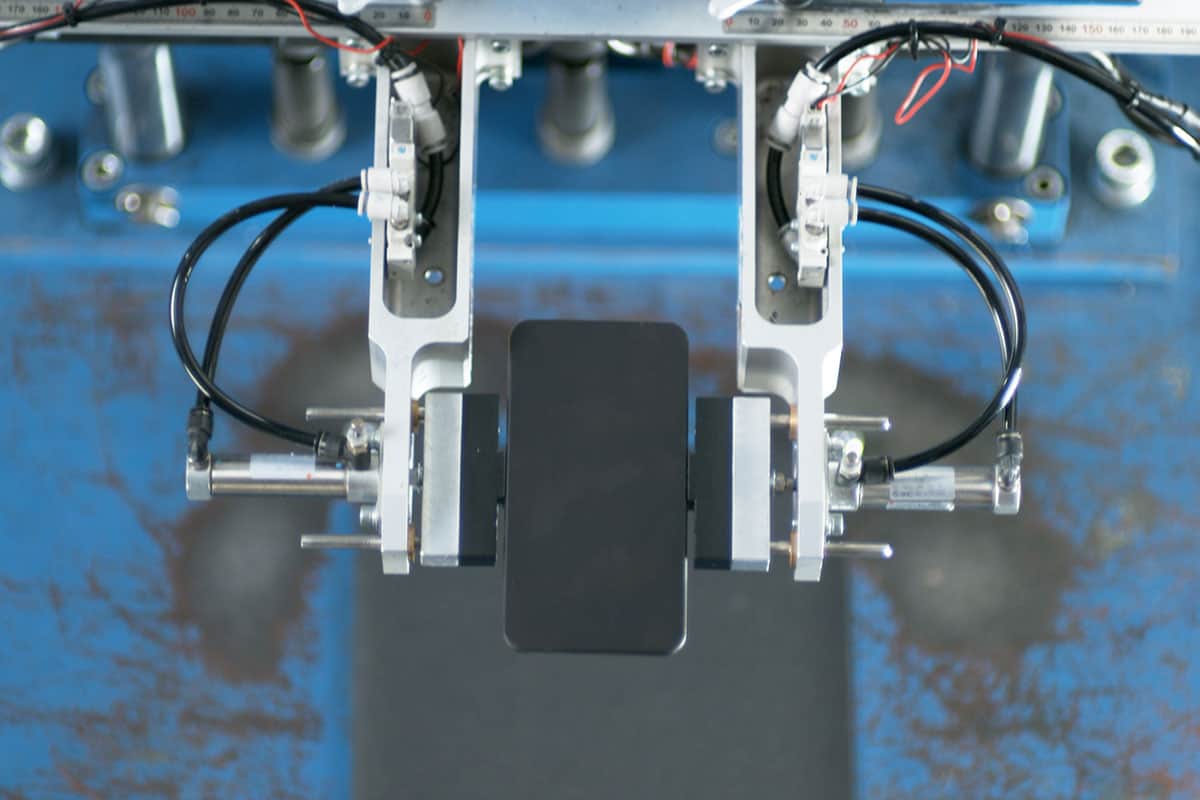
A phone undergoes a drop test

As glass gets thinner, however, it becomes ever harder to set up a substantial difference in cooling rate between the core and the surface. In the 1960s researchers at Corning discovered a way of chemically strengthening glass by allowing smaller ions in the glass to be replaced with larger ions from a chemical bath. Thanks to this process of “ion exchange”, the surface of the glass becomes highly compressed, and therefore less prone to the introduction of damage and the application of stresses that could make it break.

Corning sold this glass under the brand name Chemcor and it was used until the early 1990s in various commercial and industrial applications, including car windscreens, planes, drug vials, prison windows, safety glasses and phone booths. Chemcor had varying degrees of commercial success but all that was to change in January 2007 when Steve Jobs, then the chief executive of Apple, took the stage at that year’s MacWorld convention in San Francisco.

Enter Steve Jobs

In front of a whooping audience at the Moscone Center, Jobs introduced a revolutionary new device – the very first Apple iPhone. Until that point, smartphones had been clunky, ugly objects with fiddly keyboards. The new 3.5-inch iPhone promised to transform the market, offering customers a slick, touchscreen device with in-built camera and web-browsing capabilities for the first time.

But the day after revealing the device to an enthusiastic world, Jobs complained that the screen of his own iPhone, which he had been carrying around in his pocket, had ended up covered in tiny nicks. That’s because the prototype iPhone that Jobs had demonstrated was built with a plastic screen, which was mechanically strong but very easy to scratch. A few years earlier Corning had shown Jobs the company’s glass technology and he now insisted that, when the iPhone went on the market just five months later in June 2007, it had to have a glass screen.

Jeff Williams, Apple’s chief operating officer, recalls telling Jobs that his demand was impossible, insisting it would take three or four years to develop glass that was durable enough to meet Jobs’s requirements. “I said, ‘We’ve tested all the current glass and when you drop it, it breaks 100% of the time.’ And he said ‘I don’t know how we’re going to do it, but when it ships in June, it’s gonna be glass’.”

Two days later, Williams got a phone call from Wendell Weeks, Corning’s chief executive. Weeks suggested that Corning’s Chemcor glass, which the company had just started studying again for smartphone use under the name “Gorilla Glass”, could be the solution to Apple’s problem. There followed several months of what Williams calls “sheer terror” as teams at the two companies worked flat out to turn Chemcor into something that would be ready in time for the iPhone’s launch.

The work paid off. “When we launched in June [2007], customers had an iPhone that had the beautiful feel of glass – Corning glass – and was scratch resistant,” Williams recalls. “It helped set the tone for iPhone.” The scratch-resistant glass that shipped on the first-generation iPhone has been a key part of the iPhone success.

Market dominance

In the early smartphones, Corning’s Gorilla Glass was about 1 mm thick – any thicker and the capacitive liquid-crystal displays used at the time wouldn’t have worked well. But despite its thickness, the glass was hard, surprisingly flexible and incredibly scratch resistant, just as Jobs demanded. These days, Corning is on its seventh generation of Gorilla Glass, which is just 0.3–0.5 mm thick. Of course, there are now many competitors who also produce smartphone-glass, including Dragontrail from Japan’s AGC Inc and Xensation from the German firm Schott.

But Gorilla Glass dominates the market. By 2017 it had been adopted by 40 major manufacturers around the world, being used not only on all Apple iPhones and iPads, but in more than 1800 products from many different firms. According to Expert Market Research, the global smartphone-cover glass market was worth some $1.63bn in 2020, with Gorilla Glass being incorporated into nearly six billion devices. Corning, however, supplies all the glass for Apple smartphones, with the company having used it more and more with each generation of device.

Of course, phones do get dropped and even though Gorilla Glass is incredibly tough, smartphone screens can get damaged. That’s why there is also a healthy market for screen-protection films, which are often made of similar glassy materials. According to a report from MarketWatch this year, the screen-protector market is expected to grow from $2.3bn in 2020 to $5.4bn by 2026. After all, no-one wants to scratch a top-of-the-range nearly un-scratchable smartphone for which they might have paid more than £1000!

Still, can you imagine how the market would have reacted to an Apple iPhone that got scratched every time you put it in your pocket? If Jobs had launched the iPhone with a plastic screen as was originally the plan, I think that could well have killed off the device – however cool the idea was. Jobs was right: it needed to be glass. And to think it can all be traced back to a botched experiment and a faulty oven at Corning Glass Works in 1953. Without that serendipity, we might never be where we are today.
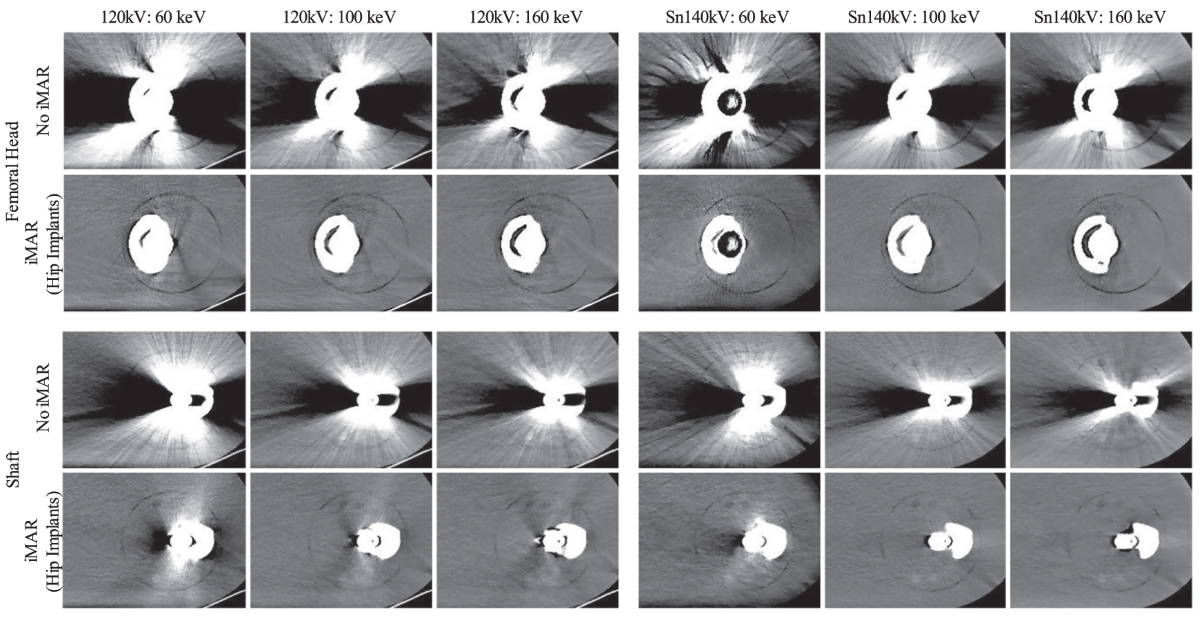
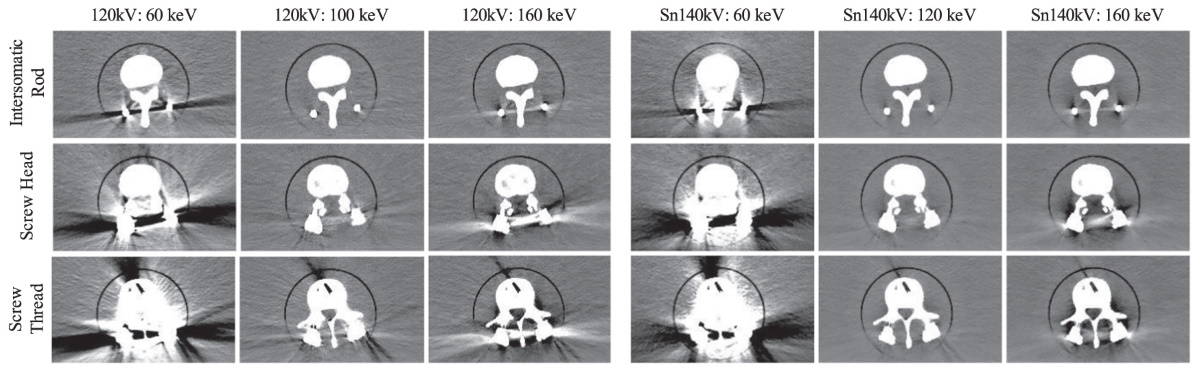
Reducing metal artefacts in photon-counting CT

Hip phantom images

Metal implants in the body, such as hip replacements or dental fillings, are a major source of artefacts in CT images. Clinically available methods reduce these metal artefacts – up to a point.

Iterative metal artefact reduction (iMAR) decreases the influence of metal during image reconstruction by interpolating between boundaries of metal in a tissue-normalized sinogram. However, iMAR doesn’t incorporate spectral information, so some anatomic information is lost. A second technique, virtual monoenergetic imaging (VMI), combines multiple spectra from a dual-energy CT acquisition.

New photon-counting CT systems inherently provide spectral information without requiring a dual-energy acquisition and offer better spatial resolution, improved contrast-to-noise ratio and lower radiation dose than conventional energy-integrating detectors. The first photon-counting CT system, the NAEOTOM Alpha from Siemens Healthineers, received CE certification and 510(k) FDA clearance in 2021.

Julian Anhaus, a third-year PhD student in the CT Physics department at Siemens Healthineers in Germany, is investigating different approaches for metal artefact reduction on these systems. He and his PhD research advisors, Christian Hofmann, a global CT technology manager at Siemens Healthineers, and Andreas Mahnken, a professor at Philipps-Universität Marburg, recently studied some of the possibilities for metal artefact reduction on the NAEOTOM Alpha, publishing their findings in Physics in Medicine & Biology.

“Of course, clinicians must make their own experiences with different protocols and consequentially spectra and other scan parameters, patients and implant types, but this work can be used as an orientation and guideline for clinicians on how to tune their clinical protocols on the NAEOTOM Alpha when performing scans on patients with metal to provide best possible images for the patient’s diagnosis or care,” Anhaus says.

VMI plus iMAR reduces artefacts from high-Z metals

Anhaus tested iMAR and VMI on the NAEOTOM Alpha using anthropomorphic phantoms for different body regions and a tissue characterization phantom. He reconstructed images with and without iMAR and computed VMIs in 10 keV steps from 40 to 190 keV.

Virtual monoenergetic imaging

Results were mixed – Anhaus found that VMI could reduce metal artefacts in metals with low atomic numbers and low penetration lengths, such as those used in spinal implants. But for cases with large metal implants and materials with high atomic numbers, such as those used in dental fillings or in the hip head, he could only reduce artefacts by applying iMAR after VMI.

“The inherent spectral information, which is one of the main benefits of recent [photon-counting detector CT] systems, can be utilized to reduce metal artefacts without iMAR. Unfortunately, this only applies to certain metal and implant types,” Anhaus summarizes. “In most implant types, the utilization of spectral information reduces the base artefact level, but iMAR is still required to provide metal artefact-free CT images.”

Anhaus says that this study only scratches the surface of metal artefact reduction options for the NAEOTOM Alpha and other photon-counting CT systems.

“There are many thrilling methods which can be enabled through the photon-counting detector system and carried over to [metal artefact reduction] applications,” he says.

He and Hofmann emphasize that this study is not intended to compare image quality and artefact reduction potential between photon-counting CT and conventional energy-integrating detector CT systems that require dual-energy CT acquisition for VMI. A comprehensive comparison is part of their future work.

Lithium-ion batteries recharge in the cold

As temperatures fall below freezing, lithium-ion batteries cannot hold as much charge, so they do not recharge very well. Researchers from China’s Jiaotong University say they have now overcome this problem by replacing the traditional graphite anode in these devices with a “bumpy” carbon-based material. The new structure maintains its rechargeable storage capacity down to -20°C, allowing it to be used in cold environments such as those found at high altitudes, in aerospace applications, and for deep-sea exploration, as well as in other electric vehicles that need to work in extreme conditions.

Lithium-ion batteries are widely employed in applications ranging from mobile phones to electric vehicles. These devices have a high capacity and high energy density, which means they can store a lot of charge very quickly. During charging, lithium ions move from the cathode to the anode though an electrolyte, which is usually made from a lithium salt dissolved in a liquid organic solvent. At temperatures close to zero degrees Celsius, however, the anodes in these devices can fail to transfer any charge – a phenomenon known as severe capacity degradation.

Modified anode surface structure

Researchers recently discovered that the flat orientation of graphite in the lithium-ion battery anode is responsible for decreasing the battery’s energy storage capacity at cold temperatures. In the new work, a team of researchers led by Wang Xi  of Jiaotong University’s School of Physical Science and Engineering and Jiannian Yao from the Beijing National Laboratory for Molecular Sciences therefore chose to modify the surface structure of this anode in an attempt to improve the energy transfer process in the electrode.

To make their new “bumpy” material, Wang, Yao and colleagues began by heating a cobalt-containing zeolite material, called ZIF-67, at high temperatures. This creates a surface made of 12-sided carbon nanospheres that has a positive curvature, like a bowl. The material has a reversible capacity – a measure of a battery’s capacity after many cycles – of 624 mAh/g at -20°C, which is equivalent to 85.9% of its room-temperature energy capacity. Even at -35°C, the reversible capacity was still retained at 160 mAh/g after 200 cycles.

Extending the range of applications for Li-ion batteries

The researchers’ calculations revealed that the newly bumpy surface, in effect, wakes up the sluggish behaviour of the Li-ion anode at low temperature thanks to the local accumulation of charges that occupy non-coplanar sp2 hybridized orbitals. These accumulated charges facilitate the charge-transfer process.

“This work could extend the range of applications for Li-ion batteries at low temperatures,” Wang says. “From the theoretical perspective, the idea would be to build a bridge between the low-temperature performance of Li+ storage and its geometry through the electronic structure, which may open up new research avenues for advanced electrode materials,” he tells Physics World.

The researchers admit that the new anode is far from optimized and that there are many unknowns still to be solved. “We are of course seeking cooperation from other laboratories to further expand the practicality of this work,” says Wang.

They detail their study in ACS Cent. Sci.

A new approach to Hall effect measurements for researchers

This video looks at the MeasureReady™ M91 FastHall™ measurement controller, an all-in-one Hall analysis instrument from Lake Shore Cryotronics that delivers significantly higher levels of precision, speed, and convenience to researchers involved in the study of electronic materials.

The measurement controller combines all the necessary Hall measurement system functions into a single instrument, automating and optimizing the measurement process, and directly reporting the calculated parameters. With Lake Shore’s patented FastHall measurement technique, the M91 fundamentally changes the way the Hall effect is measured by eliminating the need to switch the polarity of the applied magnetic field during the measurement. This breakthrough results in faster and more accurate measurements, especially when using high field superconducting magnets or when measuring very low-mobility materials.

The M91 is extremely fast, reducing analysis time in some cases by 100 times. Most commonly measured materials can be analyzed in a few seconds. Even extremely high resistance (up to 200 GΩ) or low-mobility (~0.001 cm2/V s) samples can generally be analyzed in under two minutes.

Also available: the M91 controller provided as part of a fully integrated, high-precision tabletop system for simplified Hall measurements and less experimental setup.

Applied physicist Arati Prabhakar becomes first female US science adviser

The applied physicist Arati Prabhakar has been nominated by US president Joe Biden as the next director of the Office of Science and Technology Policy (OSTP). If approved by the US Senate, the 63-year-old would become the first woman – and the first immigrant and person of colour – to take up this key role in US science. Biden has also announced that Prabhakar will become US science adviser and will join the president’s cabinet.

Prabhakar, who was born in India but moved to the US when she was three years old, already has other significant firsts to her name. In 1984 she became the first woman to receive a PhD in applied physics from the California Institute of Technology. Following a stint at the Defense Advanced Research Projects Agency (DARPA), at 34 she became the first female director of the National Institute of Standards and Technology (NIST), a position she held from 1993 to 1997.

Prabhakar also has experience in industry, having served as chief technology officer and senior vice president of Raychem from 1997–1998. She then worked as a venture capitalist for US Ventures – a firm in Menlo Park, California, that supports information technology start-ups. And from 2012 to 2017, Prabhakar served as DARPA director, where she expanded the agency’s focus on life science and medicine.

‘Uniquely qualified’

Prabhakar’s appointment as US science adviser follows the departure of the mathematician and geneticist Eric Lander, Biden’s first science adviser and OSTP director. Lander resigned in February from both roles after an investigation found “credible evidence” that he had mistreated and demeaned OSTP staff.

Biden then appointed Francis Collins, a former head of the National Institutes of Health, as science adviser, while sociologist Alondra Nelson took up the OSTP directorship – controversially splitting the science adviser and OSTP director roles between two people when it had traditionally been held by one person. Nelson will resume her previous role as deputy director of OSTP’s science and society team once Prabhakar is confirmed.

I hope the [Senate] committee receives many letters urging quick confirmation. In my view the situation is urgent.

Neal Lane

“[Prabhakar is] a brilliant and highly respected engineer and applied physicist and will lead the [OSTP] to leverage science, technology, and innovation to expand our possibilities, solve our toughest challenges, and make the impossible possible,” says Biden.

Members of the scientific community echoed those sentiments. “Her record of excellence and innovation will be an asset to the agency,” says Deborah Cooper, the current president of IEEE-USA, which represents more than 150,000 professionals in engineering, computing, and technology.

Former presidential science adviser Neal Lane and Norman Augustine, retired chair and chief executive of Lockheed, note in a joint letter to Congressional leaders that Prabhakar is “uniquely qualified” to lead the OSTP. “Issues such as international competitiveness, climate change, a clean energy future, and advanced health research all require the kind of leadership and experience Prabhakar can provide,” they add.

Lane now calls for Prabhakar’s nomination to be prioritized. “I hope the [Senate] committee receives many letters urging quick confirmation,” he told Physics World. “In my view the situation is urgent.”

Analysis: Prabhakar faces multiple challenges as she takes up US science adviser role

In a 2020 interview with the American Institute of Physics’ Center for History of Physics, Arati Prabhakar expressed her preference for engineering over academic research. “Science’s verbs are ‘know’ and ‘understand’. Those are not my verbs,” she said. “Yes, let’s know and understand, but I want to do engineering’s verbs, which are ‘solve’ and ‘create’.”

That “solutions” approach will help Prabhakar as she becomes US science adviser and head of the presidential Office of Science and Technology Policy (OSTP). Those roles have gained more than the usual significance owing to the pandemic, the Russian invasion of Ukraine as well as the looming threat of China to the US’s dominance in science and technology.

Indeed, the five months since Eric Lander’s resignation as head of the OSTP haven’t changed Prabhakar’s in-tray of tasks. Biden had asked Lander to use lessons from the pandemic to improve public health; to enlist researchers in the struggle against climate change; to maintain US leadership in key technologies; to reduce inequality; and to convert government-funded research into jobs and products.

And there may not be currently a better candidate to tackle those issues. The Center for American Progress (CAP) – an independent policy institute – calls Prabhakar “the ideal leader” for the OSTP and with a background well suited for the presidential science adviser role. “Her work across the private sector, nonprofits, and government equips her for cross-cutting challenges, at a moment when the rigorous work of fact-based policymaking is more critical than ever and the governance of tech platforms so clearly affects the fragility of US democracy,” CAP director Patrick Gaspard noted in a statement.

Logic gate breaks speed record

ultrafast logic gates

The first logic gate to operate at femtosecond timescales could help usher in an era of information processing at petahertz frequencies – a million times faster than today’s gigahertz-scale computers. The new gate, developed by researchers at the University of Rochester in the US and the Friedrich-Alexander-Universität Erlangen-Nürnberg (FAU) in Germany, is an application of lightwave electronics – essentially, shuffling electrons around with light fields – and harnesses both real and virtual charge carriers.

In lightwave electronics, scientists use laser light to guide the motion of electrons in matter, then exploit this control to create electronic circuit elements. “Since light oscillates so fast (roughly a few hundred million times per second), using light could speed up electronics by a factor of roughly 10 000 as compared to computer chips,” says Tobias Boolakee, a laser physicist in Peter Hommelhoff’s group at the FAU and the first author of a study in Nature on the new gate. “With our present work, we have been able propose the idea for a first light field-driven logic gate (the fundamental building block for any computer architecture) and also demonstrate its working principle experimentally.”

In the work, Boolakee and colleagues prepared tiny graphene-based wires connected to two gold electrodes and illuminated them with a laser pulse lasting a few tens of femtoseconds (10-15 s). This laser pulse excites, or sets in motion, the electrons in graphene and causes them to propagate in a particular direction – so generating a net electrical current.

Virtual and real charge carriers

Researchers at the FAU and Rochester have been working on lightwave electronics for the past decade, and the latest work takes advantage of their recent discovery that exciting the gold-graphene junction excites two different kinds of electronic charge carriers: virtual and real. The virtual carriers are only set in a net directional motion while the laser pulse is on, the researchers explain, and as such are transient. The contribution of the virtual carriers to the net current must therefore be measured during light excitation.

The researchers performed this measurement by probing a net polarization induced by the virtual carriers in the gold electrodes attached to the graphene. The real charge carriers, for their part, continue propagating in the preferred direction even after the laser pulse is turned off, so their contribution to the net current can be measured after light excitation has ended.

According to the researchers, the results of the measurement were “striking”: by changing the shape of the laser pulse, they found they could generate currents in which only the real or only the virtual charge carriers play a role. Being able to control the two different types of charge carriers in this way allowed them to make a logic gate operating on the femtosecond timescale for the first time.

Logic gate operations

The basic idea of the new logic gate is to encode two binary signals (0 and 1, as is standard in computer logic) in the shape of two few-cycle laser pulses – that is, in their “carrier-envelope” phase, Hommelhoff explains. When these two laser pulses interact with the gold-graphene heterostructure, each one produces an ultrafast current pulse. Hence, from the two incoming laser pulses, the researchers can generate two current pulses that either add up or cancel each other out.

“A binary output signal (again 0 or 1) is obtained from the level of the resulting electric current measured at one of the gold electrodes,” Hommelhoff tells Physics World. “The timescale for the logic operations is fundamentally limited by the turn-on time of the two current pulses, which is intrinsically given by the underlying quantum-mechanical mechanisms driven by the frequency of the laser pulse.”

With the parameters used in their experiment, the Rochester-FAU team anticipates an upper limit for the bandwidth of their logic gate at the driving optical frequency of 0.36 PHz, or equivalently, 2.8 fs.

While the researchers are – at least for the moment – hesitant about direct applications for the new gate, they say the next step will be to prove that it can operate at much faster time scales than can conventional electronics.  “We are quite positive that this is the case, but scaling up our system to more gates to form a complex logic will be much more of an issue: here we will need to find ways to keep the speeds high,” Boolakee says.

As for integrating these gates into actual devices, the team note that the system will need to be much smaller than it is now. This will mean resorting to nearfield optics schemes to circumvent the fact that the laser focus cannot be made much smaller than the wavelengths of the actual driving laser pulses (around 800 nm), which is much too large for electronics length scales.

“Finally, the laser pulses we used in this work need to be quite intense, which is another point that will make scaling up difficult,” Hommelhoff says. “In essence, much more fundamental and well as applied research is needed to turn this proof-of-principle demonstration into a new technology. But at least we have made the initial step: the demonstration of a new logic gate.”

Advances in nuclear medicine technology reduce radiation exposure and shorten scan times

CT-free PET

Nuclear medicine modalities such as positron emission tomography (PET) and single-photon emission computed tomography (SPECT) play a vital role in many areas of healthcare, including cancer diagnostics and cardiac imaging, among others. Alongside, innovative research projects aim to continually improve these molecular imaging techniques, by minimizing the amount of radioactive tracer needed, reducing the required imaging time or enhancing the image quality. At the recent Annual Meeting of the Society of Nuclear Medicine and Molecular Imaging (SNMMI), researchers presented the latest advances in PET and SPECT instrumentation.

CT-free PET reduces radiation dose

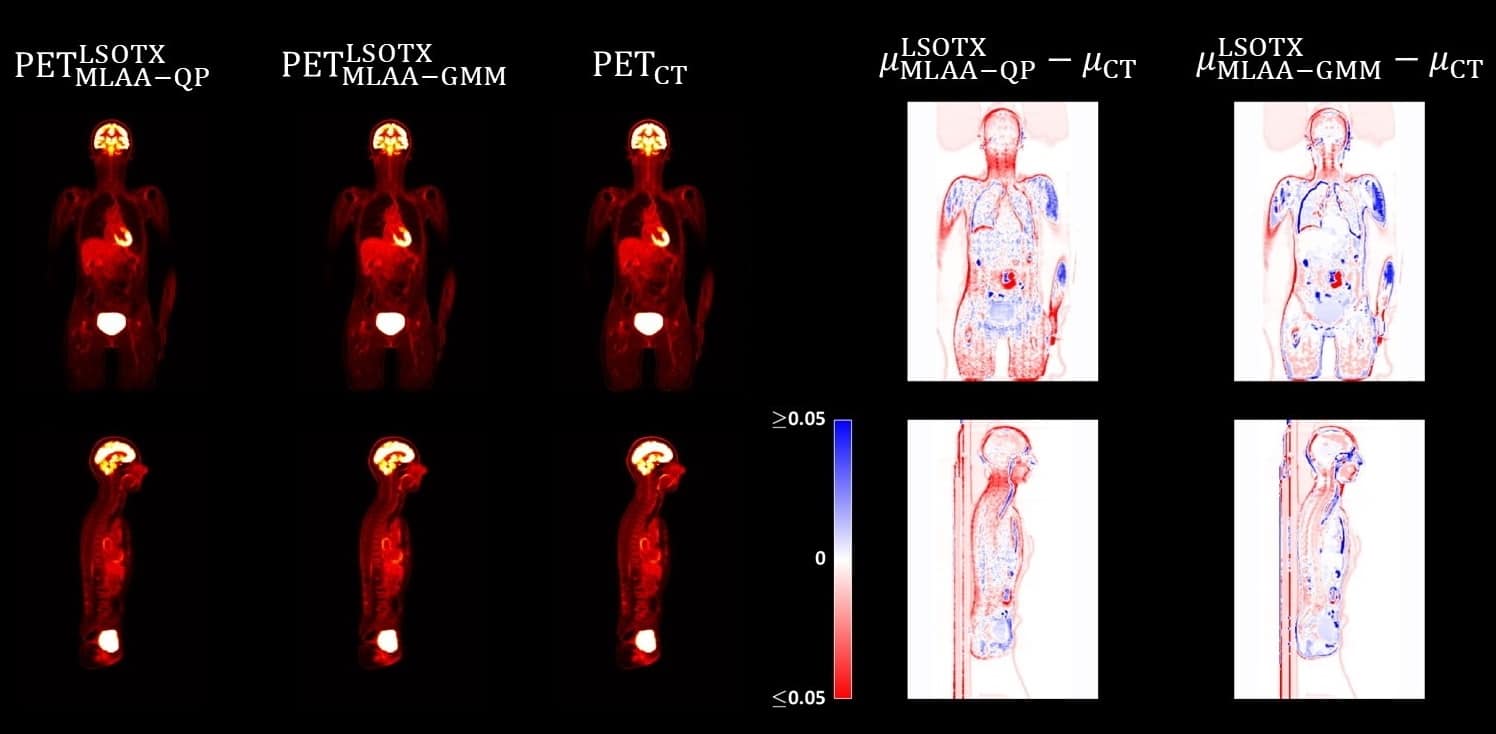
Total-body PET scanners with a long axial field-of-view can enable extremely low-dose PET scans. But the CT scan performed alongside to obtain attenuation maps can deliver a substantial radiation dose, negating these low-dose benefits. At the SNMMI Annual Meeting, Mohammadreza Teimoorisichani from Siemens Medical Imaging presented a fully quantitative PET imaging technique that does not require an accompanying CT scan and dramatically reduces the amount of radiation delivered to the patient. The approach could prove of particular benefit to paediatric patients and those requiring multiple scans.

“Most modern PET scanners use lutetium-based scintillators to detect gamma photons” explains Teimoorisichani in a press statement. “The lutetium in the scintillator contains a small amount – less than 3% – of the radioisotope 176Lu, which emits background radiation during the scan. In our study, we used this background radiation as a transmission source to simultaneously reconstruct attenuation maps and quantitative PET images without the use of CT.”

The researchers evaluated their proposed reconstruction technique using data from a clinical FDG-PET scan acquired with a Siemens Biograph Vision Quadra PET/CT scanner. The patient was injected with roughly 170 MBq of 18F-FDG and scanned 55 min post-injection for a duration of 10 min. Using the 202 and 307 keV gamma photons from 176Lu to reconstruct attenuation maps, they generated PET images using various CT-free reconstruction algorithms.

Comparing the results with standard PET/CT images showed that the largest quantification errors in the attenuation maps appeared around the patient boundary. Of the various organs examined, the brain had the largest quantitative error (activity underestimation of 15–21%). However, the CT-free reconstructed PET images showed average organ quantitative errors of 4.8% and 10% for two reconstruction techniques examined.

As well as reducing patient dose, the proposed method also eliminates potential attenuation map misregistration that can arise due to patient motion between the CT and PET scans. The approach could also provide a reliable technique for attenuation correction in hybrid PET/MR scanners.

“This study is an important step toward practical CT-less quantitative PET imaging,” notes Teimoorisichani. “In addition to reducing patient radiation exposure, a true low-dose quantitative PET scan can have a great impact on research studies that aim to better understand human physiology at the molecular level and on research involving the development of radiopharmaceuticals. The algorithm is currently being evaluated on a large number of patients to discover its full potential.”

Self-collimating SPECT offers rapid cardiac imaging

A team from Tsinghua University in Beijing has designed a cardiac SPECT system that performs scans 10 to 100 times faster than current SPECT devices. The new system employs active detectors in a multi-layer architecture that carry out the dual functionality of detection and collimation. This “self-collimation” concept improves upon conventional SPECT approaches to deliver dramatically shortened scan time, better image quality, increased patient throughput and reduced radiation exposure to patients.

Self-collimating-SPECT system

“SPECT is an important non-invasive imaging tool for the diagnosis and risk stratification of patients with coronary heart disease,” says Debin Zhang in a press statement. “However, conventional SPECT suffers from long scan time and poor image quality as a result of relying on a mechanical collimator. The new SPECT system is capable of performing fast-framed dynamic scans with high quality.”

The self-collimating cardiac SPECT consists of three identical trapezoidal detector units, joined to form a half-hexagon that encloses a spherical field-of-view. Each detector unit comprises an inner tungsten plate containing many apertures, followed by four stacked detector layers, three containing scintillators sparsely arranged in a chessboard pattern and the outer one containing closely packed scintillators. These scintillators perform the dual functions of photon detection and collimation.

SPECT reconstructions of an XCAT cardiac phantom

The researchers compared three aperture patterns in the metal plate (which also provides part of the collimation) and found that a random distribution of 140 apertures provided better signal-to-noise performance than 48 or 140 apertures in a grid pattern. Using this random configuration, the cardiac SPECT had an average sensitivity of 0.68 in the field-of-view.

In scans of phantoms, the system could separate 4 mm rods in a hot-rod phantom, and was able to identify a defect in a cardiac phantom in as little as 2 s.

The team concludes that the proposed detector design has potential to expand clinical applications of dynamic cardiac SPECT, by eliminating the impact of patient’s respiratory motion, increasing patient throughput, enabling ultra-low-dose imaging and precisely quantifying myocardial blood flow and coronary flow reserve.

Xanadu puts quantum advantage in the cloud

Researchers at Xanadu, a Canadian company specializing in photonic quantum computing, claim to have achieved quantum computational advantage with an experiment run on their cloud-accessible Borealis machine. The term “quantum advantage” (sometimes called quantum supremacy) refers to a situation in which a quantum machine carries out specific computational tasks that would be intractable for a classical computer. The latest experiment, which involves taking measurements that correspond to drawing a sample from a distribution, takes Xanadu’s Borealis 36 microseconds per sample, whereas the team estimate it would take 9000 years for the world’s fastest supercomputer to model the same experiment using the best known algorithms.

The task in this experiment is an example of Gaussian boson sampling (GBS) – a simplified framework for optical quantum computers in which quantum states of light are sent through an interferometer (an optical network with tunable parameters dictating how the photons interfere) before being measured at the outputs. This design is simpler than a universal quantum computer, and as Jonathan Lavoie, systems integration team lead at Xanadu, explains, it has restricted applications. “It is important to emphasize that quantum advantage machines are built with the purpose of proving something fundamental about the power of quantum computing, not necessarily to solve an immediate ‘useful’ problem,” Lavoie says. “The latter will likely require fault-tolerance and error correction.”

Building on previous quantum advantage results

Previous quantum computational advantage claims have met with some controversy. In 2019, a team at Google announced quantum advantage using superconducting (instead of photonic) technology, although this has been debated within the community. More recently, experimenters from the University of Science and Technology of China made similar claims for two experiments (also performing GBS) known as Jiuzhang and Jiuzhang 2.0. Although a considerable technological achievement, further papers raise questions about their results. Nicolás Quesada, who led the project alongside Lavoie and is now assistant professor at Polytechnique Montréal, notes that “more theory and verification tools are needed.” Quesada’s work continues to look at these verification tasks.

Borealis differs from Jiuzhang in several ways, including size: with 216 distinct modes (different accessible quantum states), Xanadu’s machine represents a significant increase from the previous record of 144. Xanadu also uses a new design for GBS that delays photons in loops of optical fibre before they interfere with subsequent pulses, which helps suppress errors and improves scalability. One particular achievement of this latest work is techniques implemented to stabilize these fibres to lengths far below the order of the wavelength of the light, as discussed in a blog post published by the team at Xanadu.

The new setup means that not all possible configurations of GBS can be carried out. “For photonics, when one wants to encode interesting problems reflective of real-world application instances, one needs access to a universal programmable interferometer, which will typically entail significant losses,” Quesada says. “So this is definitely a hard challenge.”

Borealis does, however, allow full programmability within the limits of the proposed structure, whereas previous GBS experiments of this scale had fixed interactions between modes. The additional flexibility is permitted by advances in generating quantum states of light, the detection rate, and fast electro-optical switching, which changes the settings of components at which pulses interfere at a sufficiently high speed to implement all the possible operations.

Borealis is unique among quantum advantage demonstrations in that the public can now access this machine and submit jobs remotely via Xanadu’s cloud service. Whether GBS produces any useful calculations beyond a demonstration of quantum advantage, however, is still uncertain. Furthermore, as Quesada explains, when it comes to the applications of GBS, further research is needed to understand “whether there are classical algorithms that can do the job well enough thus nullifying the need for quantum machines”. Nonetheless, this achievement “really helps build confidence that our hardware development and software control systems are on the right track to build a fault-tolerant photonic quantum computer at Xanadu,” Lavoie tells Physics World.

IUPAP: uniting physicists for the last 100 years

Can you remind us of IUPAP’s remit? 

IUPAP is a global organization that was founded in 1922. Its mission is to assist the worldwide development of physics, to foster international co-operation in physics and to help in the application of physics towards solving problems of concern to humanity. In our current strategic plan, we have also adapted five new principles: to foster openness and inclusiveness in physics; to promote free movement of physicists and open data; to ensure integrity and credibility; to promote physics as a building block of innovation and multidisciplinary research; and to promote physics as an essential tool for development and sustainability. 

Why was IUPAP originally set up? 

Around a century ago physics was increasingly branching into many sub-fields. By 1922 it became impossible for one person to be an expert in all existing fields of physics, so it became more important to be connected to other physicists. The subject was also flourishing in more countries, so IUPAP was set up by 13 founding member nations to bring together physicists from all sub-disciplines and from across the world. 

How did you get involved in IUPAP? 

In 2014, having just stepped down as president of CERN Council, I became a researcher in astroparticle physics. At the time there was no IUPAP working group on this emerging field – only two separate ones on astronomy and particle physics. I volunteered to create a new working group on astroparticle physics and was chair of it from 2014 to 2017. Astroparticle physicists already had their own conference, but my main action was to promote access to publications, data and instruments in the field. 

How did you become president of IUPAP? 

In 2017 I was approached by Bruce McKellar who at the time was IUPAP president. He asked if I would accept the role of president-elect. In 2017 at the triennial general assembly, I was elected president-designate for three years from 2020 to 2023. In 2019, due to Kennedy Reed’s early resignation from the role, I automatically became president sooner than expected. The general assembly that was planned for October 2020, where I would be formally elected, was deferred to 2021 because of COVID-19 and when it was held virtually in 2021, I was elected president for another three years. The next general assembly will be in 2024, so I will have an exceptionally long mandate of five years, when it is normally three. 

What are the main activities of IUPAP today? 

There are many activities but the main one is that IUPAP sponsors global conferences in various sub-fields of physics. Most of the money for the conferences comes from other sponsors, but IUPAP sponsorship is a label that guarantees high scientific quality. IUPAP also sets rules that are adopted by all conferences it sponsors to reinforce equality, diversity and inclusiveness. 

What are these rules? 

The rules focus on promoting three aspects: participation of women in conferences; participation of developing countries; and inclusiveness in terms of attracting early-career physicists. We present an early-career scientific award to physicists at all large International IUPAP-sponsored conferences. 

How have IUPAP’s goals changed since it began? 

Equality, diversity and inclusion are becoming more important as are ethics and integrity. These are big challenges. Now there are many fake conferences, fake data and fake experiments. There is fake news everywhere. Part of our job is to fight against this and promote integrity. If you don’t, you will lose credibility. What is also new compared to 100 years ago is that the challenges society faces are increasingly connected to multidisciplinary research and innovation. So, we must promote physics as a building block of this. 

How has IUPAP developed as an organization? 

Before last year, IUPAP was an informal structure without legal status or permanent headquarters. As an organization we have moved around a lot: we were hosted by the American Physical Society and then the Institute of Physics in the UK before heading to Singapore for six years. Last year, for the first time, IUPAP became a registered association under Swiss law with permanent headquarters in Geneva. 

What are some of IUPAP’s most important achievements? 

IUPAP has made progress in equality, diversity and inclusion and participation from all countries. There has been progress in gender balance at IUPAP-sponsored conferences – we have more women now participating in physics and at conferences. IUPAP has also promoted collaboration and peace through physics, for example by actively promoting the Synchrotron-Light for Experimental Science and Applications in the Middle East, which is based near Amman in Jordan. We are now promoting light sources in Africa, Asia and Latin America. 

As an international organization, how do you handle situations such as the Russian invasion of Ukraine? 

IUPAP is well known for its activity during the Cold War to support physicists from the East. This is important again during today’s difficulties. We condemn the Russian invasion of Ukraine and we have offered free IUPAP membership to Ukraine, which was not previously a member. The National Academy of Sciences of Ukraine was very proud to become a new member. We also offer Russian physicists who do not support the war a neutral IUPAP affiliation to participate in IUPAP-sponsored conferences in case they have difficulties putting their home institute affiliation. 

IUPAP is a kind of spokes-organization for all physicists and can sit at the UN and similar organizations

In the age of social media and increased connectivity between individuals why do we still need a body like IUPAP? 

IUPAP is now becoming a non-governmental organization (NGO), which has a legal structure. As an NGO, IUPAP is a kind of spokes-organization for all physicists and can sit at the UN or UNESCO and similar organizations. Social media alone cannot provide this. 

What other challenges does IUPAP face? 

The main challenge is to be more global in membership. When IUPAP started out, it had 13 member countries. Now there are 60 represented territories, but we want to increase this number. We also want to be better connected to physics outside academia. There are more physicists now in industry than in academia, which is why we are now also accepting corporate members. This change was brought in last year at the general assembly. Finally, we want to promote more equality, diversity and inclusion, collaboration and openness and integrity in IUPAP’s activities and in physics in general. 

As well as being the centenary of IUPAP, 2022 is also the UN International Year of Basic Sciences for Sustainable Development (IYBSSD). Are these events linked? 

Yes. In 2017, when I was approached to become president-elect, I had the idea to join the IYBSSD with the IUPAP centenary celebrations to emphasize that physics is a building block for interdisciplinarity and for sustainable development. The IYBSSD was initiated by IUPAP and is the main event to celebrate IUPAP’s 100th anniversary. I am also chair of the IYBSSD steering committee. 

What will the centennial symposium in Trieste on 11–13 July involve? 

A series of activities will be held to celebrate IUPAP’s centenary all over the world and we hope that many will participate in person at Trieste. But we understand that some people may have difficulties, so the meeting will be hybrid. It will include plenary talks by keynote speakers, including the president of the National Academy of Sciences of Ukraine. There will be an emphasis on IUPAP history, developing countries, collaboration among countries, and physics education in relation to attracting early-career physicists. 

Any other special events planned? 

We will have a special general assembly in 2023 to mark the 100th anniversary of IUPAP’s first general assembly. We hope to hold this at CERN’s new Science Gateway outreach and education centre, which is expected to be finished next year. 

South African robotic telescope to begin search for the afterglow of cosmic events

A new optical telescope in South Africa that will measure the brightness of transient sources will begin operation in mid-July. Located at the Boyden Observatory in Bloemfontein, the telescope – a collaboration between South Africa’s University of the Free State, University College Dublin (UCD) and the Institute of Astrophysics of Andalusia in Spain – will be used to study the afterglow from extremely energetic astrophysical events. 

Transient events often appear in the sky briefly before disappearing. The telescope – dubbed the Burst Observer and Optical Transient Exploring System (BOOTES 6) – is equipped with an extremely sensitive CCD camera to detect these faint events and it has an incredibly fast “slew rate”. This means that when an alert of a gamma-ray explosion is reported, the telescope can observe it within a few seconds, which is crucial when monitoring transient events.

Astronomer Pieter Meintjes, who is head of astrophysics at the University of the Free State, says the group is “ecstatic” about the fast slew rate as it will allow quick data collection and give the team an edge over rival groups. 

Studying extreme events

One of the main aims of the telescope will be following up on the afterglow that is produced during gamma-ray bursts that are created when very massive stars form black holes or when neutron stars collide.

“By observing the afterglow and monitoring how it fades away over time allows astronomers to pin-point the location of the explosion and also establish what kind of explosion it was,” says Meintjes, who adds that the researchers are planning to put a spectrograph on the telescope, which will allow them to determine what elements are forged in these extreme events.

Work began on the telescope two years ago, but efforts were hampered by the COVID-19 pandemic with engineers only being able to assemble the telescope in April. The telescope’s hardware was funded by the Institute of Astrophysics of Andalusia while the University of the Free State built the observing dome.

The Boyden telescope joins other BOOTES telescopes that are located in China, New Zealand, Mexico and Spain – in the search for transient events. 

The new telescope is the second observatory to be hosted by the University of the Free State after the 0.41 m Watcher telescope, which has been managed by UCD since 2001. 

Copyright © 2026 by IOP Publishing Ltd and individual contributors