Deep learning improves multimodality imaging for breast cancer detection

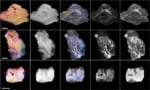
An international research team has configured the deep-learning-based Z-net algorithm to generate MRI-guided near-infrared spectral tomography (NIRST) images directly from measured optical signals and MRI data. According to its developers, from Dartmouth College, Beijing University of Technology and the University of Birmingham, the new algorithm shows potential to improve the detection and diagnosis of breast cancer. Reporting their findings in Optica, they note that the algorithm’s ability to learn from data in near-real time overcomes a major hurdle in multimodality imaging. Z-Net also can distinguish between malignant and benign tumours using data from non-contrast MRI-guided NIRST breast exams.

NIRST is a diagnostic imaging technique that characterizes soft tissue optical properties in the spectral range of 600–1000 nm for early detection of cancer. The complexity and time required to reconstruct diagnostic quality NIRST images, however, has made the technology impractical for day-to-day clinical use.

Incorporating structural information from simultaneous MR imaging can significantly improve the obtained tissue function images. The researchers explain that the process of MRI guidance in NIRST has been time consuming, however, due to the need for tissue-type segmentation and forward diffuse modelling of light propagation in tissue. As such, they propose using an artificial intelligence algorithm to perform near-real-time image reconstruction of MRI-guided NIRST, without the need for complex light propagation modelling.

To create the Z-Net-based algorithm, the researchers used diffuse optical signals and MR images as inputs to the neural network, and simultaneously recovered the concentrations of oxy-haemoglobin, deoxy-haemoglobin and water from 20,000 sets of computer-generated simulations. After training the algorithm, they confirmed that eliminating diffuse light propagation modelling and MRI segmentation did not degrade the quality of the resulting images.

Keith Paulsen

To test the algorithm’s clinical relevance, the researchers applied Z-Net to patient data obtained by their MRI-guided NIRST system. Principal investigator Keith Paulsen, of Dartmouth’s Thayer School of Engineering, explains that the MRI exam and NIRST data acquisition were carried out simultaneously for two women with suspicious undiagnosed abnormalities at the time of their imaging exams. One patient was later diagnosed with invasive ductal carcinoma and the other with a benign fibroadenoma. Z-Net was able to characterize and distinguish malignant from benign tissue, using only tissue haemoglobin concentration and water images.

“Since Z-Net can be expanded by adding other parameters, such as oxygen saturation, lipids and scattering properties into the network, the diagnostic power for breast cancer detection may be increased even further as multispectral systems for tissue spectroscopy are advanced,” the team writes.

Lead author Jinchao Feng, of the Beijing Key Laboratory of Computational Intelligence and Intelligent System, points out that the Z-Net algorithm reduces the time needed to generate a new image to several seconds. “Another advantage is that the algorithm can be trained with data generated by computer simulations rather than from actual patient exams, which can expedite training when in vivo data is insufficient or unavailable,” Feng explains. “These capabilities will allow Z-Net’s adaptation for use with other cancers and diseases for which multimodality imaging data are available.”

“Although Z-Net training sets were based on 3D simulations, data from a single MRI slice was input to the network, and thus, the network output was a 2D image of chromophore concentrations,” Paulsen tells Physics World.

The researchers are developing a new NIR/NIRST imaging system with a breast interface that has many more sources and detectors that cover the entire breast volume. They are also working on an improved Z-Net algorithm that receives the 3D MR image volume (many slices of the MR image) and returns the 3D NIRST images.

“We hope that 3D NIRST images of chromophore concentrations can be learned by Z-Net and recovered from patient data to improve MRI diagnostic accuracy and performance,” Paulsen adds. The team is now planning a clinical study, which will involve about 40 women who have breast abnormalities, in the near future.

Martin Knudsen: a pioneer in gas flows

Want to learn more on this subject?

The Danish physicist Martin Knudsen (1871–1949) has just passed his 150th anniversary. Growing up, he worked as a shepherd during the summer and finished his career as a professor in physics and president at the University of Copenhagen.

In the period from about 1910 to 1920 he was investigating the behaviour of the gas flow in vacuum systems, in particular, low-pressure systems, in which the mean-free distance and dimensions of the vacuum system were comparable.

He introduced several concepts, the Knudsen Number, Knudsen gas, (Hertz-)Knudsen equation and Knudsen cells, which are still used today. The influence that Knudsen had on recent work will also be outlined.

Want to learn more on this subject?

Jørgen Schou graduated in 1980 at the University of Copenhagen, Denmark, with a study on electron- and ion-induced secondary electrons. In the following years, until 2007, he worked as a staff member of the physics department at Risø National Laboratory with the main emphasis on sputtering of volatile targets by ion and electron beams. The latest 10 years he worked as group leader at the Technical University of Denmark (DTU) mostly on photovoltaic films and retired in 2021 after having obtained the world record efficiency for CZTS-silicon tandem cells of about 7% as a coordinator for a major innovation project.


US survey reveals harassment faced by early-career astronomers

Harassing behaviour is pervasive in astronomy, with about a third experiencing discrimination at college or at work. That is according to a new report by American Institute of Physics (AIP) and the American Astronomical Society (AAS) that outlines ways forward for the community to rid itself of discriminatory conduct that has caused many researchers to leave the field. 

The report is based on a longitudinal survey about harassment and discrimination experienced by early-career astronomers that began in 2003. It initially polled male and female students in astronomy graduate courses during the 2006/07 college year and then followed up with the same individuals in 2012/13 and 2015/16, by which time the students had entered the workplace. About 800 of the original 1300 candidates responded to the follow-up survey, where about a third reported having experienced harassment and discrimination at college or at work. 

The latest report, released in late March, identifies four of the most common types of harassment. They are biased assumptions about young astronomers’ status, careers and personal life; verbal putdowns, such as jokes, criticisms and undermining comments; inequitable treatment based on demography that limited the young astronomers’ social support and professional development; and unwanted sexual attention that ranged from inappropriate comments to threats, stalking and assault.

The survey also reveals that harassing and discriminatory behaviour is not restricted to senior supervisors who are generally white and male. “It’s not just the bad actors,” says Rachel Ivie, director of the AIP’s statistical research centre, who co-authored the report.

“Harassment and discrimination can appear peer-to-peer, and even by subordinates to superiors – putting a female professor ‘in her place’, for example, or PhD candidates harassing postdocs.” Women are not the only victims either. “Men from under-represented groups were more likely to experience discrimination,” Ivie adds. “Women of colour were the most likely.”

The AAS says it will now begin to implement measures to reverse the trend by, for example, adopting a code of ethics and an anti-harassment policy. AAS president Paula Szkody of the University of Washington says that the organization will now conduct a poll of graduate students to test progress on the initiatives. 

Ivie adds the importance of questioning and restructuring organizational settings that enable such behaviours. “Harassment and discrimination can reinforce or realign power differentials in academic work and educational settings,” she says. “We’re now looking at the effect of harassment and discrimination on individual careers – what can be done in the field of astronomy to reduce attrition.”

Vacuum technology for mimicking cosmic-dust formation in dying stars

Want to learn more on this subject?

Cosmic dust grains are believed to play an essential role in the emergency of chemical complexity in the universe. In particular, it may catalyze new chemical reactions with the circumstellar and interstellar gasses and therefore, dust-grain surfaces may contribute to the synthesis of the large variety of molecular species found in the interstellar medium. Albeit its importance, much remains unknown on the cosmic-dust formation processes, and high- and ultra-high-vacuum technologies may provide an excellent workbench for these studies.

In this webinar, we present the STARDUST machine, an innovative experimental station devoted to the engineering, production, manipulation, processing and in situ analysis of a wide variety of clusters and nanoparticles, particularly designed to mimic the travel of cosmic-dust seeds from their formation towards the interstellar medium. Its original design offers unique possibilities for nanoparticle growth with high throughput and controlled size and elemental composition. These highly controlled nanoparticles can also be used in other fields, like catalysis or medicine.

Want to learn more on this subject?

Jose A Martín Gago, research professor at ICMM-CSIC from 2012, obtained a PhD in physics funded by ESRF, Grenoble. He held a post-doctoral fellowship at synchrotron LURE-CNRS. Orsay, France, with a Marie-Curie fellowship. For six months during 2020–2021, he was invited professor at FZU-mobility program at the Institute of Physics of the Czech Academy of Sciences.

Jose is a member of important international scientific committees, such as the program scientific board of the large installation facilities: ESRF (Grenoble), ELETTRA (Italy) and ALBA (Barcelona). From 2010, he has been the Spanish representative in the executive council of the International union of vacuum science and technique and applications (IUVSTA). Jose also leads the ESISNA group (Interdisciplinary studies based on nanoscopic systems).


Laser-lit photonic integrated circuits aim for a brighter future

VitreaLab is developing displays based on photonic integrated circuits; how are these created?

Essentially, we take a standard piece of display glass and we put it in our laser-writing system, which is composed of a femtosecond pulsed laser and a motion stage. Then we focus the laser on a specific 3D position inside the glass and locally melt the glass. This raises the index of refraction, and if you string along this modification, you create a light channel, or waveguide. As the index of refraction is higher in these waveguides, light undergoes total internal reflection and is guided in a similar way to inside an optical fibre. The waveguides have diameters of 2 or 3 µm and we use them to build very complex photonic networks. We can distribute the light from a single laser diode to tens of thousands, hundreds of thousands, or even millions of separate laser beams.

Is this the laser-lit chip?

The laser-lit chip is essentially the waveguide technology integrated with a nanoimprint layer on the glass surface, which reshapes the beams a little. But it is essentially a piece of glass that emits a very dense array of red, green and blue laser beams. The beams are so tightly spaced that you can actually slot this chip behind a standard liquid-crystal display (LCD) panel and deliver one laser beam per pixel. And since you can’t see the pixels in such a display, you can imagine how dense this beam array is. This technology can create a lot of new display types, in both 2D and 3D.

We can go from 5% transmission through the display stack to 90%: a huge jump in energy efficiency

What are benefits of using these laser-lit chips in displays?

Even after decades of development, the displays that we have today are fairly bad in many aspects. An LCD typically works by having a rectangular white light source such as an LED at the back of the screen and a filter array in front of it that subtracts light to create the image. But this is an incredibly wasteful process, you waste about 95% of the light being emitted. If you look at a laptop screen with a reasonable brightness, for example, you can imagine how incredibly bright the screen has to be at the back, and this drains the battery of your device tremendously. 

What we are doing is essentially just making the light flow much more easily through the entire liquid-crystal stack. It doesn’t get scattered, it doesn’t get colour filtered and it doesn’t create polarization-based loss. In this way, we can go from 5% transmission through the display stack to 90%. This makes a huge jump possible in energy efficiency. We see this as the strongest draw, what we can do for standard 2D display panels, this tremendous increase in energy efficiency. 

VitreaLab uses a unique laser-writing technology to inscribe tiny wave-guides into glass

VitreaLab is also planning to create the first full holographic display, how will this work?

Holography is an often misused physics term – not everything that is a 3D display is a hologram. Holographic displays, by definition, are something that are interference-based and laser-based. How a holographic display works is that you have to have a huge laser wavefront, something highly continuous, then you make tiny modulations, phase shifts, and from this you can create a complex wavefront that encapsulates your entire image. Typically, you would use a laboratory laser, widen the beam with a big lens and eventually let that impinge on your panel – but that’s not practical for consumer products. 

That’s where we come in: we miniaturize all of that. Our unique capability is to provide this wavefront, the laser light that you need to create a holographic image, in a form factor that nobody else can produce. We are able to control the laser light very well and enable this holographic back-light component. This will make consumer holographic displays possible.

Has VitreaLab released a commercial device yet? 

We are still in the early R&D stages, we have been developing this technology now for three years. We have shown, in our YouTube channel and also at the Photonics West conference, the first proof-of-concept chips, at 15 × 15 mm and 20 × 20 mm. We demonstrated colour images using our laser-lit chip and just an off-the-shelf LCD component. The cool thing we can already show is that you can produce colour images just using an LCD without colour filters, so essentially a monochrome display unit. But because we illuminate each sub-pixel with the correct colour with our separate beams, we can create colour images out of that.

What type of display are you targeting for your first products?

At the moment, we are targeting mobile- to laptop-size displays, maybe also up to monitor sizes for 3D displays, 25 or 28 inches, but definitely nothing larger than that for now. We did some testing, and it seems that when you use a laptop for web surfing, at least half of the energy is just going to the display. So if you can reduce this by 80 or 90%, of course it will make a tremendous difference to your run time. Something similar should also be true for smartphones.

Finally, why do you think VitreaLab won the SPIE Startup Challenge?

I hope that we were chosen because we delivered a good pitch and the jury members were happy with what we presented. We made a statement that we can fundamentally change what this displays space can do and bring it into a new era, into the laser era, and I think this really resonated with them. And, we have evidence that we can actually do this, with these proof-of-concept devices that we were showing during Photonics West. It’s a great boost for us because it’s a renowned award and it validates us with this display technology that’s very different to what everybody else does.

Dosimetry audit on stereotactic radiosurgery applications: Clinical experience of succeSRS

Want to learn more on this subject?

This webinar presents a novel methodology for dosimetry audits on intracranial stereotactic radiosurgery applications. The succeSRS dosimetry audit service offered by RTsafe combines the Prime anthropomorphic head phantom with advanced dosimetry implemented by RTsafe’s highly experienced scientific team.

During this webinar, the overall experience of a radiotherapy department that performs SRS treatments on succeSRS and the acquired results of this service are shared.

Presenter
Andriana Peraticou is director of medical physics at the Bank of Cyprus Oncology Centre.

Want to learn more on this subject?

Results of a 2020 UK survey for the use of online treatment monitoring solutions for IMRT/VMAT

Want to learn more on this subject?

Numerous commercial technologies for online treatment monitoring (OTM) in radiotherapy (RT) are currently available including electronic portal imaging device (EPID) in vivo dosimetry (IVD), transmission detectors and log file analysis. Despite this, in the UK, there exists limited guidance on how to implement and commission a system for clinical use or information about the resources required to set up and maintain a service. A Radiotherapy Special Interest Group working party, established by the Institute of Physics and Engineering in Medicine (IPEM) was formed with a view to reassess the current practice for OTM in the UK and an aim to develop consensus guidelines for the implementation of a system.


In this webinar we discuss options for OTM, results and insights from the survey and a discussion on the future guidance ahead.

The speaker, Simon Stevens, has published a paper on this topic in Physics in Medicine & Biology.

Want to learn more on this subject?

Simon Stevens is deputy chief physicist at the London Clinic Hospital based on Harley Street, UK. Having undertaken his physics degree at Imperial College London in 2005, Simon completed his medical physics Master’s at the University of Surrey with distinction in 2007 and underwent practical training at St George’s University NHS Trust, The Royal Marsden Hospital, and Royal Surrey County Hospital. He completed his state registration as a clinical scientist at St Bartholomew’s hospital, London, in 2011 and has worked as a lecturer in oncology for the Institute of Cancer Research.

Simon’s research interests included flattening filter-free technology, in vivo dosimetry and intra-operative radiotherapy. His publications have featured in Physics in Medicine & Biology and Physica Medical: European Journal of Medical Physics. He has presented his work at both national and international level, including IPEM and ESTRO meetings.

Simon is a member of IPEM and a member of the Institute of Physics. He is currently chair of the IPEM working party for online treatment monitoring in radiotherapy and a member of an IPEM working party for vendor-supplied quality-control equipment.

Electromagnetic cavity could enhance high-temperature superconductors

Researchers at Harvard University in the US have put forward a possible new way to enhance superconductivity in cuprate materials. The approach, which involves embedding the materials in an electromagnetic cavity, could pave the way toward realizing room-temperature superconductivity, which the researchers call “a holy grail of modern condensed matter and material science”.

Scientists have long known that shining intense light on a quantum material can alter its properties. More recently, researchers have suggested that similar results could be achieved by resonantly coupling the material to an electromagnetic cavity.

One promising application of this technique would be to control antiferromagnetic correlations in certain copper oxides (cuprates) that conduct electricity without resistance at temperatures above 77 K. Such correlations are thought to underlie many of the exotic and potential useful aspects of these so-called “unconventional” superconductors. Being able to manipulate them could thus have important near-term applications as well as providing a potential route to crafting materials that remain superconducting at still higher temperatures.

Magnon mediation

The conventional theory of superconductivity (known as BCS theory after the initials of its authors) states that below a certain critical temperature Tc, the electrons in a material overcome their mutual repulsion and join up to form so-called Cooper pairs that then travel unimpeded through the material. The formation of these Cooper pairs is mediated by phonons – quasiparticles that arise from vibrations of the material’s crystal lattice.

While this theory holds true for most superconducting materials, it does not apply to the cuprates. For them, Cooper-pair formation is instead thought to be mediated by magnons, which are collective oscillations of the material’s spin magnetic moments. Unlike phonons, these quasiparticles do not need to pair up to travel long distances.

In the new work, a team led by Jonathan Curtis studied an unconventional bilayer superconductor with the chemical formula YBa2Cu3O6 (YBCO) and a Tc of 100 K. The researchers began by trying to understand the various ways in which coupling between phonons and the electromagnetic cavity could affect the magnons in the material. Based on their theoretical results, Curtis and colleagues predict that the strongest effect – that is, the one that could lead to the greatest increase in Tc – occurs when the cavity–phonon–magnon interaction stems from distortions of the crystal lattice of YBCO (and indeed other bilayer cuprates). The team also predicts that other cuprates – including monolayer ones – will experience a weaker effect due to phonons exciting magnons through a relativistic interaction between an electron’s spin and its motion.

Need for experimental verification

The Harvard researchers, who report their work in Physical Review Research, stress that they do not yet know whether it is indeed possible to increase Tc using their technique. However, they believe there are several interesting future directions to take their work. “Of course, the first and most important is for us to carry out real experiments, since after all our study is still only theoretical,” Curtis says. “I think that people are starting to reach the necessary parameter regimes to actually construct these devices and I hope that they will try to realize what we have described in this work.”

Curtis adds that on the theoretical front, the most important thing is to analyse what effects such a resonant device will have on Cooper pairing. “This is a challenging problem in large part because these materials are notoriously difficult to model, but we hope to start analysing these effects and at least determine whether there may be a reasonable effect or not,” he tells Physics World. “At the moment, this is something we are actively working on.”

Schrödinger lecture theatre at Trinity College Dublin renamed after sexual-abuse reports

The school of physics at Trinity College Dublin has renamed a lecture theatre that was previously named in honour of the Nobel-prize-winning physicist Erwin Schrödinger. The move is in response to revelations about Schrödinger’s life, specifically that he groomed and sexually abused young girls. The university says that it is also considering the future of its annual Schrödinger Lecture Series, which began in 1995 and is supported by the Austrian Embassy and the National Bank of Austria. 

Born in 1887 in Vienna, Schrödinger spent most of his early life in Germany and Switzerland. In 1933 he moved to the University of Oxford and that year shared the Nobel Prize for Physics with Paul Dirac for formulating a wave equation that accurately calculates the energy levels of electrons in atoms. Yet Schrödinger’s personal arrangements – in which he lived with two women – were not welcomed and, following a stint at Princeton University, he returned to Austria in 1936. 

As an educational institute, we cannot condone or glorify someone who abused the trust between teacher and student

Jonathan Coleman

In 1938 Schrödinger was invited to Ireland to set up the Dublin Institute for Advanced Studies and was based at Trinity until 1955, becoming an Irish citizen. In 1943 he delivered a series of lectures at Trinity on how concepts in physics can be applied to living things, which resulted in the now classic book What is Life? . 

On 11 December last year the Irish Times published a story that outlined Schrödinger’s controversial past, which included relationships with two girls. The article prompted the physics executive committee at Trinity to meet on 20 January to discuss the article and the shocked reaction from staff and students.

A day later, Jonathan Coleman, head of physics at Trinity, e-mailed the department saying it would recommend to Trinity’s provost – Linda Doyle – that the Schrödinger Lecture Theatre be renamed and that it “would be inappropriate” to continue with the annual Schrödinger Lecture series. “It was noted that the majority of people had not been aware of and were shocked by the reported details of Schrödinger’s personal life and sexual history,” Coleman said in his e-mail. 

Following the meeting with the provost in February, they agreed to rename the lecture theatre to “Physics Lecture Theatre”. Since then, a portrait of Schrödinger in the university’s FitzGerald building has been removed.

It has also been proposed that the annual lecture – which has been cancelled this year – will be renamed the What is Life Lecture Series and be overseen by one of the biology schools rather than physics. Discussions are ongoing about how Trinity will commemorate that the 1943 lecture took place while acknowledging Schrödinger’s wrongdoings. 

Coleman told Physics World that he thinks the university has taken the correct, appropriate response. “As an educational institute, we cannot condone or glorify someone who abused the trust between teacher and student,” he says, but added that physicists should not begin to rename scientific concepts or teach about Schrödinger’s demeanours during physics lectures. “What we need to do instead is get much better at teaching the history of science,” says Coleman.

Anna Krylov, a theoretical chemist from the University of Southern California, Los Angeles, who has previously voiced concern about  what she calls “the politicization of science”, disagrees with Trinity’s decision. “These cancellations rob us of the opportunity to learn,” she says. “History should be discussed, not obliterated.”

Krylov fears that other institutions might follow Trinity’s move, leading to Schrödinger’s name being removed from medals, awards and even the equation itself. “The cathedrals of science were built by people, not by saints, and while some committed truly reprehensible acts, when we use their names, we recognize their scientific contributions and honour their intellectual legacy, not their morals or political views” she says. 

US planetary scientists call for mission to investigate solar system’s ice giants

NASA should send a probe to Uranus within the coming decade as well as develop a craft to see if Saturn’s icy moon Enceladus harbours life in its interior ocean. Those are just some of the conclusions contained in the latest decadal survey of planetary sciences and astrobiology.  The 780-page report, released today, prioritizes the scientific themes and concepts for US planetary science for the coming decade.

Composed by a 19-member steering committee convened by the US National Academies of Sciences, Engineering and Medicine, the report focuses on 12 priority science questions within three themes. “Origins” covers issues such as the evolution of the protoplanetary disk, accretion in the outer solar system, and the origin of the Earth and other bodies in the inner solar system. “Worlds” focuses on the evolution of, and interactions among, planets and accompanying bodies in the solar system. Meanwhile, “life” examines the evolution of life on Earth and the possibilities of life elsewhere.

The report outlines a list of space probes need to address these themes. In large-class missions, top priority goes to the Uranus Orbiter and Probe (UOP) – a $4bn multi-year mission intended to gain fresh knowledge of the Uranian system and ice giants. Uranus and Neptune are the only planets that have never been studied with a dedicated orbital probe and the UOP would carry out several flybys of Uranus and contain a probe to sample Uranus’ atmosphere. The report states that a launch within the next decade is “viable on currently available launch vehicles”.

The second highest-priority large-class mission is the Enceladus Orbilander, which would study the Saturnian satellite’s interior ocean and search for evidence of life. Launched in 1997, NASA’s Cassini spacecraft discovered that the icy moon has a subsurface ocean that vents water into space. The Enceladus Orbilander, costing around $5bn, would carry out orbital observations of Enceladus for over a year before landing on the moon, where it would spend two years studying the plume from its interior ocean.

This recommended portfolio of missions, high-priority research activities, and technology development will produce transformative advances in human knowledge

Robin Canup

The report also recommends that NASA maintains its Mars Exploration Programme, prioritizing the Mars Life Explorer as the next medium-class mission. The explorer would search for signs of life currently on the planet – rather than, say, ancient signatures as previous and current missions do – and access the habitability of the red planet. For NASA’s New Frontiers programme, which funds missions costing less than £850m, the report recommends the space agency cover mission themes such as a Ceres sample-return probe, a comet surface sample return, a Titan orbiter as well as a Venus explorer.

Threats from above

Closer to Earth, the report calls on NASA to enhance its detection and tracking of near-Earth objects (NEO) and to develop methods of deflecting those that threaten Earth. It calls on the space agency to support the development and launch of the space-based NEO Surveyor, which operates in the mid-infrared. Following the surveyor, as well at the launch of the Double Asteroid Redirection Test, NASA should develop a “rapid-response, short-warning” demonstration concept that would perform a fly-by mission of an NEO about 50–100 m in diameter – roughly the size of an object that poses a high probability of causing damage on Earth.

Robin Canup of the Southwest Research Institute, who co-chaired the report’s steering committee, says the document sets out an “ambitious but practicable vision” for planetary science exploration in the coming decade. “This recommended portfolio of missions, high-priority research activities, and technology development will produce transformative advances in human knowledge and understanding about the origin and evolution of the solar system, and of life and the habitability of other bodies beyond Earth,” she says.

The report is the first decadal survey to examine diversity, equity, inclusivity and accessibility in planetary science. “A strong system of equity and accountability is required to recruit, retain, and nurture the best talent into the community,” the report states. Although claiming that progress has been made, particularly in terms of women’s prominence in the field, “much work remains to be done, in particular to address persistent and troubling issues of basic representation by race/ethnicity”.

To make progress, the report recommends that NASA’s planetary science division implement codes of conduct for its missions, conferences and field campaigns. NASA – along with the other funders, institutions and professional societies – should also work to mitigate bias at all levels, for example by analysing decision-making practices and procedures as well as engaging with the community to develop initiatives to uncover and stop bias.”This is the first report to consider the state of the profession,” adds Canup. “To the extent we don’t have complete participation, we miss out on great ideas and great people.”

Copyright © 2026 by IOP Publishing Ltd and individual contributors