NASA’s James Webb Space Telescope releases first unaligned images

NASA has released the first unaligned image from the James Webb Space Telescope (JWST). Taken early this month from the observatory’s Near Infrared Camera (NIRCam), the picture is a crucial step towards the instrument coming online in June. It will then begin collecting light from celestial objects.

The mosaic image shows a star called HD 84406 in the constellation Ursa Major. As the telescope it not yet aligned, however, the photo shows starlight from the star 18 times, once from each of the 18 primary mirror segments.

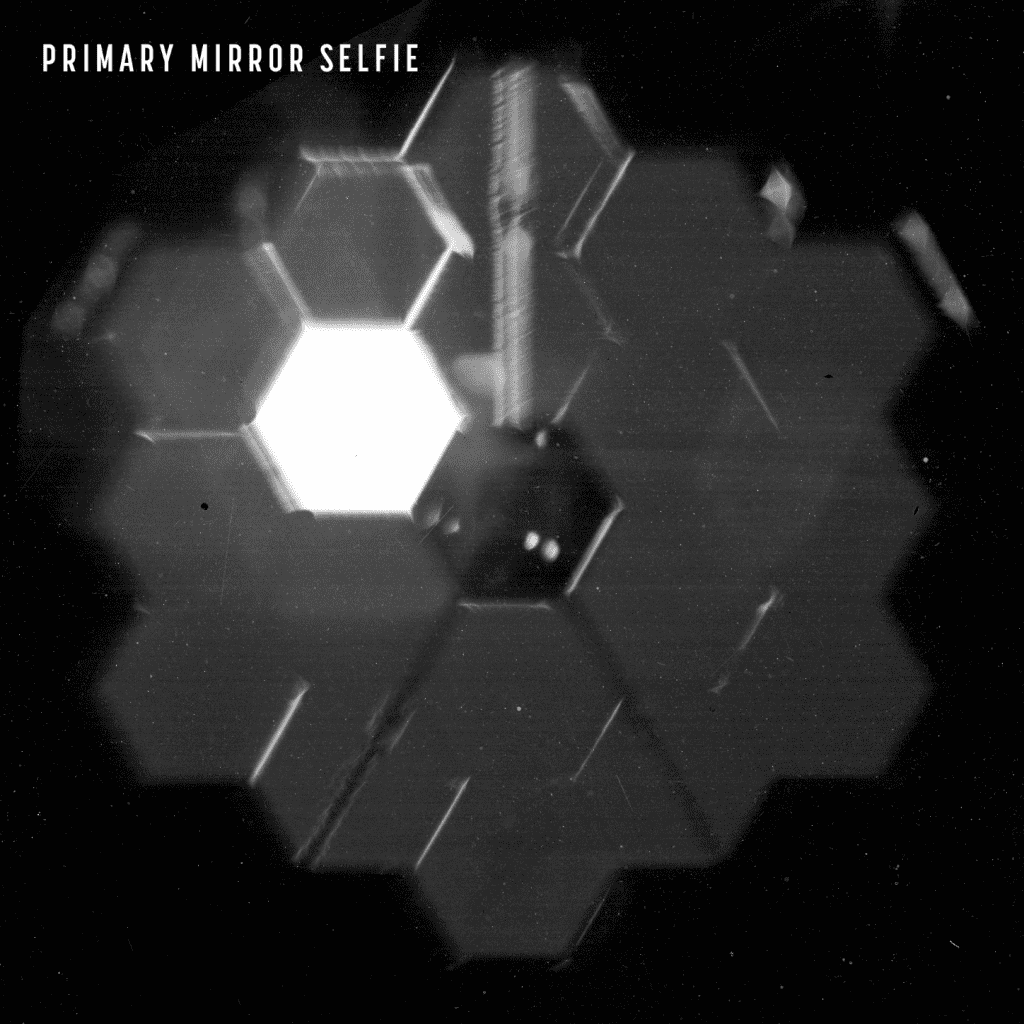
JWST "selfie"

The blurry starlight will be used to align and focus the telescope and over the coming months the team will gradually adjust the mirror segments until the 18 images become a single star.

“The entire Webb team is ecstatic at how well the first steps of taking images and aligning the telescope are proceeding,” says Marcia Rieke from the University of Arizona who is principal investigator for the NIRCam instrument in a statement. “We were so happy to see that light makes its way into NIRCam.”

Meanwhile, NASA has also released a “selfie” of the JWST’s primary mirror. The picture was taken using a specialized “pupil-imaging lens” that is inside NIRCam. The lens was designed to take images of the primary mirror segments to aid the alignment process rather than take images of space.

Ask me anything: Donna Strickland – ‘I wouldn’t have wanted to know that I would win a Nobel prize’

What skills do you use every day in your job?

I use writing skills every day. When I was back at my high school I didn’t try very hard in my English classes because I didn’t like it as much as I liked physics and maths, and yet I doubt there are very many jobs where writing doesn’t play a big role.

What do you like best and least about your job?

Certainly what I like best is going into the lab, working with the students and seeing something happen. That’s the name of the game. That’s why we want to do science. I hate marking because I don’t like judging people, so I find that aspect of the job difficult.

What do you know now that you wish you knew when you were starting out in your career?

I’ve been so blessed that I’ve gone through life and things have worked out for me, so maybe I haven’t learned any great secrets in life. It’s always nice to know that in the future life will work out. But I wouldn’t have wanted to know that I would win a Nobel prize. I think that would have skewed me too much. I don’t think one should know something like that. It’s better for it to be a surprise.

Industrial salt makes a safer and more sustainable zinc battery

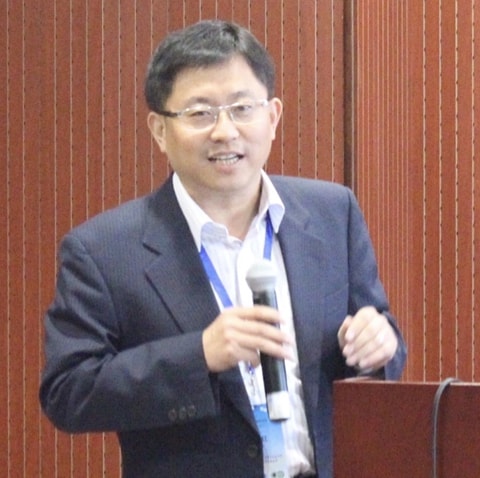
Quan-Hong Yang

Batteries based on zinc are promising alternatives to their widely-used lithium-ion cousins, but they suffer from one of the same drawbacks: needle-like structures called dendrites that form on the surface of the electrode and grow into the electrolyte, ultimately causing the battery to short or even ignite. Researchers led by Quan-Hong Yang of Tianjin University, China, have now developed a partial remedy in the form of an organic electrolyte made from a widely-used industrial salt and an ethylene glycol solvent. Together, these materials form a protective layer that guards the zinc electrode against dendrite growth.

While lithium-ion batteries are today’s battery of choice in portable electronics and electric vehicles, the flammable and toxic organic electrolytes they contain are a cause for concern. Lithium is also expensive relative to some other, more common metals, and the global supply is subject to various uncertainties. Zinc batteries, which are normally formed with aqueous electrolytes, are an attractive substitute because zinc is cheaper, less toxic, more easily recycled and more widely available than lithium. They also have a high energy density, with a high specific capacity (820 mAh/g and 5,855 mAh/cm3) and a favourable redox potential (−0.76V versus the standard hydrogen electrode) of the Zn anode.

Implementing zinc technology is not all plain sailing, however, and there are some major technical barriers to overcome. One of these is the aforementioned dendrite growth. Another is the material’s tendency to undergo side reactions such as hydrogen evolution and corrosion with water. These side reactions jeopardize the batteries’ cycling stability and shorten their lifetime, respectively, by continuously consuming both the electrolyte and the zinc anode.

The fundamental cause of these problems is the interaction between the metallic zinc anode and the aqueous electrolyte. One way to avoid them is to use electrolytes that do not contain any water. Such electrolytes are expensive, do not conduct ions well, and can even be hazardous. Researchers are thus looking for alternative strategies to protect zinc anodes from water.

A new suppression strategy

The salt that Yang and colleagues used, zinc tetrafluoroborate hydrate (Zn(BF4)2), has rarely been employed in batteries. It does, however, have prominent applications in electroplating and textile manufacturing, where it acts as a flame retardant. By coupling this salt with ethylene glycol (EG) – a material that is, incidentally, cheaper than conventional ZnSO4 electrolytes – the researchers were able to promote the formation of a protective ZnF2 passivating layer that suppresses side reactions as well as inhibiting the growth of zinc dendrites.

The resulting hydrous Zn(BF4)2/EG electrolyte is non-flammable and works over a wide temperature range, from –30°C to 40°C. The electrode can be cycled for over 4000 hours at a current density of 0.5 mA/cm2 with a high Coulombic efficiency of 99.4%. Based on these figures, Yang says the new electrolyte shows much promise for developing Zn batteries that are safe, high-performance and sustainable. “We now plan to improve our device and also explore more electrolyte formulations to promote the rapid practical use of such batteries,” he tells Physics World.

Full details of the new electrode are reported in Nature Sustainability.

Artificial material mimics tooth enamel, but is tougher

Researchers in China and the US have created an artificial material that closely mimics the hierarchical structure of tooth enamel. Hewei Zhao at Beihang University and colleagues fabricated the composite structure using specially coated nanowires, which are aligned along a single direction. The material has mechanical properties that are superior to natural tooth enamel, and the teams says it could soon be used in a wide range of engineering applications.

The enamel that coats our teeth is the hardest biological material in the human body. Known for its exceptional stiffness, hardness, viscoelasticity, strength and toughness, the material has a remarkable resistance to deformation and damage, despite being just a few millimetres thick. This unusual combination of properties stems from enamel’s hierarchical structure, which stretches from the nanoscale to the macroscale. Enamel is composed of parallel nanowires made of the calcium-based mineral hydroxyapatite. These are interconnected by a glass-like substance called amorphous calcium phosphate.

In previous studies, researchers aimed to mimic this structure in artificial materials. So far, however, the assembly of hierarchical structures across multiple scales has proven challenging – and limited to sub-millimetre scales.

Strong chemical bond

Zhao’s team began the process of making their material by synthesizing hydroxyapatite nanowires roughly 10 µm in length. They then coated the nanowires with a layer of amorphous zinc peroxide, which forms a strong chemical bond with the hydroxyapatite. The movements of the coated nanowires were then restricted by intertwining them with the stringy molecules of polyvinyl alcohol; after which the entire mixture was frozen.

When the team applied a bi-directional temperature gradient to the mixture, ice crystals grow in parallel layers. Subsequently, this forced the intertwined nanowires to occupy the gaps between ice layers while orienting themselves along a single direction. Finally, the material was freeze-dried and compressed. This resulted in a dense artificial tooth enamel, in which parallel columns of coated nanowires were rigidly bonded together.

Through stringent mechanical tests, and subsequent analysis with electron microscopy, Zhao’s team found that their composite structure could endure strains exceeding 140 MPa; and fractional length changes of 1.8%, before fracturing. On macroscopic scales, this gave the material a stiffness, hardness, strength, viscoelasticity and toughness that exceeded those of both natural enamel, and previous enamel-inspired materials.

What is more, Zhao and colleagues showed how the material could be easily manufactured in bulk and machined into desirable macroscopic shapes. Through the future development of suitable manufacturing techniques, the team believes that artificial enamel could be used across a variety of engineering applications where material rigidity is required.

The new material is described in Science.

Self-healing ice, AI beats humans at Gran Turismo, aerogel insulation turns a profit in Zurich

If you put two ice cubes side-by-side in a freezer you will find that after a while they will fuse together. This effect fascinated the great 19th-century physicist Michael Faraday, who proposed that ice has a thin layer of water on its surface that causes the cubes to freeze together. Now, physicists at the University of Amsterdam have done experiments that suggest that the effect could occur because water molecules sublimate from the surface – that is transform directly from solid to gas, skipping the liquid phase altogether.

Instead of studying ice cubes, the team observed how tiny scratches on the surfaces of ice heal themselves within several hours. Then they used their data to evaluate four different models of how this process could occur – including Faraday’s surface liquid theory. They found that the sublimation of water from the scratches followed by its condensation back onto the surface provided the best explanation of what they saw.

Now, you might be thinking that ice rinks could somehow optimize this process so they could do away with Zamboni ice re-surfacing machines. Apparently not, because the experiments were done under controlled conditions that would be difficult to replicate on a rink – so Zambonis are safe for now. The research is described in the Journal of Physical Chemistry C.

Artificial intelligence goes gaming

Computers are already advanced enough to beat the best human players at games such as chess and poker. But now artificial intelligence (AI) has been taken to the next level by outcompeting four world-champion-level human players in the head-to-head car racing game Gran Turismo.

Researchers at Sony taught an AI “agent” named GT Sophy to play Gran Turismo using deep reinforcement learning. It was trained to accelerate and brake the car efficiently over a course, as well as find alternative paths in different conditions or when blocked by opponents. The system can also work out how to avoid penalties that would be incurred by breaching race etiquette. As well as giving humans a good beating, which it did over three car and track combinations, the findings could have applications in robotics, aerial drones and self-driving vehicles. The study is described in Nature.

Expensive air

Property prices in Switzerland are famously high, and now researchers there and in Ireland and Norway have show that it is economically advantageous to use high-cost, low-thickness “superinsulation” in buildings where real estate is very expensive. They looked at superinsulation made from aerogels, which are materials that are mostly air – and therefore very good and keeping the cold out (or in).

The team evaluated the use of an aerogel insulating material 14 cm thick that was used in a mixed residential and commercial building that was recently built in Zurich. The aerogel was used in place of a much cheaper conventional material that is 20 cm thick. This meant that an additional 30 square metres of floor space was created in the building. Floor space in Zurich costs 12,700 Swiss francs (£10,000) per square metre, so even when the extra cost of the aerogel is factored in, the aerogel turned a profit of 247,000 Swiss francs.

The research is described in Energy and Buildings.

International Year of Glass gets cracking in Geneva

The International Year of Glass (IYOG2022) kicked off yesterday with a two-day opening ceremony at the Palace of Nations in Geneva, Switzerland. IYOG2022 will celebrate this versatile material that underpins many technologies that have transformed the modern world. Events throughout the year will also highlight why glass is critical in achieving the United Nations’ 2030 Agenda for Sustainable Development.

“Welcome to transparency, welcome to sustainability, welcome to the age of glass,” said IYOG2022 chair Alicia Durán, in her opening remarks. Durán, a physicist at the Spanish Research Council (CSIC) in Madrid, played a key role in building support for the project while serving as president of the International Commission on Glass (ICG) between 2018 and 2021.

During the past three years, Spain’s permanent mission at the UN headquarters in New York led the process for obtaining an official resolution, with expressed support from 18 other nations. The global glass industry and cultural institutions also backed IYOG22, which now has 2100 endorsements from 90 countries across five continents.

From King Tut to German industry

One of the aims for IYOG2022 is to highlight the role of glass in advancing civilization. Ambassadors from Turkey and Egypt spoke at the opening ceremony as both nations have rich histories in the origins of modern glassmaking. “Let us cherish the significance of this brilliant and versatile material in humanity’s past, present and future,” said Sadik Arslan, head of Turkey’s permanent mission at the UN in Geneva.

This year is the 100th anniversary of the discovery of Tutankhamun’s tomb in Egypt’s the Valley of the Kings. To mark the occasion, Egypt will inaugurate its new Grand Egyptian Museum just outside Cairo, which showcases ornamental glass from Ancient Egypt. To coincide, Egypt will host an IYOG2022 event “From Pharaohs to High Tech Glass” on 18–20 April.

All of this year’s major glass fairs will have a focus on IYOG2022. China, the world’s biggest producer and consumer of glass, will host China Glass 2022 in Shanghai alongside a number of satellite events on 11–15 April. This year is also the centenary of the German Glass Technology Society (DGG), which will be celebrated on 2–8 July in Berlin at the ICG’s international congress.

Elsewhere, the US will host a National Day of Glass Event on 3–5 April in Washington, DC while Mexico will host GLASSMAN in Monterrey on 11–12 May and Russia has MIR STEKLA in Moscow on 6–9 June. IYOG2022’s closing ceremony will take place in Japan on 8–9 December.

Supporting the UN’s sustainability goals

Events will highlight how glass-based technologies can contribute to the UN’s 17 sustainable development goals. In renewable energy, glass is used for concentrated solar power, photovoltaics and the fibreglass of wind turbines. Glasswool is used for insulating houses, while new window technologies can make buildings efficient and light. Glass is non-toxic and infinitely recyclable, so it is also a key material for circular economies.

Optical fibres are the digital highways for the Internet and touch-sensitive glass screens have revolutionized how we communicate. In healthcare, non-reactive glass containers that can withstand ultracold temperatures have been essential for transporting COVID-19 vaccines. Bioglass has been used for half a century to assist bone healing, and recent advances have seen glass nanostrutures used for drug delivery and wound healing.

IYOG2022 organizers hope to inspire students through cultural events and initiatives, while addressing gender balance in science and the needs of developing countries. The Museum of Glass Art in Alcorcón, Madrid, is hosting an event in June called Women in Glass, Art and Science, which will highlight contributions of women from Ibero-America.

To close the opening ceremony in Geneva on Friday afternoon, the Japanese artist Kimiake Higuchi spoke about her creations using te de verre. In this technique finely crushed glass is mixed with binding material and colouring agents to create a paste that is moulded and fired.

New multichannel lock-in measurement system 

This video highlights the MeasureReady™ M81-SMM Synchronous Source Measure System, a new modular solution for low-level material and device electrical characterization that combines the convenience of DC and AC sourcing with DC and AC, including mixed-signal and lock-in measurements.

Designed to eliminate the user complexities of multiple single-function instrumentation set-ups, the extremely low-noise system also ensures inherently synchronized measurements from one to three source channels and from one to three measure channels per a single half-rack instrument. The M81’s modular architecture enables remote signal and source amplifiers to be physically located as close as possible to the sample being characterized. Minimizing the low-level signal wiring length to the sample reduces noise and increases sensitivity, resulting in more accurate and repeatable measurements.

Complex systems approaches to information processing

Want to learn more on this subject?

The area of information processing and computing is highly fractionalized. It covers sub-fields in machine learning, neuroscience, physics, mathematics, computer science, engineering, biology, social sciences, and more. Not only digital computers, but also organisms, brains, nonlinear physical, quantum, and socio-technical systems, as well as artificial neural networks and many other complex systems, carry out complex information processing.

How these systems process, store and retrieve information, and how they can even learn to improve on specific tasks as an interplay of structure and dynamics are fundamental questions at the core of research in complex systems that we need to answer. Finding answers will represent the basis to a better understanding, and ultimately to designing efficient and robust complex information-processing systems.

This webinar brings together five different perspectives from this endeavour – all contributions from a JPhys Complexity focus issue of the same name – and aims to explore the role that complex systems science play in connecting the various involved fields.

Chairs
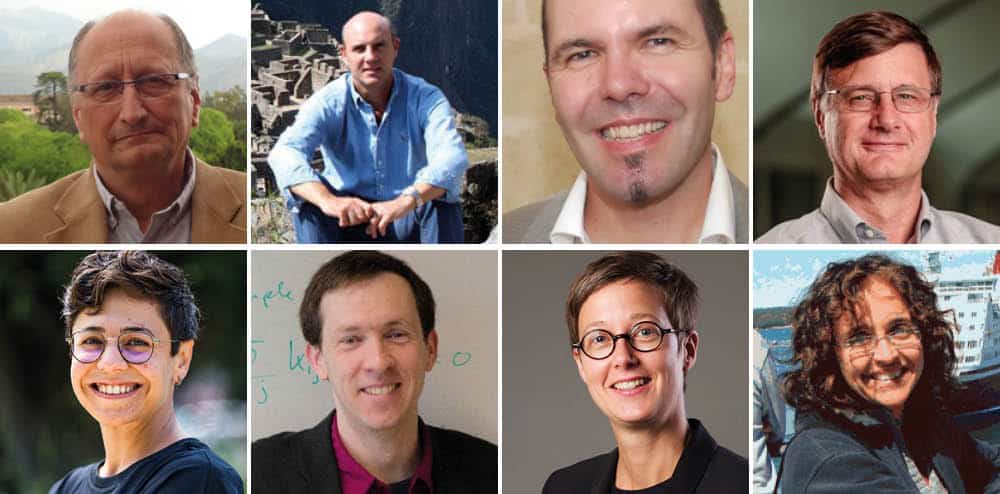
Maxi San Miguel, Claudio Mirasso and Ingo Fischer, IFISC (Institute for Cross-Disciplinary Physics and Complex Systems), Spain.

Speakers
Daniel Gauthier, professor of physics and professor of electrical and computer engineering at The Ohio State University, with a wide variety of research interests including quantum computing, quantum key distribution, and dynamics of complex networks.

Hiba Sheheitli, postdoctoral researcher at Institut de Neurosciences des Systèmes (INS) – Aix-Marseille University, France, with a current research focus on dynamical systems analysis and modelling of whole brain nonlinear dynamics.

Marc Timme, strategic professor and chair for Network Dynamics at TU Dresden, working on developing our understanding of the collective nonlinear dynamics of networks, with applications including biological and bio-inspired technical systems, future mobility and network economy and sustainability.

Karoline Wiesner, professor of complexity science at University of Potsdam, Germany, looking at developing information theory to study the dynamics of complex systems, with applications ranging from physics and biology to social systems.

Roberta Zambrini, tenured researcher at the Institute for Cross-Disciplinary Physics and Complex Systems (IFISC), Spain, with interests including complex and open quantum systems, synchronization, quantum networks, quantum optics and more recently quantum machine learning.

Want to learn more on this subject?

About this journal

JPhys Complexity is a new, interdisciplinary and fully open access journal publishing the most exciting and significant developments across all areas of complex systems and networks.

Editor-in-chief: Ginestra Bianconi, Queen Mary University of London, UK.


Can pencil-beam scanning enable gantry-free proton therapy?

The ability to deliver proton therapy without the use of a gantry could help it become a more affordable radiotherapy option for cancer patients. Researchers at Massachusetts General Hospital (MGH) have investigated the feasibility of using pencil-beam scanning (PBS) with robotic positioning and immobilization devices to do just that. In their latest research, reported in Medical Physics, they perform a proof-of-concept study of gantry-less PBS proton therapy for patients with head-and-neck or brain tumours.

Proton therapy, an advanced type of radiation treatment, delivers highly conformal radiation precisely focused on the tumour target. This reduces the risk of irradiating adjacent healthy tissue and causing serious toxicities. Yet only a very small percentage of cancer patients who could benefit from proton therapy receive it, due in great part to the prohibitively high capital cost of building a proton therapy facility. According to the Particle Therapy Co-operative Group (PTCOG), as of January 2022, only 122 proton therapy centres in 20 countries are operational.

If proton therapy could be delivered effectively without requiring a 100-tonne gantry, treatment centres would be much less costly to build and to operate. The main geometric difference between a traditional gantry system and a gantry-less system (if patient rotation is not available), is that gantries support beam delivery from both coplanar and non-coplanar directions.

The researchers identified three factors that may reduce the need for a gantry: advanced PBS technology with small spot sizes that enable dose modulation at each spot position; highly integrated and automated image guidance systems; and robotic patient positioning. After evaluating the proton therapy plans of 4332 cancer patients treated on gantries at MGH’s Francis H. Burr Proton Therapy Center, the team determined that the majority could have been treated without a gantry.

The gantry-less proton therapy approach is based on the premise that instead of moving the beam relative to the patient, the patient is moved relative to a fixed proton beam. To achieve this, the researchers have developed a prototype robotic patient positioning chair combined with a soft immobilization device that conforms to a patient’s body. They envision that the positioning chair will be located in the centre of a synchrotron with a horizontal beamline, in a 7 × 7 m treatment room. With the patient sitting upright, the chair is rotated for the delivery of coplanar beams, and an optical motion tracking system is used to monitor the patient position

Plan comparison

For their current study, led by Thomas Bortfeld, the researchers created PBS treatment plans for seven patients with head-and-neck or brain tumours, including simple to complex plans. They evaluated whether plans using a new treatment geometry, with only coplanar beams, could achieve the same dosimetric goals as plans developed for delivery with a gantry-based system. They created two plans for each patient: a traditional gantry-based plan containing non-coplanar beams, with the patient lying supine; and a gantry-less plan delivered by a fixed horizontal beamline with the patient sitting upright.

Using in-house developed ASTROID software, the researchers optimized the PBS plans to deliver a uniform dose based on the full prescription as a composite of the beams. For each plan, they calculated dose–volume histograms, the homogeneity index (HI) of the target region, and the mean dose, D2 (near-maximum dose) and D98 (near-minimum dose) of the target and organs-at-risk (OAR).

All gantry and gantry-less treatment plans delivered the required radiation dose to the target and maintained the dose to healthy tissue below the prescribed limit. Most of the gantry-less plans had similar target HI and mean OAR dose as the gantry-based plans, although some gantry-based plans exhibited slightly better target coverage and better sparing of healthy organs. A robustness analysis performed for one patient revealed that both plan types were equally robust with respect to range uncertainties and setup errors.

The researchers conclude that when a modern PBS system is used, high-quality proton treatment plans can be obtained for brain and head-and-neck patients even without non-coplanar beams. They suggest that if appropriate positioning and immobilization is available, many proton treatments could be delivered using a gantry-less system.

“We are currently investigating robust optimization of proton plans to evaluate a wider variety of cancers, and hope to publish these results soon,” says first author Susu Yan. “We envision that the gantry-less system could treat most solid tumours. Besides head-and-neck and brain tumours, we have already developed an immobilization devices for breast cancer. Other disease sites feasible for this treatment could include liver, lung and prostate cancer.”

Liquid metal experiment sheds light on solar corona conundrum

The centre of the Sun is incredibly hot, at 15 million degrees Celsius. Its surface is much cooler, at 6000 degrees. Then, in the outer reaches of its atmosphere, it becomes hotter again, with temperatures in the solar corona reaching several million degrees. This “corona heating”, as it is known, is one of greatest mysteries of solar physics. Current theories suggest that it stems from a “hot trail” that forms in the region just below the corona, where strong magnetic fields mean that plasma waves known as Alfvén waves can travel at the speed of sound. Direct evidence for this behaviour has, however, been lacking.

Researchers from the HZDR in Germany have now shed new light on this mystery by confirming the behaviour of Alfvén waves at high magnetic fields for the first time. Using the HZDR’s Dresden High Magnetic Field Laboratory, they showed that the speed of Alfvén waves within a sample of molten rubidium metal can indeed surpass the speed of sound, thus validating a key prediction from the “hot trail” theory.

Magnetism and Alfvén waves

Researchers have known for a long time that magnetic fields must be the main culprit in corona heating. The tricky part is determining whether the heating stems from sudden changes in magnetic field structures in the hot solar plasma just below the corona, or from the dampening of different types of waves.

These different types of waves include Alfvén waves, which were discovered in 1942 by the Swedish plasma physicist Hannes Alfvén. They were initially studied in experiments involving liquid metal, and later in plasma-physics facilities, where they are used to heat plasmas in fusion experiments. In an astrophysical context, Alfvén waves are found in the Earth’s ionosphere, and are thought to play a crucial role not only in corona heating, but also in accelerating the solar wind, which is the stream of charged particles expelled by the Sun.

Reaching the “magic” point

In the latest research, Frank Stefani of the HZDR Institute of Fluid Dynamics and colleagues focused on Alfvén waves that occur in the magnetic canopy, which is a plasma-filled layer of the solar atmosphere just below the corona. Within this canopy, the Sun’s magnetic field runs mostly parallel to the solar surface, and it interacts with ionized particles in the plasma. As the strength of the field increases, so do the frequency and propagation speed of the Alfvén waves. Eventually, if the field becomes strong enough, Stefani explains that sound waves and Alfvén will have roughly the same speed and can therefore “morph” into each other.

To find out what happens at this “magic” point, the HZDR team set out to explore it in an analogous laboratory experiment involving liquid rubidium metal. This is the first time such an experiment had been carried out in high pulsed magnetic fields, and performing it meant overcoming several challenges.

Thanks to previous studies on liquid metals, the team knew that rubidium must reach the magic point at a magnetic field strength of 54 T. This is well below the Dresden facility’s maximum of nearly 100 T. However, because rubidium metal ignites spontaneously in air and reacts violently with water, the researchers had to encase it in a robust stainless-steel container before they could inject the alternating current needed to generate Alfvén waves into the bottom of the container while simultaneously exposing it to the magnetic field.

Plasma-β unity

Stefani and colleagues found that at up to 54 T, all measurements were dominated by the frequency of the alternating current. At precisely this point, however, a new signal with half that frequency appeared. This sudden period doubling, they explain, agrees perfectly with theoretical predictions of a mutual interaction with sound waves, indicating that the Alfvén waves had begun to travel at a faster-than-sound speed. This threshold, sometimes called plasma-β unity, is thought to play a key role in the corona heating.

Looking forward, the researchers, who report their work in Physical Review Letters, say they now plan to back up their experimental results with detailed numerical simulations. “These might, in turn, lead to improved designs and protocols of further experiments,” Stefani tells Physics World.


Copyright © 2026 by IOP Publishing Ltd and individual contributors